

Summary
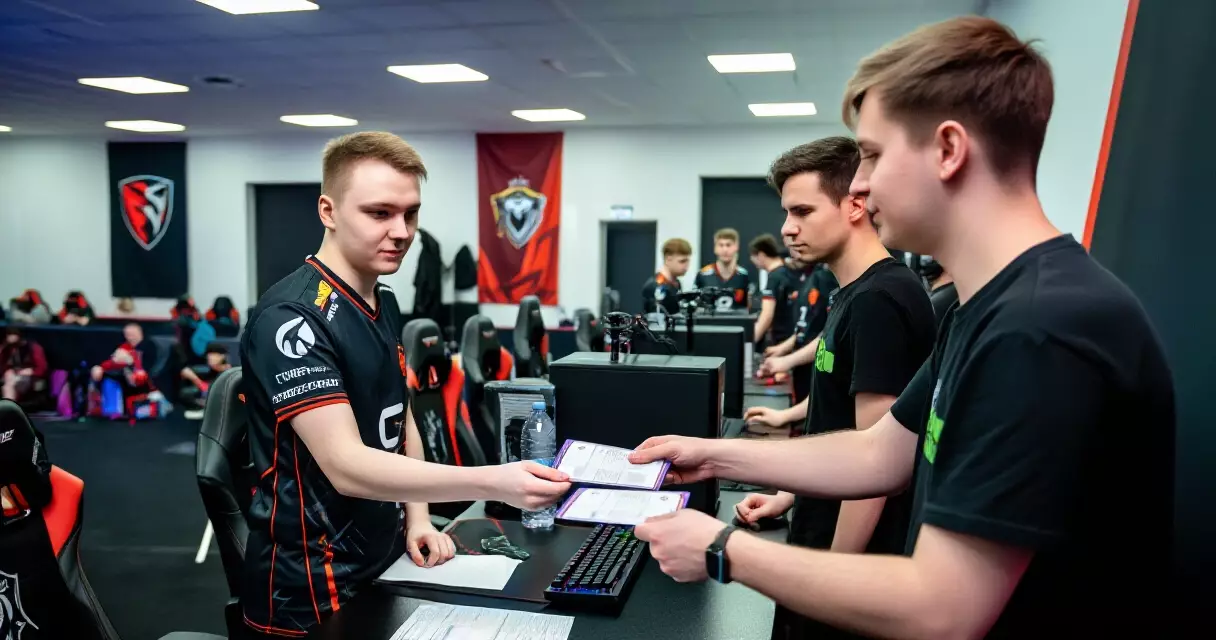
✓Reviewed by Emma Thompson The esports identity verification trends 2026 for tournament rosters and player eligibility are reshaping how competitive gaming events are organized, who can compete, and how organizers defend the integrity of their brackets. According to a Cloud...
Table of contents
- 1 How Esports Identity Verification Has Evolved
- 2 The Core Problem: AI-Generated Fraud Breaks Old Eligibility Models
- 3 Biometrics Move From Optional to Standard in Roster Submissions
- 3.1 Liveness Detection vs. Static Photo Checks
- 3.2 Behavioral Biometrics as an Ongoing Check
- 4 Continuous Verification Replaces One-Time KYC Checks
- 5 Governance Formalization: WIPO, USA Esports, and the NGB Push
- 6 Age Verification and Minor Eligibility in 2026
- 7 The “One Person, One Account” Standard Across Major Titles
- 8 Comparing Verification Approaches Across Tournament Tiers
- 9 Legal and Jurisdictional Complexity for U.S. Organizers
- 10 What Tournament Organizers Are Implementing Right Now
- 11 Frequently Asked Questions
- 11.1 What documents do esports tournaments typically require for player identity verification?
- 11.2 How do organizers prevent smurfing through identity verification?
- 11.3 Are biometrics now required for esports registration in the U.S.?
- 11.4 How are minors handled in competitive esports eligibility checks?
- 11.5 What happens when a player’s legal identity doesn’t match their in-game account name?
- 11.6 How does digital identity fragmentation affect cross-publisher eligibility?
- 12 Sources
The esports identity verification trends 2026 for tournament rosters and player eligibility are reshaping how competitive gaming events are organized, who can compete, and how organizers defend the integrity of their brackets. According to a Cloud Analyst 2026 report, biometric modalities now account for more than 60% of the verification market globally — a shift that is landing squarely in esports registration systems as tournament operators look for stronger, fraud-resistant proof of personhood before allowing a player to represent a roster. With deepfake-enabled identity fraud reported to have risen roughly 700% between early 2024 and early 2025, according to Tech-Insider’s iGaming fraud analysis, the window in which a simple gamer-tag submission counted as sufficient eligibility proof is closing fast.
How Esports Identity Verification Has Evolved
For most of esports’ history, identity for tournament purposes meant little more than a player’s handle and a valid game account. From the early LAN events of the late 1990s through the circuit-based formats of the 2010s, roster submissions were informal — a team manager filed a list of usernames, and eligibility disputes were resolved after the fact, if at all. The shift began in earnest around 2018–2019, when large prize pools and broadcast rights deals made fraudulent participation a financial risk, not just a competitive one. By 2023, major publishers including Riot Games and Valve had introduced account-linkage requirements that tied competitive profiles to verified email addresses and phone numbers. The current 2026 landscape represents the third generation of that evolution: legal-name confirmation, document checks, and biometric liveness detection are becoming standard steps in serious tournament pipelines.
The Core Problem: AI-Generated Fraud Breaks Old Eligibility Models
The clearest reason esports identity verification trends 2026 for tournament rosters and player eligibility have accelerated is the threat environment. According to Tech-Insider’s iGaming fraud analysis, deepfake fraud now accounts for approximately 11% of all first-party fraud in competitive digital environments, and multi-step identity attacks — where a fraudster layers credential stuffing, account takeover, and synthetic document submission — rose from 10% of all identity fraud in 2024 to 28% in 2025. That is a 180% increase in sophisticated attack share in a single year.
For tournament organizers, this translates into a specific roster risk: a player registered under one legal identity may not be the person who actually competes. Smurfing (high-ranked players hiding behind new accounts), account sharing, and outright identity substitution all undermine eligibility rules, nationality requirements, and age restrictions. The old model — verify the game account, trust the handle — cannot detect these scenarios. The 2026 model adds document verification, biometric liveness checks, and behavioral analytics on top of account linkage to close those gaps.
The death of point-in-time verification and its replacement by continuous, behavioural intelligence that never stops watching is the defining shift of 2026 in competitive gaming identity.
Biometrics Move From Optional to Standard in Roster Submissions
Biometric verification — primarily facial recognition with liveness detection — is the most consequential of the esports identity verification trends 2026 for tournament rosters and player eligibility. According to the Cloud Analyst State of Digital Identity Verification 2026, biometric modalities account for more than 60% of the verification market, with facial recognition as the dominant mode. In esports, this means a player submitting a roster application increasingly photographs or videos themselves live during registration — not just uploads a static document — allowing the system to confirm the submitted ID document matches the person applying.
Liveness Detection vs. Static Photo Checks
The distinction between static photo verification and active liveness detection is significant. Static checks compare a submitted selfie to an ID document — a method that deepfake-generated images can defeat. Liveness detection requires the applicant to perform a real-time action (blinking, turning the head, responding to a prompt), making synthetic spoofing substantially harder. As the NHIMG online sports gaming fraud report notes, an 80% MFA bypass success rate in digital sports platforms underscores why static controls are insufficient — liveness-based checks are becoming the recommended minimum for serious competitive events.
Behavioral Biometrics as an Ongoing Check
Beyond registration, behavioral biometrics — keystroke dynamics, mouse-movement patterns, reaction time signatures — are increasingly used to verify that the same person who registered is the one competing. This continuous monitoring approach directly addresses account sharing, where a player qualifies under their own identity but hands the account to a teammate or substitute during the event itself.
Continuous Verification Replaces One-Time KYC Checks
Perhaps the most operationally significant of the esports identity verification trends 2026 for tournament rosters and player eligibility is the move from static, point-in-time registration checks to continuous eligibility monitoring. The CIO Review 2026 compliance outlook identifies continuous behavioral monitoring as one of five critical shifts reshaping regulated online gaming — and the pattern is migrating directly into tournament operations. Rather than verifying a player once at registration and assuming eligibility through the event, 2026 systems re-score identity risk throughout the competition lifecycle using behavioral signals, device fingerprinting, and play-pattern analytics.
For roster integrity, this means eligibility is no longer a binary gate — cleared at sign-up, ignored thereafter. It becomes an ongoing status that can trigger a re-verification request if anomalous behavior is detected mid-tournament. This is especially relevant for extended league formats where months pass between initial registration and final bracket play.
Governance Formalization: WIPO, USA Esports, and the NGB Push
Identity verification is not happening in an institutional vacuum. Two parallel governance developments in 2026 are creating the formal frameworks that identity standards slot into. First, the World Intellectual Property Organization released three new sets of guidelines addressing esports player identity and rights in 2026, signaling that who a player “is” — their competitive identity, their attributed results, their eligibility record — is increasingly a matter of formal rights management, not just platform policy. Second, USA Esports, incorporated as a 501(c)(3) nonprofit, formally sought National Governing Body (NGB) status from the U.S. Olympic and Paralympic Committee, which would bring esports roster and eligibility rules into alignment with the USOPC’s established NGB governance framework.
The NGB push matters because USOPC-recognized bodies are required to maintain auditable eligibility records, anti-doping controls, and athlete registration systems. Adopting that framework would impose far more rigorous identity verification standards on U.S. competitive esports than currently exist under publisher-specific or organizer-specific rules. For a detailed look at how roster moves are currently handled before these governance changes fully take effect, the reporting at Esports Player Transfers Explained covers the existing framework.

Age Verification and Minor Eligibility in 2026
Age verification is one of the clearest pressure points in 2026 player eligibility checks. According to the Xident 2026 age verification guide for online platforms, new requirements in multiple U.S. states now mandate enhanced identity verification at account creation plus ongoing behavioral monitoring for accounts exhibiting patterns consistent with underage use. While that guidance applies directly to betting and gaming platforms, tournaments with age brackets, sponsor obligations, or prize structures are adopting equivalent controls.
For competitive esports, age verification failures carry real consequences: a tournament that allows an underage player to compete for cash prizes may violate state law depending on jurisdiction. Separate from legal risk, age restrictions govern eligibility in junior and open divisions, and verifying age without a document check relies entirely on self-declaration — a method that biometric-backed ID checks are replacing. The intersection of minor protection, prize law, and roster integrity is making age assurance one of the most actively developed areas in the field.
The “One Person, One Account” Standard Across Major Titles
A practical expression of esports identity verification trends 2026 for tournament rosters and player eligibility is the “one person, one account” principle increasingly enforced by publishers. As the Esports Observer’s 2026 digital identity fragmentation analysis notes, to reduce smurfing, account sharing, and cheating, many competitive setups use identity checks that look more like finance or travel than gaming — linking a single verified legal identity to a single competitive profile. Riot Games’ Valorant and League of Legends competitive programs, CS2’s FACEIT-integrated systems, and Honor of Kings’ regional eligibility gates all reflect versions of this principle.
The challenge is that esports digital identity remains fragmented across publishers, platforms, and tournament organizers. A player verified by Riot for Valorant Champions eligibility holds no automatic standing in a CS2 event — their identity must be re-verified against a different system. This fragmentation is both an operational burden and a security gap: inconsistent standards mean a player can exploit the weakest verification link in the circuit they are targeting. Standardization efforts, including WIPO’s 2026 guidelines, are addressing this directly, though full interoperability across publishers is still a multi-year project.
Comparing Verification Approaches Across Tournament Tiers
Not all competitive events apply the same verification depth. The following comparison reflects the operational norms reported across open, amateur, and professional tournament tiers as of mid-2026, based on available industry reporting and platform documentation.
| Tournament Tier | Identity Check Required | Biometric Step | Continuous Monitoring | Age Verification |
|---|---|---|---|---|
| Open / Amateur (community) | Gamer tag + email | Rare | None | Self-declaration |
| Semi-pro / Regional qualifier | Legal name + ID document | Increasingly common | Limited (post-round audits) | Document-backed |
| Professional / Major circuit | Legal name + ID + contract | Standard (liveness detection) | Active behavioral analytics | Document + publisher account link |
Legal and Jurisdictional Complexity for U.S. Organizers
The legal landscape for esports identity requirements in the United States is state-dependent and still evolving. According to Playante’s competitive gaming legal landscape guide for 2026, skill-based competitive gaming is legal in more than 40 U.S. states under a framework that distinguishes skill-based outcomes from chance-based gambling, requiring that outcomes be determined predominantly by skill. Under this framework, organizers running prize competitions face identity verification obligations tied to age (no minor payouts in most states), tax reporting (IRS 1099 requirements above prize thresholds), and in some states explicit KYC requirements borrowed from the online gaming sector.
For the broader picture of recent events shaping the competitive gaming world this year, the Esports World Cup 2026 schedule and prize pool coverage illustrates the scale of the events where these eligibility standards are now being applied.
| Verification Requirement | Trigger | U.S. Legal Basis |
|---|---|---|
| Age verification (18+) | Prize competitions with cash payouts | State-level gaming and prize statutes |
| IRS identity confirmation | Prize winnings above $600 | IRS 1099 reporting rules |
| Nationality / residency check | National or regional qualification events | Publisher/organizer rules + visa law |
| Anti-doping declaration | USOPC-adjacent events, growing adoption | USOPC NGB framework (if recognized) |
Roster integrity in 2026 is an audit problem as much as a registration problem — documentation, logging, and post-registration eligibility review are now expected parts of any serious tournament pipeline.
What Tournament Organizers Are Implementing Right Now
Based on available industry reporting as of August 2026, the following practices represent the leading edge of tournament roster verification:
- Document + selfie matching: Players submit a government-issued ID alongside a liveness check; a verification service confirms the document is authentic and the person is present.
- Publisher account linkage: Competitive profiles (Riot accounts, Steam IDs, Battle.net IDs) are cryptographically bound to verified legal identities so that account trades or handoffs invalidate eligibility.
- Pre-event re-verification windows: Organizers running multi-month leagues schedule re-verification checkpoints before playoffs to catch eligibility changes (transfers, suspensions, age turns, nationality shifts).
- Audit trail generation: Every verification step is logged with timestamps and document hashes for post-event dispute resolution or regulatory review.
- Legal-name to pseudonym mapping: Tournament officials maintain a confidential mapping between a player’s competitive alias and their confirmed legal name, used only for eligibility disputes and tax reporting.
Frequently Asked Questions
What documents do esports tournaments typically require for player identity verification?
Professional and semi-professional circuits increasingly require a government-issued photo ID (passport, national ID card, or driver’s license) combined with a live selfie or liveness check. Open and community tournaments often rely on gamer-tag registration and email confirmation, but this is changing as organizers face pressure to comply with prize-payout reporting requirements and anti-fraud standards.
How do organizers prevent smurfing through identity verification?
The primary mechanism is binding a single verified legal identity to a single competitive account — the “one person, one account” model. Publisher systems and third-party verification platforms can flag attempts to register multiple competition profiles against the same identity document. Behavioral analytics during play can additionally identify skill-signature mismatches that suggest a substitute player is operating the account.
Are biometrics now required for esports registration in the U.S.?
There is no universal federal requirement mandating biometrics for esports registration in the United States as of August 2026. However, leading professional circuits — particularly those with large prize pools or broadcast rights obligations — are adopting biometric liveness detection as an operational standard, not just a regulatory obligation. The convergence with regulated online gaming standards is accelerating this adoption.
How are minors handled in competitive esports eligibility checks?
Age restrictions vary by event, publisher, and jurisdiction. Cash prize competitions face the clearest legal obligations: most U.S. states prohibit direct cash payouts to minors, requiring either a guardian co-signatory or age verification at registration. Youth divisions require affirmative age confirmation. Leading organizers are replacing self-declaration with document-backed age checks as the legal risk of non-compliance grows clearer.
What happens when a player’s legal identity doesn’t match their in-game account name?
Pseudonym and legal-name mismatches are routine and expected — the competitive alias (gamer tag) and the legal name are separate things. Verification systems maintain a confidential mapping between the two. A mismatch between the legal identity submitted and the verified owner of the game account is a different, more serious problem: it typically results in disqualification, forfeiture of results, and in professional settings, a suspension process. The 2026 identity verification case studies document several recent instances and their outcomes.
How does digital identity fragmentation affect cross-publisher eligibility?
Because each publisher operates its own competitive account system, a player verified by Riot for Valorant holds no automatic eligibility in a Valve CS2 or Activision Call of Duty event. Each circuit requires separate registration and verification. WIPO’s 2026 guidelines are laying groundwork for more interoperable identity standards, but practical cross-publisher identity portability remains a multi-year project as of mid-2026.
Sources
- The State of Digital Identity Verification 2026 — Cloud Analyst — Retrieved August 9, 2026
- iGaming Fraud 2026: 700% Deepfakes Kill One-Time KYC — Tech-Insider — Retrieved August 9, 2026
- Online Sports Gaming Fraud Is Shifting to AI-Driven Identity Abuse — NHIMG — Retrieved August 9, 2026
- 2026 Outlook: Five Critical Shifts Reshaping Compliance for Regulated Online Gaming — CIO Review — Retrieved August 9, 2026
- Gambling and Gaming ID Verification Market 2025–2033 — Trendvault Research — Retrieved August 9, 2026
- Identity Verification Market Size and Growth Report 2034 — Fortune Business Insights — Retrieved August 9, 2026
- Age Verification for Online Gambling in 2026 — Xident — Retrieved August 9, 2026
- Competitive Gaming Legal Landscape 2026 — Playante — Retrieved August 9, 2026
- Who Owns Esports Digital Identity in 2026, Why It’s Fragmented — Esports Observer — Retrieved August 9, 2026