
Summary
When a star Counter-Strike player switches teams mid-season, or a League of Legends pro goes from one regional powerhouse to a rival franchise, something more complex than a handshake is happening behind the scenes. The U.S. esports market was valued...
Table of contents
- 1 What Is an Esports Player Transfer?
- 2 A Brief History: How the Transfer System Evolved
- 3 How Transfers Actually Work: Step by Step
- 4 Transfer Windows: When Roster Moves Happen
- 5 Transfer Mechanics Compared Across Major Titles
- 6 How Player Value Is Measured in the Transfer Market
- 7 Region Lock Rules and International Transfers
- 8 Transfers vs. Free Agency: Key Differences at a Glance
- 9 Related Reading
- 10 FAQ: Esports Player Transfers Explained
- 10.1 What is an esports player transfer?
- 10.2 What is a buyout in esports?
- 10.3 What are transfer windows in esports?
- 10.4 How do region-lock rules affect transfers?
- 10.5 Can esports players refuse a transfer?
- 10.6 How is a transfer different in franchised vs. open circuit leagues?
- 10.7 How do teams decide how much a player is worth?
- 10.8 Are esports transfers publicly announced?
- 11 Sources
When a star Counter-Strike player switches teams mid-season, or a League of Legends pro goes from one regional powerhouse to a rival franchise, something more complex than a handshake is happening behind the scenes. The U.S. esports market was valued at USD 536.4 million in 2025 (IMARC Group) and is projected to nearly double to USD 1,185.9 million by 2034 – and the player transfer ecosystem is one of the engines driving that growth. Understanding how roster moves actually work helps fans, aspiring pros, and team investors alike make sense of the news cycle and the business underneath it.
What Is an Esports Player Transfer?
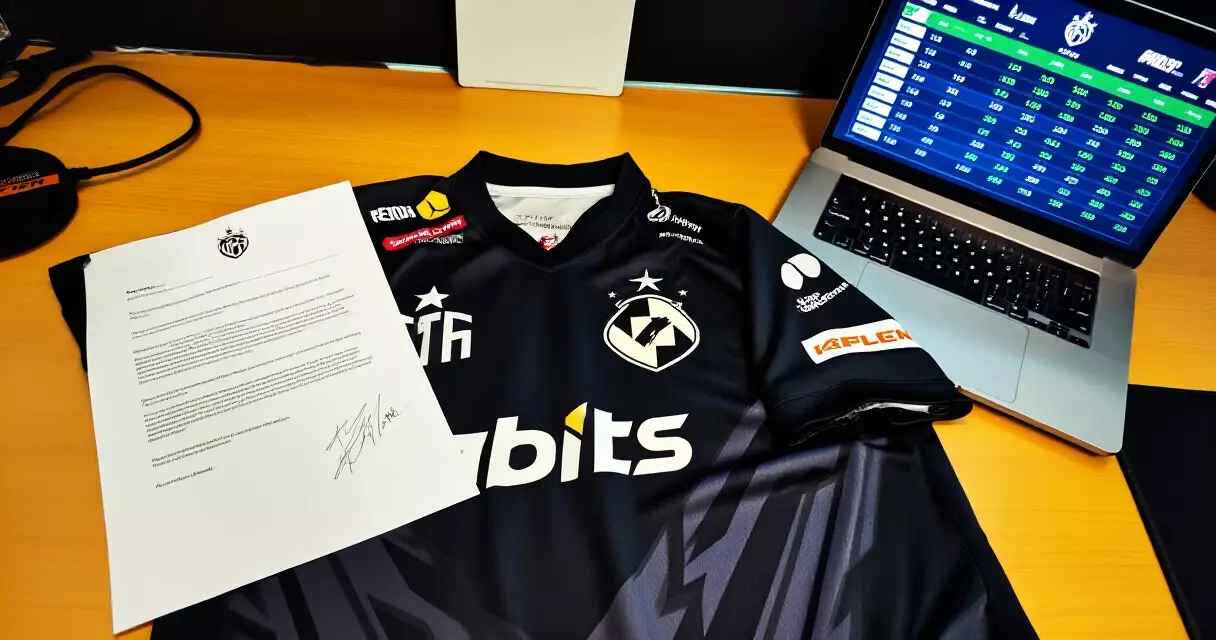
A transfer in esports is the formal movement of a player from one organization to another while a contract is still active. It differs from a player simply leaving at the end of their deal (a free agency move) in one key way: the releasing team usually receives compensation, called a buyout, before the player can join the new club.
Free agency is by far the most common route. When a contract expires, the player can negotiate with any team without a fee changing hands. Transfers with buyouts are more common at the highest tier of competition, where a team’s investment in developing or signing a player is substantial enough to warrant protection.
Loans are a third mechanism: a player temporarily joins another organization for a defined period, then returns to their parent team. This is seen frequently in Valorant’s Challengers ecosystem and in CS2, where academy or B-team players get top-tier exposure without permanently leaving their organization. The recent FaZe Clan loan of JBOEN from BIG Academy is a real-world example of this structure in action.
A Brief History: How the Transfer System Evolved
In esports’ early years – roughly 2000 to 2012 – roster changes were mostly informal. Teams were volunteer-run communities, contracts were rare, and a player could simply leave a Discord server and join a new squad. There was no legal infrastructure and no league rule that enforced the relationship between a player and an organization.
The shift began when large prize pools arrived. Valve’s The International in Dota 2 crossed USD 1 million in 2011, making player skill something worth protecting contractually. By 2013, League of Legends had formalized its LCS structure, which required teams to submit official rosters to Riot Games and abide by transfer eligibility rules. That was effectively the birth of the structured esports transfer system as it exists today.
By the mid-2010s, major organizations began hiring sports lawyers to draft player contracts based loosely on traditional professional sports models – with salary, image rights clauses, and release fees. The professionalization accelerated dramatically with franchising: when the LCS moved to a franchised model in 2018, and the Overwatch League launched the same year, transfer rules became binding and enforceable at an institutional level.
How Transfers Actually Work: Step by Step
The mechanics differ slightly by game and league, but the core process follows a recognizable pattern across most major titles.
Step 1 – Roster evaluation. A team’s management identifies a gap in performance or a player they want to add. Performance data plays a growing role here: in Rocket League, for example, BLAST’s 2026 transfer window summary cited granular metrics like goals per game (a notable NA player ranked fourth in the region with 0.78 goals per game) and team production rates (2.08 goals per game for the league leader). These are the kinds of numbers that inform transfer targets.
Step 2 – Contract status check. Is the player under contract, or a free agent? If their deal has expired, no buyout is needed. The Esports Charts player database tracks 92,672 registered players and lists current team status – including free agent designations – making it easier for organizations to identify signing opportunities. Johan "N0tail" Sundstein (career earnings: USD 7,184,163) and Jesse "JerAx" Vainikka (USD 6,486,623) are examples of elite players whose free-agent status has been tracked publicly in this database.
Step 3 – Negotiation and buyout. If the player is under contract, the acquiring team approaches the releasing team to negotiate a buyout. The amount is confidential in most cases. Both teams must agree before any player discussions can be formalized. Only after an agreement in principle between the organizations can the player negotiate their own deal with the new team.
Step 4 – League eligibility check. Even after both sides agree, the player must clear eligibility requirements set by the league. This is where region-lock rules become critical. In the RLCS (Rocket League Championship Series), the official 2/3 rule requires that two of the three starting players be citizens or permanent residents of the region the team competes in. If a team also carries a substitute, three of four players must meet that standard. These rules directly limit who a team can recruit from outside their home region.
Step 5 – Announcement and registration. Once all parties sign, the organization registers the player with the league operator and issues a public announcement. In League of Legends, Liquipedia’s player transfer tracker serves as a near-real-time community log of these announcements, reflecting how frequent and newsworthy LoL roster moves have become. The 2026 LoL offseason tracker, for instance, documented dozens of moves including Gumayusi leaving T1 and Peyz joining, along with contract extensions for Canyon at Gen.G and Doran at T1.
In esports, the most expensive part of a transfer is rarely the buyout – it’s the opportunity cost of not moving fast enough when a free agent window opens.
Transfer Windows: When Roster Moves Happen
Not every esports circuit runs on a fixed transfer window, but the most organized ones do. Publisher-run leagues have increasingly pushed roster changes into defined periods between splits or seasons, concentrating activity and making the market easier to follow.
In League of Legends, the major offseason window runs after Worlds (typically October-November), with a shorter mid-split window in some regions. The LCS, LEC, LCK, and LPL each have their own timelines but coordinate loosely to allow international transfers. Valorant’s VCT circuit runs similar windows between its three major splits (Kickoff, Stage 1, Stage 2 into Champions).
CS2 operates differently. Because the game uses an open, partner-team model rather than a fully franchised structure, roster moves happen year-round. HLTV’s transfer tracker reflects this – it logs changes continuously rather than in concentrated bursts. The result is a more fluid but harder-to-follow market for casual fans.
The RLCS 2026 transfer window was formally summarized by BLAST, which operates the circuit. The window created a concentrated period of roster reshuffling that produced significant movement across North American and European rosters, with performance analytics embedded directly into transfer coverage for the first time at that scale.
Transfer Mechanics Compared Across Major Titles
The rules differ meaningfully between games. The table below summarizes the key structural differences across the five most followed esports titles as of 2026. For a deeper look at how the broader roster market functions, see our esports player transfers roster market guide.
| Game | Transfer Model | Window Structure | Region Lock? | Key Governing Body |
|---|---|---|---|---|
| League of Legends | Franchised (LCS, LEC, LCK, LPL) | Defined offseason + mid-split | Yes (residency rules per region) | Riot Games |
| Valorant | Franchised (VCT Partnerships + Challengers) | Between splits | Yes (VCT Challengers regional) | Riot Games |
| CS2 | Open / partner team model | Year-round (no fixed window) | No formal lock | BLAST / ESL / PGL (varies) |
| Dota 2 | Open circuit (DPC + regional leagues) | Between majors / seasons | Soft regional preferences | Valve / regional leagues |
| Rocket League | Publisher-run (RLCS) | Defined windows (BLAST-operated) | Yes (2/3 rule: 2 of 3 starters) | Psyonix / BLAST |
Source: League rules published by Riot Games, Psyonix/BLAST (RLCS), and Valve; BLAST transfer window summary (2026).

How Player Value Is Measured in the Transfer Market
Valuing an esports player for a transfer isn’t like checking a traditional sports salary database. The metrics are more fragmented, game-specific, and publicly available in ways that traditional sports are not.
Prize money history is one starting point. Esports Charts tracks cumulative tournament earnings alongside peak viewership numbers, total matches, and tournament count. At the top end of the database, Johan "N0tail" Sundstein sits at USD 7,184,163 in tracked earnings. Below that, Miposhka has logged USD 6,250,134. These figures don’t represent salary – they’re prize pool distributions – but they serve as a proxy for competitive pedigree during transfer negotiations.
In-game performance metrics are increasingly formalized. Rocket League’s RLCS coverage by BLAST cited specific stats when covering the 2026 transfer window: individual goals per game, goal participation percentage, assist rank within a region, and team production rate. A player’s team leading the NA league at 2.08 goals per game while the player ranked fourth individually at 0.78 goals per game tells a nuanced story about role and value that a wins-only metric cannot.
Audience and social following are also factored in, especially at organizations whose revenue depends on content and sponsorships. According to reporting on transfer market value methodology, factors like Twitter followers, Twitch growth rate, and streaming activity have been explicitly included in player valuation frameworks used by some organizations – a significant departure from how traditional sports teams assess players.
Prize money, viewership pull, and in-game statistics are all part of the same equation when a team’s management decides what a player is worth on the open market.
Region Lock Rules and International Transfers
One of the most misunderstood parts of the transfer system is region lock: the rule that limits how many non-local players a team can field. These rules exist because leagues want to develop local talent and maintain regional identities – a topic explored in more depth in our piece on national identity and esports fan culture.
In RLCS 2026, the 2/3 region lock means two of three starting players must be citizens or permanent residents of the competing region. If the team carries a substitute, the ratio extends to three of four. This rule actively shapes roster-building strategy: a North American team that wants to sign a European star must already have two local players on their starting lineup, or restructure their entire roster to accommodate the import.
Riot Games applies similar logic in VCT Challengers – the pathway leagues below the franchised tier – with local-residency requirements designed to ensure that regional scenes develop genuine homegrown talent rather than just functioning as import leagues.
International transfers that do clear region-lock requirements often require significant documentation: proof of citizenship, permanent residency status, or in some leagues, a minimum period of residency before eligibility kicks in. This is one area where esports administration intersects with actual immigration policy, and getting it wrong can result in a roster being ruled ineligible mid-season.
Transfers vs. Free Agency: Key Differences at a Glance
The confusion between transfers and free agency is common even among experienced fans. The table below lays out the practical distinctions.
| Factor | Transfer (Player Under Contract) | Free Agency (Contract Expired) |
|---|---|---|
| Buyout required? | Yes – releasing team must be compensated | No – player is free to sign anywhere |
| Who negotiates first? | Acquiring team and releasing team | Player and acquiring team directly |
| Timeline | Can happen during or outside windows (varies by league) | Usually concentrated in off-season windows |
| Player agency | Player can trigger release request, but team can refuse | Player has full negotiating control |
| Visibility | Often announced with official language from both orgs | Sometimes announced quietly; tracked via databases |
| Common in | Top-tier franchised leagues (LCS, LEC, VCT) | All levels; dominant at mid-tier and below |
Free agency is the dominant mechanism across esports overall, which is why large public databases like Esports Charts track free agent status explicitly. With 92,672 registered players in the system, the free-agent pool at any given moment is substantial. The five biggest esports each have their own free-agent dynamics, shaped by the maturity and revenue of their respective scenes.
Related Reading
FAQ: Esports Player Transfers Explained
What is an esports player transfer?
An esports player transfer is the formal process by which a player moves from one organization to another while their existing contract is still active. Unlike a free-agent signing – where a player whose contract has expired can negotiate freely – a transfer requires the releasing organization to receive compensation, typically called a buyout. The acquiring team negotiates the buyout directly with the releasing team before the player can formally discuss contract terms with the new organization. All parties must also clear the eligibility requirements set by the league or game publisher overseeing the competition.
What is a buyout in esports?
A buyout is the fee paid by an acquiring team to a releasing team to allow a player under contract to move. The amount is almost always kept private – neither league rules nor public reporting typically require disclosure. Buyout figures vary enormously depending on the player’s contract length remaining, their competitive track record, prize-money history, audience value, and the negotiating use of both organizations. At the top tier of League of Legends or Valorant, buyouts can reach figures comparable to mid-tier traditional sports – though no official public benchmark exists for most games.
What are transfer windows in esports?
Transfer windows are defined periods during which roster changes are permitted in leagues that enforce them. Publisher-run and franchised circuits, including the VCT (Valorant Champions Tour) and RLCS (Rocket League Championship Series), concentrate roster moves into specific off-season or between-split periods. This protects competitive integrity: teams can’t continuously upgrade their lineups mid-season in response to poor results. BLAST formally published a summary of the RLCS 2026 transfer window, reflecting how institutionalized these windows have become in well-structured esports circuits. CS2 is a notable exception – transfers happen year-round in its open model.
How do region-lock rules affect transfers?
Region-lock rules restrict how many players from outside a league’s home region a team can field. In RLCS 2026, the official 2/3 rule means two of three starting players must be citizens or permanent residents of the competing region; if a substitute is added, three of four must meet that standard. These rules directly shape recruitment – a team that wants to sign an international star must have enough local players to stay compliant. Violations don’t just result in a fine; a team can be ruled ineligible to compete. Riot Games applies similar residency logic in its regional Challengers circuits for League of Legends and Valorant.
Can esports players refuse a transfer?
Yes – in most cases, a player must consent to any transfer. Unlike some traditional sports systems where a player can be traded without personal agreement, esports contracts are employment agreements that generally require the player to agree to the new terms before joining an organization. A player can decline a buyout offer from another team. However, if a player’s current organization is unwilling to release them and the player wants to leave, they may be "benched" – kept on contract but out of the active roster – which is a common pressure mechanism. Being benched without salary continuation would depend on the specific contract terms.
How is a transfer different in franchised vs. open circuit leagues?
In franchised leagues (LCS, LEC, VCT Partnerships, Overwatch League), the league itself has formal oversight of roster submissions and transfer eligibility. Teams pay a franchise slot and agree to operate under strict league rules, which makes transfers more structured and more public in their announcement. In open circuits – like the broader CS2 ecosystem – there is no central franchisor; individual tournament organizers (BLAST, ESL, PGL) each set their own participation rules. This makes the CS2 transfer market more fluid and harder to track, though databases like HLTV’s transfer tracker and Esports Charts partially fill the gap.
How do teams decide how much a player is worth?
Player valuation in esports is multidimensional. Organizations look at competitive performance – metrics like goals per game in Rocket League or KDA and damage share in League of Legends – alongside prize-money history as a proxy for tournament pedigree. Esports Charts combines player earnings, peak viewership during their matches, and total tournament appearances in one public database, giving teams a starting point for comparisons. Audience value matters too: a player with a large streaming following brings sponsorship visibility beyond their in-game contribution. There is no standardized player valuation system across all esports, which means negotiation remains as much an art as a science.
Are esports transfers publicly announced?
Most significant transfers are announced publicly – organizations use roster moves as content and marketing moments, sharing news via social media, press releases, and official team channels. However, the financial terms (buyout amount, new salary) are almost never disclosed. Community databases like Liquipedia’s League of Legends player transfer tracker and Esports Charts fill in the timeline, logging announcements by date, team, and game. Smaller moves at the semi-professional or Challenger tier may go unannounced or be picked up only by dedicated tracking sites. Q1 2026 transfer coverage from Esports Charts grouped moves by title – CS2, Dota 2, LoL, Valorant – demonstrating how transfer reporting has become formalized at scale.
Sources
- IMARC Group – United States Esports Market Size, Forecast 2026–34: https://www.imarcgroup.com/united-states-esports-market
- BLAST – Reshuffling the Deck: A Summary of the RLCS 2026 Transfer Window: https://blast.tv/rl/news/a-summary-of-the-rlcs-2026-trade-window
- Esports Charts – Players and Transfers Database: https://escharts.com/players
- Esports Charts – Top Transfers and Roster Moves Q1 2026: https://escharts.com/news/top-transfers-and-roster-moves-q1-2026
- Liquipedia – League of Legends Player Transfers: https://liquipedia.net/leagueoflegends/Player_Transfers
- esports.gg – The Biggest Rocket League Transfers Before RLCS 2026 (region-lock rules): https://esports.gg/news/rocket-league/transfers-rlcs-2026/
Top Esports Organizations 2026: Teams, Rosters, and Performance Rankings