
Summary
✓Reviewed by Emma Thompson Identity verification has become one of the most consequential compliance issues in competitive gaming. As Singapore formally recognized esports as an official sport in January 2026 under the Singapore Sports Council (Amendment) Bill, the regulatory obligations...
Table of contents
- 1 What Is Esports Identity Verification and Why It Matters Now
- 2 The Regulatory History Behind Esports Verification in Singapore
- 3 How Singapore’s Digital ID System Supports Esports Verification
- 3.1 Singpass, Facial Estimation, and Government ID: The Three Accepted Methods
- 4 Age Assurance vs. Identity Verification: Understanding the Difference
- 4.1 Why Account Sharing and Smurfing Require Identity Controls
- 5 Esports Verification at Tournament Level: A Practical Framework
- 6 Legal and Gambling Compliance Dimensions
- 7 How Major Platforms Handle Esports Identity Verification in 2026
- 8 What Esports Organizers Must Do: A Step-by-Step Checklist
- 9 What This Means for Players: Your Identity and Your Competitive Record
- 10 Frequently Asked Questions
- 10.1 Does Singapore have a specific law for esports identity verification?
- 10.2 Can I use Singpass to verify player identity at my tournament?
- 10.3 What happens if a player fails identity verification at check-in?
- 10.4 Is esports betting legal in Singapore?
- 10.5 How do international tournaments handle identity verification for Singapore players?
- 10.6 What is the minimum age to compete in professional esports in Singapore?
- 11 Sources
Identity verification has become one of the most consequential compliance issues in competitive gaming. As Singapore formally recognized esports as an official sport in January 2026 under the Singapore Sports Council (Amendment) Bill, the regulatory obligations around player eligibility, age assurance, and account integrity have sharpened considerably. This eSports Identity Verification Guide covers what tournament organizers, platform operators, and competitive players need to understand about the systems, laws, and processes now in effect.
What Is Esports Identity Verification and Why It Matters Now
Esports identity verification refers to any process used to confirm that a competitive player, account holder, or platform user is who they claim to be. In practice, it covers a spectrum of checks: verifying a player’s legal name against a roster submission, confirming age before a user accesses a rated game, and validating that a tournament participant is not operating under a banned alternate account. As the scene has professionalized, the integrity risks associated with identity fraud — smurfing, account sharing, underage access, and impersonation — have grown in step.
Singapore’s legislative move in early 2026 gives esports organizations and platform operators a clearer regulatory anchor. Recognition as an official sport brings esports into the jurisdiction of Sport Singapore, which means eligibility standards, anti-doping analogues, and integrity frameworks developed for traditional sports can now be applied or adapted. That context makes understanding the full verification landscape more urgent, not less.
The Regulatory History Behind Esports Verification in Singapore
Singapore’s approach to digital identity and gaming regulation has developed in distinct phases. The country’s Singpass national ID program was established as a login credential for government services and has progressively expanded: by 2024, GovTech Singapore and iProov had deployed facial verification across the national digital identity infrastructure, enabling four million citizens to authenticate using biometrics. In 2025, the Infocomm Media Development Authority (IMDA) introduced a formal Code of Practice for Online Safety for App Distribution Services, imposing age-assurance obligations on app stores operating in Singapore. This culminated in a compliance deadline of April 1, 2026, after which major platforms — including Apple, Google, Samsung, Huawei, and Microsoft — were required to implement systems preventing users estimated to be under 18 from downloading age-restricted apps and games.
On the sports-law side, Parliament passed the Singapore Sports Council (Amendment) Bill in January 2026, formally writing esports and mind sports such as chess into the definition of sport under Singapore law. This single legislative step brought competitive gaming under the same institutional umbrella as football, athletics, and swimming, with implications for funding, liability, and — critically — eligibility governance.
How Singapore’s Digital ID System Supports Esports Verification
Singapore is unusually well-positioned for digital identity in gaming because its national infrastructure already supports the kind of multi-layered verification that esports integrity demands. Singpass, operated by GovTech Singapore, allows individuals to authenticate their legal identity without uploading physical documents, using a combination of government-held data and biometric face matching. MyInfo, the data-sharing layer built on Singpass, enables services to pull verified personal data — legal name, date of birth, nationality — with user consent.
For tournament organizers, this creates a practical pathway. Instead of manually verifying passport scans or NRIC copies, a Singpass-integrated registration flow can confirm a player’s identity in seconds. The system is relevant to esports eligibility in two specific areas: confirming that a player is of legal age for the event’s requirements, and confirming that a player’s legal identity matches the account or handle they are competing under.
Singpass, Facial Estimation, and Government ID: The Three Accepted Methods
Under Singapore’s IMDA framework, app distribution services may use any one of three methods to assure a user’s age: Singpass authentication, facial age estimation via selfie, or upload of an official government-issued ID. Microsoft’s March 2026 announcement confirmed that Microsoft Store and Xbox storefronts in Singapore would implement all three options for users accessing apps and games rated 18+. This flexibility reflects IMDA’s stated privacy-oriented approach: requiring a specific document type would create barriers; allowing multiple methods maintains inclusion while achieving the compliance goal.
For competitive esports organizers adapting these frameworks, the three-method model offers a useful template. High-stakes events with significant prize pools can require Singpass (the highest-assurance method), while grassroots tournaments can accept facial age estimation as a lower-friction alternative.
Age Assurance vs. Identity Verification: Understanding the Difference
These two terms are frequently conflated in esports policy discussions, but they address different problems. Age assurance establishes that a user meets a minimum age threshold, typically 18, without necessarily confirming their full legal identity. Identity verification confirms who a person is — their legal name, nationality, and account ownership. Competitive esports requires both, in different contexts and for different reasons.
Age assurance is primarily a consumer protection and platform compliance matter. Singapore’s IMDA Code of Practice for App Distribution Services, analyzed by Reed Smith in early 2025, established that from March 31, 2025, app stores were required to prevent under-18 users from accessing age-restricted content. That deadline was the compliance trigger; enforcement began in earnest in April 2026. Identity verification, by contrast, is an esports integrity matter — it prevents account sharing, smurfing, and impersonation at the competitive level.
Why Account Sharing and Smurfing Require Identity Controls
Account sharing — where a player competes under another player’s credentials — and smurfing — where a skilled player uses a low-ranked alternate account to face weaker competition — are integrity violations that undermine the validity of competitive results. Both require that the person actually playing matches the account on record. Without identity verification at the point of competition, these practices are difficult to detect. Tournament operators using platforms such as FACEIT, Battlefy, or Challengermode have increasingly integrated ID-check workflows into their registration processes, requiring players to submit government ID or link accounts to verified identity documents before competing for significant prizes.
Identity verification in esports is not bureaucracy for its own sake — it is the technical foundation of fair competition.
Esports Verification at Tournament Level: A Practical Framework
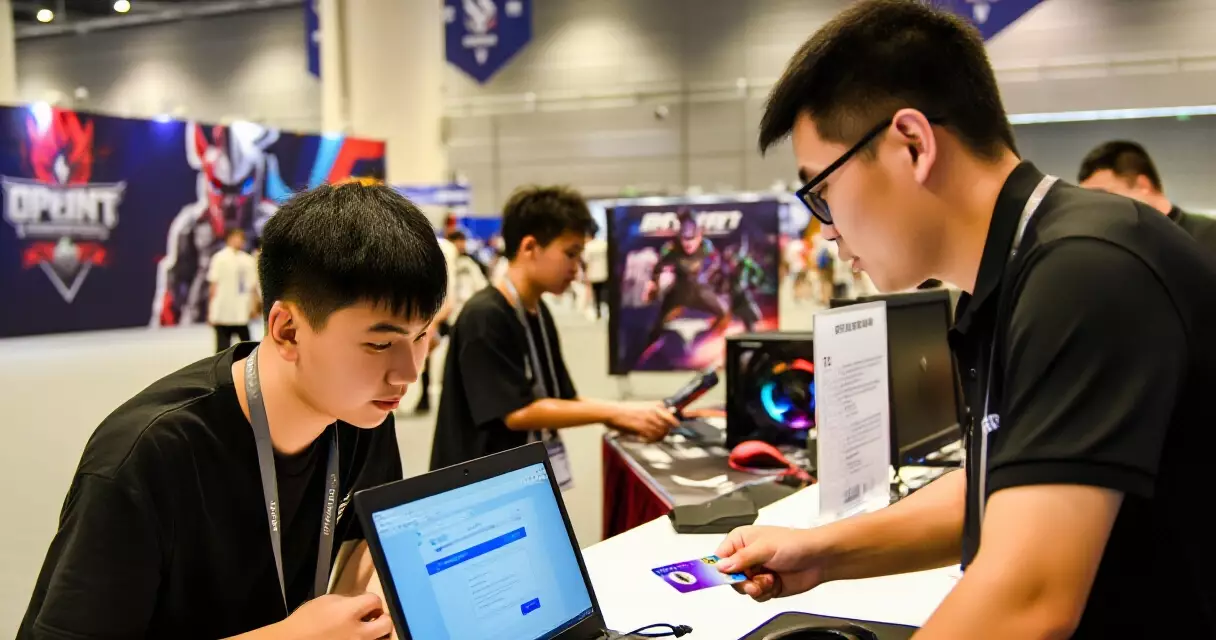
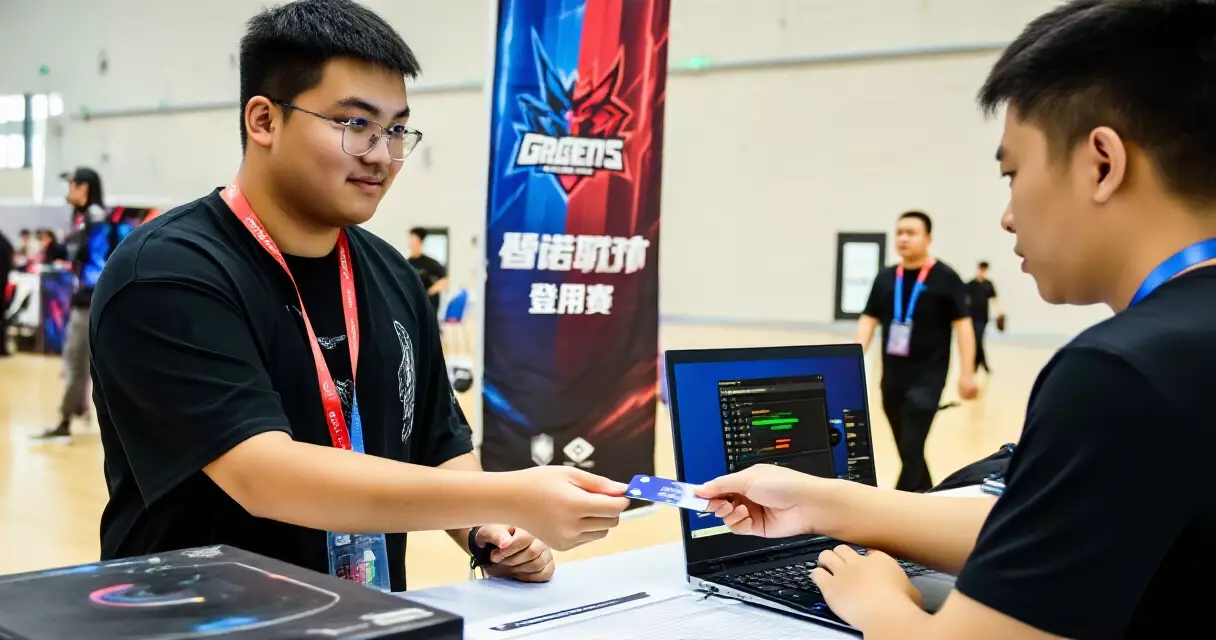
For organizers running events in Singapore in 2026, a workable identity verification framework operates across three stages: pre-registration, check-in, and post-event audit. The details differ by event tier, but the underlying logic is consistent.
| Event Tier | Recommended Verification Method | Minimum ID Check | Notes |
|---|---|---|---|
| Grassroots / Open | Facial age estimation or account-linked email | Age 16+ self-declaration | Low prize pools; lighter friction acceptable |
| Regional Amateur | Government ID upload or Singpass | Photo ID + legal name match | Suitable for LAN events with prizes up to SGD 1,000 |
| Semi-Professional | Singpass + MyInfo pull | Full legal identity: name, DOB, nationality | Required for Sport Singapore-affiliated events |
| Professional / Prize-Bearing | Singpass + in-person document check at LAN | Passport or NRIC; biometric cross-reference | Aligns with ESL, PGL, and Riot Games event standards |
The ESIC (Esports Integrity Commission) suspension of Dota 2 players at the Esports World Cup 2026 for identity cheating and account sharing — covered in detail in our reporting on the Esports World Cup 2026 — illustrates exactly why the professional tier demands the most rigorous controls. When prize money and qualification slots are involved, the incentive to cheat rises, and only robust identity checks at registration and check-in can credibly deter it.
Legal and Gambling Compliance Dimensions
Singapore’s legal framework creates a specific compliance context that esports operators must understand. According to NUS TRAIL’s analysis of legal and regulatory issues in video gaming and esports, the National Council on Problem Gambling has specifically stated that esports betting is illegal in Singapore. The Gambling Control Act defines a game of chance to include games with both chance and skill elements, but the legal treatment of esports as a sport (post-January 2026) may shift how regulators frame competitive outcomes over time.
The practical implication for verification: any operator that accepts wagering or fantasy competition entries tied to esports outcomes in Singapore must apply the full identity verification requirements of the Gambling Regulatory Authority, not just the lighter IMDA age-assurance standard. This is a materially higher bar and requires legal counsel, not just a technical workflow.
How Major Platforms Handle Esports Identity Verification in 2026
The major platform-level responses to Singapore’s verification requirements offer practical reference points for organizers designing their own systems.
| Platform / Operator | Verification Method in Singapore | Effective Date | Authority / Source |
|---|---|---|---|
| Microsoft Store / Xbox | Singpass, facial age estimation, or government ID upload for 18+ apps and games | March 2026 | Microsoft News Asia, March 17, 2026 |
| Apple App Store | Age assurance measures per IMDA Code of Practice | April 2026 | Reed Smith / IMDA, 2025–2026 |
| Google Play Store | Age assurance measures per IMDA Code of Practice | April 2026 | Reed Smith / IMDA, 2025–2026 |
| GovTech Singpass | Biometric face verification + MyInfo data pull for integrated services | Operational since 2024 | iProov / GovTech Singapore, 2024 |
What unites these implementations is the shift from user-reported age to platform-enforced verification. Self-declaration — typing a birth year into a registration form — is no longer considered adequate compliance under Singapore’s IMDA framework. The esports sector is now expected to apply the same standard.
Self-declaration is not age verification. Singapore’s regulatory framework has moved decisively beyond the honor system.
What Esports Organizers Must Do: A Step-by-Step Checklist
Based on the regulatory framework in effect as of September 3, 2026, Singapore-based esports organizers running prize competitions or age-restricted events should work through the following steps.
- Determine your event tier and applicable rules. Sport Singapore-affiliated events have the highest requirements. Open amateur events have the most flexibility.
- Choose a verification method aligned with IMDA’s accepted options. Singpass is the highest-assurance route; facial age estimation is suitable for lower-stakes contexts.
- Integrate at the registration stage, not at check-in. Catching ineligible players at the venue wastes resources and creates disputes. Pre-event verification closes the gap cleanly.
- Document your process. IMDA compliance obligations require that app distribution services demonstrate their age-assurance method. Tournament organizers facing regulatory scrutiny benefit from equivalent records.
- Plan for appeals. A player who fails an automated check because of a data mismatch needs a defined escalation path. Manual review by a human organizer should be the backstop, not the primary method.
- Audit after the event. Post-event review of identity data against actual participants closes loops on any integrity questions that arise from results.
For events covering multiple countries, note that Singapore’s Singpass is a national system and cannot be used to verify foreign players. International participants require the government ID or facial estimation path, or must present a passport at a dedicated check-in station. Our reporting on esports player agents has covered how representation agreements increasingly include eligibility compliance clauses, which means agents are now a useful point of contact for verifying international rosters.
What This Means for Players: Your Identity and Your Competitive Record
For competitive players, identity verification is not just a compliance box to tick — it is the anchor that ties your competitive record to your legal identity. As prize pools grow and career pathways in esports become more formalized, the integrity of that record matters. A player who has competed under multiple accounts, shared credentials, or used a false name will find those historical results disputed or disqualified if they later attempt to convert an amateur career into a professional one.
Singapore players benefit from the Singpass infrastructure that makes this straightforward. Linking your Singpass identity to a tournament registration takes under a minute and produces a tamper-resistant record that organizers and integrity bodies can reference. For players who are under 18 and competing in age-appropriate events, the same infrastructure supports age verification without requiring full identity disclosure, preserving privacy while satisfying organizer requirements.
The broader competitive context — including how roster eligibility interacts with identity — is covered in depth in our analysis of esports transfer rumor verification. Players in the transfer market should understand that identity verification and roster eligibility are now routinely cross-checked by the organizations and leagues involved.
Frequently Asked Questions
Does Singapore have a specific law for esports identity verification?
There is no single statute dedicated to esports identity verification. The relevant legal framework draws on three sources: IMDA’s Code of Practice for Online Safety for App Distribution Services (age assurance), the Singapore Sports Council (Amendment) Act 2026 (esports recognition as a sport), and the Gambling Control Act (for any competition with gambling-adjacent mechanics). Organizers must navigate all three.
Can I use Singpass to verify player identity at my tournament?
Yes, for Singapore residents. Singpass integration requires an API agreement with GovTech Singapore and is typically accessible to organizations through the Singpass API developer program. For large-scale events, this is the highest-assurance and most streamlined path. For smaller organizers, the government ID upload route via a third-party verification provider is more practical.
What happens if a player fails identity verification at check-in?
The player should be offered a manual review escalation. Automated systems have false-negative rates — a facial age estimation tool might flag a 19-year-old as under 18. A defined appeals process prevents legitimate players from being excluded on technical grounds. Document the outcome of every manual review for audit purposes.
Is esports betting legal in Singapore?
No. According to NUS TRAIL’s esports legal analysis, the National Council on Problem Gambling has specifically stated that esports betting is illegal in Singapore. The January 2026 sports recognition law does not change this position.
How do international tournaments handle identity verification for Singapore players?
Major international tournament operators — including ESL, PGL, Riot Games, and Valve — require players to submit government-issued ID and in some cases undergo biometric verification at LAN events. Singapore players typically use their NRIC or passport. The Singpass system is not recognized outside Singapore’s own platforms, so international events default to document-based verification regardless of what domestic platforms accept.
What is the minimum age to compete in professional esports in Singapore?
There is no single legal minimum age for esports competition in Singapore. The relevant constraints come from the age ratings of the games themselves (an M18-rated game cannot be played competitively in a public event by under-18 players without violating IMDA content classifications) and from individual tournament organizer rules. Most major titles — CS2, VALORANT, League of Legends — have publisher-set minimum ages of 16 or 18 for professional competitions.
Sources
- Singapore Government Extends National Digital Identity with Face Verification — iProov / GovTech Singapore — Retrieved September 3, 2026
- Microsoft to Introduce Age Assurance Measures in Singapore — Microsoft News Asia — Retrieved September 3, 2026
- Singapore Moves to Enforce Age Verification in App Stores — Reed Smith — Retrieved September 3, 2026
- Legal and Regulatory Issues in Video Gaming and Esports — NUS TRAIL — Retrieved September 3, 2026
- Singapore Government Currently Assessing Age Assurance Obligations for Social Media Services — Baker McKenzie Connect on Tech — Retrieved September 3, 2026
- E-sports and E-gaming in Singapore — U.S. International Trade Administration — Retrieved September 3, 2026