

Summary
✓Reviewed by Emma Thompson When a star player transfers teams, when a region dominates an international bracket, or when a publisher restructures its media-day format, the story that follows is never just about the result — it is about identity....
Table of contents
- 1 What Esports Related Identity News and Reporting Actually Covers
- 2 The History of Identity Framing in Esports Journalism
- 3 Player Identity: The Core of Esports News Reporting
- 3.1 Game Handle vs. Real Name: A Persistent Editorial Choice
- 3.2 Profile Features vs. Match Reports
- 4 Team Identity in Competitive Gaming Coverage
- 5 Regional Identity: How Geography Shapes Esports Narratives
- 6 Brand and Publisher Identity: How Commercial Actors Shape the Narrative
- 7 Real-World Reporting Examples: Identity in Action
- 8 The Dual Identity Problem: Outlet as Team and Journalist as Fan
- 9 How to Identify Identity-Driven Reporting: A Practical Framework
- 10 Frequently Asked Questions
- 10.1 What does “esports related identity” mean in a journalism context?
- 10.2 Why do esports reporters rely so heavily on insider sources for identity stories?
- 10.3 How do publishers like Riot Games influence player identity narratives in media coverage?
- 10.4 What is the difference between a player profile and match report in terms of identity coverage?
- 10.5 How does regional identity affect international tournament coverage?
- 10.6 What ethical considerations apply to esports outlets that have a dual identity as both team and media organization?
- 11 Key Takeaways
- 12 Sources
When a star player transfers teams, when a region dominates an international bracket, or when a publisher restructures its media-day format, the story that follows is never just about the result — it is about identity. Esports related identity news and reporting oriented identity example coverage has matured into a distinct journalistic beat that organizes competitive gaming around who players are, what teams represent, where regions stand, and how commercial brands shape the narratives that reach fans. As of July 2026, outlets from the Daily Mail to specialist platforms now employ dedicated esports reporters whose job is precisely this kind of identity-driven storytelling.
What Esports Related Identity News and Reporting Actually Covers
The phrase “esports related identity” refers to the network of characteristics — individual, institutional, geographic, and commercial — that journalists use to frame competitive gaming stories. Esports related identity news and reporting oriented identity example work is not a single article type; it is a reporting lens applied across match previews, transfer news, feature profiles, organizational announcements, and tournament narratives. Reporters who cover esports professionally treat identity as the connective tissue between results and meaning: a win only matters once the audience understands who won and what that organization represents.
A useful working definition comes from the Journalism.co.uk profile of the Daily Mail’s esports desk: the reporter described their beat as “reporting news and developments within the industry, going to events, writing features and interviews with professional gamers.” That description encodes identity at every level — the industry has a shape, the events have stakes, and the gamers have personal stories worth interviewing.
The History of Identity Framing in Esports Journalism
Esports reporting began as fan-community documentation on forums and clan websites in the late 1990s and early 2000s, focused almost entirely on match results and patch notes. The shift toward identity-driven coverage accelerated after roughly 2012, when publisher-backed leagues — Riot Games’ LCS launching in 2013, Activision Blizzard’s Overwatch League in 2018 — created structured seasons with recurring teams, player contracts, and formal media access. These structures gave journalists the raw material for identity narratives: named players with contracts, branded franchises with home markets, and regional qualifying circuits that made geography meaningful. By 2024, peer-reviewed research had begun examining this shift formally; a content analysis published in Frontiers in Sports and Active Living traced CS:GO news from 2013 through 2023, finding that identity-laden sourcing patterns — particularly insider transfer information — had become structurally central to the beat.
Player Identity: The Core of Esports News Reporting
Player identity is the most granular and most frequently cited dimension in esports related identity news and reporting oriented identity example coverage. Journalists build stories around a competitor’s game handle, nationality, role in the team composition, performance trajectory, and personal background. These elements transform what would otherwise be a dry scoreline into a narrative that casual and dedicated fans alike can follow across multiple events.
According to the Frontiers in Sports and Active Living 2024 study on CS:GO coverage, unofficial insiders — agents, former teammates, organization staff — frequently leak transfer information before official announcements, and reporters must decide how to source and frame those leaks. That editorial decision is itself an identity judgment: naming a player as a likely transfer target assigns them a particular competitive identity (valued, mobile, sought-after) before any contract is signed.
“A lot of my work is reporting news and developments within the industry, going to events, writing features and interviews with professional gamers.” — Daily Mail esports reporter, via Journalism.co.uk
Game Handle vs. Real Name: A Persistent Editorial Choice
One of the most visible identity decisions in esports reporting is whether to lead with a player’s handle or legal name. Publications covering Counter-Strike 2 typically lead with handles (s1mple, ZywOo, device) because the competitive community recognizes those names first. Publications targeting a broader sports-business audience — Reuters, the AP, Bloomberg — tend to invert this, leading with legal names and placing handles in parentheses. Neither approach is wrong, but the choice signals the intended audience and the reporter’s positioning within the esports identity ecosystem.
Profile Features vs. Match Reports
Match reports and player profiles serve different identity functions. Match reports anchor player identity to performance — this player won the clutch, this player had a negative K/D — while profile features explore background, motivation, and context. The Daily Mail’s esports reporting model noted that match reports “don’t tend to do quite as well” in terms of readership compared to features and industry news. This reflects a broader pattern: audiences engage more with identity narratives than with raw results, which is why specialist outlets like coverage of the Esports World Cup 2026 Week 4 blend match results with player and team identity context to maximize reader engagement.
Team Identity in Competitive Gaming Coverage
Teams function as the institutional layer of esports identity. Coverage of organizations like Team Liquid, Natus Vincere, Cloud9, or Fnatic is not only about wins and losses — it encompasses roster philosophy, organizational history, geographic affiliation, financial backing, and the stylistic reputation built over years of play. Journalists covering team identity treat roster changes as institutional events, similar to how traditional sports beat reporters cover coaching hires or front-office restructuring.
The 2024 Frontiers study found that esports coverage “relies heavily on insider information” for roster and transfer stories, which means journalists covering team identity are often navigating a landscape where official sources (organizations, publishers) lag behind informal sources (agents, players, community insiders). This structural feature of the beat shapes how team identity gets reported: organizations are often reactive in their public communications, which gives reporters significant latitude in how they frame a team’s direction and stability.
Regional Identity: How Geography Shapes Esports Narratives
Esports related identity news and reporting oriented identity example coverage uses regional framing to explain why certain matchups carry weight beyond the immediate result. When a Korean squad faces a European lineup at a Valorant international, the regional identity frame tells the audience something about playstyle, developmental history, and competitive pedigree that pure statistics cannot convey.
A German journalism study reviewed by Nomos E-Library (Medien & Kommunikationswissenschaft, 2024) noted that German esports reporters routinely place players and tournament finals in a “sporting and sport-political context,” which explicitly includes regional significance and audience identity. This is not incidental — regional identity coverage serves commercial functions (tournament organizers need regional fan bases to sell tickets and viewership) and editorial functions (regional narratives make international results legible to local audiences).
The most prominent regional identity structures in 2026 coverage include: the Korea/China dominance narrative in titles like League of Legends and PUBG; the North America vs. Europe dynamic that has defined Counter-Strike coverage since the ESL One era; and the emerging Southeast Asia and Latin America regional identities that platforms like the Esports World Cup 2026 have worked to amplify through expanded qualifying paths.
Brand and Publisher Identity: How Commercial Actors Shape the Narrative
Publisher identity is the most structurally powerful and least openly discussed dimension of esports reporting. When Riot Games, Valve, Activision Blizzard, or a major tournament organizer controls media access — press conferences, player interview slots, broadcast rights — they are directly shaping which identity narratives get amplified and which get suppressed.
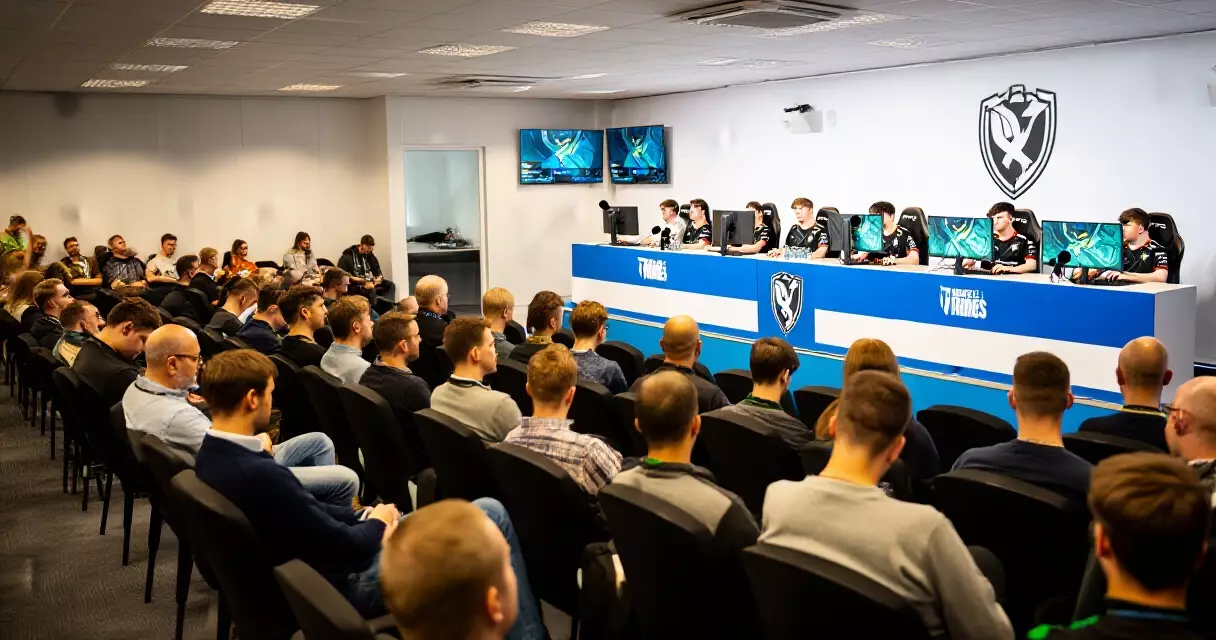
A detailed commentary on Riot’s evolving media-access model, documented via YouTube by a credentialed press member, noted that Riot’s shift from post-match one-on-ones to structured press-conference formats changed which questions could be asked and, consequently, which player identity narratives emerged. The commentator observed that organizer-controlled media days “structure access, questions, and interview opportunities” in ways that favor organizational narratives over individual player identity stories. This is a well-documented pattern in traditional sports journalism, but it operates with particular intensity in esports because publishers are simultaneously the game’s developer, the league’s operator, and often the broadcast rights holder — concentrations of control that have no direct parallel in traditional sports media.
Real-World Reporting Examples: Identity in Action
Understanding esports related identity news and reporting oriented identity example coverage is clearer with concrete cases. The following table maps identity type to a real reporting scenario drawn from well-documented 2025–2026 coverage patterns.
| Identity Type | Reporting Scenario | Key Editorial Decision | Example Outlet Type |
|---|---|---|---|
| Player identity | s1mple announces retirement from active CS2 roster play | Lead with legacy narrative vs. tactical team-impact analysis | Specialist esports press (Dot Esports, HLTV) |
| Team identity | Cloud9 acquires a new Valorant roster mid-season | Frame as rebuild vs. investment in growth | Sports-business press (The Esports Observer) |
| Regional identity | Korea sweeps Pacific bracket at VCT Champions 2026 | Contextualize as systemic infrastructure advantage vs. individual talent | Broadcast-adjacent coverage (VCT media, ESPN Esports) |
| Brand identity | Riot restructures LCS media-day access rules | Report as policy news vs. access-control critique | Press-freedom and industry commentary |
The Dual Identity Problem: Outlet as Team and Journalist as Fan
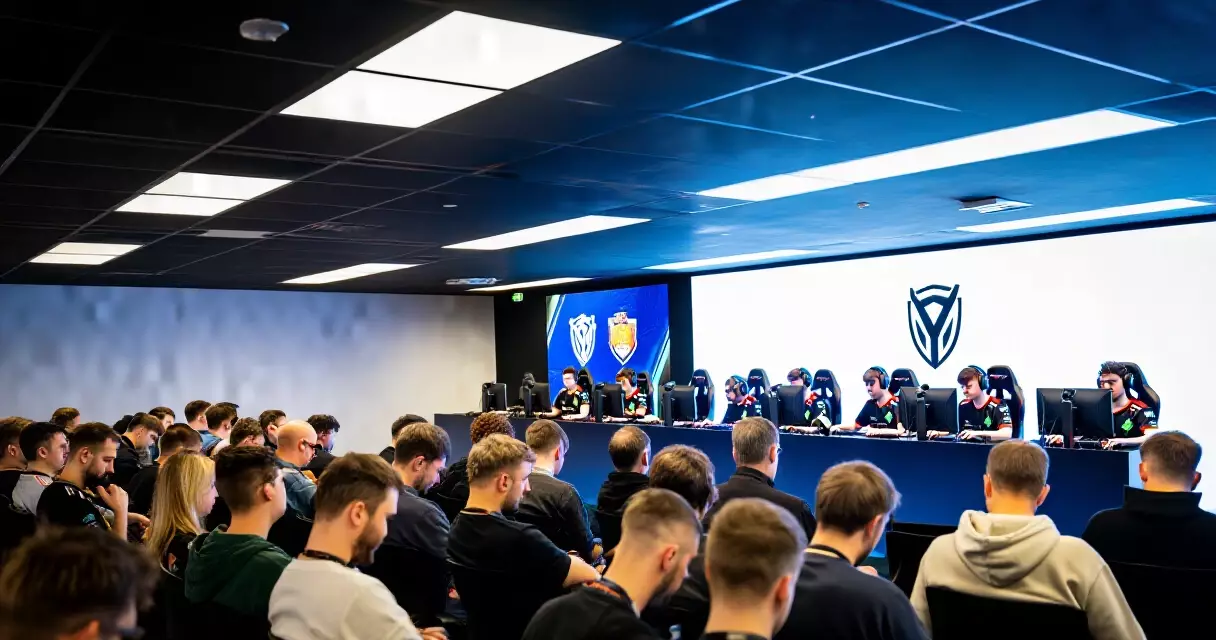
A distinctive feature of esports media identified in recent journalism research is the dual-identity tension: some esports outlets operate as both a news publication and a competitive team (team-owned media arms), and many esports journalists are themselves part of the fan community they cover. A July 2026 analysis from Krizek.tech describing “Esports News DualMedia” framed this as a platform that “cultivates trust through a rigorous commitment to transparent reporting” while operating with a “dual identity as both a competitive team and a news platform” — an arrangement with no clear parallel in mainstream sports journalism ethics.
This dual-identity structure creates both advantages and ethical complexities. Team-owned media arms have unparalleled access to player identity stories — they can publish exclusive interviews, behind-the-scenes content, and training insights. But they also face credibility questions when covering their parent organization’s competitive results or business decisions. Independent esports reporters, by contrast, often rely on the community insider networks documented in the Frontiers 2024 study, which gives them more editorial independence but more sourcing uncertainty.
Identity is not background in esports reporting — it is the story itself. Who a player is, what a team represents, and which region they come from determines whether a result registers as meaningful or forgettable.
How to Identify Identity-Driven Reporting: A Practical Framework
For readers, editors, and aspiring esports journalists, distinguishing identity-oriented reporting from purely results-oriented coverage requires attention to a few consistent signals. The following table outlines the structural markers of each approach based on published journalism guides and the Frontiers 2024 research framework.
| Reporting Dimension | Results-Oriented Coverage | Identity-Oriented Coverage |
|---|---|---|
| Headline focus | Score, winner, bracket position | Player/team narrative, context, meaning |
| Primary source | Official match data, broadcast stats | Player interviews, agent leaks, community insiders |
| Story timing | Post-match, immediate | Pre-match, transfer window, off-season |
| Key identity element | None (results speak for themselves) | Player persona, team brand, regional context |
| Audience assumption | Fans who watched the match | Fans who want to understand the scene |
| Byline type common | Staff reporter, data desk | Beat reporter with scene relationships |
Understanding player identity verification — a related but distinct concept — is also increasingly relevant to how player identities are confirmed in official competition contexts. Verification systems ensure the player identity being reported on is actually the person competing, particularly in online qualifiers where esports player identity verification has become a structural requirement at the tournament level.
Frequently Asked Questions
What does “esports related identity” mean in a journalism context?
In journalism, esports related identity refers to the set of characteristics — player persona, team brand, regional affiliation, publisher or sponsor alignment — that reporters use to give competitive gaming events narrative meaning. Rather than reporting only scores, identity-oriented esports journalism explains who the competitors are and why their outcomes matter to a defined audience. This framing approach is now standard across outlets covering the scene professionally, from specialist publications to mainstream sports desks.
Why do esports reporters rely so heavily on insider sources for identity stories?
According to the Frontiers in Sports and Active Living 2024 study, official organizations and publishers typically delay public announcements of transfers and roster moves for strategic or contractual reasons. This creates an information gap that unofficial insiders — agents, former teammates, community figures — fill. Reporters who cultivate these networks can break identity-defining stories (who is moving, why, what it means for a team) well ahead of official confirmation, which is the primary competitive advantage of experienced esports beat journalists.
How do publishers like Riot Games influence player identity narratives in media coverage?
Publishers control media-day formats, press-conference structures, and broadcast rights, which directly determines which player identity angles are surfaced in coverage. When Riot shifted from one-on-one post-match interviews to structured press conferences, it changed which questions could be asked and which player narratives could be explored. Independent reporters respond by developing alternative sourcing — social media, community networks, direct player relationships — to supplement what publisher-controlled access provides.
What is the difference between a player profile and match report in terms of identity coverage?
A match report anchors identity to a specific performance — clutch plays, stat lines, in-game decisions — while a player profile explores the background, motivation, and context that make a competitor meaningful beyond a single event. As the Daily Mail’s esports desk noted, match reports typically generate lower readership than features and interviews, suggesting audiences engage more deeply with identity narratives than with results documentation alone. Both formats are necessary, but identity-driven features tend to have longer shelf life and broader appeal.
How does regional identity affect international tournament coverage?
Regional identity gives international matchups narrative stakes that pure competitive rankings cannot provide. When a Korean team faces a North American squad at a major, the regional identity frame draws on years of coverage establishing each region’s playstyle, infrastructure, and historical performance. According to the German journalism study reviewed in Nomos E-Library (2024), esports reporters explicitly place players and tournaments in a “sport-political context” that includes regional significance — making regional identity not just a cultural feature but an editorial tool for making results legible to local audiences.
What ethical considerations apply to esports outlets that have a dual identity as both team and media organization?
The dual-identity structure — where an esports outlet also operates as or is owned by a competitive team — creates standard journalistic conflicts of interest: the outlet may have privileged access to its parent team while being commercially motivated to present that team favorably. Readers and industry observers assess credibility by looking for disclosure practices, separation between editorial and team operations, and whether the outlet covers its parent organization’s negative results with the same rigor it applies to competitors. The emerging industry norm, as of 2026, is explicit disclosure rather than structural separation.
Key Takeaways
- Esports related identity news and reporting oriented identity example coverage organizes competitive gaming stories around four dimensions: player persona, team brand, regional affiliation, and publisher/commercial identity.
- According to peer-reviewed research published in Frontiers in Sports and Active Living (2024), insider transfer sourcing is structurally central to the esports reporting beat, making player identity the most frequently reported-on identity dimension.
- Publisher-controlled media access — press conferences, media days, broadcast rights — directly shapes which identity narratives reach audiences, creating a structural dynamic that independent reporters compensate for through alternative sourcing.
- Regional identity framing is an editorial tool, not just a cultural observation: it makes international results legible to local audiences and serves commercial functions for tournament organizers.
- As of July 2026, esports identity reporting is recognized as a distinct journalism beat, covered by specialized outlets like Dot Esports, The Esports Observer, and dedicated desks at mainstream sports publications.
Sources
- Frontiers in Sports and Active Living — The role played by insider transfer information in esports coverage (2024) — Retrieved July 29, 2026
- Journalism.co.uk — The rise of esports: Why the Daily Mail hired a full-time reporter to cover live video gaming — Retrieved July 29, 2026
- Nomos E-Library — Medien & Kommunikationswissenschaft: Esports journalism in Germany (2024) — Retrieved July 29, 2026