

Summary
✓Reviewed by Emma Thompson How a selfie-based identity check is changing esports player verification is no longer a theoretical question — it is the operational reality at platforms hosting millions of competitive players worldwide. By combining a real-time selfie with...
Table of contents
- 1 What Selfie-Based Identity Verification Actually Means for Esports
- 2 How the Technology Evolved: From Password Checks to Biometric Proofing
- 3 FACEIT’s Selfie Verification Workflow: A Real-World Case Study
- 4 How Liveness Detection Closes the Spoofing Gap
- 4.1 Active vs. Passive Liveness
- 4.2 Deepfake Defense as a Design Requirement
- 5 Selfie Checks and the Fight Against Smurfing and Ban Evasion
- 6 Comparing Verification Approaches: What the Data Shows
- 7 Age Verification and Identity Proofing: Where the Two Converge
- 8 Privacy Considerations and Data Minimization
- 9 Operator Verification Comparison: Daon, Jumio, Yoti, and the Competitive Landscape
- 10 What Comes Next: Re-Authentication and Tournament-Level Identity Checks
- 11 Key Takeaways for Players, Operators, and Observers
- 12 Frequently Asked Questions
- 12.1 Why does esports need selfie-based identity verification at all?
- 12.2 How does a selfie match an ID document?
- 12.3 What is liveness detection and why is it necessary?
- 12.4 Does selfie verification store biometric data permanently?
- 12.5 Can a player fail verification due to lighting or camera quality?
- 12.6 Will selfie verification become mandatory across all major esports platforms?
- 13 Sources
How a selfie-based identity check is changing esports player verification is no longer a theoretical question — it is the operational reality at platforms hosting millions of competitive players worldwide. By combining a real-time selfie with a government-issued ID scan and liveness detection, organizers and platforms can now confirm within minutes that the person registering is the person on the document, binding each competitive account to a single verified human. The shift represents one of the most consequential overhauls to competitive gaming infrastructure in the past decade.
What Selfie-Based Identity Verification Actually Means for Esports
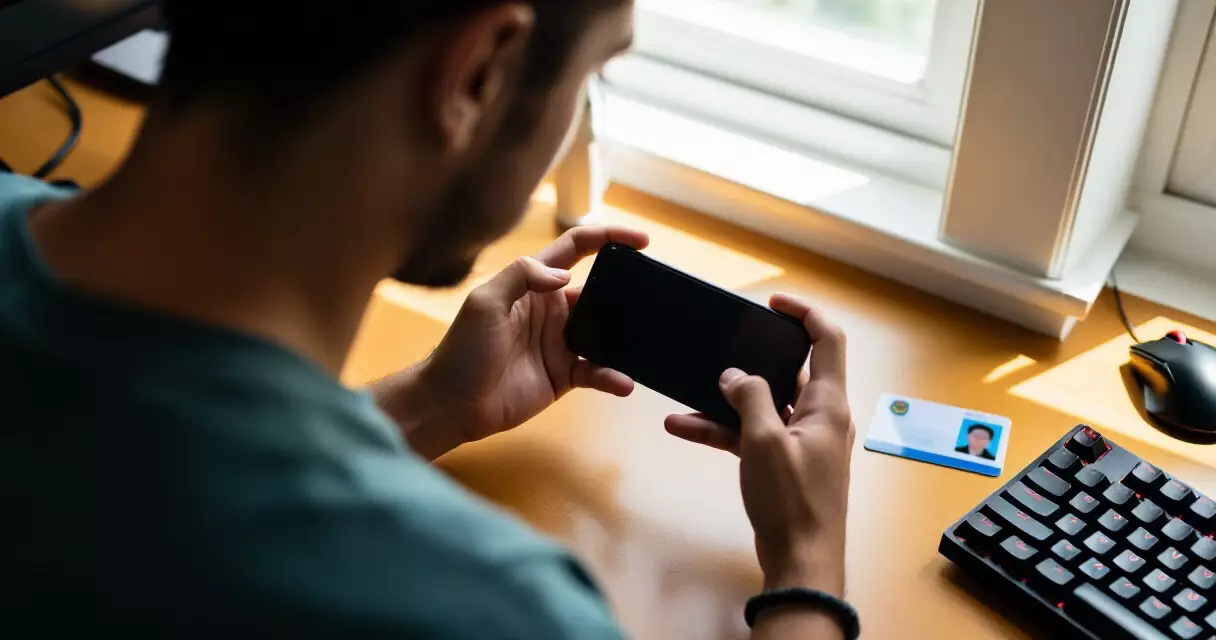
The phrase “selfie check” can sound lightweight, but the underlying process is substantially more rigorous than a simple photo upload. As described by Ondato, modern identity verification for gaming platforms follows a structured three-step flow: document capture (the player photographs a passport, national ID card, or driver’s license), biometric matching (the player takes a selfie that an AI algorithm compares against the document photo), and liveness detection (the system confirms a real, present person rather than a printed photo or a replay video). All three steps happen inside a single mobile or browser session, typically in under two minutes.
The reason all three steps are necessary is that any single step alone is insufficient. A document scan can be stolen; a static selfie can be spoofed with a photograph; only the combination of both, cross-checked with a liveness signal, closes the most common fraud vectors simultaneously. According to Security Magazine, when identity proofing includes matching against existing document data, it becomes fast and frictionless while still providing meaningful security — precisely the balance competitive gaming platforms need to retain players at registration.
How the Technology Evolved: From Password Checks to Biometric Proofing
Esports identity verification began modestly — email confirmation and self-reported birthdays were the norm through most of the 2010s. Platforms moved to phone-number SMS verification around 2017–2019, which reduced duplicate accounts but did nothing to confirm that the number holder was the same person creating the account. The introduction of government-ID document scanning, pioneered in regulated online gaming contexts, marked the first real inflection point. Selfie-based facial biometrics arrived as the next layer: once document OCR became reliable enough to extract face photos automatically, matching those photos against a live selfie became computationally trivial and commercially viable. By 2025, the combination of document scan plus selfie plus liveness was already the dominant model recommended by vendors including Regula Forensics for regulated gaming onboarding.
FACEIT’s Selfie Verification Workflow: A Real-World Case Study
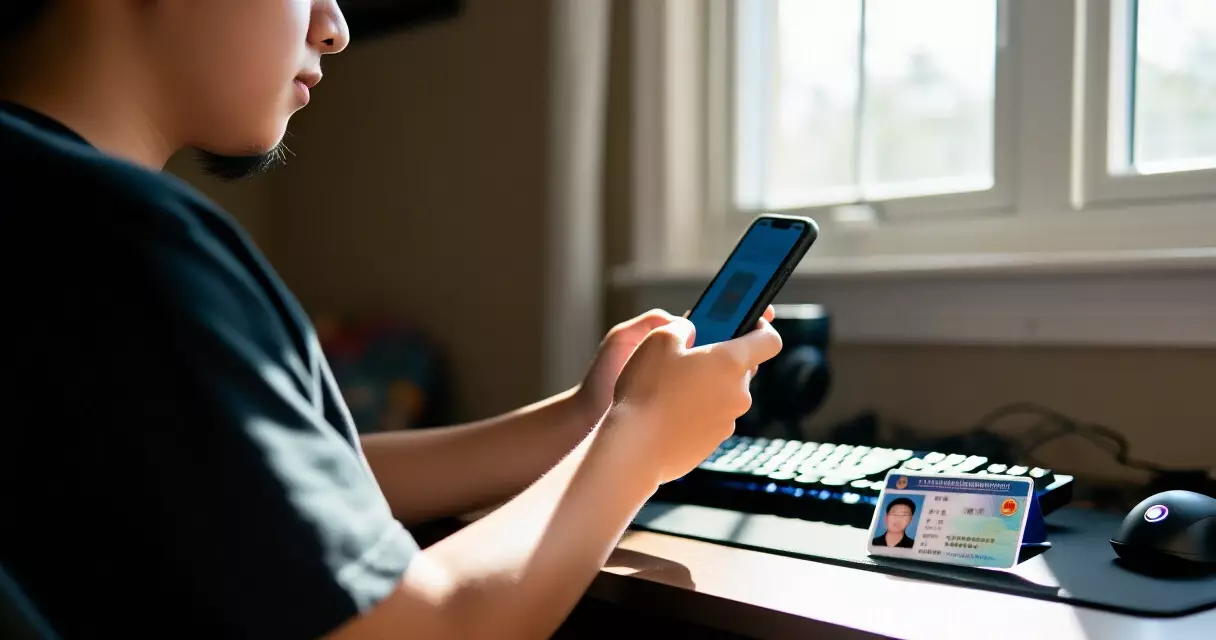
FACEIT, one of the largest competitive gaming platforms for PC titles including CS2 and Valorant, offers the clearest public example of selfie-based player verification deployed at competitive scale. According to FACEIT’s official verification documentation, the process works as follows: the player scans a QR code, captures a selfie, scans a government-issued ID document, and receives a verification badge upon approval. The platform’s stated purpose is explicit — to ensure that each account, statistic, and ranking corresponds to a real player under their own identity. Verification is free and uses technology from Daon, a digital identity provider with, according to Daon’s own materials, 20 years of experience in the digital identity industry.
The FACEIT model illustrates why selfie checks matter beyond simple anti-fraud: when an account is verifiably tied to one real person, the competitive record of that account becomes trustworthy. A ban means something, a ranking means something, and a statistic means something — because they cannot be circumvented simply by creating a new email address.
How Liveness Detection Closes the Spoofing Gap
Liveness detection is the component that separates robust selfie verification from a trivially defeated photo check. Without it, a fraudster could hold up a printed photograph of someone else’s ID photo and pass the biometric match. Liveness detection forces the system to confirm that the face captured is a live, present human rather than an artifact.
Active vs. Passive Liveness
Two main liveness approaches exist. Active liveness asks the user to perform an action — blinking, turning their head, or reading a code — to confirm presence. Passive liveness, as described by RealEyes in its July 2026 analysis of esports player verification, uses subtle signals in a standard selfie (texture, depth cues, lighting inconsistencies) to determine whether a real person is present, without asking the user to do anything extra. Passive liveness is gaining emphasis in gaming contexts precisely because it preserves fraud-detection value while reducing user effort — a meaningful consideration when operators are trying to keep registration drop-off rates low.
Deepfake Defense as a Design Requirement
By 2026, deepfake and synthetic-media attacks have moved from theoretical concern to design requirement. According to Facephi’s gaming identity verification documentation, passive liveness detection is now marketed explicitly as a defense against deepfakes and presentation attacks — not just against printed photographs. The implication for esports operators is clear: liveness systems need to be continuously updated as generative AI tools improve, because the threat model evolves faster than static rules can track.
Selfie Checks and the Fight Against Smurfing and Ban Evasion
Smurfing — where a high-skill player creates a secondary account to compete against lower-ranked opponents — and ban evasion are among the most persistent integrity problems in competitive gaming. Both depend on the same vulnerability: the ease of creating a new account. Selfie-based identity verification directly attacks that vulnerability by tying account creation to a government-issued document and a live biometric. According to Security Magazine’s reporting on esports identity proofing, a verified player may also be asked to re-authenticate at certain transaction points, such as entering a specific tournament or high-stakes match, by capturing another selfie — adding a re-verification layer that confirms the same person who registered is the one competing.
The downstream effects are significant. Ranked ladder integrity improves when every account represents one real person. Tournament organizers gain confidence that a qualifier result reflects genuine skill rather than a secondary account. Prize money flows to who actually earned it. For coverage of how the Esports World Cup 2026 has approached player eligibility frameworks at its Paris event, the intersection of identity standards and prize integrity is already playing out at the highest competitive levels.
Comparing Verification Approaches: What the Data Shows
| Verification Method | Fraud Risk | Friction Level | Competitive Integrity Value |
|---|---|---|---|
| Email + password only | Very high | Very low | Minimal |
| SMS / phone verification | High | Low | Low |
| Document scan only | Moderate | Moderate | Moderate |
| Selfie + document + liveness | Low | Low to moderate | High |
| Face-only (no document) | Low to moderate | Very low | Moderate |
Source: Method characterizations drawn from vendor documentation published by Ondato (2024–2026) and RealEyes (July 2026). Friction and risk ratings are qualitative summaries, not quantitative scores.
Age Verification and Identity Proofing: Where the Two Converge
Selfie verification in gaming serves two overlapping functions: confirming who someone is, and confirming how old they are. The two are increasingly handled by the same technical flow. According to Yoti, a widely used age-verification provider in the gaming sector, AI analysis of a selfie can determine whether a real person is behind the camera and whether that person is the right age for the service — all without storing unnecessary personal data. This convergence matters for esports because competitive titles frequently have age ratings, and some prize structures involve legal financial instruments (prize checks, wire transfers) that require the recipient to meet minimum age thresholds.
In the United States, the regulatory picture is fragmented. According to a 2026 compliance guide published by DeepIDV, states including New Jersey, Pennsylvania, and Michigan require identity verification at registration for online gaming, and new legislation has expanded these requirements to additional states. While these rules target licensed gambling operators rather than competitive esports platforms, they are shaping the technical standards that esports-adjacent verification vendors build toward — and the expectations operators and players bring into the competitive scene.
Privacy Considerations and Data Minimization
Biometric data collected during selfie verification is among the most sensitive personal data a platform can hold. How long facial images and biometric templates are retained, who has access to them, and under what legal basis they are processed are questions that players and regulators are asking with increasing urgency. RealEyes’ July 2026 analysis of esports player verification notes that privacy considerations depend heavily on how collection, retention, and whether verification can occur without storing biometric data long-term are handled — a tacit acknowledgment that best practice is to verify and discard, not verify and retain.
For competitive players considering whether to participate in a selfie verification program, the relevant questions are: Does the platform delete the raw selfie after the match is complete? Is the biometric template (the numerical representation of the face) stored separately from the account record? Can the player request deletion under applicable privacy law? Platforms that can answer these questions clearly — rather than burying the answers in dense terms of service — are better positioned to earn player trust. Esports news coverage of player identity standards, including our reporting on esports player identity verification, has tracked how this trust calculus is evolving.
Operator Verification Comparison: Daon, Jumio, Yoti, and the Competitive Landscape
| Vendor | Esports / Gaming Deployment | Liveness Capability | Notable Feature |
|---|---|---|---|
| Daon | FACEIT (confirmed) | Active and passive | Face-only proofing option for low-risk flows |
| Jumio | Gaming/gambling sector | Active and passive | Friendly-fraud reduction via ID + selfie pairing |
| Yoti | Gaming age-assurance | AI-based real-person check | Age estimation without document for lower-stakes checks |
| Ondato | Gaming platforms | Passive liveness detection | Structured three-step onboarding flow |
| Regula Forensics | Online gaming / gambling | Document + selfie + liveness | Progressive KYC escalation model |
Source: Vendor documentation from Daon, Jumio, Yoti, Ondato, and Regula Forensics, all accessed July 2026. Esports deployment claims reflect publicly documented implementations only.
When identity proofing ensures that each account, statistic, and ranking corresponds to a real player under their own identity, the leaderboard stops being a number and starts being a record.
What Comes Next: Re-Authentication and Tournament-Level Identity Checks
One-time registration verification is the current standard, but the industry is already moving toward re-authentication at specific competitive moments. Security Magazine’s reporting describes a model where a verified player is asked to capture another selfie before entering a high-stakes tournament or a match with prize implications — confirming that the registered account holder is the one sitting at the keyboard. This mirrors patterns already established in regulated financial services, where higher-value transactions trigger stronger authentication steps regardless of prior verification history.
Daon’s documentation describes two tiers of verification flow already available: a full identity verification path using a selfie plus ID document, and a lighter “face-only” proofing option for lower-risk scenarios. The existence of these tiers suggests operators will increasingly be able to calibrate verification intensity to competitive stakes — running lighter checks at open qualifier sign-up and heavier checks at championship registration. For players following the competitive scene closely, verification standards are becoming as much a part of how a tournament is structured as its bracket format or prize split. Our coverage of the Esports World Cup 2026 Week 4 events in Paris reflects how rapidly the structural side of competitive esports is professionalizing alongside verification standards.
Selfie capture appeared in fewer than 5% of reported fraud attacks — a figure that reflects not a weakness in the method, but evidence that its deterrent effect is working.
Key Takeaways for Players, Operators, and Observers
The shift to selfie-based identity verification in esports is not a single product decision by a single platform. It reflects a convergence of technical maturity (biometric matching and liveness detection at consumer scale), regulatory pressure (gaming identity laws in multiple U.S. states setting baseline expectations), and competitive integrity demands (smurfing, ban evasion, and match-fixing all depending on account anonymity). The platforms and operators that implement it thoughtfully — combining robust verification with clear data retention policies and player communication — stand to gain measurably in leaderboard credibility and community trust.
- Selfie-based identity verification combines document scan, facial biometric match, and liveness detection in a single onboarding session.
- FACEIT, using Daon technology, represents the most prominent public deployment in competitive gaming as of 2026.
- Passive liveness detection reduces user friction while maintaining meaningful fraud defense, including against deepfake attacks.
- According to RealEyes (July 2026), selfie capture appeared in fewer than 5% of reported fraud attacks — evidence of a deterrent effect.
- Age verification and identity proofing are converging into the same technical flow, with implications for both access control and prize-money compliance.
- Re-authentication at tournament entry is emerging as the next step beyond one-time registration verification.
- Privacy standards (data minimization, biometric retention limits) are the next major battleground for player trust in verification systems.
Frequently Asked Questions
Why does esports need selfie-based identity verification at all?
Competitive gaming has long struggled with smurfing (high-skill players using secondary accounts to play against lower-ranked opponents), ban evasion, and match-fixing, all of which depend on the ease of creating anonymous accounts. Selfie-based identity verification ties each account to a verified government-issued document, making it substantially harder to create a second account without a second identity. The result is a competitive environment where bans, rankings, and tournament results carry more weight.
How does a selfie match an ID document?
When a player submits their ID document, optical character recognition (OCR) software extracts the facial photograph embedded in it. An AI algorithm then compares the geometric features of that extracted face photo against the live selfie captured during registration. The comparison generates a similarity score; if the score meets the platform’s threshold, the match is approved. This process happens in seconds inside the mobile or browser session.
What is liveness detection and why is it necessary?
Liveness detection determines whether the face captured in a selfie belongs to a live, present person rather than a photograph, video replay, or synthetic image. Without it, a fraudster could defeat biometric matching simply by holding a printed photo of someone else’s ID photo up to the camera. Passive liveness systems detect subtle signals — texture, lighting, depth cues — that a still image or video frame does not reproduce authentically, blocking these presentation attacks without requiring the user to perform any action.
Does selfie verification store biometric data permanently?
This depends on the platform and the jurisdiction it operates under. Best practice, as noted in RealEyes’ July 2026 analysis, involves verifying and discarding raw biometric data rather than retaining it. Some platforms store only a numerical template (a mathematical representation of facial geometry) rather than the actual selfie image, and for a limited retention period. Players should review the platform’s privacy policy and data retention documentation, and in applicable jurisdictions can request data deletion under privacy law.
Can a player fail verification due to lighting or camera quality?
Yes. System guidance from Login.gov, which deploys selfie verification for U.S. government services, advises taking the selfie in a well-lit place while avoiding glare, with the entire face visible from chin to forehead and no coverings that are not also visible in the ID photo. If the selfie does not produce a sufficient match, users may be redirected to an alternative verification route. Gaming platforms typically offer similar fallback options or allow the player to re-attempt the capture.
Will selfie verification become mandatory across all major esports platforms?
The trend is clearly in that direction for high-stakes competitive play, though casual and non-prize platforms are unlikely to require it universally in the near term. Platforms hosting tournaments with prize money, ranked ladders tied to professional qualification, or regional representation have the strongest incentives to require full identity verification. As biometric technology becomes cheaper and faster, and as the competitive integrity benefits become better documented, voluntary adoption is likely to accelerate even without regulatory mandates.
Sources
- Security Magazine: The solution to esports’ identity problem is as simple as a selfie — Retrieved July 30, 2026
- FACEIT: The Verification Process (official support documentation) — Retrieved July 30, 2026
- RealEyes: Esports Player Verification for Competitive Gaming Platforms — Retrieved July 30, 2026
- Regula Forensics: Gambling and iGaming ID Verification: Best Practices — Retrieved July 30, 2026
- Login.gov: Take a selfie (U.S. federal identity verification guidance) — Retrieved July 30, 2026
- Ondato: Why Gaming Platforms Need Identity and Age Verification — Retrieved July 30, 2026
- Yoti: Age Verification for Gaming — Retrieved July 30, 2026
- DeepIDV: Age Verification for Online Gaming and Gambling 2026 — Retrieved July 30, 2026
- Daon: eSports: Identity Proofing is the Name of the Game — Retrieved July 30, 2026
- Facephi: Identity Verification for Online Gambling and Gaming — Retrieved July 30, 2026