
Summary
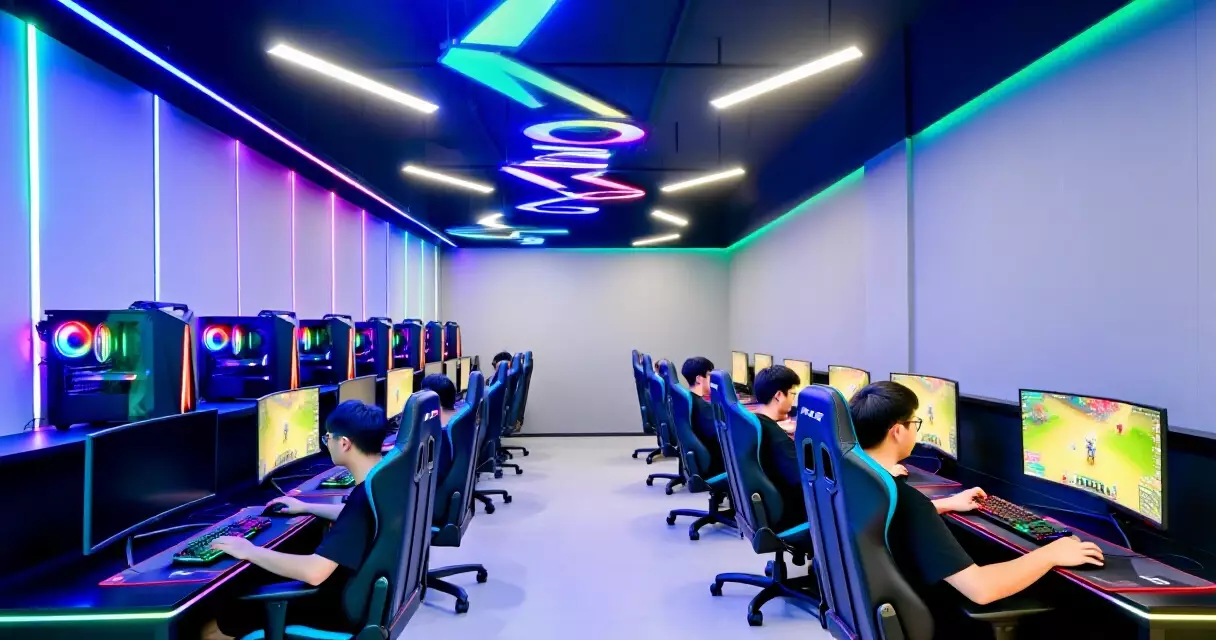
Walk into a 1337 Esports Center on a Friday evening and the picture is immediately clear: rows of high-refresh-rate monitors glowing blue, headsets hanging on pegboards, and a dozen players leaning into ranked matches while others queue for a LAN...
Table of contents
- 1 What Is 1337 Esports Center?
- 2 History and Background
- 3 Facilities and Hardware Setup
- 4 Pricing and Membership Options
- 5 Tournament Programming and Community Events
- 6 1337 Esports Center vs. Major Tournament Venues: A Direct Comparison
- 7 Pros and Cons
- 8 The Business Model Behind Community Venues
- 9 Who Should Visit 1337 Esports Center?
- 10 Overall Verdict and Ratings
- 11 Frequently Asked Questions
- 11.1 What games can you play at 1337 Esports Center?
- 11.2 Do you need a membership to use 1337 Esports Center?
- 11.3 How does 1337 Esports Center compare to playing at home?
- 11.4 Can you host a private event or birthday party at 1337 Esports Center?
- 11.5 What ages are allowed at 1337 Esports Center?
- 11.6 Does 1337 Esports Center run tournaments open to the public?
- 11.7 How does 1337 Esports Center fit into the broader esports venue landscape?
- 12 Sources
Walk into a 1337 Esports Center on a Friday evening and the picture is immediately clear: rows of high-refresh-rate monitors glowing blue, headsets hanging on pegboards, and a dozen players leaning into ranked matches while others queue for a LAN tournament bracket. According to the Entertainment Software Association’s 2024 Essential Facts report, roughly 212 million Americans play video games–and a growing subset of them want to do it together, in person, on gear they can’t afford at home. 1337 Esports Center has built a business around exactly that demand, positioning itself somewhere between a neighborhood gaming cafe and a purpose-built competitive arena. Whether it delivers on that promise depends heavily on what you’re looking for.
What Is 1337 Esports Center?
1337 Esports Center (the name is a nod to “leet,” hacker slang for elite) is a chain of walk-in esports gaming venues operating across the United States. Unlike broadcast arenas such as the Riot Games Arena in Los Angeles or the HyperX Esports Arena Las Vegas–venues designed around spectator seating, broadcast infrastructure, and tens of thousands of square feet–1337 locations are typically 3,000–8,000 square feet of playing floor. The model is closer to a premium gaming lounge than a stadium, with revenue driven by hourly PC rentals, private party bookings, and in-house tournament entry fees.
The chain has operated locations in states including Washington, Arizona, and Texas, often anchoring itself in suburban retail corridors where foot traffic is steady and the target demographic–teens and young adults aged 13–30–is dense. Staff double as referees and tech support, and most locations keep extended evening and weekend hours to capture the after-school and weekend-warrior crowd.
History and Background
The concept of the dedicated gaming lounge predates modern esports by decades–LAN centers were a fixture of the early 2000s, particularly in South Korea where PC bangs became a genuine cultural institution. Wikipedia documents that by 2000 South Korea had more than 15,000 PC bangs serving millions of daily players. In the United States the model struggled: broadband internet reached homes faster here than in Asia, and the value proposition of a shared gaming space weakened accordingly. Most early US LAN centers closed by 2010.
The esports boom of the mid-2010s rewrote that calculus. As competitive gaming moved onto broadcast platforms and prize pools grew, a new generation of players wanted to practice in genuine LAN conditions–low latency, consistent hardware, a social environment. Venues like 1337 Esports Center emerged in that window, differentiating from the old PC cafe model by emphasizing tournament infrastructure, curated peripheral lineups, and community programming rather than just cheap hourly rates. The chain’s branding explicitly targets competitive players, not casual customers killing time.
Facilities and Hardware Setup
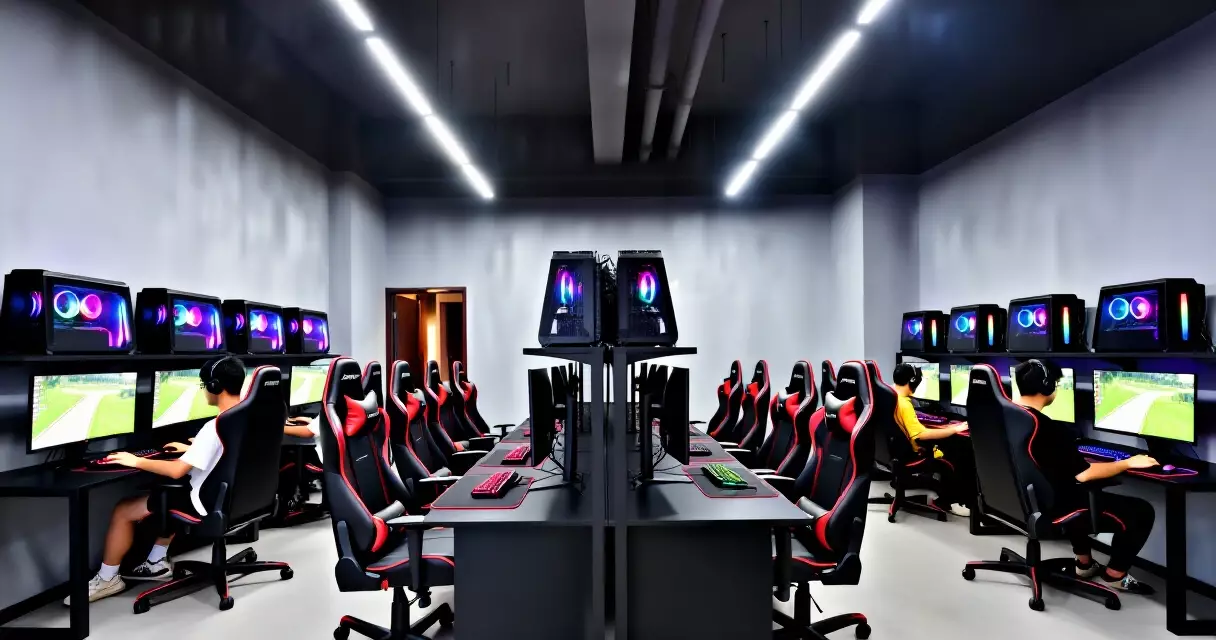
Hardware is where 1337 Esports Center stakes its core value claim. Stations are built around gaming-grade PCs–typically featuring NVIDIA GeForce RTX 30- or 40-series GPUs, Intel Core i7/i9 or AMD Ryzen 7/9 processors, and 16–32 GB of DDR5 RAM–paired with 144Hz or 240Hz IPS monitors from brands including BenQ and ASUS ROG. Peripherals rotate by partnership: you’ll commonly find SteelSeries keyboards and mice at the stations, and HyperX headsets on the rack.
Internet connectivity is a genuine differentiator at well-run esports venues. A fiber-backed symmetric gigabit connection, routed through managed switches with traffic shaping, eliminates the lag spikes that plague home connections. For games where a few milliseconds of ping variance determines whether a headshot registers–CS2, Valorant, Apex Legends–the LAN advantage is real. As our esports venue technology guide details, this network infrastructure represents one of the largest capital outlays for any venue operator.
Console stations–typically PlayStation 5 and Xbox Series X setups on large-format displays–are present at most 1337 locations, though they represent a smaller portion of the floor plan than PC rigs. VR stations have appeared at select locations as an additional draw, leveraging headsets like the Meta Quest 3 or Valve Index for walk-in experiences.
Pricing and Membership Options
1337 Esports Center uses a tiered pricing structure designed to reward loyalty. Walk-in customers pay the standard hourly rate–typically $5–$8 per hour depending on location and time of day (peak evening rates are higher). Members who purchase monthly plans receive a discounted per-hour rate and may get priority queue access or reserved booking windows. Private event packages bundle hours, food/beverage arrangements, and optionally a dedicated staff member for birthday parties, corporate team-building events, or private tournament brackets.
| Access Type | Typical Rate | Best For | Notes |
|---|---|---|---|
| Walk-in (off-peak) | $5–$6/hr | Occasional visitors | Weekday daytime slots |
| Walk-in (peak) | $7–$8/hr | Evening/weekend players | Friday–Sunday evenings |
| Monthly membership | $40–$60/mo | Regular grinders | Discounted hourly + perks |
| Private event (2 hrs) | $150–$300+ | Parties, team events | Minimum booking applies |
| Tournament entry | $10–$25/entry | Competitive players | Prize pool varies by event |
Compared to, say, a night at a bowling alley or a round of mini-golf, the hourly rate for gaming is competitive. The calculus changes when stacked against the cost of owning equivalent hardware at home–a PC capable of running modern titles at 240fps costs upward of $1,500–but for players who can’t justify that capital expenditure or who play infrequently enough that a venue makes financial sense, 1337’s pricing lands in a reasonable range.
“A monthly membership at 1337 makes economic sense the moment you’re logging more than eight hours of in-venue play per month–at that point you’re paying less per hour than a walk-in customer while playing on gear most home setups can’t match.”
Tournament Programming and Community Events
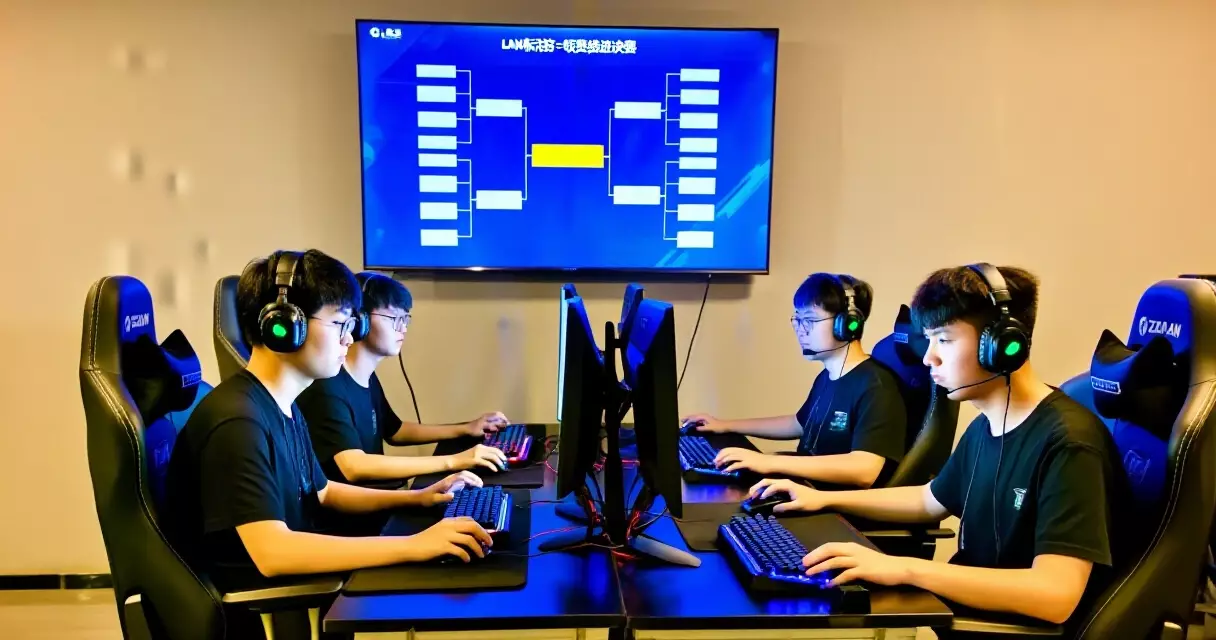
This is where 1337 Esports Center genuinely separates itself from a basic gaming lounge. The venue runs regular in-house tournaments across titles including Valorant, CS2, Street Fighter 6, Rocket League, and Super Smash Bros. Main. Entry fees are modest–typically $10–$25–and prize pools are funded by a percentage of the entry pool, occasionally supplemented by sponsor contributions from peripheral or energy drink brands.
These grassroots events matter for the local competitive scene in ways that major broadcast arenas don’t address. The Wikipedia overview of esports notes that the competitive gaming ecosystem runs from informal local play all the way up to million-dollar international championships–and community venues occupy a critical rung on that ladder. A player who first competes in a 1337 Smash Bros. bracket may eventually qualify for a regional or national event; the pipeline starts here.
Beyond tournaments, most 1337 locations host casual gaming nights, game release watch parties, and occasionally collegiate esports team scrimmages. Some locations have partnered with local high schools and universities to offer coaching sessions or serve as practice facilities for scholastic esports programs–a growing sector given that high school esports leagues now operate in more than 40 US states according to the High School Esports Association.
1337 Esports Center vs. Major Tournament Venues: A Direct Comparison
The honest framing for 1337 Esports Center is that it doesn’t compete with venues like the Blizzard Arena in Burbank or the Fusion Arena in Philadelphia–it occupies a completely different position in the ecosystem. Understanding that distinction is the key to evaluating it fairly.
| Feature | 1337 Esports Center | Major Tournament Venue (e.g., HyperX Arena LV) |
|---|---|---|
| Primary purpose | Walk-in community play + local events | Broadcast production + spectator events |
| Capacity | ~30–80 player stations | 300–1,500+ seats (spectator-focused) |
| Public access | Daily walk-in, pay-per-hour | Ticketed events only (some walk-in zones) |
| Tournament scale | Local/regional (10–128 players) | National/international (hundreds to thousands) |
| Broadcast infrastructure | Basic or none | Full studio: LED walls, broadcast cameras, caster desks |
| Food & beverage | Snack bar or vending | Full concessions, sometimes alcohol |
| Typical cost to attend | $5–$8/hr walk-in | $20–$80+ per event ticket |
| Atmosphere | Casual-competitive, social | Spectacle-oriented, event-driven |
If you want to watch a live Valorant Champions Tour match with a crowd of thousands, 1337 isn’t the destination. If you want to grind ranked Valorant for three hours with a stable LAN connection, then meet up with your squad afterward, 1337 wins handily over most alternatives. Our 2026 esports venues guide covers both ends of the spectrum–it’s worth reading if you’re evaluating which type of venue suits your needs.
Pros and Cons
After assessing 1337 Esports Center across hardware, pricing, programming, and atmosphere, here’s how the ledger reads:
| Pros | Cons |
|---|---|
| High-spec gaming PCs unavailable at most home setups | No spectator seating for large events |
| LAN-grade network with managed routing | Noise levels can be high during peak hours |
| Active local tournament calendar | Location availability varies–not nationwide |
| Social, community-first atmosphere | Hourly costs add up quickly for long sessions |
| Flexible walk-in model–no reservation required for open play | Food options typically limited to snacks/drinks |
| Scholastic and team practice partnerships | Hardware refresh cycles can lag at some locations |
| Private event packages with staff support | Weekend evenings often crowded–wait times possible |
“1337 Esports Center isn’t trying to be Riot Games Arena–and that’s exactly the point. The community esports venue and the broadcast stadium serve different audiences, and conflating them produces a bad review of both.”
The Business Model Behind Community Venues
Understanding how 1337 makes money illuminates both its strengths and its constraints. Walk-in hourly revenue is the backbone, but it’s the private events and memberships that stabilize cash flow month to month. As we break down in our piece on how esports venues make money, the margin on hourly PC rentals is thin once you factor in electricity, hardware depreciation, and staffing–private events and food/beverage are where the numbers improve.
This creates an incentive structure that community players feel directly. Tournament programming stays grassroots in scale because large prize pools require broadcast sponsorship dollars that most local venues can’t attract. Hardware refresh cycles are driven by capital availability, not by a pure desire to keep stations current. Staff quality is variable because wages at independent retail-adjacent venues are constrained. None of these are unique to 1337–they’re structural realities for any community gaming venue operator, as documented in industry analyses from sources like the Statista Esports overview.
Who Should Visit 1337 Esports Center?
The answer is fairly specific, and that specificity is useful. 1337 Esports Center is well-suited for:
- Competitive players without high-end home setups who want to practice on tournament-grade hardware and a stable LAN connection.
- Social gamers who want a venue to gather with friends for an evening session–think of it as a bowling alley for your generation.
- Local tournament participants looking for grassroots brackets where a $15 entry fee can yield real competitive experience.
- Scholastic esports teams that need a practice facility outside school hours.
- Private event organizers–birthday parties, team-building, or brand activations that want a gaming theme without renting a stadium.
It’s less suited for:
- Fans who want to watch a major esports event live–a broadcast arena like those covered in our ranking of the world’s best esports arenas is the right destination.
- Professional teams seeking bootcamp facilities with full production infrastructure.
- Anyone who already owns a competitive gaming PC and has fiber internet at home–the value proposition weakens substantially for that profile.
Overall Verdict and Ratings
| Category | Score (out of 10) | Notes |
|---|---|---|
| Hardware quality | 8/10 | Competitive-grade PCs and peripherals; refresh varies by location |
| Network infrastructure | 8/10 | Fiber LAN is a genuine advantage over home play |
| Pricing value | 7/10 | Fair for occasional visitors; memberships improve economics |
| Tournament programming | 7/10 | Active local calendar; scale is grassroots by necessity |
| Atmosphere | 8/10 | Social, community-forward; noise can be an issue at peak |
| Event production | 5/10 | Not designed for broadcast or large spectator events |
| Accessibility / location | 6/10 | Suburban-centric; not in every major metro |
| Overall | 7/10 | Strong community venue; wrong venue for spectacle events |
Rated as a community esports venue–which is exactly what it is–1337 Esports Center earns a solid 7 out of 10. The hardware is legitimately good, the LAN environment is a real competitive asset, and the tournament calendar keeps things interesting beyond simple walk-in play. The gaps are structural: no broadcast infrastructure, limited food options, and location coverage that doesn’t reach every city. For what it sets out to do, though, it does it well.
Frequently Asked Questions
What games can you play at 1337 Esports Center?
1337 Esports Center stations come pre-loaded with a broad library of competitive and casual titles. You’ll consistently find Valorant, CS2, League of Legends, Apex Legends, Rocket League, and Fortnite available on the PC rigs, along with fighting game titles like Street Fighter 6 and Tekken 8 on dedicated console setups. Most locations also keep casual and couch-co-op titles available for console stations. The library is updated periodically, and staff can typically install specific titles on request if they’re within the existing license agreements. VR stations, where present, run a rotation of popular SteamVR and Meta Quest titles. The best practice before visiting is to check the location’s specific page or social media feed, as library availability can vary between individual venues.
Do you need a membership to use 1337 Esports Center?
No membership is required for walk-in access. Any customer can show up during operating hours, pay the standard hourly rate at the front desk, and be seated at an available station. That said, a monthly membership is worth calculating against your expected usage: most locations offer members a reduced per-hour rate (sometimes 20–30% below walk-in pricing) along with perks like priority queuing during busy windows, discounts on tournament entry fees, and exclusive member-only events. For anyone planning to visit more than two or three times a month, the membership quickly pays for itself. Annual membership options, where available, offer further savings. Memberships are typically tied to a single home location, though some multi-location chains offer cross-location access at a premium tier.
How does 1337 Esports Center compare to playing at home?
The comparison depends almost entirely on what you have at home. If your home setup is a mid-range PC with a 60Hz monitor and a standard cable internet connection, 1337 Esports Center’s 240Hz displays and gigabit fiber LAN will feel like a genuine upgrade–and you’ll likely notice the difference in games where frame rate and ping directly affect performance, such as CS2 or Valorant. If you already own a high-end rig with a 240Hz monitor and fiber internet, the gap narrows significantly, and the main reasons to visit become social (playing with friends) or competitive (local tournament access). The LAN environment also eliminates home distractions and network interference from other household devices, which some competitive players find valuable even if their raw specs are comparable.
Can you host a private event or birthday party at 1337 Esports Center?
Yes–private event booking is one of the core revenue streams for 1337 locations and typically one of the better-organized offerings. Packages generally include a reserved block of stations for a minimum of two hours, a dedicated staff member, and optional add-ons like custom tournament brackets, decoration assistance, and food/beverage arrangements. Pricing scales with the number of stations and the duration; a basic eight-person birthday party booking usually starts around $150–$200, while larger corporate or team-building events can run significantly higher. Booking lead time of at least one to two weeks is recommended for weekend dates, which fill quickly. The private event model is especially popular for ages 10–18 birthday parties and corporate team-building activities where gaming is the chosen activity–something covered in our look at how esports venues are designed and built.
What ages are allowed at 1337 Esports Center?
Most 1337 Esports Center locations are all-ages venues, though specific policies vary. Walk-in players under 18 typically require parental consent at registration–either a parent accompanying them for the first visit or a signed waiver on file. Some locations have age restrictions for late-night hours (generally after 10 or 11 PM on weekends), at which point they may require players to be 18 or older. This is consistent with general venue practice and is driven by both legal liability considerations and the character of the late-night customer mix. For minors planning to visit solo during daytime or early evening hours, calling ahead to confirm the local policy is recommended since rules differ slightly between franchised and independently operated locations.
Does 1337 Esports Center run tournaments open to the public?
Yes, and this is one of the strongest reasons to consider a 1337 membership if you’re a competitive player. Public tournaments are a regular feature at active 1337 locations, typically running weekly or bi-weekly across popular competitive titles. Entry fees are kept accessible–usually $10–$25 per player–and prize pools are funded by a portion of the entry pool, sometimes augmented by local sponsor contributions. Tournament formats vary: some events use standard double-elimination brackets, while others run Swiss-system formats to maximize the number of matches each player gets. Registration is generally first-come-first-served with caps per event. Following the venue’s social media accounts or Discord server (where available) is the most reliable way to stay ahead of upcoming brackets, since schedules often get posted two to three weeks in advance.
How does 1337 Esports Center fit into the broader esports venue landscape?
1337 Esports Center occupies the community tier of a clearly stratified market. At the top sit broadcast arenas like the HyperX Esports Arena Las Vegas and the Riot Games Arena–purpose-built for live spectacle, television production, and major prize pool events. Below that are mid-tier regional venues that blend public gaming access with event hosting. At the grassroots level, community venues like 1337 serve the player-participant rather than the fan-spectator. The major esports arenas article on this site covers the upper tier in depth. For players interested in the full picture of where competitive gaming happens–from bedroom streams to 20,000-seat stadiums–the 2026 guide to esports venues maps the entire landscape. 1337’s value is precisely that it makes the competitive pipeline accessible at the local level, not that it aspires to replace any of those larger venues.
Sources
- Entertainment Software Association – 2024 Essential Facts About the Video Game Industry
- Wikipedia – PC bang (history of LAN gaming cafes)
- Wikipedia – Esports (competitive gaming ecosystem overview)
- Statista – Esports industry data and market overview
- High School Esports Association – Scholastic esports program data
Top Esports Organizations 2026: Teams, Rosters, and Performance Rankings