
Summary
When YouTube reportedly paid $160 million for a three-year exclusivity deal covering Activision Blizzard's Overwatch League, Call of Duty League, and Hearthstone Championship Tour, it was the most discussed media-rights package in esports history (GamesIndustry.biz, 2020). That deal, the antitrust...
Table of contents
- 1 How Activision Blizzard Built Its Esports Rights Empire
- 2 The YouTube Deal: Structure, Scope, and Performance Clauses
- 3 IP Ownership and the Publisher-as-Rights-Holder Model
- 4 Community Competition Licensing: The Floor Below the Franchise
- 5 The DOJ Antitrust Case: When Media Rights Meet Labor Law
- 6 Media Rights Deal Comparison: Activision Blizzard vs. Other Publishers
- 7 Revenue Distribution and Team Economics
- 8 Specs and Rights Structure at a Glance
- 9 Pros and Cons of the Activision Blizzard Rights Model
- 10 Lessons for the Broader Esports Rights Market
- 11 Frequently Asked Questions
- 11.1 Who owns the media rights to Overwatch League and Call of Duty League broadcasts?
- 11.2 How much did YouTube pay for Activision Blizzard esports rights?
- 11.3 Why did the Department of Justice sue Activision Blizzard over esports?
- 11.4 What is the Competitive Balance Tax in esports?
- 11.5 How do Activision Blizzard’s community competition rules affect small event organizers?
- 11.6 How does Activision Blizzard’s rights model compare to Riot Games?
- 11.7 What happened to the Overwatch League and Call of Duty League?
- 11.8 Are esports media rights deals different from traditional sports broadcasting contracts?
- 12 Sources
When YouTube reportedly paid $160 million for a three-year exclusivity deal covering Activision Blizzard’s Overwatch League, Call of Duty League, and Hearthstone Championship Tour, it was the most discussed media-rights package in esports history (GamesIndustry.biz, 2020). That deal, the antitrust lawsuit that followed it, and the eventual Department of Justice settlement together form one of the clearest case studies in how publisher-controlled media rights can shape – and sometimes distort – an entire competitive ecosystem. This review unpacks every layer: deal structure, rights ownership, broadcast mechanics, regulatory fallout, and what it means for teams, players, and viewers.
How Activision Blizzard Built Its Esports Rights Empire
Activision Blizzard did not stumble into the esports rights business – it engineered it deliberately. The company’s acquisition of Major League Gaming (MLG) in January 2016 for a reported $46 million was the first major signal (Activision Blizzard investor filing, 2016). MLG brought in-house production infrastructure, online streaming technology, and a decade’s worth of live-event experience that Activision could repurpose for its own titles.
From that foundation, Activision Blizzard launched the Overwatch League in 2018 as a city-franchise model explicitly modeled on traditional North American sports leagues. Team slots reportedly sold for between $20 million and $60 million each. The league promised franchise owners a share of net revenues from advertising, ticket sales, and broadcast rights – a structure disclosed when the league’s plans were first unveiled in 2017 (Yahoo Finance / Activision Blizzard announcement, 2017).
The YouTube Deal: Structure, Scope, and Performance Clauses
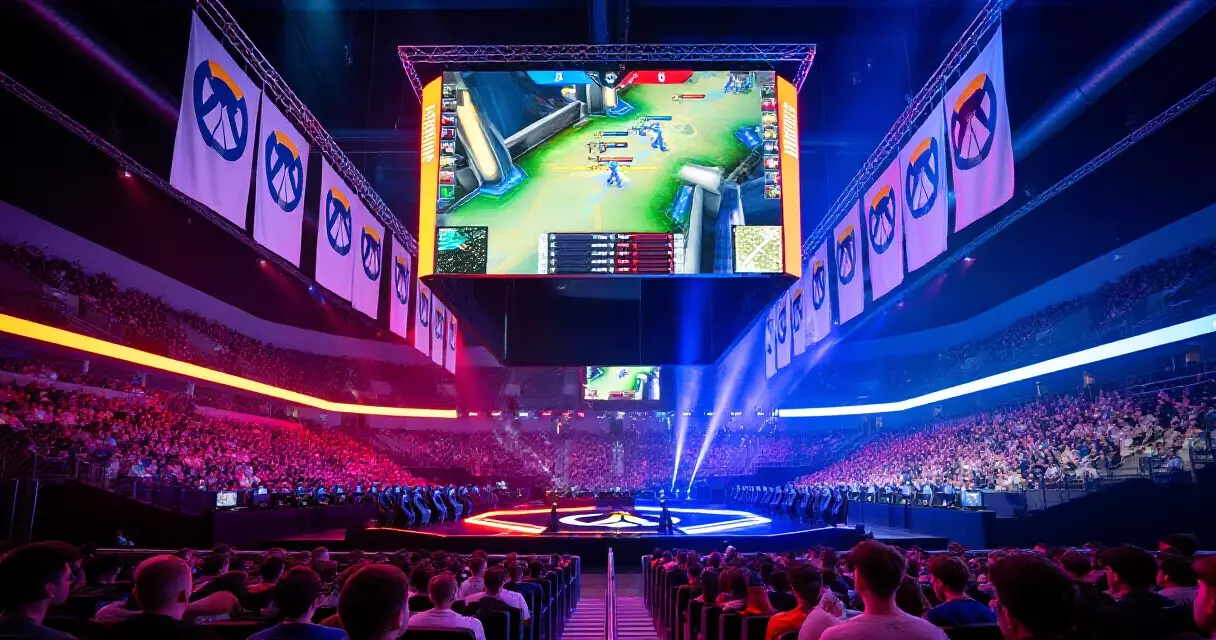
The reported $160 million YouTube agreement stands as the defining financial event in Activision Blizzard’s media-rights history. According to multiple sources cited by Esports Observer and reported by GamesIndustry.biz, the deal covered three Activision Blizzard titles – the Overwatch League, the Call of Duty League, and the Hearthstone Championship Tour – under a single multi-title exclusivity umbrella. The earlier Overwatch-only deal had already cost YouTube roughly $90 million across two seasons, meaning the expanded package represented a modest per-title efficiency for the platform.
One structurally significant detail: the expanded deal reportedly included incentive clauses tied to viewership targets and advertising sales. That makes it one of the first major esports rights packages to function partly on a KPI-linked basis rather than a simple flat fee. From a rights-valuation perspective, this matters because it shifts some of the financial risk back onto the rights holder – in this case, Activision Blizzard – if viewership underperforms against benchmarks.
For viewers, YouTube exclusivity meant all official Overwatch League and Call of Duty League content was gated to a single platform. Fans accustomed to watching on Twitch had to migrate, a friction that generated measurable viewer drop-off in early OWL seasons and became a frequently cited criticism of publisher-controlled exclusivity arrangements. For a deeper look at how platform exclusivity shapes viewer behavior across the industry, see our comparison of Twitch vs YouTube vs ESPN for esports streaming rights.
IP Ownership and the Publisher-as-Rights-Holder Model
Understanding any Activision Blizzard media deal requires understanding why the company had the use to command those numbers in the first place. The answer is intellectual property law. As ESPN’s analysis of esports broadcasting rights explains, game publishers own the underlying games and therefore control access to competitive play – including who may stream or broadcast it (ESPN, 2016, updated 2025). There is no equivalent to a sports league’s collective rights structure where teams can negotiate independently of a game maker.
In Activision Blizzard’s model, the company did not merely license the right to broadcast matches – it owned the league outright. The Overwatch League and Call of Duty League were Activision Blizzard properties. Teams were licensees paying for the right to operate a franchise, not co-owners of a shared media asset. This means every broadcast deal, every streaming contract, and every sponsorship agreement at the league level flowed through Activision’s approval. That is a fundamentally different structure from, for example, the NFL or NBA, where the league itself is governed by team owners.
“Because publishers own the underlying game, they control the competitive ecosystem and broadcast rights from the ground up – a use point that has no direct parallel in legacy sports.”
For context on how this compares to a third-party tournament operator’s approach, see our review of ESL FACEIT Hub media rights, where a non-publisher rights model creates a very different set of commercial constraints and opportunities.
Community Competition Licensing: The Floor Below the Franchise
Not everyone interacting with Activision Blizzard’s esports ecosystem operates at the OWL or CDL level. Below the flagship franchises, Blizzard maintains a Community Competition License that governs grassroots tournament organizers, small-scale broadcasters, and community event producers. The terms of that license reveal how tightly the publisher controls even the lower rungs of its competitive pyramid.
Under the current Blizzard Community Competition License, the total sponsor contribution across all sponsors in any covered competition cannot exceed $25,000. Cumulative revenues across all events within a 12-month period cannot exceed $100,000. Streaming and broadcast platforms involved with an event may not pay the organizer more than $25,000 in any form (Blizzard.com/legal, 2024). Any association with gambling, daily fantasy sports, cryptocurrencies, or NFTs is prohibited outright – meaning a community tournament organizer cannot accept a sponsor from those categories regardless of deal size.
These caps create a hard ceiling on the commercial viability of grassroots Blizzard esports. For aspiring organizers, the license is essentially a permission-to-operate document with a revenue ceiling, rather than a pathway to building a business. This differs sharply from the model used by Riot Games, which has gradually opened broader revenue opportunities for community events around League of Legends and Valorant – a contrast worth noting when evaluating the two publishers’ rights philosophies side by side. You can explore that comparison in our Riot Games media rights review.
The DOJ Antitrust Case: When Media Rights Meet Labor Law
The most significant regulatory event in Activision Blizzard’s esports history was not a broadcast deal – it was a federal lawsuit. In April 2023, the U.S. Department of Justice filed a civil antitrust complaint against Activision Blizzard in the U.S. District Court for the District of Columbia, alleging that rules governing the Overwatch League and Call of Duty League violated the Sherman Act (DOJ press release, April 3, 2023).
The DOJ’s complaint centered on a mechanism called the Competitive Balance Tax – a financial penalty applied to teams that paid their players above a threshold set by Activision. The DOJ argued this tax functioned as a de facto salary cap that suppressed player wages. Because teams faced financial penalties for exceeding the compensation ceiling, the complaint alleged, Activision was using its position as both league operator and game publisher to restrain the labor market for professional esports players (DOJ complaint document, 2023).
The case was resolved through a consent decree – a negotiated settlement in which Activision agreed to stop the challenged practices without formally admitting liability. Under the consent decree, Activision is barred from rules that directly or indirectly limit player compensation in its esports leagues, or that impose any tax, fine, or penalty on teams for exceeding compensation thresholds (DOJ / Bloomberg Law, 2023). This is a structural change: the league can no longer use financial mechanisms to enforce an informal wage ceiling.
The case matters beyond Activision Blizzard because it established that U.S. antitrust regulators are willing to scrutinize the labor-market effects of franchised esports league rules, not just media-rights exclusivity or competitive practices. For anyone studying how esports broadcast and media deals work at the structural level, the DOJ action is a warning that publisher-run leagues operate inside ordinary antitrust law regardless of how novel the industry seems.
“The DOJ’s consent decree made clear: operating a franchised esports league does not exempt a publisher from Sherman Act scrutiny when league rules restrict how teams compete for player talent.”
Media Rights Deal Comparison: Activision Blizzard vs. Other Publishers
To put the Activision Blizzard rights model in context, it helps to compare it across the major publisher-run and third-party esports ecosystems. The table below focuses on structural differences in deal type, platform relationships, and rights control rather than exact deal values, which are not uniformly publicly disclosed.
| Publisher / Operator | Rights Model | Primary Platform | Community Rights | Antitrust Scrutiny |
|---|---|---|---|---|
| Activision Blizzard (OWL/CDL) | Publisher-owned league, exclusive platform deal | YouTube (exclusive, multi-year) | Tightly capped ($25k sponsor, $100k annual) | DOJ consent decree (2023) |
| Riot Games (LoL/Valorant) | Publisher-owned league, multi-platform distribution | Twitch + YouTube + TV | More open; third-party tournament programs | No major action reported |
| ESL FACEIT Hub | Third-party operator; licenses game IP from publishers | Twitch + YouTube + DAZN | Open qualifier model; no publisher revenue cap | No major action reported |
| Valve (CS2/Dota 2) | Decentralized; third-party tournament organizers license game | Twitch (Valve events); varies by organizer | Broadly open; no formal community cap | No major action reported |
Sources: DOJ (2023), GamesIndustry.biz (2020), ESPN (2016/2025), Blizzard.com/legal (2024), Wikipedia Sports Broadcasting Contracts (updated 2026).
Revenue Distribution and Team Economics
One of the most discussed selling points of the Overwatch League’s franchise model was its promise of shared revenue. The original OWL structure, as described when Activision Blizzard unveiled its plans in 2017, indicated that teams would receive a share of net revenues from advertising, ticket sales, and broadcast rights. Teams were also set to keep locally generated revenue up to a defined amount, with revenue above that threshold pooled back into the league (Activision Blizzard / Yahoo Finance, 2017).
In practice, the revenue-sharing model faced significant headwinds. OWL viewership on YouTube fell well short of the numbers that would have maximized the deal’s performance clauses. The franchise model’s high buy-in costs – combined with operating expenses for city-based teams that included player salaries, staff, travel, and local event production – meant many franchise owners found the economics difficult to sustain. By the early 2020s, multiple team owners had publicly questioned the financial viability of the model.
The Call of Duty League, launched in 2020 with a similar city-franchise structure, faced analogous challenges. The CDL moved to a home-and-away format that proved logistically complex and expensive, and viewership numbers remained below what would have been needed to validate rights-deal premiums at the scale Activision had targeted.
Understanding how these revenue structures compare to the broader tournament business model provides useful context. Our breakdown of how esports tournaments make money covers the revenue mix that most viable events rely on, which differs materially from the franchise-media model Activision attempted.
Specs and Rights Structure at a Glance
The table below summarizes the key structural parameters of Activision Blizzard’s esports media rights framework as it existed at its peak, based on publicly reported and officially disclosed information.
| Parameter | Detail | Source |
|---|---|---|
| Primary broadcast partner | YouTube (Google) | GamesIndustry.biz / Esports Observer, 2020 |
| Total deal value (3-year, 3-title) | Reported $160 million | GamesIndustry.biz, 2020 |
| Prior OWL-only deal (2-year) | Reported ~$90 million | GamesIndustry.biz, 2020 |
| Deal structure | Exclusivity with performance/KPI clauses | GamesIndustry.biz, 2020 |
| Titles covered (expanded deal) | OWL, CDL, Hearthstone Championship Tour | GamesIndustry.biz, 2020 |
| Rights ownership model | Publisher-owned league; IP and broadcast controlled by Activision | ESPN IP analysis, 2016/2025 |
| Community sponsor cap | $25,000 per competition | Blizzard Community Competition License, 2024 |
| Community annual revenue cap | $100,000 across all events (12 months) | Blizzard Community Competition License, 2024 |
| Prohibited sponsor categories | Gambling, daily fantasy sports, crypto, NFTs | Blizzard Community Competition License, 2024 |
| DOJ antitrust action | Civil lawsuit filed April 2023; settled via consent decree | DOJ press release, 2023 |
| Consent decree scope | Bars compensation-limiting rules and Competitive Balance Tax | DOJ, 2023 |
| MLG acquisition | 2016; production/streaming infrastructure acquired | Activision investor filing, 2016 |
Pros and Cons of the Activision Blizzard Rights Model
No rights model is neutral. Activision Blizzard’s approach delivered genuine advantages alongside significant structural problems. The list below reflects the model as it operated during the OWL/CDL franchise era.
What worked:
- Premium production values: by controlling the entire production stack – including in-house capability via the MLG acquisition – Activision Blizzard delivered consistently high broadcast quality for OWL and CDL events.
- Significant platform investment: the YouTube deal brought meaningful financial support that subsidized professional play for several seasons.
- Structured revenue sharing: the franchise model’s shared-revenue promise was a genuine attempt to align team and publisher interests, even if execution fell short.
- Anti-gambling/crypto protections at the community level: the strict sponsor prohibitions in the community license protected grassroots events from predatory sponsorship categories.
What did not work:
- Platform exclusivity reduced audience reach: moving OWL from Twitch to YouTube cost the league a significant portion of its habitual viewer base.
- Performance clauses backfired: if viewership targets were not met, the incentive structure that was meant to align platform and publisher interests became a source of financial shortfall.
- Competitive Balance Tax suppressed player wages: this was serious enough to attract federal antitrust enforcement and a consent decree that barred the practice.
- Franchise cost and operating burden: the city-based model’s logistics proved expensive relative to revenue, straining team owners and eroding confidence in the long-term model.
- Community organizer revenue caps: the hard ceilings on grassroots event revenue left no commercial path for independent promoters to build sustainable Blizzard esports businesses.
Lessons for the Broader Esports Rights Market
The Activision Blizzard experience has become a reference point for what publisher-controlled media rights can and cannot achieve. Several lessons stand out.
First, platform exclusivity is a double-edged instrument. The YouTube deal delivered revenue, but the friction of platform migration constrained viewership growth, which in turn affected the deal’s performance-clause payouts. A non-exclusive multi-platform approach – the model Riot Games uses for League of Legends, for example – sacrifices per-platform premium but preserves audience reach. The right choice depends on whether the publisher is optimizing for deal revenue or audience growth.
Second, labor-market rules inside franchise leagues carry antitrust risk. The DOJ case established clearly that the Sherman Act applies to compensation mechanisms in professional esports leagues. Any publisher designing future franchise structures needs antitrust counsel involved in the design of compensation rules – not just standard employment or commercial lawyers.
Third, grassroots ecosystem health matters for media rights value. A publisher that locks down community events too tightly reduces the pipeline of talent and fan engagement that feeds the top-tier product viewers actually want to watch. The $25,000 community sponsor cap and $100,000 annual revenue ceiling in Blizzard’s license are worth re-examining against that dynamic.
Fourth, KPI-linked deal structures require realistic audience projections. When rights deals carry performance clauses tied to viewership or advertising metrics, both sides need honest baseline data. Projections built on peak-Twitch engagement figures that don’t account for platform-migration friction are a recipe for shortfall. For a broader explanation of how these structures are negotiated across the industry, see our esports media rights explained guide.
Frequently Asked Questions
Who owns the media rights to Overwatch League and Call of Duty League broadcasts?
Activision Blizzard owns the media rights to both the Overwatch League and Call of Duty League in full. Because Activision Blizzard owns the underlying games – Overwatch and Call of Duty – it controls access to competitive play through intellectual property law, as analyzed by ESPN’s esports IP coverage. The leagues themselves are Activision Blizzard properties, not independent entities governed by the team franchisees. Teams pay for the right to operate a franchise within those leagues, but they do not hold independent broadcast rights to the matches they participate in. All broadcast agreements, streaming contracts, and major sponsorship arrangements at the league level require Activision Blizzard’s approval and flow through the publisher’s commercial agreements.
How much did YouTube pay for Activision Blizzard esports rights?
According to multiple sources cited by Esports Observer and reported by GamesIndustry.biz, YouTube paid a reported $160 million for a three-year exclusivity deal covering the Overwatch League, the Call of Duty League, and the Hearthstone Championship Tour. An earlier deal covering only the Overwatch League was reported to have cost approximately $90 million across two seasons. Activision Blizzard has not officially confirmed these figures, so they represent well-sourced industry estimates rather than confirmed financials. The deals also reportedly included performance clauses – meaning payouts could vary depending on whether viewership and advertising-sales targets were met over the course of each contract period.
Why did the Department of Justice sue Activision Blizzard over esports?
The U.S. Department of Justice filed a civil antitrust lawsuit against Activision Blizzard in April 2023, alleging that the company’s esports league rules violated the Sherman Act by suppressing competition for players and restraining player wages. The core of the complaint focused on the Competitive Balance Tax – a financial penalty applied to teams that paid their players above a threshold Activision set. The DOJ argued this penalty functioned as a de facto salary cap that limited how much teams could pay players in the Overwatch League and Call of Duty League. The case was resolved through a consent decree that barred Activision from imposing any rules, taxes, fines, or penalties that directly or indirectly limit player compensation in its esports leagues going forward.
What is the Competitive Balance Tax in esports?
The Competitive Balance Tax was a financial mechanism used in the Overwatch League and Call of Duty League that required teams to pay a financial penalty if they compensated players above a threshold set by Activision Blizzard. The tax was framed as a tool to prevent large-market or wealthier franchise owners from dramatically outspending smaller teams, ostensibly to preserve competitive balance across the league. However, the U.S. Department of Justice’s antitrust complaint argued the tax functioned as an illegal salary cap because it suppressed competition among teams for player talent. The consent decree signed in 2023 required Activision to eliminate this mechanism and prohibited similar compensation-limiting rules in the future.
How do Activision Blizzard’s community competition rules affect small event organizers?
Blizzard’s Community Competition License sets strict financial ceilings on what grassroots event organizers can earn from Blizzard game tournaments. Total sponsor contributions across all sponsors for any single competition cannot exceed $25,000. Total revenues across all events within a 12-month period are capped at $100,000. Streaming platforms may not pay organizers more than $25,000. The license also prohibits sponsorships from gambling companies, daily fantasy sports operators, cryptocurrency platforms, and NFT projects. These rules mean that even a very popular community Overwatch or Hearthstone tournament series hits a hard commercial ceiling well before it could become a self-sustaining business. Organizers who want to grow beyond these limits need to become official Blizzard partners, which involves separate approvals and obligations.
How does Activision Blizzard’s rights model compare to Riot Games?
Both Activision Blizzard and Riot Games operate publisher-controlled esports ecosystems where the publisher owns the league and controls broadcast rights through IP ownership. The key differences lie in platform strategy and community ecosystem openness. Riot distributes League of Legends and Valorant content across multiple platforms – including Twitch, YouTube, and regional television – rather than locking to a single exclusive partner. Riot has also developed more extensive third-party tournament programs that allow community organizers to build larger events without hitting the kind of hard revenue caps Blizzard applies. Neither model is without trade-offs: Activision’s exclusivity generated a larger per-platform check, while Riot’s multi-platform approach supports broader audience reach. For a detailed breakdown of Riot’s structure, see our Riot Games media rights review.
What happened to the Overwatch League and Call of Duty League?
Both leagues faced significant commercial headwinds through the early 2020s. Viewership on YouTube fell short of levels needed to maximize the deal’s performance clauses, and the city-franchise model’s operational costs – player salaries, travel, local event production – proved difficult to sustain for many franchise owners. Activision Blizzard’s broader business was also disrupted by internal legal and regulatory challenges. Microsoft completed its acquisition of Activision Blizzard in 2023, which affected the organizational context for both leagues. Neither league continued to operate in the original city-franchise format by the time the initial broadcast deals expired. The esports and media rights landscape that these leagues helped define has since evolved, but their legacy as a large-scale test of the publisher-owned franchise model remains heavily studied across the industry.
Are esports media rights deals different from traditional sports broadcasting contracts?
Yes, in several important ways. In traditional sports, broadcasting rights are typically negotiated between the league (which is governed collectively by its member teams) and broadcast partners. The league does not own the sport itself. In esports, the game publisher owns the underlying intellectual property – the game – and can therefore control who is allowed to broadcast competition at any level. This concentrates far more use in the hands of a single entity. Additionally, esports rights deals have historically been more volatile in value, more platform-specific in their exclusivity structure, and more likely to include performance or KPI-linked clauses rather than the flat-fee guarantees common in major traditional sports. The DOJ case against Activision Blizzard also illustrated a labor-market dimension – antitrust scrutiny of player compensation rules – that has no direct equivalent in the major U.S. professional sports leagues. For a broader explanation of how esports broadcast and streaming deals work, our pillar article covers the full structural framework.
Sources
- U.S. Department of Justice – Press release: “Justice Department Files Lawsuit and Proposed Consent Decree to Prohibit Activision Blizzard” (April 3, 2023) – justice.gov
- U.S. Department of Justice Antitrust Division – Complaint: U.S. v. Activision Blizzard, Inc. (2023) – justice.gov/atr
- GamesIndustry.biz – “YouTube reportedly paid $160m for Activision Blizzard esports exclusivity” (February 18, 2020) – gamesindustry.biz
- ESPN – “Esports is growing up: IP law and broadcasting rights” (January 25, 2016; updated 2025) – espn.com
- Bloomberg Law – “DOJ Hits Activision Blizzard With Antitrust Suit Over Esports Pay” (April 3, 2023) – bloomberglaw.com
- Activision Blizzard Investor Relations – MLG Acquisition Filing (2016) – investor.activision.com
- Blizzard Entertainment – Blizzard Community Competition License (legal) – blizzard.com/legal
- Wikipedia – Sports Broadcasting Contracts in the United States (updated July 2026) – wikipedia.org
- Yahoo Finance / Activision Blizzard – “Activision Blizzard Unveils Overwatch League eSports Plans” (July 12, 2017) – yahoo.com
Top Esports Organizations 2026: Teams, Rosters, and Performance Rankings