
Summary
When IMG renewed its exclusive global distribution agreement with PGL in March 2023 – extending through 2025 – the deal covered television rights across Counter-Strike and Dota 2 events that collectively drew tens of millions of viewers worldwide. That single...
Table of contents
- 1 What Is PGL and Why Do Its Media Rights Matter?
- 2 PGL’s Broadcast History: From Regional Organizer to Global Rights Holder
- 3 The PGL–IMG Distribution Structure Explained
- 4 How PGL Rights Compare to Other Esports Organizers
- 5 Platform Distribution: Twitch, YouTube, and Linear TV
- 6 PGL Media Rights: Specs, Pricing, and Deal Structure
- 7 Pros and Cons of PGL’s Media Rights Approach
- 8 PGL in the Context of the Broader Esports Rights Market
- 9 Frequently Asked Questions About PGL Media Rights
- 9.1 Who owns PGL’s media rights?
- 9.2 What games and tournaments does the PGL media rights deal cover?
- 9.3 How long do PGL media rights deals last?
- 9.4 Why does PGL use IMG instead of selling rights directly to platforms?
- 9.5 Where can I watch PGL events in the United States?
- 9.6 How does PGL’s media rights model compare to traditional sports deals?
- 9.7 What happens to PGL media rights after the IMG deal ends?
- 9.8 Does PGL hold any data rights separately from broadcast rights?
- 10 Sources
When IMG renewed its exclusive global distribution agreement with PGL in March 2023 – extending through 2025 – the deal covered television rights across Counter-Strike and Dota 2 events that collectively drew tens of millions of viewers worldwide. That single arrangement encapsulates what makes PGL distinctive among esports tournament organizers: rather than selling rights piecemeal to individual platforms, PGL centralizes its broadcast, sponsorship, and data rights through a specialist agency and then pushes that package to broadcasters across dozens of territories. For anyone tracking how esports media rights work at the structural level, PGL is a case worth understanding closely.
What Is PGL and Why Do Its Media Rights Matter?
PGL (short for Professional Gamers League) was founded in Bucharest, Romania, and has grown into one of esports’ most recognized independent tournament organizers. Unlike publisher-controlled circuits – such as Riot Games’ LoL Championship Series or Valve’s Dota Pro Circuit – PGL operates as a third-party organizer that acquires licenses from game publishers and then builds event infrastructure, broadcast production, and commercial rights packages around those licenses.
That structural position makes PGL’s media rights arrangements particularly instructive. PGL must negotiate broadcast rights not just with downstream platforms and broadcasters, but upstream with Valve – the publisher that controls CS2 and Dota 2. Understanding how rights flow through that chain illuminates a model followed by several other major independent organizers and helps explain why esports broadcast deals operate differently from traditional sports.
PGL’s Broadcast History: From Regional Organizer to Global Rights Holder
PGL’s origins trace back to the mid-2000s Romanian esports scene, where it primarily organized domestic events with limited broadcast reach. The company began expanding internationally as Counter-Strike’s global following matured, eventually landing major event licenses that carried substantial viewership.
The turning point for PGL’s rights strategy came as Valve shifted toward an open third-party ecosystem for Dota 2 and CS:GO (now CS2) majors. Valve’s Major system gave selected organizers the prestige associated with official Valve backing, significantly increasing the commercial value of broadcast rights attached to those events. PGL secured the CS:GO Stockholm Major in 2021, which attracted peak concurrent viewership exceeding 2.7 million on Twitch alone – a figure that validated the scale of audience PGL could deliver to broadcast partners.
That audience scale caught the attention of IMG, which entered an exclusive global distribution agreement with PGL in October 2021. The deal gave IMG the mandate to package and sell PGL’s media, sponsorship, and data rights to broadcasters and rights buyers internationally – a model already proven in traditional sports but relatively novel in esports at the time.
The PGL–IMG Distribution Structure Explained
The PGL–IMG arrangement is the central mechanism through which PGL’s broadcast rights reach international audiences. Under the deal – renewed in March 2023 and extended through 2025 per Sportcal reporting – IMG operates as PGL’s exclusive partner for three distinct categories of commercial rights: media rights, sponsorship rights, and data rights.
Media rights cover the broadcast and streaming distribution of PGL events, including CS2 Majors and Dota 2 tournaments. Sponsorship rights give IMG authority to sell official partnerships at PGL events. Data rights cover the use of match and player statistics by betting operators, fantasy platforms, and broadcast data overlays. Bundling all three categories under one agency provides PGL with a single commercial relationship rather than three separate negotiating tracks.
From a broadcaster’s perspective, acquiring PGL rights through IMG means dealing with an established sports-media intermediary rather than directly with an esports company. That can smooth clearance processes for traditional broadcasters such as linear TV channels in Germany, Brazil, or the Philippines – markets where PGL’s CS2 audience is substantial but the broadcaster may have limited familiarity with esports rights transactions.
How PGL Rights Compare to Other Esports Organizers
PGL’s agency-distribution model sits between two alternative approaches common in esports. On one end, publisher-controlled leagues like the Riot Games model for LoL and Valorant keep rights entirely in-house, negotiating directly with platforms and retaining full control over which distributors can broadcast events and on what terms. On the other end, some smaller tournament organizers self-distribute – running their own streams without any agency intermediary – keeping all revenue but capping reach to their own channel infrastructure.
ESL and FACEIT, PGL’s closest structural comparators, follow a different path post-merger with Savvy Gaming Group. As covered in the ESL FACEIT Hub media rights review, that organization increasingly internalizes rights packaging as its parent company builds a vertically integrated esports business. PGL’s continued reliance on IMG suggests a strategic choice to remain lighter on commercial infrastructure while focusing on event production.
| Organizer | Rights Model | Key Distribution Partner | Primary Games |
|---|---|---|---|
| PGL | Agency-distributed | IMG (exclusive, through 2025) | CS2, Dota 2 |
| ESL FACEIT Hub | Partial in-house + publisher alignment | Internal + platform deals | CS2, Dota 2, VALORANT |
| Riot Games | Publisher-owned, fully in-house | Direct (Twitch, YouTube, linear) | LoL, VALORANT, Teamfight Tactics |
| BLAST Premier | Hybrid self-distribution | Direct platform deals (BLAST.tv) | CS2 |
| ESL Pro League | Partially self-distributed | FACEIT platform + broadcast partners | CS2 |
Sources: Sportcal (IMG-PGL deal), company announcements, Wikipedia (Sports broadcasting contracts).
PGL’s agency model trades margin for reach – accepting a revenue split with IMG in exchange for instant access to broadcaster relationships across dozens of territories that would take years to build independently.
Platform Distribution: Twitch, YouTube, and Linear TV
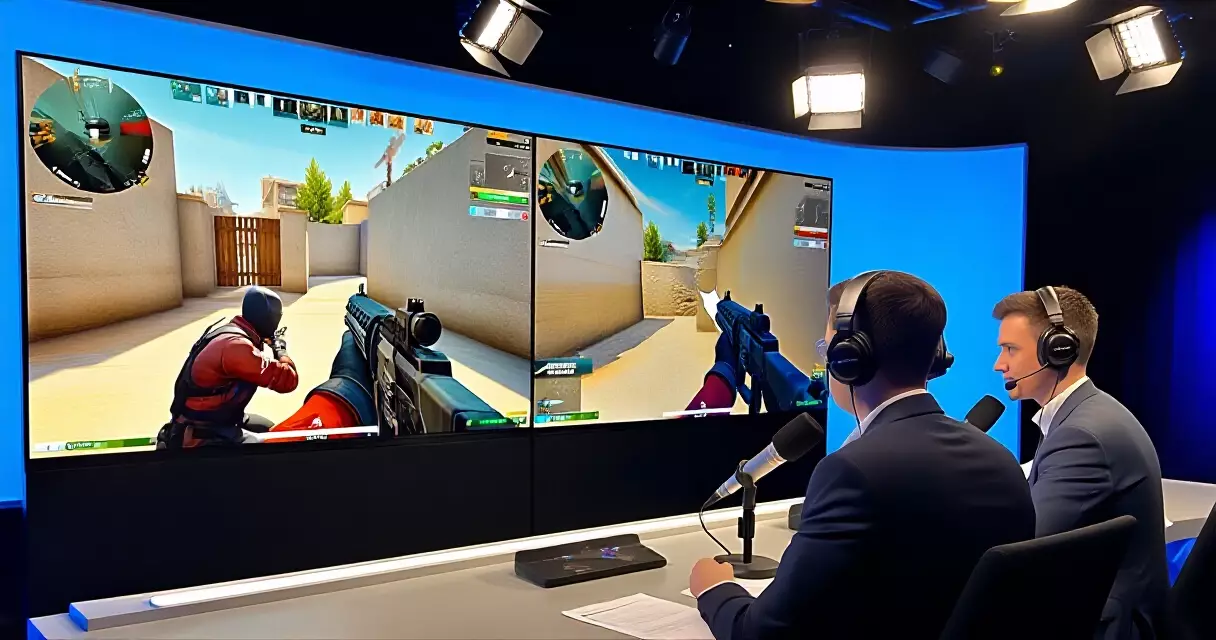
PGL events are primarily distributed through Twitch and YouTube for core esports audiences globally. The CS2 Stockholm Major in 2021 peaked above 2.7 million concurrent viewers on Twitch, making it one of the most-watched CS events of that year. PGL Antwerp 2022 and subsequent CS Majors continued to draw millions of concurrent viewers across streaming platforms, validating the live-event premium that makes PGL rights valuable to platform partners.
Linear television distribution remains a secondary but commercially significant component. Through IMG, PGL rights have been placed with terrestrial and cable channels in several European and Asian markets, adding reach among audiences who do not stream. This multi-platform approach – combining large streaming numbers with linear TV clearances – aligns with the broader trend in U.S. and global sports rights where deals increasingly bundle broadcast and streaming components. The USGA’s 2025 renewal with NBCUniversal through 2032, for example, explicitly combined NBC linear coverage with exclusive Peacock streaming windows (USGA.org, 2025).
For a deeper look at how Twitch, YouTube, and ESPN compare as esports streaming rights destinations, the structural differences between those platforms affect what rights packages PGL’s distributor can offer each potential broadcast partner.
PGL Media Rights: Specs, Pricing, and Deal Structure
PGL does not publicly disclose rights fees, which is standard practice across esports and most sports media. However, structural characteristics of PGL deals can be assessed from publicly available information and comparisons with analogous properties.
| Dimension | PGL Arrangement | Notes |
|---|---|---|
| Distribution partner | IMG (exclusive) | Covers media, sponsorship, and data rights |
| Contract duration | Multi-year (2021–2025 confirmed) | First signed Oct 2021; renewed March 2023 per Sportcal |
| Games covered | CS2 (Majors and other events), Dota 2 | Subject to Valve publisher licenses |
| Rights categories bundled | Media + sponsorship + data | Bundled under single IMG mandate |
| Platform delivery | Twitch, YouTube (primary streaming); linear TV via broadcasters | IMG places rights with downstream partners |
| Exclusivity model | Exclusive international distribution via IMG | Downstream exclusivity depends on territory deals |
| Rights fee transparency | Not publicly disclosed | Standard for esports; no regulatory disclosure requirement |
| Geo scope | Global | IMG operates across North America, Europe, Asia |
Sources: Sportcal (April 2023 IMG-PGL renewal report); Wikipedia (Sports broadcasting contracts in the United States).
The pricing of esports rights generally remains far below comparable traditional sports properties. S&P Global Market Intelligence reported that global sports rights spending reached $67.34 billion in 2026 – a 9.6% increase year-over-year – but esports accounts for a small fraction of that figure. North America alone represents $34.9 billion, or 52% of global spending (S&P Global, April 2026). Within that landscape, esports rights are a growth category, but the absolute fees paid for even major PGL events remain modest compared to premium traditional sports properties.
Pros and Cons of PGL’s Media Rights Approach
Every rights model involves tradeoffs. PGL’s agency-distribution strategy through IMG offers genuine advantages alongside some structural limitations worth understanding for broadcasters, sponsors, and data partners considering PGL deals.
Advantages:
- Instant access to IMG’s existing broadcast relationships across North America, Europe, Asia, and elsewhere – reducing the time and cost of market-by-market rights sales.
- Bundled commercial package (media + sponsorship + data) creates a single point of contact for major brands and broadcasters, simplifying procurement.
- IMG’s credibility with traditional sports broadcasters can open doors to linear TV placements that a purely esports-native organizer might not easily access.
- Multi-year contracts provide commercial predictability for both PGL and downstream rights holders.
- The model frees PGL’s internal team to focus on event production and Valve relationship management rather than international broadcast sales infrastructure.
Limitations:
- Revenue share with IMG reduces PGL’s net rights income compared to a fully self-distributed model.
- Exclusivity means PGL cannot experiment with direct platform deals or novel distribution arrangements without involving IMG.
- Downstream rights holders deal with IMG rather than PGL, which can create additional layers of negotiation and slower response to market changes.
- Data rights bundling may limit PGL’s flexibility to capitalize separately on the growing betting-data market, which has seen significant expansion in the U.S. following state-by-state legalization of sports wagering.
- Contract renewal cycles (the 2023 renewal ran only through 2025) mean PGL faces periodic uncertainty about its commercial distribution infrastructure.
The global sports rights market hit $67.34 billion in 2026 – and while esports remains a small fraction of that total, the growth trajectory and the involvement of agencies like IMG in esports rights packaging signal that the gap is narrowing.
PGL in the Context of the Broader Esports Rights Market
Placing PGL’s rights strategy within the wider market helps calibrate how significant its current structure is. The Activision Blizzard rights model – characterized by locked franchises, platform exclusives, and then a reversal of that model – provides a cautionary tale about the risks of rigid, publisher-controlled rights structures. PGL’s publisher-agnostic position (it works with Valve but does not own the underlying IP) creates a different risk profile.
The U.S. sports rights market provides useful context. Longer contract horizons have become standard: the PGA of America extended its deal with NBC Sports and USA Sports through 2033 in March 2026 (NBC Sports, 2026), and NBCUniversal’s USGA agreement runs through 2032 (USGA.org, 2025). Esports rights contracts are generally shorter – PGL’s confirmed IMG renewal ran two years – reflecting the younger market’s preference for flexibility over long-term lock-in.
The trend toward equity-linked media deals is also worth noting. ESPN’s 2025 five-year deal with the Premier Lacrosse League included a minority ownership stake, illustrating how premium broadcasters are moving beyond pure licensing toward strategic equity positions in growth properties (SportsPro, 2025). If esports rights values continue rising and platforms begin treating top organizers as investable assets, PGL’s IMG-mediated model may eventually face pressure to accommodate equity arrangements that pure distribution agencies are not structured to facilitate.
For background on how PGL compares to ESL, BLAST, and other major organizers on operational dimensions beyond media rights, the broader competitive landscape provides additional context.
Frequently Asked Questions About PGL Media Rights
Who owns PGL’s media rights?
PGL retains ownership of its event media rights but has appointed IMG as its exclusive global distribution partner. That means PGL owns the underlying rights to broadcast its CS2 and Dota 2 events, but IMG has the exclusive mandate to sell, package, and place those rights with downstream broadcasters and streaming platforms across global territories. The distinction matters: PGL is the rightsholder, IMG is the licensed distributor. This is confirmed by Sportcal’s April 2023 reporting on the IMG–PGL renewal, which described IMG as the “exclusive partner for media, sponsorship, and data rights” rather than an owner of those rights.
What games and tournaments does the PGL media rights deal cover?
The PGL–IMG arrangement covers PGL’s event portfolio, which primarily includes CS2 events – most notably Valve-sanctioned CS2 Majors – and Dota 2 tournaments. The specific scope of coverage depends on which PGL events fall within the deal period. CS2 Majors are the highest-value properties in PGL’s rights portfolio given their peak viewership records. Dota 2 events, while attracting a different and sometimes smaller concurrent-viewer audience than CS events, also carry rights value due to The International’s historical prize pool and cultural significance within the Dota community.
How long do PGL media rights deals last?
The PGL–IMG agreement was first signed in October 2021 and renewed in March 2023 through 2025, per Sportcal. That gives a confirmed contract lifespan of approximately two to three years per term – shorter than the multi-year horizons common in traditional sports (the PGA of America–NBC Sports extension runs through 2033 per NBC Sports, 2026) but consistent with esports industry norms, which generally favor shorter renewal cycles to allow flexibility as platform landscapes and viewership patterns shift.
Why does PGL use IMG instead of selling rights directly to platforms?
Using IMG gives PGL access to a global broadcaster network without building that sales infrastructure internally. IMG has existing relationships with television networks, streaming platforms, and data buyers across North America, Europe, Asia, and beyond. For a tournament organizer whose core competency is event production rather than broadcast sales, outsourcing distribution to a specialist agency reduces overhead, speeds rights placement, and can produce better outcomes in less-familiar international markets. The bundling of media, sponsorship, and data rights into a single mandate also makes the overall package more attractive to IMG, which benefits from representing the full commercial value of PGL’s events.
Where can I watch PGL events in the United States?
PGL CS2 and Dota 2 events are primarily accessible via Twitch and YouTube, both of which carry PGL streams free of charge for core audiences. The CS2 Stockholm Major peaked above 2.7 million concurrent Twitch viewers, demonstrating the platform’s dominance as the primary delivery mechanism. For U.S. viewers specifically, the absence of a dedicated linear TV home for CS2 events means streaming remains the default access point. IMG’s rights placement with traditional broadcasters is more consequential in European and some Asian markets than in the U.S., where esports streaming audiences are more digitally native.
How does PGL’s media rights model compare to traditional sports deals?
Traditional sports rights deals tend to be longer (often five to ten or more years), higher in absolute value, and tied to established broadcast regulations. S&P Global Market Intelligence reports that global sports rights spending hit $67.34 billion in 2026, with North America alone accounting for $34.9 billion – sums that dwarf current esports rights totals. PGL’s deals share structural DNA with traditional sports in their use of agency-based distribution and multi-category rights bundling, but differ in contract duration, fee transparency, and the upstream complexity introduced by publisher IP licensing requirements that do not exist in traditional sports.
What happens to PGL media rights after the IMG deal ends?
As of mid-2026, the publicly confirmed IMG–PGL arrangement covered the period through 2025, per Sportcal’s March 2023 reporting. Whether the deal has been extended further, renegotiated on different terms, or replaced by an alternative arrangement has not been publicly disclosed at the time of writing. This is consistent with standard practice in esports rights: renewal terms are rarely announced proactively and often only become public through industry trade sources. Any material change to PGL’s distribution infrastructure would likely surface via Sportcal, SportsPro, or direct PGL announcements.
Does PGL hold any data rights separately from broadcast rights?
Under the IMG arrangement, data rights are included in the bundled mandate alongside media and sponsorship rights. This means IMG has the authority to place PGL’s match and player data with sports data companies, betting operators (where legally permitted), fantasy platforms, and broadcast data overlay providers. Bundling data rights alongside media rights is increasingly common as the commercial value of real-time sports data has grown with the expansion of legal sports wagering in the United States – a market that has expanded substantially following the Supreme Court’s 2018 Murphy v. National Collegiate Athletic Association ruling, which cleared the path for state-by-state legalization.
Sources
- Sportcal – “IMG renews global distribution rights deal with esports’ PGL” (April 2023): https://www.sportcal.com/media/img-renews-global-distribution-rights-deal-with-esports-pgl/
- S&P Global Market Intelligence – “Global sports rights climb to over $67 billion in 2026” (April 2026): https://www.spglobal.com/market-intelligence/en/news-insights/research/2026/04/global-sports-rights-climb-to-ove-67-billion-in-2026
- NBC Sports – “PGA of America, NBC Sports and USA Sports extend media rights agreement through 2033” (March 2026): https://www.nbcsports.com/pressbox/press-releases/pga-of-america-nbc-sports-and-usa-sports-extend-media-rights-agreement-through-2033
- USGA – “NBCUniversal, USGA extend media rights agreement through 2032” (August 2025): https://www.usga.org/content/usga/home-page/articles/2025/08/NBCUniversal-USGA-extend-media-rights-agreement-through-2032.html
- SportsPro – “ESPN acquires minority stake in Premier Lacrosse League in five-year TV deal” (June 2025): https://www.sportspro.com/news/premier-lacrosse-league-pll-wll-espn-investment-tv-rights-june-2025/
- Wikipedia – “Sports broadcasting contracts in the United States”: https://en.wikipedia.org/wiki/Sports_broadcasting_contracts_in_the_United_States
Top Esports Organizations 2026: Teams, Rosters, and Performance Rankings