
Summary
✓Reviewed by Emma Thompson PARIS, August 14, 2026 — The Esports Integrity Commission (ESIC) has taken dual enforcement action in the lead-up to and during the Esports World Cup 2026, issuing a formal determination against Kirsan "byek" Ivanov for account-sharing...
Table of contents
- 1 ESIC Rules Ivanov Engaged in Account-Sharing Identity Fraud
- 2 Active EWC 2026 Investigation: Vintage and DarkMago Under Provisional Suspension
- 3 ESIC’s Role as EWC 2026 Integrity Partner
- 4 What Account-Sharing Cheating Means for Competitive Identity
- 5 Enforcement Timeline: 2026 ESIC Actions at a Glance
- 6 Pattern of Identity-Based Enforcement Growing in 2026
- 7 What to Watch Next
- 8 Related Coverage
- 9 Sources
PARIS, August 14, 2026 — The Esports Integrity Commission (ESIC) has taken dual enforcement action in the lead-up to and during the Esports World Cup 2026, issuing a formal determination against Kirsan “byek” Ivanov for account-sharing and identity-related cheating misconduct, while simultaneously maintaining an active investigation into Juan “Vintage” Angulo and Oswaldo “DarkMago” Herrera from PTime Dota 2 for conduct during the Paris event. The back-to-back actions mark one of ESIC’s most consequential integrity weeks of the competitive year, reinforcing that player identity fraud remains a top enforcement priority across global esports.
ESIC Rules Ivanov Engaged in Account-Sharing Identity Fraud
In its formal determination published on August 6, 2026, ESIC concluded that Kirsan “byek” Ivanov had committed account-sharing and identity-related cheating misconduct during official esports competition. The ruling is among the clearest examples of competitive identity fraud ESIC has officially codified in 2026.
According to ESIC’s official administrative communications, the commission found that “the account used under the identity ‘byek’ was not consistently controlled by a single individual,” with evidence including “unexplained performance and connectivity irregularities indicative of possible mid-series account hand-offs.” ESIC further determined that “another individual may have played using the account during matches, misrepresenting the identity of the competing player.”
The language is deliberate and significant: ESIC categorized the violation as “account-sharing / identity-related cheating misconduct,” formally linking the concept of account control directly to competitive identity. Tournament opponents, organizers, and spectators had been led to believe that a single registered player was competing under the “byek” handle throughout the series — when, ESIC concluded, multiple individuals were controlling the account at different points.
Active EWC 2026 Investigation: Vintage and DarkMago Under Provisional Suspension
Separate from the Ivanov determination, ESIC is actively investigating Juan “Vintage” Angulo and Oswaldo “DarkMago” Herrera, two competitors associated with the PTime Dota 2 team, over conduct alleged to have occurred during the Esports World Cup 2026 in Paris. Both players were issued provisional suspensions. The investigation was opened on July 15, 2026, and as of August 14, 2026, the matter remains active with one update logged on the ESIC Open Investigations Register.
According to the ESIC Open Investigations Register, the PTime matter is listed with the matter name: “Investigation into Juan ‘Vintage’ Angulo and Oswaldo ‘DarkMago’ Herrera in Connection with conduct during the Esports World Cup 2026,” with status marked as Active and last updated on July 14, 2026. ESIC has not publicly disclosed the specific nature of the alleged conduct pending the conclusion of its investigation.
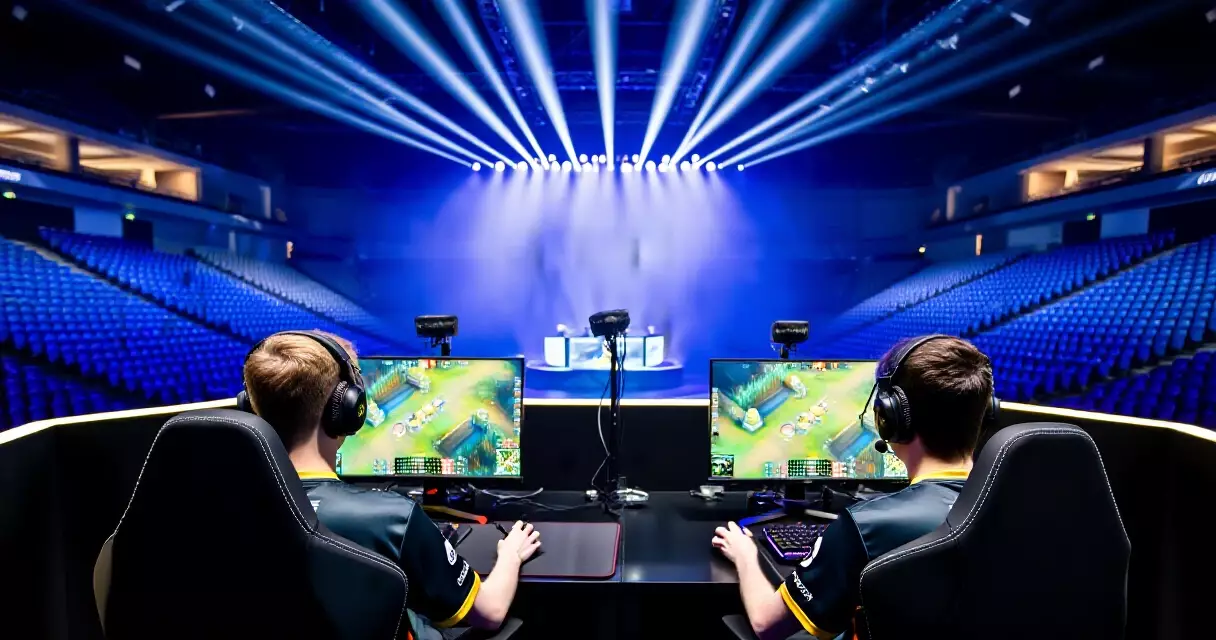
ESIC’s Role as EWC 2026 Integrity Partner
ESIC serves as the official integrity partner of the Esports World Cup 2026, a role that grants it enforcement authority over all competitions and participants within the event’s ecosystem. That partnership positions ESIC to act quickly when integrity concerns arise — issuing provisional suspensions before investigations are concluded to protect the competitive environment.
The Esports World Cup 2026 is one of the largest multi-game esports events of the year, drawing competitors from across the globe to Paris across multiple weeks. For full scheduling and prize pool context, see our complete EWC 2026 coverage. The integrity partnership with ESIC was established precisely to address the complex player identity and eligibility challenges that arise when hundreds of players from different regulatory environments converge at a single event.
What Account-Sharing Cheating Means for Competitive Identity
The Ivanov case is a textbook example of why player identity verification has become a central concern in esports governance. When a competitive account is shared between individuals — even temporarily during a live series — the entire premise of individual skill-based competition is undermined. Ratings, standings, and match records attributed to a single player’s “identity” in the game may in fact reflect the performance of an entirely different person.
This form of cheating is distinct from match-fixing or scripting: it attacks the foundational authenticity of who is actually competing. Tournament organizers, broadcasters, and fans cannot verify real-time that the player on screen is the registered participant — making robust pre-event identity verification and in-match behavioral monitoring the primary defenses available. For deeper context on how identity checks work before competition begins, see our reporting on player identity verification versus roster eligibility and what’s changing in esports identity verification for 2026.
Enforcement Timeline: 2026 ESIC Actions at a Glance
| Date | Subject | Status | Violation Type |
|---|---|---|---|
| July 14, 2026 | Juan “Vintage” Angulo & Oswaldo “DarkMago” Herrera (PTime Dota 2) | Active Investigation | Conduct during EWC 2026 (unspecified) |
| July 15, 2026 | PTime Dota 2 matter formally opened | Active | Provisional suspensions issued |
| August 6, 2026 | Kirsan “byek” Ivanov | Determined | Account-sharing / identity-related cheating |
Pattern of Identity-Based Enforcement Growing in 2026
The Ivanov determination and the active PTime investigation are not isolated incidents. ESIC’s Open Investigations Register reflects a growing caseload of identity-adjacent integrity matters in 2026, consistent with a broader trend across competitive gaming: as prize pools grow and competitive stakes rise, the incentive to misrepresent player identity increases accordingly.
Account-sharing infractions sit at the intersection of cheating and identity fraud. Unlike hardware-based cheats that anti-cheat software can detect, account-sharing requires forensic behavioral analysis — examining performance variance, connectivity patterns, and input timing across a player’s match history. ESIC’s reference to “unexplained performance and connectivity irregularities” in the Ivanov case signals that this kind of pattern analysis is now a live investigative tool in the commission’s arsenal.
The implications extend beyond individual bans. For teams, the presence of an account-sharing player can call into question the validity of results obtained during matches where the violation occurred. For the broader scene, repeated enforcement actions by ESIC reinforce that competitive identity — the principle that the person registered is the person playing — is a non-negotiable foundation of fair competition.
What to Watch Next
The PTime Dota 2 investigation involving Vintage and DarkMago remains the most consequential open matter on ESIC’s register as of August 14, 2026. A determination in that case could carry sanctions affecting not just the individual players but potentially PTime’s standing in EWC 2026 results. ESIC typically publishes determinations through its official site once investigations conclude; given the matter opened in mid-July, a resolution could arrive in the coming weeks.
For teams and players preparing for upcoming events, these cases serve as a pointed reminder that ESIC’s behavioral monitoring extends throughout competition — not just at the point of registration. Integrity partners embedded at major events are increasingly capable of flagging anomalies in real time, compressing the window between a violation and a provisional suspension. The esports industry’s ongoing push toward more rigorous identity standards shows no sign of slowing as the second half of 2026’s competitive calendar unfolds.
Related Coverage
- Player Identity Verification vs Roster Eligibility in Esports: 2026 Guide
- Esports Identity Verification and Player Eligibility: What’s Changing in 2026
- Esports Reporting in 2026: How the Industry Covers Competitive Gaming
- Esports Player Identity Verification Case Study: 2026 Lessons