

Summary
✓Reviewed by Emma Thompson Why esports needs a new identity, not a sports template, is one of the most pressing structural debates in competitive gaming heading into the second half of 2026. For nearly two decades, esports organizations, sponsors, and...
Table of contents
- 1 The Franchising Experiment That Proved the Model Wrong
- 2 A Brief History of Esports Borrowing from Traditional Sports
- 3 Why Esports Needs a New Identity, Not a Sports Template: The Core Argument
- 4 What a Purpose-Built Esports Identity Would Look Like
- 4.1 Open Competition Over Closed Franchises
- 4.2 Player-Centric Rather Than Franchise-Centric Value
- 4.3 Digital-First Distribution as a Feature, Not a Concession
- 5 Why Esports Needs a New Identity: The Publisher Problem
- 6 How Riot, Valve, and Others Are Already Building Alternative Identities
- 7 The Global Identity Problem: Esports Is Not American Sports
- 8 What the Data Says About Audience Behavior Under Different Models
- 9 A Comparison: Sports Template Assumptions vs Esports Realities
- 10 Frequently Asked Questions
- 10.1 Why did the Overwatch League fail as a sports-template model?
- 10.2 What would a purpose-built esports identity model include?
- 10.3 Are there existing esports structures that already reflect a new identity model?
- 10.4 Does esports need to be recognized as a traditional sport to succeed?
- 10.5 Why do esports audiences not follow city-based franchises?
- 10.6 What role do publishers play in preventing a new esports identity?
- 11 Conclusion: The Identity Esports Actually Needs
- 12 Sources
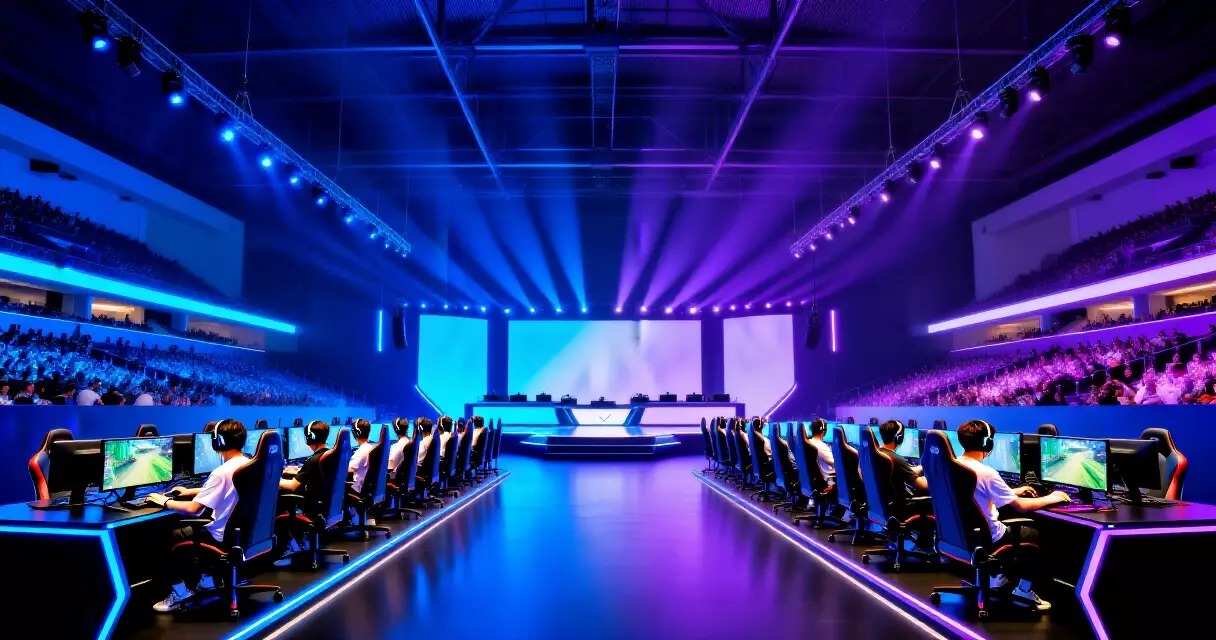
Why esports needs a new identity, not a sports template, is one of the most pressing structural debates in competitive gaming heading into the second half of 2026. For nearly two decades, esports organizations, sponsors, and broadcasters have borrowed frameworks from traditional sports — franchised leagues, city-based teams, rigid seasonal calendars — in the hope that familiarity would attract mainstream audiences and institutional investment. The results have been mixed at best, and in many cases actively harmful to the things that made competitive gaming compelling in the first place.
The Franchising Experiment That Proved the Model Wrong
The most expensive test of the sports-template theory came from Activision Blizzard’s Overwatch League, launched in 2018 with city-based franchises selling for a reported $20 million per slot. The league was built explicitly on NFL and NBA models: geographic teams, home-and-away aspirations, national broadcast ambitions. By 2023, the league was contracting. By 2024, Activision Blizzard announced a full restructuring. According to reporting by Reuters, the league’s television viewership on ABC and ESPN had fallen sharply from its 2019 peaks, and franchise owners who had paid tens of millions for slots faced losses with no realistic exit at valuation. The Call of Duty League followed a nearly identical arc. Both experiments demonstrated that borrowing the shell of traditional sports — the city branding, the broadcast slot, the fixed roster rules — did not transplant the cultural roots that make those sports work.
A Brief History of Esports Borrowing from Traditional Sports
Competitive gaming’s early identity was nothing like traditional sports. The first major organized tournaments — including Nintendo’s 1990 World Championships and the Cyberathlete Professional League events of the late 1990s — were built around LAN gatherings, open brackets, and community credibility. The shift toward a sports-industry model accelerated around 2016 and 2017, when venture capital flooded the sector and leagues like the Esports World Cup and various franchised leagues emerged as investors sought familiar return structures. The assumption was that the sports business model — broadcast rights, franchise equity, sponsorship tiers — was a proven template that could simply be ported. That assumption underestimated how different the underlying cultural product actually was.
Why Esports Needs a New Identity, Not a Sports Template: The Core Argument
Why esports needs a new identity, not a sports template, comes down to five structural differences that the sports model cannot accommodate. First, esports audiences are not geographic. A League of Legends fan in Manila, a Valorant viewer in São Paulo, and a Counter-Strike follower in Stockholm share no city-based loyalty to exploit. According to the Newzoo 2025 Global Esports Report, approximately 70 percent of esports viewers globally are aged 18 to 34, and their primary identity is built around the game and the player, not a city franchise. Second, the competitive game itself is controlled by a private publisher — Riot Games, Valve, Activision — not an independent governing body like FIFA or the IOC. Publisher decisions about patches, ranked resets, and game sunsetting can render an entire competitive ecosystem obsolete overnight. No traditional sport has an equivalent vulnerability. Third, the most engaged esports communities live on Twitch, YouTube, and Discord, not in stadiums. Attempting to monetize through broadcast rights and venue tickets replicates costs without replicating the revenue drivers.
What a Purpose-Built Esports Identity Would Look Like
Open Competition Over Closed Franchises
The most durable competitive structures in esports have consistently been open or semi-open brackets, not closed leagues. Valve’s PGL CS2 Major system — regional open qualifiers feeding into challenger stages and then a main event — maintains genuine meritocracy. Teams that perform rise; teams that decline fall. This produces narrative tension that closed leagues structurally cannot generate, because no franchise-protected team faces true elimination risk. The Dota 2 International has operated on a similar open principle since 2011, and remains one of the highest-profile annual events in esports by any measure. The evidence from these structures suggests that competitive legitimacy, not geographic branding, is the core asset esports actually owns.
Player-Centric Rather Than Franchise-Centric Value
In traditional sports, the franchise is the primary commercial unit. In esports, it is the player. Viewership data consistently shows that audiences follow individual players across teams and even across games. Shroud’s streaming career after leaving Cloud9’s CS:GO roster demonstrated that a player’s personal brand can outlast and outperform any organizational affiliation. A new esports identity model would acknowledge this reality by building governance, revenue sharing, and media structures around player contracts and personal rights, rather than treating players as interchangeable franchise assets. The esports reporting landscape has increasingly reflected this shift, with player-focused coverage driving more engagement than team-brand coverage in most major titles.
Digital-First Distribution as a Feature, Not a Concession
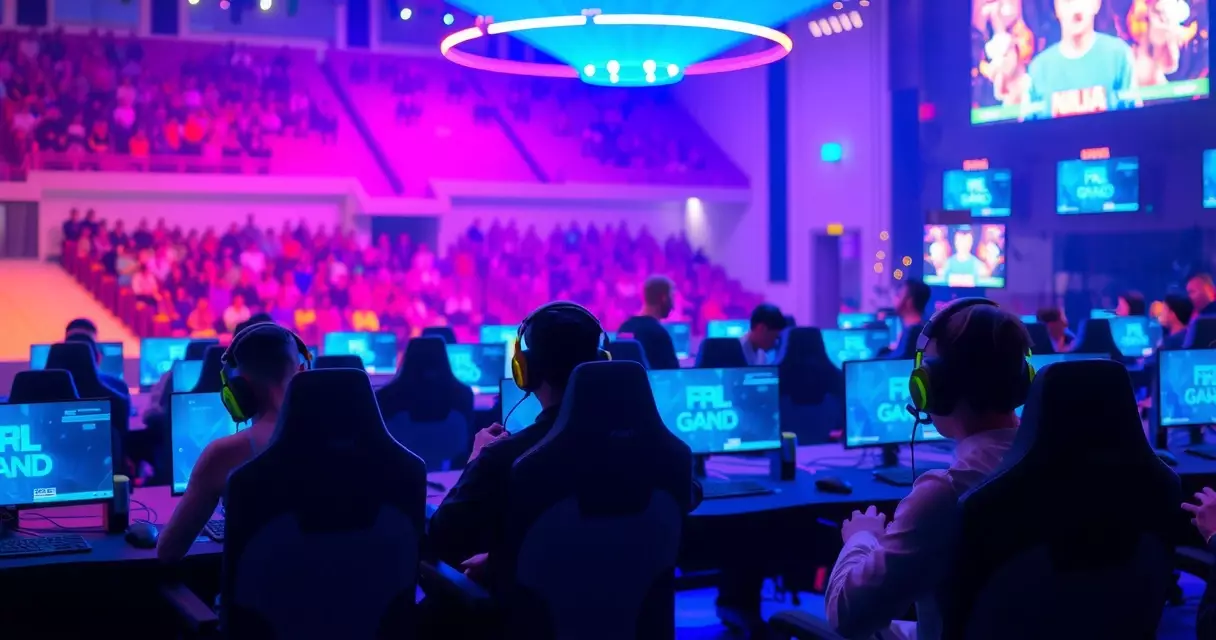
Traditional sports treat streaming and digital distribution as secondary to broadcast rights, which remain the primary revenue mechanism. Esports audiences discovered competitive gaming on Twitch and YouTube first, and the attempt to move them to traditional broadcast has repeatedly shown declining engagement rather than growth. A purpose-built esports identity would treat digital-first distribution as the primary model, monetizing through direct fan interaction, subscription tiers, in-client rewards, and creator partnerships — mechanisms that traditional sports have only begun to explore. The Esports World Cup 2026’s partnership model, combining in-game rewards with live broadcast across multiple free-to-access platforms, represents a closer approximation of this approach than anything the franchised league era produced.
Esports audiences were never looking for digital versions of the NFL — they were looking for global arenas where performance is the only credential that matters.
Why Esports Needs a New Identity: The Publisher Problem
No discussion of why esports needs a new identity, not a sports template, is complete without addressing publisher control. When Riot Games restructured the Valorant Champions Tour in 2023 and again in 2025, every team that had invested in a partnership slot was subject to conditions set unilaterally by the game’s owner. When Activision Blizzard was acquired in the deal that closed in August 2026 — covered in depth in reporting on the reshaping of the esports landscape — the competitive structures of multiple major titles were suddenly subject to new corporate priorities. There is no equivalent in traditional sports: the NFL does not have a parent company that could decide to discontinue American football. An esports identity model that does not account for publisher sovereignty will always be fragile.
How Riot, Valve, and Others Are Already Building Alternative Identities
Some publishers have already begun moving away from strict sports-template mimicry. Valve’s approach to Dota 2 and Counter-Strike has consistently emphasized open competition, meritocratic qualification, and community-driven tournament ecosystems through the third-party organizer system. Riot Games, after the VCT partnership model showed structural strain, introduced more flexible regional formats in 2025 and 2026 that allow broader participation without requiring franchise buy-in. The VCT Champions 2026 format reflects lessons learned from the early closed-league era. These are partial corrections, not comprehensive identity redesigns, but they signal that the industry’s largest publishers recognize the sports template’s limitations even if they have not fully articulated an alternative.
The Global Identity Problem: Esports Is Not American Sports
The sports-template model was, at its core, an American model — city franchises, broadcast exclusivity, hard salary caps. It was applied globally to a product whose audience has never been predominantly American. According to the Newzoo 2025 Global Esports Report, the largest esports audiences by volume are in Asia-Pacific, with Southeast Asia and China representing dominant shares of total viewership. The LPL (China’s League of Legends league), the LCK (Korea’s), and regional ecosystems across Vietnam, Indonesia, and the Philippines operate on different structural assumptions — many of which are closer to a purpose-built esports model than to American franchise sports. Honor of Kings World Cup 2026, which opened at the Esports World Cup in Paris with 20 nations, demonstrated that national and regional identity, not city-franchise identity, produces genuine audience investment in global esports events.
The sports template was designed for geographically bounded audiences. Esports was always a global product — and that gap is the root of every structural failure the template has produced.
What the Data Says About Audience Behavior Under Different Models
Comparing viewership performance across different competitive structures reveals a consistent pattern. Open international events with clear national or player-based stakes outperform closed franchise league regular seasons by significant margins. Based on available streaming data from Esports Charts, The International Dota 2 championship consistently generates peak concurrent viewership figures that no Overwatch League or Call of Duty League regular season event has matched in the same period. Similarly, CS2 Majors under the Valve-certified open-qualifier system generate viewership multiples above what equivalent closed franchise events produce. This is not coincidental — it reflects the structural truth that competitive stakes and open meritocracy produce drama, and drama drives viewership in esports far more effectively than franchise brand investment.
| Competitive Model | Key Examples | Structural Feature | Viewership Pattern |
|---|---|---|---|
| Open International | Dota 2 TI, CS2 Majors | Open qualifiers, full elimination | High peak concurrent; strong narrative tension |
| Closed Franchise League | Overwatch League (2018–2024), CDL | Protected slots, no relegation | Declining regular season; collapsed by 2024 |
| Hybrid Regional + International | VCT 2025–2026, LoL Worlds | Regional gates + open international | Moderate; strongest at international stage |
| National Team Format | Honor of Kings World Cup, Esports Nations Cup | Country representation, open pools | High engagement in participating regions |
A Comparison: Sports Template Assumptions vs Esports Realities
| Sports Template Assumption | Esports Reality in 2026 |
|---|---|
| Geographic fan loyalty anchors audience | Audiences follow players and games globally, not cities |
| Franchise equity holds value over time | Publisher decisions can eliminate game ecosystems overnight |
| Broadcast rights are the primary revenue driver | Streaming, in-game rewards, and creator economies dominate |
| Fixed seasonal calendars match audience behavior | Live-service games evolve continuously; rigid calendars cause audience churn |
| Closed leagues create sustainable competition | Absence of relegation eliminates the stakes that drive viewership |
| Venue attendance signals mainstream legitimacy | Most engaged audiences watch online; venues are secondary |
Frequently Asked Questions
Why did the Overwatch League fail as a sports-template model?
The Overwatch League’s franchise model required owners to pay approximately $20 million per slot for city-based teams in a sport where audience loyalty was never geographic. Regular season viewership declined steadily after 2019 as the competitive stakes of a closed, no-relegation league proved insufficient to sustain engagement. By 2024, Activision Blizzard had restructured the league entirely, representing one of the clearest empirical tests of the sports template in esports — and one of its clearest failures.
What would a purpose-built esports identity model include?
A purpose-built model would prioritize open competition with genuine promotion and relegation, player-centric governance and revenue sharing, digital-first distribution as the primary rather than secondary format, and structures that account for publisher sovereignty over game ecosystems. It would be organized around games and player communities rather than city franchises or geographic markets.
Are there existing esports structures that already reflect a new identity model?
Yes. Valve’s Dota 2 International and CS2 Major systems — built on open qualifiers and full competitive merit — consistently outperform closed franchise formats in viewership. The Honor of Kings World Cup and Esports Nations Cup use national team formats that tap into genuine audience identity without requiring city franchise investment. These are not fully formed alternative models, but they demonstrate which structural elements work with esports’ actual properties.
Does esports need to be recognized as a traditional sport to succeed?
No — and the pursuit of that recognition may itself be part of the problem. Esports does not need Olympic inclusion or mainstream sports legitimacy to be a sustainable industry. It needs governance models, revenue structures, and audience development strategies that fit its actual properties. Chasing sports legitimacy has often meant adopting structures that damage what esports does well.
Why do esports audiences not follow city-based franchises?
Esports audiences formed their identities around online communities, games, and individual players — not physical geography. A viewer in Manila who follows T1 because of Faker’s performance has no geographic basis for that loyalty; it is entirely player and game based. The sports model assumes geographic identity as its foundation, which simply does not exist in the same form for esports audiences globally.
What role do publishers play in preventing a new esports identity?
Publishers hold ultimate authority over the games that esports is built on, including whether a competitive scene continues, what rules govern it, and how revenue is shared. Any new esports identity model must either negotiate durable agreements with publishers — minimum competitive lifespan guarantees, revenue sharing frameworks, player rights protections — or be designed to function within publisher-controlled parameters. Ignoring publisher sovereignty has been one of the key reasons previous identity experiments failed.
Conclusion: The Identity Esports Actually Needs
Why esports needs a new identity, not a sports template, is ultimately a question about honesty — about whether the industry is willing to build structures that fit what esports actually is, rather than what investors hoped it would become. The franchised league era produced expensive lessons: audiences do not follow city brands they were assigned, closed leagues without competitive stakes lose viewers, and publisher-controlled games cannot be governed like independently owned sports. The esports structures that have proven most durable — open qualifiers, meritocratic brackets, global international events, player-driven audiences — share a common feature: they work with esports’ properties instead of against them. As the Esports World Cup 2026 demonstrates with its $60 million prize pool across multiple titles and its global digital-first broadcast, the scale is there. The question is whether the governance, revenue, and identity structures will finally be built to match it.
Sources
- Newzoo Global Esports Market Report 2025 — Retrieved August 14, 2026
- Reuters — Esports Industry Coverage — Retrieved August 14, 2026
- Esports Charts — Viewership Analytics — Retrieved August 14, 2026
- Associated Press — Gaming and Esports Desk — Retrieved August 14, 2026