
Summary
Since the U.S. Supreme Court struck down the federal ban on single-game sports wagering in Murphy v. NCAA in 2018, betting markets across the country have spread into territory that barely existed a decade earlier, and competitive video gaming is...
Table of contents
- 1 What Esports Betting Actually Means
- 2 From Skin Betting to Regulated Markets: A Short History
- 3 How Esports Odds and Bet Types Work
- 4 How to Choose an Esports Betting Site
- 5 The Games That Drive Esports Betting
- 6 Reading a Matchup: Esports Match Analysis
- 7 Integrity, Match-Fixing, and Why It Matters
- 8 Esports Betting and U.S. Law
- 9 Betting Responsibly
- 10 Building a Staking Plan: Bankroll Math for Esports Bettors
- 11 Tools and Data Sources That Sharpen Esports Bets
- 12 Frequently Asked Questions
- 12.1 Is esports betting legal in the United States?
- 12.2 Which esports are the most popular to bet on?
- 12.3 How do esports odds work?
- 12.4 What is skin betting, and is it the same as esports betting?
- 12.5 How can I tell if an esports betting site is trustworthy?
- 12.6 What is match-fixing in esports?
- 12.7 How do I analyze an esports match before betting?
- 13 Sources
- 13.1 Further reading
Since the U.S. Supreme Court struck down the federal ban on single-game sports wagering in Murphy v. NCAA in 2018, betting markets across the country have spread into territory that barely existed a decade earlier, and competitive video gaming is one of the fastest-moving corners of that map. Esports betting lets fans stake real money on professional matches in titles such as Counter-Strike 2, League of Legends, and Dota 2, drawing on a global esports audience that research firm Newzoo estimated at roughly 640 million people in 2025. This guide breaks down how the odds work, how to compare betting sites, how to read a matchup, and where the legal lines sit in the United States.
What Esports Betting Actually Means
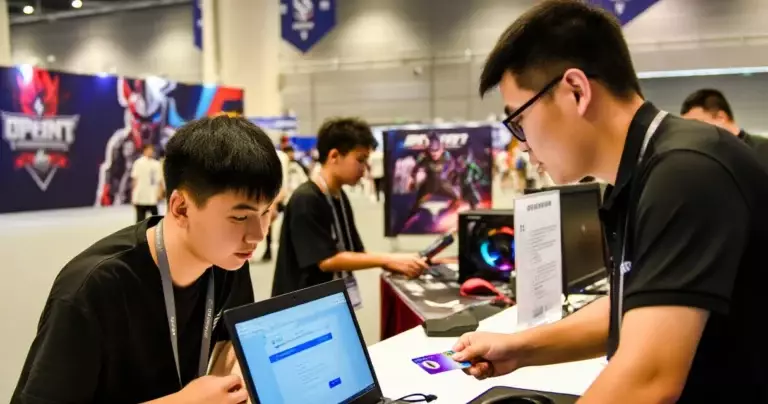
Esports betting is wagering real money on the outcome of professional video game competitions. The mechanics mirror conventional sports betting: a bookmaker sets odds, you place a stake, and a correct prediction pays out according to those odds. Rather than football or basketball, the contests are matches in games such as Counter-Strike 2, League of Legends, Valorant, and Dota 2, played in leagues and tournaments that run almost every week of the year.
The audience behind this market is large. Newzoo figures cited widely in 2025 placed the global esports audience near 640 million viewers, with hundreds of millions counted as committed enthusiasts rather than occasional watchers. That viewership feeds demand for ways to engage beyond spectating, and betting is among the most direct.
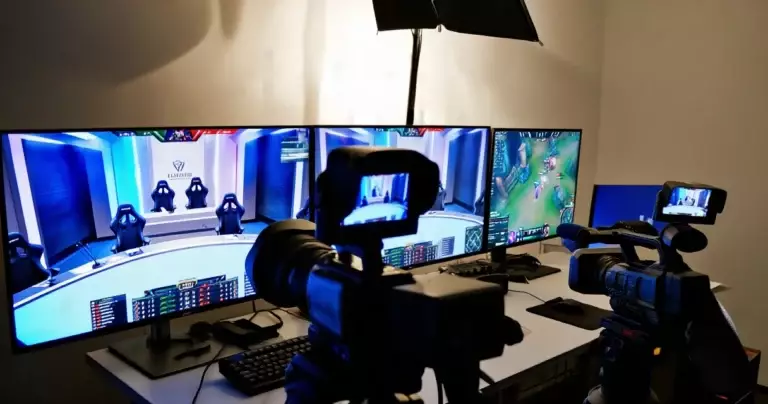
Two features set esports apart from legacy sports. The games themselves change through patches and updates, so a team’s form can swing overnight when a developer rebalances weapons or characters. Matches also happen online as often as in arenas, which compresses schedules and produces a steady flow of fresh betting markets.
From Skin Betting to Regulated Markets: A Short History
Betting on competitive gaming did not start in licensed sportsbooks. Through the mid-2010s, much of the activity ran through “skin betting,” where players wagered cosmetic in-game items from Counter-Strike: Global Offensive as if they were casino chips. The practice drew legal scrutiny, and in 2016 the Washington State Gambling Commission ordered Valve, the game’s developer, to stop facilitating skin gambling through its platform.
The legal ground shifted again in 2018. When the Court decided Murphy v. NCAA, it struck down the Professional and Amateur Sports Protection Act of 1992, the federal law that had effectively confined legal single-game wagering to Nevada. States were free to write their own rules, and licensed operators began listing esports markets next to football and baseball.
Regulated esports wagering still moved carefully. Nevada regulators approved bets on specific events one at a time rather than opening the category wholesale, a stance that reflected concerns about the young age of players and the integrity of online matches. That caution shaped how the legal market looks today.
How Esports Odds and Bet Types Work
Odds express two things at once: the implied probability of an outcome and the payout you receive if your pick lands. American odds mark a favorite with a minus sign, meaning you risk more to win less, and an underdog with a plus sign, meaning a smaller stake returns more. A line of -200 means a $200 stake wins $100, while +200 means a $100 stake wins $200. Decimal odds, common internationally, multiply your stake by the listed number to give the total return.
| Bet type | What it means | Example |
|---|---|---|
| Match winner (moneyline) | Pick the team that wins the series | Team A vs Team B, take Team A |
| Map handicap | A spread applied to maps won | Team A -1.5 maps |
| Totals (over/under) | Total maps or rounds played | Over 2.5 maps |
| Outright (futures) | Pick the winner of a whole event | Winner of The International |
| Proposition | An in-game event inside a match | First team to ten kills |
Match winner bets are the entry point for most newcomers, yet the deeper markets are where experienced bettors hunt for value. Map handicaps, total-maps lines, and proposition bets reward people who understand one specific title rather than the scene in general. A bettor who knows that a Counter-Strike 2 roster struggles on a particular map can find an edge that a casual moneyline never offers.
How to Choose an Esports Betting Site
Licensing comes first. A site regulated by a recognized authority, whether a U.S. state gaming commission or an established offshore body, gives you legal recourse and a baseline of consumer protection. Mainstream operators such as DraftKings, FanDuel, and Bet365 hold U.S. state licenses and list esports alongside traditional sports, while specialist platforms like Pinnacle, Rivalry, and Thunderpick built their names on deep esports markets and live in-play betting.
The presence of betting brands inside the scene is itself a signal of how seriously the audience is taken. DraftKings, for instance, has stepped in as a partner to teams and events, a move we examined in our look at DraftKings as an esports sponsor. Sponsorship money and betting interest tend to track the same growing audience.

Beyond a valid license, weigh a few practical factors before depositing:
- Market depth: Does the site cover the games and tiers you follow, or only the biggest finals?
- Odds quality: Compare the same match across two or three books; small differences in price add up over time.
- Live betting: In-play markets that update during a match reward viewers who watch closely.
- Payments and payouts: Check deposit methods, withdrawal speed, and any fees before you commit.
- Responsible-gambling tools: Deposit limits, time-outs, and self-exclusion options signal a serious operator.
The Games That Drive Esports Betting
A handful of titles account for most betting handle. Each has a flagship circuit, a distinct competitive rhythm, and its own quirks that affect how matches play out. Knowing these differences matters more than chasing whichever game has the largest crowd.
| Game | Developer | Premier event | Note for bettors |
|---|---|---|---|
| Counter-Strike 2 | Valve | Majors | Map vetoes shape outcomes heavily |
| League of Legends | Riot Games | Worlds | Largest MOBA viewership |
| Dota 2 | Valve | The International | Historically huge prize pools |
| Valorant | Riot Games | Champions Tour | Fast-growing, agent metas shift |
| Call of Duty | Activision | Call of Duty League | North America-centric scene |
Prize money helps explain why these games attract such attention. The Dota 2 flagship, The International, reached a crowdfunded prize pool of roughly $40 million in 2021, one of the largest in the history of competitive gaming. Stakes that high pull in elite rosters, sponsors, and bettors alike.
In esports, the smart money follows the patch notes as closely as the standings.
Teams matter as much as games. Storied organizations carry deep benches and consistent coaching that show up over a long season, which is why following them pays off. Our profiles of G2 Esports and the multi-game roster at Cloud9 illustrate how organizational depth translates into on-stage results that bettors can read.
Reading a Matchup: Esports Match Analysis
Solid analysis starts with recent form rather than reputation. A team that won a major last year can slump after a roster change, so check results over the past one to three months instead of trusting a famous name. Head-to-head history adds context, especially in Counter-Strike 2, where one squad may simply have a stylistic edge over another.
Game-specific factors then sharpen the read. Map pools and bans decide a large share of Counter-Strike outcomes; champion and agent metas swing League of Legends and Valorant; and the latest patch can quietly buff a strategy that one team has already mastered. Roster stability is its own signal, because a recently swapped player often needs weeks to gel.

Match setting belongs in the calculation too. Online matches can favor different teams than LAN events, where crowd pressure and equipment standardization change the dynamic. The financial muscle behind a roster also tells a story; our breakdown of how esports organizations are valued shows why well-funded teams can sustain practice infrastructure that smaller squads cannot match.
For a worked example of reading depth and consistency, our analysis of Team Liquid shows how a multi-game organization spreads talent and risk across titles, which affects how reliable its results are season to season.
Integrity, Match-Fixing, and Why It Matters
Esports has faced real integrity problems, and they affect bettors directly. One of the most cited cases involved the North American Counter-Strike team iBUYPOWER, whose players were permanently banned by Valve in 2015 after a match-fixing scandal tied to skin betting. The episode showed how easily a fixed result could distort a market.
In response, the industry created watchdogs. The Esports Integrity Commission, founded in 2016, investigates cheating and betting fraud and coordinates with tournament organizers and bookmakers to flag suspicious betting patterns. Licensed operators are required to report unusual activity, which adds a layer of protection that unregulated skin markets never had.
Esports Betting and U.S. Law
Legality depends entirely on your state. Because the 2018 ruling handed the decision to individual states, esports betting is permitted only where sports betting itself is licensed, and even then the rules vary. By 2025, the American Gaming Association counted 38 states plus the District of Columbia with some form of legal sports betting, though not all of them list esports markets.
| State | Status | Notes |
|---|---|---|
| Nevada | Legal | Esports events approved case by case |
| New Jersey | Legal | Regulated by the Division of Gaming Enforcement |
| New York | Legal | Online sports betting authorized |
| Colorado | Legal | Esports included among approved markets |
| California | Not legal | No legal sports betting as of 2025 |
| Texas | Not legal | No legal sports betting as of 2025 |
Where you stand when you place a bet decides whether it is legal, not where the match is played.
Age limits apply on top of state rules. Most states set the minimum at 21, though a few allow 18, and licensed sites verify identity before any payout. Betting through an offshore site from a state where wagering is not authorized carries legal and financial risk, since you have little recourse if a dispute arises.

Betting Responsibly
No analysis removes the house edge, and treating betting as entertainment rather than income keeps the activity healthy. Set a budget you can afford to lose, decide on it before you watch a match, and stop when you reach it. Chasing losses with bigger stakes is the most common path to trouble.
Building a Staking Plan: Bankroll Math for Esports Bettors
A staking plan decides how much of your bankroll goes on each bet, and it matters more than picking winners. Start by defining a bankroll you can lose without affecting rent or bills. The flat-stake method, recommended by the UK charity GamCare in its 2025 guidance, sets every wager at 1 to 2 percent of that figure. On a $500 bankroll, that means $5 to $10 per bet, win or lose, regardless of how confident you feel about a CS2 or Dota 2 map.
Follow these steps to build one:
- Set a total bankroll, for example $500, kept separate from everyday money.
- Choose a unit size of 1 percent, so one unit equals $5.
- Stake 1 unit on standard picks and never more than 3 units on your strongest reads.
- Re-calculate your unit only after the bankroll moves by 25 percent in either direction.
The danger to avoid is the Martingale system, where you double the stake after each loss. The math is brutal: a $5 base stake that loses five maps in a row needs a $160 sixth bet just to recover, and most U.S. sportsbooks cap esports stakes well below the level a long losing streak would demand. A 2024 review by the National Council on Problem Gambling linked chasing systems like this to faster bankroll depletion.
For value bettors, the Kelly Criterion offers a sharper alternative. It sizes each bet by your estimated edge, but professional bettors quoted by Pinnacle in its 2025 betting resources almost always use fractional Kelly, typically a quarter or a half, to soften variance. If your model says a -110 underdog has a true 55 percent chance to win, full Kelly suggests roughly 5 percent of bankroll, so quarter Kelly trims that to about 1.25 percent. The discipline is the point: fixed rules remove the emotional all-in decision that ends most betting accounts inside a single bad weekend.
Tools and Data Sources That Sharpen Esports Bets
Sharp esports bettors rarely rely on a sportsbook’s own page. They cross-reference free statistics sites, odds aggregators, and live trackers before committing a unit. The advantage is concrete: HLTV.org, the main Counter-Strike database, publishes head-to-head records, map win rates, and roster change dates that a casual bettor pricing a match by team name alone will miss entirely.
The core toolkit splits into three jobs: researching form, comparing prices, and tracking live state. The table below maps the most-used free tools to each job.
| Tool | Primary use | Best for |
|---|---|---|
| HLTV.org | Team and player stats, map veto history | Counter-Strike 2 |
| Dotabuff | Hero win rates, pro match history | Dota 2 |
| Liquipedia | Rosters, prize pools, tournament brackets | All major titles |
| Oddspedia | Live odds comparison across books | Line shopping |
| Esports Charts | Viewership and event scale data | Market context |
Line shopping is where these tools pay for themselves. Oddspedia data cited in its 2025 market reports regularly shows the same match priced 5 to 10 percent apart between books on series winner markets. Taking a +145 underdog at one book instead of +130 at another raises the payout on a $20 bet from $26 to $29 profit, and that gap compounds across hundreds of wagers.
Timing matters as much as the source. Liquipedia flags roster swaps, and a 2025 Esports Charts report noted that The International remained the genre’s most-watched event, the kind of high-stakes setting where a stand-in player can swing a series the closing line has not yet absorbed. Practical workflow: confirm the active roster on Liquipedia, pull recent map form from HLTV or Dotabuff, then check Oddspedia to find the book offering the longest price on the side you have already decided to back. Research first, price second, and never let an attractive number talk you into a bet your data did not support.
Frequently Asked Questions
Is esports betting legal in the United States?
It is legal only in states that have authorized sports betting, and the list keeps changing. After the Supreme Court struck down the federal ban in 2018, each state set its own rules, so esports wagering is allowed in places like New Jersey, Nevada, New York, and Colorado but not in California or Texas as of 2025. Even within legal states, some operators list esports markets and others do not, and certain regulators approve esports events one at a time. Always confirm the rules where you physically place the bet, because that location determines legality, not where the match happens.
Which esports are the most popular to bet on?
Most betting handle concentrates on a few titles: Counter-Strike 2, League of Legends, Dota 2, Valorant, and Call of Duty. Counter-Strike 2 is a favorite among bettors because its map-veto system creates clear strategic edges, while League of Legends draws the largest overall viewership and a heavy schedule of regional leagues feeding into the Worlds championship. Dota 2 attracts attention around The International thanks to its enormous prize pools. Valorant has grown quickly through Riot Games’ Champions Tour. Picking a game you understand deeply tends to serve a bettor better than spreading thin across all five.
How do esports odds work?
Odds show both the implied probability of an outcome and the payout for a correct pick. American odds use a minus sign for favorites, where you risk more to win less, and a plus sign for underdogs, where a smaller stake returns more. A line of -150 means a $150 stake wins $100, while +150 means a $100 stake wins $150. Decimal odds, common outside the United States, multiply your stake by the listed figure to give your total return. Comparing the same match across two or three sites helps you spot the best available price, since small differences compound over many bets.
What is skin betting, and is it the same as esports betting?
Skin betting refers to wagering cosmetic in-game items, such as Counter-Strike weapon skins, on match outcomes or casino-style games. It surged in the mid-2010s through unofficial third-party sites and operated largely outside any regulation. That lack of oversight contributed to integrity scandals and legal action, including a 2016 order from the Washington State Gambling Commission directing Valve to curb the practice. Regulated esports betting, by contrast, uses real money through licensed sportsbooks that verify identity, enforce age limits, and report suspicious activity. The two are related in history but very different in legal standing and consumer protection.
How can I tell if an esports betting site is trustworthy?
Start with licensing. A site regulated by a recognized authority, such as a U.S. state gaming commission, gives you a clear baseline of consumer protection and a path to resolve disputes. Established operators like DraftKings, FanDuel, and Bet365 carry state licenses, while esports specialists such as Pinnacle and Rivalry have long track records. Look for transparent payout terms, reasonable withdrawal times, and visible responsible-gambling tools like deposit limits and self-exclusion. Read independent user feedback about how the site handles withdrawals, since slow or blocked payouts are the clearest red flag. If a site hides its licensing details, treat that as a reason to walk away.
What is match-fixing in esports?
Match-fixing happens when players or teams deliberately lose or manipulate a match for betting profit. The best-known case involved the iBUYPOWER Counter-Strike roster, whose members Valve permanently banned in 2015 after a fixing scheme connected to skin betting. Because esports includes many lower-tier online matches with modest pay and limited oversight, those events carry a higher fixing risk than televised finals. The Esports Integrity Commission, founded in 2016, investigates such cases and works with bookmakers to flag suspicious betting patterns. As a bettor, sharp or unexplained line movements in minor events can be a warning sign worth respecting.
How do I analyze an esports match before betting?
Begin with recent form over the past one to three months rather than a team’s reputation, since rosters and coaching change often. Review head-to-head history, then add game-specific detail: map pools and bans in Counter-Strike 2, champion and agent metas in League of Legends and Valorant, and the impact of the latest patch. Check whether a team made a recent roster swap, because new lineups usually need weeks to find chemistry. Consider the setting too, as online and LAN results can diverge. Combining these factors with the offered odds helps you decide whether a price actually reflects value.
Sources
- Murphy v. National Collegiate Athletic Association (U.S. Supreme Court opinion) – https://www.supremecourt.gov/opinions/17pdf/16-476_dbfi.pdf
- Murphy v. NCAA (overview) – https://en.wikipedia.org/wiki/Murphy_v._National_Collegiate_Athletic_Association
- Esports (audience and market overview) – https://en.wikipedia.org/wiki/Esports
- Professional and Amateur Sports Protection Act – https://en.wikipedia.org/wiki/Professional_and_Amateur_Sports_Protection_Act
- Match fixing in esports – https://en.wikipedia.org/wiki/Match_fixing_in_esports
- Esports Integrity Commission – https://en.wikipedia.org/wiki/Esports_Integrity_Commission
- The International (Dota 2) prize pools – https://en.wikipedia.org/wiki/The_International_(Dota_2)
- ESPN Esports coverage – https://www.espn.com/esports/
Further reading
Top Esports Organizations 2026: Teams, Rosters, and Performance Rankings