

Summary
✓Reviewed by Emma Thompson Esports emerges as a major economic force across Southeast Asia, and nowhere is that transformation more clearly documented than in Singapore. On 14 January 2026, the Singapore Parliament passed the Singapore Sports Council (Amendment) Bill, formally...
Table of contents
- 1 Singapore’s Landmark 2026 Esports Recognition
- 2 A Brief History: From Niche to National Policy
- 3 Economic Scale: What the Numbers Show
- 4 Growth Projections: Video Games and Esports Revenue Forecasts
- 4.1 Sector Composition: Where Revenue Is Generated
- 4.2 Employment and Professional Pathways
- 5 Singapore as a Regional Esports Hub
- 6 How 2026 Legal Recognition Changes the Economic Picture
- 7 Infrastructure, Events, and Tourism Impact
- 8 Esports Economic Force: Comparative Data Table
- 9 Challenges and Constraints on Growth
- 10 Frequently Asked Questions
- 10.1 When did Singapore officially recognise esports as a sport?
- 10.2 How large is Singapore’s esports and games sector?
- 10.3 What is the projected growth rate for esports revenue in Singapore?
- 10.4 Why does esports matter to Singapore’s broader digital economy?
- 10.5 What barriers limit esports revenue growth in Singapore?
- 10.6 How does Singapore compare to other ASEAN esports markets?
- 11 Limitations of This Analysis
- 12 Sources
Esports emerges as a major economic force across Southeast Asia, and nowhere is that transformation more clearly documented than in Singapore. On 14 January 2026, the Singapore Parliament passed the Singapore Sports Council (Amendment) Bill, formally recognising esports as a sport in its own right — a legislative milestone that extends the mandate of SportSG to include competitive gaming for the first time. This is not ceremonial. It signals that a sector once dismissed as a hobby has matured into a pillar of Singapore’s digital and creative economy.
Singapore’s Landmark 2026 Esports Recognition
The 2026 legal change reshapes how the entire sector is governed. Before 14 January 2026, esports organisations in Singapore operated outside the formal sports framework, which limited access to government funding streams, athlete development programmes, and structured competition pathways. The amendment to the Singapore Sports Council Act changes that. According to MCCY’s second reading statement, ASEAN is among the world’s fastest-growing esports markets, and the bill was explicitly designed to position Singapore to capture that growth.
The recognition extends to mind sports — chess and bridge — alongside competitive gaming, but the esports provisions carry the heaviest economic implications. SportSG can now allocate resources to esports development, support team infrastructure, and integrate competitive gaming into national sports policies in the same way it does for football, swimming, or athletics.
A Brief History: From Niche to National Policy
Singapore’s relationship with competitive gaming stretches back to the early 2000s, when local LAN centres hosted grassroots StarCraft and Counter-Strike tournaments. The sector’s economic character began to crystallise around 2017, when the Ministry of Trade and Industry reported that the development and distribution of video games contributed S$1.95 billion to the Singapore economy that year. By 2019, Singapore had about 190 games development and publishing companies; by 2023, that number had grown to over 200, according to the Ministry of Culture, Community and Youth. The 2026 legislative reform is the culmination of nearly a decade of steady policy interest — not a sudden pivot.
Economic Scale: What the Numbers Show
Understanding why esports emerges as a major economic force requires examining the numbers in context. The U.S. Department of Commerce market intelligence brief on Singapore reports that players spent USD 327 million on games in 2019 alone — a figure that reflects consumer spending before the global gaming surge accelerated during 2020 and beyond. The same brief identifies that 46% of Singapore’s online population, roughly 3.8 million people, watched video game content, while 21% specifically consumed esports broadcasts.
From a global perspective, the MTI’s 2019 parliamentary reply noted that video games and esports generated over US$140 billion globally in 2018, with almost half coming from the Asia-Pacific region — the geographic zone Singapore sits at the commercial centre of.
Growth Projections: Video Games and Esports Revenue Forecasts
A speech delivered by Minister of State Alvin Tan at Gamescom Asia 2023 cited Statista projections indicating that Singapore’s video game revenues are expected to grow at 14% annually and esports revenues at 10% annually between 2023 and 2027. If those trajectories hold, the esports segment alone should see compounding revenue gains that meaningfully outpace most traditional entertainment verticals in the same period.
The Straits Times’ coverage of the 2026 parliamentary bill separately cited Statista data showing that global esports revenue was projected to reach US$1.86 billion (approximately S$2.4 billion) by 2025, a figure that underscores how rapidly the professional competitive gaming market has scaled.
Sector Composition: Where Revenue Is Generated
Singapore’s esports economy is not monolithic. Revenue flows from several distinct streams: game publishing and distribution fees, live and online event ticketing and broadcasting, sponsorship agreements with brands seeking access to the 18–35 demographic, merchandise, and increasingly, media rights deals for tournament coverage. Companies such as Sea Group (operators of the Garena platform) are among the locally headquartered firms contributing to this ecosystem, alongside multinational publishers including Ubisoft, which has maintained a Singapore presence cited in government parliamentary records.
Employment and Professional Pathways
According to the Ministry of Digital Development and Information, nearly 2,000 people were employed in Singapore’s games sector in 2021, covering roles in content creation, product management, UI/UX design, and business development. The ministry’s reply also estimated that the games sector would require approximately 2,700 infocomm and media professionals over the subsequent two years — a projection that points to structural talent demand rather than cyclical hiring.
“Esports is part of a vibrant games sector in Singapore, which has created diverse job opportunities over the years.” — Ministry of Digital Development and Information, 2022 parliamentary reply
Singapore as a Regional Esports Hub
Singapore’s government has consistently framed the city-state’s ambition in regional terms. MCCY’s 2023 statement describes Singapore as “one of Asia’s leading media and entertainment hubs,” a positioning that relies on the country’s legal stability, English-language infrastructure, and proximity to the massive Southeast Asian player base. ASEAN’s esports market — covering Indonesia, Thailand, the Philippines, Malaysia, Vietnam, and Singapore itself — represents one of the fastest-growing competitive gaming regions in the world, and Singapore’s companies and institutions are positioned to serve as operational and commercial headquarters for regional expansion.
This regional hub ambition connects directly to how Singapore’s esports league franchising trends are evolving — structured leagues with permanent team slots require the kind of legal, financial, and broadcasting infrastructure that Singapore offers more reliably than most neighbouring markets.
How 2026 Legal Recognition Changes the Economic Picture
The January 2026 amendment is not merely symbolic. By folding esports into the Singapore Sports Council Act, the government creates legal pathways for esports organisations to access institutional sports funding, apply for national team status, and participate in structured athlete development programmes administered by SportSG. This has direct economic consequences: organisations can attract investment more easily when their legal status is clearly defined, sponsorship deals become more bankable when the sport is formally recognised, and international events become easier to host when a national governing body has a clear mandate.
The broader implications connect to player welfare too. The Republic of Korea’s model for esport players’ rights has long been cited as the benchmark; Singapore’s 2026 recognition moves it meaningfully closer to that standard by bringing esports within the scope of formal sports governance.
Infrastructure, Events, and Tourism Impact
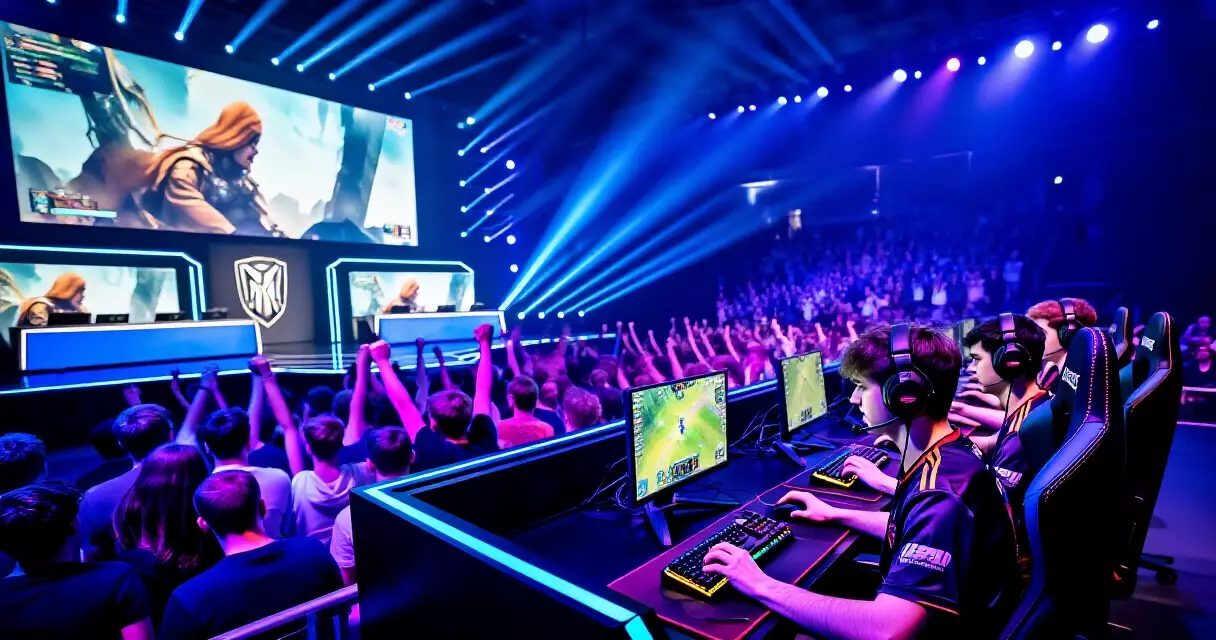
Esports events are increasingly significant tourism and hospitality drivers in Singapore. Large-format tournaments — drawing thousands of in-person attendees and generating millions of online viewing hours — require hotel accommodation, venue hire, food and beverage, and production services, all of which multiply the direct economic effect of the sector. The Esports World Cup 2026 demonstrated at scale how premium competitive gaming events generate economic activity well beyond the prize pool. Singapore, with its purpose-built convention and entertainment infrastructure, is well placed to host comparable events as the local regulatory environment matures.
“The esports and tech sector has continued to attract investments from game companies, adding to our tech ecosystem diversity.” — Ministry of Culture, Community and Youth, 2023
Esports Economic Force: Comparative Data Table
| Indicator | Figure | Year | Source |
|---|---|---|---|
| Singapore video game sector contribution | S$1.95 billion | 2017 | MTI parliamentary reply |
| Global games and esports revenue | US$140 billion+ | 2018 | MTI parliamentary reply |
| Singapore gamer spending on games | USD 327 million | 2019 | U.S. Department of Commerce |
| Singapore online population watching esports | 21% (approx. 1.7 million) | 2019 | U.S. Department of Commerce |
| Games sector employees in Singapore | ~2,000 | 2021 | MDDI parliamentary reply |
| Game companies in Singapore | 200+ | 2023 | MCCY |
| Projected global esports revenue | US$1.86 billion | 2025 (projected) | Statista via Straits Times |
| Projected Singapore esports revenue growth rate | 10% per annum | 2023–2027 | Statista via MTI speech |
Challenges and Constraints on Growth
Honest analysis of the esports economic story requires acknowledging the constraints. Statista’s Singapore esports market forecast notes that the local esports market has grown at a subdued rate compared with broader gaming, impacted by limited sponsorship and advertising opportunities, relatively low media rights deal values, and the regulatory environment around esports betting. These factors compress the revenue ceiling for organisers and mean that the sector’s headline employment numbers remain modest relative to its cultural visibility.
Talent pipeline gaps also present structural headwinds. The MDDI’s estimate of 2,700 additional infocomm and media professionals needed by the games sector signals that supply of qualified people may lag demand as the sector scales. Filling that gap requires sustained investment in education, training, and industry-academia partnerships that go beyond the competitive gaming side of esports into broadcast production, data analytics, and event management.
Frequently Asked Questions
When did Singapore officially recognise esports as a sport?
Singapore Parliament passed the Singapore Sports Council (Amendment) Bill on 14 January 2026, formally recognising esports and mind sports as sports in their own right. The amendment extends SportSG’s mandate to include competitive gaming for the first time, giving esports organisations access to the same institutional framework as traditional sports bodies.
How large is Singapore’s esports and games sector?
According to the Ministry of Culture, Community and Youth, Singapore is home to over 200 game-developing and publishing companies. The Ministry of Digital Development and Information reported that approximately 2,000 people were employed in the games sector in 2021, with demand projected to grow significantly. The Ministry of Trade and Industry has noted that the development and distribution of video games contributed S$1.95 billion to the economy as far back as 2017.
What is the projected growth rate for esports revenue in Singapore?
Based on Statista projections cited in a Ministry of Trade and Industry speech at Gamescom Asia 2023, Singapore’s esports revenues are expected to grow at approximately 10% annually between 2023 and 2027. Video game revenues more broadly are forecast to grow at 14% annually over the same period. These figures reflect the sector’s growth potential within a constrained but expanding market.
Why does esports matter to Singapore’s broader digital economy?
Esports is an economic multiplier rather than a standalone industry. Its growth drives demand for game development, UI/UX design, broadcast production, data analytics, content creation, and event management — all sectors where Singapore has existing strengths. The U.S. Department of Commerce noted that Singapore’s games industry grew 15% between 2019 and 2020, reaching approximately 220 companies. The sector’s health directly feeds into Singapore’s ambition to be a leading digital economy in Asia.
What barriers limit esports revenue growth in Singapore?
Statista’s Singapore esports market analysis identifies limited sponsorship and advertising opportunities, low media rights deal values, and strict regulatory constraints around esports betting as the primary factors that have held the local esports market to a more subdued growth rate than might be expected given the broader gaming audience size. Addressing these barriers is likely to become a policy priority now that esports holds formal sport status.
How does Singapore compare to other ASEAN esports markets?
Singapore functions as the institutional and commercial headquarters for a broader ASEAN esports economy that spans Indonesia, the Philippines, Thailand, Vietnam, and Malaysia. MCCY has described ASEAN as one of the world’s fastest-growing esports markets. Singapore’s advantage is not raw audience scale — Indonesia and the Philippines are larger player populations — but rather its legal infrastructure, English-language business environment, and access to international capital, all of which make it the natural base for regional esports operations.
Limitations of This Analysis
The economic data cited in this article spans different years (2017 to 2026) and different measurement methodologies. Earlier Singapore-specific figures from MTI and MDDI parliamentary replies reflect the sector at an earlier stage of development; current revenue and employment figures are larger but are not yet consolidated in a single published government report for 2025 or 2026. Statista revenue projections cited through government speeches are forecasts, not audited outcomes. Readers seeking the most current figures should consult SportSG, MCCY, and MTI directly following the 2026 legislative change.
Sources
- MCCY — Second Reading of the Singapore Sports Council (SSC) Amendment Bill — Retrieved September 6, 2026
- MCCY — Unleashing Innovation and Seizing Opportunities in the Esports and Games Sector — Retrieved September 6, 2026
- Ministry of Trade and Industry — Oral Reply to PQ on E-sports and Video Games — Retrieved September 6, 2026
- Ministry of Trade and Industry — Speech by MOS Alvin Tan at Gamescom Asia 2023 — Retrieved September 6, 2026
- U.S. Department of Commerce — E-sports and E-gaming in Singapore — Retrieved September 6, 2026
- Ministry of Digital Development and Information — Infocomm and Media Professionals Required to Support Games Sector — Retrieved September 6, 2026
- Ministry of Digital Development and Information — Development of E-sports and Gaming Industries in Singapore — Retrieved September 6, 2026