

Summary
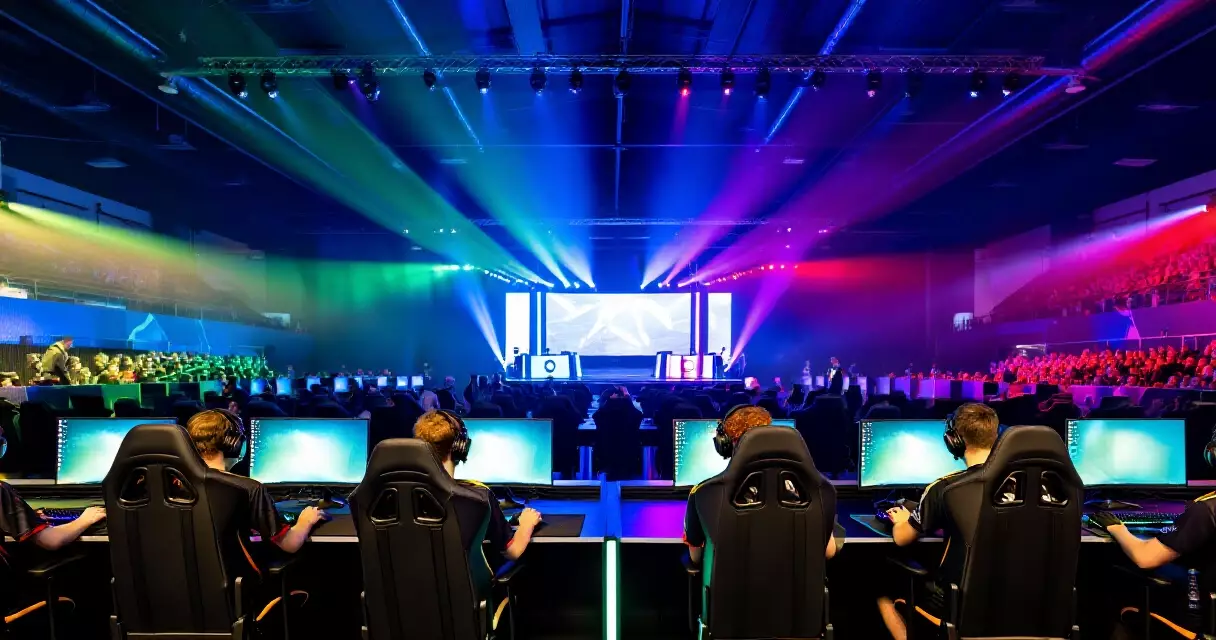
✓Reviewed by Emma Thompson Esports league franchising trends 2026 point to a defining moment for the industry: a shift from speculative growth to disciplined, sport-like governance. According to a Reuters press release from April 2026, the global esports market has...
Table of contents
- 1 What Is Esports League Franchising and Why It Dominates in 2026
- 2 A Brief History: How Franchising Became the Default Esports Model
- 3 Singapore’s 2026 Esports Recognition and Its Effect on Franchising
- 4 Esports League Franchising Trends 2026: Consolidation Over Expansion
- 4.1 Publisher Control as the Defining Variable
- 4.2 Revenue Sharing Models Are Evolving
- 5 Major Capital Movements Reshaping the Franchise Landscape
- 6 Comparing Franchise and Open-Circuit Models in 2026
- 7 Esports Franchising Trends 2026 and the Asian Games Effect
- 8 Financial Realities: What Franchise Slots Cost and Who Can Afford Them
- 9 What Esports Franchising Trends 2026 Mean for Players and Teams
- 10 Frequently Asked Questions
- 10.1 What is a franchise league in esports?
- 10.2 Why did some franchise leagues fail?
- 10.3 How does Singapore’s 2026 esports law affect franchise leagues?
- 10.4 Which esports titles still use franchise leagues in 2026?
- 10.5 How much does a franchise slot cost in 2026?
- 10.6 Is franchising still the dominant model in esports in 2026?
- 11 Key Takeaways: Esports League Franchising Trends 2026
- 12 Sources
Esports league franchising trends 2026 point to a defining moment for the industry: a shift from speculative growth to disciplined, sport-like governance. According to a Reuters press release from April 2026, the global esports market has surpassed US$5 billion in total value, with the audience nearing 641 million worldwide. Franchised league structures sit at the centre of that maturation, offering publishers, investors, and teams the stability that open-circuit models never reliably provided.
What Is Esports League Franchising and Why It Dominates in 2026
Franchise leagues replace the traditional promotion-and-relegation system with a closed set of permanent team slots, usually sold by the game publisher at significant cost. Teams pay a one-time or recurring fee for the right to compete, and in return receive a share of league revenues, broadcast rights, and merchandise income. According to a peer-reviewed analysis published through the Universitat de Barcelona repository, by 2021 all four major esports regions — North America, Europe, Korea, and China — had moved to franchised league models in at least one major title.
The logic behind franchising is economic predictability. A relegated team in an open circuit loses its sponsorship base overnight; a franchise holder retains its slot and, with it, the commercial relationships it has built. That stability is especially important when team valuations run into the tens of millions of dollars and sponsorship contracts span multiple years.
A Brief History: How Franchising Became the Default Esports Model
The shift toward franchise leagues gained momentum around 2018, when Activision Blizzard launched the Overwatch League as the first major city-franchise esports competition, selling slots for reported fees starting at US$20 million. Riot Games followed with the League of Legends Championship Series (LCS) franchising North America in 2018 and the League of Legends EMEA Championship (LEC) in 2019. As the University of Barcelona’s franchising analysis documents, the four major regions had completed the transition by 2021 — a remarkably fast structural shift by any sports-industry standard. The years since have been a stress-test of whether franchise economics can actually sustain the promises made to slot buyers.
Singapore’s 2026 Esports Recognition and Its Effect on Franchising
For Singapore-based readers, the most consequential development of the year arrived on 14 January 2026, when Parliament passed the Singapore Sports Council (Amendment) Bill. As reported by The Straits Times, the Bill formally writes esports into Singapore’s legal definition of sport, updating the Singapore Sports Council Act of 1973 for the first time to include competitive gaming. Acting Minister for Culture, Community and Youth David Neo stated the aim was to make the national sports ecosystem “inclusive, dynamic and future-ready.”
The practical consequences for franchising are significant. Sport Singapore (SportSG) now has a clear mandate to fund, regulate, and support esports organisations in the same framework it applies to traditional sports. That means government co-investment in athlete development pipelines is now legally possible, giving franchise-holding organisations a path to public support that simply did not exist before January 2026. It also aligns with Singapore’s broader ambition: the Ministry of Culture, Community and Youth noted that the 2026 Asian Games will feature 11 esports medal events, up from 7 in 2022, signalling continued international institutional recognition.
Esports League Franchising Trends 2026: Consolidation Over Expansion
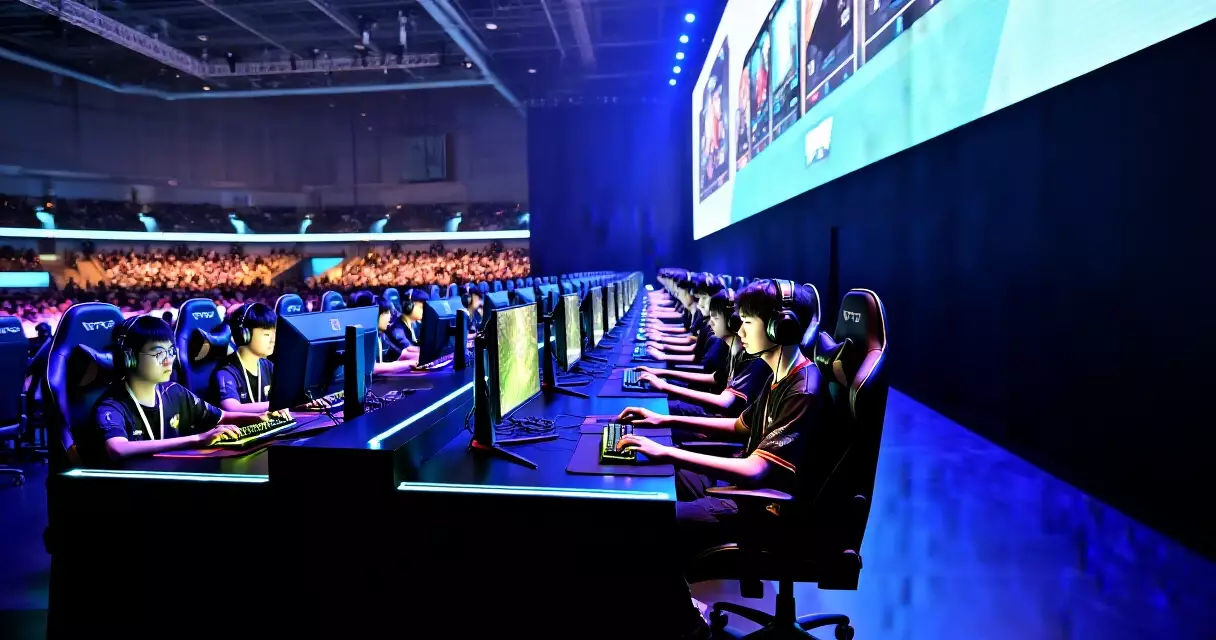
The dominant esports league franchising trend in 2026 is consolidation rather than expansion. The Reuters April 2026 market overview describes the current landscape as showing “maturity” through stable revenues and consolidated frameworks, explicitly contrasting the current moment with the speculative expansion that characterised the 2018 to 2021 franchise boom. Several major franchise experiments wound down or restructured in 2023 and 2024 — most notably the Overwatch League, which Activision Blizzard shuttered after struggling to sustain its city-based franchise model. That contraction has made surviving franchise leagues more selective and more disciplined about commercial terms.
For esports fans following the competitive circuit, this means fewer franchise leagues but healthier ones. The Esports World Cup 2026 itself reflects this trend: it draws from both franchised and open-format ecosystems, demonstrating that the industry is running parallel structures rather than converging on a single model.
Publisher Control as the Defining Variable
The single factor that most determines whether a franchise league succeeds or fails in 2026 is publisher commitment. Riot Games’ League of Legends and VALORANT leagues have maintained structural coherence because Riot controls both the game and the competitive ecosystem. Valve’s Counter-Strike 2 by contrast operates primarily on an open-circuit model with Valve retaining minimal direct league involvement, letting third-party tournament operators like PGL carry the competitive calendar — as covered in PGL CS2 Major 2026. The contrast between these two approaches illustrates why publisher intention is the primary driver of franchise-league viability.
Revenue Sharing Models Are Evolving
Early franchise leagues offered teams a share of central league revenue — broadcast deals, sponsorships, merchandise — in exchange for their slot fees. In 2026, those revenue-sharing arrangements are under renegotiation in several titles as leagues seek more sustainable splits. The academic analysis from the E3S Conferences 2023 paper on franchise league management notes that franchise implementation typically involves multimillion-dollar investment levels, citing examples at approximately US$1 million and above, with revenue-sharing structures negotiated individually between publishers and franchise holders.
Major Capital Movements Reshaping the Franchise Landscape
Franchise league structures are inseparable from the capital that funds them, and 2026 has seen significant deal activity at the publisher level. According to Reuters reporting from March 2026, ByteDance was negotiating the sale of Moonton — the developer behind Mobile Legends: Bang Bang — to Savvy Games Group, a Saudi Public Investment Fund entity, at an estimated valuation of US$6 billion to US$7 billion. Mobile Legends operates one of Southeast Asia’s most-watched esports leagues, the MPL (Mobile Legends Professional League), which runs on a franchise model across multiple countries including the Philippines, Indonesia, and Malaysia.
A change of ownership at Moonton would be one of the most consequential franchise-league transactions of the decade. Savvy Games Group has made clear its intention to build a dominant position in global esports, and acquiring the most-played mobile esports title in Southeast Asia would give it direct control over franchise slot valuations, revenue-sharing terms, and league governance across the region.
Comparing Franchise and Open-Circuit Models in 2026
Not every esports title uses a franchise structure, and 2026 is seeing a cleaner articulation of the difference between the two models.
| Model | Entry | Revenue security | Fan engagement | Publisher control | Examples (2026) |
|---|---|---|---|---|---|
| Franchise League | Paid permanent slot | High — revenue-sharing contract | Stable team brands, city identity | Publisher sets all terms | LCS, LEC, VCT Americas, MPL |
| Open Circuit | Qualification-based | Variable — prize pool dependent | Meritocratic drama, relegation stakes | Distributed — multiple TOs | CS2, Dota 2 (The International path) |
| Hybrid | Partially protected slots + open qualifiers | Medium | Mix of both | Shared between publisher and TOs | VCT Challengers paths, some regional leagues |
Esports Franchising Trends 2026 and the Asian Games Effect
One underreported driver of esports franchise-league development in 2026 is the Asian Games. The Ministry of Culture, Community and Youth confirmed that the 2026 Asian Games will include 11 esports medal events — four more than the seven contested in Hangzhou in 2022. That expansion is pushing national sports bodies across Asia, including Sport Singapore, to formalise their esports governance so that national representation is managed through credible, sport-like structures. Franchise leagues, with their clear team rosters, league standing records, and institutional accountability, fit that requirement far better than open-circuit results.
What we are witnessing now is not merely a bubble — it is an industry organising itself based on traditional sports economic principles. (Reuters, April 2026)
Financial Realities: What Franchise Slots Cost and Who Can Afford Them
Franchise slot costs vary enormously by title and region. The E3S Conferences 2023 peer-reviewed analysis of esports franchise management notes implementation costs at approximately US$1 million in cited regional examples, while major North American and European league slots in titles like League of Legends were reported at multiples of that figure at the time of initial sale. In 2026, the secondary market for franchise slots — where existing holders sell or transfer their positions — has become an important pricing signal, often trading at discounts to original slot fees as the market prices in league-specific risk.
| League / Region | Model | Entry cost range (reported) | Status in 2026 |
|---|---|---|---|
| LCS (North America) | Franchise | US$10–13 million (original) | Active; slot transfers ongoing |
| LEC (Europe) | Franchise | Undisclosed; estimated multimillion | Active; restructured format |
| MPL (SE Asia — multiple) | Franchise per country | Lower regional fees | Active; Moonton ownership in flux |
| VCT Americas / EMEA / Pacific | Publisher-invited | Invitation-based (no public slot fee) | Active; see VCT format guide |
| Overwatch League | Franchise (city) | US$20 million+ (original) | Discontinued (2024) |
Sources: E3S Conferences peer-reviewed analysis (2023); Reuters market coverage (2026); University of Barcelona franchising analysis (2022). Slot fee ranges are as reported at time of original sale; current secondary-market values are not publicly disclosed by publishers.
What Esports Franchising Trends 2026 Mean for Players and Teams
For professional players, franchise leagues create more predictable employment conditions. A team with a permanent slot has a guaranteed competitive calendar, which in turn supports multi-year player contracts and structured salary negotiations. The University of Barcelona analysis links franchising directly to competitive balance improvements, noting that revenue-sharing and fixed rosters reduce the extreme financial inequality between top and bottom organisations that characterises open circuits.
For team organisations, the franchise model also changes how player transfers affect performance. In an open circuit, a team can be relegated out of tier-one competition regardless of its roster moves. In a franchise league, transfers are purely about competitive quality — there is no existential threat of losing the league slot. That changes the risk calculus around buying expensive players and investing in long-term development.
Franchise leagues offer players the one thing open circuits cannot guarantee: a competitive season that exists regardless of last split’s results.
Frequently Asked Questions
What is a franchise league in esports?
A franchise league is a closed competitive structure where teams pay a publisher for a permanent slot, replacing promotion and relegation with guaranteed participation. Teams receive a share of central revenues in exchange. By 2021, according to the University of Barcelona analysis, all four major esports regions had adopted this model in at least one major title.
Why did some franchise leagues fail?
The Overwatch League, the most prominent failure, struggled with a city-franchise concept that required significant local event infrastructure that COVID-19 and subsequent cost pressures made unviable. High original slot fees — reported at US$20 million and above — left many franchise holders unable to recoup their investment when broadcast and sponsorship revenues disappointed. The lesson for 2026 is that franchise economics require realistic revenue projections, not optimistic ones.
How does Singapore’s 2026 esports law affect franchise leagues?
The Singapore Sports Council (Amendment) Bill, passed on 14 January 2026, gives Sport Singapore a legal mandate to fund and support esports in the same framework as traditional sports. This opens franchise-holding organisations in Singapore to government athlete-development co-investment and official sports-sector credibility, making the city-state more attractive for regional franchise league operations and international events.
Which esports titles still use franchise leagues in 2026?
As of September 2026, the most prominent active franchise leagues include Riot Games’ LCS (North America), LEC (Europe), and the VCT international leagues across Americas, EMEA, and Pacific. The Mobile Legends Professional League (MPL) operates franchise structures across several Southeast Asian countries. Counter-Strike 2 and Dota 2 remain on open-circuit models managed primarily by third-party tournament operators.
How much does a franchise slot cost in 2026?
Slot costs vary widely by title and region. The E3S Conferences peer-reviewed analysis (2023) cites regional implementation costs at approximately US$1 million in some examples, while major North American League of Legends slots were originally reported at US$10–13 million. VCT’s international leagues operate on an invitation basis with no publicly disclosed fee. Secondary-market values in 2026 often trade below original prices as the market matures.
Is franchising still the dominant model in esports in 2026?
Franchising remains dominant in the highest-revenue titles but is no longer expanding aggressively. Reuters’ April 2026 market coverage describes the current landscape as one of consolidation and maturity rather than new franchise launches. Open-circuit and hybrid models co-exist, and the industry is settling into a pragmatic mix where franchise structures are used when publisher resources and audience scale justify the investment.
Key Takeaways: Esports League Franchising Trends 2026
- The global esports market has surpassed US$5 billion in 2026, per Reuters, with sponsorship revenue forecast above US$1.11 billion at an estimated 7.8% annual growth rate (Statista, via Reuters).
- Singapore’s January 2026 legal recognition of esports gives Sport Singapore a mandate to support franchise organisations through the same institutional channels as traditional sports.
- All four major esports regions had adopted franchise models by 2021; in 2026 the trend is consolidation and survival of the best-structured leagues, not new launches.
- Publisher control is the primary determinant of franchise league success — Riot’s sustained commitment contrasts with Activision Blizzard’s Overwatch League exit.
- The potential Moonton acquisition by Savvy Games Group, reported by Reuters at US$6–7 billion, would transfer control of Southeast Asia’s most-watched mobile esports franchise ecosystem to a sovereign-wealth-fund-backed buyer.
- The 2026 Asian Games expanding to 11 esports medal events is pushing national sports bodies across Asia to formalise esports governance structures compatible with franchise-league accountability standards.
Sources
- The Straits Times: Parliament passes Bill to recognise chess, e-sports and others as sports — Retrieved September 5, 2026
- Ministry of Culture, Community and Youth (Singapore): Second Reading of the Singapore Sports Council (SSC) Amendment Bill — Retrieved September 5, 2026
- Reuters: Esports 2026 — Global Market Surpasses the $5 Billion Mark — Retrieved September 5, 2026
- Reuters: ByteDance to sell gaming unit Moonton to Saudi PIF-owned firm — Retrieved September 5, 2026
- Universitat de Barcelona: The Effect of Franchising on the Competitive Balance in eSports (Dawes, 2022) — Retrieved September 5, 2026
- E3S Conferences (peer-reviewed): Analysis of the Effect of Electronic Sports (E-Sports) Management on the Implementation of the Franchise League (2023) — Retrieved September 5, 2026
- Sport Singapore: COS 2026 — Sport Excellence Singapore (SpexSG) — Retrieved September 5, 2026