
Summary
The format a tournament organizer chooses can determine whether a champion is crowned fairly or by a single bad game. At The International 2023, one of Dota 2’s most decorated squads was eliminated in a best-of-one match during the Wild...
Table of contents
- 1 Why Tournament Format Matters in Esports
- 2 Single Elimination: High Stakes, Low Time Cost
- 3 Double Elimination: A Second Chance Built Into the Bracket
- 4 Round Robin: Maximum Fairness for Smaller Fields
- 5 Swiss System: The Format Built for Scale
- 6 Format Comparison: Which Structure Fits Which Scenario
- 7 Hybrid Formats: How Major Tournaments Combine Structures
- 8 The History of Tournament Formats in Competitive Gaming
- 9 Format Trends in 2025–2026: What Organizers Are Choosing Now
- 10 FAQ: Esports Tournament Formats
- 10.1 What is the most common format used in esports tournaments?
- 10.2 What is the difference between single elimination and double elimination?
- 10.3 How does the Swiss system work in esports?
- 10.4 Why did CS:GO and CS2 Majors switch to the Swiss format?
- 10.5 Which esports games use round robin formats?
- 10.6 Does format choice affect esports betting and predictions?
- 10.7 What is a GSL-style group in esports?
- 10.8 How do tournament formats affect player preparation?
- 11 Sources
The format a tournament organizer chooses can determine whether a champion is crowned fairly or by a single bad game. At The International 2023, one of Dota 2’s most decorated squads was eliminated in a best-of-one match during the Wild Card stage – a decision that sparked fierce debate about single-elimination formats in high-stakes esports. Understanding why organizers choose single elimination over Swiss, or double elimination over round robin, is essential knowledge for players, spectators, and analysts following competitive gaming in 2026.
Why Tournament Format Matters in Esports
Tournament format is not a procedural footnote – it shapes every competitive outcome. A single elimination bracket means one off day ends a season. A round-robin group stage rewards consistency over a single peak performance. When Valve switched CS:GO Majors from a double-elimination group stage to a Swiss system in 2017, the change was driven by a specific problem: small groups produced byes and unequal match counts. Swiss solved it by pairing teams of equal records, maximizing meaningful matches played.
The stakes are high. Major esports tournaments now offer prize pools reaching into the tens of millions of dollars. The International 2021 set a record prize pool of over $40 million, funded entirely through crowd-sourced Battle Pass sales (Valve, 2021). With that much money on the line, every bracket decision carries weight – and the esports community scrutinizes format choices closely.
For fans betting on matches or following tournament brackets, understanding the format also directly affects how you read odds and predict outcomes. A team seeded into the lower bracket of a double-elimination event has a longer, harder road to a title – but the path exists. In a single-elimination draw, that same team would already be home. You can read more about how formats interact with betting strategy in our esports betting bankroll management guide.
Single Elimination: High Stakes, Low Time Cost
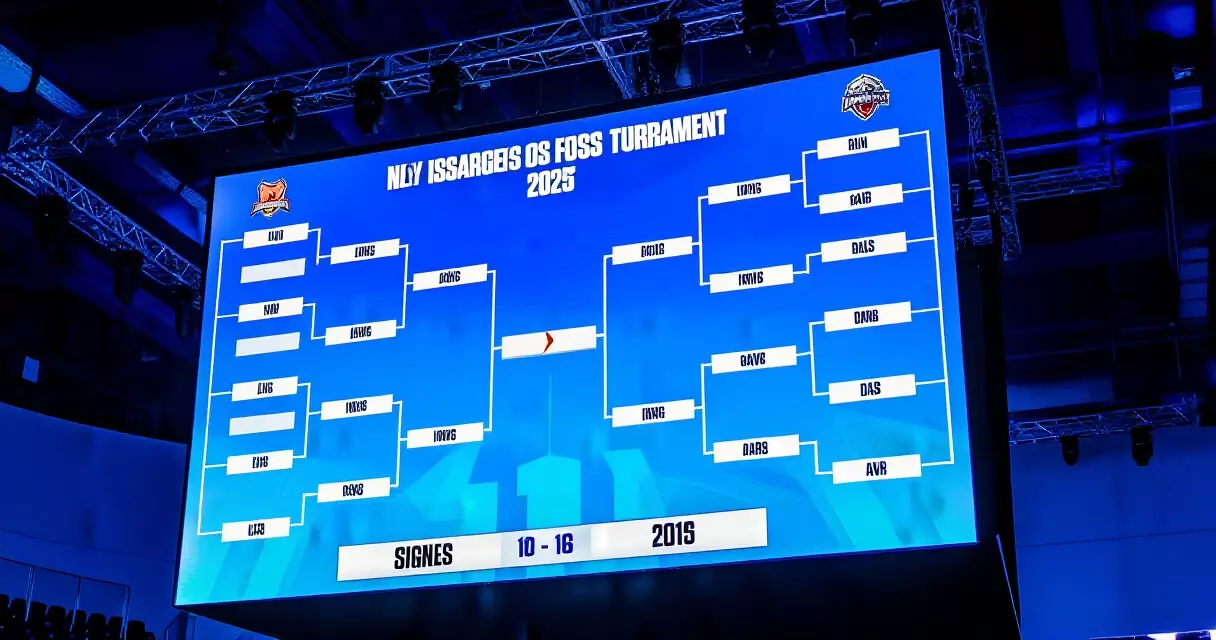
Single elimination is the oldest and simplest bracket format. Every team plays until they lose once, at which point they are out of the tournament. A 16-team single-elimination bracket requires exactly 15 matches to produce a winner. The format’s efficiency is its chief advantage: fewer matches mean lower broadcast costs, shorter event windows, and a clear narrative tension in every game.
The format is used widely in the knockout stages of major esports circuits. League of Legends Worlds has featured single-elimination quarterfinals, semifinals, and finals since 2011. Once a team clears the group stage, one loss ends their run. Riot Games maintained this structure through the 2023 and 2024 editions of Worlds, with the Play-In stage using a hybrid format that feeds into the single-elimination main bracket (Riot Games, 2024).
The principal criticism of single elimination is statistical: a stronger team can be upset by a weaker team in any individual series, and one bad performance ends the tournament. In a Wikipedia analysis of single-elimination tournament mathematics, researchers note that the probability of the strongest team winning falls significantly compared to round-robin or double-elimination brackets, particularly in smaller fields. For a 16-team bracket, the best team wins less than 50% of the time under purely probabilistic models.
When organizers choose single elimination:
- Final stages where dramatic elimination is the spectator draw
- Limited venue availability or broadcast windows
- Large fields where group stages have already filtered teams
- One-day events or online cups with short time horizons
Double Elimination: A Second Chance Built Into the Bracket
Double elimination gives every team two lives. Lose once and you fall to the lower bracket – sometimes called the loser’s bracket – where you can fight back to the grand final. Only a second loss eliminates you. The format requires at least twice as many matches as single elimination (and sometimes more, depending on grand final rules), but provides significantly stronger accuracy in identifying the best team.
The International is the most prominent example of double elimination at the highest level of esports. Every edition of Valve’s Dota 2 championship since 2011 has used a double-elimination main event bracket. Teams that enter through the lower bracket have won TI – Na’Vi’s run through the lower bracket to claim TI10 in 2021 is one of the most discussed championship runs in esports history. The format rewarded resilience, and it made for extraordinary broadcast content.
One structural quirk in double elimination is the grand final reset. In many implementations, the upper-bracket finalist enters the grand final with an advantage – typically a one-game head start – because they reached the final without losing. The lower-bracket finalist must win two sets to claim the title, while the upper-bracket finalist only needs one. Valve has varied this rule across TI editions, and the choice generates community debate each year.
Double elimination does not just give teams a second chance – it makes the eventual winner prove they can win from multiple starting positions, upper and lower bracket alike.
Valorant Champions, Riot’s annual global championship, has also used double-elimination formats for its group and playoff stages, pairing it with a Swiss play-in. ESL and BLAST, two of the most active third-party esports organizers, frequently deploy double elimination for their Counter-Strike 2 Pro Series and Premier events, citing competitive integrity as the primary reason.
When organizers choose double elimination:
- Flagship events where prestige demands a fair result
- Fields of 8–16 teams where match count is manageable
- Games where individual match variance is high (e.g., one teamfight can swing a Dota 2 game)
- Events with multi-day venue bookings and broadcast capacity
Round Robin: Maximum Fairness for Smaller Fields
In a round robin, every team plays every other team exactly once (single round robin) or twice (double round robin). Teams accumulate points based on wins, and the standings after all matches are complete determine advancement. There are no surprise eliminations – only consistent performance across the entire field.
Round robin is almost exclusively used as a group stage mechanism in esports, not as a full tournament structure. The reason is arithmetic: a 16-team full round robin requires 120 matches. That is logistically impossible in a standard event window. But groups of 4–6 teams playing round robin is common. League of Legends Worlds group stages used a double round-robin format for years, meaning each team faced each group opponent twice. This gave analysts a clear signal of form and allowed teams to correct errors between rematches.
The format is statistically the most accurate at ranking teams within a group. Wikipedia’s entry on round-robin tournaments notes that under standard probability models, round robin produces the most accurate ranking of relative team strength when all pairings are completed. The downside is time: even a four-team double round robin requires 12 matches.
In domestic leagues like the LCS (North America) and LEC (Europe), round robin is the backbone of the regular season. The LCS Spring and Summer Splits use a double round-robin format across ten teams to determine playoff seeding – exactly the use case round robin is built for. Every team meets every other twice, and the standings accurately reflect the entire season. This model is also used in the Overwatch League’s divisional play and in Rocket League Championship Series (RLCS) regional leagues.
Swiss System: The Format Built for Scale
The Swiss system was invented for chess tournaments in the late 19th century – specifically developed at a chess event in Zurich, Switzerland in 1895, which gave the format its name (Wikipedia, Swiss-system tournament). It was designed to handle large fields where full round-robin scheduling is impossible but single elimination feels inadequate. In Swiss, teams are not eliminated after one loss. Instead, each round pairs teams with identical (or similar) records. After a set number of rounds, teams with the required win count advance; teams with too many losses are eliminated.
The breakthrough moment for Swiss in esports came at the CS:GO Major in Krakow, Poland in July 2017. Valve and PGL replaced the traditional group stage with a Swiss format – 16 teams, five rounds, advancing at 3-0 and 3-1, eliminated at 0-3 and 1-3. It solved a specific problem: previous Major group stages with pools of four teams had produced situations where one team had no meaningful matches to play in the final round. Swiss guaranteed that every match in every round affected advancement.
The CS2 Major structure as of 2025–2026 retains this three-stage Swiss framework: the Challenger Stage (16 teams, Swiss), the Legends Stage (16 teams, Swiss), and the Champions Stage (8 teams, single elimination). ESL and PGL have maintained the format across back-to-back Majors, and it is now considered the default CS2 Major structure by the community and analysts alike.
The Swiss system made its esports debut at a chess-era format that was over a century old – proof that competitive structure problems often have long-established solutions waiting to be adapted.
Valve also adopted Swiss for Dota 2’s DPC (Dota Pro Circuit) Major group stages beginning in the 2021–22 season. The format allowed 18 teams to compete meaningfully across six rounds without the elimination drama of a bracket or the scheduling weight of full round robin. Teams advanced from the group stage based on Swiss record, then moved into a double-elimination main event.
When organizers choose Swiss:
- Large initial fields (12–24 teams) where bracket seeding is unclear
- Events where full round robin is scheduling-prohibitive
- Qualifying stages feeding into a smaller knockout bracket
- Games with large player pools and open qualifiers (CS2, Valorant open events)
Format Comparison: Which Structure Fits Which Scenario
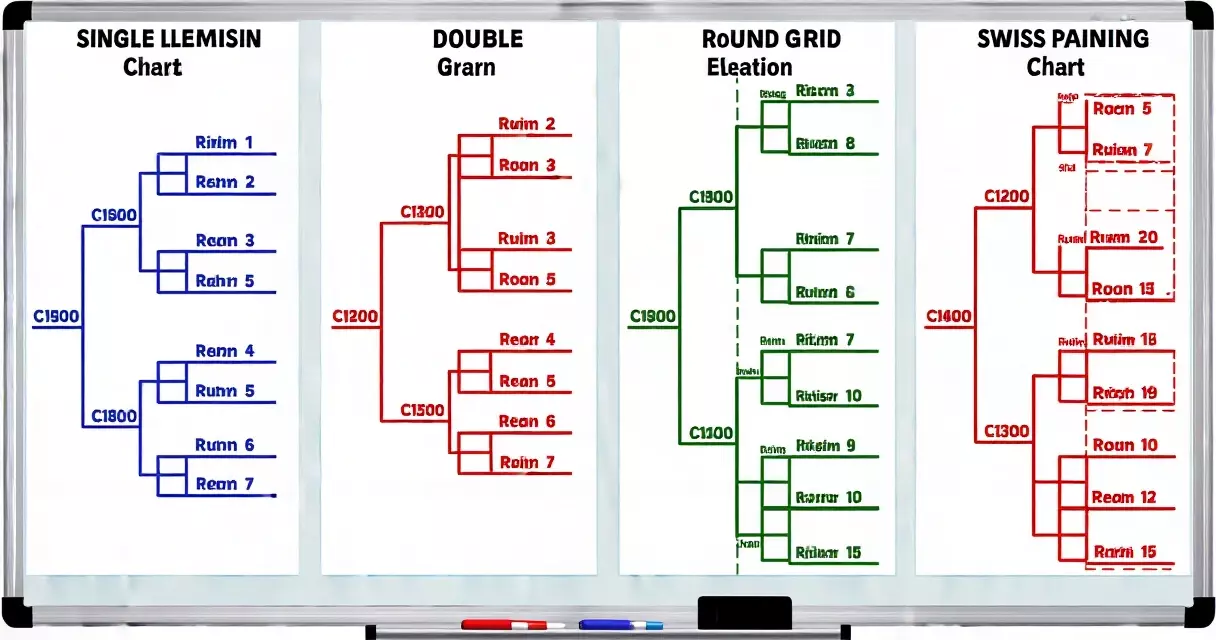
No format is objectively superior – each optimizes for a different set of constraints. The table below summarizes the four core formats across the dimensions that matter most to organizers and players.
| Format | Teams Eliminated Per Loss | Match Efficiency | Competitive Accuracy | Best Field Size | Real Example |
|---|---|---|---|---|---|
| Single Elimination | 1 loss = out | Highest (N-1 matches) | Lowest | Any (8–64+) | LoL Worlds Knockouts |
| Double Elimination | 2 losses = out | Medium (~2N matches) | High | 8–16 | The International (Dota 2) |
| Round Robin | No elimination mid-stage | Lowest (N×(N-1)/2) | Highest | 4–8 per group | LCS/LEC Regular Season |
| Swiss System | Loss threshold (e.g., 2–3 losses) | High (fixed rounds) | High | 12–24+ | CS2 Majors (all stages) |
Hybrid Formats: How Major Tournaments Combine Structures
Real tournament structures rarely use a single pure format. Most major esports events combine two or three formats across different stages. The typical structure is: a Swiss or round-robin group stage that functions as a qualifier filter, feeding into a double-elimination playoff bracket, which then narrows to a single-elimination final.
Valorant Champions 2023 and 2024 used a Swiss play-in phase, followed by a double-elimination group stage, and then a single-elimination final bracket. This three-layer design is increasingly standard because it distributes the strengths of each format: Swiss handles the large, uncertain initial field; double elimination rewards consistent performers in the playoff stage; single elimination provides broadcast-friendly knockout drama at the end.
BLAST Premier, one of Counter-Strike’s two flagship third-party circuits, uses group stages in a round-robin format for its league play, then moves to single elimination for the BLAST Premier Finals. ESL Pro League uses a similar model. The distinction matters for seeding – a team that dominates its round-robin group enters the playoff bracket in a more favorable position, making the group stage results consequential rather than ceremonial. For a broader overview of how these circuits are structured across regions and games, see our esports tournaments 2026 circuit guide.
| Tournament | Stage 1 | Stage 2 | Stage 3 | Organizer |
|---|---|---|---|---|
| CS2 Major (2025–2026) | Swiss (Challengers) | Swiss (Legends) | Single Elim (Champions) | PGL / ESL / Valve |
| The International (Dota 2) | Swiss / Round Robin (Groups) | Double Elimination (Main) | Grand Final (Bo5) | Valve |
| LoL Worlds (Riot, 2024) | Play-In (Hybrid) | Swiss (Groups) | Single Elim (Knockouts) | Riot Games |
| Valorant Champions (2024) | Swiss (Play-In) | Double Elimination (Groups) | Single Elim (Finals) | Riot Games |
| RLCS World Championship | Swiss (Day 1–2) | Double Elimination (Bracket) | Grand Final (Bo7) | Psyonix / Riot |
Understanding these hybrid structures is particularly useful when tracking a team’s tournament run. A team entering a CS2 Major Challengers Stage at 0–0 in Swiss must reach 3 wins before 3 losses – they could theoretically face five matches in one day. Compare that to a team in a Dota 2 TI group stage playing a fixed round-robin schedule of one match per slot. The pacing, the pressure, and the preparation are different in each case. If you’re following the biggest upcoming events, our esports tournaments explained guide covers prize pools and entry structures in more detail.
The History of Tournament Formats in Competitive Gaming
Early esports events in the late 1990s and early 2000s borrowed directly from traditional sports. StarCraft: Brood War tournaments in South Korea used single-elimination brackets for televised matches on OGN and MBC Game, mirroring the knock-out rounds of football and tennis. The format made sense for broadcast television: one match, one winner, clear drama.
The shift toward more sophisticated structures came as prize pools grew and communities demanded competitive accuracy. The Counter-Strike 1.6 era at events like CPL (Cyberathlete Professional League) and IEM (Intel Extreme Masters) began experimenting with double-elimination formats for LAN finals as early as 2005–2006. Valve’s introduction of a structured Dota 2 Major system in 2015 brought double elimination to mainstream esports coverage at a global scale.
The Swiss system’s esports debut in 2017 represented a maturation of the field. Tournament directors were no longer adapting formats from sports; they were adapting from chess – a game with centuries of competitive structure refinement. The choice signaled that esports organizing was becoming a discipline in its own right, drawing on the full history of competitive structure design.
By 2022–2025, the trend across top-tier tournaments moved toward hybrid formats. The pure single-elimination bracket, once the default for everything, now appears mainly at the final knockout stage. Research from academic analyses of competitive tournament design – including work published in journals like the Journal of Sports Sciences and covered in press by IGN and The Esports Observer – consistently shows that hybrid formats with at least a group stage phase produce more accurate final rankings than pure single elimination.
Format Trends in 2025–2026: What Organizers Are Choosing Now
The dominant trend in 2025–2026 is the consolidation around Swiss-to-bracket hybrid structures for any event with more than 12 teams. Riot Games moved League of Legends Worlds to a Swiss group stage in 2023 and has maintained that structure since, citing the improved competitive integrity of the format over the previous double round-robin groups. Valve has similarly reinforced Swiss for DPC Majors and continued the proven CS2 Major format.
One emerging format variation is the GSL-style group – named after the Global StarCraft II League – which places four teams in a group and runs a mini double-elimination bracket within it. Each group produces two advancing teams. This format appears in ESL Pro League’s group stage and has been used at several IEM events. It is faster than round robin for a group of four and more accurate than single elimination at the same field size.
Grassroots and community-organized events face different constraints than top-tier productions. Online tournament platforms like Battlefy, Challonge, and Toornament offer automated Swiss and double-elimination brackets, making these formats accessible to amateur organizers. According to Toornament’s publicly available platform data (Toornament, 2024), single elimination remains the most commonly used format across all tournament sizes by raw count – primarily because of its simplicity and fast completion time. But double elimination is the most chosen format for events with prize pools above $500, where organizers want the result to feel legitimate.
Regional leagues – the LCS, LEC, LCK, LPL in League of Legends; national Valorant circuits; and domestic Rocket League series – continue to use double round-robin regular seasons followed by single-elimination playoffs. This two-phase model mirrors traditional North American sports leagues and feels intuitive to audiences familiar with NFL or NBA playoff structures. The major esports venues hosting these events, from Riot Games Arena in Los Angeles to specialized facilities in Seoul and Berlin, are built around the multi-day scheduling that these hybrid formats require.
FAQ: Esports Tournament Formats
What is the most common format used in esports tournaments?
Single elimination is the most common format by raw count across all tournaments globally, primarily because it is simple to run, requires the fewest matches, and works at any field size. However, for major paid events and top-tier circuits, hybrid formats dominate. Most Tier 1 tournaments combine a Swiss or round-robin group stage with a double or single-elimination playoff bracket. The CS2 Major, The International, LoL Worlds, and Valorant Champions all use hybrid structures that draw from multiple formats. Single elimination typically appears only at the knockout finale, not as the entire event structure, in professional esports.
What is the difference between single elimination and double elimination?
In single elimination, one loss removes you from the tournament immediately. There is no path back – you are simply out. In double elimination, losing your first match sends you to a lower bracket (also called the loser’s bracket), where you continue playing. Only a second loss eliminates you. The grand final of a double-elimination bracket often features a rule where the upper-bracket finalist holds an advantage – for example, a one-game lead – because they reached the final without losing. Double elimination requires roughly twice as many matches but produces a far more accurate result, since no team is eliminated by a single upset.
How does the Swiss system work in esports?
In a Swiss system, teams are not placed into a fixed bracket. Instead, after each round, teams with the same win-loss record are paired against each other. You can never face the same opponent twice. Teams accumulate wins and losses across a fixed number of rounds, and those who reach a target win count (e.g., 3 wins in a 5-round Swiss) advance, while those who reach the loss threshold are eliminated. CS2 Majors use a 3-win advance / 3-loss elimination structure across 5 rounds. This format is ideal for large fields because it maximizes competitive matches while requiring far fewer games than a full round robin.
Why did CS:GO and CS2 Majors switch to the Swiss format?
Valve and PGL introduced the Swiss format at the CS:GO Major in Krakow in July 2017 to solve a specific structural problem with the previous group-stage format. The old system divided 16 teams into four groups of four, using a GSL-style double-elimination mini-bracket within each group. The problem was that some final-round matches within a group were meaningless – both teams either already advanced or already eliminated. Swiss eliminated dead matches by ensuring every round produced meaningful games. Teams only meet opponents at their current record level, and every match has advancement implications. The format has been used at every CS Major since 2017 and carried over to CS2 Majors in 2023 and beyond.
Which esports games use round robin formats?
Round robin formats are most common in domestic league regular seasons rather than international tournaments. The LCS (League of Legends Championship Series in North America), the LEC (Europe), and the LCK (South Korea) all use double round-robin regular seasons, where each team plays every other team twice. The Overwatch League used round-robin divisional play for regular season standings. Rocket League Championship Series uses single round-robin group stages at international events. The format also appears at small LAN events and invitational tournaments where field sizes of 4–6 teams make full round-robin scheduling practical within a day or weekend window.
Does format choice affect esports betting and predictions?
Format has a direct and significant impact on how esports matches should be analyzed. In single-elimination brackets, the risk of upset is concentrated in a single series – even a strong favorite can be beaten by a weaker team on a bad day. In double elimination, a team that loses early has time to recover, and their eventual path to the title tells you more about their floor as a competitor. In Swiss, early rounds may feature mismatched records where high-variance upsets are more likely before the field settles. Understanding the format before placing wagers or making predictions is important. Our guide to common esports betting mistakes covers how format misunderstanding affects bettor decisions.
What is a GSL-style group in esports?
A GSL-style group – named after the Global StarCraft II League produced by AfreecaTV (formerly GomTV) in South Korea – is a format that places four teams in a group and runs a mini double-elimination tournament within it. The two winners of the opening match advance; the two losers play a decider. The winners of those two matches meet in the group winner’s match, and the losers meet in an elimination game. Two teams advance and two are eliminated from each group. This format is faster than round robin for groups of four and more forgiving than single elimination. ESL Pro League and several IEM events use GSL groups for their initial stages.
How do tournament formats affect player preparation?
Format shapes preparation strategy significantly. In a single-elimination event, teams invest heavily in opponent-specific preparation – scouting one team thoroughly and crafting a targeted game plan. In Swiss or round-robin formats, teams cannot know who they will face next (in Swiss) or need to prepare for every team in their group (round robin). Double elimination creates a unique mental challenge: teams that fall to the lower bracket must reset psychologically and prepare faster for a longer run. Professional coaching staffs in organizations like Team Liquid, G2 Esports, and Cloud9 build format-specific preparation protocols as part of their competitive operations.
Sources
- Wikipedia – Single-elimination tournament
- Wikipedia – Double-elimination tournament
- Wikipedia – Round-robin tournament
- Wikipedia – Swiss-system tournament
- Valve Corporation – The International prize pool announcements (2021), Dota 2 official site
- Riot Games – League of Legends Worlds format announcements (2023, 2024), lolesports.com
- PGL – CS:GO Major Krakow 2017 format announcement
- Toornament – Platform usage data (2024), toornament.com
- Taylor & Francis / Journal of Sports Sciences – Tournament structure research
Top Esports Organizations 2026: Teams, Rosters, and Performance Rankings