
Summary
Breaking into competitive esports is not a matter of luck. According to the Newzoo Global Esports & Live Streaming Market Report, more than 500 million people watched or played competitive gaming in 2024 – yet the number of players who...
Table of contents
- 1 A Brief History of How Esports Qualification Evolved
- 2 The Three Core Qualification Routes
- 2.1 1. Open Qualifiers
- 2.2 2. Ranked-Ladder Cutoffs and League Promotion
- 2.3 3. Direct Invitations and Circuit Points
- 3 Game-by-Game Qualification Breakdown
- 4 Step-by-Step: How to Actually Enter an Open Qualifier
- 5 Regional Pathways and How Geography Affects Your Route
- 6 Third-Party and Amateur Tournament Pathways
- 7 What Tournament Organizers Actually Look For
- 8 FAQ: Qualifying for Esports Tournaments
- 8.1 Do you need to be part of a professional organization to compete in esports tournaments?
- 8.2 What rank do you need to qualify for tournaments like a CS2 Major or Valorant Champions?
- 8.3 How long does the qualifier process take from sign-up to the main event?
- 8.4 Can you qualify for an international tournament from a country with a small esports scene?
- 8.5 Are there age restrictions for competing in esports tournaments?
- 8.6 What platforms host esports open qualifiers?
- 8.7 How important is a coach or analyst for qualifying teams?
- 8.8 Is there a path into Tier-1 esports that doesn’t require open qualifiers?
- 9 Sources
Breaking into competitive esports is not a matter of luck. According to the Newzoo Global Esports & Live Streaming Market Report, more than 500 million people watched or played competitive gaming in 2024 – yet the number of players who actually compete in recognized tournaments remains a fraction of that figure. Understanding exactly how qualification works is the single biggest gap between an aspiring competitor and someone who shows up at LAN.
A Brief History of How Esports Qualification Evolved
In the early 2000s, most esports tournaments were invite-only affairs run by game publishers or small LAN cafe circuits. The Cyberathlete Professional League (CPL), founded in 1997, picked participants almost entirely by reputation and sponsor relationships. That changed dramatically when Valve introduced The International open qualifiers in 2011 for Dota 2, letting any team in the world compete for a spot at the $1 million event. That model proved enormously popular and triggered a shift across the industry.
By the late 2010s, Riot Games had introduced ranked-ladder gates (called Challenger ladders), Blizzard had built out the Overwatch Contenders pathway, and ESL had codified regional league formats for CS:GO. Today, nearly every major title operates some form of structured open pathway sitting alongside its invite system.
The Three Core Qualification Routes
At the top level, qualification breaks into three distinct models. Most premier circuits blend elements of all three, so players often need to navigate more than one gate to reach a championship event.
1. Open Qualifiers
Open qualifiers (sometimes called open cups or open brackets) allow any registered account in a given region to sign up and compete. Entry is typically free or requires only a nominal tournament platform registration. Players form a team, meet minimum game-account requirements – usually a ranked tier threshold – and compete through a series of online rounds until only a handful advance to a closed qualifier or the main event itself.
The appeal is clear: no prior reputation is required. Team Liquid, one of the most decorated organizations in esports history, famously broke into Dota 2’s top tier after grinding through open qualifiers in Western Europe in 2015. Newer Counter-Strike squads regularly earn their first major appearances the same way.
2. Ranked-Ladder Cutoffs and League Promotion
Some ecosystems replace or supplement open qualifiers with a persistent ranked ladder. Players grind competitive matchmaking over a defined season, and those at the top of the ladder at the end of each split earn automatic entry to the next tier. This model is prominent in League of Legends (Riot Games’ Challenger ladder feeds the LCS Amateur series and LCS Academy pathway) and in games like Rocket League, where the RLCS ladder acts as a continuous gate.
The advantage for organizers is that it reduces one-time luck: to qualify via a ladder, players must sustain elite performance over weeks, not just a single weekend bracket. The downside for new teams is that grinding to Challenger or Radiant rank requires hundreds of hours and a coordinated five-person roster that stays together long enough to accumulate ranking points.

3. Direct Invitations and Circuit Points
The top layer of most circuits reserves a portion of the bracket – typically 50% to 75% – for teams that have already proven themselves. Invitations come in two forms: discretionary invites (the organizer chooses based on past results, marketability, and regional diversity) and circuit-points invites (earned by finishing well at earlier events in the same season).
Valve’s Regional Major Rankings (RMR) system for CS2 Majors is one of the clearest examples of circuit-points invitations. Teams earn RMR points at Regional Major Rankings events throughout the year; those points directly determine seeding and whether a team starts in the Challenger Stage, the Legends Stage, or misses the Major entirely. Similarly, the Valorant Champions Tour uses a points system across Masters events to determine Champions slots.
Game-by-Game Qualification Breakdown
Each major title runs its own ecosystem, and the qualification structures differ significantly. The table below maps the primary route into each game’s premier event as of 2025–2026.
| Game | Premier Event | Open Qualifier? | Ladder Gate | Direct Invites |
|---|---|---|---|---|
| CS2 | Valve Majors | Yes (RMR open rounds) | Premier Rating cutoff | Yes (RMR points) |
| Dota 2 | The International | Yes (regional open qualifiers) | No | Yes (DPC points) |
| Valorant | VCT Champions | Yes (Challengers open rounds) | Immortal rank minimum | Yes (VCT Masters points) |
| League of Legends | Worlds | Limited (regional play-ins) | Challenger ladder | Yes (split standings) |
| Rocket League | RLCS World Championship | Yes (open qualifiers per split) | In-game rank minimum | Yes (RLCS circuit points) |
| Rainbow Six Siege | Six Invitational | Yes (Challenger League) | Ranked requirement | Yes (Pro League standings) |
Sources: Valve (2025), Riot Games (2025), Psyonix/Epic Games (2025), Ubisoft (2025).
The open qualifier is esports’ version of an open audition – the mechanism that keeps the competitive scene from becoming a closed club, and the single best route for unknown teams to prove they belong at the top level.
Step-by-Step: How to Actually Enter an Open Qualifier
Knowing the system exists is different from knowing how to navigate it. Here is the practical sequence most open qualifiers follow, regardless of game.
- Meet the rank floor. Every serious open qualifier sets a minimum in-game ranked tier. If even one player on your roster falls below it, the team is disqualified before the first match. Check rank requirements at least three to four weeks in advance so everyone has time to qualify or substitute.
- Register on the official platform. Most Tier-1 events run their qualifiers through ESL Play, FACEIT, Battlefy, or a publisher-owned platform (Riot’s Battle.gg, for example). Create or link your account, verify your game account with the same region setting, and register your roster by the cutoff deadline – often 48 hours before the first match.
- Field a legal roster. Roster rules vary but typically require a minimum of five players (plus one substitute), all from the same eligible region, with no active contract violations or competitive bans. Organizations with existing Tier-1 contracts may be ineligible from open rounds.
- Play the bracket. Open rounds are almost always single-elimination or a short best-of-one Swiss format to process thousands of teams quickly. Prepare for match times that may span weekdays – many rounds are scheduled mid-week.
- Advance to closed qualifier. The top finishers from the open round enter a closed qualifier – a smaller, seeded bracket played at best-of-three or best-of-five. The one or two winners of the closed qualifier earn a spot at the main event.
For an in-depth look at how these bracket formats work – single-elimination, double-elimination, Swiss – see our breakdown in Esports Tournament Formats: Single Elim, Double Elim, Round Robin & Swiss.
Regional Pathways and How Geography Affects Your Route
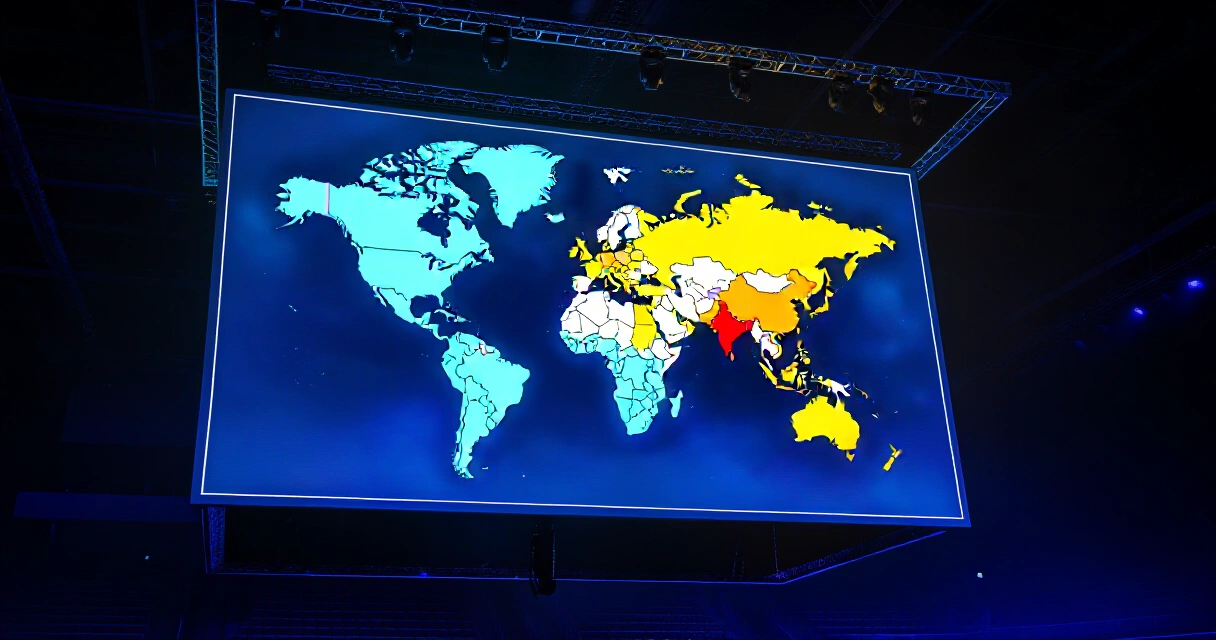
One detail that trips up newer competitors: qualification is almost always region-locked. A North American team cannot enter a European regional qualifier, even if no rule explicitly states it, because the game accounts must be registered in the correct regional server and the organizer verifies this. Understanding your region’s specific pathway is as important as understanding the system in general.
Riot Games divides the world into five VCT regions: Americas (covering North America, Latin America North, and Latin America South), EMEA (Europe, Middle East, and North Africa), Pacific (covering Korea, Japan, Southeast Asia, and Oceania), China, and a separate CN sub-league. Each region runs its own Challengers league – the development tier below the partner-team Franchised League – with its own open qualifier rounds and promotion playoffs. Only the top teams from each Challengers league can earn a promotion spot to the franchised league or earn international Wild Cards.
Valve’s Dota 2 divides competition into six regions: Western Europe, Eastern Europe & CIS, North America, South America, Southeast Asia, and China. Each region hosts its own open qualifiers, and the number of spots allocated to each region at The International is proportional to the region’s DPC points performance and viewership – a factor that has historically favored China and Western Europe.
For a broader view of how the global circuit is structured by game and region this year, the Esports Tournaments 2026: Circuit Guide by Game and Region is the leading starting point.
Third-Party and Amateur Tournament Pathways
Not every competitive path runs through a publisher-owned circuit. A substantial ecosystem of third-party organizers – ESL, FACEIT, DreamHack (now part of ESL Gaming), PGL, BLAST Premier, WePlay Esports, and dozens of regional operators – host their own events that can serve as stepping stones.
FACEIT’s open ladder and its monthly cup system, for example, let CS2 players compete every weekend at escalating levels of prize pool and prestige. A team that wins a FACEIT Monthly Final gains visibility with team scouts and organizers, and ESL often pulls its invitational lists partly from FACEIT performance data. Similarly, Battlefy hosts hundreds of community-run tournaments each week across dozens of titles, many of which serve as unofficial proving grounds for organizations scouting talent.
College and scholastic leagues are also a growing pipeline. The North American Scholastic Esports Federation (NASEF) and the National Association of Collegiate Esports (NACE) operate structured league systems for high school and college players respectively, and several Tier-1 organizations have signed players directly from college rosters. The High School Esports League (HSEL) similarly runs varsity competition across multiple titles, providing verifiable competitive history that can support professional team applications.
To understand what major venues and events look like for teams that do break through, the review of Esports Tournaments Explained: Formats, Prize Pools, and How They Work covers the full structure of professional events.
What Tournament Organizers Actually Look For
Even when a path exists, execution matters. Teams that consistently fail to advance through open qualifiers often make the same structural mistakes: roster instability, no dedicated in-game leader (IGL) or coach, inconsistent practice schedules, and poor understanding of the specific meta or map pool for the event.
Organizers who issue discretionary invitations consider factors beyond raw win rate. Team history and stability, streaming presence, social following, and region representation all factor in. A team from an underserved region – Southeast Asia, Latin America, or the Middle East – may receive a discretionary invite ahead of a slightly higher-rated team from a heavily represented region because organizers want diverse representation and broadcaster interest.
The Wikipedia article on Esports notes that organizational backing, sponsorship deals, and media partnerships now factor significantly into which teams receive invitations at the top tier – a reality that makes the open qualifier route all the more important for genuinely independent teams.
| Qualification Route | Accessibility | Time Investment | Requires Organization Backing? | Best For |
|---|---|---|---|---|
| Open Qualifier | High – anyone can enter | 1–3 weekends | No | New or unsigned teams |
| Ranked Ladder Cutoff | Medium – requires sustained grinding | Entire season (weeks) | No | Individual-skill-focused players |
| Circuit Points / RMR | Low – must already compete at mid-tier | Full circuit season | Usually yes | Established orgs seeking top seeds |
| Direct Invitation | Very low – reserved for top teams | N/A (reputation-based) | Almost always | Top-ranked established teams |
| College / Scholastic League | High – for enrolled students | Semester or school year | No | Student players building a resume |
Roster stability is the qualifier most teams overlook. A team that plays together for six months will almost always outperform a team of individually stronger players who have practiced together for six weeks.
Teams hoping to compete at the highest-profile events – and understand what those venues and production environments look like – can read more in The Biggest Esports Tournaments in the World: Prize Pools, Viewership, and Prestige Ranked.
FAQ: Qualifying for Esports Tournaments
Do you need to be part of a professional organization to compete in esports tournaments?
No. Open qualifiers are specifically designed to let unsponsored, unaffiliated teams compete. Players form a roster of five, meet the game’s ranked-tier requirements, and register through the official platform – no organization backing required. In fact, some of the most memorable Cinderella runs in esports history – including several teams at CS:GO Majors – came from players competing independently before being signed after their qualifier performance attracted attention. That said, reaching the closed-qualifier level consistently becomes much easier with organizational support for bootcamp costs, coaching staff, and travel logistics.
What rank do you need to qualify for tournaments like a CS2 Major or Valorant Champions?
Requirements vary by event and are updated each season. For CS2 Major qualifying (the RMR open rounds), Valve historically sets a minimum Premier Rating in the top regional percentile – typically requiring players to be in the top few thousand active accounts in their region. For Valorant’s VCT Challengers open rounds, Riot requires all five active roster members to hold at least Immortal rank on accounts registered in the qualifying region. For Dota 2’s regional qualifiers, Valve requires players to have their accounts in Good Standing (no active bans) but does not enforce a strict MMR floor at the open round stage, though teams without very high MMR players almost never advance past the first round in practice.
How long does the qualifier process take from sign-up to the main event?
For most major events, the full qualifier process runs three to six weeks from the open qualifier registration deadline to the last closed-qualifier match. Open rounds typically run over one or two weekends, condensed into a single-elimination format. The closed qualifier – a smaller bracket of 8 to 16 teams – then runs the following one to two weeks, usually in a double-elimination format with best-of-three series. After the closed qualifier concludes, winning teams typically have two to four weeks before the LAN event itself, which most organizers use as a grace period for visa processing and travel logistics for international participants.
Can you qualify for an international tournament from a country with a small esports scene?
Yes, but the path is harder. If your country falls within a recognized region – say, Southeast Asia for Dota 2 or EMEA for Valorant – you compete in that region’s qualifier alongside teams from larger esports nations. Some publishers have introduced sub-regional splits to help. Riot’s Valorant Pacific region, for example, separately seeds teams from Oceania, Japan, and Southeast Asian sub-regions. For games without sub-regional protection, players from smaller scenes often need to either relocate accounts to a more active region (where eligible by residency rules) or grind through the regional qualifier against historically dominant programs from South Korea, China, or Western Europe. Scholarships from NASEF and college programs have opened some alternative paths specifically for players from under-resourced regions.
Are there age restrictions for competing in esports tournaments?
Most tier-1 circuit events require players to be at least 16 years old, and some – including certain ESL and Riot-operated events with prize pools above a threshold – require players to be 18 to receive prize money or sign contracts without parental consent. Valve’s Major rules for CS2 require players to be at least 16 years old at the time of the event. Scholastic leagues like NASEF and HSEL have their own age brackets specifically for minors and provide structured paths that work within those constraints. The National Association of Collegiate Esports (Wikipedia) documents the college-level requirements in detail.
What platforms host esports open qualifiers?
The main platforms used by professional organizers are ESL Play (esl.gg/play), FACEIT (faceit.com), Battlefy (battlefy.com), Toornament (toornament.com), and publisher-owned hubs such as Riot’s Battle.gg. ESL Play and FACEIT handle the largest volume of qualifying events, particularly for CS2 and Dota 2. Battlefy is especially strong for North American amateur and college events across multiple titles. Publisher platforms handle their own flagship circuits – Riot’s VCT qualifiers run through Battle.gg, while Valve’s RMR qualifiers are administered through partner organizations like ESL and PGL using their respective platforms.
How important is a coach or analyst for qualifying teams?
Research from the academic journal International Journal of Esports and practitioner surveys suggest that teams with dedicated coaching staff show measurably better performance consistency compared to self-coached rosters, particularly in best-of-three and best-of-five formats where opponent adaptation matters most. In open-qualifier single-elimination rounds, mechanical skill often decides outcomes. But in closed qualifiers – where opponents have played each other before and VOD scouting is common – strategic preparation and in-game leadership become the differentiating factors. Most teams that consistently advance past open rounds employ at least a part-time analyst or in-game leader dedicated to preparation.
Is there a path into Tier-1 esports that doesn’t require open qualifiers?
In franchised ecosystems – like the LCS (North America’s League of Legends Championship Series) or the Overwatch League – team slots are bought by organizations rather than earned through open play. A player can bypass the qualifier path entirely if they are signed directly by a franchised organization. This typically happens through scouting: performing well in ranked play, building a streaming presence, earning visibility through third-party cups, or being headhunted from a college program. Franchised leagues have faced criticism for limiting open competition, which is part of why Riot restructured the LCS format in 2023–2024 to re-introduce promotion tournaments between the Academy and main roster levels.
Sources
- Newzoo Global Esports & Live Streaming Market Report 2024 – newzoo.com
- Wikipedia: Esports – en.wikipedia.org/wiki/Esports
- Wikipedia: National Association of Collegiate Esports – en.wikipedia.org/wiki/National_Association_of_Collegiate_Esports
- North American Scholastic Esports Federation (NASEF) – nasef.org
- NACE Collegiate Esports – nacesports.org
- International Journal of Esports (Tandfonline) – tandfonline.com
Top Esports Organizations 2026: Teams, Rosters, and Performance Rankings