
Summary
The global esports industry generated an estimated $1.87 billion in total revenues in 2024 according to Newzoo, and a significant share of that figure flows through the hands of a small group of tournament organizers who plan, produce, and broadcast...
Table of contents
- 1 What Does an Esports Tournament Organizer Actually Do?
- 2 A Brief History: How Tournament Organizers Emerged
- 3 ESL Gaming: The Largest Third-Party Organizer
- 4 PGL: The CS2 and Dota 2 Specialist from Eastern Europe
- 5 BLAST Premier: The Curated Circuit Model
- 6 Publisher-Run Circuits: Riot Games, Valve, and Activision Blizzard
- 7 Other Major Organizers: WePlay, EPICENTER, and Regional Players
- 8 Head-to-Head Comparison: ESL, PGL, BLAST, and Riot
- 9 Prize Pool and Production Budgets: What the Numbers Show
- 10 How Organizers Choose Venues and Cities
- 11 The Role of Sponsors and Media Rights in Organizer Revenue
- 12 Trends Shaping Tournament Organizers in 2025–2026
- 13 FAQ: Esports Tournament Organizers
- 13.1 Who is the biggest esports tournament organizer in the world?
- 13.2 What is the difference between ESL, PGL, and BLAST?
- 13.3 Do esports tournament organizers make money?
- 13.4 How does an organizer get the rights to run a CS2 Major?
- 13.5 What happened to the Overwatch League?
- 13.6 Which esports organizer runs the most games?
- 13.7 How do esports teams qualify for events run by these organizers?
- 13.8 Is the Esports World Cup run by an independent organizer?
- 14 Sources
The global esports industry generated an estimated $1.87 billion in total revenues in 2024 according to Newzoo, and a significant share of that figure flows through the hands of a small group of tournament organizers who plan, produce, and broadcast the world’s biggest competitive gaming events. Understanding who these companies are, how they differ, and what games they control is essential for anyone tracking where competitive gaming is headed in 2026.
What Does an Esports Tournament Organizer Actually Do?
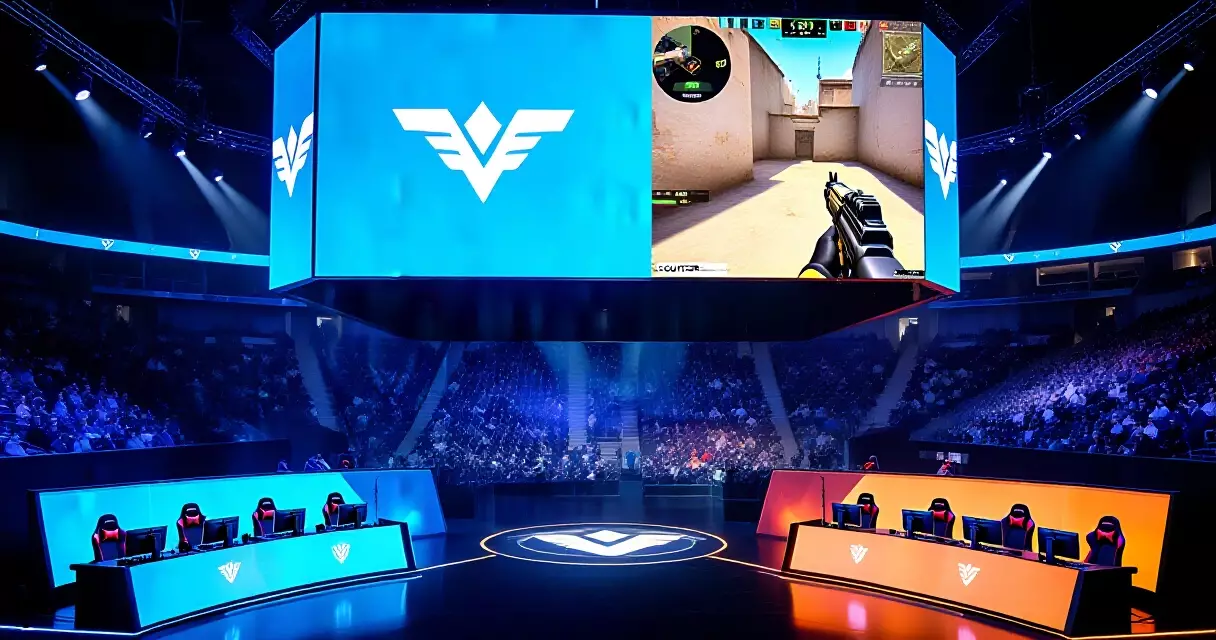
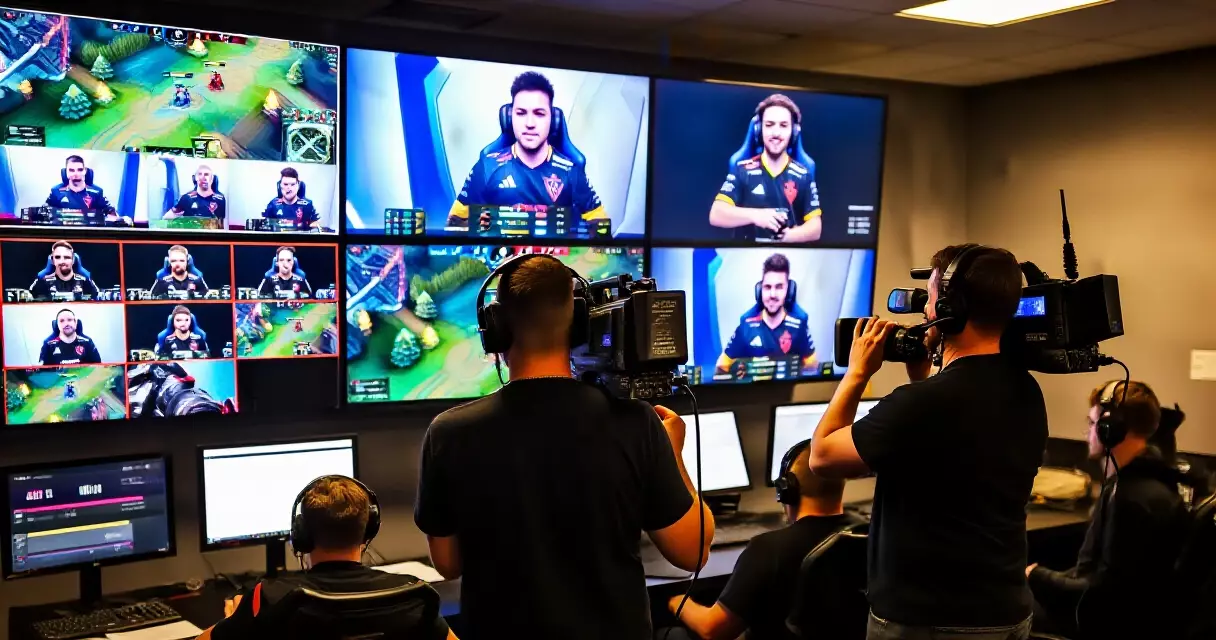
An esports tournament organizer is the company or entity responsible for planning, funding, producing, and broadcasting competitive gaming events. This role spans a surprisingly broad set of responsibilities: securing venue contracts, licensing game titles from publishers, recruiting and paying casters and analysts, managing the bracket and scheduling logic, coordinating with team travel, handling prize pool distribution, and delivering broadcast content to streaming platforms like Twitch and YouTube.
Organizers sit in a distinct position in the esports ecosystem. They are neither the game publishers (who own the intellectual property) nor the esports teams (who employ the players). Instead, they act as the connective tissue: the neutral third-party infrastructure layer that makes a tournament happen. Some organizers work under license from publishers, while others operate proprietary circuits in games where publishers grant open licensing.
Revenue models vary. Major organizers earn money through media rights deals, sponsorship packages, ticket sales, merchandise, and in some cases a share of publisher broadcast fees. For a deeper look at how prize pools and revenue split across the industry, see our piece on esports tournament prize pools: from thousands to millions.
A Brief History: How Tournament Organizers Emerged
Organized competitive gaming predates the term "esports" by decades. The first widely-cited large-scale gaming tournament was the 1980 Space Invaders Championship hosted by Atari, which attracted around 10,000 participants across the United States according to Wikipedia’s esports article. However, the modern third-party tournament organizer model took shape in the early 2000s alongside the rise of broadband internet, PC gaming cafes, and games like Counter-Strike and StarCraft.
ESL (Electronic Sports League) was founded in Germany in 2000 and quickly became one of the first organizers to build a scalable, recurring tournament structure for PC games. Around the same time, the Cyberathlete Professional League (CPL) in the United States ran high-profile Counter-Strike and Quake events before shutting down in the late 2000s. Major League Gaming (MLG) followed in North America, focusing heavily on Halo and Call of Duty console titles.
The period from 2012 to 2018 marked the fastest growth phase. Riot Games launched the League of Legends Championship Series (LCS) in 2013, establishing the franchised league model in which a publisher controls the entire competitive circuit. Valve introduced The International Dota 2 Championship in 2011, pioneering the crowd-funded prize pool through Battle Pass systems. By 2017, total esports prize money distributed annually had crossed $100 million for the first time, according to Esports Earnings records tracked by Wikipedia.
ESL Gaming: The Largest Third-Party Organizer
ESL Gaming is the most recognizable name in third-party esports tournament organization. Founded in 2000 in Cologne, Germany, ESL grew from a hobbyist online ladder platform into a global production company running events in Counter-Strike, Dota 2, StarCraft II, Rainbow Six Siege, and numerous other titles. Its flagship events include ESL One (a series of international CS2 and Dota 2 majors held in large arenas), IEM (Intel Extreme Masters), and the ESL Pro League.
In 2022, Saudi Arabia’s Savvy Games Group, the gaming arm of the Public Investment Fund (PIF), acquired a majority stake in the ESL FACEIT Group (EFG) – the combined entity formed after ESL and FACEIT merged – in a deal valued at approximately $1.5 billion, as reported by Reuters. This acquisition made EFG the world’s largest esports company by event footprint and platform user base, with FACEIT’s amateur matchmaking platform contributing tens of millions of registered users alongside ESL’s elite circuit infrastructure.
ESL holds the rights to operate CS2 Majors under a license from Valve, making ESL and PGL the two companies that rotate responsibility for Counter-Strike’s most prestigious tournament bracket. The ESL Pro League runs as a points-earning feeder circuit, and the best teams earn direct spots to Major qualification stages. This vertically integrated model – from grassroots FACEIT ladders to Major-level play – is ESL’s core competitive advantage.
ESL’s acquisition by Savvy Games Group in 2022 marked the first time a sovereign wealth fund directly took control of a major esports organizer, reshaping assumptions about who funds competitive gaming infrastructure.
PGL: The CS2 and Dota 2 Specialist from Eastern Europe
PGL (Professional Gamers League) is a Romanian esports organization headquartered in Bucharest. Despite its eastern European roots, PGL consistently delivers some of the most technically polished major tournament productions in the industry. The company has hosted multiple CS2 (formerly CS:GO) Majors, including PGL Major Antwerp 2022, PGL Major Copenhagen 2024, and PGL Wallachia Season 1 and Season 2 for Dota 2.
PGL is particularly respected for broadcast production quality. Its in-arena graphics, observer camera work, and talent line-up are frequently cited by analysts as setting the benchmark for CS2 tournaments. The company operates as a relatively lean organization compared to ESL, focusing on a smaller number of high-profile events rather than a continuous year-round circuit.
PGL also holds the rights to operate PGL Dota 2 events in partnership with Valve and has expanded its portfolio into other titles including Mobile Legends: Bang Bang and PUBG. Its willingness to host events outside Western Europe – in cities like Bucharest, Krakow, and Antwerp – has helped diversify the geographic footprint of major tournament stops, a topic explored in our ranking of the biggest esports tournaments in the world.
BLAST Premier: The Curated Circuit Model
BLAST Premier is a Copenhagen-based esports company that operates one of Counter-Strike’s major third-party circuits alongside ESL. BLAST’s approach differs from ESL in several important ways. Where ESL emphasizes volume – running dozens of events across multiple games throughout the year – BLAST focuses on a curated seasonal calendar. The BLAST Premier circuit consists of two Spring and two Fall seasons (groups + finals) plus a World Final at the end of each year, capping the number of matches teams play under the BLAST umbrella.
BLAST also operates the BLAST Open circuit for CS2 and has expanded into other games including Apex Legends through the ALGS (Apex Legends Global Series) partnership with EA, as well as Halo esports. This multi-game expansion strategy mirrors what ESL has done, though on a smaller scale. BLAST’s broadcast production emphasizes viewer-friendly storyline packages and high-quality studio segments between matches, aiming to attract casual viewers alongside the core CS fanbase.
BLAST is also notable for its team partnership model. Unlike fully open circuits, BLAST events historically involved a fixed group of partner teams, a structure that drew both praise (for ensuring top-quality competition) and criticism (for limiting access to rising challengers). The company has since evolved its formats to allow more qualification pathways. For a breakdown of how these structural choices work, see our guide to esports tournament formats including single elimination, double elimination, round robin, and Swiss.
Publisher-Run Circuits: Riot Games, Valve, and Activision Blizzard
Not all major esports tournaments are run by independent third parties. Several of the most-watched events in the world are organized directly by game publishers, who retain full control over format, teams, broadcast rights, and prize pools.
Riot Games operates the most extensive publisher-owned competitive ecosystem. The company runs Valorant Champions Tour (VCT), the League of Legends World Championship (Worlds), the League of Legends Championship Series (LCS) in North America, and multiple regional leagues across EMEA, Korea (LCK), China (LPL), and other territories. Riot controls every element of these circuits, from team franchising agreements to broadcast exclusivity deals with streaming platforms. The VCT in particular has grown rapidly since Valorant’s 2020 launch, with the 2023 Masters Tokyo and 2023 Champions Seoul drawing over a million peak concurrent viewers on Twitch according to Esports Charts.
Valve takes a hybrid approach. The International is Valve’s own flagship event for Dota 2, handling prize pool funding directly (historically through the Battle Pass system). However, Valve licenses regional leagues and qualifier events to third-party organizers like ESL, PGL, and WePlay Esports, retaining only the final championship itself as a fully in-house production.
Activision Blizzard launched the Overwatch League and Call of Duty League as franchised city-based circuits starting in 2018 and 2020 respectively. Both leagues faced financial turbulence by 2023, with the Overwatch League ultimately shut down after its 2023 season, its teams released from their franchise agreements. The Call of Duty League has continued under a restructured format. This trajectory illustrates the risks of a fully publisher-controlled model that depends on sustained franchise fees from team owners.
Other Major Organizers: WePlay, EPICENTER, and Regional Players
Beyond the largest names, several other organizers run events that matter to fans and teams in specific games or regions.
WePlay Esports is a Ukrainian-founded company that has become known for its theatrical, highly produced events. WePlay Anime Snow Battle, WePlay Dragon Temple, and similar events are built around elaborate visual themes that blend competitive play with entertainment spectacle. WePlay primarily operates Dota 2, CS2, and Mortal Kombat tournaments, and despite the disruptions caused by Russia’s invasion of Ukraine in 2022, the company continued operating with a distributed team.
EPICENTER was a Russia-based organizer that ran well-regarded CS:GO and Dota 2 events from 2016 through the early 2020s. Geopolitical developments following February 2022 effectively ended EPICENTER’s ability to host events, as major Western teams declined to participate in Russia-based tournaments and Valve suspended Russian and Belarusian teams from international competition.
Perfect World operates Dota 2 and CS2 circuits in China under licenses from Valve, running the China regional qualifiers and the China-specific league seasons. Tencent similarly manages the infrastructure for Honor of Kings International Championship and coordinates League of Legends LPL operations through its ownership of Riot Games.
Regional organizers in Southeast Asia (notably ONE Esports, owned by ONE Championship), South Korea (OGN – OnGameNet, the pioneer of broadcast esports), and South America (GAMERS CLUB in Brazil) fill critical gaps for audiences and teams that the global majors cannot consistently serve. For players looking to break into competitive play through these regional structures, our breakdown of how to qualify for esports tournaments covers the pathways in detail.
Head-to-Head Comparison: ESL, PGL, BLAST, and Riot
The table below compares the key attributes of the four most prominent esports tournament organizers at the top of the industry as of mid-2026.
| Organizer | Founded | Headquarters | Primary Games | Model | Notable Events |
|---|---|---|---|---|---|
| ESL Gaming (EFG) | 2000 | Cologne, Germany | CS2, Dota 2, R6 Siege, StarCraft II | Third-party, licensed | IEM Katowice, ESL One, ESL Pro League |
| PGL | 2002 | Bucharest, Romania | CS2, Dota 2, MLBB, PUBG | Third-party, licensed | PGL Major, PGL Wallachia, PGL Open |
| BLAST Premier | 2019 | Copenhagen, Denmark | CS2, Apex Legends, Halo | Third-party, curated circuit | BLAST Premier World Final, BLAST Open |
| Riot Games | 2006 (esports from 2011) | Los Angeles, USA | League of Legends, Valorant | Publisher-owned franchise | Worlds, VCT Champions, LCS, LCK, LPL |
Each model carries trade-offs. Publisher-owned circuits like Riot’s guarantee long-term stability and cohesive branding but limit competitive access to franchised team slots. Third-party organizers like ESL and PGL allow for broader participation and multi-game portfolios but depend on publisher licensing goodwill, which can be revoked or restructured at any time.
Third-party organizers live and die by their relationships with publishers – a single licensing decision can redraw the entire competitive map overnight.
Prize Pool and Production Budgets: What the Numbers Show
Prize pool size is one of the most visible metrics by which fans and analysts judge tournament organizers, though it is an imperfect proxy for overall event quality. The table below lists landmark prize pools associated with events organized or hosted by the major organizers discussed in this article.
| Event | Organizer | Game | Year | Prize Pool (USD) | Source |
|---|---|---|---|---|---|
| The International 2021 | Valve | Dota 2 | 2021 | $40.02 million | Valve / Wikipedia |
| The International 2019 | Valve | Dota 2 | 2019 | $34.33 million | Valve / Wikipedia |
| IEM Katowice 2024 CS2 | ESL Gaming | CS2 | 2024 | $1.25 million | ESL Gaming official |
| PGL Major Copenhagen 2024 | PGL | CS2 | 2024 | $1.25 million | PGL official / Liquipedia |
| VCT Champions 2023 | Riot Games | Valorant | 2023 | $2.25 million | Riot Games official |
| LoL World Championship 2023 | Riot Games | League of Legends | 2023 | $2.25 million | Riot Games official / Wikipedia |
| BLAST Premier World Final 2023 | BLAST | CS2 | 2023 | $500,000 | BLAST official |
The gap between Valve’s crowd-funded Dota 2 prize pools and the fixed pools of other organizers is striking. Valve’s model, in which a portion of Battle Pass sales funded The International prize pool, allowed community money to push totals far beyond what any organizer budget could justify. Valve announced in 2023 that it would move away from the Battle Pass funding model for future Internationals, which is expected to bring Dota 2 prize pools closer to industry norms going forward.
How Organizers Choose Venues and Cities
Venue selection is one of the most consequential decisions an organizer makes. Large arena events in cities like Cologne, Katowice, Stockholm, Los Angeles, or Seoul generate significant ticket revenue, brand exposure, and local media coverage. ESL’s IEM Katowice event, held annually at the Spodek arena in Poland, regularly sells out 11,500 seats and is widely regarded as one of the most atmospherically intense CS2 events on the calendar.
Organizers weigh several factors when selecting host cities: local fan base density, government or municipal support (some cities actively offer subsidies or logistical assistance to attract esports events), venue technical capabilities, and broadcast timezone considerations for key audience markets. A European final held in prime Central European Time reaches both European fans live and Asian fans in the morning – a scheduling sweet spot.
Online or studio-based events cost significantly less to produce and remain common for lower-tier qualifiers and regional circuits. The ESL FACEIT Group runs a significant portion of FACEIT-platform events entirely online, with only the finals brought to a physical arena. If you are curious about the venues themselves, our look at major esports arenas and venues where championships are won covers the infrastructure side in detail.
The Role of Sponsors and Media Rights in Organizer Revenue
Sponsorship is the primary revenue driver for most major esports tournament organizers. ESL’s long-running Intel partnership, which branded the IEM series for over a decade, is one of the highest-profile examples of an endemic technology sponsor embedded into an organizer’s event naming rights. Other major sponsors across the big organizers include energy drink brands (Monster, Red Bull), hardware companies (HyperX, SteelSeries, Logitech), and automotive brands (BMW has been an ESL partner).
Media rights deals are growing in importance. Streaming exclusivity agreements – where an organizer sells the right for a single platform to broadcast all of its events – can generate significant recurring revenue. ESL signed a multi-year deal with YouTube to stream ESL and DreamHack events starting in 2020. By 2023, several organizers had moved toward non-exclusive streaming strategies to maximize reach rather than lock-in revenue, reflecting changing assumptions about what drives long-term audience growth.
Ticket sales and live event merchandise add meaningful revenue at large arena events, though the COVID-19 pandemic from 2020 to 2022 severely disrupted this income stream and accelerated many organizers’ investment in pure online broadcast formats. The recovery of live event revenue since 2022 has been a key positive trend for organizer financials across the board, according to Newzoo’s annual market reports.
Trends Shaping Tournament Organizers in 2025–2026
Several structural trends are reshaping how major organizers operate as of 2026.
Consolidation. The ESL-FACEIT merger and Savvy Games Group’s $1.5 billion acquisition are part of a broader pattern. Smaller independent organizers have struggled to compete with the production values and sponsor relationships of the largest players. Some have been acquired; others have pivoted to niche games or regional markets.
Middle East investment. Saudi Arabia’s PIF, through Savvy Games Group, has become the most financially powerful actor in esports infrastructure. Beyond EFG, PIF has invested in Esports World Cup (EWC) – a massive multi-game annual tournament held in Riyadh that began in 2024 and rapidly became one of the most-watched and highest-prize-pool events on the calendar.
Mobile esports growth. Organizers are increasingly investing in mobile game circuits. Titles like Mobile Legends: Bang Bang (dominant in Southeast Asia), PUBG Mobile, and Free Fire have massive player bases and engaged competitive communities that traditional PC-focused organizers have been slower to serve. PGL’s expansion into MLBB is an example of this pivot. You can read more on this subject in our piece on what mobile esports is and how competitive mobile gaming works.
Format innovation. Organizers are experimenting with hybrid formats that blend online play with in-person LAN finals to reduce costs while preserving the prestige of a live event. Swiss system group stages, in particular, have become the dominant format across CS2 events run by ESL, PGL, and BLAST, largely because Swiss stages generate more total matches and more meaningful games late in the group stage compared to traditional round-robin pools. Our article on esports tournament formats breaks down exactly how these work.
Declining franchise fees. The franchised city-based league model that Activision Blizzard pioneered proved financially unsustainable in its original form. As the Overwatch League wound down and the Call of Duty League restructured, the industry broadly shifted back toward more open or semi-open qualification structures, which also benefits smaller teams and regional scenes. Riot Games has adjusted its VCT partnership model in response, creating a Challengers pathway to give non-partner teams a route into the top tier.
FAQ: Esports Tournament Organizers
Who is the biggest esports tournament organizer in the world?
By event volume, platform reach, and financial scale, ESL Gaming – operating under the ESL FACEIT Group (EFG) umbrella – is generally considered the largest third-party esports tournament organizer in the world. EFG runs elite events like IEM Katowice and the ESL Pro League while also operating FACEIT, which hosts millions of amateur and semi-professional matches on its platform each year. The group’s acquisition by Savvy Games Group for approximately $1.5 billion in 2022 reinforced its position at the top of the industry’s organizational hierarchy. However, if publisher-run circuits are included, Riot Games – with its League of Legends and Valorant ecosystems – reaches a larger total audience through Worlds and VCT Champions than any single ESL event.
What is the difference between ESL, PGL, and BLAST?
ESL, PGL, and BLAST are all third-party organizers licensed by Valve to run Counter-Strike 2 events, but they differ in scale, philosophy, and event cadence. ESL is the largest, running a year-round circuit across multiple games with the FACEIT amateur platform underpinning its ecosystem. PGL is a specialist organizer known for its high-quality production at a smaller number of major events, primarily CS2 and Dota 2 Majors. BLAST Premier operates a curated seasonal circuit with a fixed calendar of events focused on top-tier CS2 teams, plus expansion into Apex Legends and Halo. All three contribute to the competitive pipeline leading to and around Valve’s own CS2 Major Championships, though with distinct brand identities and audience positioning.
Do esports tournament organizers make money?
Yes, though profitability varies significantly by organizer, event scale, and business model. Revenue streams for major organizers include sponsorship and naming rights deals (which can be worth tens of millions of dollars annually for top-tier events), broadcast media rights (streaming platform exclusivity contracts), ticket sales and live event merchandise, and in some cases publisher fees for operating licensed circuits. Production costs for large LAN events are substantial – arena rentals, technical production crews, broadcast infrastructure, and team travel support all add up. Smaller organizers often operate at a loss on individual events, relying on long-term sponsor relationships or parent company subsidies to remain viable. EFG’s backing by Saudi Arabia’s Public Investment Fund gives it financial resources that most independent organizers cannot match.
How does an organizer get the rights to run a CS2 Major?
Valve maintains control over which companies are authorized to run CS2 Major Championships, the most prestigious events in the Counter-Strike competitive calendar. Organizers apply to Valve and must demonstrate sufficient production capability, broadcast infrastructure, financial stability, and venue capacity. Valve sets minimum prize pool requirements (historically $1.25 million for Majors), lays out the bracket format specifications, and retains final approval on key tournament logistics. ESL and PGL currently hold the two licenses that rotate responsibility for Major hosting. Neither license is permanent – Valve can restructure the Major system at any point, as it has done several times throughout CS:GO’s history. There is no formal public procurement process; Valve negotiates these arrangements privately.
What happened to the Overwatch League?
The Overwatch League (OWL), launched by Activision Blizzard in 2018, was a fully franchised city-based esports league in which teams (“franchises”) paid entry fees reportedly ranging from $20 million to $60 million for slots in the league. The model initially attracted major investor interest but struggled with declining viewership, the challenges of a city-team identity for a global online audience, and Activision Blizzard’s own corporate controversies. After several rounds of team contraction and reduced broadcast deals, Activision Blizzard shut down the Overwatch League following its 2023 season. The league’s closure became a widely-cited example of the risks inherent in the publisher-controlled franchise model when audience engagement does not keep pace with the financial obligations placed on team owners.
Which esports organizer runs the most games?
ESL FACEIT Group runs events across the widest range of titles among third-party organizers, covering CS2, Dota 2, Rainbow Six Siege, StarCraft II, and several others through its various sub-brands (ESL, DreamHack, FACEIT-run tournaments). Riot Games, as a publisher, covers League of Legends, Valorant, and Teamfight Tactics competitively. If the scope is expanded to include publisher-owned circuits operated by their respective companies, Tencent’s portfolio – which includes Honor of Kings, PUBG Mobile (via KRAFTON partnership), and League of Legends LPL through Riot ownership – arguably spans the broadest set of games by global player base, particularly when accounting for the enormous mobile gaming markets in China and Southeast Asia.
How do esports teams qualify for events run by these organizers?
Qualification pathways differ by organizer and event tier. For ESL Pro League, teams earn spots through a combination of direct invitations (based on world ranking) and open regional qualifiers run on the FACEIT platform. For CS2 Majors organized by ESL or PGL, teams work through a series of Regional Major Ranking (RMR) events to accumulate points and earn placement at the Major itself – a process that includes open qualifier rounds accessible to any team. BLAST Premier uses a partner team structure with additional spots filled by qualification from RMR events. Riot’s VCT circuits use a Challengers league to promote teams into the partner tier. For a full breakdown of these pathways, our guide on how to qualify for esports tournaments covers each route in detail.
Is the Esports World Cup run by an independent organizer?
The Esports World Cup (EWC), launched in Riyadh, Saudi Arabia in 2024, is operated by the Esports World Cup Foundation, a non-profit entity backed by the Saudi Arabian government and aligned with Savvy Games Group and the Public Investment Fund. It is neither a traditional third-party organizer nor a publisher-controlled circuit – it is better understood as a government-backed mega-event that licenses slots from multiple game publishers simultaneously, aggregating competition across dozens of titles into a single multi-week festival format. In 2024, the EWC distributed a combined prize pool of over $60 million across all participating games, making it the single largest prize pool aggregation in esports history up to that point. The EWC model represents a new category of organizer: the sovereign-backed esports event host.
Sources
- Newzoo Global Esports Market Report 2024
- Wikipedia – Esports
- Wikipedia – ESL Gaming
- Wikipedia – PGL (company)
- Wikipedia – BLAST Premier
- Wikipedia – Overwatch League
- Wikipedia – The International (Dota 2)
- Wikipedia – Valorant Champions Tour
- Wikipedia – League of Legends World Championship
- Esports Charts – viewership data
Top Esports Organizations 2026: Teams, Rosters, and Performance Rankings