


Summary
In 2026, the highest-paid League of Legends player earns more than most NBA bench players – yet the average esports professional still takes home a fraction of what a mid-tier MLB roster player collects over a single season. That paradox...
Table of contents
- 1 A Brief History: How Both Industries Set Their Pay Standards
- 2 Salary Floors and Ceilings: The Numbers Side by Side
- 3 Prize Money vs. Base Salary: A Structural Difference
- 4 Career Length and Earning Windows
- 5 Where the Gap Narrows: Top-Tier Esports vs. Mid-Tier Traditional Sports
- 6 Revenue Models and Why They Drive the Pay Gap
- 7 Regional Variation: North America, Europe, South Korea, and China
- 8 The Benefits Gap: Health, Retirement, and Representation
- 9 What 2026 Trends Tell Us About the Future
- 10 FAQ: Esports Salaries vs. Traditional Sports
- 10.1 Do esports players earn as much as traditional athletes?
- 10.2 Why is the esports salary floor so much lower than traditional sports?
- 10.3 How does prize money factor into esports earnings compared to traditional sports bonuses?
- 10.4 Do esports players get benefits like health insurance and retirement plans?
- 10.5 Which esports titles pay the highest salaries?
- 10.6 Is the salary gap between esports and traditional sports closing?
- 10.7 Can esports players earn more than traditional athletes through streaming?
- 10.8 What regions pay esports players the most?
- 11 Sources
In 2026, the highest-paid League of Legends player earns more than most NBA bench players – yet the average esports professional still takes home a fraction of what a mid-tier MLB roster player collects over a single season. That paradox sits at the heart of any honest comparison between esports and traditional sports compensation, and it explains why the debate refuses to go away. Esports prize pools have shattered records, broadcast rights deals are multiplying, and franchise valuations are climbing into nine figures. But salaries across the two worlds remain separated by structures, timelines, and economic realities that are worth understanding in detail.
A Brief History: How Both Industries Set Their Pay Standards
Traditional sports compensation did not arrive at today’s figures overnight. Baseball players staged a series of labor actions from the 1960s onward, culminating in free agency rights after the 1975 Messersmith–McNally arbitration ruling. The NBA introduced its first collective bargaining agreement (CBA) in 1976. These hard-won labor protections gave athletes the right to sell their services on an open market, and salaries compounded from there. The NFL, MLB, NBA, and NHL now each publish minimum salaries, maximum rookie contracts, and salary-cap rules that create a transparent floor under every professional player.
Esports has no such history. Competitive gaming as a paid profession barely predates 2000 for most titles. The Cyberathlete Professional League offered prize money in the late 1990s, but stable team salaries did not become the norm until around 2013–2016, when Riot Games’ League of Legends Championship Series and Valve’s Dota 2 ecosystem matured. The Overwatch League’s franchise model, launched in 2018, briefly imposed a $50,000 minimum salary – the first league-wide floor in North American esports. That experiment collapsed by 2023 when Activision Blizzard wound the OWL down. No universal esports labor standard currently exists in the United States.
Salary Floors and Ceilings: The Numbers Side by Side
The most useful way to compare pay across the two industries is to look at minimums, medians, and maximums separately, because aggregating everything into one average produces a misleading number in both camps.
| League / Scene | Minimum Salary | Estimated Median | Reported Top Salary | Source / Notes |
|---|---|---|---|---|
| NFL (2025) | $795,000 | ~$2.8 million | $89 million (Patrick Mahomes AAV) | NFLPA / Spotrac |
| NBA (2024–25) | $1,119,563 | ~$9.7 million | $62.6 million (Nikola Jokic) | NBA CBA / HoopsHype |
| MLB (2025) | $740,000 | ~$1.5 million | $43 million (Shohei Ohtani AAV) | MLBPA / Spotrac |
| NHL (2024–25) | $775,000 | ~$3.0 million | $12.5 million (Connor McDavid) | NHLPA |
| League of Legends LCS/LEC (2025) | ~$75,000 (no official floor) | ~$150,000–$300,000 | ~$2–3 million (top rosters) | Industry estimates / Dot Esports |
| Dota 2 (tier-1, 2025) | No floor | ~$50,000–$120,000 base | Prize-based (TI winner share) | Esports Earnings / team disclosures |
| Valorant VCT (2025) | ~$50,000 (Riot guideline) | ~$100,000–$250,000 | ~$1 million+ (franchised stars) | Dot Esports / VCT partner disclosures |
| CS2 / CS:GO tier-1 (2025) | No floor | ~$100,000–$200,000 | ~$1.5 million (elite players) | HLTV / industry reports |
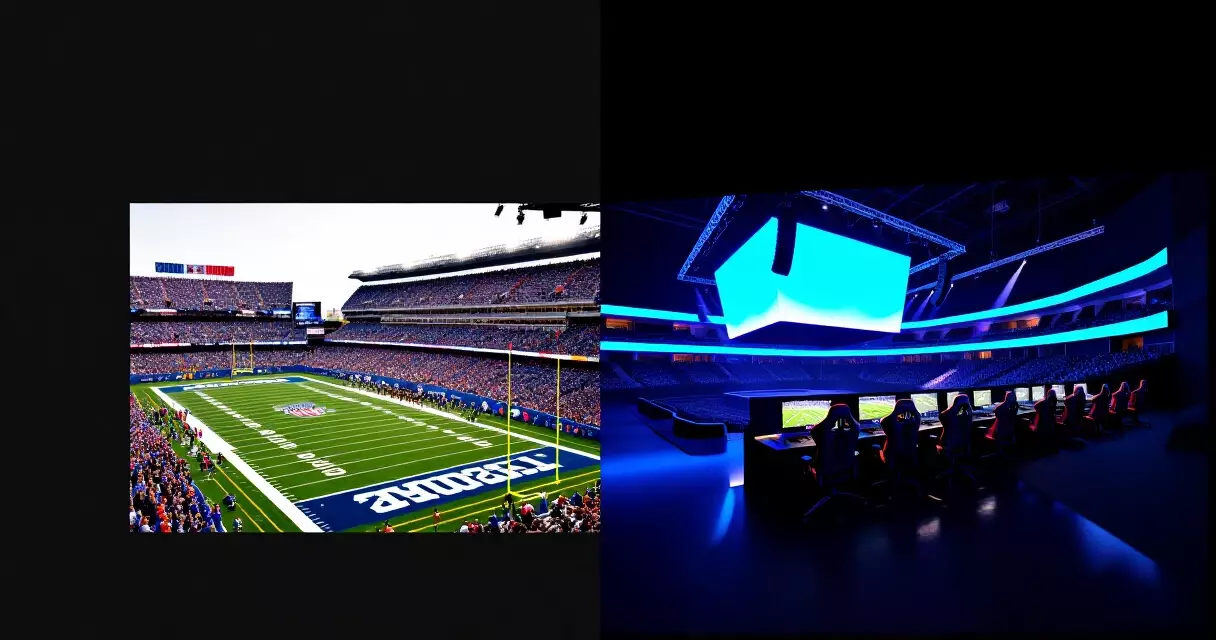
The contrast is stark at the floor. Every major North American traditional league guarantees its lowest-paid active roster member at least $740,000 a year. No esports league operating in 2026 enforces a comparable floor. Riot Games encourages VCT partner teams to pay players a minimum, but the figure is a guideline rather than a collectively bargained right.
Every major North American traditional sports league guarantees its lowest-paid active roster member at least $740,000 a year. No esports league operating in 2026 enforces a comparable floor.
Prize Money vs. Base Salary: A Structural Difference
One of the biggest sources of confusion in salary comparisons is the role of prize money. Traditional athletes do earn bonuses – postseason shares, performance incentives, playoff revenue – but their base salaries are the dominant income stream. A backup NFL safety making the league minimum does not meaningfully depend on Super Bowl prize money to pay rent.
For many esports professionals, especially in Dota 2 and certain fighting-game circuits, prize money is a large or even primary component of annual income. The International (TI), Dota 2’s premier event, generated a prize pool of over $40 million at its peak in 2021. Winners of TI can earn individual shares exceeding $3 million in a single tournament. But those windfalls are rare, bracket-dependent, and inconsistent year to year. A player who wins TI one year and exits in the group stage the next may see their income drop by 90 percent with no guaranteed base to fall back on.
This prize-versus-salary structure has real consequences for career planning and financial stability. The U.S. Bureau of Labor Statistics classifies professional athletes broadly, but the income volatility documented in esports aligns far more with freelance entertainment work than with the guaranteed multi-year contracts typical of an NFL starter. Many esports players sign contracts of one to two years with no guaranteed extensions, while a traditional sports star at a comparable competitive level might lock in a five-year deal worth tens of millions in guaranteed money.
Career Length and Earning Windows
Career length is another dimension where the two industries diverge sharply, and it has a direct bearing on lifetime earnings.
According to research published in journals tracking sports science, the average NFL career lasts approximately 3.3 years (NFL Players Association data). NBA careers average around 4.5 years. MLB players who reach the majors have a median tenure closer to 5.6 years. These are short careers by most professional standards, but they come with high salaries and, for vested players, meaningful pension and benefit packages.
Esports careers are frequently even shorter at the competitive peak. Reaction time and mechanical precision – critical in first-person shooters and real-time strategy games – tend to peak in the late teens and early-to-mid twenties. A 2020 study by researchers at the MDPI journal Healthcare found that esports athletes show cognitive performance peaks between ages 16 and 24, with measurable decline afterward. Retire at 26 with four years of mid-tier esports earnings, and lifetime compensation is modest even if the peak years paid reasonably well.
Traditional athletes also retire young relative to the general workforce, but their compensation over a shorter window is so much higher that the lifetime totals diverge dramatically. An NBA player on a minimum contract for five seasons earns roughly $5.6 million in base salary alone. A median-level esports professional over the same five years might earn $350,000 to $500,000 total, prize money included.
| Metric | Traditional Sports (North America avg.) | Esports (competitive tier, est.) |
|---|---|---|
| Average peak career length | 3.3–5.6 years (varies by sport) | 3–5 years (shorter in shooters) |
| Estimated lifetime earnings (median player) | $2 million–$15 million+ | $200,000–$600,000 |
| Pension / retirement benefits | Yes (all 4 major leagues) | Rare / none in most orgs |
| Health insurance provision | Standard across leagues | Inconsistent; not universal |
| Contract guarantees | Fully guaranteed (NBA); partial (NFL) | Rarely fully guaranteed |
| Agent / union representation | Mandatory unions (NFLPA, NBPA, etc.) | No union; individual agents rare |
Where the Gap Narrows: Top-Tier Esports vs. Mid-Tier Traditional Sports
The comparison looks very different when you restrict it to the elite tier in esports versus the median or minimum tier in traditional sports. S-tier players in League of Legends – the Faker, Chovy, or Ruler level – command salaries reported between $2 million and $5 million per year from their organizations, a figure that overlaps meaningfully with what a mid-rotation NBA player earns on a veteran minimum extension.
Lee “Faker” Sang-hyeok of T1 is the most cited example. South Korean media and sponsor disclosures have placed his combined earnings (salary, endorsements, prize money) in the range of $4–$8 million annually in recent years, making him competitive with household-name athletes in mid-market traditional sports franchises. Similarly, top-earning CS2 and Valorant players at franchised organizations are pulling seven-figure total compensation packages when streaming revenue and sponsorships are included.
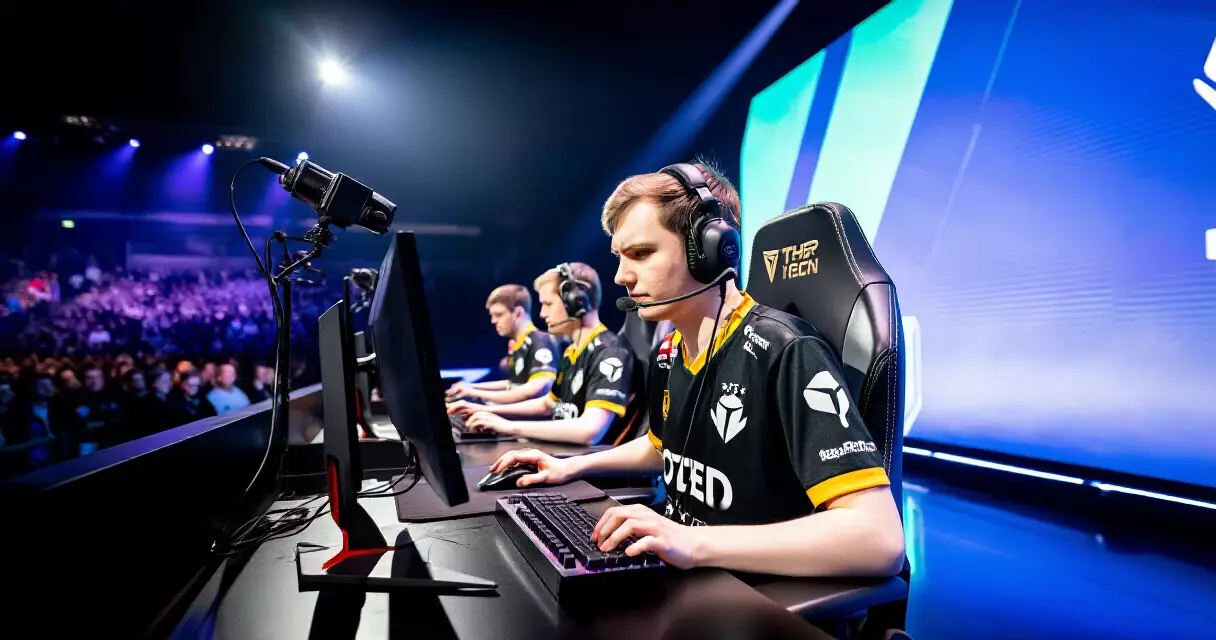
Streaming and content creation are the wildcard. Traditional athletes are prohibited from or constrained in moonlighting during their seasons. Esports professionals frequently stream on Twitch or YouTube, build substantial audiences, and earn income that materially supplements – or in some cases exceeds – their team salaries. Tyler “Ninja” Blevins, at his peak, was earning an estimated $500,000 per month from streaming alone, dwarfing what any conventional sports athlete could earn through a parallel media career during their competitive years. Streaming income is not a salary, but it fundamentally changes the total earnings picture for high-profile esports figures.
At the elite tier, the gap between esports and traditional sports salaries is smaller than headlines suggest – especially once streaming and sponsorship income enters the calculation.
For deeper context on how prize pools contribute to esports economics, see our article on esports tournament prize pools and their history, which traces how top-end payouts have grown since the early 2000s.
Revenue Models and Why They Drive the Pay Gap
Salary levels in any professional sport are ultimately determined by the revenue the sport generates and how that revenue is distributed to players. Traditional North American sports leagues share a well-developed mix of broadcast deals, ticket sales, merchandise, and stadium revenue. The NFL’s current television rights package is worth approximately $110 billion over 11 years, signed with CBS, Fox, NBC, ESPN/ABC, and Amazon in 2021 (per Sports Illustrated reporting). That kind of deal provides the economic floor from which league minimums are set.
Esports broadcast rights, by comparison, remain nascent. Most major esports events are broadcast free on Twitch, YouTube, or proprietary platforms. Viewership numbers are high – the 2023 League of Legends World Championship peaked at 6.4 million concurrent viewers according to Riot Games – but monetizing live esports audiences at traditional TV rates has proven difficult. Advertisers pay lower CPMs for streaming audiences than for linear television, and subscription revenue from esports-specific broadcasts has not yet reached scale.
This revenue gap feeds directly into the salary gap. Until esports organizations generate revenues comparable to NFL or NBA franchises, they cannot pay comparable salaries across their full rosters. Our overview of how esports tournaments make money breaks down the revenue streams in detail and explains why the economics of esports differ from traditional sports in ways that affect player pay at every level.
Regional Variation: North America, Europe, South Korea, and China
Esports salaries are not uniform globally, and comparing them to traditional sports requires accounting for regional market differences that do not apply the same way in the NFL or NBA.
South Korea has the longest history of treating esports as a legitimate professional sport. The KeSPA (Korea e-Sports Association) has regulated professional StarCraft competition since the early 2000s, and the country’s League of Legends ecosystem – the LCK – produces some of the highest-paid players in the world. Korean players frequently command transfer fees and salaries in the $500,000 to $2 million range when imported by Chinese, North American, or European organizations.
China’s League of Legends Pro League (LPL) has historically been the highest-spending region, with organizations backed by Tencent, Alibaba, and other technology conglomerates paying salaries that sometimes match or exceed LCS equivalents. The Chinese market’s willingness to spend on esports talent has inflated global salary expectations for elite players, narrowing the gap with traditional sports stars in that country.
Europe and North America show more variation. LEC (League of Legends EMEA Championship) salaries for non-star players are reported to be lower on average than LCS equivalents. Outside the franchised leagues, semi-professional and regional esports players across all markets earn far less – often sub-$30,000 per year – with no benefits. This compares poorly to even minor-league traditional sports, where MLB’s minor league minimum rose to $30,000 per season after a 2022 agreement (MLB.com), with housing and travel often provided.
To understand the tournament structures that shape how these salaries are paid out, it helps to review esports tournament formats and how players qualify for major events, since prize distribution and team earnings are tied closely to format and qualification pathway.
The Benefits Gap: Health, Retirement, and Representation
Raw salary figures alone understate the full compensation gap. Traditional sports leagues provide substantial non-salary benefits that add significant value to each player’s total package. NFL players who complete three credited seasons become vested in the league pension plan, which pays a monthly benefit based on years of service. NBA players vested after three seasons receive pension benefits and post-career health insurance. These are the product of decades of collective bargaining through the NFLPA and NBPA.
Esports organizations in 2026 vary widely in what they provide beyond salary. Some franchised organizations – 100 Thieves, Cloud9, Team Liquid – have publicly committed to health insurance and structured coaching environments. Many smaller organizations provide neither. Mental health support, a growing concern in esports given the documented burnout rates among young players, is similarly inconsistent. A 2020 review published in PLOS ONE identified stress, sleep disruption, and burnout as significant occupational health concerns for competitive gamers – conditions that traditional sports leagues now actively address through player wellness programs.
Representation is another structural difference. Every major traditional sports league player is automatically represented by a union that negotiates collectively. Esports players negotiate individually, sometimes with an agent, sometimes without. The Esports Player Association has pushed for standardized contracts since its founding, but player representation in esports remains fragmented and under-resourced compared to established sports unions.
What 2026 Trends Tell Us About the Future
Several developments in 2025 and 2026 are reshaping the salary picture in ways that suggest continued but uneven convergence.
Riot Games’ Valorant Champions Tour has continued to expand its franchise model globally, with partner teams in North America, EMEA, and Asia Pacific. The league enforces stricter organizational standards, and partner team revenues are rising as brand sponsorships in esports recover from a 2022–2023 contraction. The result is that VCT partner team players are seeing more stable, better-documented salaries than most esports professionals elsewhere.
Meanwhile, traditional sports leagues are paying more attention to esports as both a talent pipeline – NBA 2K League, NFL flag esports initiatives – and a revenue diversification tool. The NBA 2K League set a minimum salary of $37,500 per season, lower than the NBA itself but with housing and league-provided equipment. These hybrid league models are a bellwether for how traditional sports organizations think about esports labor standards.
The global esports market revenue was estimated at approximately $1.87 billion in 2024 by Newzoo, with growth continuing into 2026 driven primarily by Asia-Pacific markets. That figure, while impressive in absolute terms, compares to the NFL alone generating over $20 billion in revenue in the 2023 season (per NFL financial disclosures). The ratio helps explain why salary levels are where they are.
For thorough salary data on the esports side, our pillar article on esports player salaries and what pro gamers actually earn in 2026 covers the full spectrum of roles, games, and regions. For a closer look at how individual games differ, see the breakdown by game and earnings tier.
FAQ: Esports Salaries vs. Traditional Sports
Do esports players earn as much as traditional athletes?
At the very top of each industry, the gap is smaller than most people expect. Elite players like Lee “Faker” Sang-hyeok reportedly earn $4–$8 million per year in total compensation including salary, sponsorships, and prize money – comparable to a mid-tier starter in the NBA or a reliable NFL wide receiver. However, across the full professional population, traditional athletes earn substantially more. Every major North American sports league guarantees its lowest-paid players at least $740,000 to $1.1 million per year. No esports league has a binding salary floor anywhere near that level. The median esports professional in North America earns an estimated $60,000–$75,000 in base salary, which is closer to a skilled service-sector job than to a professional athlete’s contract.
Why is the esports salary floor so much lower than traditional sports?
The primary reason is the absence of a union with collective bargaining power. Traditional sports players associations – the NFLPA, NBPA, MLBPA, NHLPA – negotiated their current salary floors through decades of strikes, arbitration, and legislative action. Esports has no equivalent body with the organizational depth or legal authority to compel franchise owners to set minimums. A secondary reason is revenue scale: esports organizations collectively generate a fraction of the revenue that NFL or NBA franchises do, which limits what they can sustainably pay. Until esports broadcast rights and sponsorship revenues catch up – or until a credible players association forms – the floor will remain far lower than traditional sports.
How does prize money factor into esports earnings compared to traditional sports bonuses?
Prize money plays a much larger relative role in esports than postseason bonuses do in traditional sports. A backup NFL lineman’s Super Bowl share is a meaningful bonus but not income he depends on. For a Dota 2 player without a high base salary, a strong run at The International could double or triple their annual income in a single month. The problem is inconsistency – tournament prize money is bracket-dependent, and players who exit early earn little or nothing. This creates high income volatility that traditional athletes, with guaranteed contracts, largely avoid. Career prize money totals published on platforms like Esports Earnings can be misleading because they accumulate over many years and say nothing about how evenly distributed that income was.
Do esports players get benefits like health insurance and retirement plans?
Inconsistently. Some franchised organizations – Cloud9, Team Liquid, 100 Thieves, T1 – have publicly stated they provide health coverage and structured support environments for their rosters. Many smaller and regional organizations do not. Retirement plans are virtually non-existent in esports as a structured industry offering; individual players must handle their own savings. Traditional sports leagues, by comparison, provide vested pension benefits to every player who reaches the qualifying threshold. The NFLPA pension, for instance, pays $560 per month per credited season at age 55 for players who vested before 2012 – a modest but guaranteed long-term benefit that most esports players will never see.
Which esports titles pay the highest salaries?
League of Legends and Valorant have the most structured salary environments thanks to Riot Games’ franchise models in the LCS, LEC, and VCT. Top players in those leagues can earn $500,000 to $3 million per year in salary alone. Dota 2 is prize-heavy rather than salary-heavy; base salaries are often lower, but elite players can earn enormous sums through tournament wins. CS2 (the successor to CS:GO) sits in between – franchised BLAST Premier and IEM events pay well, and top HLTV-ranked players at organizations like Natus Vincere, FaZe Clan, or Team Vitality earn $500,000 to $1.5 million annually by most industry estimates. Battle royale and mobile esports titles generally pay less, though exceptions exist in Southeast Asian markets where mobile gaming commands premium sponsorships.
Is the salary gap between esports and traditional sports closing?
At the top, yes. At the median, slowly and unevenly. The global esports market is still growing, broadcast partnerships are becoming more formal, and Riot Games’ VCT structure has raised the bar for minimum standards in at least one major title. But the structural differences – absence of unions, inconsistent revenue, short career windows, no mandatory benefits – will take years or decades to close fully. The most plausible near-term scenario is that salary gaps narrow at the top end as star player brands generate more commercial value, while the middle and lower tiers of esports see slower improvement because they lack the collective bargaining use that traditional sports players built over the second half of the 20th century.
Can esports players earn more than traditional athletes through streaming?
In extreme cases, yes. Tyler “Ninja” Blevins reportedly earned over $500,000 per month at his streaming peak, and Shroud, Pokimane, and xQc have all documented incomes that rival or exceed traditional athlete salaries in their peak years. However, these are extreme outliers, not representative of the esports profession. Most esports professionals with competitive team contracts stream infrequently due to schedule demands, and those who do build significant audiences typically are personalities with large independent followings rather than rank-and-file competitive players. Streaming income is best understood as a potential parallel career for exceptional communicators and entertainers, not a structural component of esports compensation that levels the playing field with traditional sports.
What regions pay esports players the most?
China’s LPL has historically been the highest-spending region for League of Legends salaries, with teams backed by Tencent and NetEase offering packages that rival or exceed North American equivalents. South Korea’s LCK produces the most sought-after players globally, driving premium salaries when Korean stars are exported. North America’s LCS is well-documented and pays relatively high base salaries by global esports standards, supported by endemic and non-endemic sponsor deals. Europe’s LEC pays competitively at the top but is reported to lag North America for non-star players. Southeast Asia and South America have growing esports scenes but salary levels that trail the top-three regions significantly, though mobile esports in Southeast Asia is a notable exception where local sponsorship money drives above-average pay in mobile titles like Mobile Legends: Bang Bang and PUBG Mobile.
Sources
- U.S. Bureau of Labor Statistics – Occupational Outlook: Athletes and Sports Competitors: https://www.bls.gov/ooh/entertainment-and-sports/athletes-and-sports-competitors.htm
- MDPI Healthcare – Esports athletes: Physical and psychological health study (2020): https://www.mdpi.com/2227-9032/8/1/42
- PLOS ONE / PubMed Central – Mental health review of esports competitors (2020): https://www.ncbi.nlm.nih.gov/pmc/articles/PMC7346803/
- NFLPA – NFL Collective Bargaining Agreement salary data: https://www.nflpa.com/
- Wikipedia – Esports: https://en.wikipedia.org/wiki/Esports
- Esports Earnings – Career prize money database: https://www.esportsearnings.com/
Top Esports Organizations 2026: Teams, Rosters, and Performance Rankings