
Summary
When Faker signed his landmark contract extension with T1 in 2023 – reportedly worth over $10 million across multiple years according to ESPN Esports – headlines fixated on the base salary figure. But veteran industry analysts immediately noted that the...
Table of contents
- 1 Why Esports Pay Is Not Just a Paycheck
- 2 Tournament Prize Money: The Most Visible Income Stream
- 3 Streaming and Content Creation: The New Primary Income
- 4 Personal Sponsorships and Brand Deals
- 5 Merchandise, Apparel, and Player-Branded Products
- 6 Coaching, Content Academies, and Educational Revenue
- 7 Equity, Investment, and Organizational Ownership
- 8 Social Media, TikTok, and the Creator Economy Crossover
- 9 Appearance Fees, Events, and Fan Experience Revenue
- 10 The Tax and Legal Reality of Multi-Stream Esports Income
- 11 FAQ: Esports Player Income Sources
- 11.1 Do all esports players get a salary?
- 11.2 How much do esports players earn from streaming?
- 11.3 What percentage of tournament prize money do players actually keep?
- 11.4 Can esports players earn money from sponsorships independently of their team?
- 11.5 What is the most stable income source for an esports player?
- 11.6 Do esports players pay taxes on international prize money?
- 11.7 How do esports players transition income streams after retiring from competition?
- 11.8 What role do agents and managers play in an esports player’s income?
- 12 Related Reading
- 13 Sources
When Faker signed his landmark contract extension with T1 in 2023 – reportedly worth over $10 million across multiple years according to ESPN Esports – headlines fixated on the base salary figure. But veteran industry analysts immediately noted that the headline number captured only a fraction of what the world’s most celebrated League of Legends player actually earns. For the overwhelming majority of professional esports players, the base salary is just the starting point of a far more layered financial picture.
Why Esports Pay Is Not Just a Paycheck
Professional gaming compensation has never been as simple as a single line on a contract. From the earliest StarCraft: Brood War days in South Korea, where top players earned appearance fees and product endorsements on top of team stipends, esports has operated on a multi-stream income model. What has changed dramatically over the past decade is the scale and diversity of those streams.
The global esports economy was valued at approximately $1.87 billion in 2025 according to Newzoo’s 2025 Global Esports & Live Streaming Market Report, with sponsorship and media rights together accounting for roughly 60% of total industry revenue. That sponsorship money flows not only to tournament organizers and team brands but increasingly directly to individual players who have cultivated their own audiences. A player with a recognizable personal brand can negotiate independent deals that dwarf their team-paid salary.
Tier 2 and Tier 3 players face a different reality. Many compete with modest base salaries – or none at all – and rely almost entirely on supplemental income to make professional play financially viable. Understanding the full income map is therefore critical not just for elite stars but for the thousands of players at every competitive level who are trying to build a sustainable career in gaming.
Tournament Prize Money: The Most Visible Income Stream
Prize pools are the income stream esports fans follow most closely, and with good reason – the numbers at the top are genuinely staggering. The Dota 2 International 2024 distributed over $6.5 million in prize money, while the CS2 IEM Katowice 2025 carried a $1 million prize pool split among competing teams. For a player who finishes on a championship roster, a single tournament can represent more than an entire year of base salary.
The reality for most players, though, is more modest. Prize money is subject to several important deductions before it reaches an individual. Teams typically retain a percentage – commonly between 20% and 40% – as an organizational cut, per standard contracts reviewed by the Esports Player Association (ESPA). Tax authorities in the United States treat prize winnings as ordinary income, meaning a player winning $100,000 at a tournament may take home considerably less after federal and state taxes. The IRS classifies tournament prizes as self-employment income in many cases, adding self-employment tax obligations on top of income tax.
Prize money distribution is also extremely top-heavy. According to data aggregated by Esports Earnings, the top 1% of earners by tournament prize account for more than 50% of all prize money ever paid out across tracked titles. A player who exits in the quarterfinals of a regional qualifier might earn a few hundred dollars; a player who wins a major international tournament might earn six figures from a single event. This volatility makes prize money an unreliable primary income source for all but a small elite.
| Game / Tournament | 2024-25 Prize Pool | Winner’s Share (approx.) |
|---|---|---|
| Dota 2 – The International 2024 | $6.5 million | ~$2 million (team split) |
| CS2 – IEM Katowice 2025 | $1,000,000 | $400,000 |
| League of Legends – Worlds 2024 | $2.25 million | $500,000 (team) |
| Fortnite – FNCS Global Championship 2024 | $4,000,000 | $300,000 |
| Valorant Champions 2024 | $2,250,000 | $450,000 |
| Rainbow Six Siege – Six Invitational 2025 | $3,000,000 | $600,000 |
For more context on how prize pools are structured and funded, see our deep-dive at Esports Tournament Prize Pools: From Thousands to Millions.
Streaming and Content Creation: The New Primary Income
For many competitive players, especially those in games with large casual audiences like Fortnite, Valorant, and Apex Legends, streaming has become a more consistent and potentially more lucrative income channel than competing professionally. Twitch and YouTube Gaming are the two dominant platforms, with Kick emerging as a significant alternative following high-profile creator signings in 2023 and 2024.
Twitch revenue for streamers comes from several distinct sources within the platform itself. Channel subscriptions at the $4.99, $9.99, and $24.99 tiers pay streamers a revenue split – typically 50% for standard partners, with top-tier creators negotiating 70% splits per contract terms reported by The Verge. Bits (Twitch’s virtual currency for cheering) yield approximately $0.01 per bit. Ad revenue, paid out via CPM (cost per thousand impressions), typically ranges from $2 to $10 per thousand views depending on audience demographics and advertiser demand, with gaming audiences generally commanding mid-range CPMs.
YouTube Gaming offers a different revenue model. Ad revenue on YouTube is calculated via the YouTube Partner Program and averaged between $2 and $8 CPM for gaming content according to data reported by StreamerCharts in 2024. YouTube also offers channel memberships (analogous to Twitch subscriptions) and Super Chat payments during live streams. A significant advantage YouTube holds is that uploaded video-on-demand content continues generating ad revenue long after the initial upload, creating a compounding passive income stream that live-only Twitch broadcasts cannot replicate.
Kick, the streaming platform founded in part by gambling-adjacent investors, has attracted players like xQc and Nickmercs with guaranteed revenue deals reportedly worth tens of millions of dollars over multi-year terms according to reporting by Bloomberg. These guaranteed deals – flat fees paid regardless of viewership performance – represent a structural shift in how platform competition for talent operates, and they signal how valuable individual player audiences have become as media assets.
For a mid-tier professional player, a consistent streaming audience of 2,000 concurrent viewers can generate more stable monthly income than the team salary attached to their playing contract.
Personal Sponsorships and Brand Deals
Brand deals negotiated directly by individual players – separate from any team-level sponsorships – represent one of the fastest-growing income categories in esports. Unlike team sponsorships, which distribute value across an entire roster and organization, personal sponsorships pay the individual player directly and follow them if they change teams.
Peripheral and hardware brands have historically been the most active in signing individual player deals. Companies like SteelSeries, Logitech G, Razer, and HyperX have extensive rosters of player ambassadors who receive a combination of free equipment, a monthly or annual cash fee, and performance bonuses tied to content output (number of sponsored stream hours, social media posts, or tournament appearances). Mid-tier player deals in the peripheral space typically run from $10,000 to $50,000 annually, while top-10 ranked players in major titles can negotiate deals exceeding $200,000 per year with a single peripheral brand according to agent disclosures compiled by Esports Insider in 2024.
The categories have diversified significantly beyond hardware. Energy drinks – led by G Fuel, Celsius, and Monster Energy’s Reign brand – remain a staple of esports sponsorship at every level. Apparel brands including Champion, New Era, and Ralph Lauren have entered esports through player partnerships. Financial services brands, VPN providers such as NordVPN and ExpressVPN, and food delivery services like Grubhub have also become common sponsors in gaming content. These non-endemic brands (companies outside the gaming hardware/software space) generally pay higher fees because they are buying credibility with a demographic their traditional advertising channels struggle to reach.
Affiliate marketing sits at the lower end of brand partnership income but requires minimal effort to activate. Most streamers maintain affiliate codes for products they use, earning a commission – typically 5% to 15% – on sales generated through their unique link. A player recommending a gaming chair to 10,000 viewers can generate consistent passive income from ongoing purchases without any active promotion beyond a single setup tour video.
Merchandise, Apparel, and Player-Branded Products
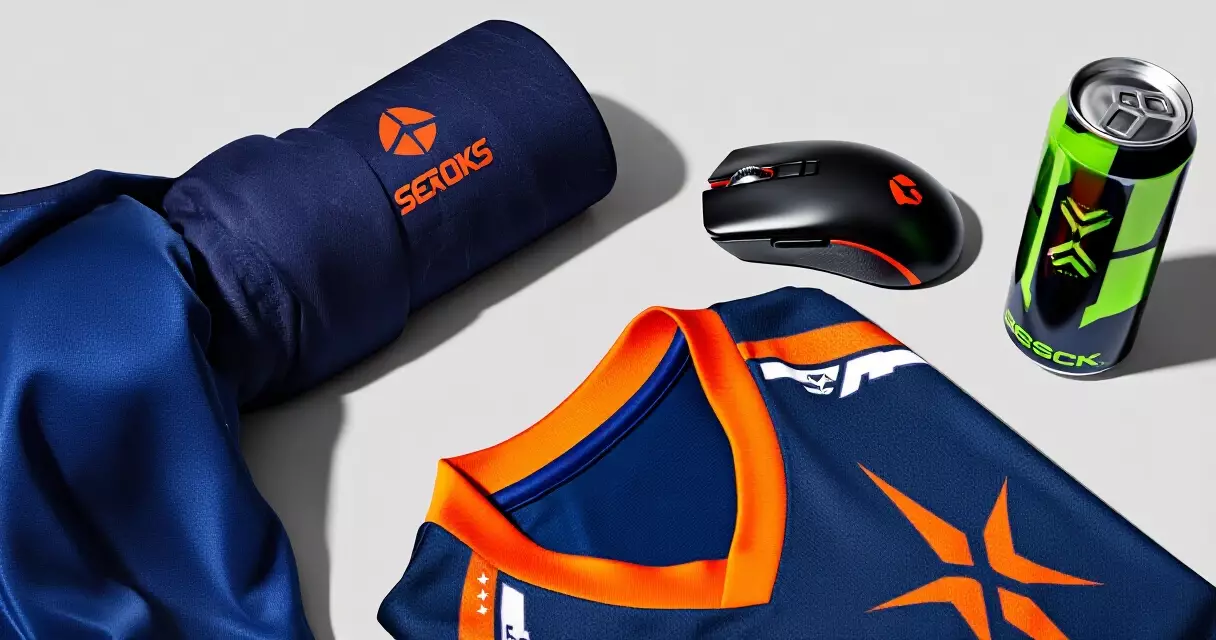
Player-branded merchandise has followed the template pioneered by YouTubers and adapted for the esports context. At the team level, organizations like Team Liquid, Cloud9, and FaZe Clan sell jerseys, hoodies, and accessories that include individual player names and numbers. Players typically earn a royalty on items bearing their name or likeness – contracts vary, but 10% to 15% of net sales on player-specific items is a reported industry norm per the Esports Bar association’s 2023 contract transparency report.
Independent merchandise lines go further. Streamers and players with large personal followings launch standalone brands or product lines through print-on-demand services like Printful and Printify, or through more sophisticated operations using custom manufacturing. Ninja’s “Ninja” brand merchandise, sold through platforms including the now-defunct Mixer and later through his own storefront, reportedly generated seven figures annually at peak popularity according to Forbes Games coverage in 2021. More recently, players like Shroud (Michael Grzesiek) and Pokimane (Imane Anys) have launched dedicated product lines that extend well beyond gaming gear into lifestyle categories.
Limited-edition drops tied to tournament performances or major streaming milestones have proven particularly effective at driving merchandise revenue. A player who wins a major championship can convert that moment of visibility into immediate merchandise sales if their storefront is ready – a lesson that esports organizations have taken from traditional sports teams’ championship merchandise playbooks.
Coaching, Content Academies, and Educational Revenue
The transition from active competition to coaching or educational content creation is one of the most financially stable moves a retiring or semi-retired player can make. Players with recognized expertise in a specific game command premium rates for one-on-one coaching sessions, which are facilitated by platforms including Metafy, ProGuides, and Fiverr’s gaming coaching category.
Metafy, which focuses exclusively on gaming coaching, reported in 2023 that top coaches on its platform – many of whom are former or current semi-pro players – earned between $50,000 and $200,000 annually from coaching sessions alone. Session rates for high-demand coaches in titles like Valorant, League of Legends, and CS2 typically run from $75 to $300 per hour, with former pro players able to charge at the upper end of that range.
Online course platforms offer a scalable alternative to one-on-one coaching. Courses on Udemy, Skillshare, or self-hosted platforms allow a player to record their expertise once and sell it to unlimited buyers. CS:GO/CS2 strategy courses, Valorant aim training programs, and Dota 2 draft analysis series are consistent sellers with relatively long market lifespans compared to the constantly-shifting meta of the games themselves. A well-produced course from a credible pro can generate $10,000 to $100,000 in lifetime sales from a relatively modest initial investment of time and production cost.
Team-level coaching positions – where a former player joins an organization’s staff as a head coach or analyst – are a separate and growing formal career track. Major esports organizations now employ full coaching staffs comparable to traditional sports teams, with head coach salaries at Tier 1 organizations reported in the $80,000 to $200,000 range by Esports Insider. This path converts competitive expertise into salaried employment rather than entrepreneurial income, offering stability that individual player careers rarely provide.
Equity, Investment, and Organizational Ownership
The most financially transformative income pathway for elite esports players is equity participation in teams, content networks, or gaming companies. This path is not available to most players, but for the small number who achieve it, the returns can dwarf every other income stream combined.
FaZe Clan’s 2022 listing on Nasdaq (ticker: FAZE) via a SPAC merger valued the organization at approximately $725 million at peak, according to SEC filings. FaZe members who held equity stakes – including content creators FaZe Banks and FaZe Temperrr – saw their paper worth amplify significantly, though the subsequent collapse in share price illustrated the volatility of this route. The episode nonetheless established a template: players who negotiate equity as part of their compensation, rather than accepting cash-only deals, participate in the organization’s upside.
More commonly, established players invest personal income into gaming-adjacent businesses. Several prominent CS2 and Dota 2 veterans have co-founded tournament organizers, production studios, or talent management agencies. The competitive advantage is obvious: their reputation and network accelerate the new business’s credibility in ways unavailable to outsiders. Astralis group co-founder and player Nicolai “dev1ce” Reedtz has publicly discussed how player-ownership stakes in organizations align player and organizational incentives in ways pure salary contracts cannot.
Angel investing in gaming startups is a growing phenomenon among players who have accumulated capital and industry knowledge. Players have backed gaming peripheral companies, streaming technology firms, and esports analytics platforms. The Wikipedia article on esports notes that the industry has attracted substantial venture capital investment across its infrastructure layer, and players with inside knowledge of what tools and platforms competitors actually need are theoretically well-positioned as early-stage investors in the space.
| Income Source | Typical Annual Range (Mid-Tier Pro) | Typical Annual Range (Tier 1 Star) | Stability |
|---|---|---|---|
| Base Team Salary | $25,000 – $100,000 | $200,000 – $2,000,000+ | High (contract term) |
| Tournament Prize Money | $0 – $30,000 | $50,000 – $500,000+ | Low (performance-dependent) |
| Streaming (Twitch/YouTube/Kick) | $10,000 – $80,000 | $500,000 – $10,000,000+ | Medium (audience-dependent) |
| Personal Sponsorships | $5,000 – $50,000 | $100,000 – $2,000,000+ | Medium (renewable deals) |
| Merchandise | $1,000 – $20,000 | $50,000 – $1,000,000+ | Medium |
| Coaching / Education | $10,000 – $60,000 | $50,000 – $200,000 | High |
| Equity / Investment | Rare / minimal | Variable / high upside | Low to very high |
For broader context on how the organizations employing these players generate their own revenue, see How Esports Tournaments Make Money: Revenue Streams Explained and our overview of Esports Player Salaries: What Pro Gamers Actually Earn in 2026.
Social Media, TikTok, and the Creator Economy Crossover
The creator economy has merged with competitive esports to a degree that would have been hard to predict even five years ago. Players are now evaluated not just on their in-game performance metrics but on their social media presence – a factor that directly affects their sponsorship marketability and, increasingly, their base salary negotiating use.
TikTok has emerged as a particularly high-value platform for esports players. Short-form highlight clips, reaction videos, and personality-driven content reach audiences that don’t watch long-form streams, expanding a player’s commercial footprint beyond the core esports fanbase. TikTok’s Creator Fund paid modest rates – approximately $0.02 to $0.04 per 1,000 views – but TikTok’s Creator Marketplace connects players directly with brands offering sponsored post deals that can range from a few hundred dollars for micro-creators to tens of thousands per post for players with multi-million follower counts.
Instagram and X (formerly Twitter) function primarily as brand deal vehicles rather than direct revenue platforms. Sponsored posts on Instagram from players with 500,000 to 1 million followers typically command $2,000 to $10,000 per post according to influencer marketing rate cards published by agencies like Influential and Creator.co. X (Twitter) has launched its own creator monetization through ad revenue sharing for verified users, though rates have fluctuated considerably since the platform’s ownership transition.
The cumulative value of a diversified social media presence compounds over time. A player who builds simultaneously on Twitch, YouTube, TikTok, and Instagram creates multiple independent audience relationships, any one of which can become a primary revenue channel if competitive performance declines or a team contract ends. This portfolio approach to audience-building is now actively taught in esports management programs at universities including the Full Sail University Esports program and Ohio State’s esports curriculum.
A player who treats their social media presence as a passive side effect of competing is leaving money on the table. The most financially successful esports careers are built by treating every platform as its own business.
Appearance Fees, Events, and Fan Experience Revenue
Appearance fees are a significant but rarely discussed income source for recognized players. Tournament organizers, gaming conventions, and brand activations pay players to attend events, participate in panel discussions, sign autographs, or simply be present as a draw for their fanbase. Gaming conventions like PAX, DreamHack, and regional gaming expos regularly compensate featured players for their time.
Fan experience activations – where brands pay players to interact with fans at trade shows or in-person events – have become a structured business. A player with 500,000 Twitter followers and a recognizable face in their game community can charge $1,000 to $5,000 per appearance day for smaller regional events, with top-tier players commanding $25,000 to $100,000 for major convention appearances or brand-sponsored activations according to talent agency rate sheets reviewed by Esports Insider.
Content partnerships with esports venues represent a newer income avenue. As dedicated gaming arenas have proliferated – venues like the HyperX Esports Arena Las Vegas and Fusion Arena Philadelphia – players have been invited to host exclusive in-venue streaming sessions, fan meet-and-greets, and branded gaming nights that generate revenue for both the venue and the player. This venue-player partnership model is still developing but represents a growing opportunity as the physical esports infrastructure matures.
The Tax and Legal Reality of Multi-Stream Esports Income
Managing income from multiple sources creates significant complexity that players – particularly young players without financial advisors – often underestimate. In the United States, the IRS treats esports income across its various categories differently, and the combination creates layered tax obligations that can significantly affect take-home pay.
Base salary paid by a team through a standard employment contract is subject to standard payroll withholding – federal income tax, state income tax where applicable, and FICA (Social Security and Medicare). Prize money, by contrast, is typically paid without withholding and requires players to make estimated quarterly tax payments to avoid underpayment penalties. International tournament winnings are subject to additional complexity; prize money earned in a foreign country may face local withholding taxes and require filing foreign tax credit claims on U.S. returns per IRS Publication 514.
Streaming and sponsorship income is self-employment income, subject to self-employment tax (15.3% on net earnings up to the Social Security wage base as of 2025) in addition to income tax. Players operating as sole proprietors can deduct business expenses – gaming equipment, internet, a portion of home office space, travel to tournaments – but record-keeping requirements are substantial. Many financially savvy players form single-member LLCs or S-corporations to manage this income more efficiently and potentially reduce self-employment tax exposure, a strategy commonly recommended by gaming-focused CPAs.
The IRS Foreign Earned Income Exclusion can apply to players who spend significant portions of the year competing abroad – a relevant consideration for players on international rosters. The intersection of immigration law and work authorization for international players adds another legal dimension that organizations and players must navigate carefully, particularly following post-COVID tightening of work visa processing timelines.
FAQ: Esports Player Income Sources
Do all esports players get a salary?
No – a guaranteed base salary is not universal in competitive gaming. At the Tier 1 level (major leagues like the LCS, LEC, VCT, and CDL), salaried contracts are standard and players receive regular monthly payments from their organizations. At Tier 2 and Tier 3 levels, revenue-sharing arrangements are more common, where players receive a percentage of the team’s tournament earnings rather than a fixed salary. Some players at the amateur level compete entirely without compensation beyond travel and accommodation expenses covered by sponsors. The Esports Player Association has advocated for minimum salary standards across more titles, but enforcement varies widely by game publisher and league structure. In short, a salaried contract is something players must negotiate rather than assume.
How much do esports players earn from streaming?
Streaming income varies enormously depending on viewership, consistency, platform, and the player’s ability to convert audience attention into monetized content. A mid-tier professional player who streams consistently three to five days per week with an average of 500 to 2,000 concurrent viewers can realistically earn between $30,000 and $100,000 annually from combined Twitch subscriptions, ad revenue, and donations. Top-tier streamers with sustained audiences above 20,000 concurrent viewers – a category occupied by players like Shroud, Summit1g, and Tfue – earn from $500,000 to several million dollars per year from streaming platforms alone, before counting sponsorship and brand deal income that their streaming audience amplifies. Platform-guaranteed deals on Kick, available to the very top of the talent pool, have reportedly reached eight-figure multi-year contracts for the highest-draw creators.
What percentage of tournament prize money do players actually keep?
The player’s actual take-home from prize money passes through several deductions before reaching their bank account. First, the team typically retains a cut – standard contracts reviewed by the Esports Player Association indicate team cuts ranging from 20% to 40% of tournament winnings. The remaining amount is then divided among the active roster, typically five players in a team-based game, though splitting formulas vary and star players sometimes negotiate higher individual shares. After the team split, taxes apply – tournament prize money in the United States is fully taxable as ordinary income, and international winnings may face withholding at the source country’s rate before reaching the player. A player’s gross prize money share could realistically be reduced by 50% to 65% once all deductions are applied, making prize money less impactful than the headline tournament figure suggests. See our article on Esports Player Salaries: How Much Do Pro Gamers Actually Earn in 2026 for further context.
Can esports players earn money from sponsorships independently of their team?
Yes, though the degree of independence depends on the player’s contract. Most team contracts include provisions restricting players from signing personal sponsorship deals with brands that compete directly with the team’s own sponsors – a player on a team sponsored by SteelSeries, for example, typically cannot independently sign with Razer. Outside of competing brand restrictions, players generally retain the right to negotiate personal deals in non-conflicting categories. Hardware accessories, food and beverage, apparel, and non-gaming tech are common categories for independent player deals. As players build larger personal audiences that exceed their team’s reach, the negotiating use for independent deals increases significantly. Some star players have negotiated contractual rights to retain a larger proportion of their personal sponsorship income in exchange for accepting lower base salaries – a trade-off that makes sense when personal brand value is high.
What is the most stable income source for an esports player?
Among active players, a base team salary offers the most stability – it is paid regardless of tournament results and is contractually guaranteed for the duration of the signed term. However, player contracts in esports are typically one to two years in length, making stability conditional on re-signing. Among income sources that can persist after competitive play ends, coaching stands out as combining relatively high income potential with strong demand and the ability to work independently or within an organization. Online course sales and brand deals also offer some stability once established. Prize money is universally the least stable income source because it is entirely performance-dependent and subject to the enormous variance of single-elimination tournament formats that are common in esports. Players who build multiple income streams – salary plus streaming plus sponsorship – are far better positioned to weather the instability that comes with performance slumps or team roster changes.
Do esports players pay taxes on international prize money?
Yes, and the tax situation for international prize money is one of the more complex financial realities in esports. U.S.-based players who win prize money at tournaments held abroad are generally subject to withholding taxes in the host country – rates vary from 0% in some jurisdictions to 30% in others – and must report all foreign income on their U.S. federal tax return. The U.S. taxes citizens and permanent residents on worldwide income, with no exemption for prize money earned abroad. Players can claim a Foreign Tax Credit (Form 1116) to offset U.S. tax liability by the amount already withheld abroad, preventing full double taxation, but this requires careful documentation. Countries with bilateral tax treaties with the United States may provide partial relief, but not all major esports tournament hosts have favorable treaty terms. Players competing internationally are strongly advised to work with a CPA experienced in international taxation, as errors in reporting foreign income can result in significant penalties per IRS guidance at IRS.gov.
How do esports players transition income streams after retiring from competition?
Retirement from active competition does not necessarily mean a reduction in income for players who have built strong personal brands and audience relationships. The most common transition paths are streaming (which can continue or even increase in audience once competitive commitments no longer restrict streaming schedules), coaching (either independently or within an organization), content creation and commentary for broadcast teams, and entrepreneurship. Many retired players have found success launching their own content networks, agencies, or gaming businesses where their industry relationships and reputation provide a meaningful competitive advantage. The players who struggle most post-competition are those who relied almost entirely on team salary and prize money without building parallel income streams during their active careers – a cautionary pattern that the industry’s growing player union advocates are working to address through financial literacy programs. Comparing esports career transition challenges to traditional sports is explored further in our article Esports vs Traditional Sports Salaries: Pay Compared 2026.
What role do agents and managers play in an esports player’s income?
Esports player agents and managers are a growing professional category that mirrors the role of sports agents in traditional athletics. A player agent negotiates contract terms with teams, secures and structures brand deal agreements, advises on equity participation, and manages the legal review of agreements – all in exchange for a commission that typically runs between 10% and 20% of the deals they negotiate. For players with complex multi-stream income, a skilled agent pays for themselves many times over by securing better contract terms, identifying sponsorship opportunities the player might miss, and preventing common contractual pitfalls like overly restrictive non-compete clauses or excessive team cuts on prize money. The Esports Player Association and the Global Esports Federation have both published guidance on the agent relationship and what players should expect in terms of transparency and fiduciary duty from their representatives.
Related Reading
- Esports Player Salaries: What Pro Gamers Actually Earn in 2026
- Esports Player Salaries: How Much Do Pro Gamers Actually Earn in 2026
- Esports vs Traditional Sports Salaries: Pay Compared 2026
- Why Esports Salary Transparency Is Still Broken — And What Needs to Change
Sources
- Newzoo – Global Esports & Live Streaming Market Report 2025: https://newzoo.com/resources/blog/global-games-market-report
- Esports Earnings – Prize money database (2025): https://www.esportsearnings.com
- The Verge – Twitch revenue split reporting (2023): https://www.theverge.com/2023/3/2/23622803/twitch-70-30-revenue-split-top-streamers
- Bloomberg – Kick streaming platform creator deals (2023): https://www.bloomberg.com/news/articles/2023-12-14/kick-streaming-platform-signs-top-talent
- IRS – Foreign Income Exclusion guidance: https://www.irs.gov/individuals/international-taxpayers/foreign-income-exclusion
- SEC EDGAR – FaZe Clan (FAZE) SPAC filing: https://www.sec.gov/cgi-bin/browse-edgar?action=getcompany&CIK=FAZE
- Wikipedia – Esports overview: https://en.wikipedia.org/wiki/Esports
- Esports Insider – Player sponsorship and coaching salary reporting (2024): https://www.esportsinsider.com
- Full Sail University – Esports program overview: https://www.fullsail.edu/areas-of-study/esports
- Liquipedia – Tournament prize pool data: https://liquipedia.net
Top Esports Organizations 2026: Teams, Rosters, and Performance Rankings