


Summary
✓Reviewed by Emma Thompson When a roster dispute erupts mid-tournament, the first question every esports journalist faces is deceptively simple: is the person listed on this roster actually who they claim to be? Knowing how do esports reporters verify a...
Table of contents
- 1 Why Player Identity Verification Has Become a Reporting Priority
- 2 A Brief History: How Verification Standards Evolved
- 3 Primary Sources Reporters Consult First
- 3.1 Tournament Registration Records
- 3.2 Publisher-Held Account Data
- 3.3 Visa and Border Documentation
- 4 Biometric Verification: The New Evidentiary Standard
- 5 How Reporters Use ESIC and Integrity Body Channels
- 6 Cross-Referencing Ranked Ladder and Match History Data
- 7 Verification Methods Compared: A Reporter’s Reference Table
- 8 Handling Source Conflicts and Disputed Records
- 9 Organizer Transparency Standards in 2026
- 10 Frequently Asked Questions
- 10.1 What is the most reliable document source for verifying a player’s identity in a roster dispute?
- 10.2 Can esports reporters access a player’s Steam or Riot Games account data?
- 10.3 How does ESIC help reporters covering player identity disputes?
- 10.4 What role does ranked ladder data play in identity verification reporting?
- 10.5 How do reporters handle situations where organizer and publisher data conflict?
- 10.6 How has the verification landscape changed in 2025 and 2026?
- 11 Key Takeaways for Reporters Covering Roster Disputes
- 12 Sources
When a roster dispute erupts mid-tournament, the first question every esports journalist faces is deceptively simple: is the person listed on this roster actually who they claim to be? Knowing how do esports reporters verify a player’s identity in roster disputes has become a core professional skill in 2026, as prize pools climb into the millions and the incentive to field ineligible players grows alongside them. The methods reporters use draw on official document trails, platform account data, biometric checks introduced by major organizers, and a network of industry sources that has matured considerably over the past five years.
Why Player Identity Verification Has Become a Reporting Priority
The stakes driving identity fraud in competitive gaming have risen sharply. According to Ampere Analysis estimates cited in industry coverage through early 2026, global esports prize money exceeded $200 million across sanctioned events in 2025. At that level of financial exposure, teams and individuals have clear incentives to misrepresent who is playing under a given gamertag or passport entry. Journalists covering the beat must be equipped to cut through those misrepresentations before publishing.
Roster disputes typically fall into three categories: account-sharing allegations (where a substitute plays ranked matches under a rostered player’s credentials), age or nationality fraud (where a player misrepresents citizenship or date of birth to meet eligibility rules), and straight-up impersonation (where an entirely different individual appears at a LAN event). Each category requires a slightly different verification approach.
A Brief History: How Verification Standards Evolved
Early esports tournaments in the 2000s relied almost entirely on honor systems and forum-based community accountability. The Esports Integrity Commission (ESIC), founded in 2015, marked the first sustained institutional attempt to bring structured identity oversight to the scene. ESIC introduced cross-referencing of in-game accounts with government ID documents for member tournaments, a model that Riot Games, Valve, and ESL later adopted and expanded. By 2022, major organizers had begun requiring passport or national ID scans at check-in. The 2024 introduction of real-time selfie biometric matching by ESL FACEIT Hub represented the most significant procedural leap yet, giving journalists a new paper trail to request when disputes arise.
Primary Sources Reporters Consult First
When how do esports reporters verify a player’s identity in roster disputes comes down to first-line sourcing, three document categories dominate: official tournament registration records, publisher account data, and immigration or visa documentation for international LAN events.
Tournament Registration Records
All Tier 1 organizers — including Riot Games Esports, PGL, and ESL FACEIT Hub — require players to submit government-issued photo identification during registration. These records are held by the organizer and, in some jurisdictions, shared with national gaming integrity bodies. Reporters covering disputes can formally request that an organizer confirm whether a specific individual’s submitted ID matched the name on the roster. Organizers typically respond to credentialed press inquiries with a confirmation or denial without releasing the underlying document, which satisfies the journalistic standard of verification without violating player privacy.
Publisher-Held Account Data
Game publishers maintain the most granular identity data in the ecosystem. Riot Games links each Valorant and League of Legends esports account to a verified real-name record stored server-side. Valve’s Steam platform records login IP histories and hardware identifiers that can reveal whether an account was accessed from unusual locations or devices during ranked play. Reporters have obtained this type of data through official press channels, through sources within publisher integrity teams, or, in cases involving legal proceedings, through court-disclosed discovery documents.
Visa and Border Documentation
For LAN events with international rosters, visa applications provide an independent identity verification layer entirely outside the esports ecosystem. In several documented cases, reporters have confirmed or refuted player identity claims by checking whether a named individual appeared on a country’s publicly accessible visa-approval list, or by contacting national immigration offices through formal press inquiry procedures. This approach is particularly effective for nationality-eligibility disputes at events like the Esports World Cup, where national representation rules create clear incentives for misrepresentation.
Biometric Verification: The New Evidentiary Standard
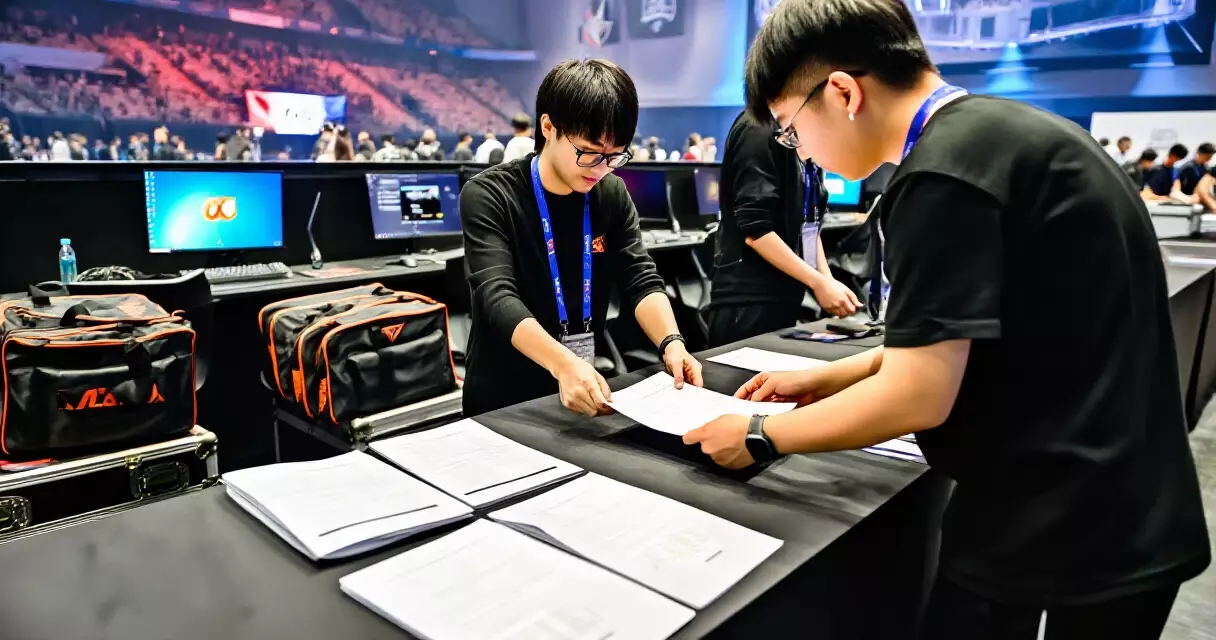
The shift to selfie-based biometric checks has changed what esports reporters can ask for and what organizers can confirm. ESL FACEIT Hub’s system, rolled out across all Tier 1 CS2 events from 2024 onward, requires each registered player to complete a real-time facial recognition match against their submitted government ID photo before receiving a player pass. The check is conducted by a third-party identity verification provider — in ESL FACEIT Hub’s case, the platform has referenced partnerships consistent with providers like Jumio and similar KYC-compliance vendors.
For a journalist investigating a roster dispute, the existence of this system means there is now a discrete pass/fail record for each registered player. Reporters can ask the organizer a binary question — did this player complete biometric verification successfully? — and use the answer as a cornerstone of their reporting. This is a significant improvement over the pre-2024 environment, where verification records were largely paper-based and organizer-specific in format.
The biometric pass/fail record is now the single most unambiguous document a reporter can request in a player identity dispute — it answers the core question without requiring the underlying ID to be disclosed.
How Reporters Use ESIC and Integrity Body Channels
The Esports Integrity Commission operates a case-disclosure process through which journalists covering active investigations can request confirmation of case status, the nature of the alleged breach, and — once a case closes — the findings. ESIC does not release underlying identity documents, but its published case summaries routinely include the type of violation (account sharing, false identity submission, age misrepresentation) and the evidence category that supported the ruling. Reporters treat these summaries as authoritative secondary sources, citing them alongside their own primary reporting.
In 2025 and into 2026, ESIC expanded its membership to include several regional organizers in Southeast Asia and South America, widening the scope of cases where this channel is available. Journalists covering those regions now have a structured integrity body to contact, rather than relying solely on informal organizer responses.
Cross-Referencing Ranked Ladder and Match History Data
One of the most accessible verification methods for esports reporters is cross-referencing a player’s listed ranked-ladder account against their competitive match history. Platforms like op.gg for League of Legends, tracker.gg for Valorant and CS2, and HLTV for CS2 maintain publicly accessible match histories tied to specific in-game accounts. In a roster dispute involving account-sharing allegations, a journalist can pull the match history for the period in question and look for anomalies: sudden performance spikes, unusual peak-hour play patterns inconsistent with the player’s known time zone, or hardware-fingerprint shifts detectable through replay metadata.
This method is not conclusive on its own — it establishes suspicion rather than proof — but it provides the factual foundation for follow-up questions to organizers and publishers, and it can corroborate or contradict claims made by the team or player under scrutiny. Several high-profile 2025 roster disputes were initially surfaced through exactly this kind of ladder-data anomaly reporting before organizers launched formal investigations. For more on how roster eligibility intersects with these verification processes, the esports player transfers explained overview provides useful structural context.
Verification Methods Compared: A Reporter’s Reference Table
| Method | What It Confirms | Accessibility for Press | Strength of Evidence |
|---|---|---|---|
| Tournament registration ID check | Name on ID matches roster name | Via official press inquiry to organizer | High (primary document) |
| Biometric selfie match record | Physical player matches submitted ID | Pass/fail confirmation from organizer | Very high (biometric) |
| Publisher account data | Account activity, login locations, hardware IDs | Press channel or legal discovery | High (platform-level) |
| ESIC case records | Prior integrity rulings on same player/team | Public case log on esic.gg | High (institutional) |
| Visa/immigration records | Nationality, travel history | Formal press inquiry to national body | High (government) |
| Ranked ladder/match history | Performance anomalies, usage patterns | Public platforms (op.gg, HLTV, tracker.gg) | Medium (circumstantial) |
| Community/player testimony | Contextual claims, peer observations | Direct interview or social media | Low (requires corroboration) |
Handling Source Conflicts and Disputed Records
A significant challenge in verifying player identity for esports reporters is that different sources sometimes point in conflicting directions. An organizer may confirm that a player’s ID checked out at registration while a publisher’s account data suggests the account was accessed from a different country during the same period. Reporters navigating this situation apply standard investigative journalism practice: they seek a third independent source before publishing a definitive claim, and they clearly characterize the nature and limits of each source’s confirmation.
The esports identity verification trends for 2026 have shown a marked increase in cases where players challenge organizer findings through lawyers, meaning reporters covering disputes increasingly need to account for contested records in their framing. The standard practice is to present each body of evidence separately and allow readers to assess the weight of each, rather than synthesizing a single authoritative verdict that the reporter cannot independently confirm.
When sources conflict, the reporter’s job is not to resolve the dispute — it is to accurately document the conflict and the weight of each evidentiary thread.
Organizer Transparency Standards in 2026
The degree of transparency reporters can expect varies significantly by organizer. As of August 2026, the landscape breaks down roughly as follows:
| Organizer | Press Inquiry Response | Public Rulebook | Post-Investigation Disclosure |
|---|---|---|---|
| ESL FACEIT Hub | Confirms/denies ID match; references ESIC for integrity cases | Yes, publicly available | Via ESIC case summaries |
| Riot Games Esports (VCT/LoL) | Confirms player eligibility status; no underlying document | Yes, per-circuit rulebook | Public ruling announcements |
| PGL | Case-by-case; typically confirms registration status | Yes | Statements on official channels |
| Esports World Cup Foundation | Nationality eligibility confirmations via press office | Yes | Limited; national org level |
| BLAST | Confirms player pass status; routes integrity cases to ESIC | Yes | Via ESIC |
Reporters covering events at organizers with less developed press infrastructure often rely more heavily on the ESIC channel and on direct publisher inquiry, which has become the de facto backstop for verification when organizer communication is limited. Coverage of events like the Esports World Cup 2026 has benefited from the EWC Foundation’s dedicated press office, which has responded to credentialed identity inquiries more consistently than many regional organizers.
Frequently Asked Questions
What is the most reliable document source for verifying a player’s identity in a roster dispute?
Tournament organizer registration records tied to government-issued photo ID are the most reliable primary source, because they represent a document that the player submitted under penalty of disqualification. Biometric selfie match results, where available, add a second verification layer that is harder to circumvent than document-only checks. Reporters cannot access these documents directly but can request official confirmation of their outcome through press channels.
Can esports reporters access a player’s Steam or Riot Games account data?
Not directly. Publishers treat account data as private under their terms of service. However, reporters can request that publishers confirm or deny specific factual claims — for example, whether an account was flagged for unusual activity during a specified period — through official press inquiry channels. Publishers including Riot Games and Valve have responded to such inquiries in documented past cases. Full account data typically only becomes available to reporters through legal discovery in cases that reach arbitration or court proceedings.
How does ESIC help reporters covering player identity disputes?
ESIC maintains a publicly accessible case log that reporters can reference for prior rulings involving specific players or teams. When a new dispute arises, a reporter checking ESIC records can establish whether the same individual has been subject to a prior identity or integrity ruling — a significant contextual fact. ESIC also responds to credentialed press inquiries about the status and nature of active or closed cases, providing a structured institutional source that carries more authority than team or player statements alone.
What role does ranked ladder data play in identity verification reporting?
Ranked ladder and match history data from platforms like op.gg, HLTV, and tracker.gg serves as a circumstantial but publicly accessible starting point. Performance anomalies, unusual play-time patterns, or geographic inconsistencies in login behavior can flag potential account-sharing or impersonation. This data alone is not sufficient to make a definitive identity claim, but it provides the factual basis for directing more targeted inquiries to organizers and publishers — and it can corroborate or undercut a player’s or team’s public statements.
How do reporters handle situations where organizer and publisher data conflict?
Standard investigative practice requires reporters to seek a third independent source before publishing a definitive claim when two sources conflict. Where a third source is unavailable, reporters clearly frame each body of evidence separately, characterize what each source does and does not confirm, and avoid synthesizing a verdict they cannot independently substantiate. Readers are then able to assess the weight of each evidentiary thread themselves — a practice consistent with the factual reporting standards followed by outlets like the Reuters news agency.
How has the verification landscape changed in 2025 and 2026?
The two most significant changes since 2024 are the widespread adoption of biometric selfie matching by major organizers and the expansion of ESIC membership to regional organizations in Southeast Asia and South America. Together, these developments mean that more events now generate a structured, contestable verification record that reporters can reference — and that the geographic scope of covered events has widened substantially. For a broader look at how these trends are reshaping the competitive scene, the esports identity verification case study from 2026 provides detailed incident-level analysis.
Key Takeaways for Reporters Covering Roster Disputes
Understanding how do esports reporters verify a player’s identity in roster disputes requires mapping the available evidentiary layers in order of reliability: biometric match records and organizer ID confirmations at the top, publisher account data next, visa documentation for nationality disputes, ESIC case records as institutional corroboration, and ranked-ladder anomalies as the publicly accessible entry point. No single source is sufficient; the standard of responsible reporting requires at least two independent confirmations before a definitive identity claim is published.
- Request biometric verification outcome first — it is the most unambiguous single record available from organizers.
- Check the ESIC case log before contacting any other party — prior rulings are public and can reframe the entire story.
- Use ranked-ladder data as a tip-generator, not a publication-ready source.
- For nationality disputes, visa and immigration records sit outside publisher and organizer control and are therefore among the hardest to suppress.
- Clearly separate what each source confirms from what it does not — especially when sources conflict.
Sources
- Esports Integrity Commission (ESIC) — retrieved August 10, 2026
- Riot Games Esports — Official Rulebooks and Player Eligibility Policy — retrieved August 10, 2026
- Reuters — Reporting Standards Reference — retrieved August 10, 2026