
Summary
When League of Legends Season 3 World Championship Finals sold out Staples Center in 2013, drawing 15,000 fans and 32 million concurrent online viewers, the esports industry stopped being a curiosity and started being a business. That single night in...
Table of contents
- 1 The Rise of the Esports Venue: A Brief History
- 2 North America’s Major Esports Venues
- 3 Multi-Purpose Arenas That Shaped Esports History
- 4 Europe’s Premier Esports Venues
- 5 Asia’s Esports Venue Landscape
- 6 The Middle East’s Emerging Esports Infrastructure
- 7 Purpose-Built vs. Adapted Venues: A Comparison
- 8 What Makes an Esports Venue Work: Key Infrastructure Requirements
- 9 Economic Impact and the Business Case for Esports Venues
- 10 2026 Trends: What’s Shaping Esports Venues Now
- 11 Frequently Asked Questions About Esports Venues
- 11.1 What is the largest dedicated esports arena in North America?
- 11.2 What was the biggest live esports crowd ever?
- 11.3 What is HyperX Esports Arena and where is it?
- 11.4 Why does IEM Katowice draw such large crowds?
- 11.5 How do purpose-built esports arenas differ from regular venues?
- 11.6 Which country has the most esports venues?
- 11.7 Has esports ever been held at the Olympics or Asian Games?
- 11.8 What are the key revenue streams for an esports venue?
- 12 Sources
When League of Legends Season 3 World Championship Finals sold out Staples Center in 2013, drawing 15,000 fans and 32 million concurrent online viewers, the esports industry stopped being a curiosity and started being a business. That single night in Los Angeles proved something venues, sponsors, and city planners have spent the decade since racing to capitalize on: competitive gaming does not just belong on a screen in a bedroom–it belongs on a stage, in an arena, before a roaring crowd.
The Rise of the Esports Venue: A Brief History
Competitive gaming’s live-event roots trace back to the late 1990s, when the Cyberathlete Professional League (CPL) ran tournaments in Dallas hotel ballrooms and QuakeCon packed convention center floors. These gatherings were passion projects, not productions. Prize pools were measured in thousands of dollars. Nobody was building arenas.
The World Cyber Games (WCG) Grand Final in 2005 changed the conversation when it landed at the Singapore Indoor Stadium, putting competitive gaming in front of roughly 8,000 live spectators in a proper multi-sport facility. South Korea, however, had already been ahead of everyone. OGN (Ongamenet) was broadcasting StarCraft matches to national television audiences from dedicated studio arenas as early as 2000, treating pro gamers the same way a network treats athletes.
The real turning point for venues came in 2012, when Riot Games staged the League of Legends Season 2 World Championship Finals at the USC Galen Center in Los Angeles. Eight thousand seats sold out in under an hour. A year later, the Season 3 Finals filled Staples Center. Publishers, arena operators, and municipal governments all took notice simultaneously.
North America’s Major Esports Venues
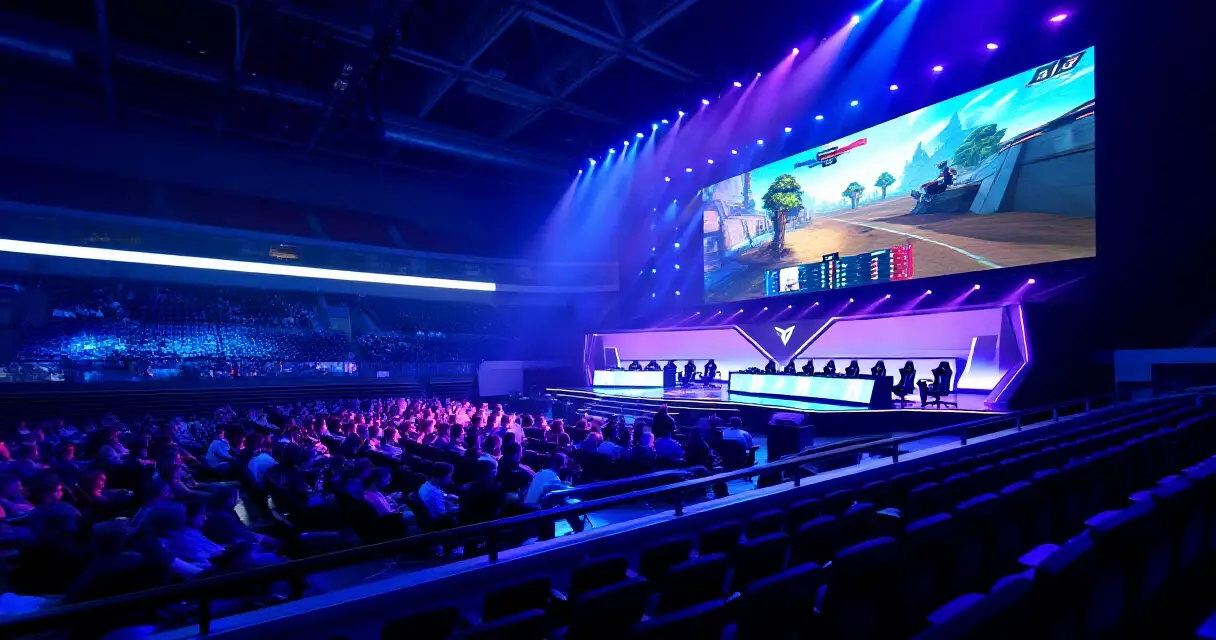
North America hosts several of the world’s most-visited dedicated esports facilities. Esports Stadium Arlington, which opened in November 2018 in Arlington, Texas, is the largest purpose-built esports venue on the continent–100,000 square feet of floor space with seating configurations reaching 2,500 to 3,000 depending on the event. The City of Arlington owns the facility and partnered with Oak View Group to manage it. Tournaments hosted here have included ESL One, DreamHack, Call of Duty League regular-season matches, and major Smash Bros. championships.
Inside the Luxor Hotel on the Las Vegas Strip, HyperX Esports Arena (opened October 2018 as Allied Esports Arena, rebranded after HyperX acquired naming rights) blended the gambling capital’s entertainment infrastructure with competitive gaming. Capacity sits at roughly 1,000 for tournament seating, complemented by more than 50 gaming stations on the general floor, a broadcast studio, and a restaurant and bar. The Las Vegas location made it uniquely suited to hosting mixed-audience events–players compete while spectators watch from the casino floor.
Riot Games operates its own dedicated LCS Arena (informally the Riot Games Arena) on the company’s campus in the Los Angeles area, seating approximately 1,000 ticketed fans. It serves as the permanent home of the League of Legends Championship Series, and its broadcast infrastructure–production control rooms, analyst desks, player booths–sets the standard for franchised league studios in North America.
Blizzard Arena in Burbank, California, opened in October 2017 as a converted television studio holding approximately 450 seats. It hosted the inaugural Overwatch League season starting in January 2018, establishing what a franchised home-market model for esports could look like before the league pivoted its teams to their own city-based venues.
Multi-Purpose Arenas That Shaped Esports History
Some of the most important moments in esports history happened in venues built for other purposes. Staples Center in Los Angeles hosted the 2013 LoL World Championship Finals and later became a recurring stop for major finals events. Chase Center in San Francisco–home of the Golden State Warriors–sold out approximately 18,000 seats for the Overwatch League Grand Finals in September 2019, one of the first times a franchised esports league final filled an NBA arena in North America.
Madison Square Garden in New York City hosted a landmark CS:GO event through ESL in 2016, primarily in the Hulu Theater (formerly Theater at MSG, roughly 5,600 seats). The event demonstrated that East Coast esports audiences would show up for premium live experiences at iconic venues. The NA LCS 2016 Summer Finals also used MSG, cementing New York’s place on the esports touring circuit.
The 2017 League of Legends World Championship Finals at Beijing’s National Stadium drew an estimated 60,000 fans on-site–the largest single-day live esports crowd ever recorded.
Scotiabank Arena in Toronto–home to the Maple Leafs and Raptors, capacity just under 20,000–hosted League of Legends World Championship 2019 group and playoff stages, extending the global Worlds tour across North America and demonstrating that Canadian markets were fully viable for top-tier esports events.
Europe’s Premier Esports Venues
Europe has produced some of the most enduring major esports events, largely thanks to two cities: Cologne and Katowice. The LANXESS Arena in Cologne, Germany–capacity up to 19,000–has hosted Intel Extreme Masters (IEM) Cologne annually since 2012. IEM Cologne 2022 drew an estimated 45,000 total attendees across the event week, with CS:GO matches filling the arena for finals day. The IEM brand, operated by ESL (acquired by Savvy Gaming Group in 2022 for approximately $1.5 billion USD), is among the longest-running arena-scale esports events on the planet.
Spodek Arena in Katowice, Poland, seating approximately 11,500 for esports configurations, is the spiritual home of CS:GO Major championships. IEM Katowice has run since 2013, and the 2023 edition recorded total multi-day attendance of approximately 173,000 across Spodek and the adjacent International Congress Centre–a figure that rivals large-scale music festivals. The Congress Centre itself handles group-stage capacity of 6,000 to 8,000, providing a two-venue campus model that other events have tried to replicate.
Accor Arena in Paris (capacity ~20,300) hosted the League of Legends World Championship Finals in November 2019, selling out approximately 19,000 seats. The Royal Arena in Copenhagen (capacity ~16,000) hosted IEM Copenhagen 2022, the first CS:GO Major held in Denmark. OVO Hydro in Glasgow (~13,000 capacity) has hosted ESL and LEC events. These venues share a common characteristic: they were built for concerts and traditional sports but have been adapted with gaming-ready broadcast infrastructure by tournament organizers willing to invest in event-day production.
Asia’s Esports Venue Landscape
South Korea pioneered the concept of esports as stadium spectacle. OGN’s broadcast studios in Seoul were treating StarCraft matches as national television programming before most Western publishers had held their first LAN event. The Olympic Gymnastics Arena in Seoul sold out roughly 15,000 seats for StarCraft finals as early as 2012. LoL Park, Riot Korea’s dedicated League of Legends arena in Jongno, Seoul, opened in 2018 with approximately 400 seats–a boutique broadcast venue designed to produce premium broadcast content for LCK matches while hosting a live audience.
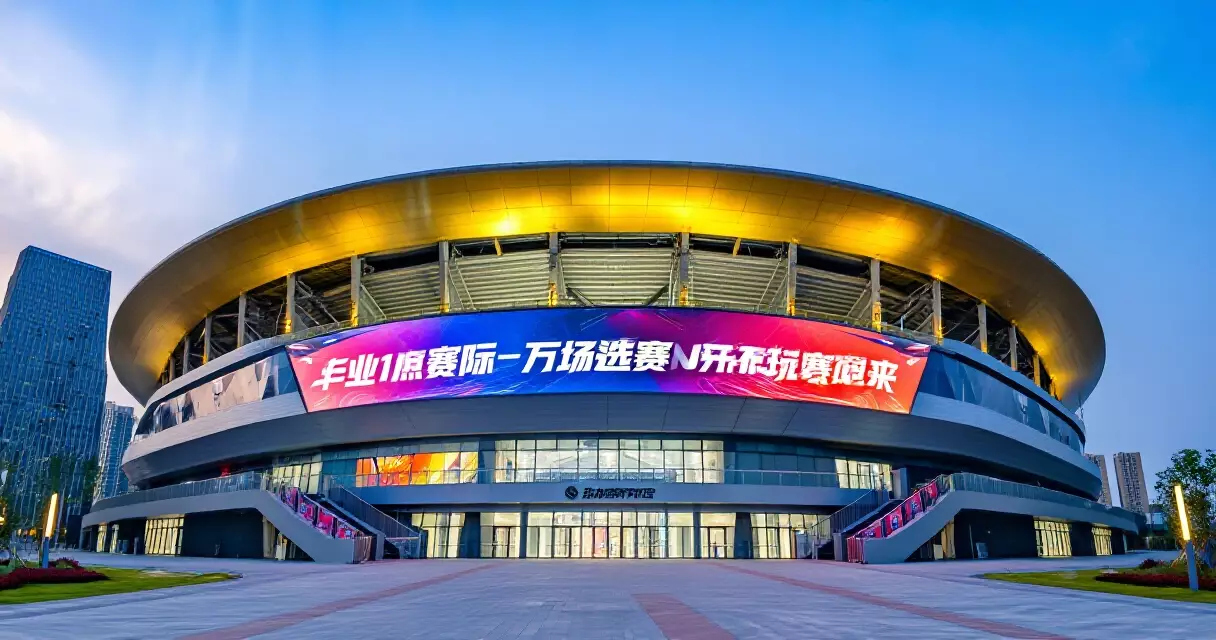
China’s approach is the most ambitious in scale. The National Stadium in Beijing–the Bird’s Nest, capacity 91,000–hosted the 2017 LoL World Championship Finals. Official on-site attendance reached an estimated 60,000, the largest single-day live esports crowd on record according to Wikipedia’s event records. Shanghai’s Mercedes-Benz Arena (18,000 seats) hosted the Dota 2 International 2019 Grand Finals, where the prize pool hit $34.3 million USD, the largest crowd-funded prize pool in esports history at the time.
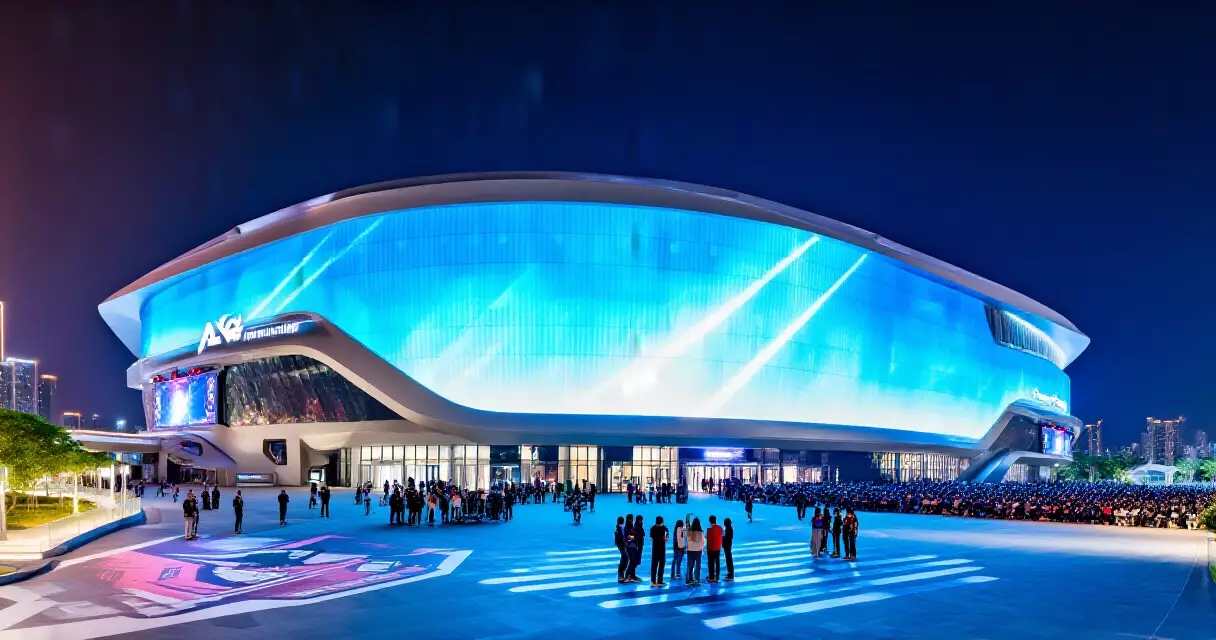
China has also invested heavily at the city government level. The Hangzhou Esports Center (approximately 6,000 seats) was built specifically to host esports as a medal sport at the 2022 Asian Games (held in Hangzhou in September 2023), marking the first time esports appeared as a medal discipline at a government-sanctioned multi-sport event. The Chengdu Esports Center in Sichuan Province, also ~6,000 seats, is part of China’s broader “esports city” initiative, where municipal governments have designated esports as a key pillar of their entertainment and technology economies.
The Middle East’s Emerging Esports Infrastructure
Saudi Arabia’s entry into esports venue development is the fastest large-scale buildout happening anywhere in the world in 2026. The Saudi Esports Federation, backed by the sovereign Public Investment Fund through Savvy Gaming Group, has been staging the Gamers8 festival at Boulevard Riyadh City since 2022. The 2023 edition offered a total prize pool of $45 million USD across titles including CS2, Dota 2, Fortnite, and Rocket League–one of the largest annual prize pools in live esports history.
Plans for permanent flagship esports arenas in Saudi Arabia are advancing under the Vision 2030 framework, which frames esports as both a tourism driver and a youth employment sector. NEOM–the futuristic city project–has signaled interest in dedicated esports infrastructure, though confirmed construction timelines remained in development as of mid-2026. The region’s investment in esports venues is directly connected to its acquisition of ESL and FACEIT: owning the tournament infrastructure gives Saudi Arabia use to direct major events to its own venues.
Purpose-Built vs. Adapted Venues: A Comparison
Not every esports event needs a 20,000-seat arena. The industry runs on two distinct venue models, each with clear trade-offs around cost, flexibility, and broadcast quality.
| Venue Type | Examples | Typical Capacity | Key Advantage | Key Trade-off |
|---|---|---|---|---|
| Purpose-built esports studio | Blizzard Arena (Burbank), Riot LCS Arena (LA), LoL Park (Seoul) | 400–1,000 | Permanent broadcast rig, consistent production quality, low per-event setup cost | Small live audience; limits spectacle and ticket revenue |
| Dedicated esports arena | Esports Stadium Arlington, HyperX Arena Las Vegas | 1,000–3,000 | Purpose-built for gaming events; flexible floor plans; year-round programming | Mid-range capacity limits prestige for flagship finals |
| Multi-purpose arena (adapted) | LANXESS Arena Cologne, Spodek Katowice, Chase Center SF | 11,000–20,000+ | Mass spectacle; mainstream credibility; premium sponsorship positioning | High per-event cost; requires significant temporary broadcast infrastructure |
| Stadium (landmark event) | Bird’s Nest Beijing (Worlds 2017), Sangam Stadium Seoul | 50,000–91,000 | Maximum cultural moment; mainstream media coverage | Extremely expensive; risk of visual empty seats; logistically complex |
Publisher-operated studio arenas tend to produce the cleanest broadcast content because cameras, cables, and lighting rigs stay in place season-round. This is why franchised leagues–the LCS, LCK, VCT Americas–have gravitated toward the model. The trade-off is atmosphere: a 450-seat Blizzard Arena simply cannot generate the crowd noise or visual spectacle of a sold-out Chase Center. Tournament organizers are increasingly adopting a split-season model–weekly play in studio arenas, finals in major multi-purpose venues–to capture both advantages.
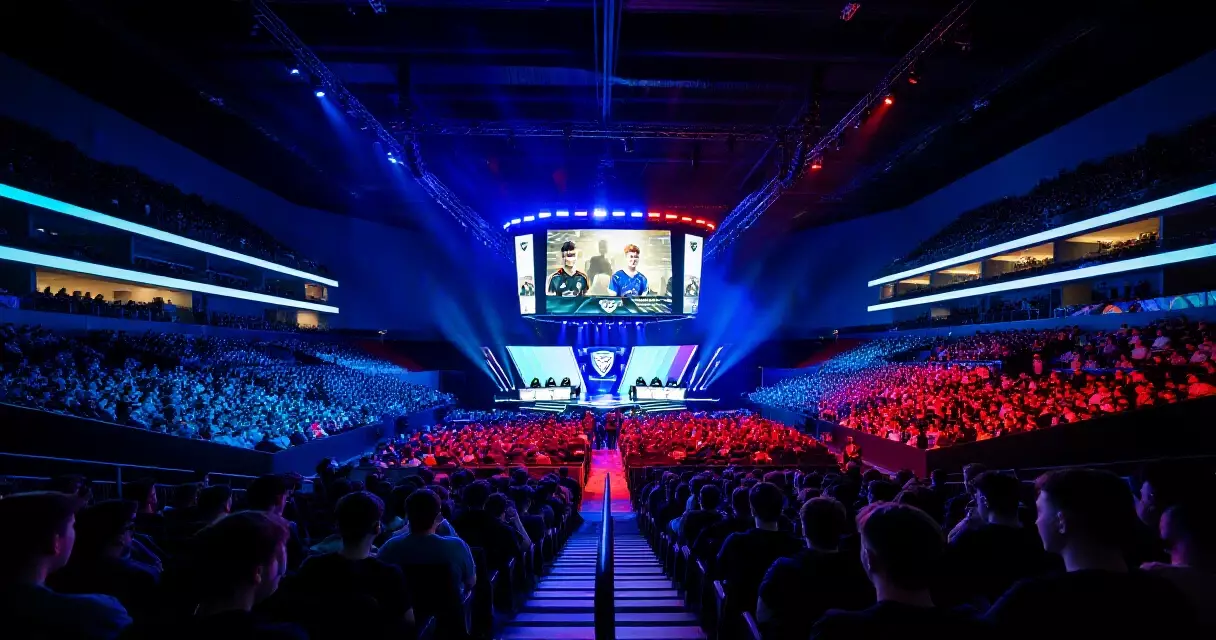
A sold-out Spodek Arena at IEM Katowice generates crowd energy that no broadcast studio can replicate–and that atmosphere is a core part of what makes premier esports events worth attending in person.
What Makes an Esports Venue Work: Key Infrastructure Requirements
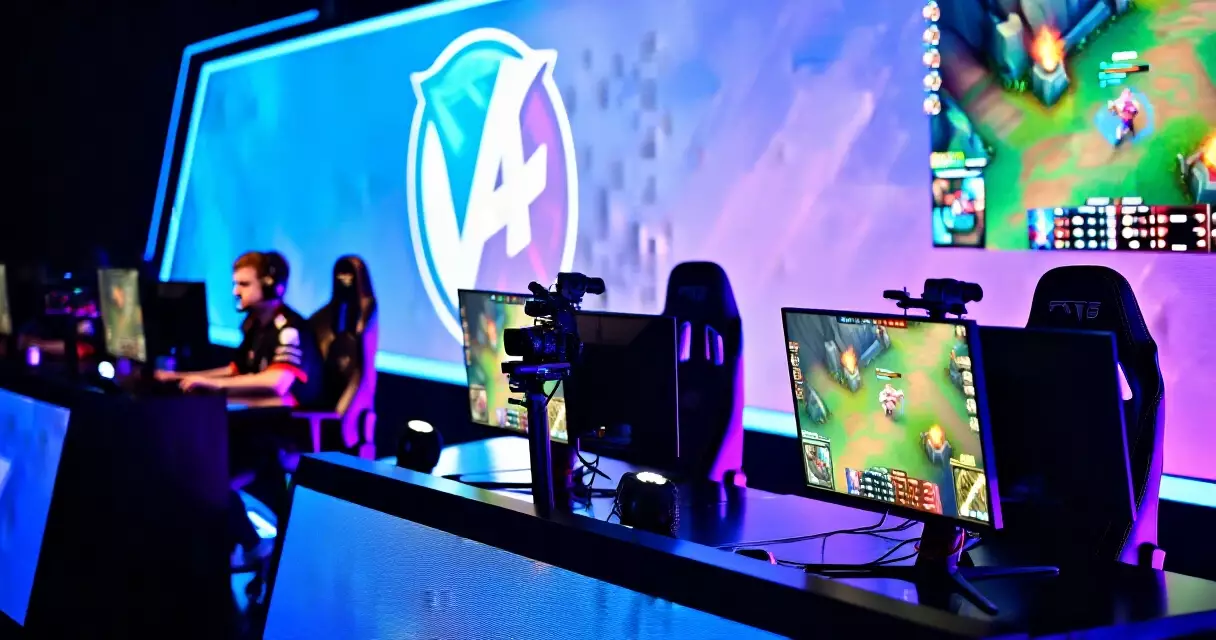
An esports venue has technical requirements that differ substantially from traditional sports facilities. Bandwidth is the obvious one: a single high-level esports event can require multi-gigabit dedicated fiber connections for player machines, production, and broadcasting simultaneously. Latency on the player’s local network must be effectively zero; even minor packet loss can affect competitive integrity.
Sight lines matter differently too. In a traditional arena, every seat needs a clear view of a physical playing surface. In esports, every seat needs a clear view of large LED video walls displaying the game feed–because the “action” is on-screen rather than in the physical space. This is why esports events frequently reconfigure arena floors to orient the entire audience toward centrally positioned screens, sometimes at the cost of using only 60 to 80 percent of a venue’s nominal capacity.
Cooling is a significant issue. High-performance gaming computers generate substantial heat, and a competition floor running 20 or more high-spec machines under competition load creates a heat load that standard event venue HVAC systems are not designed for. Purpose-built facilities engineer for this; adapted venues require temporary cooling infrastructure brought in for each event.
Sound design requires special attention as well. Player booths must be acoustically isolated so that crowd noise does not influence in-game communication. Yet the crowd must also be able to hear game audio, caster commentary, and event production. Tournament organizers like ESL have developed proprietary sound management systems that allow the main arena speakers to run at full volume while keeping player booths effectively isolated.
| Requirement | Specification | Why It Matters |
|---|---|---|
| Network bandwidth | Multi-gigabit dedicated fiber; sub-1ms local latency | Competitive integrity; broadcast uplink quality |
| Power supply | Redundant UPS systems; 10–20kW per player station cluster | Hardware failure mid-match would void results |
| Cooling (HVAC) | Supplemental precision cooling on competition floor | Competition PCs generate high continuous heat load |
| Player isolation booths | Acoustically treated; NRC 0.85+ absorption rating | Prevents crowd audio from reaching player comms |
| LED display infrastructure | Primary screen ≥ 10m wide; 1,200–2,500 nit brightness | Visibility from all seats, including upper bowl |
| Broadcast production space | Dedicated production control room; OB truck access | Live broadcast to streaming platforms and TV |
Economic Impact and the Business Case for Esports Venues
Cities and arena operators pursue esports events for the same reasons they pursue any major sporting event: hotel nights, restaurant spend, and media exposure. A multi-day IEM Katowice event drawing 173,000 total attendees generates significant hospitality revenue for the city of Katowice, a mid-size Polish city that has become internationally recognized primarily because of this event.
The global esports market–including media rights, sponsorships, merchandise, and live events–was valued at approximately $1.38 billion USD in 2022 according to Newzoo, the industry’s most cited market research firm. Live event ticket revenue specifically was estimated at $100 to $130 million USD globally in 2023. These figures look modest against the NFL or NBA, but the audience demographic–concentrated in the 18-to-34 age range, with high digital engagement and spending power in gaming peripherals, energy drinks, and technology–makes sponsorship value disproportionate to raw attendance numbers.
Naming rights deals reflect this value. HyperX paid to brand the Las Vegas arena; Intel attached its name to IEM events globally; Barclays lent its name to Hamburg’s arena for ESL One events. The sponsor list for major esports venue events reads similarly to traditional sports: technology companies, telecommunications firms, energy drink brands, and–increasingly–financial services. For readers following Intel’s esports sponsorship strategy or BMW’s multi-team deals, the venue context explains why brand activation at live events is so central to those partnerships.
The economics of venue operation still challenge profitability. Purpose-built facilities that run weekly events–like the LCS Arena–are typically subsidized by the publisher as a production cost rather than a standalone revenue center. Venues that host multiple titles and organizers across a full calendar year, like Esports Stadium Arlington, are closer to a traditional event venue business model. The most financially robust setup appears to be the hybrid model: a dedicated facility that hosts major tournament events while renting floor space for corporate events, product launches, and fan experiences on off-peak days.
2026 Trends: What’s Shaping Esports Venues Now
Several trends are reshaping how esports venues are built, programmed, and financed heading into 2026.
Valorant’s regional league model has created new demand for permanent studio arenas in three global hubs: Los Angeles (VCT Americas), Berlin (VCT EMEA), and the Asia-Pacific region. Riot Games leased and built out dedicated broadcast facilities for each hub in 2023, establishing a publisher-owned global studio network that bypasses the need for touring major multi-purpose venues for regular season play.
Saudi Arabia’s sovereign wealth-backed investment in esports infrastructure is accelerating. The Saudi Esports Federation and Savvy Gaming Group–which now owns ESL, FACEIT, and their combined event portfolio–are positioned to redirect major events to Saudi venues as permanent facilities come online. Gamers8 at Boulevard Riyadh City has functioned as a temporary proving ground for this strategy, offering prize pools large enough to attract every top-tier team globally.
The Asian Games precedent matters for venue investment globally. When esports appeared as a medal sport at the 2022 Asian Games (held in 2023, Hangzhou), it signaled to governments that competitive gaming warranted the same public infrastructure investment as traditional Olympic disciplines. Multiple Southeast Asian nations have since announced or expanded esports venue plans tied to regional multi-sport event bids.
Hybrid physical-digital attendance is also evolving. Major finals increasingly offer synchronized watch parties at secondary venues in other cities, using the primary arena feed. This model–similar to how boxing PPV events run watch parties–extends the live experience without requiring the primary venue to be physically larger. ESL and Riot have both experimented with this format for major CS2 and LoL events.
For fans who follow the competitive scene closely, understanding venue infrastructure connects directly to how and where the biggest matches are decided. The same analysis applies whether you’re tracking how pro players prepare for those events or studying how tournament context affects competitive outcomes.
Frequently Asked Questions About Esports Venues
What is the largest dedicated esports arena in North America?
Esports Stadium Arlington in Arlington, Texas, holds the title of the largest purpose-built esports venue in North America. The facility spans 100,000 square feet and can seat between 2,500 and 3,000 spectators depending on event configuration. It opened in November 2018 and is owned by the City of Arlington, operated in partnership with Oak View Group. Events hosted there have included ESL One, DreamHack, the Call of Duty League, and major Super Smash Bros. tournaments. The venue’s scale makes it uniquely suited to multi-day esports festivals that require large floor space for ancillary activations alongside a main competition stage.
What was the biggest live esports crowd ever?
The largest single-day live esports audience on record attended the League of Legends World Championship Finals on November 4, 2017, at Beijing’s National Stadium–the Bird’s Nest. Official on-site attendance is estimated at approximately 60,000 spectators, though the venue’s nominal capacity is 91,000. The event–Samsung Galaxy vs. SKT T1–was also broadcast to tens of millions of concurrent online viewers. The scale of that event demonstrated that esports could command stadium infrastructure at the level of major international sporting events, and it directly influenced subsequent investment decisions in esports venue construction globally.
What is HyperX Esports Arena and where is it?
HyperX Esports Arena is a dedicated competitive gaming venue located inside the Luxor Hotel and Casino on the Las Vegas Strip in Nevada. It opened in October 2018 under the name Allied Esports Arena before HyperX secured naming rights. The venue seats approximately 1,000 for tournament events and also features more than 50 public gaming stations, a broadcast studio, and food and beverage facilities. Its location inside a major casino resort gives it a year-round audience of visitors beyond the core esports fan base. It has hosted World Poker Tour esports events, ESL tournaments, and publisher-hosted gaming activations, making it one of the most commercially versatile dedicated esports venues in the United States.
Why does IEM Katowice draw such large crowds?
IEM Katowice consistently draws some of the largest esports crowds in the world–the 2023 edition recorded approximately 173,000 total multi-day attendees across Spodek Arena and the International Congress Centre–for several interconnected reasons. Katowice sits at a geographic crossroads within Central Europe, accessible by rail from Germany, Czech Republic, Slovakia, and beyond, giving the event a catchment area of hundreds of millions of potential visitors within a few hours’ travel. The event has been held annually since 2013, building genuine community and tradition around the CS franchise. ESL’s production standards have remained high across that decade, and Spodek Arena’s steep seating bowl creates outstanding sightlines and atmosphere for the game-focused format.
How do purpose-built esports arenas differ from regular venues?
Purpose-built esports arenas are engineered around technical requirements that conventional venues cannot easily meet. Permanent multi-gigabit fiber infrastructure, redundant UPS power systems for player hardware, acoustically isolated player booths, precision cooling for competition PC clusters, and permanent LED display walls at broadcast-grade calibration are features designed in from the foundation rather than brought in temporarily. The result is lower per-event setup cost, more consistent broadcast quality, and reduced competitive risk from infrastructure failures. The trade-off is capacity–most purpose-built esports facilities top out between 400 and 3,000 seats, far below the 15,000 to 20,000 a major traditional arena offers. This is why publishers use studio arenas for regular-season league play and rent large multi-purpose venues for finals.
Which country has the most esports venues?
China has the highest concentration of purpose-built and government-backed dedicated esports venues globally as of 2026. Multiple Chinese city governments have designated esports as a strategic industry and funded dedicated arena construction as part of broader “esports city” initiatives. Hangzhou, Chengdu, Guangzhou, Shenzhen, and Shanghai all have purpose-built or significantly adapted esports facilities. South Korea has the longest history of dedicated esports broadcast arenas, starting with OGN’s studio arenas in Seoul in the early 2000s, but the total number of large-capacity venues is smaller. The United States leads in the size of individual dedicated facilities, anchored by Esports Stadium Arlington.
Has esports ever been held at the Olympics or Asian Games?
Esports made its debut as a full medal sport at the 2022 Asian Games, which were held in Hangzhou, China, in September 2023 due to a COVID-related postponement. Multiple titles were contested as official medal disciplines, with national delegations competing in a purpose-built Hangzhou Esports Center with approximately 6,000 seats. This marked the first time a government-sanctioned multi-sport event of Olympic equivalent status awarded esports medals. The IOC has separately announced an Olympic Esports Games series–a standalone event distinct from the Summer Olympics–as a pathway for competitive gaming to gain Olympic-affiliated status without being included in the main Olympic program.
What are the key revenue streams for an esports venue?
Esports venues generate revenue through multiple channels that differ somewhat from traditional sports facilities. Ticket sales for live events remain the most visible revenue line, but they are often supplemented or even exceeded by sponsorship and naming rights deals–as seen with HyperX’s branding of the Las Vegas venue and Intel’s sponsorship of IEM events globally. Venue rental fees from tournament organizers, food and beverage concessions, merchandise sales during events, and ancillary floor rental for corporate events and product launches on non-event days all contribute. Purpose-built facilities also generate value indirectly for the publisher or operator through broadcast content production–the Riot LCS Arena’s primary economic function is generating the broadcast product for the League of Legends Championship Series, not ticket revenue. Understanding these economics is useful context for anyone studying the sponsorship models that fund these events.
Sources
Wikipedia – 2017 League of Legends World Championship (attendance and venue data for Bird’s Nest Finals)
Wikipedia – 2022 Asian Games (esports as medal discipline, Hangzhou Esports Center)
Wikipedia – Olympic Esports Games (IOC standalone esports event series)
Wikipedia – Esports Stadium Arlington (capacity, opening date, operator)
Wikipedia – IEM Katowice (history, Spodek Arena, attendance figures)
Wikipedia – HyperX Esports Arena Las Vegas (opening, capacity, features)
Top Esports Organizations 2026: Teams, Rosters, and Performance Rankings