
Summary
When the League of Legends World Championship drew over 73 million concurrent online viewers in 2023 – a figure reported by Statista – the thousands of fans packed inside Seoul's Gocheok Sky Dome were experiencing something that a stream simply...
Table of contents
- 1 What Makes a Venue an Esports Venue?
- 2 The History of Esports Venues: From Basements to Arenas
- 3 Major Esports Venues in the United States
- 4 Global Esports Venues: A World Tour
- 5 How Esports Venues Are Designed and Built
- 6 The Business Model Behind Esports Arenas
- 7 Esports Venues and the Live Fan Experience in 2026
- 8 Emerging Trends: What Esports Venues Look Like in 2026
- 9 Frequently Asked Questions About Esports Venues
- 9.1 What is the largest esports-only venue in the world?
- 9.2 How much does it cost to build a dedicated esports arena?
- 9.3 Which US cities have the most esports venues?
- 9.4 Can any arena host a major esports tournament?
- 9.5 What technology infrastructure does an esports venue need?
- 9.6 How are esports venues different from gaming cafes?
- 9.7 Are esports venues profitable businesses?
- 9.8 What role do universities play in the esports venue landscape?
- 10 Sources
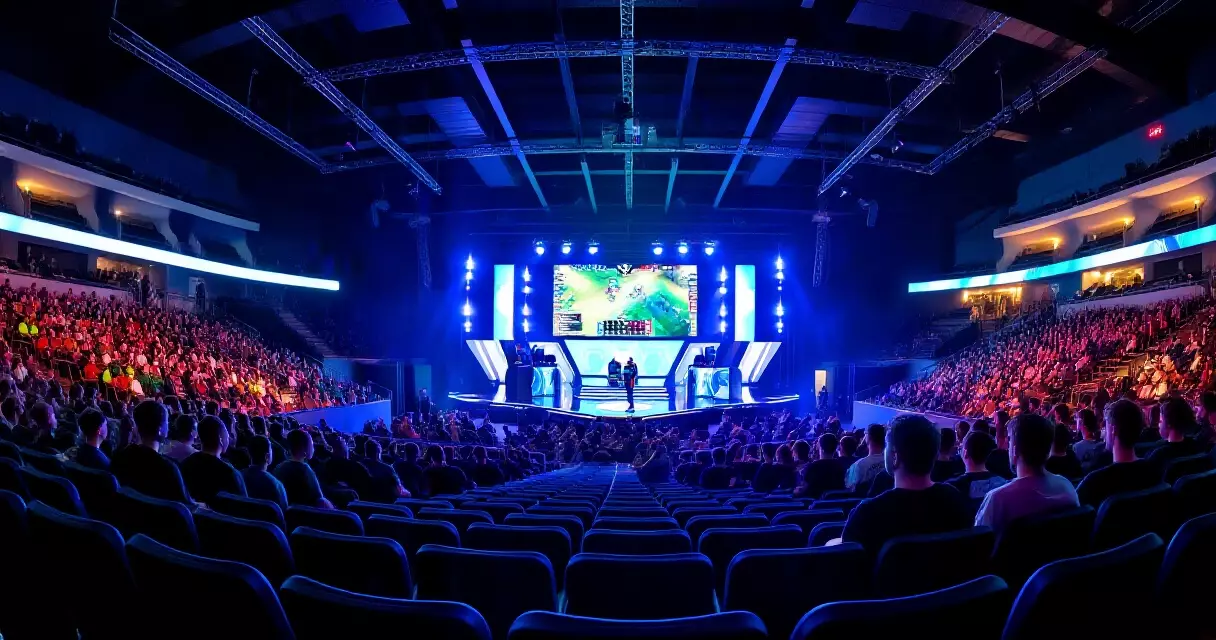
When the League of Legends World Championship drew over 73 million concurrent online viewers in 2023 – a figure reported by Statista – the thousands of fans packed inside Seoul’s Gocheok Sky Dome were experiencing something that a stream simply cannot replicate: the roar of a crowd, the pulse of LED lighting rigs, and the shared electricity of watching elite players compete in person. Esports venues have evolved from repurposed convention halls into purpose-built temples of competition, and in 2026 the industry is expanding faster than at any point in its history.
What Makes a Venue an Esports Venue?
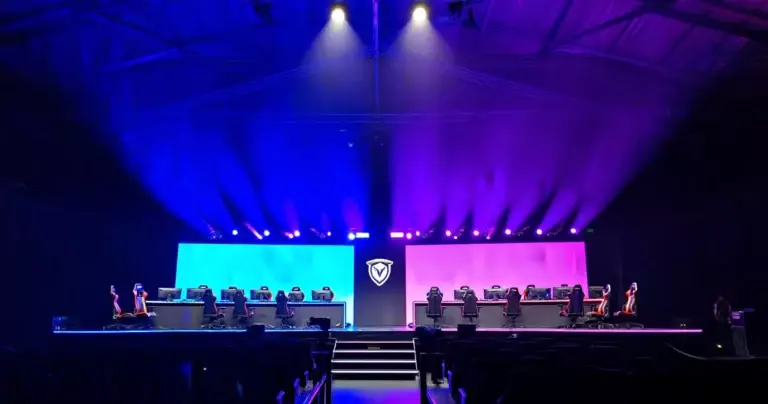
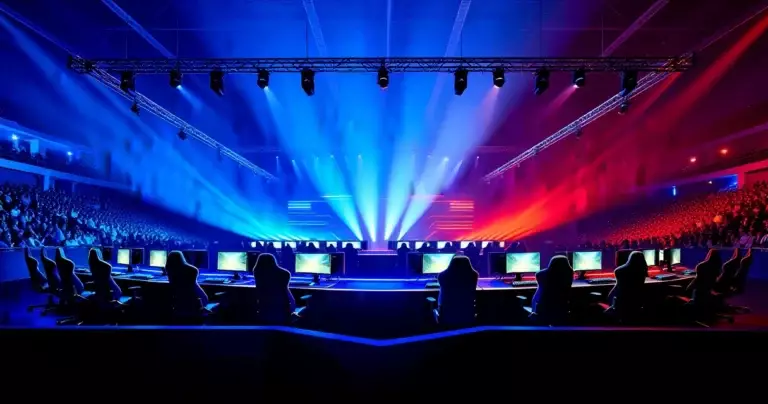
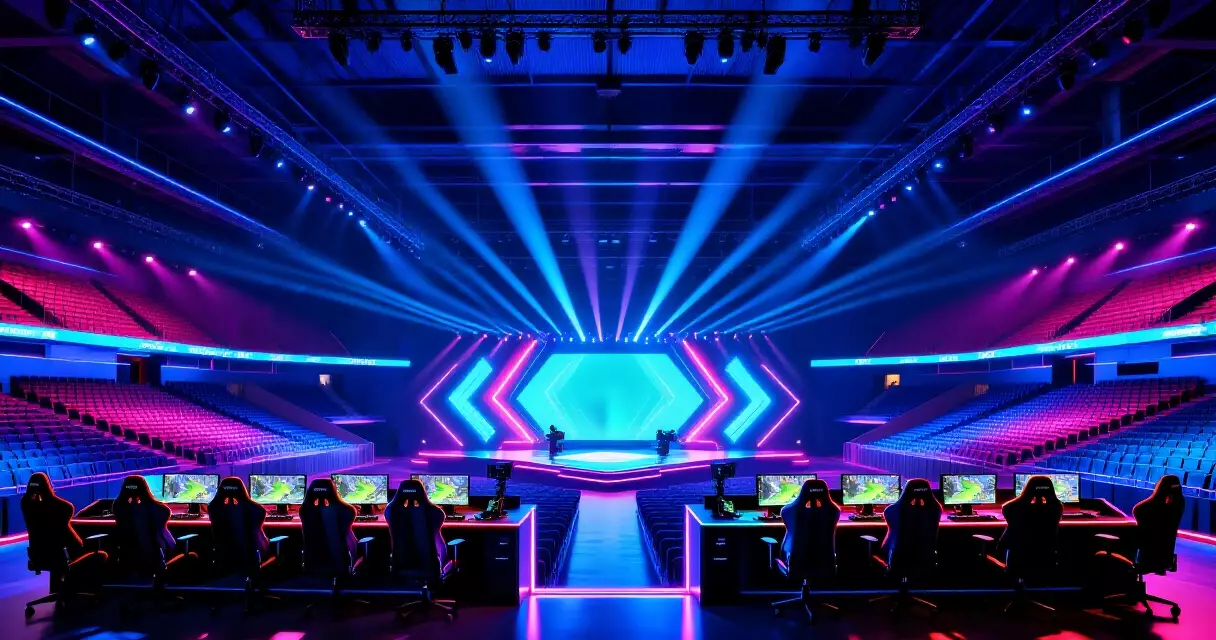
Not every building that hosts a gaming tournament qualifies as a true esports venue. The distinction lies in infrastructure. A genuine esports venue is built – or substantially retrofitted – around four core technical requirements: ultra-low-latency networking (typically fiber with sub-5ms ping), broadcast-grade production suites capable of multi-camera feeds and live encoding, stage setups designed for player visibility from every seat, and audience display systems powerful enough to show in-game action to thousands of people simultaneously.
Beyond the technical layer, purpose-built arenas incorporate player zones that are acoustically isolated from crowd noise, green rooms, practice stations, and dedicated media areas for press and content creators. These elements separate a first-class venue from a hotel ballroom with a projector screen.
The History of Esports Venues: From Basements to Arenas
Competitive gaming’s relationship with physical space stretches back to the 1980 Space Invaders Championship, which Atari held across the United States and attracted roughly 10,000 participants according to Wikipedia’s esports history record. For most of the 1980s and 1990s, however, tournaments lived in arcades, LAN cafes, and university computer labs – wherever there was hardware and a willing crowd.
The shift toward larger venues accelerated alongside broadband adoption. When Blizzard began running StarCraft leagues in South Korea during the late 1990s, dedicated gaming TV channels like OGN and MBC Game broadcast matches from small studios that were purpose-designed for esports production. Those Korean studios – some seating just 200 to 400 spectators – established the template that today’s mega-arenas follow at a much larger scale.
By the mid-2010s, Western publishers and organizers had begun booking traditional sports facilities. The 2014 League of Legends World Championship finals sold out Sangam Stadium in Seoul (capacity 45,000), and Riot Games repeated the feat at Madison Square Garden in New York for the 2015 event. Those moments signaled that esports audiences could fill – and fund – venues that mainstream sports organizations had built over decades.
“The 2014 League of Legends World Championship at Sangam Stadium – a 45,000-seat soccer ground – proved that esports could command the same physical footprint as any major professional sport.”
The first venue purpose-built exclusively for esports in the United States opened in 2018: the Esports Arena at the Luxor Hotel in Las Vegas, operated by Allied Esports. That 30,000-square-foot space quickly became a proof-of-concept for casino and hospitality operators who saw gaming events as a draw for younger demographics.
Major Esports Venues in the United States
The United States now hosts some of the most technically advanced esports facilities on the planet. While Asia – particularly South Korea and China – dominated the early dedicated-venue landscape, American arenas have closed the gap rapidly since 2018. For a full breakdown of the world’s premier arenas, see our guide to major esports arenas and venues where championships are won.
| Venue | Location | Capacity | Notable Events | Year Opened |
|---|---|---|---|---|
| Esports Stadium Arlington (ESA) | Arlington, TX | 2,500 | IEM Dallas, ESL Pro League finals | 2018 |
| Riot Games Arena | Los Angeles, CA | ~1,000 | LCS regular season, Valorant Challengers | 2020 |
| Esports Arena Las Vegas (Luxor) | Las Vegas, NV | ~3,200 (total complex) | HyperX Esports Arena events, Allied Esports productions | 2018 |
| Blizzard Arena | Burbank, CA | 450 | Overwatch League, Hearthstone Championships | 2017 |
| Chase Center (converted use) | San Francisco, CA | 18,064 | League of Legends Championship Series finals | 2019 |
| United Center (converted use) | Chicago, IL | 20,917 | DreamHack festivals, Call of Duty League events | 1994 (repurposed) |
Esports Stadium Arlington remains the largest facility in the United States built specifically for esports. Its 100,000-square-foot footprint includes broadcast studios, a 103-foot LED display wall, and production infrastructure that meets broadcast standards for simultaneous multi-game events. The venue is owned by the City of Arlington – the same municipality that houses the Dallas Cowboys’ AT&T Stadium – reflecting a growing pattern of municipal investment in esports infrastructure as an economic development tool.
Global Esports Venues: A World Tour
Outside the United States, several venues have established themselves as iconic destinations for competitive gaming. South Korea’s LoL Park in Seoul, opened by Riot Games Korea in 2018 with a 435-seat dedicated arena and adjacent broadcast facilities, is widely considered the gold standard for compact venue design. China’s Hangzhou Esports Center, which hosted the 2023 Asian Games esports events – the first time esports appeared as a medal sport at a multi-sport continental event, per the International Olympic Committee – seats 3,600 and was built with public funding as part of a broader smart-city development program.
Europe’s venue scene is anchored by the Barclays Arena in Hamburg (18,000 seats), which has hosted ESL One and IEM Global Challenge events, and the Palacio de los Deportes in Katowice, Poland, home to IEM Katowice – the longest-running major esports tournament on the annual calendar. The Spodek Arena in Katowice has become so associated with Counter-Strike that its distinctive flying-saucer silhouette appears in CS2 fan art and merchandise worldwide.
| Venue | Country | Capacity | Signature Esports Use |
|---|---|---|---|
| Gocheok Sky Dome | South Korea | 16,813 | LoL Worlds 2023 Finals |
| LoL Park | South Korea | 435 | LCK regular season (Riot Games Korea) |
| Hangzhou Esports Center | China | 3,600 | Asian Games 2023 esports medal events |
| Mercedes-Benz Arena Shanghai | China | 18,000 | LoL Worlds Finals 2017 & 2021 |
| Spodek / Międzynarodowe Centrum Kongresowe | Poland | 11,500 | IEM Katowice (CS / CSGO / CS2) |
| Barclays Arena Hamburg | Germany | 18,000 | ESL One, IEM Global Challenge |
| Royal Arena Copenhagen | Denmark | 12,500 | ESL Pro League Finals, BLAST Premier |
| Co-op Live Manchester | United Kingdom | 23,500 | Opened 2024; upcoming esports bookings |
How Esports Venues Are Designed and Built
Designing an esports venue is a fundamentally different challenge from designing a basketball arena or concert hall. The sight-lines that matter most are not to a court or stage, but to giant screens displaying gameplay. Architects must account for viewing angles to multiple displays simultaneously, since esports broadcasts often split screens between different player perspectives and a minimap overview.
Network infrastructure is equally critical. A venue hosting a 32-team Counter-Strike 2 event needs dedicated fiber runs to each player station, a separate broadcast backbone, redundant internet uplinks, and network operations center (NOC) staff on-site throughout the event. ESL and PGL – two of the largest esports tournament organizers – both maintain traveling NOC teams that audit a venue’s network before signing any contract.
Acoustic design presents a nuanced challenge: player stations must be sound-isolated enough that crowd cheers don’t affect in-game communication over headsets, yet the arena atmosphere must still feel alive to spectators. Many venues solve this with custom headphone amplification systems and separate communication channels that bypass the ambient sound environment entirely.
The Business Model Behind Esports Arenas
Running an esports venue profitably requires a diversified revenue model. Ticket sales from individual events are rarely sufficient on their own – most dedicated esports arenas are dark for significant portions of the year unless they operate a resident league or franchise team. The venues that succeed financially layer multiple streams: naming rights deals, broadcast rights for productions filmed on-site, facility rental to publishers and third-party organizers, food and beverage operations, merchandise, and corporate event hosting.
The naming rights market for esports venues has matured considerably. HyperX (Kingston Technology) secured naming rights to the Luxor venue in Las Vegas, while Riot Games’ commitment to its own arena in Los Angeles allowed the company to control production quality directly rather than negotiating with a venue operator. For players and fans interested in how major brands activate around esports, our coverage of Intel’s esports sponsorship strategy and Logitech G’s sponsorship deals shows how hardware brands in particular use venue partnerships as a cornerstone of their marketing.
Beyond naming rights, ancillary revenue from on-site gaming lounges, membership programs, and youth training camps has become a meaningful contributor for venues like ESA Arlington. The arena operates a program allowing amateur teams to book practice time during off-event periods, generating steady revenue while building community engagement.
Esports Venues and the Live Fan Experience in 2026
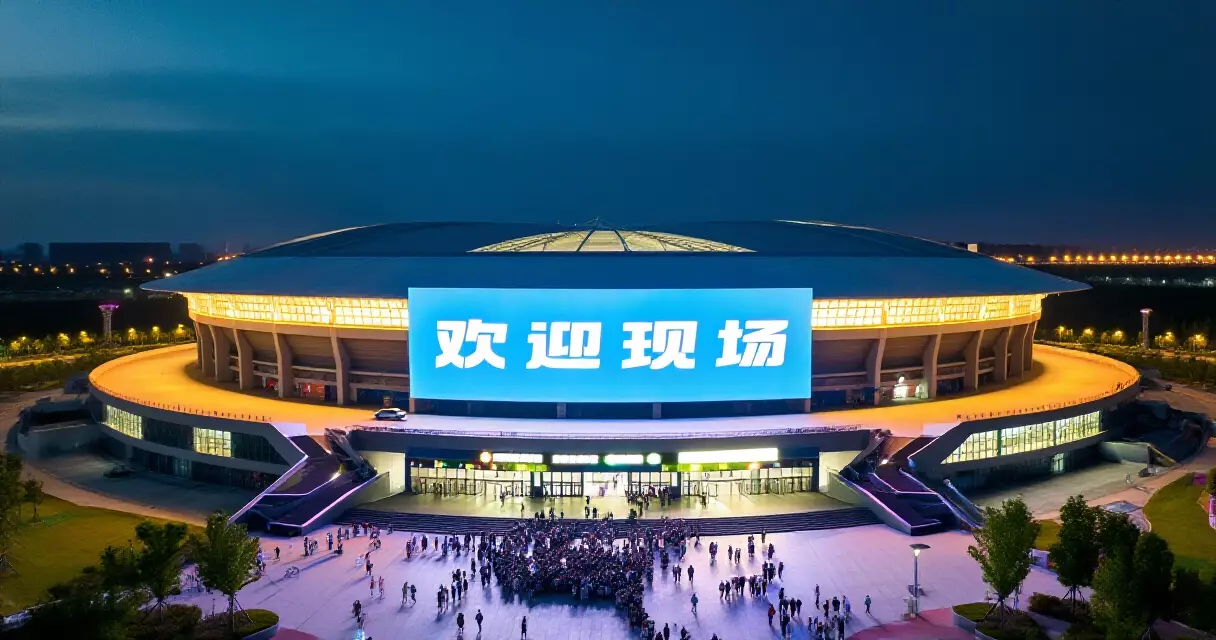
The live experience at a top-tier esports event has grown considerably more sophisticated since the days of folding chairs in convention halls. Today’s flagship events feature production values that rival – and in some respects exceed – those of traditional sports. The opening ceremonies at LoL Worlds routinely incorporate augmented-reality dragons, holographic performances, and stadium-wide LED lighting choreography that is timed to the broadcast feed.
For spectators, the challenge is fundamentally different from watching basketball or soccer: the game being played is visible primarily through broadcast displays rather than direct observation of athlete movement. This has pushed venue operators toward larger and higher-resolution screens. Esports Stadium Arlington’s 103-foot LED wall was state-of-the-art in 2018; venues opening in 2025 and 2026 are now specifying screens exceeding 150 feet and pixel pitches of P2.5 or better to ensure clarity even from the back rows.
Mobile gaming events are also carving out venue space. The growth of titles like Honor of Kings and PUBG Mobile in Southeast Asia has driven demand for arenas that can accommodate mobile-specific stage setups – including charging infrastructure and device management stations. Our look at what mobile esports is and how competitive mobile gaming works provides useful background on this fast-expanding segment.
“In 2026, the most technically demanding element of an esports venue is not the stage – it is the network. A dropped packet at the wrong moment can cost a team a championship, and venues know it.”
Accessibility has become a growing conversation in venue design. Organizers including ESL and PGL have published accessibility guidelines for their events, covering wheelchair seating, captioning on large displays, and sensory-friendly viewing zones for fans with autism or sensory sensitivities. The Americans with Disabilities Act (ADA) sets minimum standards for US venues, but leading operators now treat accessibility as a competitive differentiator rather than a compliance floor.
Emerging Trends: What Esports Venues Look Like in 2026
Several structural shifts are shaping how esports venues are conceived and operated as we move through 2026. The first is hybridization: venues are increasingly designed to serve both esports and traditional entertainment, recognizing that a single-use building carrying the overhead of a 2,500-seat arena is difficult to sustain on esports events alone. Co-op Live in Manchester – which opened in spring 2024 as the UK’s largest indoor arena – was designed from the outset with esports production capabilities alongside its concert and sports programming.
The second trend is decentralization. Rather than concentrating investment in a handful of mega-venues, the industry is seeing growth in smaller, community-focused gaming centers of 200 to 500 seats that serve as feeder venues for regional leagues. These spaces host amateur tournaments, content creator events, and local brand activations, building the grassroots audience pipeline that feeds the major arenas downstream. Understanding how players develop through these grassroots tiers connects directly to training practices covered in our mobile esports training tips resource.
Third is the integration of betting and sports-media infrastructure. As legal sports betting expands across US states – a regulatory landscape tracked in our piece on whether esports betting is legal in the US in 2026 – venues are beginning to incorporate dedicated sports-betting lounges and data feed partnerships with official data providers. Several NBA arenas that host esports events have piloted integrated wagering kiosks on the concourse during gaming events.
Frequently Asked Questions About Esports Venues
What is the largest esports-only venue in the world?
As of 2026, the Esports Stadium Arlington in Arlington, Texas is widely cited as the largest purpose-built esports-only venue in the United States, with a capacity of approximately 2,500 seats and 100,000 square feet of event space. Globally, China has several larger dedicated esports facilities – including venues built for city-level leagues in Shanghai, Chengdu, and Hangzhou – though capacity figures for these venues vary because they often incorporate mixed-use entertainment space. South Korea’s OGN Super Arena in Seoul, with around 6,000 seats for esports configuration, is among the largest dedicated facilities outside the US. The distinction between “dedicated” and “converted” capacity matters: some 20,000-seat arenas regularly host esports but are not built exclusively for it.
How much does it cost to build a dedicated esports arena?
Construction costs for dedicated esports venues vary widely depending on capacity, location, and technical specification. A compact 200-500 seat esports center with professional production capability typically runs between $5 million and $20 million in the United States, accounting for network infrastructure, AV systems, and soundproofing. Esports Stadium Arlington reportedly cost around $10 million to convert from a convention hall into a dedicated arena. A ground-up purpose-built arena at the 2,000-plus seat tier – comparable to ESA – would likely cost $40-80 million in 2026 construction costs given current material and labor prices. Chinese government-backed arenas have reported costs exceeding $100 million for mixed-use complexes that include training facilities, hotels, and retail alongside the competition hall. Operational costs are often underestimated: staffing, utilities, network maintenance, and insurance for a mid-size venue run several million dollars annually before any events are booked.
Which US cities have the most esports venues?
Los Angeles leads the United States in esports venue density, with Riot Games Arena, the former Blizzard Arena in Burbank, and numerous gaming lounges and broadcast studios spread across the metro area. The LA market benefits from proximity to major game publishers, a large streaming and production talent pool, and a dense population of gaming-age consumers. Las Vegas is a close second for large-scale event venues, with the Esports Arena at the Luxor and the capacity of the Las Vegas Strip’s convention infrastructure enabling major LAN events. Dallas–Fort Worth hosts ESA Arlington, one of the country’s most active dedicated arenas. Seattle, Chicago, Atlanta, and New York also regularly appear on the circuit calendar, typically using converted sports or entertainment venues rather than dedicated esports facilities.
Can any arena host a major esports tournament?
Technically, any arena with sufficient floor space can host an esports tournament – but qualifying for a major sanctioned event requires meeting specific technical standards that many general-purpose venues cannot accommodate without significant temporary infrastructure. ESL and PGL, the two largest CS2 tournament operators, require venues to pass a network audit covering fiber uplink capacity, latency to central servers, and redundancy protocols. Riot Games has its own venue certification process for Valorant and League of Legends events. Power requirements are also substantial: a 32-team LAN event running 10-plus gaming PCs per team, along with broadcast servers, streaming encoders, and lighting rigs, can draw several hundred kilowatts. Venues that lack adequate electrical capacity must bring in generator trucks, which adds cost and complexity. For a smaller grassroots or open-bracket tournament, almost any large convention space will work with the right temporary gear.
What technology infrastructure does an esports venue need?
The core technology stack of a professional esports venue includes dedicated fiber internet uplinks with bandwidth capacity typically exceeding 10 Gbps and redundant failover circuits, a managed local area network with sub-5ms ping to on-site servers, broadcast-grade video production suites capable of multi-camera switching and live encoding to streaming platforms, high-brightness LED display walls (minimum 3,000 nits for arena environments), professional audio systems with stage monitoring and audience PA separation, and player station hardware – which is typically provided by sponsors like Intel, ASUS ROG, or Alienware for flagship events. Additional requirements include a network operations center, dedicated power circuits for each player station, and physical security for equipment. Streaming integration – sending a clean feed to Twitch, YouTube, or a publisher’s own platform – requires encoding hardware or cloud encoding services that can maintain quality even under network fluctuations.
How are esports venues different from gaming cafes?
Gaming cafes (also called LAN cafes or PC bangs in Korea) are retail businesses where individuals pay hourly to use gaming hardware. They seat anywhere from a dozen to several hundred computers and are optimized for individual gameplay, not spectator events. An esports venue, by contrast, is built around a central stage or competition area designed for audience viewing, with player stations oriented toward a production crew and a broadcast camera setup rather than toward a retail counter. The economics differ fundamentally: gaming cafes generate revenue from session fees and food and beverage sales to individual customers, while esports venues generate revenue from event ticketing, broadcast rights, sponsorship activations, and facility rental to organizers. Some hybrid spaces exist – particularly in Asia – where a gaming lounge adjoins a small spectator arena, but they serve distinct functions. The customer profiles are also different: gaming cafes attract casual and competitive players who want time on quality hardware, while esports venues draw fans who want to watch top-level competition live.
Are esports venues profitable businesses?
Profitability for esports venues is achievable but not guaranteed, and the track record is mixed. Allied Esports, which operated the HyperX Esports Arena in Las Vegas, reported consistent usage but ultimately sold its venue operations assets in 2021 as part of a broader corporate restructuring. Riot Games operates its LA arena as a controlled production cost rather than a standalone profit center, subsidizing it through the value of consistent LCS broadcast quality. Publicly owned venues like ESA Arlington measure success partly through hotel occupancy, restaurant spend, and tax revenue in the surrounding area rather than the venue’s own P&L. The most financially sustainable model seen so far is the multi-use arena that books esports events alongside concerts, corporate events, and live entertainment – spreading fixed costs across a broader event calendar. Pure-play dedicated esports venues below approximately 3,000 capacity face structural challenges unless they can secure a long-term anchor tenant, such as a franchised esports team, a publisher’s resident league, or a content studio.
What role do universities play in the esports venue landscape?
Colleges and universities have become a significant and often underappreciated segment of the esports venue ecosystem. The National Association of Collegiate Esports (NACE) reports that over 200 member institutions now operate varsity esports programs, and many have invested in purpose-built arenas or renovated facilities to house them. The University of Harrisburg opened one of the first dedicated collegiate esports arenas in the US in 2017. Since then, schools including the University of Utah, Boise State, and Columbia College have built or renovated facilities ranging from 50-seat gaming rooms to 200-plus seat event arenas. Collegiate venues serve a dual purpose: they attract prospective students interested in esports programs, and they create a feeder pipeline of skilled players and event organizers for the professional scene. Some university arenas also host regional open tournaments, making them genuine community hubs rather than purely academic facilities.
Sources
- Statista – League of Legends World Championship viewer statistics
- Wikipedia – Esports history and overview
- International Olympic Committee – Esports at the Olympic Games
- ADA.gov – Americans with Disabilities Act venue standards
- Newzoo Global Esports & Live Streaming Market Report 2024 (newzoo.com)
Top Esports Organizations 2026: Teams, Rosters, and Performance Rankings