
Summary
✓Reviewed by Emma Thompson The 2019 Leisure Studies article "Narratives, identity and community in esports" by Hanhan Xue, Joshua I. Newman, and Jian Xu remains one of the most-cited academic entry points for understanding how esports communities construct belonging —...
Table of contents
- 1 What the Foundational Research Actually Says
- 2 A Brief History: How Esports Narratives Evolved
- 3 Narratives as the Infrastructure of Esports Community
- 4 Identity Formation in Esports Communities
- 4.1 Platform Architecture Shapes Identity Claims
- 4.2 Player Narratives as Identity Anchors
- 5 The Esports Narrative Economy
- 6 Gender, Race, and Inclusion in Esports Communities
- 7 National Identity and the Esports Nations Cup
- 8 How Transmedia Storytelling Builds Esports Community
- 9 Key Research on Narratives, Identity and Community in Esports: A Comparison
- 10 What the 2026 Market Context Means for Community Identity
- 11 Frequently Asked Questions
- 11.1 What is the Xue, Newman & Xu study on narratives, identity and community in esports?
- 11.2 Why do narratives matter so much in esports compared to traditional sports?
- 11.3 How does gender affect esports community identity?
- 11.4 What is the esports narrative economy?
- 11.5 How is national identity shaping esports community in 2026?
- 11.6 Where can I access the full text of the Xue, Newman & Xu study?
- 12 Sources
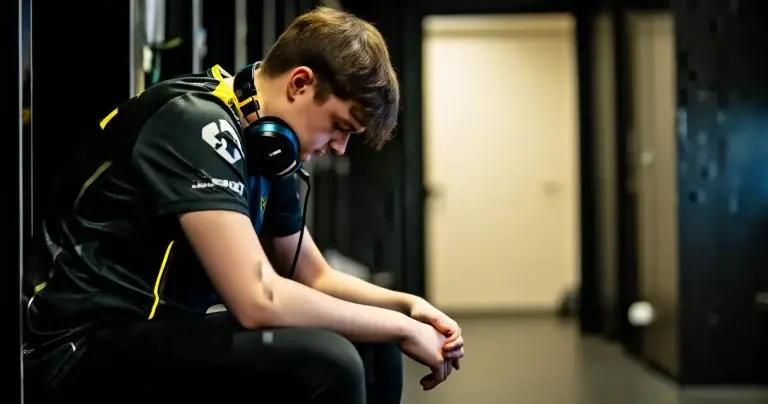
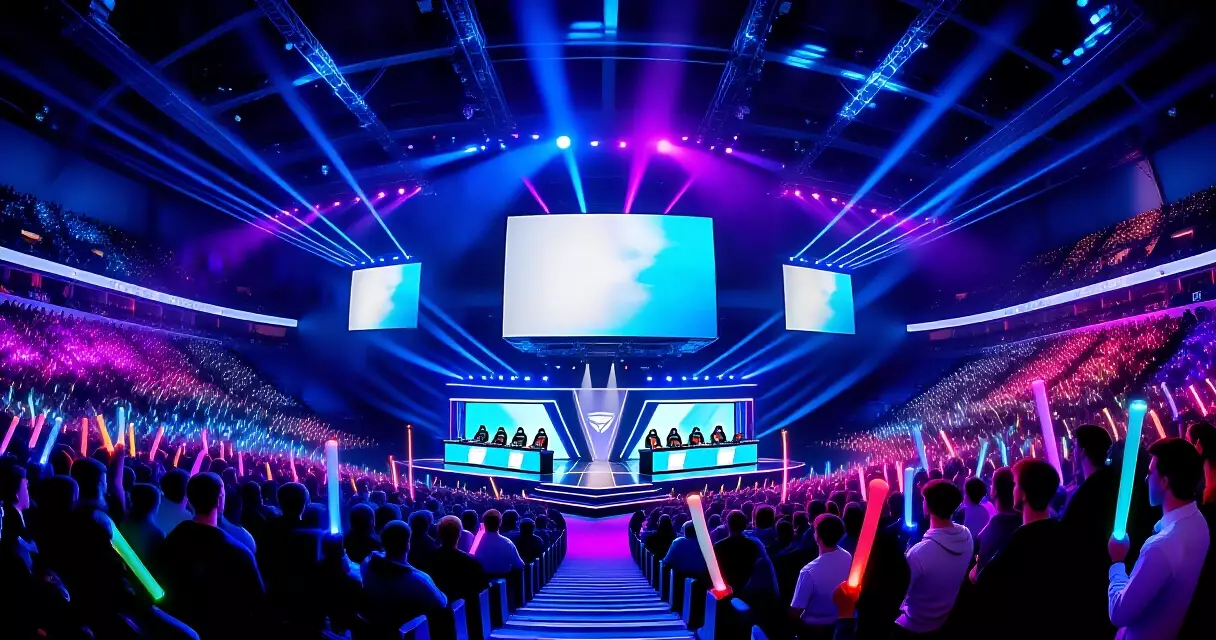
The 2019 Leisure Studies article “Narratives, identity and community in esports” by Hanhan Xue, Joshua I. Newman, and Jian Xu remains one of the most-cited academic entry points for understanding how esports communities construct belonging — and how narratives, identity and community in esports are shaped far more by social politics than by competitive skill alone. As the global esports audience reaches roughly 641 million viewers in 2026, according to a Reuters-cited April 2026 market report, those foundational questions about who belongs, who gets to tell the story, and who the scene is actually for have never been more consequential.
What the Foundational Research Actually Says
The landmark academic paper on this subject is Xue, Newman, and Xu’s 2019 article in Leisure Studies, titled “Narratives, identity and community in esports.” Its core finding is precise and unsettling: Reddit users in esports spaces actively construct a dominant politics of gender- and investment-based inclusion and exclusion. That is, the community defines who counts as a legitimate member not by skill or passion alone, but through social gatekeeping rooted in gender norms and demonstrated investment — financial, temporal, and cultural.
The study treats esports communities not as neutral fan spaces but as contested social arenas where identity claims are constantly tested. This has direct implications for reporters, community managers, tournament organizers, and anyone who wants to understand why some esports scenes feel welcoming while others feel deliberately hostile.
A Brief History: How Esports Narratives Evolved
Esports storytelling did not emerge fully formed. In the early 2000s, competitive gaming was almost entirely self-narrated — communities on forums like GameFAQs and early IRC channels built their own mythologies around star players in StarCraft: Brood War and Counter-Strike 1.6, with no broadcast infrastructure to shape the tale. The introduction of Twitch in 2011 and the parallel rise of the League of Legends Championship Series in 2013 marked the pivotal shift: for the first time, professional esports had broadcast layers, production budgets, and editorial teams actively constructing narratives for mass audiences. By 2018, as the KCI-indexed analysis of League of Legends esports narrative documents, the industry had moved to transmedia storytelling — the anthem video RISE for the 2018 World Championship was not coverage of a tournament; it was the active construction of a shared collective-fate narrative. That evolution from grassroots forum lore to produced media identity is the historical context behind every research paper on the subject today.
Narratives as the Infrastructure of Esports Community
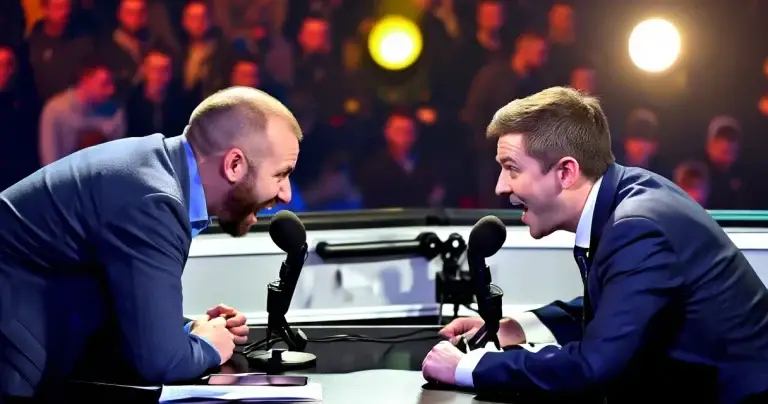
A 2021 University of Waterloo thesis, Stories in Play: Narrative Formation in Sports and Esports, makes a point that is easy to overlook: sports and esports depend on narrative to function as media content at all, yet both are inherently difficult to narrativize because their outcomes are unpredictable. Unlike scripted drama, you cannot guarantee a satisfying story arc in a best-of-five series. What broadcast teams, casters, editorial desks, and community platforms do is actively construct the narrative in real time — deciding which player’s journey to follow, which rivalry to foreground, which moment to replay.
That active construction is not neutral. The stories that get told determine which players become icons, which regions feel represented, and which fans feel seen. For community members who already occupy marginal positions — women, non-binary players, fans from smaller regions, players in underrepresented titles — the narratives told about their scene directly shape whether they feel they belong to it.
“Reddit users actively use the medium to promote a dominant politics of gender- and investment-based inclusion/exclusion.” — Xue, Newman & Xu, Leisure Studies, 2019
Identity Formation in Esports Communities
Identity in esports is not a fixed trait but a social achievement. According to the Xue, Newman, and Xu framework, community members constantly negotiate their legitimacy through signals of investment: hours played, money spent on peripherals or battle passes, depth of game knowledge, and alignment with community norms. Gender functions as a structural filter on top of those signals — women and non-binary participants frequently report that their investment credentials are scrutinized more harshly, or simply dismissed.
Platform Architecture Shapes Identity Claims
Reddit, Twitch, Discord, and Twitter each create different conditions for identity expression. Reddit’s upvote-downvote system makes community consensus visible and enforceable — a comment asserting a marginal identity can be buried, while a gatekeeping comment can rise to the top and present itself as community consensus. Twitch chat’s real-time speed rewards in-jokes and shared codes that exclude newcomers almost automatically. Discord servers can be more welcoming because their server-specific cultures can be explicitly designed, but they also fragment community into silos that make cross-community identity harder to sustain.
Player Narratives as Identity Anchors
One of the most consistent findings across esports narrative research is that individual player stories serve as the primary identity anchors for community formation. Fans do not primarily identify with teams or titles in the abstract — they identify with specific players whose narratives they have followed across multiple seasons. The underdog arc, the redemption story, the dynasty narrative, and the rivalry frame are the four dominant templates, and each creates a different kind of community loyalty. A team built around an underdog narrative generates a community with a strong shared outsider identity; a dynasty narrative builds a community with a strong status investment in continued dominance.
The Esports Narrative Economy
A 2022 article in Communication & Sport by Joshua I. Newman, Hanhan Xue, Nicholas M. Watanabe, Grace Yan, and Christopher M. McLeod introduced the concept of the esports narrative economy — the observation that the dominant story told about esports is one of growth, opportunity, and sport-esport synergy. This meta-narrative serves commercial and institutional interests: it positions esports as a legitimate investment vehicle, attracts sponsors, and justifies the institutionalization of leagues and governing bodies. It also tends to crowd out counter-narratives about labor conditions, player welfare, and community toxicity.
Understanding the narrative economy is essential for journalists covering the scene. When a publisher releases figures about viewership or prize pools, they are contributing to — and usually benefiting from — the dominant growth narrative. Critical esports reporting requires situating those figures within the broader story being constructed, not just passing them along uncritically.
Gender, Race, and Inclusion in Esports Communities
The Xue, Newman, and Xu study’s finding about gender-based exclusion was not an anomaly — it reflects a structural pattern documented across multiple research contexts. A 2023 ScienceDirect study on esports fan identity explores how engagement practices vary significantly by demographic, with implications for how communities define their boundaries. The spectator-participant boundary in esports is unusually permeable — most fans also play the games they watch — which creates a community culture where credentialing through play is constant and those perceived as less skilled face compounded identity challenges.
Race and regional identity add further complexity. Asia-Pacific accounts for roughly 57% of the global esports audience according to the Reuters-cited 2026 market data, yet the dominant narratives in Western esports media have historically centered North American and European players and storylines. This creates communities that feel globally populated but culturally Western in their default assumptions — a tension that mobile-native titles like Mobile Legends: Bang Bang and Honor of Kings are actively disrupting by centering Southeast Asian and East Asian narratives at the highest competitive levels.
National Identity and the Esports Nations Cup
One of the most significant structural developments in esports community identity is the emergence of nation-state representation as a primary organizing frame. According to Reuters’ August 2025 reporting, the Saudi-backed Esports Foundation launched the Esports Nations Cup in Riyadh, explicitly betting that national pride would drive audience engagement in a new format. This mirrors the trajectory of traditional sports tournaments like the FIFA World Cup, where national identity creates emotional investment that transcends loyalty to any individual team or player.
The nation-state frame is powerful precisely because it gives fans an identity anchor that requires no prior investment in specific players or titles — national belonging is pre-existing. But it also risks flattening the internal diversity of each country’s esports community. For coverage of esports like the Overwatch World Cup 2026, reporters must grapple with what national representation actually means when players may live in multiple countries and compete across regional circuits.
Esports communities are unusually powerful because most fans also play the games being contested — making the spectator-participant boundary more permeable than in traditional sports, and making identity claims more directly tied to personal competitive experience.
How Transmedia Storytelling Builds Esports Community
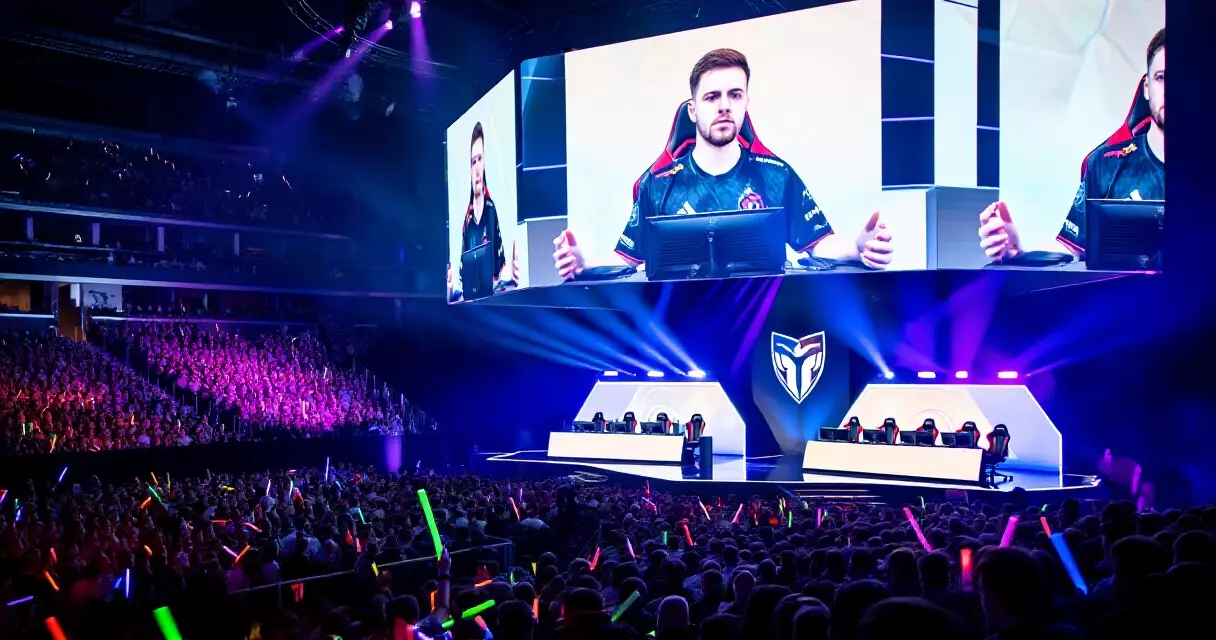
The KCI-indexed analysis of League of Legends esports narrative documents how the 2017 World Championship and the 2018 anthem video RISE constructed what the paper calls a “collective fate” narrative — a story in which the aspiration to win is framed not as individual achievement but as the shared pursuit of an entire community. This is transmedia storytelling in its most sophisticated esports form: the tournament creates the narrative seeds, the broadcast develops them, and ancillary content (music videos, documentary series, social media arcs) extends and deepens the emotional investment of fans who may not watch every match.
The University of Twente thesis Storytelling in Esports extends this analysis, noting that esports narrative ranges from live caster commentary to single tweets, and that this range constitutes the narrative identity of players, teams, and organizations cumulatively over time. For community members, the constant production of this narrative content creates a shared culture that distinguishes an esports scene from a mere game player base.
Key Research on Narratives, Identity and Community in Esports: A Comparison
| Study / Source | Year | Core Finding | Method |
|---|---|---|---|
| Xue, Newman & Xu — Leisure Studies | 2019 | Reddit communities enforce gender- and investment-based inclusion/exclusion | Discourse analysis of Reddit |
| Newman, Xue, Watanabe et al. — Communication & Sport | 2022 | Dominant esports narrative is a “narrative economy” centered on growth and opportunity | Mixed-method, narrative analysis |
| Stories in Play — University of Waterloo thesis | 2021 | Live broadcast actively constructs the final narrative; outcomes are inherently unpredictable | Narrative formation model |
| Esports Narrative: LoL Focus — KCI journal | 2024 | LoL esports builds a “collective fate” narrative around the aspiration to win | Analysis of 2017 Worlds and RISE MV |
| ScienceDirect — esports fan identity study | 2023 | Fan engagement practices vary significantly by demographic; identity shapes participation | Quantitative + survey |
What the 2026 Market Context Means for Community Identity
According to a Reuters-cited April 2026 market report, esports has entered a period of stabilized revenues and institutional investment rather than explosive growth. Sponsorships and media rights together account for approximately 65% of industry revenue, with sponsorship revenue projected to exceed $1.11 billion in 2026 at an annual growth rate of about 7.8%. This commercialization has direct consequences for community identity: when brand revenue depends on safe, broad audiences, publishers and league operators have structural incentives to moderate community cultures — which can reduce toxicity but can also suppress the authentic community voice that makes esports spaces feel meaningful to insiders.
The growing weight of mobile-native titles — with Mobile Legends: Bang Bang reaching a peak of 5,680,511 concurrent viewers in 2026 according to Esports Charts data — is reshaping which communities are centered in the broader esports identity conversation. Mobile esports communities have different platform habits, different regional concentrations, and different relationships to the traditional “PC gaming” identity that dominated early esports culture. Covering esports identity in 2026 means accounting for these communities as primary, not peripheral.
| Esports Community Identity Factor | Traditional Esports (PC-first) | Mobile-Native Esports |
|---|---|---|
| Dominant platforms for community formation | Reddit, Discord, Twitch, Twitter/X | TikTok, YouTube Mobile, regional chat apps |
| Primary audience geography | North America, Western Europe, Korea | Southeast Asia, South Asia, MENA |
| Investment credentialing signals | Hardware knowledge, hours in PC titles | Mobile rank, regional tournament awareness |
| Narrative anchors | Team franchises, long-form player arcs | Regional pride, mobile title-specific stars |
| 2026 peak viewership example | LoL Worlds, CS2 majors | Mobile Legends M-Series: 5.68M peak concurrent |
Frequently Asked Questions
What is the Xue, Newman & Xu study on narratives, identity and community in esports?
It is a 2019 academic article published in Leisure Studies (volume 38, issue 6, pages 845–861) by Hanhan Xue, Joshua I. Newman, and Jian Xu. The study analyzes how Reddit users in esports communities construct inclusion and exclusion based on gender and investment. Its central argument is that esports communities are not neutral fan spaces — they are social arenas where identity is actively negotiated and gatekept, often in ways that disadvantage women and other marginalized participants.
Why do narratives matter so much in esports compared to traditional sports?
As the University of Waterloo thesis Stories in Play argues, sports and esports both require narrative to function as media content, but esports faces a particular challenge because its competitive events are technically difficult to follow without game knowledge. Narratives — player backstories, rivalry frames, underdog arcs — give audiences an emotional entry point that does not require expertise. In traditional sports, decades of broadcast convention have established those narrative frameworks; esports is still actively building them, which makes the narrative construction process more visible and more contested.
How does gender affect esports community identity?
According to the Xue, Newman, and Xu research, gender operates as a structural filter in esports community spaces. Women and non-binary community members frequently find their investment credentials scrutinized more harshly, and the dominant community norms on platforms like Reddit often reinforce masculine-coded participation as the default. This is not unique to esports — it mirrors patterns in gaming culture more broadly — but the high-stakes, competitive nature of esports amplifies these dynamics because community membership is so closely tied to demonstrated skill and knowledge.
What is the esports narrative economy?
The term comes from a 2022 article in Communication & Sport by Newman, Xue, Watanabe, Yan, and McLeod. It refers to the dominant meta-narrative about esports as an industry — a story centered on growth, opportunity, and the legitimacy of esports as a successor to or partner of traditional sports. The narrative economy benefits publishers, investors, and governing bodies, and tends to crowd out counter-narratives about player welfare, labor conditions, or community toxicity. Recognizing it is important for reporters who want to cover esports critically rather than just amplifying industry PR.
How is national identity shaping esports community in 2026?
National identity has become an increasingly central organizing frame for esports communities, driven in part by events like the Esports Nations Cup launched by the Saudi-backed Esports Foundation. Reuters reported in August 2025 that the Foundation was explicitly betting on national pride to drive audience engagement for this new format. Nation-state representation gives fans a pre-existing identity anchor that does not require prior investment in specific players or titles, which broadens audience reach but also risks erasing the internal diversity of each country’s esports community.
Where can I access the full text of the Xue, Newman & Xu study?
The article is published in Leisure Studies, volume 38, issue 6 (2019), pages 845–861, and is available via Taylor & Francis Online at tandfonline.com. Access requires either a personal subscription to Leisure Studies or institutional access through a university library. Many university library systems provide free access to Taylor & Francis journals — searching for the DOI (10.1080/02614367.2019.1640778) through your library’s journal access portal is the most reliable method.
Sources
- Narratives, identity and community in esports — Leisure Studies (Xue, Newman & Xu, 2019) — Retrieved August 23, 2026
- Full article: Narratives, identity and community in esports — Taylor & Francis Online — Retrieved August 23, 2026
- Esports 2026: Global Market Surpasses the $5 Billion Mark — Reuters Press Releases — Retrieved August 23, 2026
- Saudi-backed Esports Foundation to debut Nations Cup in Riyadh — Reuters Sports — Retrieved August 23, 2026
- Stories in Play: Narrative Formation in Sports and Esports — University of Waterloo thesis — Retrieved August 23, 2026
- Gaming Gone Viral: An Analysis of the Emerging Esports Narrative Economy — Communication & Sport (Newman, Xue et al., 2022) — Retrieved August 23, 2026
- An exploration of esports fan identity, engagement practices — ScienceDirect (2023) — Retrieved August 23, 2026
- Esports Narrative: Focusing on the League of Legends — KCI journal (2024) — Retrieved August 23, 2026