Summary
✓Reviewed by Emma Thompson The intersection of national identity, digital fan culture, and esports has never been more consequential than in 2026. With the inaugural Esports World Cup drawing competitors from more than 100 nations and national governing bodies emerging...
Table of contents
- 1 Why National Identity Has Become Central to Esports Fan Culture
- 2 A Brief History: From Clan Tags to Country Flags
- 3 The Mechanics of National Fan Identity Online
- 4 Flagship Events Shaping the Intersection of National Identity and Esports in 2026
- 5 Digital Fan Culture as a Driver of National Esports Investment
- 6 How Game Titles Shape National Esports Identities Differently
- 6.1 League of Legends and Korean Cultural Dominance
- 6.2 CS2 and European National Rivalries
- 6.3 Valorant and the New Nationalism
- 7 Tensions and Complications at the Intersection
- 8 Broadcast Identity and the Visual Language of Esports Nationalism
- 9 What Comes Next: The Future of National Identity in Esports Fan Culture
- 10 Frequently Asked Questions
- 10.1 How does national identity differ in esports fan culture compared to traditional sports?
- 10.2 Which countries have the strongest national esports identities in 2026?
- 10.3 What is the Esports Nations Cup and why does it matter?
- 10.4 Does nationality actually matter for individual player careers in esports?
- 10.5 How do esports broadcasters reinforce national identity during tournaments?
- 10.6 Are there risks to the fusion of national identity and esports fan culture?
- 11 Key Takeaways
- 12 Sources
The intersection of national identity, digital fan culture, and esports has never been more consequential than in 2026. With the inaugural Esports World Cup drawing competitors from more than 100 nations and national governing bodies emerging on every continent, competitive gaming has become one of the most revealing arenas for understanding how countries express pride, belonging, and rivalry in the digital age.
Why National Identity Has Become Central to Esports Fan Culture
For most of esports’ early history, fan loyalty attached to franchise clubs — Team Liquid, Natus Vincere, T1 — rather than to countries. That has shifted. According to Newzoo’s 2025 Global Esports & Live Streaming Market Report, global esports viewership reached an estimated 640 million in 2025, with regional and national identity emerging as the fastest-growing dimension of audience segmentation. Fans increasingly describe themselves first as supporters of a national squad and second as followers of a specific team or title.
This shift is visible at the infrastructure level. The USA Esports Alliance announced in mid-2026 that Evil Geniuses, G2, and Gen.G had joined its governing body push — signaling that the United States now treats competitive gaming as a nationhood project, not merely an entertainment category. South Korea, Brazil, France, and Saudi Arabia have made analogous institutional moves.
A Brief History: From Clan Tags to Country Flags
National esports identity did not emerge overnight. The Olympic Council of Asia first recognized esports as a medal sport at the 2018 Asian Games in Jakarta, giving countries a formal framework for sending national squads. That moment crystallized what fan communities had been practicing informally for years: draping national colors over everything from Discord banners to in-game sprays. The 2022 Asian Games in Hangzhou further cemented the model, with government-backed training programs emerging in South Korea, Thailand, and Singapore.
The Mechanics of National Fan Identity Online
Digital fan culture around national esports identity operates through distinct mechanisms that differ from traditional sports fandom. On Twitch and YouTube Gaming, viewers apply country flag overlays and nationality-coded usernames during major tournaments. Reddit communities such as r/GlobalEsports and title-specific subreddits fill with “country pride” threads whenever a national player reaches a major final. Discord servers organized around national esports federations have grown substantially in 2025 and 2026, providing spaces where linguistic identity and gaming passion reinforce each other.
When a Turkish player lifts a Valorant trophy, Turkish fans across three continents light up Twitch chat in unison — that real-time collective expression is what makes esports nationalism so potent.
Social media amplification matters enormously. According to research published by Pew Research Center on digital community formation, shared national identity is one of the most durable organizing forces in online spaces, transferring readily into novel entertainment contexts. Esports — with its real-time global broadcast infrastructure — provides an ideal substrate for this dynamic.
Flagship Events Shaping the Intersection of National Identity and Esports in 2026
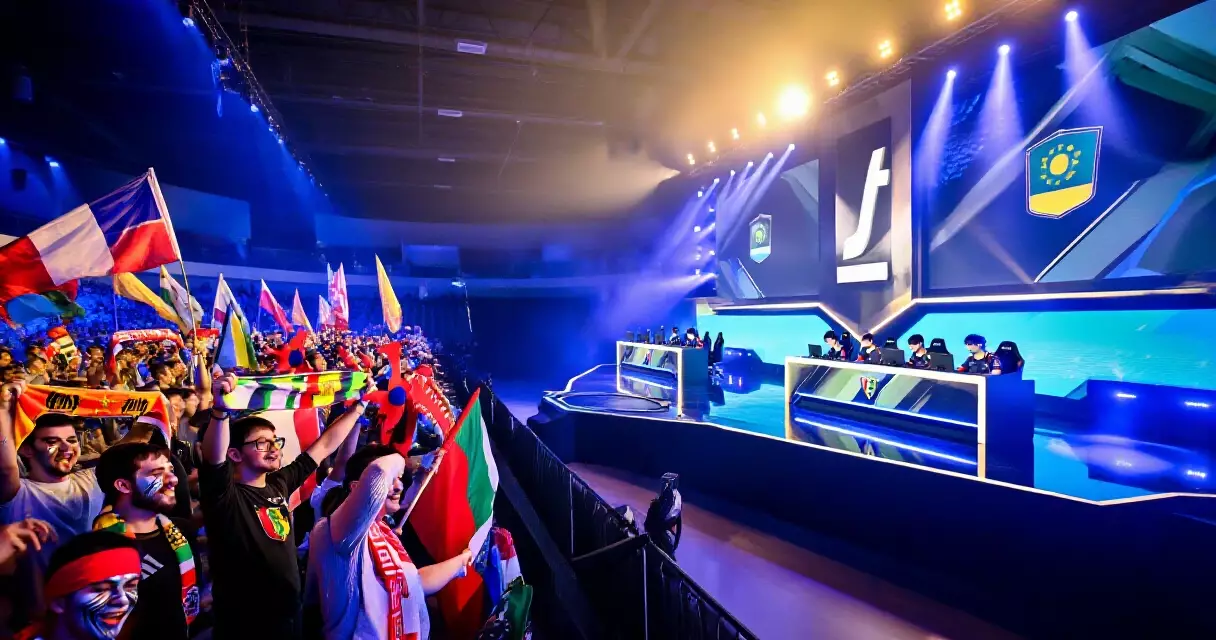
Several events in 2026 have crystallized how national identity, digital fan culture, and competitive gaming are converging. The Honor of Kings World Cup 2026 opened at the Esports World Cup in Paris on July 30 with 20 national teams competing — a structure explicitly modeled on the FIFA World Cup’s country-versus-country format. Broadcasts featured national anthems, delegation ceremonies, and flag parades that would be familiar to any traditional sports viewer.
Simultaneously, the adidas and Esports Foundation partnership to outfit more than 100 nations for the Esports Nations Cup introduced matching national kits to competitive gaming for the first time at scale. Kit design became its own cultural conversation: fans debated color choices, crest designs, and whether national esports uniforms should mirror traditional sports kits or develop an independent visual language.
Digital Fan Culture as a Driver of National Esports Investment
Governments are responding to fan demand, not leading it. National esports programs in South Korea, France, Saudi Arabia, and Brazil emerged after years of organic fan mobilization online. Fan communities petitioned federations, created national esports hashtags, and organized grassroots qualifiers long before official structures existed. This bottom-up dynamic distinguishes esports nationalism from traditional state-sponsored sport programs.
In the United States, the trajectory is similar. The USA Esports Alliance’s 2026 push was preceded by years of fan-driven advocacy, documented through petition campaigns and social media pressure. When Evil Geniuses, G2, and Gen.G joined the alliance, the announcement generated more engagement on X (formerly Twitter) in the first 24 hours than any comparable esports governance story in recent memory, according to social listening data cited by ESPN Esports.
How Game Titles Shape National Esports Identities Differently
League of Legends and Korean Cultural Dominance
Few national identities are as thoroughly fused with an esports title as South Korea’s relationship with League of Legends. The LCK (League Champions Korea) produced seven of the first eleven World Championship winners, creating a feedback loop in which Korean national pride and LoL mastery became mutually reinforcing in global fan culture. Even as other regions have closed the gap, the “Korean player” designation still carries specific cultural weight in global fandom — a form of national branding with no direct equivalent in traditional sport.
CS2 and European National Rivalries
Counter-Strike has long organized its fan culture around European national rivalries. Danish, French, Swedish, and Brazilian fanbases maintain intense national pride around their CS2 representatives — a dynamic that informed the drama around the FaZe Clan CS2 roster overhaul in summer 2026, where broky’s benching resonated differently across Czech and international fan communities precisely because national identity had been attached to his role on the team.
Valorant and the New Nationalism
Riot Games’ Valorant Champions Tour has perhaps done more than any other organizer to institutionalize national identity in esports fan culture. The VCT’s regional structure — Americas, EMEA, Pacific — maps onto political geography in ways that generate genuine cross-national rivalries. Broadcast identity changes introduced by Riot in 2026, which emphasized regional flags and national player profiles, have deepened this effect.
Riot’s decision to redesign VCT broadcasts around regional and national identity in 2026 is a deliberate bet that fans want to root for their country, not just their favorite org.
Tensions and Complications at the Intersection
The fusion of national identity and digital fan culture in esports is not without friction. Several complications deserve clear-eyed acknowledgment.
First, player nationality in esports is not always straightforward. Many top players hold dual citizenship, have immigrated for training opportunities, or represent countries they have limited cultural ties to. This creates fan culture debates about authenticity that echo similar conversations in traditional sport but are amplified by the internet’s capacity for detailed scrutiny.
Second, nationalism in online fan culture can tip into toxicity. During major international tournaments, national fan communities have been documented engaging in coordinated harassment of opposing players, particularly on platforms like VK, Twitter/X, and Weibo. Tournament organizers including ESL and PGL have introduced moderation protocols specifically targeting nationality-based abuse.
Third, the commercial logic of national esports identity creates potential conflicts with player welfare. When a national kit or federation deal is signed, the financial benefits rarely flow equitably to players themselves — a tension that organizations like the Esports Players Union have flagged in 2025-2026 advocacy work.
Broadcast Identity and the Visual Language of Esports Nationalism
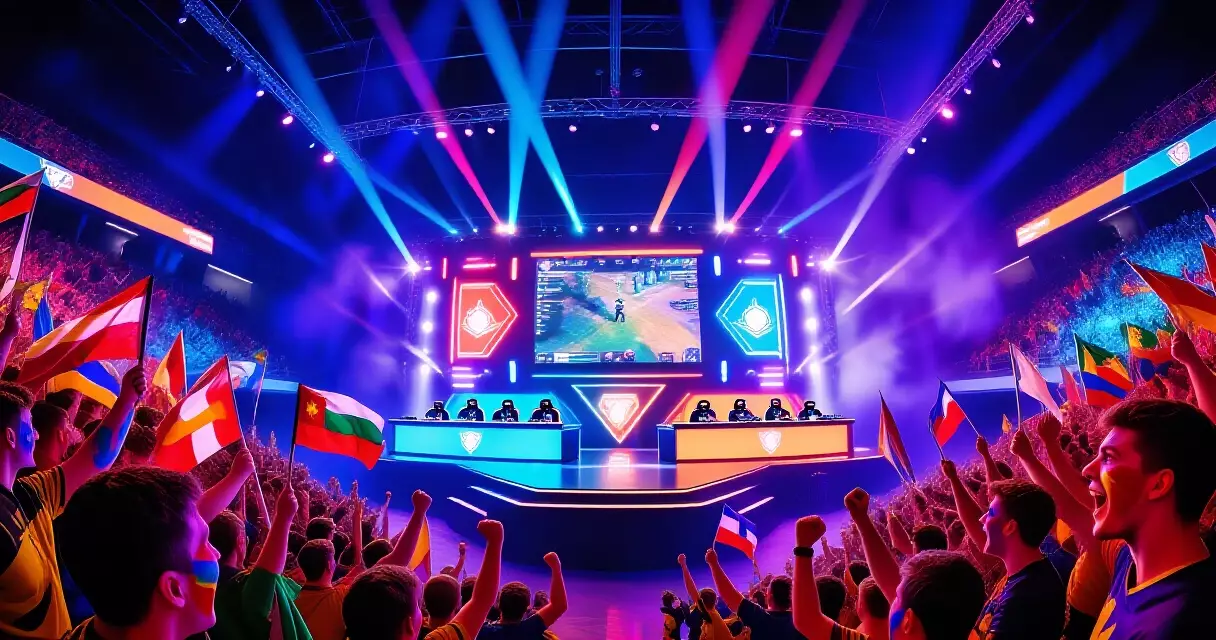
Broadcast design plays an underappreciated role in constructing national esports identity. The Riot Games esports broadcast identity changes of 2026 — involving new graphics packages, player profile treatments, and flag-forward lower-thirds — were not merely aesthetic updates. They were deliberate choices about how national affiliation should be visualized and weighted in competitive gaming presentation.
These decisions influence how fans emotionally engage with matches. When a player’s nationality is prominently displayed alongside their in-game handle, the broadcast is actively constructing a nationalized frame for the viewer. Research in sports media studies, including work published through Taylor & Francis journals on sports nationalism, consistently finds that broadcast framing shapes fan identification more powerfully than almost any other factor.
What Comes Next: The Future of National Identity in Esports Fan Culture
Several forces will shape how the intersection of national identity, digital fan culture, and esports evolves through the remainder of 2026 and beyond.
The Electronic Arts merger closing on August 4, 2026 creates a new publishing giant with significant stakes in competitive gaming — and likely incentives to develop national and regional competitive structures for FIFA/EA Sports FC esports, where country identity is especially commercially valuable.
The International Olympic Committee’s ongoing esports discussions — following the success of the 2023 inaugural Olympic Esports Series in Singapore — suggest that the Olympics themselves may become a site of esports nationalism within this decade, with all the flag-ceremony, anthem-playing, medal-table politics that entails. According to the International Olympic Committee, formal esports inclusion discussions continue as of 2026, with a dedicated Olympic Esports Games proposed for future cycles.
Frequently Asked Questions
How does national identity differ in esports fan culture compared to traditional sports?
Esports national fan identity operates primarily through digital channels — Discord servers, Twitch chat, Reddit, Twitter/X — rather than physical stadiums. This makes it faster-forming and more geographically diffuse than traditional sports nationalism, but also more vulnerable to coordinated toxicity. The absence of physical proximity means national fan communities cohere around flags, language, and shared broadcast moments rather than local attendance.
Which countries have the strongest national esports identities in 2026?
South Korea, Brazil, China, France, and Saudi Arabia are consistently cited as having the most developed national esports identities in 2026, based on government investment levels, organized fan communities, and tournament performance. The United States is rapidly formalizing its position through the USA Esports Alliance, while emerging markets in Southeast Asia — particularly the Philippines, Thailand, and Vietnam — show significant grassroots national esports culture.
What is the Esports Nations Cup and why does it matter?
The Esports Nations Cup is the first major international tournament explicitly structured around national team competition across multiple titles, featuring over 100 national delegations and backed by adidas and the Esports Foundation. It matters because it provides the clearest institutional expression yet of esports as a vehicle for national identity — analogous to the FIFA World Cup or the Olympics in its country-versus-country format and associated patriotic fan mobilization.
Does nationality actually matter for individual player careers in esports?
Nationality increasingly matters in several concrete ways. National federation membership can affect eligibility for country-specific tournaments and sponsorships. Work visa requirements for playing in foreign leagues create genuine career constraints based on citizenship. And fan bases — which influence sponsorship value — frequently organize around national identity, meaning a player from a country with strong esports culture may have a larger built-in audience than an equally skilled player from a smaller esports nation.
How do esports broadcasters reinforce national identity during tournaments?
Broadcasters reinforce national identity through flag displays in player profiles, national anthem ceremonies, country-coded color schemes in team graphics, and commentary that contextualizes players within national narratives. Riot Games’ 2026 broadcast redesign explicitly foregrounded these elements. Research in sports media consistently finds that these broadcast choices significantly shape viewer identification and emotional investment.
Are there risks to the fusion of national identity and esports fan culture?
Yes. The main documented risks include nationality-based harassment of players and rival fans, disputes over player eligibility when citizenship is ambiguous, and commercial exploitation of national identity without fair compensation to players. Tournament organizers including ESL and PGL have introduced moderation protocols targeting nationality-based abuse, while player advocacy groups have raised concerns about federation deals that benefit governing bodies more than the competitors who generate value.
Key Takeaways
- The intersection of national identity, digital fan culture, and esports has become one of the defining dynamics of competitive gaming in 2026, driven by fan community formation, institutional investment, and broadcast design choices.
- Events like the Esports Nations Cup (100+ nations, adidas-backed) and the Honor of Kings World Cup (20 national teams) represent the institutionalization of esports nationalism.
- Digital platforms enable faster, more geographically diffuse national fan communities than traditional sport but also introduce new risks around online toxicity and commercial exploitation.
- Game titles shape national esports identities differently: LoL carries Korean cultural dominance, CS2 anchors European national rivalries, and Valorant is actively constructing new nationalism through broadcast design.
- Future developments — including the EA merger’s competitive gaming implications and possible Olympic inclusion — will deepen the role of national identity in esports fan culture through the end of this decade.
Sources
- Newzoo Global Esports & Live Streaming Market Report 2025 — Retrieved August 5, 2026
- International Olympic Committee — Esports News and Updates — Retrieved August 5, 2026
- IOC — Esports Program Overview — Retrieved August 5, 2026
- Pew Research Center — Internet & Technology Research — Retrieved August 5, 2026
- Taylor & Francis — Sports Media and Nationalism Research — Retrieved August 5, 2026
- ESPN Esports — Retrieved August 5, 2026
- Esports Players Union — Player Advocacy and Welfare — Retrieved August 5, 2026