
Summary
✓Reviewed by Emma Thompson When Riot Games unveiled the League of Legends European Championship in January 2019, it did far more than swap an acronym. The move from EU LCS to LEC marked a complete reinvention of Riot Games' esports...
Table of contents
- 1 From EU LCS to LEC: The History of Riot Games’ European Esports Identity
- 2 The LEC Rebrand Visual Identity: What Further Group Built for Riot
- 3 Franchising and the LEC Rebrand: What Changed for Teams in 2019
- 3.1 What Franchising Meant for the LEC’s Brand Identity
- 3.2 The Berlin Studio as an Identity Anchor
- 4 From LEC to EMEA: How Riot Expanded the European Esports Identity
- 5 LEC 2026: How the Rebrand Identity Holds Up Seven Years Later
- 6 LEC Rebrand vs. Other Regional League Identities: A Comparison
- 7 LEC 2026 Broadcast Identity: Talent, Format, and Presentation
- 8 LEC 2026 Season Structure at a Glance
- 9 Frequently Asked Questions
- 9.1 What does LEC stand for, and why did Riot change from EU LCS?
- 9.2 Who designed the LEC brand identity?
- 9.3 When did the LEC become EMEA?
- 9.4 How many teams compete in the LEC?
- 9.5 Where is the LEC broadcast from?
- 9.6 How does the LEC connect to international tournaments like Worlds?
- 10 Key Takeaways
- 11 Sources
When Riot Games unveiled the League of Legends European Championship in January 2019, it did far more than swap an acronym. The move from EU LCS to LEC marked a complete reinvention of Riot Games’ esports identity for Europe, one that touched every layer of competitive League of Legends on the continent — the name, the visual system, the broadcast package, the franchising model, and ultimately the league’s geographic ambition. For fans, teams, and industry observers tracking the evolution of European esports, understanding the LEC rebrand means understanding how a publisher deliberately shaped a regional identity from the ground up.
From EU LCS to LEC: The History of Riot Games’ European Esports Identity
Riot launched its European competitive structure in 2013 as the European League of Legends Championship Series — the EU LCS. The format ran for five years as an open-circuit, promotion-and-relegation league, with teams earning and losing spots through a challenger system. By late 2018, Riot decided the structure no longer matched its long-term commercial vision for the region. According to Wikipedia’s 2019 LEC season entry, Riot Games formally rebranded in November 2018, and the first season under the new name kicked off on 18 January 2019. Alongside the name change, Riot introduced full league franchising — a permanent-slot model that removed relegation and gave 10 partner organisations long-term stability in the competition.
The identity shift was deliberate: by shortening the name to LEC, Riot created a clear parallel with its North American league, which simultaneously rebranded from NA LCS to LCS. As Liquipedia’s LCS entry confirms, the North American league had previously been known as the NA LCS prior to the same 2019 rebranding cycle, making both moves part of a coordinated global brand simplification by Riot.
The LEC Rebrand Visual Identity: What Further Group Built for Riot
A name change alone does not constitute a brand identity. The visual and broadcast system that accompanied the LEC launch was purpose-built from scratch. According to Further Group’s project page for Riot Games Europe, the agency created the entire new European esports identity and broadcast package for Riot Games, covering the LEC name, visual language, roadshows, and set design. Further Group’s brief was to build a system that felt distinct from the North American league while still sitting coherently inside Riot’s broader LoL Esports visual universe.
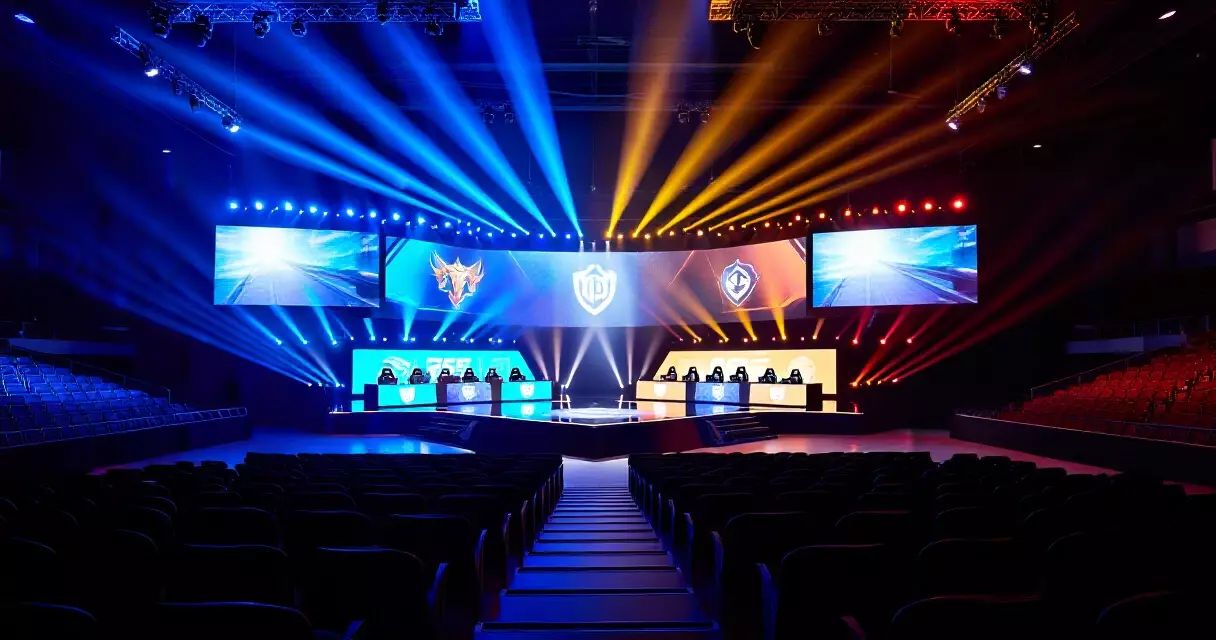
The result was a clean, arena-grade identity — motion graphics, colour systems, stage elements, and on-air presentation that made the LEC feel like a premier sports property rather than a game publisher’s in-house stream. The rebrand positioned the LEC as a broadcast product first, a competition second — a deliberate editorial choice that influenced how European League of Legends esports was covered and perceived in the years that followed.
Franchising and the LEC Rebrand: What Changed for Teams in 2019
The Riot Games esports identity shift for Europe was inseparable from the franchising change. Under the EU LCS promotion-and-relegation model, teams faced annual existential risk. The 2019 LEC rebrand introduced permanent partnership slots: according to the 2019 LEC season Wikipedia entry, Riot Games announced 10 final franchise partners for the first season under the new name. Organisations including Fnatic, G2 Esports, Team Vitality, Schalke 04, SK Gaming, and others secured long-term slots, replacing the open-circuit model entirely.
What Franchising Meant for the LEC’s Brand Identity
Permanent slots changed team behaviour overnight. Organisations could plan multi-year sponsorship deals, invest in training facilities, and build fanbases without the threat of relegation disrupting commercial relationships. The LEC’s brand identity benefited directly: with stable rosters of known partner organisations, the league could build consistent storylines, rivalries, and audience retention in ways the EU LCS had struggled to sustain.
The Berlin Studio as an Identity Anchor
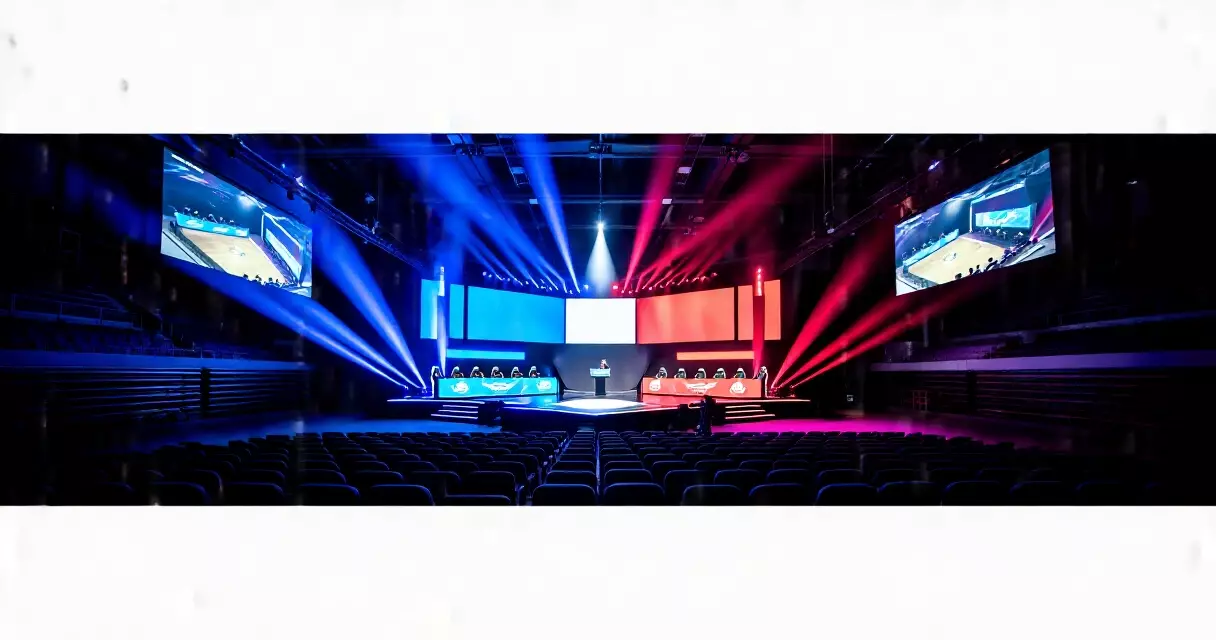
Riot’s decision to base the LEC in Berlin was another deliberate identity choice. According to available reporting from Strafe’s LEC Summer 2026 event page, Berlin remains the primary venue hub for the league’s production and broadcast, reinforcing the city’s role as the physical centre of European competitive League of Legends. The studio setting — rather than a touring event format — gave the LEC a consistent visual backdrop and production quality that became recognisable to audiences worldwide.
“Alongside a new name, we created a fresh new identity and broadcast package, influencing the roadshows and set design.” — Further Group, on the LEC rebrand brief
From LEC to EMEA: How Riot Expanded the European Esports Identity
The 2019 rebrand established the LEC as a European identity, but Riot’s ambitions extended further. By 2023, according to the English Wikipedia entry for the League of Legends EMEA Championship, the league expanded its geographic scope to become the League of Legends EMEA Championship — covering Europe, the Middle East, and Africa under the same competitive and brand umbrella. The acronym LEC remained, preserving brand equity built since 2019, but the scope shifted from a single-continent competition to a multi-region one.
This expansion reflects a broader pattern in how Riot constructs regional identities for its esports properties. The VALORANT Champions Tour (VCT) uses a similar EMEA designation for its European regional league, suggesting Riot has standardised the EMEA framing across its flagship titles. For coverage of how that parallel structure works, the VCT format guide on this site provides a useful comparison point.
LEC 2026: How the Rebrand Identity Holds Up Seven Years Later
Seven years on from the original rebrand, the LEC’s identity has proven durable. According to Esports.net’s LEC 2026 tournament entry, the 2026 season introduced a structural change: the Winter Split was replaced by an invitational format called LEC Versus, a 12-team event staged at the Riot Games Arena in Berlin. This signals that Riot is willing to iterate on the competition format while keeping the core LEC brand intact — the identity container is stable even as the content inside it evolves.
The 2026 competitive calendar, as published on Riot’s official LoL Esports LEC schedule page, runs from 12 January through to the regional summer split ending in October, followed by Worlds from 15 October to 14 November. The LEC feeds into three international events in 2026: First Stand (16–22 March), MSI (28 June – 12 July), and Worlds (15 October – 14 November). This architecture positions the LEC not as a standalone competition but as a regional gateway within a global esports calendar — which is precisely the identity Riot designed it to carry.
LEC Rebrand vs. Other Regional League Identities: A Comparison
Understanding the Riot Games esports identity for Europe requires placing the LEC alongside the other major regional leagues Riot operates. The table below compares the key structural and branding elements across the LEC, LCS (North America), and LCK (Korea), based on available 2025–2026 information from Riot’s official platforms and Wikipedia.
| League | Region | Current Name Since | Teams | Venue Anchor | Franchised |
|---|---|---|---|---|---|
| LEC | EMEA | 2019 (EMEA from 2023) | 10 | Berlin (Riot Games Arena) | Yes (2019) |
| LCS | North America | 2019 | Varies by split | Los Angeles | Yes (2018) |
| LCK | Korea | 2012 | 10 | Seoul | Yes (2021) |
Sources: Wikipedia (LEC); Liquipedia (LCS); Riot Games official pages.
LEC 2026 Broadcast Identity: Talent, Format, and Presentation
The broadcast side of the LEC’s identity has been as carefully managed as the competitive structure. According to Esports News UK’s January 2026 report on LEC broadcast talent, the 2026 season confirmed a full roster of broadcast talent and co-streamers, continuing Riot’s approach of using the LEC as a flagship showcase for multilingual, multi-platform audience engagement. Co-streaming — where partnered creators broadcast LEC matches simultaneously to their own audiences — has become a structural part of how the league extends its identity beyond the primary feed.
This matters for the LEC’s brand identity because it reflects a deliberate choice to let the league’s visual and audio language travel into communities Riot cannot directly reach. A co-streamer broadcasting in Turkish, Polish, or Portuguese carries the LEC’s motion graphics, production values, and competitive framing into regional audiences while retaining their own editorial voice. For those tracking esports league franchising trends in 2026, the LEC’s co-streaming model is worth noting as a distribution identity strategy distinct from traditional broadcasting rights models.
The LEC’s rebrand was not a cosmetic exercise — it was a decision to treat European competitive League of Legends as a media property with its own identity, audience, and commercial logic.
LEC 2026 Season Structure at a Glance
The competitive calendar for the LEC in 2026, drawn from Riot’s official LoL Esports schedule pages, shows how the league’s seasonal rhythm has matured since the 2019 rebrand. The table below summarises the key windows.
| Phase | Dates (2026) | Type | Notes |
|---|---|---|---|
| LEC Versus (Winter replacement) | January | Invitational (12 teams) | Replaces former Winter Split; held at Riot Games Arena, Berlin |
| Regional Split 1 | 12 Jan – 8 Mar | Regional league play | LEC feeds into First Stand |
| First Stand | 16–22 Mar | International | Cross-regional qualifier event |
| Regional Split 2 | 30 Mar – 21 Jun | Regional league play | LEC feeds into MSI |
| MSI | 28 Jun – 12 Jul | International | Mid-Season Invitational |
| Regional Split 3 | Jul – Oct | Regional league play | LEC feeds into Worlds |
| Worlds | 15 Oct – 14 Nov | International | World Championship |
Source: Riot Games official LoL Esports LEC schedule, September 2026.
Frequently Asked Questions
What does LEC stand for, and why did Riot change from EU LCS?
LEC stands for League of Legends European Championship. Riot Games changed from EU LCS (European League of Legends Championship Series) in November 2018 as part of a global brand simplification that also renamed North America’s league from NA LCS to LCS. The rebrand coincided with the introduction of franchising, giving the new name a clean break from the open-circuit era.
Who designed the LEC brand identity?
The LEC’s visual identity and broadcast package were created by Further Group, a creative agency that worked directly with Riot Games on the European rebrand. Their brief covered the new name, the full identity system, roadshows, and set design for the league’s studio broadcasts.
When did the LEC become EMEA?
The league expanded from a European identity to an EMEA (Europe, the Middle East and Africa) identity in 2023, according to the English Wikipedia entry for the League of Legends EMEA Championship. The LEC acronym was retained to preserve brand equity, even as the geographic scope broadened significantly.
How many teams compete in the LEC?
The LEC operates with 10 franchised teams, as confirmed by the English Wikipedia entry for the League of Legends EMEA Championship. These teams hold permanent slots in the league, meaning there is no promotion or relegation from a challenger tier — a structural feature introduced alongside the 2019 rebrand.
Where is the LEC broadcast from?
The LEC is primarily broadcast from the Riot Games Arena in Berlin, Germany. Berlin has served as the league’s production hub since the 2019 rebrand, and the 2026 LEC Versus invitational was also staged there. The fixed studio location is a deliberate identity choice that gives the league a consistent visual backdrop and production standard.
How does the LEC connect to international tournaments like Worlds?
The LEC functions as a regional qualifier pathway to three international events in the 2026 calendar: First Stand, MSI, and Worlds. Each regional split determines which LEC teams earn slots at the corresponding international event. Worlds 2026 runs from 15 October to 14 November, according to Riot’s official LoL Esports schedule, with the LEC summer split serving as the final qualification window.
Key Takeaways
- Riot Games rebranded its European League of Legends league from EU LCS to LEC in November 2018, launching the new format on 18 January 2019.
- The rebrand was accompanied by full franchising — 10 permanent partner slots — and a ground-up visual identity created by Further Group.
- Berlin’s Riot Games Arena has served as the production anchor for the league’s identity since 2019.
- In 2023 the league expanded from a European to an EMEA (Europe, Middle East and Africa) scope, retaining the LEC acronym.
- The 2026 LEC season introduced the LEC Versus invitational to replace the Winter Split, while the core three-split structure and international pathway to First Stand, MSI, and Worlds remain intact.
- Co-streaming has become a key distribution element of the LEC’s broadcast identity, extending the league’s reach into multilingual communities.
Sources
- League of Legends EMEA Championship — Wikipedia — retrieved September 7, 2026
- 2019 LEC Season — Wikipedia — retrieved September 7, 2026
- Riot Games Esports Identity for Europe — Further Group — retrieved September 7, 2026
- LEC Official Schedule — LoL Esports (Riot Games) — retrieved September 7, 2026
- LEC 2026 — Esports.net — retrieved September 7, 2026
- LEC 2026 Broadcast Talent and Co-Streamers Confirmed — Esports News UK — retrieved September 7, 2026
- LCS — Liquipedia League of Legends — retrieved September 7, 2026
- LEC Summer 2026 Schedule, Brackets and Results — Strafe — retrieved September 7, 2026