

Summary
✓Reviewed by Emma Thompson The reinforcement or destabilisation of a sport brand identity is rarely accidental — it is the cumulative result of participation trends, visual consistency, sponsorship decisions, and government policy operating in concert or in conflict. In Singapore,...
Table of contents
- 1 What Does Sport Brand Identity Actually Mean?
- 2 How Participation Data Reinforces a Sport Brand Identity
- 3 The Historical Roots of Sport Brand Identity in Singapore
- 4 Sponsorship Turnover as a Destabilisation Trigger
- 5 Visual Consistency and Symbol Systems as Reinforcement Tools
- 5.1 The Role of Logo and Colour Stability
- 5.2 Government Policy as a Brand Stabiliser
- 6 Performance Results: Reinforcement or Double-Edged Sword?
- 7 Fan Identity and the Sponsor–Community Relationship
- 8 Reinforcement vs Destabilisation: A Comparative Framework
- 9 Measuring Identity Stability: What the Data Can and Cannot Tell You
- 10 Frequently Asked Questions
- 10.1 What is the difference between reinforcing and destabilising a sport brand identity?
- 10.2 How do participation rates relate to sport brand strength?
- 10.3 Can a sponsorship change permanently damage a sport brand?
- 10.4 Is esports brand identity more or less stable than traditional sport brand identity?
- 10.5 What role does government policy play in sport brand reinforcement?
- 10.6 How should a sport brand manage a visual rebrand to minimise destabilisation?
- 11 Key Takeaways
- 12 Sources
The reinforcement or destabilisation of a sport brand identity is rarely accidental — it is the cumulative result of participation trends, visual consistency, sponsorship decisions, and government policy operating in concert or in conflict. In Singapore, where sport is woven into national identity through agencies such as Sport Singapore and measured annually by the National Sport & Exercise Participation Survey (NSPS), the mechanisms that either anchor or unsettle a sport brand are unusually transparent — and increasingly data-driven.
What Does Sport Brand Identity Actually Mean?
A sport brand identity is the total set of associations — visual, cultural, emotional, and behavioural — that audiences attach to a sport organisation, national programme, or sporting property. It encompasses the logo, colour palette, tone of voice, athlete ambassadors, kit designs, and the values communicated through policy and competition. According to Sport Singapore, its own brand identity centres on an upward spiral symbolising the fullness of life that sport brings, with bold red representing passion and nation-building. That level of intentional symbolism underlines how seriously sport bodies treat brand as a strategic asset, not just a design exercise.
At the national level, sport brand identity intersects with public policy. Singapore’s Ministry of Culture, Community and Youth tracks facility attendance, participation demographics, and motivational drivers — all data streams that either validate or challenge the brand’s core promise. When those numbers align with the brand narrative, identity is reinforced. When they diverge, destabilisation begins.
How Participation Data Reinforces a Sport Brand Identity
Rising participation is the most durable reinforcement mechanism a sport brand has. When a growing share of the population engages with a sport — regularly, voluntarily, and across demographic groups — it validates the brand’s promise of inclusion and relevance. According to the NSPS participation dataset published on data.gov.sg, Singapore’s overall participation rate climbed from 73% in 2023 to 74% in 2024 and reached 76% in 2025 — the highest level recorded in the survey’s published series. The non-participation rate dropped from 18% in 2024 to just 12% in 2025, a particularly significant signal because non-participants represent the gap between a sport brand’s aspirational reach and its actual community.
These numbers give Sport Singapore’s messaging a factual anchor. When the agency frames Singapore as an active, sport-positive nation, the NSPS data confirms rather than contradicts that claim. The consistency of the top five participation activities — walking, jogging, cycling, swimming, and gym-based exercise, as reported in the 2023 NSPS snapshot — also reinforces a stable identity around accessible, everyday sport rather than elite performance. A brand built on accessibility is more robust when its participation data shows broad, sustained engagement rather than spikes tied to one tournament or one star athlete.
The Historical Roots of Sport Brand Identity in Singapore
Singapore’s modern sport brand identity was shaped in significant part by the establishment of Sport Singapore in 2014, when the Singapore Sports Council was restructured to reflect a broader, community-centred mission. Before that shift, national sport identity was anchored predominantly around elite performance and the construction of major infrastructure — most visibly the Singapore Sports Hub, which opened in 2014. The NSPS itself was formalised as the primary annual tracking instrument, giving the sport brand a consistent measurement framework that now spans more than a decade of data. According to the Ministry of Culture, Community and Youth’s sports statistics publications, annual facility attendance at Sport Singapore venues grew from roughly 15.37 million to 18.12 million over the period covered in their tables — a trajectory that underpins the brand’s claim to be a lived, not just an aspirational, part of Singaporean life.
Sponsorship Turnover as a Destabilisation Trigger
Commercial partnerships are among the fastest-acting destabilisation forces in sport brand management. Sponsorships carry visual identity — kit colours, logo placement, material quality — and when they change, fans and stakeholders must re-learn a set of associations they had embedded over years. In August 2026, the Football Association of Singapore announced that Adidas would replace Nike as the Singapore Lions’ official kit sponsor, ending an 18-year Nike association. The announcement, confirmed on 1 August 2026, introduced a new set of brand signals for Singapore’s national football identity at a moment when the Lions were already in the middle of an active competitive cycle.
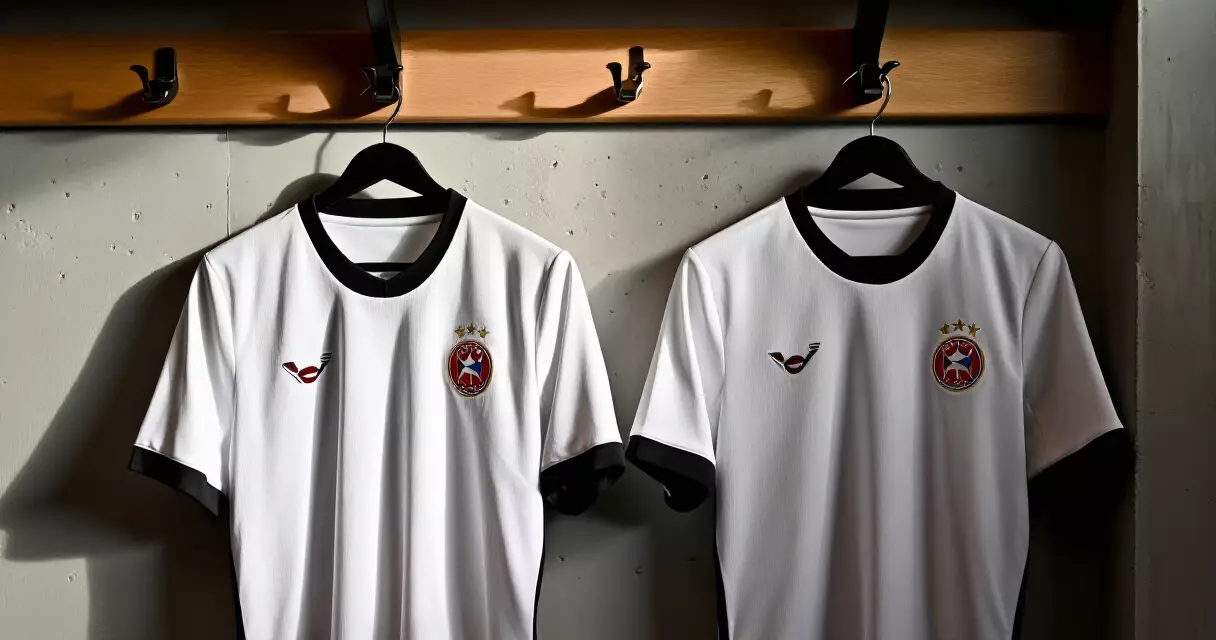
Whether a sponsorship change reinforces or destabilises a sport brand depends heavily on three factors: the equity of the incoming partner, the perceived rationale for the switch, and the speed of visual rollout. Adidas carries substantial global sport prestige, which gives the transition some brand lift on arrival. But the 18-year Nike tenure had created deep visual memory for a generation of Singapore football supporters — an abrupt visual discontinuity, even to a prestigious partner, introduces a period of identity ambiguity. That ambiguity is the operational definition of destabilisation: audiences are uncertain which associations still apply.
A sponsorship change is not just a commercial transaction — it is a visual reboot of the associations fans have spent years encoding, and it demands active brand management to avoid an identity gap.
Visual Consistency and Symbol Systems as Reinforcement Tools
The Role of Logo and Colour Stability
Visual consistency is one of the most controllable reinforcement levers available to a sport brand. Sport Singapore’s decision to anchor its identity on bold red — explicitly linked to passion and national pride — and to maintain the upward-spiral symbol across all communications creates a coherent visual grammar that audiences can internalise quickly. According to Sport Singapore’s brand documentation, the colour bands in the organisation’s visual mark specifically represent diversity and partnerships in nation-building — each design element carries deliberate semantic weight, not just aesthetic preference.
When sport organisations refresh logos or colours without careful stakeholder preparation, they risk detaching audiences from the symbolic anchor they had relied on. The best reinforcements are gradual — introducing new elements as additions rather than replacements, allowing audiences to build dual associations before the older symbol is retired.
Government Policy as a Brand Stabiliser
In Singapore’s sport ecosystem, government policy functions as a structural reinforcement layer that commercial partners and individual athletes cannot provide on their own. The NSPS, mandated as an annual national survey by Sport Singapore and covering residents aged 13 and above, creates a recurring, authoritative data narrative that supports the brand’s claims year after year. Because the survey methodology is consistent — stratified, weighted, sample size of at least 4,500 — it produces comparable trend data that organisations can use to track the cumulative direction of the brand. An esports-focused parallel is visible in how Singapore has structured its competitive gaming ecosystem around an institutional sports identity — a dynamic explored in related coverage of how esports has emerged as a major economic force in Singapore.
Performance Results: Reinforcement or Double-Edged Sword?
Elite performance creates the highest-visibility reinforcement moments — a national team victory can generate brand associations that persist for decades. But it is also the least controllable lever. A sport brand heavily invested in the narrative of competitive excellence becomes vulnerable each time results disappoint, creating a cyclical pattern of reinforcement and destabilisation tied entirely to outcomes on the field or screen. Singapore’s sport brand strategy has partially sidestepped this vulnerability by centring its public identity on participation and active living rather than medal counts — a deliberate choice that makes the brand less spectacular but significantly more stable over time.
In esports, performance-driven identity volatility is especially pronounced. Team rosters change quickly, star players move between organisations, and a single tournament exit can shift fan allegiance overnight. This makes the reinforcement or destabilisation of a sport brand identity in competitive gaming a faster-moving problem than in traditional sports — the timeline compresses from seasons to weeks. Coverage of esports league franchising trends in 2026 shows how organisations are attempting to stabilise competitive brand identities through structural contracts rather than relying on performance continuity alone.
Fan Identity and the Sponsor–Community Relationship
Fan identity is not passive — it is actively constructed through identification with a sport brand’s symbols, values, and community. When a brand reinforces those elements consistently, fans deepen their identification and become voluntary advocates. When destabilisation occurs — through a controversial sponsorship, an unexpected rebrand, or a public values conflict — fans must renegotiate their relationship with the brand, and some disengage permanently.
The sponsor–fan dynamic adds a commercial dimension to this identity work. Sponsors are not neutral — they carry their own brand associations, and those associations merge with the sport brand in the fan’s perception. An incoming sponsor with strong positive associations (as Adidas enjoys in global football) can provide an identity upgrade. A sponsor perceived as misaligned with a sport’s values — in terms of category, ethics, or aesthetics — can undermine trust even when the commercial terms are favourable. This dynamic is central to understanding why the LEC rebrand generated such intense community debate: Riot Games was not just changing a logo, it was renegotiating the identity contract with a deeply invested audience.
Fans do not just consume a sport brand — they co-author it through their loyalty, their rituals, and their resistance to changes that feel imposed rather than earned.
Reinforcement vs Destabilisation: A Comparative Framework
The table below summarises the primary forces operating on sport brand identity, categorised by whether they tend to reinforce or destabilise, and notes the speed at which each mechanism operates:
| Force | Direction | Speed of Impact | Key Example (Singapore 2025–2026) |
|---|---|---|---|
| Rising participation rates | Reinforcement | Slow (multi-year) | 76% NSPS participation rate (2025) |
| Consistent visual identity | Reinforcement | Medium (builds over campaigns) | Sport Singapore red/spiral logo system |
| Government policy alignment | Reinforcement | Slow (structural) | MCCY sport statistics and annual NSPS |
| Sponsorship turnover | Destabilisation | Fast (immediate) | Nike-to-Adidas transition, FAS (Aug 2026) |
| Performance volatility | Destabilisation (if brand = results) | Very fast (match/tournament) | Esports roster churn; team exits |
| Values misalignment | Destabilisation | Fast (news cycle) | Sponsorships perceived as off-brand |
| Community co-creation | Reinforcement | Medium (culture-building) | Fan-driven esports identity narratives |
Measuring Identity Stability: What the Data Can and Cannot Tell You
Participation rate data, facility attendance figures, and survey-based motivation studies are all indirect measures of brand identity strength. They tell you whether audiences are engaging with the sport, but they do not directly measure what associations those audiences hold or how deeply they identify with the brand. A 76% participation rate confirms broad engagement; it does not confirm that participants feel proud of, or loyal to, the Sport Singapore brand specifically.
Direct measurement of brand identity strength requires attitudinal surveys — asking respondents about awareness, association, differentiation, and emotional connection. Singapore’s NSPS tracks motivations to participate (the motivations dataset is published on data.gov.sg), which provides a partial proxy: if respondents cite community, national identity, or pride as motivators, that signals brand reinforcement at the attitudinal level. If motivations centre entirely on personal health without any national or community dimension, the brand’s social identity function may be weaker than its participation numbers suggest.
| Measurement Approach | What It Captures | What It Misses | Best Source (Singapore) |
|---|---|---|---|
| Participation rate (NSPS) | Breadth of engagement | Depth of brand identification | data.gov.sg / Sport Singapore |
| Facility attendance | Physical touchpoint usage | Emotional connection, loyalty | MCCY Sports Statistics |
| Motivation surveys | Reasons for engaging | Brand equity vs. habit distinction | NSPS motivations dataset |
| Social media sentiment | Real-time community reaction | Demographic representativeness | FAS / Sport Singapore channels |
| Sponsorship valuation | Commercial brand equity | Fan emotional response | FAS commercial reports |
Frequently Asked Questions
What is the difference between reinforcing and destabilising a sport brand identity?
Reinforcement occurs when the actions, communications, data, and partnerships of a sport organisation consistently confirm and deepen the associations its audience already holds. Destabilisation occurs when those elements conflict — when a new sponsor contradicts the brand’s values, when performance results undercut the narrative, or when a visual rebrand detaches audiences from established symbols. The distinction matters because destabilisation is not always visible immediately; it often shows up in delayed metrics like participation decline, fan disengagement, or sponsorship difficulty.
How do participation rates relate to sport brand strength?
Participation rates are the most widely available proxy for brand reach. According to the Sport Singapore NSPS page, the survey tracks sport and exercise participation annually across Singapore’s resident population aged 13 and above. Rising participation signals that the brand’s promise — whether framed as health, community, or national pride — is resonating and motivating behaviour. Declining participation, even when communication spending increases, is an early warning sign that identity alignment has broken down somewhere in the system.
Can a sponsorship change permanently damage a sport brand?
Permanently, rarely — but significantly and for a sustained period, yes. The Football Association of Singapore’s shift from Nike to Adidas in 2026 ends 18 years of visual association, meaning an entire generation of Singapore Lions supporters built their kit-related memories around one brand. The transition requires active identity management: launching the new kit with a compelling narrative, giving fans a reason to embrace the change, and maintaining continuity in other brand elements (crest, colours, anthem) to compensate for the discontinuity in the commercial partnership.
Is esports brand identity more or less stable than traditional sport brand identity?
Generally less stable, for structural reasons. Esports organisations face faster roster turnover, shorter competitive cycles, title-specific audiences (a team’s Valorant fan base and its CS2 fan base may barely overlap), and platform dependency that traditional sports do not experience. That said, organisations that invest in consistent visual identity, community programming, and institutional brand-building — rather than relying solely on star players — demonstrate that esports brand stability is achievable. The shift toward franchised league structures is partly a response to this instability, creating longer institutional commitments that reduce destabilisation risk.
What role does government policy play in sport brand reinforcement?
In Singapore, government policy plays an unusually direct role because the primary sport body — Sport Singapore — is a statutory board under the Ministry of Culture, Community and Youth. This means the annual NSPS, the Sport Singapore logo and brand guidelines, and the national sport participation strategy are all government-endorsed signals. Policy consistency translates directly into brand consistency: when the government maintains a stable narrative around active living, community sport, and inclusiveness across years, it gives the sport brand a structural backbone that commercial entities cannot replicate on their own.
How should a sport brand manage a visual rebrand to minimise destabilisation?
The evidence from sport brand management practice points to several key principles: communicate the rationale transparently and early; retain enough continuity (colours, core crest, key symbols) that the audience experiences evolution rather than replacement; involve community stakeholders in the process where possible; and time the launch around a positive moment — a major competition, a milestone anniversary, a community event — rather than in a period of performance difficulty. Rebrands launched during controversy or poor results carry a compounded destabilisation risk because audiences are already primed for negative association.
Key Takeaways
- The reinforcement or destabilisation of a sport brand identity is driven by participation trends, visual consistency, sponsorship alignment, and performance narrative — operating simultaneously and at different speeds.
- According to the NSPS dataset on data.gov.sg, Singapore’s sport participation rate reached 76% in 2025, providing a strong empirical foundation for the national sport brand’s community-inclusion narrative.
- The Football Association of Singapore’s August 2026 Nike-to-Adidas kit transition is the clearest current example of sponsorship-driven identity disruption in Singapore sport.
- Participation rate data and facility attendance are valuable but indirect measures of brand identity strength — attitudinal surveys are required for a complete picture.
- In esports, identity destabilisation moves faster than in traditional sport, making institutional and visual consistency even more strategically important.
- Government policy — through the NSPS, Sport Singapore branding, and MCCY publications — provides a stabilising structural layer that commercial decisions alone cannot replicate.
Sources
- Sport Singapore — Our Logo — Retrieved September 8, 2026
- data.gov.sg — Sport & Exercise Participation Level (Overall) — Retrieved September 8, 2026
- Sport Singapore — Sport & Exercise Participation in Singapore — Retrieved September 8, 2026
- data.gov.sg — Regular Participation Rate by Sex — Retrieved September 8, 2026
- data.gov.sg — Top Sports & Exercise (Overall) — Retrieved September 8, 2026
- data.gov.sg — Motivations to Participate in Sport / Exercise — Retrieved September 8, 2026
- Ministry of Culture, Community and Youth — Sports Statistics and Publications — Retrieved September 8, 2026
- Channel NewsAsia — Exercise and Sports Participation Among Singapore Residents at All-Time High — Retrieved September 8, 2026