
Summary
Rivalry Corp (TSX Venture Exchange: RIV) became one of the first esports-focused sportsbooks to list on a major exchange in June 2022 – a transparency milestone almost unheard of in online betting. The global esports audience reached 640 million fans...
Table of contents
- 1 What Is Rivalry?
- 2 History and Background
- 3 Esports Markets and Game Coverage
- 4 Odds Quality and Betting Lines
- 5 Welcome Bonus and Promotions
- 6 Payment Methods and Withdrawals
- 7 Platform Design, Mobile App and User Experience
- 8 Safety, Licensing and Responsible Gambling
- 9 Rivalry vs. Competitors: How Does It Stack Up?
- 10 Pros and Cons Summary
- 11 Final Verdict
- 12 Frequently Asked Questions
- 12.1 Is Rivalry a legitimate and safe sportsbook?
- 12.2 Can US bettors use Rivalry?
- 12.3 What esports titles does Rivalry cover?
- 12.4 Does Rivalry accept Bitcoin and other cryptocurrency?
- 12.5 How does the Rivalry welcome bonus work?
- 12.6 Is there a Rivalry mobile app?
- 12.7 How does Rivalry’s book margin compare to competitors?
- 12.8 What are Rivalry’s withdrawal processing times?
- 13 Sources
Rivalry Corp (TSX Venture Exchange: RIV) became one of the first esports-focused sportsbooks to list on a major exchange in June 2022 – a transparency milestone almost unheard of in online betting. The global esports audience reached 640 million fans in 2024 according to Newzoo, yet most mainstream sportsbooks still treat competitive gaming as an afterthought. Founded in Toronto in 2018, Rivalry was built from day one around the esports audience. This review covers every layer of the platform in 2026: licensing, markets, odds quality, bonuses, payments, mobile experience, and safety.
What Is Rivalry?
Rivalry is an online sportsbook built specifically for the esports audience, covering events across CS2, League of Legends, Dota 2, Valorant, and more than a dozen other competitive titles. The company is headquartered in Toronto, Canada, and operates internationally under a license from the Isle of Man Gambling Supervision Commission (GSC), one of the most established regulatory bodies in global online gambling. Ontario players are served through Rivalry’s iGaming Ontario registration, the regulated framework that governs licensed online betting in that province.
The platform targets the 18–30 demographic that forms the core esports audience, with a dark-mode-first visual identity, editorial content alongside live odds, and features like Wager Wars – a leaderboard competition where users accumulate points through wagering. General-purpose sportsbooks such as DraftKings have added esports tabs in recent years, but their market offerings rarely go beyond a match-winner line. On a major CS2 event, Rivalry lists map-winner, round-total, first-blood, and pistol-round markets on top of the standard moneyline. That depth is the core reason a dedicated esports bettor would choose a specialist platform.
History and Background
Rivalry Corp was founded in 2018 by Steven Salz, who serves as CEO, alongside co-founder Manny Anekal in Toronto, Ontario. The founding argument was that esports bettors were being failed: shallow markets, odds disconnected from team-performance data, and no cultural alignment with competitive gaming. The platform launched its first publicly available betting markets in 2019 with a focus on CS:GO (now CS2) and League of Legends, the two titles with the deepest betting interest at the time.
The TSXV listing in June 2022 changed the company’s accountability profile entirely. Going public required Rivalry to file quarterly and annual financial statements with Canadian securities regulators – a disclosure obligation that private offshore operators never face. By 2024, Rivalry had secured iGaming Ontario registration, expanded to 15-plus esports titles, launched native iOS and Android apps, and grown its footprint across Canada, Australia, and international markets in Europe and Latin America.
Esports Markets and Game Coverage
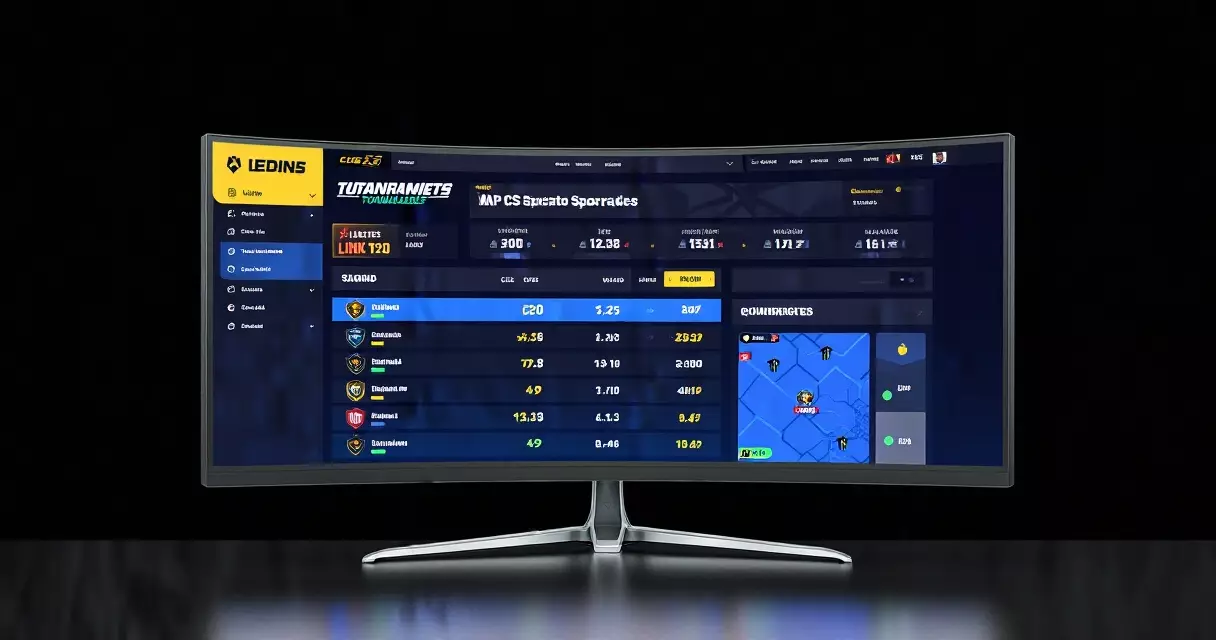
The primary argument for Rivalry over a mainstream sportsbook is market depth. For a major CS2 match, the platform lists eight or more distinct market types – a level normal for European soccer at a traditional book, but well above what most North American sportsbooks offer on esports. Understanding how esports market types work is essential before placing map-level or prop bets for the first time.
Esports titles on Rivalry as of mid-2026 include CS2 (ESL Pro League, BLAST Premier, IEM events), League of Legends (LCK, LEC, LCS, Worlds), Dota 2 (The International, Dota Pro Circuit), Valorant (VCT Champions Tour, Masters), Rainbow Six Siege, Rocket League (RLCS), Overwatch 2, the Call of Duty League, PUBG Mobile, Mobile Legends: Bang Bang, and Honor of Kings. Market depth varies by title – CS2 and LoL carry the most granular options, while smaller titles may list match-winner and tournament outright only.
| Market Type | Description | CS2 Example |
|---|---|---|
| Match Winner | Outright winner of the series | Team Vitality -145 |
| Map Handicap | One side starts with a map advantage | Navi +1.5 maps -120 |
| Map Winner | Winner of an individual map | FaZe wins Map 1 -160 |
| Total Maps Played | Over/Under on maps in the series | Over 2.5 maps -110 |
| First Map Round Total | Round count for Map 1 | Over 26.5 rounds -105 |
| First Blood | Which team records the first kill | FURIA first blood +115 |
| Tournament Outright | Winner of the full event | G2 win IEM Cologne +600 |
| Live / In-Play | Real-time markets updating per round | Dynamic |
Tournament outright markets are available for most tier-one events. Our CS2 betting guide covers how to approach outright and map-level wagering with a research-backed framework. One limitation worth noting: liquidity on lower-tier regional events can be thin, with slower live line movement than the major tournament markets – a common constraint across all specialist esports books.
Odds Quality and Betting Lines
Rivalry holds a book margin of approximately 5–7% on major esports match-winner markets, competitive within the specialist category and notably lower than the 8–10% margins mainstream US sportsbooks typically apply to their limited esports lines. Pinnacle, the benchmark for low-margin betting, operates at roughly 2–4% on major esports markets. For a close match, Rivalry’s decimal prices might be 1.87/2.05 compared to Pinnacle’s 1.92/2.01 – a gap that compounds over many bets but is offset for most bettors by Rivalry’s superior market variety.
Live in-play betting is available on major CS2, League of Legends, and Dota 2 matches, with lines updating in real time as match state changes. Odds can shift sharply at round boundaries in CS2, so speed of action matters for in-play wagering. Odds formats are configurable: Rivalry defaults to decimal but allows switching to American (moneyline) or fractional in account settings.
Rivalry’s core differentiator is not the lowest vig in the market – it is the map-by-map and round-by-round depth that serious esports bettors actually need.
Welcome Bonus and Promotions
The welcome offer for new users is a deposit match, typically 100% up to $100 (USD, CAD, or AUD equivalent by region). The wagering requirement sits at approximately 5x on esports markets at minimum odds of -200 (decimal 1.50). Casino-style bonuses routinely impose 10–20x requirements, making Rivalry’s terms genuinely achievable for active esports bettors. Bonus terms vary by jurisdiction and change seasonally – always review the current terms in your account dashboard before depositing.
Event-specific promotions follow the esports calendar rather than traditional sports schedules. During The International (Dota 2), BLAST Premier (CS2), and VCT Champions (Valorant), Rivalry typically runs enhanced-odds markets and loss-rebate offers. The Wager Wars loyalty format replaces a conventional VIP points ladder with a leaderboard competition for weekly or event-specific prize pools – a format that fits how esports fans already think about competition.
Payment Methods and Withdrawals
Rivalry accepts cryptocurrency and traditional payment methods. Crypto support covers Bitcoin (BTC), Ethereum (ETH), Tether (USDT), and Litecoin (LTC). Deposits credit within minutes; withdrawals process within 1–3 hours – faster than many offshore competitors that impose 24–48 hour windows. Traditional options include Visa and Mastercard debit cards in most supported regions, Interac e-Transfer for Ontario users (typically 24 hours), and bank wire for larger withdrawals (3–5 business days). The minimum deposit is approximately $10 USD equivalent. Rivalry charges no internal withdrawal fees, though standard blockchain network fees apply to crypto transactions.
One gap: PayPal and Skrill are not supported in most jurisdictions. Bettors who rely on those e-wallets will need to adjust. For a cross-platform look at payment method considerations, our esports betting bonuses guide covers withdrawal structures across multiple operators.

Platform Design, Mobile App and User Experience
Rivalry’s visual identity stands out: a dark-mode-first interface with bold tournament branding, editorial content alongside live odds, and a homepage that leads with featured matches and picks rather than a standard sports-category grid. The mobile app (iOS App Store and Android Google Play) replicates the desktop experience closely – live markets, bet slip, account management, and promotional pages all accessible. Push notifications can be enabled for live odds changes and upcoming event alerts.
Navigation during heavy event periods with 40-plus simultaneous matches is generally smooth. A search function lets users find teams or tournaments by name. One friction point: building a multi-leg parlay across different esports titles requires clicking back through the match list repeatedly. A favorites or quick-add function would improve this experience for bettors who regularly build accumulators.
Safety, Licensing and Responsible Gambling
Rivalry operates under two primary regulatory frameworks. The Isle of Man Gambling Supervision Commission is the international licensing body, requiring player-fund segregation, annual audits, and strict anti-money laundering compliance. For Ontario players, Rivalry holds registration with iGaming Ontario under the Alcohol and Gaming Commission of Ontario (AGCO) framework, which launched in April 2022 and imposes identity verification and responsible gambling program requirements on all registered operators.
As a TSXV-listed entity, Rivalry files quarterly and annual financials with Canadian securities regulators – an obligation no private offshore operator faces. Responsible gambling tools include deposit limits (daily, weekly, monthly), loss limits, session time alerts, and temporary or permanent self-exclusion. US residents seeking problem gambling support can reach the National Council on Problem Gambling (NCPG) at 1-800-522-4700, available 24/7.
Rivalry vs. Competitors: How Does It Stack Up?
The esports-specialist betting category includes Thunderpick, Unikrn, and Betway Esports as the closest direct competitors. Thunderpick operates under a Curacao license – a lower-scrutiny framework than Isle of Man – and shares Rivalry’s crypto-forward approach with comparable market depth. Our Thunderpick review covers that platform in full. The structural difference is accountability: Rivalry’s Isle of Man license and public-company disclosure requirements set a higher baseline than Curacao-licensed operators. Betway Esports draws on Entain’s global scale for financial stability, but its esports market selection is thinner, with fewer prop options and less coverage of emerging titles.
As a publicly listed company filing quarterly reports with Canadian securities regulators, Rivalry faces disclosure obligations that most offshore sportsbooks simply do not – and that transparency is a genuine safety signal for bettors evaluating operator legitimacy.
Pros and Cons Summary
Pros
- Esports-first platform with 15-plus titles and deep map-level and round-level markets
- Publicly listed on TSXV – financial transparency above the industry norm
- Isle of Man GSC license plus iGaming Ontario registration
- Crypto support (BTC, ETH, USDT, LTC) with 1–3 hour withdrawal processing
- Competitive vig of approximately 5–7% on major esports markets
- Native iOS and Android apps with live in-play betting
- Wager Wars loyalty format suited to a gaming-native audience
Cons
- Not available to US bettors under current regulations
- Odds margin higher than sharp market-makers such as Pinnacle
- No PayPal or Skrill in most jurisdictions
- Accumulator UX lacks a quick-add or favorites feature
- Thin liquidity and slower live odds on lower-tier regional events
Final Verdict
For bettors outside the United States who follow competitive gaming, Rivalry is one of the strongest available options in 2026. The Isle of Man GSC license, public-company financial transparency, 15-plus esports titles with genuine map-level and round-level market depth, and fast crypto payments give it a clear edge over mainstream sportsbooks and lower-regulated offshore alternatives. The vig is not the lowest in the market – Pinnacle remains the reference for price efficiency – but Rivalry’s market variety compensates for casual to intermediate esports bettors. US readers should consult our full esports betting guide for licensed options within regulated US states.
Frequently Asked Questions
Is Rivalry a legitimate and safe sportsbook?
Yes. Rivalry holds a license from the Isle of Man Gambling Supervision Commission, one of the most respected online gambling regulators globally, and is registered with iGaming Ontario under the Alcohol and Gaming Commission of Ontario. Both frameworks require player-fund segregation, identity verification, responsible gambling tools, and regular audits. Beyond those licenses, Rivalry is a publicly traded company on the TSX Venture Exchange, filing quarterly and annual financials with Canadian securities regulators. That public-company accountability is uncommon in the betting industry and provides a layer of legitimacy that private offshore operators simply cannot match. Users can review Rivalry’s financial filings through SEDAR+ or the TMX Group investor portal.
Can US bettors use Rivalry?
No. Rivalry does not hold a gambling license in any US state and does not accept registrations from bettors physically located in the United States. Online gambling in the US is regulated state by state, and Rivalry has not pursued individual state licenses. Attempting to register from a US location violates Rivalry’s terms of service and potentially federal law under the Unlawful Internet Gambling Enforcement Act (UIGEA). US-based esports betting fans should consult a guide to state-by-state legal options – several states now permit regulated online sports betting that includes limited esports markets. The regulatory situation is evolving, so check current state law before registering with any platform.
What esports titles does Rivalry cover?
Rivalry covers more than 15 esports titles as of mid-2026. Core markets include CS2 (Counter-Strike 2), League of Legends, Dota 2, Valorant, Rainbow Six Siege, Rocket League, Overwatch 2, and the Call of Duty League. Regional coverage extends to PUBG Mobile, Mobile Legends: Bang Bang, and Honor of Kings events. Market depth varies by title: CS2 and League of Legends carry the most granular options – map-winner, round totals, first-blood, pistol-round winner – while smaller titles may offer match-winner and tournament outright markets only. The platform updates its coverage to align with major tournament seasons, so the live title list may expand during peak periods.
Does Rivalry accept Bitcoin and other cryptocurrency?
Yes. Rivalry supports Bitcoin (BTC), Ethereum (ETH), Tether (USDT), and Litecoin (LTC), with additional options depending on the user’s region. Crypto deposits are credited to the account within minutes. Withdrawals are processed by Rivalry within 1–3 hours, making it one of the faster platforms for crypto payouts compared to offshore competitors that impose 24–48 hour windows. Rivalry does not charge internal fees on crypto transactions, though standard blockchain network fees apply. For USDT users, both Ethereum and Tron network options may be available. Crypto availability is subject to local regulatory requirements in the user’s jurisdiction.
How does the Rivalry welcome bonus work?
The welcome offer for new users is a deposit match, typically 100% up to $100 (USD, CAD, or AUD equivalent depending on region). The wagering requirement is approximately 5x, applied to esports betting markets at odds of -200 (decimal 1.50) or longer. This means bets on heavy favorites at shorter odds do not count toward clearing the bonus. The bonus window is typically 30 days from the date of the qualifying deposit. Terms change periodically, so always read the current offer in your account dashboard before depositing. Bonus-derived winnings are generally withdrawable once the wagering requirement is met and there is no pending restriction on the account.
Is there a Rivalry mobile app?
Yes. Rivalry offers native mobile apps for iOS (available on the App Store) and Android (available on Google Play). The app provides the full platform experience: live and upcoming match markets, a real-time bet slip, account management, deposit and withdrawal tools, and promotional pages. Push notifications can be enabled for live odds changes, upcoming match alerts, and promotional offers. The app performs well on current-generation devices. Some older hardware may experience slower load times during peak tournament periods when a high volume of simultaneous markets are active. A mobile-optimized web version is also accessible for users who prefer not to install an app.
How does Rivalry’s book margin compare to competitors?
Rivalry’s margin runs approximately 5–7% on major esports match-winner markets, which is competitive within the esports specialist category. Mainstream US sportsbooks typically impose 8–10% margins on the limited esports lines they carry. Pinnacle, the recognized benchmark for low-margin betting, operates at roughly 2–4% on major esports markets and is the best choice if minimizing the vig is your sole priority. Thunderpick operates at a similar margin to Rivalry. For bettors who value market variety – map-level and round-level props – over the absolute lowest margin, Rivalry’s trade-off is worth it. The margin difference on a single match is small; it only becomes significant over a very high volume of wagers.
What are Rivalry’s withdrawal processing times?
Withdrawal speed depends on the payment method selected. Cryptocurrency withdrawals (BTC, ETH, USDT, LTC) are processed by Rivalry within 1–3 hours; blockchain confirmation times add a small variable on top, depending on network congestion at the time of the transaction. Visa and Mastercard card withdrawals take 2–5 business days to reach the cardholder’s account. Ontario users withdrawing via Interac e-Transfer typically receive funds within 24 hours. Bank wire transfers can take 3–5 business days. Rivalry does not charge internal withdrawal fees, though your bank or card issuer may apply fees of their own for international transactions. Always confirm expected processing time in your account withdrawal section before initiating.
Sources
- Isle of Man Gambling Supervision Commission – gov.im
- iGaming Ontario official site – igamingontario.ca
- National Council on Problem Gambling – ncpgambling.org
- Newzoo Global Esports & Live Streaming Market Report 2024 – newzoo.com
- Grand View Research, Esports Betting Market Size Report 2024 – grandviewresearch.com
- TMX Group – Rivalry Corp (RIV) TSXV listing – money.tmx.com
- Wikipedia: Esports – en.wikipedia.org/wiki/Esports
Top Esports Organizations 2026: Teams, Rosters, and Performance Rankings