
Summary
✓Reviewed by Emma Thompson What is sports identity? At its core, sports identity refers to the degree to which a person defines themselves through their role in sport — whether as an athlete, a fan, a coach, or a member...
Table of contents
- 1 Defining Sports Identity: The Academic Foundation
- 2 A Brief History: How Sports Identity Research Evolved
- 3 The Three Core Dimensions of Sports Identity
- 3.1 1. Social Identity
- 3.2 2. Exclusivity
- 3.3 3. Negative Affectivity
- 4 Sports Identity vs. Fan Identity: What Is the Difference?
- 5 What Is Sports Identity in the Context of Esports?
- 6 How Sports Identity Shapes Performance and Wellbeing
- 7 National and Team Sports Identity in Competitive Gaming
- 8 Sports Identity and News Reporting: Why It Matters for Coverage
- 9 Sports Identity vs. Game Identity: A Comparison
- 10 Frequently Asked Questions About Sports Identity
- 10.1 What is sports identity in simple terms?
- 10.2 How is sports identity measured?
- 10.3 Can esports players have a sports identity?
- 10.4 What happens when a player has too strong a sports identity?
- 10.5 Is fan identity the same as sports identity?
- 10.6 How does national identity relate to sports identity?
- 11 Limitations and What This Article Does Not Cover
- 12 Key Takeaways
- 13 Sources
What is sports identity? At its core, sports identity refers to the degree to which a person defines themselves through their role in sport — whether as an athlete, a fan, a coach, or a member of a team community. It is one of the most studied constructs in sport psychology, shaping how individuals think, feel, and behave both inside and outside competition. For esports, where players often spend years forging competitive personas before a global audience, understanding sports identity has become a critical lens for analysts, organizations, and journalists alike.
Defining Sports Identity: The Academic Foundation
Sports identity is formally defined in sport psychology as the degree to which an individual identifies with the athlete role. The concept was systematically operationalized in the early 1990s by researcher Britton Brewer and colleagues, who developed the Athletic Identity Measurement Scale (AIMS), published in 1993 in the International Journal of Sport and Exercise Psychology. AIMS measures identity across three dimensions: social identity (how others see you as an athlete), exclusivity (how central sport is compared with other roles), and negative affectivity (emotional distress when the athletic role is threatened).
A person with a high sports identity sees being a competitor as the cornerstone of who they are. A person with a low sports identity may love playing recreationally without it defining their self-worth. Neither extreme is inherently better, but the degree of identification has measurable consequences — particularly during injury, retirement, or role loss.
A Brief History: How Sports Identity Research Evolved
The roots of sports identity research trace back to sociologist Sheldon Stryker’s Identity Theory (Wiley, 1980), which proposed that people occupy multiple social roles and rank them in a salience hierarchy. Sport scholars adapted that framework in the 1980s when researchers began studying why retired athletes struggled with the transition out of competition — a problem now recognized in both traditional sports and, increasingly, in professional esports careers. By the mid-2000s, the construct had expanded beyond individual athletes to encompass team identity, fan identity, and national sport identity, each studied with its own dedicated measurement instruments.
The Three Core Dimensions of Sports Identity
Most contemporary researchers treat sports identity as having three interlocking dimensions, all of which appear in some form among competitive esports players:
1. Social Identity
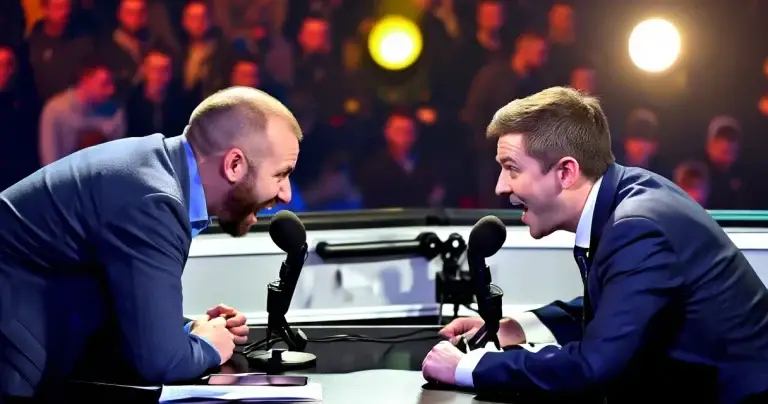
This dimension reflects how other people recognize and acknowledge a person as an athlete or competitor. In esports, social identity manifests through publicly visible rank badges, stream audiences, team jerseys, and broadcast commentary. When analysts on a League of Legends broadcast repeatedly name a player as a world-class mid-laner, they are reinforcing that player’s social sports identity for both the competitor and their audience.
2. Exclusivity
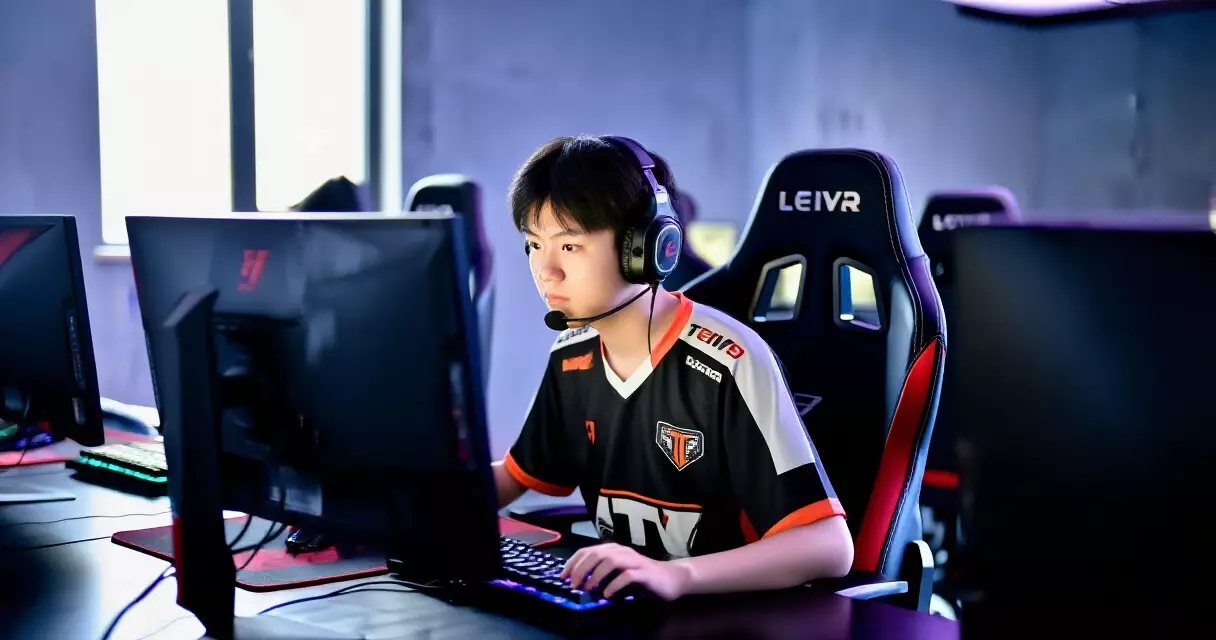
Exclusivity measures how much the athletic role dominates other self-defining roles — student, friend, professional, creative. Research published in Journal of Sport & Exercise Psychology has consistently found that athletes who score highest on exclusivity face the sharpest psychological disruption when sport is removed, whether by injury or career end. Esports carries a particularly high exclusivity risk: pros often dedicate 10 to 14 hours daily to practice from their early teens, leaving limited space for identity development outside gaming.
3. Negative Affectivity
Negative affectivity gauges the emotional pain experienced when the athlete role is challenged or lost. Athletes high in negative affectivity tend to show greater anxiety before competition and more severe psychological distress following career-ending events. For esports athletes, roster cuts, game discontinuation (as seen when Overwatch League restructured in 2023), or hand injuries represent acute threats to identity that can trigger this response.
Sports Identity vs. Fan Identity: What Is the Difference?
Not everyone who carries a strong sports identity is a player. Fan identity — sometimes called sport fan identity — describes the degree to which following and supporting a team or player forms a core part of a supporter’s self-concept. Researcher Daniel Wann at Murray State University has published extensively on fan identity, arguing that highly identified fans experience genuine psychological benefits: increased social connection, a sense of belonging, and emotional highs tied to team success. In the esports context, fan communities like those surrounding Fnatic, T1, or FaZe Clan demonstrate textbook fan identity — members adopt team colors, learn player histories, and frame wins and losses in deeply personal terms. For more on how national dimensions add another layer to this, see the coverage of national identity and digital fan culture at the esports crossroads.
“Highly identified fans don’t just watch their team — they experience wins and losses as if they happened to them personally.” — Daniel Wann, Murray State University sport psychology research
What Is Sports Identity in the Context of Esports?
Applying the concept of sports identity to esports is no longer a fringe academic exercise. A 2018 study by Seth Jenny and colleagues, published in the Journal of Sport and Social Issues, directly examined whether esports participants demonstrate athlete identity comparable to traditional sport participants. Their findings supported the conclusion that competitive gamers do develop meaningful athletic identities, particularly those competing at organized, structured levels.
By 2026, that debate is largely settled in academic circles. The American Psychological Association now recognizes esports as a domain with distinct performance psychology needs, and several university sport psychology programs — including programs at Ohio State and the University of California system — offer coursework specifically addressing esports athlete identity. This institutional recognition matters: it signals that what is sports identity in the digital competition space is no longer a philosophical question but a practical one with real welfare implications.
How Sports Identity Shapes Performance and Wellbeing
A robust body of research links sports identity strength to measurable outcomes in training, competition, and recovery. The key findings, drawn from peer-reviewed literature available through PubMed/NCBI, include the following patterns:
- Motivation and commitment: Athletes with stronger sports identities report higher intrinsic motivation and longer sustained commitment to training. This is consistent with Self-Determination Theory as applied to sport contexts.
- Team cohesion: Shared athletic identity within a roster correlates positively with task cohesion — the degree to which players pull together toward competitive goals. Esports rosters that develop a shared team identity, a collective “we,” tend to outperform groups of individually skilled but identity-isolated players.
- Injury response: Players with highly exclusive athletic identities show more severe psychological responses to injury or benching. A hand injury that sidelines a professional CS2 player is not merely physical — it threatens the core of how they understand themselves.
- Career transition: Athletes who retire or are cut from rosters with no broader identity framework report higher rates of depression and disorientation. This mirrors findings in traditional sport documented in the Journal of Applied Sport Psychology.
National and Team Sports Identity in Competitive Gaming
One of the most compelling dimensions of sports identity in 2026 is its national expression. As nation-based esports tournaments proliferate — from the Esports Nations Cup to the now-established international qualifying circuits — players increasingly carry a dual identity: their team affiliation and their national sporting persona. This mirrors exactly how traditional Olympic athletes experience identity, where being “Team USA” or “South Korea’s carry” carries psychological weight beyond club team membership.
Researcher Cheryl Cooky and colleagues at Purdue University have examined how national sporting identity is constructed and reinforced through media narratives. Their work — applicable directly to how outlets like this one cover events such as the Call of Duty Esports World Cup 2026 playoffs — demonstrates that broadcast framing, commentary, and news reporting actively shape which identities become salient for both athletes and fans.
Sports identity is not fixed — it is continuously constructed through competition, community, media, and the stories organizations tell about their athletes.
Sports Identity and News Reporting: Why It Matters for Coverage
For journalists and editors covering esports, understanding what sports identity is shapes how stories are framed. When a star player is transferred — a topic explored in depth in coverage of how the esports roster market works — the identity implications extend far beyond the contract figures. A player leaving their long-term org is navigating an identity transition, not just a career move. Reporting that acknowledges this dimension produces richer, more accurate coverage of the human stakes involved.
Similarly, when media outlets cover roster announcements, patch-driven meta shifts, or team rebrands, they are participating in the active construction of sports identities. The visual language a team adopts, the narrative arc editors assign to a player’s career, and the community discourse these stories generate all feed back into how athletes and fans understand their own identities in relation to the sport.
Sports Identity vs. Game Identity: A Comparison
It is worth distinguishing sports identity from game identity — a related but narrower concept. Game identity refers to attachment to a specific title: a player who has competed in Counter-Strike for a decade carries deep game identity tied to the mechanics, community, and culture of CS specifically. Sports identity, by contrast, is broader, encompassing the general competitive role regardless of title. A player forced to switch from CS2 to Valorant may retain a strong sports identity as a professional FPS competitor even while their game identity is disrupted by the transition.
| Dimension | Sports Identity | Game Identity |
|---|---|---|
| Scope | Broad — competitive role across titles | Narrow — tied to one specific game |
| Stability | More durable across career transitions | Can be lost when a game ends or declines |
| Community | “I am a pro gamer” | “I am a CS player” |
| Threat events | Retirement, injury, benching | Game shutdown, meta changes, title switches |
| Research tradition | Sport psychology (AIMS, Wann) | Game studies, platform studies |
Frequently Asked Questions About Sports Identity
What is sports identity in simple terms?
Sports identity is how much being an athlete or competitor forms the core of who you are. A person with a strong sports identity thinks of themselves primarily as a player or competitor, not just as someone who happens to play a game. It influences motivation, emotional responses to wins and losses, and how people cope with injury or retirement.
How is sports identity measured?
The most widely used tool is the Athletic Identity Measurement Scale (AIMS), developed by Brewer, Van Raalte, and Linder in 1993. It asks athletes to rate their agreement with statements about social identity, exclusivity, and emotional responses to being sidelined. Adapted versions have been validated for use with esports players in academic research published in the last decade.
Can esports players have a sports identity?
Yes. Research published in the Journal of Sport and Social Issues (Jenny et al., 2018) and subsequent studies confirm that competitive esports players develop meaningful athletic identities comparable in structure to those observed in traditional sports. The degree of exclusivity tends to be especially high among full-time professional players who have structured their entire daily lives around competition.
What happens when a player has too strong a sports identity?
High exclusivity in sports identity is a double-edged quality. It correlates with deep commitment and elite-level dedication, but it also creates psychological vulnerability. When the athletic role is removed — through injury, roster cut, or retirement — players with exclusively sport-defined identities face a significant mental health challenge. Sport psychologists generally recommend cultivating a broader identity portfolio alongside competitive excellence.
Is fan identity the same as sports identity?
No, though they share theoretical roots. Sports identity (or athlete identity) applies to competitors; fan identity applies to supporters. Both are measured on a spectrum, and both produce real psychological outcomes. Highly identified fans, as documented in Daniel Wann’s decades of research at Murray State University, show group cohesion, increased wellbeing from their team’s wins, and stronger community bonds than low-identification fans.
How does national identity relate to sports identity?
National sports identity adds a geopolitical layer: athletes and fans attach their sense of national belonging to competitive outcomes. This is visible in traditional sports during the Olympics and in esports during nation-cup events. Media plays an active role in constructing this layer by framing players as national representatives, which shapes how both athletes and audiences relate to competition.
Limitations and What This Article Does Not Cover
This article focuses on the core academic and applied dimensions of sports identity as they relate to competitive gaming and esports reporting. It does not cover the clinical assessment of identity disorders, detailed neurological mechanisms, or the specific therapeutic protocols used by licensed sport psychologists in one-on-one athlete counseling. Readers seeking clinical depth should consult peer-reviewed literature available through PubMed/NCBI or work with a certified sport psychologist.
Key Takeaways
- Sports identity is the degree to which a person defines themselves through their competitive or athletic role, measured along social, exclusivity, and affective dimensions.
- The concept originates in academic sport psychology; the AIMS scale (1993) remains the dominant measurement instrument.
- Esports players demonstrably develop athletic identities, with high exclusivity being a particular welfare concern for full-time professionals.
- Fan identity is a related but distinct construct — supporters can have strong sports identities without competing themselves.
- National and team sports identities add layers of belonging that media, including esports journalism, actively shapes through its framing choices.
- Understanding sports identity helps organizations, coaches, and reporters engage with athletes as whole people, not just competitive resources.
Sources
- Brewer, Van Raalte & Linder — Athletic Identity Measurement Scale (APA PsycNet, 1993) — Retrieved August 8, 2026
- PubMed/NCBI — Sport psychology and athlete identity research database — Retrieved August 8, 2026
- Journal of Sport & Exercise Psychology (Human Kinetics) — Retrieved August 8, 2026
- American Psychological Association — sport psychology resources — Retrieved August 8, 2026
- Stryker, S. — Identity Theory (Wiley, 1980; foundational framework) — Retrieved August 8, 2026