

Summary
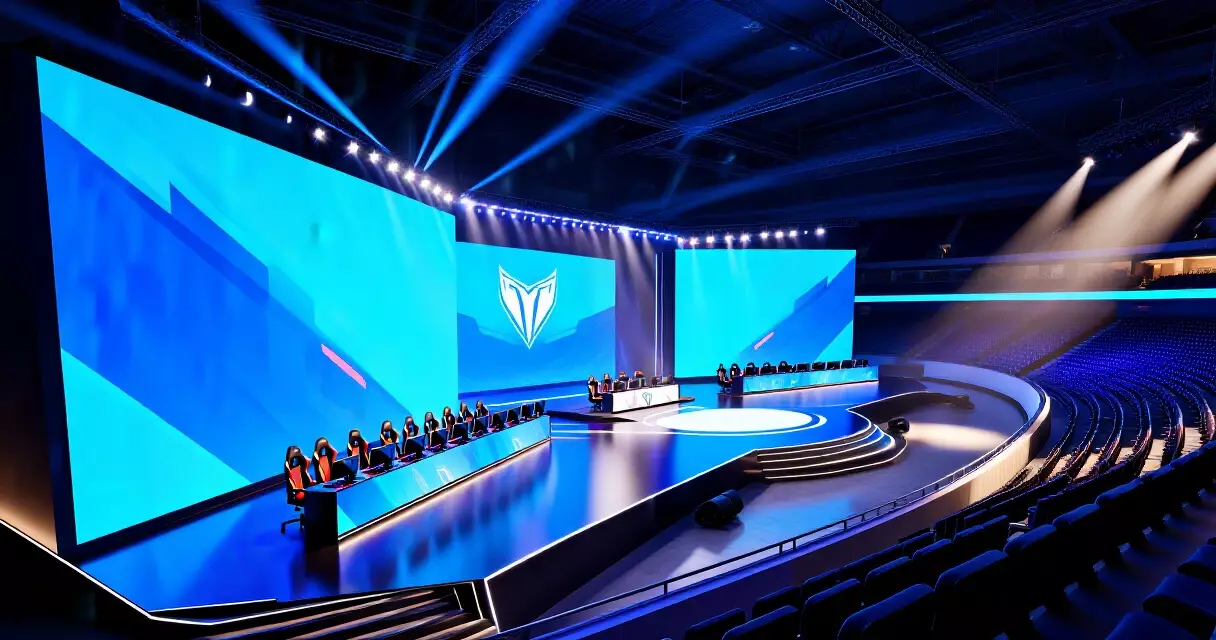
The name "Alienware Arena" points at two very different places. One is a free online rewards platform where tens of millions of registered PC gamers collect points and grab game keys. The other is a purpose-built esports wing tucked inside...
Table of contents
- 1 Two Things, One Name: Clearing Up the Confusion First
- 2 The Venue at a Glance: Capacity, Location, and Ownership
- 3 Technology and Broadcast Setup
- 4 Events Hosted: What Actually Happens Here
- 5 Tickets, Access, and How to Attend
- 6 How It Compares to Other Esports Venues
- 7 The Online Platform: A Separate Verdict
- 8 Strengths, Limitations, and Is It Worth Visiting?
- 9 Frequently Asked Questions
- 9.1 Is Alienware Arena a real physical place or just a website?
- 9.2 How many people can the Newark venue hold?
- 9.3 What events can I actually watch there?
- 9.4 How much do tickets cost?
- 9.5 How do I get to the venue without a car?
- 9.6 What hardware do players compete on?
- 9.7 Can my company or school rent the space?
- 9.8 Is it worth visiting overall?
- 10 Sources
The name “Alienware Arena” points at two very different places. One is a free online rewards platform where tens of millions of registered PC gamers collect points and grab game keys. The other is a purpose-built esports wing tucked inside the Prudential Center in Newark, New Jersey, an NHL building that seats roughly 19,500 for hockey but was retooled to host a few hundred esports fans in a broadcast-ready configuration. This review focuses mainly on the physical venue, the one you can buy a ticket to and walk into, while sorting out where the online platform fits.
Two Things, One Name: Clearing Up the Confusion First
Before anything else, the disambiguation matters, because search results for “Alienware Arena” mix the two constantly. The Alienware Arena online platform launched in the early 2010s as a free community and rewards hub. Members earn ARP, short for Alienware Reward Points, and redeem them for game keys, downloadable content, and beta access across titles such as League of Legends, Valorant, CS2, and Apex Legends. It is a website, not a building, and it has publisher partnerships tied to Steam, Epic Games, EA, and Ubisoft.
The physical Alienware Arena is a different animal entirely. It sits at 25 Lafayette Street inside the Prudential Center and exists because of a naming-rights partnership between Dell’s Alienware brand and Harris Blitzer Sports & Entertainment. HBSE owns the New Jersey Devils of the NHL and the Philadelphia 76ers of the NBA, so the esports wing shares a roof with a major-league hockey operation. The space opened around 2018 to 2019 as a dedicated esports venue, not a repurposed concourse.
The Venue at a Glance: Capacity, Location, and Ownership
The Prudential Center’s main bowl holds about 19,500 for a Devils game, according to the Wikipedia Prudential Center article. That figure sets expectations that the esports space does not meet, and that is by design. The dedicated esports configuration is built for roughly 300 to 500 spectators, which puts it in the intimate, broadcast-first category rather than the stadium-filling category. For most esports formats, that scale is a feature, not a shortfall.
Location does a lot of heavy lifting here. Newark sits inside one of the densest esports-fan populations in North America, and the venue is reachable via NJ Transit and PATH trains straight from Manhattan. A fan in Brooklyn can get to a match without a car, which is not something you can say about many purpose-built esports rooms in the United States. That accessibility shapes who shows up and how the building programs its calendar.
Ownership by Harris Blitzer Sports & Entertainment also means the esports space plugs into an existing professional operation. Ticketing, security, concessions, and broadcast staff already exist for hockey nights, so the esports wing inherits infrastructure that a standalone startup venue would have to build from scratch.
Technology and Broadcast Setup
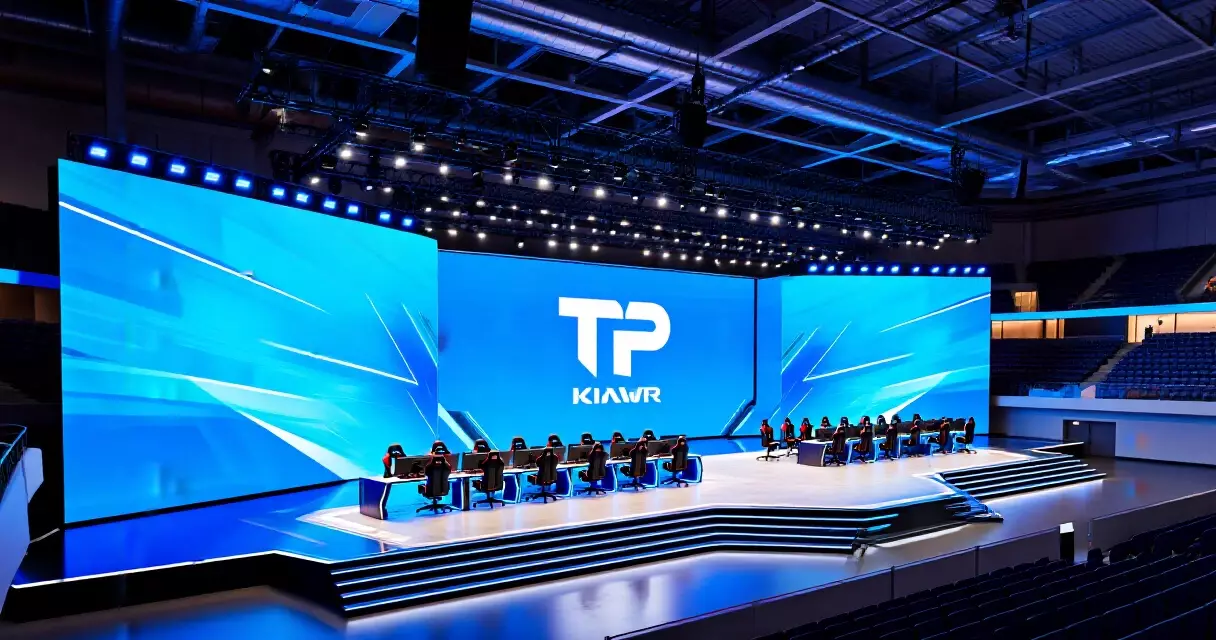
Dell being the naming partner is not just a logo on the wall. As the technology partner, Alienware supplied the gaming hardware that players compete on, including Alienware desktops, Area-51 rigs, and high-refresh monitors rated at 240Hz and above. For competitive shooters and fighting games, refresh rate and input consistency are non-negotiable, and stocking the stage with first-party Alienware machines keeps the branding and the performance story aligned.
On the production side, the venue was fitted with a multi-camera broadcast rig, streaming infrastructure, professional stage lighting, and LED display walls. Those elements are what separate a broadcast venue from a LAN cafe. A room that looks great on a Twitch stream is arguably more valuable to publishers than a room that merely seats people, because the online audience for any given match dwarfs the few hundred in the seats.
The seats hold a few hundred, but the cameras play to a few hundred thousand. That inversion is the whole point of a modern esports venue.
If you want a deeper breakdown of what a stage like this actually requires under the hood, our guide to Esports Venue Technology Requirements walks through the network, audio-visual, and stage layers that a broadcast build has to nail. The Alienware Arena checks most of those boxes because it was designed as a production space from the start rather than converted after the fact.
Events Hosted: What Actually Happens Here
The most consistent tenant is the NBA 2K League, whose New Jersey-based team ties naturally into an HBSE building. Those games give the venue a recurring, league-backed reason to open its doors rather than depending on one-off rentals. Beyond 2K, the space has hosted ESL qualifiers, college esports competitions, and New Jersey Devils esports content that leans on the hockey club’s brand.
College esports deserves a specific callout. Collegiate programs across the Northeast need real venues to hold finals and showcase events, and a train-accessible, broadcast-ready room fills that gap well. For a school without its own arena, renting a professional space for one weekend is far cheaper than building one.
General coverage of these circuits, from ESL brackets to console leagues, lives across outlets like ESPN Esports and The Verge, both of which track the tournaments that venues like this one host. If you are planning a visit, checking those feeds alongside the arena’s own calendar is the reliable way to know what is on.

Tickets, Access, and How to Attend
Access is event-specific. There is no public membership model, no season pass that lets you wander in whenever you like. You buy a ticket for a given event, and general admission for esports events runs roughly $20 to $75, with premium seating priced higher. That range is friendly compared to major traditional-sports tickets in the same building, which is part of what makes esports a low-friction night out.
Corporate rental is available for organizations that want the room for their own tournament, product launch, or team event. That flexibility is where a lot of the venue’s off-calendar activity happens, and it mirrors how many modern esports rooms actually pay their bills. To understand the economics behind that, our piece on How Esports Venues Make Money lays out the rental, ticketing, and sponsorship streams that keep the lights on.
How It Compares to Other Esports Venues
Judged purely on dedicated esports capacity, Alienware Arena is on the smaller side, and that is the honest read. But raw seat count is a misleading metric for broadcast venues, since a 400-seat room and a 1,000-seat room can reach identical online audiences. The table below puts the numbers side by side.
| Venue | Location | Esports Capacity | Notable Anchor |
|---|---|---|---|
| Riot Games Arena | Los Angeles | ~1,000 | Home of the LCS |
| HyperX Arena | Las Vegas (Luxor) | ~1,000 | Formerly Allied Esports |
| Fortress Melbourne | Australia | ~400 | Entertainment complex |
| Alienware Arena | Newark, NJ | ~300–500 (19,500 full) | NBA 2K League, ESL |
| ESL FACEIT venues | Cologne, Katowice | Varies (large) | Major LAN finals |
Riot Games Arena and HyperX Arena both hover near 1,000 dedicated seats, roughly double the Newark room’s esports configuration. The upside for Alienware Arena is the shared 19,500-seat bowl, which no other venue on this list can offer. For a marquee event, the operator can theoretically scale up into the main arena, an option a standalone 1,000-seat room simply does not have.
Most esports venues are locked to one capacity. Alienware Arena can shrink to 400 or, in principle, stretch toward 19,500. Optionality is its quiet advantage.
For rankings and head-to-head context, our roundup of The 15 Best Esports Arenas in the World Ranked places rooms like these against each other, and the broader Major Esports Arenas and Venues overview maps where each one sits in the ecosystem.
The Online Platform: A Separate Verdict
Since the name is shared, the online platform deserves its own short assessment. alienwarearena.com is free to join, and as of 2024 it counts tens of millions of registered users globally, per Dell’s own platform figures. The value proposition is simple: sign up, complete activities, earn ARP, and spend those points on game keys, DLC, or beta access. For a PC gamer who plays the supported titles anyway, the cost of entry is zero and the occasional free key is a genuine perk.
| Attribute | Physical Venue | Online Platform |
|---|---|---|
| What it is | Esports arena wing | Free rewards website |
| Location | Prudential Center, Newark | alienwarearena.com |
| Cost | $20–$75 per event | Free to join |
| Scale | ~300–500 seats | Tens of millions of users |
| Operator | HBSE + Dell/Alienware | Dell/Alienware |
The two things do not meaningfully connect for a visitor. Owning an Alienware Arena account does not get you into a Newark event, and buying an event ticket does not credit your ARP balance. They share a brand and a corporate parent in Dell, and that is roughly where the relationship ends.
Strengths, Limitations, and Is It Worth Visiting?
On the plus side, the venue delivers train-accessible location, professional broadcast-grade production, uniform high-refresh Alienware hardware, reasonable ticket prices, and the backing of a serious sports-and-entertainment operator. Those are not small things. Many esports rooms struggle with at least one of transit access, production quality, or operational maturity, and this one is strong across all three.
The limitations are equally clear. Dedicated esports capacity is modest at 300 to 500, there is no drop-in or membership model, and the calendar depends heavily on scheduled events rather than daily programming. If you show up hoping to game on a random Tuesday, there is nothing for you. This is a venue you attend, not a venue you frequent.
So, is it worth visiting? For a fan in the New York metro area, yes, provided there is an event you care about on the schedule. The combination of easy transit, fair pricing, and a genuinely well-produced show makes it an easy recommendation for NBA 2K League games, ESL qualifiers, or college finals. For comparison shoppers, our Esports Venues Guide 2026 can help you weigh it against alternatives before you buy.
Frequently Asked Questions
Is Alienware Arena a real physical place or just a website?
It is both, which causes constant confusion. There is a physical Alienware Arena, a dedicated esports wing inside the Prudential Center at 25 Lafayette Street in Newark, New Jersey, built through a Dell and HBSE partnership. Separately, there is alienwarearena.com, a free online rewards platform where PC gamers earn points and redeem game keys. The two share the Alienware brand and the Dell corporate parent, but they are not operationally linked. A ticket to the Newark venue has nothing to do with your online account, and vice versa. When you read “Alienware Arena,” check the context to know which one is meant.
How many people can the Newark venue hold?
In its dedicated esports configuration, the space is designed for roughly 300 to 500 spectators, which places it in the intimate, broadcast-focused category rather than the stadium tier. That figure comes from the HBSE venue design. However, the esports wing sits inside the larger Prudential Center, whose main bowl holds about 19,500 for a New Jersey Devils hockey game, according to the Wikipedia Prudential Center article. That shared full-arena capacity is unusual among purpose-built esports rooms and gives operators the theoretical option to scale a marquee event up into the main bowl, something most standalone esports venues cannot do.
What events can I actually watch there?
The most regular tenant is the NBA 2K League, which fits naturally because HBSE fields a New Jersey-based team. Beyond that, the venue has hosted ESL qualifiers, college esports competitions, and New Jersey Devils esports content tied to the hockey club’s brand. Because access is event-specific with no daily programming, the right move is to check the arena’s official calendar alongside esports coverage from outlets like ESPN Esports and The Verge before planning a trip. There is no walk-in gaming, so your visit needs to line up with a scheduled event to be worthwhile.
How much do tickets cost?
General admission for esports events at the venue runs roughly $20 to $75, with premium seating priced above that range. Exact pricing depends on the specific event, the seating tier, and demand, so a high-profile final will sit at the top of the range while a smaller qualifier or college showcase may land near the bottom. Compared to major traditional-sports tickets in the same building, esports events are relatively affordable, which is part of the appeal. There is no membership fee or season pass, so you only pay per event you choose to attend, keeping the overall commitment low.
How do I get to the venue without a car?
Transit access is one of the venue’s strongest selling points. The Prudential Center in Newark is reachable via NJ Transit and PATH trains directly from Manhattan and the surrounding New Jersey suburbs, so you do not need a car to attend. That connectivity matters because Newark sits inside one of the densest esports-fan populations in North America, meaning a large audience can reach the building on public transit. Taking the train also sidesteps Newark parking, which is a practical bonus on busy event nights. For anyone in the New York metro area, the trip is genuinely quick and straightforward compared with driving to a suburban venue.
What hardware do players compete on?
As the technology partner, Dell’s Alienware brand supplies the competition hardware, including Alienware gaming desktops, Area-51 rigs, and high-refresh monitors rated at 240Hz and above. Uniform, high-performance gear matters for fairness as much as branding, since competitive shooters and fighting games depend on consistent refresh rate and input response. The venue also runs a multi-camera broadcast setup, streaming infrastructure, professional stage lighting, and LED display walls, all of which mark it as a production-first space rather than a converted concourse. That broadcast quality is arguably more valuable than the seat count, because the online audience for any match far exceeds the few hundred people physically present.
Can my company or school rent the space?
Yes. Corporate rental is available for organizations that want to run their own tournament, product launch, or team event in the space. This flexibility is a significant part of the venue’s off-calendar activity and reflects how many modern esports rooms actually generate revenue. For collegiate programs, renting a professional, broadcast-ready room for a single weekend is far cheaper than building or maintaining a dedicated arena, which is why the venue is a good fit for Northeast college esports finals. If you are exploring the economics behind rentals, ticketing, and sponsorship, our coverage of how esports venues make money breaks down the revenue streams involved.
Is it worth visiting overall?
For fans in the New York metro area, it is worth visiting when there is an event you care about on the calendar. The venue combines easy train access, fair ticket prices in the $20 to $75 range, uniform Alienware hardware, and genuinely professional broadcast production, all backed by an experienced sports operator in HBSE. The main caveats are its modest 300 to 500 esports capacity and the lack of any drop-in or membership model, so there is nothing to do on a non-event day. Line your trip up with an NBA 2K League game, an ESL qualifier, or a college final, and it delivers a strong, affordable night out.
Sources
- Wikipedia – Prudential Center
- ESPN Esports
- Dell / Alienware official
- Alienware Arena online platform
- Harris Blitzer Sports & Entertainment
- NBA 2K League
- City of Newark
- The Verge
Top Esports Organizations 2026: Teams, Rosters, and Performance Rankings