

Summary
When Blizzard Entertainment opened its purpose-built esports venue in Burbank, California in October 2017, it marked a turning point for competitive gaming in North America. Blizzard Arena became the first dedicated, year-round esports facility to anchor a major franchised league–the...
Table of contents
- 1 Blizzard Arena at a Glance: Key Facts
- 2 History: How Blizzard Arena Came to Be
- 3 Layout and Physical Design
- 4 Broadcast Infrastructure and Technology
- 5 Fan Experience: Tickets, Seating, and Atmosphere
- 6 Events Hosted: OWL and Beyond
- 7 Specifications and Comparison Table
- 8 Pros and Cons: An Honest Assessment
- 9 The Decline: COVID, Homestands, and the Microsoft Acquisition
- 10 Blizzard Arena’s Legacy in Esports Venue Design
- 11 Frequently Asked Questions About Blizzard Arena
- 11.1 Where is Blizzard Arena located?
- 11.2 How many seats does Blizzard Arena have?
- 11.3 Can you still attend events at Blizzard Arena?
- 11.4 What games were played at Blizzard Arena?
- 11.5 Were the Overwatch League Grand Finals held at Blizzard Arena?
- 11.6 How does Blizzard Arena compare to Riot Games Arena in Los Angeles?
- 11.7 Why did Blizzard Arena stop hosting Overwatch League matches?
- 11.8 Is Blizzard Arena the same as BlizzCon?
- 12 Sources
When Blizzard Entertainment opened its purpose-built esports venue in Burbank, California in October 2017, it marked a turning point for competitive gaming in North America. Blizzard Arena became the first dedicated, year-round esports facility to anchor a major franchised league–the Overwatch League–drawing crowds of up to 500 fans per match while broadcasting to peak concurrent audiences of over 350,000 viewers on Twitch during its 2018–2019 peak seasons. What it lacked in stadium scale, it made up for in production precision, fan atmosphere, and historical significance.
Blizzard Arena at a Glance: Key Facts
Located within the Burbank Studios complex near 3000 W Alameda Ave in Burbank, California, Blizzard Arena sits roughly 10 miles northwest of downtown Los Angeles. It was not a converted movie theater or rented convention hall–Blizzard built and operated this space specifically as a home for its competitive gaming calendar. That distinction made it genuinely notable in 2017, when most major esports tournaments still rented arena time at sports stadiums or used temporary setups inside convention centers.
The venue occupies an estimated 25,000–30,000 square feet within the broader studio lot, which has historically housed NBC television productions and various film and television shoots. Embedding a competitive gaming venue inside a working production campus gave Blizzard access to broadcast infrastructure–power, fiber, and studio rigging–that would have been expensive to build from scratch on a standalone footprint.
History: How Blizzard Arena Came to Be
The story of Blizzard Arena begins with the ambition behind the Overwatch League itself. When Blizzard Entertainment announced OWL in 2016, it was pitching a model that had never been fully tested in esports: a city-based franchised league with permanent teams, multi-million-dollar team slots, and a television broadcast deal. To make that work, Blizzard needed a home court.
Rather than renting space event by event, Blizzard invested in building a venue it could control. Construction and fit-out of Blizzard Arena was completed in time for the OWL launch in late 2017. The location inside the Burbank Studios complex–a legacy production lot with deep ties to American television–was intentional. Blizzard wanted the look and feel of a television production, not a convention floor, and the surrounding infrastructure supported that goal from day one.
The inaugural OWL match took place on January 10, 2018, with the San Francisco Shock facing the Los Angeles Valiant in front of a sold-out house. Tickets sold out quickly. Fan response was enthusiastic. ESPN covered the event, and for a brief moment Blizzard Arena became a symbol of esports maturity–proof that competitive gaming could operate with the regularity and professionalism of traditional sport.
Layout and Physical Design
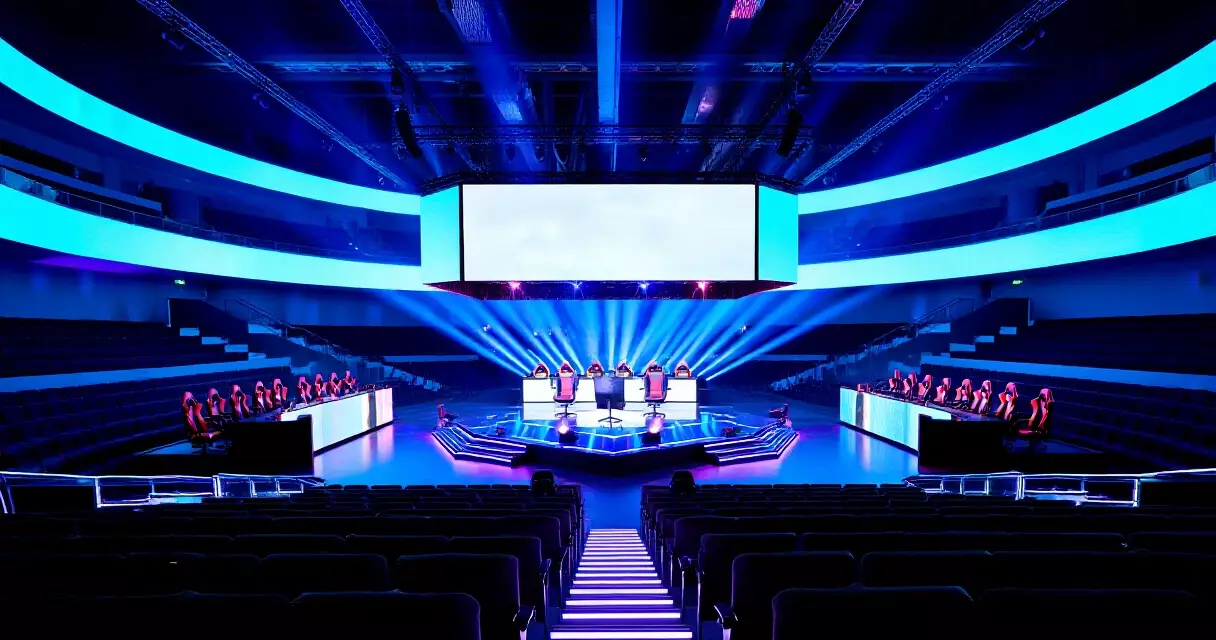
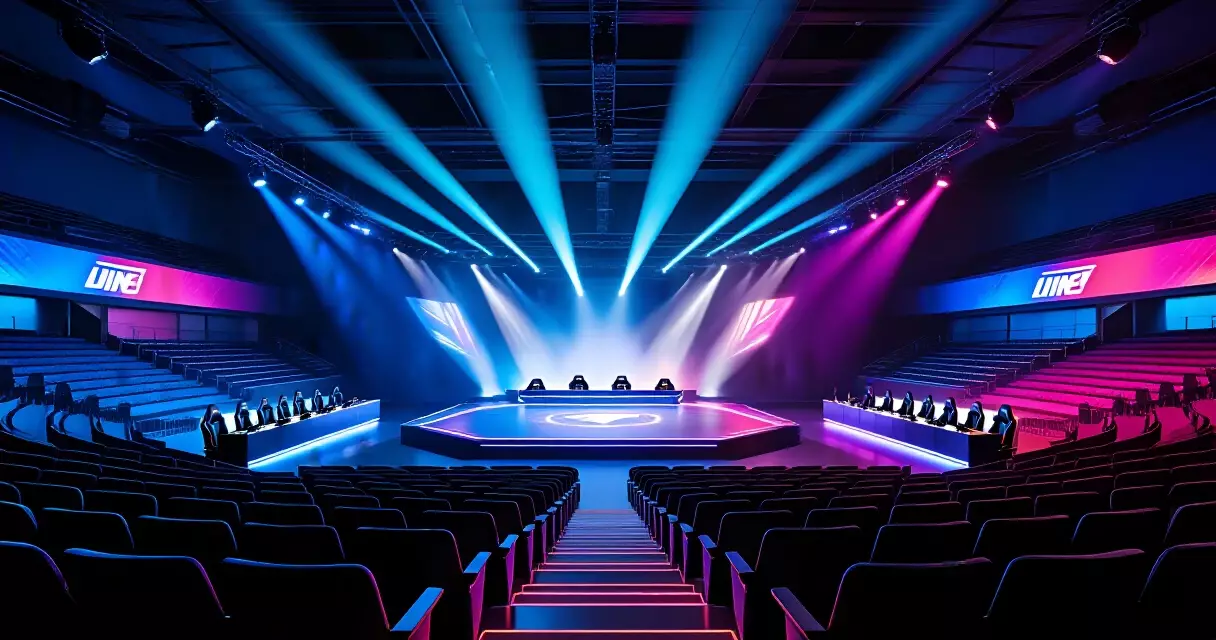
Blizzard Arena’s layout follows a theater-in-the-round philosophy adapted for esports. The central playing stage is raised, placing the action above floor level so sightlines remain clear for all seating sections. Player booths are arranged along either side of the stage in a mirrored setup: one team on the left side of center, the opposing team on the right. Each booth is enclosed with soundproofing panels to prevent crowd noise from reaching players during live play.
Seating rises in tiered rows behind and above the stage, wrapping around three sides of the playing area. Floor-level seats closest to the action were typically reserved for VIP ticket holders or priority OWL fans. General admission seating occupied the upper tiers. The configuration gives the venue an intimate atmosphere unusual for competitive sport–at 450–500 seats, the closest spectators sit within a few rows of where players compete.
Overhead, a center-hung LED scoreboard assembly delivers live match statistics, player health bars, team scores, and replay footage. The primary broadcast display behind the stage–estimated at over 50 feet wide–shows a hero view of in-game action for fans who want to follow the gameplay directly rather than watching the live players. The combination of two viewing modes–watching the players physically, or watching the screen–gives attendees flexibility in how they experience a match.
Lighting is fully programmable LED. Team entry sequences used dramatic lighting cues, pyrotechnic jets, fog, and haze to create introductions that mirrored the energy of a professional sports arena. These production flourishes were built into the venue’s design rather than added on event-by-event, which kept setup time short between weekly matches.
Broadcast Infrastructure and Technology
The single most important differentiator of Blizzard Arena relative to other esports venues of its era was its broadcast infrastructure. The venue was designed to function as a television studio first and a spectator venue second. Broadcast-grade cameras, a built-in production control room, dedicated fiber uplinks, and redundant power feeds were integrated into the building from the start–not retrofitted later.
This mattered for the OWL’s distribution strategy. The league had signed a broadcast deal that placed matches on Disney XD, ESPN, and ABC in addition to streaming on Twitch and YouTube. Delivering content to linear television requires a level of production reliability that a temporary setup in a rented arena rarely achieves. Blizzard Arena’s permanent infrastructure made consistent, broadcast-quality output possible week after week throughout the regular season.
Player stations were equipped with high-refresh-rate gaming monitors, sponsor-integrated peripherals from Logitech G and Secretlab among others, and networked match servers managed on-site. The game client running Overwatch during OWL matches used a dedicated tournament server build with spectator tooling enabled–allowing the production team to fly cameras through the match environment in real time, generate on-screen statistics overlays, and cut between player perspectives during broadcast. For a deeper look at what this kind of infrastructure requires, see our breakdown of esports venue technology requirements for network, AV, and stage setup.
Blizzard Arena was designed as a television studio that happened to have an audience–and that priority shaped everything from the sightlines to the power grid.
Fan Experience: Tickets, Seating, and Atmosphere
General admission tickets for OWL regular season matches at Blizzard Arena were priced at approximately $20–$35, putting them within reach for most esports fans in the Los Angeles metro area. VIP packages–which included premium seating, early venue access, and bundled merchandise–ran from $75 to $150 or higher depending on the match. For context, these prices were competitive with mid-tier seats at NBA or NHL regular season games in the same market.
The concession offering inside the venue was standard arena fare: hot dogs, nachos, popcorn, soft drinks, and bottled water. Beer was available for attendees over 21. There was no full-service restaurant or bar inside the footprint; the experience was closer to a theater than a sports club. Merchandise booths sold OWL team jerseys, hats, and accessories, and team-specific items drove significant revenue on match days given the passionate fan base OWL attracted in its first two seasons.
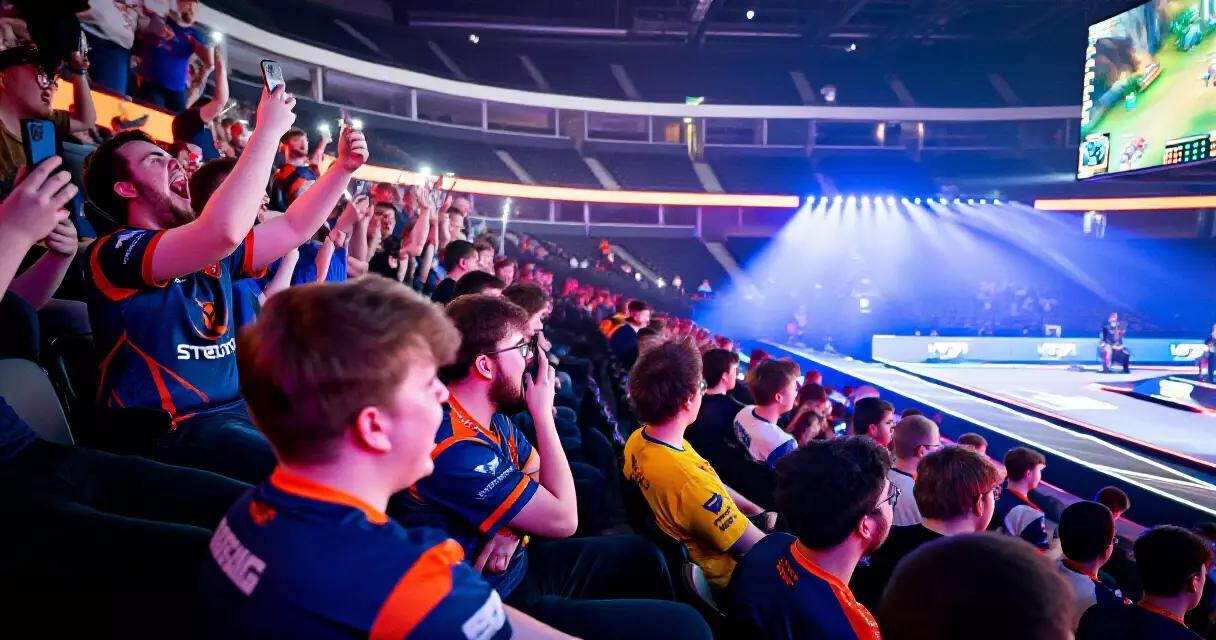
The intimate capacity created an atmosphere that larger venues struggle to replicate. Crowd chants and cheers–particularly when local Los Angeles teams like the Valiant or Gladiators were playing–bounced off the walls and reached the players on stage. Fans sat close enough to watch players’ hand movements and monitor screens. That proximity made attending a match a noticeably different experience from watching the same match on a stream. To understand how this kind of atmosphere stacks up against larger dedicated venues, the ranking of the 15 best esports arenas in the world offers useful comparison points.
Parking was available via the Burbank Studios parking structure on the complex, with ride-share drop-off accommodated near the venue entrance. Public transit access from central Los Angeles required transfers and added significant travel time, which limited walk-up attendance from non-driving fans. The venue met ADA accessibility requirements with designated seating, accessible restrooms, and step-free entry paths.
Events Hosted: OWL and Beyond
The Overwatch League was the anchor tenant, but Blizzard Arena hosted other Blizzard esports properties during its active years. The Heroes Global Championship (HGC)–the competitive circuit for Heroes of the Storm–held matches at the venue in 2018. The Hearthstone Championship Tour also used the space for broadcast events, taking advantage of the existing production infrastructure for what is a relatively low-footprint esports broadcast (only one player competes on-screen at a time in Hearthstone, requiring far less stage real estate than Overwatch).
The OWL Grand Finals were not held at Blizzard Arena. For both 2018 and 2019, Blizzard moved the championships to major sports arenas to maximize spectator capacity and generate headline events. The 2018 Grand Finals were held at Barclays Center in Brooklyn, New York, while the 2019 Grand Finals moved to the Wells Fargo Center in Philadelphia. Both venues seat tens of thousands–a stark contrast to Blizzard Arena’s 500-seat footprint, and a deliberate signal that the league intended to grow beyond studio-scale production.
OWL Season 1 (January–June 2018) was the period of densest use. Every regular season match during that year ran out of Blizzard Arena on a near-weekly cadence. Season 2 (2019) began with the same setup before Blizzard introduced homestand weekends in cities like Dallas, New York, and Atlanta–the first time OWL matches were played outside the Burbank venue. By late 2019, Blizzard Arena’s role as the singular home of OWL was already changing.
Specifications and Comparison Table
The table below compares Blizzard Arena against its closest peers in the dedicated esports venue category. For a broader look at purpose-built venues across different ownership and revenue models, see our guide to major esports arenas and venues where championships are won.
| Venue | Location | Capacity | Opened | Primary Use | Broadcast-First Design |
|---|---|---|---|---|---|
| Blizzard Arena | Burbank, CA | ~450–500 | Oct 2017 | OWL, HGC, Hearthstone | Yes |
| Riot Games Studio (LCS) | Los Angeles, CA | ~500 | 2019 (dedicated) | LCS (League of Legends) | Yes |
| Alienware Arena (Luxor) | Las Vegas, NV | Varied (event config) | 2019 (as HyperX Arena) | Mixed events & public gaming | Partial |
| ESL One (touring) | Multiple cities | 12,000–20,000 | N/A (rented venues) | CS2, Dota 2, touring | Mobile units |
| Barclays Center (OWL Grand Finals 2018) | Brooklyn, NY | ~19,000 | 2012 | NHL, NBA, esports events | No (multipurpose) |
Sources: Wikipedia – Blizzard Arena; venue official pages; Dot Esports reporting 2018–2019.
Pros and Cons: An Honest Assessment
Blizzard Arena earned genuine praise during its active years, but it also drew criticism that foreshadowed the challenges the OWL model would eventually face.
| Strengths | Weaknesses |
|---|---|
| Purpose-built for esports–no compromise on stage or production flow | Tiny capacity limits live audience reach and revenue upside |
| Broadcast-grade infrastructure enabled weekly TV-quality production | Location inside a studio lot creates logistical friction for public visitors |
| Intimate atmosphere; fans sit very close to live player action | Limited public transit access from central Los Angeles |
| Flexible layout worked for multiple Blizzard game titles | No on-site restaurant; food options were limited to basic concessions |
| Integrated show lighting and pyro created compelling player intro moments | Grand Finals required moving to external large venues (complex logistics) |
| Ticket prices accessible to general esports fans ($20–$35 GA) | Venue was tied to Blizzard’s own esports health–high single-publisher dependency |
The Decline: COVID, Homestands, and the Microsoft Acquisition
Three events ended Blizzard Arena’s role as the center of competitive Overwatch, and they arrived in rapid succession.
First, the COVID-19 pandemic forced OWL to go fully online in March 2020. With no live audiences permitted and players competing from home or team facilities, there was no operational reason to maintain a physical venue. Blizzard Arena went dark. Unlike large arenas with diversified revenue–concerts, sporting events, conventions–a single-purpose esports studio had no fallback programming to fill the gap.
Second, when OWL resumed with live events in 2021, Blizzard leaned into the homestand model it had been piloting in 2019. Teams in cities like Boston, Dallas, Atlanta, and Seoul hosted matches in their home markets rather than traveling to Burbank. The homestand format was more exciting for fans in those cities, generated local media coverage, and gave franchise owners a tangible return on their investment in regional markets. Blizzard Arena was no longer needed as the league’s hub.
Third, Microsoft’s $68.7 billion acquisition of Activision Blizzard–which closed in October 2023 according to Reuters–triggered a significant restructuring of Blizzard’s esports operations. The Overwatch League ran its final season in 2023. No 2024 season was announced. With OWL wound down, the primary purpose of Blizzard Arena ceased to exist. The broader studio complex that had housed it reverted to other uses.
Blizzard Arena’s story is ultimately the story of OWL itself–a bold, expensive bet on a franchised esports league model that produced genuine moments of brilliance before corporate restructuring brought it to a close.
For fans and venue operators, the Blizzard Arena story carries a cautionary note about publisher dependency. A venue built around a single game title and a single league is only as durable as that league’s commercial health. This is one reason why the most resilient esports venues–from the Alienware Arena in Las Vegas to major multipurpose stadiums used by ESL FACEIT Hub events–serve multiple titles and multiple organizers. The economics of venue operation favor diversification, a point covered in depth in our analysis of how esports venues make money.
Blizzard Arena’s Legacy in Esports Venue Design
Despite its relatively short operational run, Blizzard Arena’s influence on how esports venues are designed and operated is measurable. The venue demonstrated that a publisher could build a credible, broadcast-ready esports home without renting stadium time, and that audiences would pay to attend weekly league matches in an intimate setting. Both points were important signals for the industry in 2018.
Riot Games drew on similar logic when establishing its LCS studio venue in Los Angeles. The League of Legends Championship Series operates on the same broadcast-first philosophy as OWL–prioritizing streaming production quality over in-person ticket revenue. According to a Wikipedia overview of the LCS, the league has maintained its Los Angeles studio venue as the consistent home of North American League of Legends competition, a model that Blizzard Arena helped prove was viable. You can compare the two venues directly in our Riot Games Arena Los Angeles review.
The venue also set an expectation for production values that has since become standard. Player introduction sequences with programming lighting and pyrotechnics, in-game spectator overlays displayed on massive screens, and broadcast commentary booths separated from the crowd–all of these elements debuted or matured at venues like Blizzard Arena and have since been adopted by esports events globally. For a view of how this infrastructure scales up, see our guide on how to build an esports venue.
From a historical perspective, Blizzard Arena belongs to a specific and transitional period in esports–the late 2010s franchising boom when publishers invested heavily in permanent league infrastructure in the belief that esports would follow traditional sports toward long-term broadcast deals and stable franchise valuations. That thesis played out unevenly across the industry. But the physical venues built during that period, Blizzard Arena included, served as genuine proving grounds for what a purpose-built esports facility could achieve. The Wikipedia entry on the Overwatch League documents the full arc of that experiment.
Frequently Asked Questions About Blizzard Arena
Where is Blizzard Arena located?
Blizzard Arena is located in Burbank, California, within the Burbank Studios complex near 3000 W Alameda Ave. Burbank sits approximately 10 miles northwest of downtown Los Angeles and is accessible from the I-5 and SR-134 freeways. The venue is embedded within a working television and film production lot rather than standing as an independent building–which gave Blizzard access to existing broadcast infrastructure but created a somewhat unconventional visitor experience compared to a freestanding arena or stadium. Parking was available via the studio lot’s parking structure.
How many seats does Blizzard Arena have?
Blizzard Arena seats approximately 450 to 500 people for live esports events. This makes it one of the smallest dedicated esports venues in terms of live audience capacity–comparable to Riot Games’ LCS studio in Los Angeles but far smaller than multipurpose arenas used for events like ESL One tournaments, which can seat 12,000 to 20,000. The small capacity was a deliberate design choice prioritizing broadcast production quality and atmosphere density over raw ticket revenue. Every seat in the house is close to the action by design.
Can you still attend events at Blizzard Arena?
As of 2024–2025, Blizzard Arena is no longer actively hosting Overwatch League or other major Blizzard esports events. The Overwatch League concluded its final active season in 2023, following Microsoft’s acquisition of Activision Blizzard. No 2024 OWL season was announced, effectively ending the league that had been Blizzard Arena’s primary tenant. The physical venue space reverts to the broader Burbank Studios complex. Fans who want to attend live esports events in the Los Angeles region should look at venues like the Riot Games Arena or check event listings for touring tournaments at the Kia Forum, Crypto.com Arena, or similar large venues in the area.
What games were played at Blizzard Arena?
Overwatch (via the Overwatch League) was the primary game hosted at Blizzard Arena. The venue also hosted competitive events for Heroes of the Storm through the Heroes Global Championship (HGC) and Hearthstone through the Hearthstone Championship Tour, both in 2018. All three titles are Blizzard properties, which reflects the publisher’s strategy of using the venue as a centralized production hub across its esports portfolio. Notably, StarCraft II–another major Blizzard esports title–was not regularly hosted at Blizzard Arena, as that game’s competitive circuit had different production arrangements.
Were the Overwatch League Grand Finals held at Blizzard Arena?
No. The OWL Grand Finals were consistently held at large multipurpose arenas rather than at Blizzard Arena. The 2018 Grand Finals were held at Barclays Center in Brooklyn, New York, which seats approximately 19,000 for major events. The 2019 Grand Finals moved to the Wells Fargo Center in Philadelphia. Blizzard reserved these larger venues for championship events to maximize spectator numbers and generate media coverage at a scale that a 500-seat studio venue could not support. This was a deliberate escalation from the regular season format at Blizzard Arena.
How does Blizzard Arena compare to Riot Games Arena in Los Angeles?
Blizzard Arena and Riot Games Arena (the LCS studio venue) are closely comparable in philosophy and scale. Both are publisher-operated, purpose-built esports studios with capacities around 450–500. Both prioritize broadcast production over in-person ticket revenue. The key differences lie in their operational context: Blizzard Arena was located within a third-party studio complex, while Riot’s venue is embedded within Riot’s own corporate campus in West Los Angeles. Riot’s facility has continued operating as the weekly home of LCS competition while Blizzard Arena’s primary use case ended with the OWL. Read the full Riot Games Arena review for a direct comparison.
Why did Blizzard Arena stop hosting Overwatch League matches?
Blizzard Arena stopped hosting OWL matches for two sequential reasons. First, the COVID-19 pandemic in March 2020 forced OWL to go fully online, rendering the physical venue temporarily unusable. When in-person events resumed, OWL had pivoted to a homestand model where teams hosted matches in their own cities rather than centralizing play at a single hub. This decentralization eliminated the need for Blizzard Arena as a league hub. The situation was compounded by Microsoft’s 2023 acquisition of Activision Blizzard and the subsequent wind-down of the OWL as an active league, removing any remaining reason to maintain the venue for esports use.
Is Blizzard Arena the same as BlizzCon?
No. BlizzCon is Blizzard Entertainment’s annual gaming convention, held at the Anaheim Convention Center in Anaheim, California–roughly 30 miles southeast of Blizzard Arena in Burbank. BlizzCon is a consumer event featuring game announcements, developer panels, cosplay competitions, and esports tournaments including the Overwatch World Cup. Blizzard Arena was a dedicated esports production venue used for weekly league play throughout the year. The two operated independently, with Blizzard Arena handling the regular season calendar and BlizzCon serving as a marquee annual event in a much larger convention facility.
Sources
- Wikipedia – Blizzard Arena
- Wikipedia – Overwatch League
- Wikipedia – League of Legends Championship Series
- Reuters – Microsoft Activision Blizzard acquisition closes, October 2023
- Dot Esports – Overwatch League Season 1 coverage and venue reporting, 2018
- ESPN Esports – OWL broadcast deal and match coverage, 2018–2019
- Sports Business Journal – Overwatch League franchise model and venue investment analysis, 2018
Top Esports Organizations 2026: Teams, Rosters, and Performance Rankings