
Summary
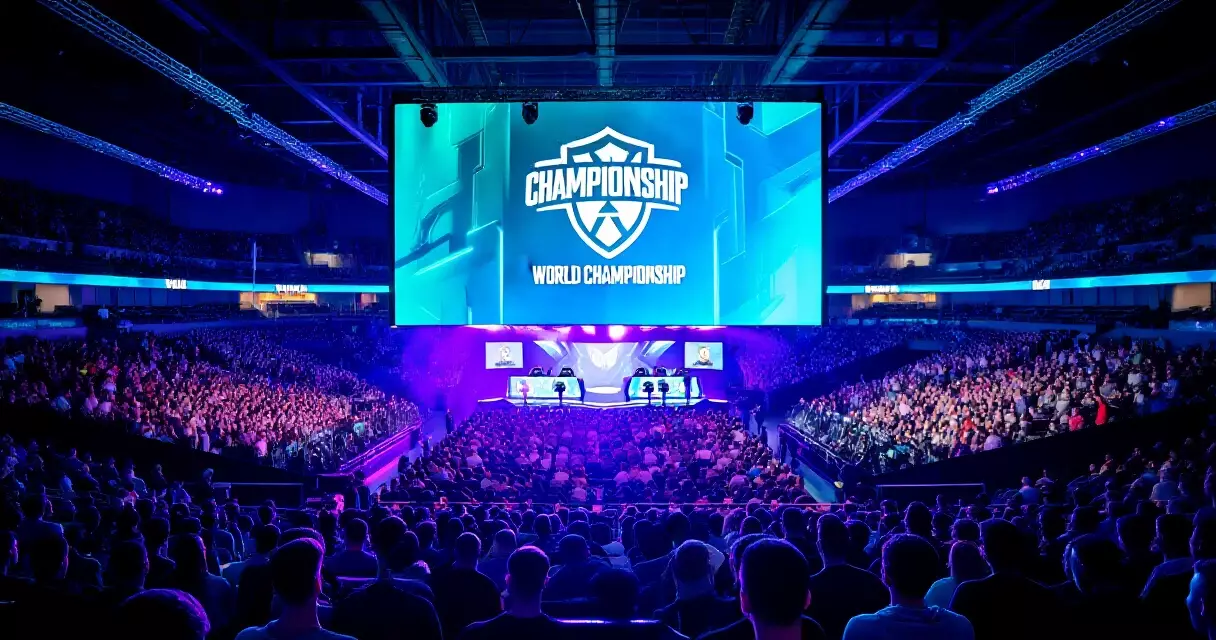
When 40,000 fans packed Beijing's Bird's Nest stadium to witness the League of Legends World Championship 2017 closing ceremony, it confirmed what the industry had been building toward for years: esports had outgrown basement LAN parties and needed real infrastructure...
Table of contents
- 1 Why Esports Arenas Are a Different Kind of Infrastructure
- 2 How We Ranked These Venues
- 3 The 15 Best Esports Arenas in the World
- 3.1 1. Bird’s Nest National Stadium – Beijing, China
- 3.2 2. Mercedes-Benz Arena – Shanghai, China
- 3.3 3. Crypto.com Arena – Los Angeles, USA
- 3.4 4. Avicii Arena – Stockholm, Sweden
- 3.5 5. Royal Arena – Copenhagen, Denmark
- 3.6 6. Sportpaleis – Antwerp, Belgium
- 3.7 7. Intuit Dome – Inglewood, California, USA
- 3.8 8. Esports Stadium Arlington – Arlington, Texas, USA
- 3.9 9. LoL Park – Seoul, South Korea
- 3.10 10. OGN Super Arena – Incheon, South Korea
- 3.11 11. Busan e-Sports Stadium – Busan, South Korea
- 3.12 12. HyperX Arena Las Vegas – Las Vegas, Nevada, USA
- 3.13 13. Tencent Honor of Kings Arenas – Chengdu and Guangzhou, China
- 3.14 14. LPL Team Home Arenas – Multiple Cities, China
- 3.15 15. Blizzard Arena – Burbank, California, USA
- 4 Technology That Separates Elite Esports Arenas from Regular Venues
- 5 Regional Breakdown: Which Countries Lead in Esports Arena Infrastructure
- 6 What Comes Next: Esports Arenas in 2026 and Beyond
- 7 Frequently Asked Questions: Esports Arenas
- 7.1 What is the largest dedicated esports arena in the world?
- 7.2 What technology makes a venue “esports-ready”?
- 7.3 Which country has the most esports arenas?
- 7.4 Are esports arenas financially profitable?
- 7.5 How much does it cost to build a dedicated esports arena?
- 7.6 What is the biggest esports event ever held at a live venue?
- 7.7 Do regular sports fans attend esports events at these arenas?
- 7.8 How do esports arenas handle the streaming audience versus the live audience?
- 8 Sources
When 40,000 fans packed Beijing’s Bird’s Nest stadium to witness the League of Legends World Championship 2017 closing ceremony, it confirmed what the industry had been building toward for years: esports had outgrown basement LAN parties and needed real infrastructure to match its audience. Today, a network of purpose-built and adapted venues spanning Seoul, Shanghai, Arlington, Las Vegas, and Copenhagen delivers the spectacle – and the technology – that competitive gaming demands. This guide ranks the 15 best esports arenas in the world by a combination of capacity, permanent tech infrastructure, event pedigree, and broadcast capability.
Why Esports Arenas Are a Different Kind of Infrastructure
A standard sports arena becomes an esports venue with enough truck rolls, temporary cabling, and a two-week stage build. A purpose-built or purpose-converted esports arena is something different: permanently wired fiber to every player station, isolated VLANs so a single competitor’s traffic never touches another’s, sub-10ms latency to regional game servers, and broadcast studios that can push 4K/HDR signals to streaming platforms without stepping outside the building. Those distinctions matter when you’re awarding a six-figure prize pool on a connection that can’t afford a 50ms spike.
South Korea understood this before anyone else. The Korea e-Sports Association (KeSPA) helped establish formal esports stadiums as early as 2002 – two decades before the rest of the world began treating the category seriously. China followed with massive government and corporate investment through Tencent and NetEase. North America and Europe have largely leaned on adapted multi-use arenas, with a handful of purpose-built standouts. Understanding that spectrum is essential before ranking these 15 venues.
How We Ranked These Venues
Ranking esports arenas requires balancing four factors: raw seating capacity, permanent technology infrastructure, championship event pedigree, and broadcast quality. A 20,000-seat general arena that hosted one esports final ranks below a 2,500-seat purpose-built venue with gigabit fiber to every station and an on-site broadcast studio – because the latter can actually deliver competitive integrity consistently, not just once. Venues are assessed on all four dimensions, with special weight given to how many Tier-1 events (Worlds, The International, CS Majors, Valorant Champions) they have hosted.
For a broader look at how venues are categorized across the industry, see our guide to major esports arenas and venues where championships are won, which covers the full tier structure from regional studios to stadium-scale events.
The 15 Best Esports Arenas in the World
The table below gives a snapshot of each venue before the individual write-ups that follow.
| # | Venue | Location | Capacity | Type | Opened |
|---|---|---|---|---|---|
| 1 | Bird’s Nest (National Stadium) | Beijing, China | ~91,000 (adapted) | Multi-use / adapted | 2008 |
| 2 | Mercedes-Benz Arena (now co-branded) | Shanghai, China | ~18,000 | Multi-use / adapted | 2010 |
| 3 | Crypto.com Arena | Los Angeles, USA | ~20,000 | Multi-use / adapted | 1999 |
| 4 | Avicii Arena (PGL Stockholm Major) | Stockholm, Sweden | ~16,000 | Multi-use / adapted | 1989 |
| 5 | Royal Arena (BLAST / PGL) | Copenhagen, Denmark | ~16,000 | Multi-use / adapted | 2017 |
| 6 | Sportpaleis (PGL Antwerp Major) | Antwerp, Belgium | ~23,000 | Multi-use / adapted | 1933 / renovated |
| 7 | Intuit Dome | Inglewood, USA | ~18,000 | Multi-use / tech-forward | 2024 |
| 8 | Esports Stadium Arlington | Arlington, TX, USA | ~2,500 (100k sq ft) | Purpose-built | 2018 |
| 9 | LoL Park | Seoul, South Korea | ~450 (broadcast) | Purpose-built | 2019 |
| 10 | OGN Super Arena | Incheon, South Korea | ~1,400 | Purpose-built | 2019 |
| 11 | Busan e-Sports Stadium | Busan, South Korea | ~2,000 | Purpose-built | 2002 |
| 12 | HyperX Arena Las Vegas | Las Vegas, USA | ~1,000 | Purpose-built | 2018 |
| 13 | Tencent Honor of Kings Arena | Chengdu / Guangzhou, China | 5,000–15,000 | Purpose-built | 2019–2024 |
| 14 | LPL Team Home Arenas | Multiple cities, China | 2,000–5,000 | Purpose-built (franchise) | 2018–2022 |
| 15 | Blizzard Arena | Burbank, CA, USA | ~450 | Purpose-built (converted) | 2017 |
1. Bird’s Nest National Stadium – Beijing, China
Built for the 2008 Beijing Olympics and seating up to 91,000, the Bird’s Nest National Stadium is not an esports venue by design – but it produced the single largest esports crowd in history when Riot Games staged the League of Legends World Championship 2017 closing ceremony there, with approximately 40,000 fans filling the bowl. The scale made a statement about where esports sat culturally in China and globally. No dedicated esports arena has since matched that raw attendance figure. The Bird’s Nest also featured in China’s 2022 Asian Games exhibition events, where esports was a demonstration discipline on the road to full medal status.
2. Mercedes-Benz Arena – Shanghai, China
The 18,000-capacity Mercedes-Benz Arena in Pudong hosted the League of Legends World Championship 2017 Finals proper – the match itself, not just the ceremony – making it the venue where Samsung Galaxy defeated SKT T1 in one of the most-watched esports broadcasts of that decade. The arena features full LED ribbon board infrastructure, a broadcast-grade lighting rig permanently installed for major events, and the connectivity required to handle Riot’s global streaming production. It remains a first-call venue for Chinese and international esports finals requiring a 10,000+ capacity room with premium production facilities in the Shanghai metro area.
3. Crypto.com Arena – Los Angeles, USA
Formerly Staples Center, Crypto.com Arena hosted the League of Legends World Championship 2016 Finals, drawing a reported peak of 14.7 million concurrent online viewers – a benchmark figure cited by Esports Charts as one of the top viewership peaks for an esports event staged in North America. The 20,000-seat venue also hosted Overwatch League Grand Finals and multiple Call of Duty League playoff events. As a general-purpose arena, it needs temporary infrastructure for each esports event, but its location in Los Angeles – the informal esports capital of North America – and its production history make it one of the most recognizable esports venues on the continent.
4. Avicii Arena – Stockholm, Sweden
Stockholm’s Avicii Arena (formerly Ericsson Globe, one of the world’s largest spherical buildings) hosted the PGL CS:GO Stockholm Major in 2021 – the first CS:GO Major played with a live audience after the COVID-19 pandemic pause. The event drew peak concurrent viewership of approximately 2.7 million on Twitch alone, according to Esports Charts, and sold out its ~16,000-seat capacity. For the Counter-Strike community specifically, the Stockholm Major is considered one of the defining live esports events of the modern era, and Avicii Arena’s unique architecture gave the broadcast a visual identity that set it apart from arena-generic alternatives.
5. Royal Arena – Copenhagen, Denmark
Opened in 2017 and seating around 16,000, Copenhagen’s Royal Arena has become the anchor venue for BLAST Premier events and hosted the PGL CS2 Copenhagen Major in 2024 – the first CS2 Major after Valve’s launch of Counter-Strike 2. The venue’s modern infrastructure (opened within the esports boom era) means its existing AV and connectivity spec is closer to esports requirements than many older European arenas. Copenhagen has positioned itself deliberately as an esports-friendly city, with the Danish government and Copenhagen Municipality backing events partly for tourism impact. The 2024 CS2 Major drew an estimated $20 million in economic activity to the city, according to event organizer PGL.
6. Sportpaleis – Antwerp, Belgium
At roughly 23,000 seats for concert-configuration events, the Sportpaleis in Antwerp is one of the largest single venues ever used for a CS:GO Major, hosting PGL Antwerp Major 2022. That event marked a post-pandemic return to European large-scale esports spectatorship and set attendance records for a CS Major at the time. Belgium’s central location in Europe makes Antwerp logistically attractive for bringing in attendees from across the continent, and the Sportpaleis infrastructure supports the heavy broadcast production that a Valve-spec Major requires.
Purpose-built or not, the venues that define esports history are those where the technical infrastructure and the crowd energy arrived at the same place at the same time.
7. Intuit Dome – Inglewood, California, USA
The newest large-scale arena on this list, Intuit Dome opened in 2024 as the home of the LA Clippers and immediately set a new benchmark for arena technology in North America. Its 4K LED halo scoreboard wraps the full interior of the bowl – the largest such installation in the US at launch – and the facility runs a 40Gbps+ internal network with full 5G coverage throughout. For esports, these specifications matter: they reduce the temporary infrastructure burden that previous adapted venues required. While Intuit Dome has not yet built the esports event pedigree of Crypto.com Arena or the older Madison Square Garden, its technical spec positions it as the most natural replacement for large-scale West Coast esports finals through the late 2020s.
8. Esports Stadium Arlington – Arlington, Texas, USA
When it opened in November 2018, Esports Stadium Arlington was immediately the largest dedicated esports facility in the Western world – a title it still holds. The 100,000-square-foot venue inside the Arlington Convention Center features a 90-foot main LED video wall (one of the largest permanent screens in any dedicated esports facility globally), a 50,000-square-foot production floor, gigabit fiber to every player station, dual-ISP redundant connectivity, and an on-site broadcast studio. Seating approximately 2,500, it punches above its capacity in technical credibility.
Arlington has hosted ESL One, DreamHack Dallas, Call of Duty League events, Valorant tournaments, and FACEIT events. DreamHack Dallas at the venue regularly generates an estimated $5–10 million in local economic impact, according to event organizers. For anyone looking at the practical realities of how to build an esports venue, Arlington remains the North American reference point for what dedicated infrastructure looks like at scale.
9. LoL Park – Seoul, South Korea
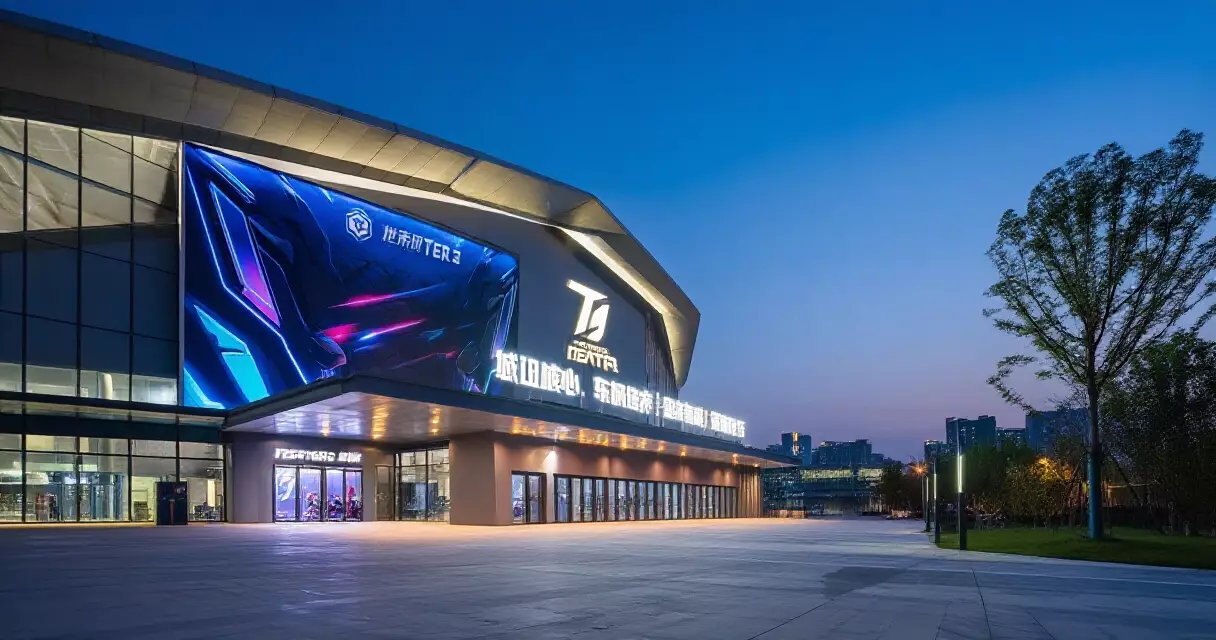
LoL Park, Riot Games Korea’s dedicated LCK (League of Legends Champions Korea) arena in Seoul’s Jongno-gu district, is a study in broadcast-first arena design. Seating only around 450 fans, it is among the smallest venues on this list by raw capacity – but its permanent infrastructure arguably surpasses most larger arenas globally. Floor-to-ceiling LED display walls, a 4K HDR broadcast production suite built directly into the facility, low-latency fiber to every player station, and a physical layout specifically designed for the LCK’s weekly broadcast schedule make it the most technically purpose-built esports arena in the world for its scale. LoL Park has hosted LCK regular season matches and playoffs every year since 2019, making it a more operationally active esports venue than almost any arena on this list.
10. OGN Super Arena – Incheon, South Korea
OGN – originally OnGameNet, the South Korean broadcaster that helped build modern esports into a televised sport – operates the OGN Super Arena in the Incheon area. Seating approximately 1,400 and equipped with a large LED backdrop wall, full production gallery, and multi-camera broadcast setup, the arena has hosted tournaments spanning Heroes of the Storm, Overwatch, PlayerUnknown’s Battlegrounds (PUBG), and various Korean esports league broadcasts. OGN’s broadcasting legacy stretching back to the early 2000s StarCraft era gives the Super Arena a heritage that no purpose-built venue built after 2015 can claim. The organization is credited by Wikipedia’s esports history record as one of the foundational institutions in building competitive gaming as a broadcast medium.
11. Busan e-Sports Stadium – Busan, South Korea
The Busan e-Sports Stadium, operated in partnership with KeSPA (Korea e-Sports Association), is arguably the most historically significant venue on this list. Established in 2002, it predates the entire Western concept of a dedicated esports stadium by roughly 15 years. With capacity of approximately 2,000 and high-speed fiber infrastructure that has been upgraded through multiple renovations, it hosted the formative years of Korean StarCraft league broadcasting that built the template for everything that followed globally. The South Korean government’s early investment in esports infrastructure – totaling over $500 million across two decades according to KeSPA reports – is most visibly embodied in facilities like the Busan stadium.
12. HyperX Arena Las Vegas – Las Vegas, Nevada, USA
Built inside the Luxor Hotel on the Las Vegas Strip and opened in 2018, HyperX Arena Las Vegas (since rebranded through ownership changes) was the first major esports arena integrated into a hotel and entertainment complex – a model that would be replicated in markets from Southeast Asia to Germany. At roughly 1,000 seated capacity, it features over one million LEDs throughout the facility, a two-story arena design with a modular stage, a dedicated streaming production suite, and broadcast infrastructure built for on-site content production. Its Las Vegas location means it operates in a city with the convention and entertainment infrastructure to support it year-round, distinguishing it from esports arenas that sit dark between tournament weekends.
13. Tencent Honor of Kings Arenas – Chengdu and Guangzhou, China
Tencent’s investment in dedicated arenas for Honor of Kings (known internationally as Arena of Valor) represents the largest coordinated esports venue build program ever undertaken by a single company. Purpose-built arenas across Chengdu, Guangzhou, and other Chinese cities seat between 5,000 and 15,000 fans, with 5G-optimized network infrastructure built specifically for mobile esports events – a distinction from most other arenas on this list, which were designed around PC gaming. The Honor of Kings World Champion Cup routinely draws 70 million or more viewers across Chinese platforms, according to Tencent’s own published viewership reports, making these among the highest-attendance, highest-viewership events in all of esports despite their near-invisibility in Western media coverage.
14. LPL Team Home Arenas – Multiple Cities, China
When Riot Games franchised the League of Legends Pro League in China, it required teams to build or lease dedicated home arenas – a model that generated a distributed network of 2,000–5,000-seat purpose-built venues across cities including Beijing, Shanghai, Chongqing, and Shenzhen between 2018 and 2022. Each arena features custom LED stage builds, full broadcast production suites, and audience-facing display infrastructure. As a collective infrastructure achievement, the LPL franchise arena network is unmatched anywhere in the world: no other league has simultaneously produced a comparable density of dedicated esports venues across a single country. Individual arenas such as the Edward Gaming Home Arena (Shanghai) and the JDG Gaming Arena (Beijing) represent the leading edge of this model.
15. Blizzard Arena – Burbank, California, USA
Blizzard Arena opened in 2017 as a converted television soundstage in Burbank, California, and was the original home of the Overwatch League and Hearthstone Championship Tour. At approximately 450 seats, it prioritized broadcast quality over fan capacity – a deliberate choice by Blizzard Entertainment to produce a studio-level viewing product for online audiences rather than a live arena spectacle. Its integrated broadcast setup, purpose-designed caster desk and player booth layout, and high-quality lighting rig made it a template for broadcast-first esports production. The Overwatch League moved away from the venue as it adopted the home-city model in 2020, but Blizzard Arena remains operational and continues to host esports and gaming content.
Technology That Separates Elite Esports Arenas from Regular Venues
The gap between a venue that can host esports and a venue that can host it well comes down to five infrastructure categories. The best arenas on this list excel across all five; most adapted multi-use arenas need temporary solutions for several of them.
| Infrastructure Category | Minimum for Tier-1 Events | Current Best Practice (2025) |
|---|---|---|
| Network backbone | 10Gbps dedicated fiber | 40–100Gbps, dual-ISP redundancy |
| Player station latency | <10ms to regional servers | <5ms via on-premise caching server |
| LED display pixel pitch | P4 (moderate close-viewing quality) | P2.5 or finer for sub-5m viewing |
| Broadcast output | 1080p60 with multi-camera replay | 4K HDR, 30+ camera positions, spidercam |
| Player isolation | Soundproofed booths (post-2023 standard) | Full VLAN isolation + acoustic engineering |
Network architecture is the piece most invisible to spectators but most critical to competitive integrity. Each player station at a Tier-1 event runs on a dedicated VLAN, physically cabled rather than wireless, with a monitoring station watching latency and packet loss in real time. Tournament operations centers – standard at venues like Esports Stadium Arlington and LoL Park – can isolate and reroute connectivity for a single station without affecting the rest of the event. That level of control is simply not possible with temporary Wi-Fi or shared building infrastructure.
Soundproofed player booths became a Tier-1 event standard after the post-2023 consensus that crowd noise at critical moments constituted an unfair competitive variable. Most of the venues listed above now use either permanent or rapidly deployable booth systems. The acoustic engineering challenge is real: the booth needs to block crowd noise while allowing team communication internally and not creating a claustrophobic environment during a multi-hour match. For more on the infrastructure requirements behind building or upgrading venues, our article on competitive gaming arenas in 2026 covers current technical specifications in detail.
At Tier-1 events, a 50ms network spike is not a technical inconvenience – it is a competitive outcome that can eliminate a team from a six-figure prize pool.
Regional Breakdown: Which Countries Lead in Esports Arena Infrastructure
Asia accounts for the majority of purpose-built esports venues globally, with China and South Korea leading by a significant margin. South Korea’s infrastructure is older and government-backed; China’s is newer, corporate-driven, and larger in scale. North America has fewer dedicated venues but hosts the highest-revenue events. Europe relies heavily on adapted multi-use arenas with temporary production builds for its biggest events.
Southeast Asia is emerging rapidly, with dedicated esports venues opening in the Philippines, Thailand, Indonesia, and Malaysia through 2022–2025, driven partly by the regional dominance of mobile esports titles like Mobile Legends: Bang Bang and PUBG Mobile. The 2019 Southeast Asian Games included esports as a medal event, catalyzing government investment in venue infrastructure across the region – a development documented by the Wikipedia record of esports at the 2019 SEA Games.
Europe’s approach has been event-driven rather than venue-driven: organizers like PGL, ESL/FACEIT, and BLAST rotate among large multi-use arenas across the continent rather than anchoring in a single dedicated facility. That model has produced some of the most visually impressive events in esports history – the Avicii Arena in Stockholm and the Sportpaleis in Antwerp are not esports venues, but they produced landmark esports moments. The question of whether Europe needs dedicated infrastructure or whether the rotation model is more economically sound is explored in our guide to esports venue costs, design, and infrastructure.
What Comes Next: Esports Arenas in 2026 and Beyond
The Esports World Cup, held annually in Riyadh, Saudi Arabia since 2024 and backed by the Saudi government’s Savvy Games Group with prize pools exceeding $60 million, represents the most significant new esports venue investment direction of the mid-2020s. Saudi Arabia is constructing dedicated esports facilities as part of its Vision 2030 entertainment investment strategy, with the potential to become a major new geography for flagship esports events – similar to how Formula 1 and golf tours expanded into Gulf markets.
In North America, the opening of Intuit Dome in 2024 set a new technology benchmark for multi-use arenas, and several NBA-adjacent teams have proposed dedicated esports facilities in their markets through 2027. The model of mixed-use venues – hosting esports alongside concerts, conventions, and corporate events – has proven more financially sustainable than the pure-play esports arena model that struggled in the Overwatch League era.
Mobile esports infrastructure is the fastest-growing segment. As Honor of Kings, PUBG Mobile, and Free Fire continue to generate viewership that rivals PC titles globally, venues optimized for 5G connectivity and mobile-native broadcast formats are becoming their own category. Tencent’s arena network in China is the current model, but Southeast Asian markets are investing rapidly in equivalent facilities.
Frequently Asked Questions: Esports Arenas
What is the largest dedicated esports arena in the world?
By purpose-built floor space, Esports Stadium Arlington in Texas remains the largest dedicated esports facility in the Western world at 100,000 square feet, having held that title since its 2018 opening. In Asia, purpose-built arenas built for the LPL franchise model and for Tencent’s Honor of Kings leagues seat 5,000 to 15,000 fans and exceed Arlington in raw capacity, but were built specifically for one league or one title rather than as multi-game venues. By the single largest crowd ever assembled for an esports event, Beijing’s Bird’s Nest National Stadium wins at approximately 40,000 attendees for the League of Legends World Championship 2017 closing ceremony – though it is a general-purpose Olympic stadium, not an esports-specific facility.
What technology makes a venue “esports-ready”?
An esports-ready venue requires five core technology components that standard sports arenas typically lack as permanent infrastructure. First, dedicated high-bandwidth fiber (minimum 10Gbps) runs to every player station – not shared Wi-Fi. Second, isolated VLANs ensure each competitor’s traffic is completely separated. Third, on-premise or priority-routed connectivity to game servers keeps latency below 10ms. Fourth, integrated broadcast infrastructure capable of 4K HDR output with 10 or more simultaneous camera positions. Fifth, soundproofed player booths that block crowd noise from affecting in-game team communication. Permanent LED display infrastructure and a dedicated tournament operations center are additional markers of purpose-built venues versus temporarily adapted ones.
Which country has the most esports arenas?
China has the highest total number of purpose-built esports arenas in the world, driven by Tencent and NetEase’s league infrastructure investments and the LPL franchise model that required teams to build dedicated home venues. South Korea has a smaller number of arenas but the longest history, with KeSPA-backed government-funded esports stadiums dating to 2002 – the earliest dedicated esports venue infrastructure anywhere. North America has approximately 15–20 purpose-built esports studios and arenas of meaningful scale as of 2024, concentrated in Texas, California, and Nevada. Europe primarily uses adapted multi-use arenas for its major events rather than maintaining a network of dedicated facilities.
Are esports arenas financially profitable?
Most purpose-built esports arenas have struggled to achieve profitability purely through esports event revenue, and the Overwatch League’s city-based home arena model (2019–2021) is the clearest recent example of that challenge at scale. The venues that prove financially sustainable tend to adopt a mixed-use strategy: hosting gaming conventions, content creator events, corporate activations, product launches, and concerts in addition to esports tournaments. HyperX Arena Las Vegas benefits from its integration into the Luxor Hotel’s entertainment ecosystem. Esports Stadium Arlington operates as part of the broader Arlington Convention Center complex. The pure-play esports venue model works best where league infrastructure – like the LPL in China – guarantees a minimum number of event days per year through a long-term contractual relationship with the venue.
How much does it cost to build a dedicated esports arena?
Construction costs vary enormously by market and by the permanence of technology installed. A small dedicated venue seating 200–500 with professional LED and broadcast infrastructure typically costs $2–10 million. A mid-scale facility seating 1,000–3,000 with full broadcast studio, tournament operations center, and permanent player station infrastructure costs $20–75 million. A large-scale purpose-built arena seating 5,000 or more runs $100–400 million or above depending on real estate and build quality. These figures do not include ongoing operational costs, technology refresh cycles (LED panels and broadcast equipment become outdated within 5–7 years), or the cost of leasing space in premium locations like Las Vegas hotel complexes.
What is the biggest esports event ever held at a live venue?
The single largest live esports event by physical attendance remains the League of Legends World Championship 2017 closing ceremony at the Bird’s Nest in Beijing, with approximately 40,000 fans in attendance. The LoL Worlds Finals proper that year (held at Mercedes-Benz Arena in Shanghai) drew around 18,000 in attendance and a global peak concurrent viewership of approximately 60 million across all platforms, according to Riot Games’ published figures – making it one of the most-watched live esports events in history. By comparison, the PGL Stockholm CS:GO Major in 2021 drew a reported peak of 2.7 million concurrent Twitch viewers, a strong benchmark for a non-MOBA title.
Do regular sports fans attend esports events at these arenas?
Audience crossover between traditional sports fans and esports event attendees is growing but remains limited. Research from Nielsen and Newzoo indicates that esports event attendees skew younger (18–34) and male compared to traditional sports demographics, and their primary identity is as gaming fans rather than sports fans. That said, the presence of major esports events in mainstream sports arenas like Crypto.com Arena, Avicii Arena, and Sportpaleis has increased general public awareness of esports as a live spectator category. Several NBA and NFL franchises have acquired or invested in esports teams specifically to reach younger audiences that their traditional broadcast contracts are not capturing.
How do esports arenas handle the streaming audience versus the live audience?
At virtually every major esports event, the global streaming audience vastly outnumbers the live attendees. The LoL Worlds Finals typically draws 60+ million peak concurrent viewers online against 18,000 in the arena. This ratio has shaped how top-tier esports venues are designed: broadcast quality takes precedence over live-fan sight lines in a way that traditional sports venues would never prioritize. Purpose-built venues like LoL Park in Seoul seat only 450 fans but produce broadcast output that reaches millions – a deliberate production philosophy. Dedicated streaming uplink infrastructure, CDN peering agreements, and on-site encoding servers are now standard at Tier-1 venues.
Sources
Wikipedia: Beijing National Stadium (Bird’s Nest) – capacity, Olympic history, and esports event use (2017 LoL Worlds closing ceremony).
Wikipedia: Esports at the 2019 Southeast Asian Games – SEA Games esports medal event history and government infrastructure investment context.
Esports Charts (escharts.com) – peak concurrent viewership data cited for PGL Stockholm Major 2021, LoL Worlds 2016 and 2017, CS2 Copenhagen Major 2024.
Newzoo Global Esports Reports – global unique viewer estimates (~540 million, 2024), live event ticket revenue (~$120 million, 2024), and dedicated venue count estimates.
Wikipedia: League of Legends World Championship 2017 – venue details (Mercedes-Benz Arena Shanghai, Bird’s Nest Beijing), attendance figures, viewership records.
Top Esports Organizations 2026: Teams, Rosters, and Performance Rankings