
Summary
✓Reviewed by Emma Thompson Oceania Fortnite professional and content creator Oatley revealed his face to the public on August 8, 2026, ending years of deliberate anonymity just days before he competed in person at the Esports World Cup in Paris...
Table of contents
- 1 A Faceless Persona Built Over Years
- 2 Why the Esports World Cup Forced the Issue
- 3 Identity and the Anonymous Esports Pro
- 4 Community Reaction and the Fake Reveal Cycle
- 5 Tournament Performance at EWC Paris
- 6 What Oatley’s Reveal Signals for Esports Identity in 2026
- 7 Key Facts at a Glance
- 8 What Comes Next
- 9 Sources
Oceania Fortnite professional and content creator Oatley revealed his face to the public on August 8, 2026, ending years of deliberate anonymity just days before he competed in person at the Esports World Cup in Paris — a LAN event that would have placed him on a global broadcast regardless of his choice. The reveal, posted simultaneously to YouTube under the title “The Real Oatley Face Reveal” and to his X account, drew immediate attention across the competitive Fortnite community and reignited a broader conversation about player identity, persona, and the pressure that in-person tournament attendance places on esports athletes who have built faceless online brands.
A Faceless Persona Built Over Years
Oatley, a 20-year-old Fortnite pro from Oceania, had cultivated a strictly anonymous online identity for years before the August reveal. His streams, competitive appearances, and content output were all conducted without showing his face — a deliberate choice that became a defining feature of his public persona and a source of recurring fan curiosity. According to reporting by Dexerto, Oatley had teased audiences throughout July 2026 with countdown-style streams and a video titled “Oatley Face Reveal” — all of which turned out to be fake, drawing a mix of frustration and anticipation from his fanbase.
The extended pattern of fake reveals had itself become a running storyline in the Fortnite content space, with viewers speculating about when — or whether — Oatley would ever genuinely show his face. The buildup made the eventual August 8 reveal land with outsized impact relative to what a standard face reveal might generate.
Why the Esports World Cup Forced the Issue
The timing of the reveal was not incidental. Oatley had qualified for the Fortnite Reload Elite Series Championship at the Esports World Cup in Paris — a live, in-person event held from August 19 to 22, 2026. LAN tournaments place competitors on camera for global broadcasts, making a sustained faceless persona functionally impossible. Oatley acknowledged the situation directly during a live stream from the Paris venue, stating: “I did a face reveal. I turned up to land. That was the whole point. I was waiting to call in to do a face reveal.”
His qualification for the event had come through a Reload Elite Series win alongside teammate Spookz in May 2026, which secured the EWC slot. That result made his in-person appearance at the Paris venue a confirmed commitment, and the reveal on August 8 was effectively timed to get ahead of what would have happened on broadcast anyway. According to coverage aggregated by Gamersboard, the reveal came “just days before the 20-year-old competes in person at the Esports World Cup” and was framed as a deliberate choice ahead of the broadcast spotlight.
Identity and the Anonymous Esports Pro
Oatley’s story sits at the intersection of two issues that have become increasingly prominent in competitive gaming: the sustainability of anonymous pro personas, and the conditions under which esports organizations and tournament operators surface player identity to audiences. As the Esports World Cup 2026 expanded its LAN footprint and global broadcast reach, it created a structural pressure on players whose brands were built on anonymity — not through policy, but through the simple fact of appearing on camera at a major venue.
Oatley was explicit during his Paris stream that the broadcast had not consistently shown him on camera even once he arrived. Viewers noted in live chat that the feed did not show him until late in the competition, and the player himself referenced the gap: stream transcripts captured audience comments reading “Broadcast didn’t even show you till game seven and it was annoying.” The episode raised questions about how LAN broadcasts handle players who are publicly known for faceless identities — whether organizers factor that into their coverage decisions, or whether the default broadcast treatment applies uniformly.
Community Reaction and the Fake Reveal Cycle
The reaction to the August 8 reveal reflected the months of anticipation Oatley had deliberately manufactured. His July fake-out content — using the same framing of a countdown and reveal video — had primed his audience to be skeptical. When the real video posted under the title “The Real Oatley Face Reveal”, the emphasis on “Real” in the title was itself a signal to an audience that had been burned by prior teases. Viewers who had followed the fake-reveal cycle responded with a mix of relief and humor, with the broader Fortnite community noting the reveal as a notable identity moment in the 2026 competitive scene.
The broader pattern of professional players using faceless personas — and the community dynamics that develop around them — has become a recurring theme in esports coverage. Unlike traditional sports, where athletes are visually identified from their first professional appearance, competitive gaming creates space for players to build substantial followings and career profiles without their physical identity ever entering public view. Oatley’s case is notable because it shows how tournament attendance can dissolve that separation not through regulatory requirement, but through the simple logistics of a live broadcast.
Tournament Performance at EWC Paris
Oatley competed in the Fortnite Reload Elite Series Championship at the Esports World Cup in Paris across the August 19-22, 2026 window. Stream data from his live broadcasts captured from the Paris LAN show him finishing 11th place in one session and 12th place in another during the group stage rounds — results that kept him active in the competition through the event. His broadcasts from the venue confirmed his physical presence at the LAN and included real-time commentary on the Paris experience, including the broadcast visibility issues noted above.
The EWC Paris event itself was one of the largest esports gatherings of 2026, featuring competition across multiple titles. For context on the full scope of that event, including prize pools and the schedule across games, see the Esports World Cup 2026 complete schedule and prize pools.
What Oatley’s Reveal Signals for Esports Identity in 2026
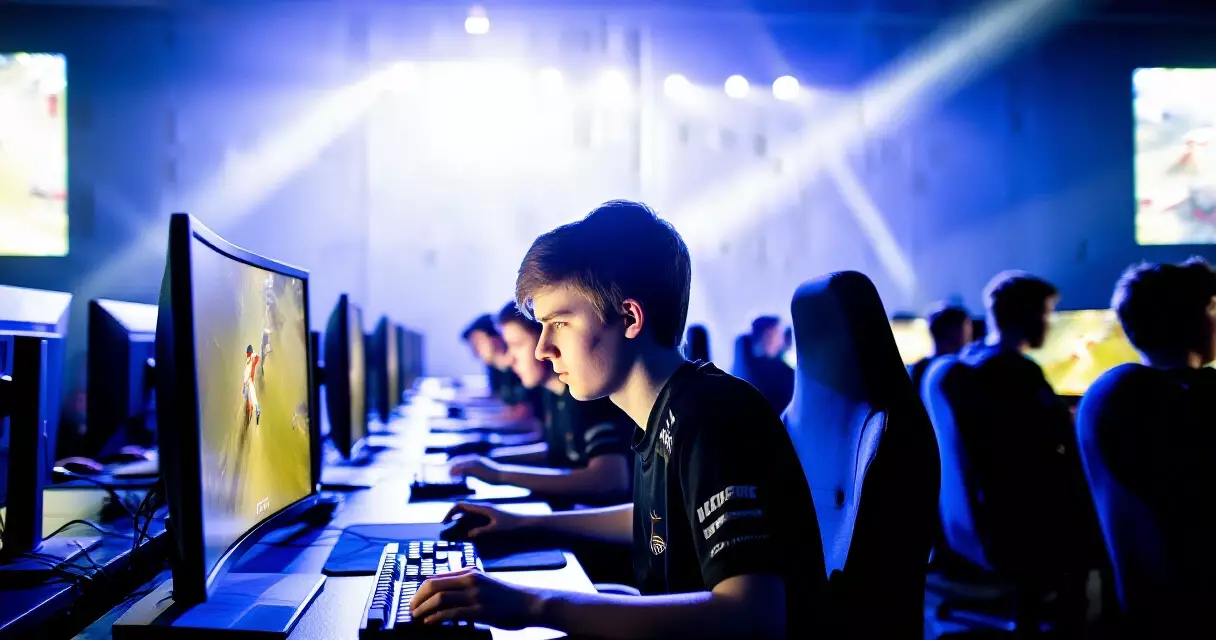
The Oatley story is a concrete illustration of a tension that has grown as esports events become more professionalized and LAN-centric: players who built audiences through online anonymity are increasingly required to appear in person at events that are broadcast globally. Unlike the early years of competitive gaming — where most matches were played online and broadcast cameras were minimal — the current major-tournament circuit places players in arenas with face-cam setups, post-match interviews, and live production teams. Sustaining a faceless persona in that environment requires either opting out of LAN events or making the choice Oatley made: getting ahead of the reveal on your own terms.
His decision to post the reveal on August 8, 11 days before the EWC event began, gave him control over the moment rather than leaving it to a broadcast team. Whether that approach becomes a template for other anonymous pros facing similar situations remains to be seen, but his handling of it — including the acknowledgment from Paris that the reveal and the tournament appearance were directly connected — sets a clear precedent for how a competitive player can navigate the anonymity-to-visibility transition deliberately rather than accidentally.
Key Facts at a Glance
| Detail | Information |
|---|---|
| Player | Oatley (Oceania, Fortnite) |
| Age | 20 |
| Face reveal date | August 8, 2026 |
| Reveal platforms | YouTube, X (formerly Twitter) |
| Video title | “The Real Oatley Face Reveal” |
| EWC qualification | Fortnite Reload Elite Series win with Spookz, May 2026 |
| EWC event dates | August 19–22, 2026 (Paris) |
| EWC event | Fortnite Reload Elite Series Championship |
| Reported EWC finish | 11th/12th (group stage sessions) |
What Comes Next
Oatley’s Fortnite career continues beyond the EWC appearance. His profile in the Oceania competitive scene has been built on consistent results in FNCS (Fortnite Champion Series) competition, and his expanded public identity — now including a visible face — may influence how he approaches content and sponsorship moving forward. The broader question his story raises, about how esports organizations and broadcast teams handle players with established anonymous personas, is likely to recur as the LAN calendar grows and more online-native pros make the transition to in-person major events.
For esports journalists and reporters covering identity-related developments in competitive gaming, the Oatley case adds to a growing body of examples where the distinction between an online persona and a publicly known athlete collapses under the conditions of professional competition — not through rule changes or governance decisions, but through the unavoidable visibility of a live broadcast stage. Oatley’s X account continues to document his competitive activity following the EWC appearance.
Sources
- Fortnite pro Oatley finally drops face reveal ahead of major tournament — dexerto.com
- YouTuber and professional Fortnite player Oatley has … — facebook.com
- JOGO Oatley (@Oatleyfn) / Posts / X – Twitter — x.com
- Fortnite : le pro Oatley dévoile enfin son visage avant l’Esports World Cup — fpsnews.net
- Oatley показал лицо перед Esports World Cup 2026 — dungen.ru