
Summary
Esports coaching is no longer a casual hobby for retired players with too much free time. According to the University of North Dakota, the average esports coach in the U.S. earns $61,121 per year – a salary that reflects how...
Table of contents
- 1 From Living Room to Profession: How Esports Coaching Evolved
- 2 Core Responsibilities: What an Esports Coach Actually Does Each Day
- 2.1 1. Practice Design and Scrim Coordination
- 2.2 2. VOD Review and Opponent Analysis
- 2.3 3. Live Match Adaptation and Timeout Management
- 2.4 4. Player Development and Individual Skill Work
- 2.5 5. Roster Management and Recruiting
- 3 Head Coach vs. Analyst vs. Performance Coach: Who Does What
- 4 Game-Specific Coaching: How the Role Shifts by Title
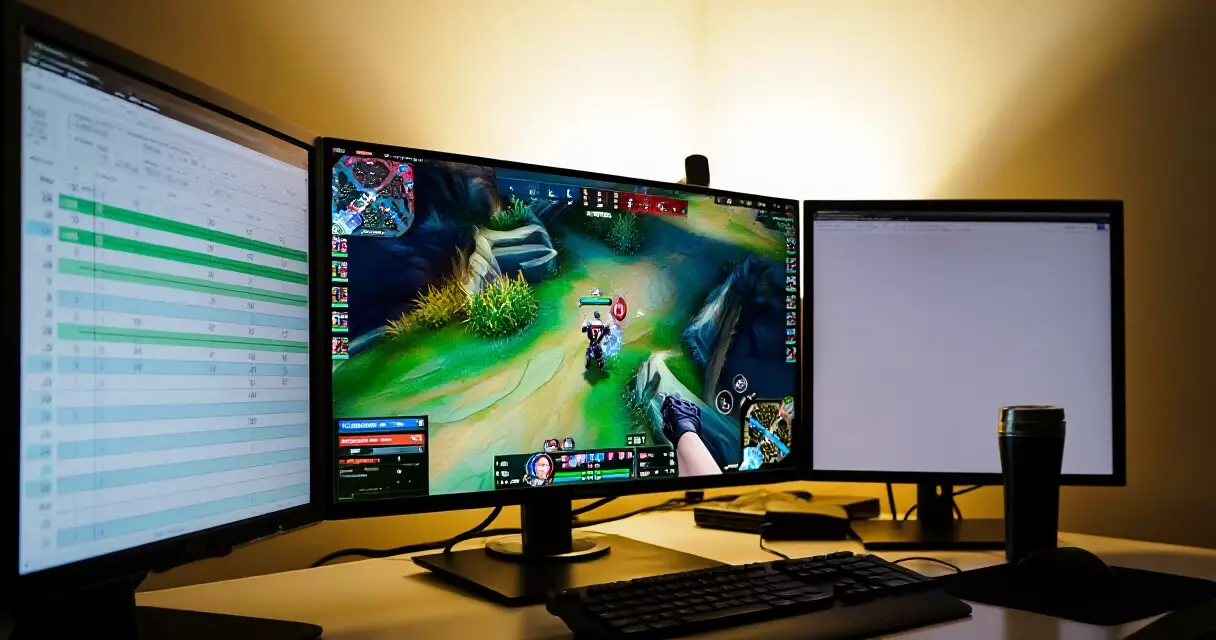
- 5 A Typical Week: Inside the Esports Coach’s Schedule
- 6 Skills and Qualifications: What It Takes to Coach Esports
- 7 How Esports Coaching Compares to Traditional Sports Coaching
- 8 Frequently Asked Questions About Esports Coaching
- 8.1 What does an esports coach do on a typical day?
- 8.2 How is an esports coach different from a traditional sports coach?
- 8.3 What is a scrim in esports, and why do coaches organize them?
- 8.4 Do esports coaches work on mental health and player wellbeing?
- 8.5 How much do esports coaches earn in the United States?
- 8.6 Do you need a degree or certification to become an esports coach?
- 8.7 What is the difference between a head coach and an analyst in esports?
- 8.8 What games do esports coaches typically specialize in?
- 9 Sources
Esports coaching is no longer a casual hobby for retired players with too much free time. According to the University of North Dakota, the average esports coach in the U.S. earns $61,121 per year – a salary that reflects how seriously organizations have come to treat this role. Behind every championship-winning squad is a coaching staff breaking down VODs at midnight, scripting draft strategies, and managing the personalities of players who may be thousands of miles apart.
From Living Room to Profession: How Esports Coaching Evolved
In the early 2000s, esports teams were largely self-managed. Players watched their own replays, called their own strategies mid-match, and figured out opponent tendencies through trial and error. That changed as prize pools scaled, rosters professionalized, and organizations began borrowing structure from traditional sports franchises.
South Korean StarCraft teams were among the first to formalize coaching staffs, with dedicated strategists and VOD analysts becoming fixtures by the late 2000s. Western League of Legends organizations followed around 2012–2014 as the LCS launched and team budgets grew large enough to justify coaching salaries. By 2016, the role had splintered further: head coaches focused on strategy, while analysts handled data, and performance coaches addressed mental and physical conditioning.
Today, academic institutions including the University of North Dakota and organizations like British Esports treat coaching as a structured career path with defined skill requirements, compensation expectations, and development trajectories. The Taylor & Francis journal Qualitative Research in Sport, Exercise and Health published peer-reviewed work in 2026 examining how coaching narratives shape esports careers – a sign the field has matured enough to attract serious academic attention.
Core Responsibilities: What an Esports Coach Actually Does Each Day
The day-to-day workload of an esports coach breaks into five broad areas, though the balance shifts depending on whether the team is in a competitive season or an off-season rebuild. A week before a major tournament looks very different from a week spent reviewing draft picks after elimination.
1. Practice Design and Scrim Coordination
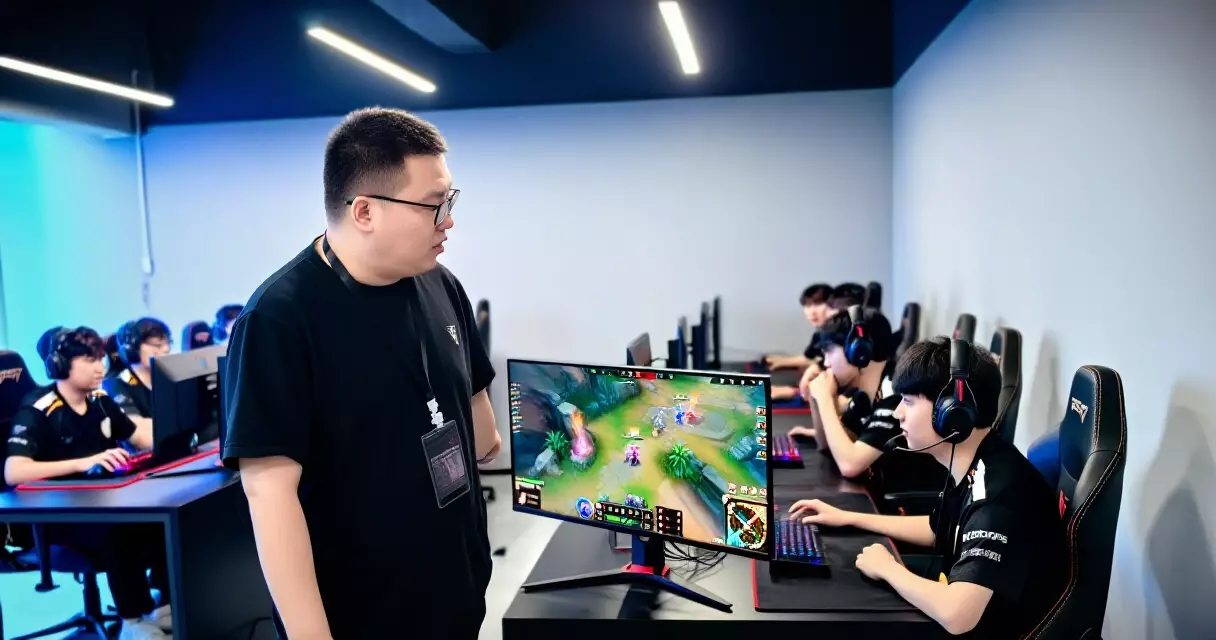
Coaches build the training schedule from the ground up. This means arranging scrimmages – practice matches against other teams, commonly called “scrims” – and assigning each session a specific learning objective. A coach does not simply tell players to “go practice”; they define what skill, timing, or team concept the session is meant to reinforce. Post-scrim reviews are a standard part of this loop: coaches document what worked, what broke down, and what to address before the next block.
According to British Esports, coaches help teams train against other teams through scrims with the explicit goal of performance improvement. The scrim schedule is often coordinated weeks in advance and requires finding opponents at a similar skill tier – a logistical task that falls squarely on the coaching staff.
2. VOD Review and Opponent Analysis
Video-on-demand review – or VOD review – is where much of the intellectual work happens. Coaches watch recorded matches frame by frame, cataloging decision trees, rotation patterns, map control tendencies, and individual mechanical habits. For games like League of Legends and Valorant, this includes draft tendencies: which champions or agents does an opponent prefer, under what map conditions, and at which stage of the tournament?
The head coach role, as described by Esports Atlas, explicitly includes managing the draft and pick-ban phase – a chess-like process in games like Dota 2 and League of Legends where selecting the wrong composition can cost a match before the first minute of play. Coaches build full draft scripts for specific opponents, including counter-picks, flex threats, and fall-back options if the opponent surprises them.
3. Live Match Adaptation and Timeout Management
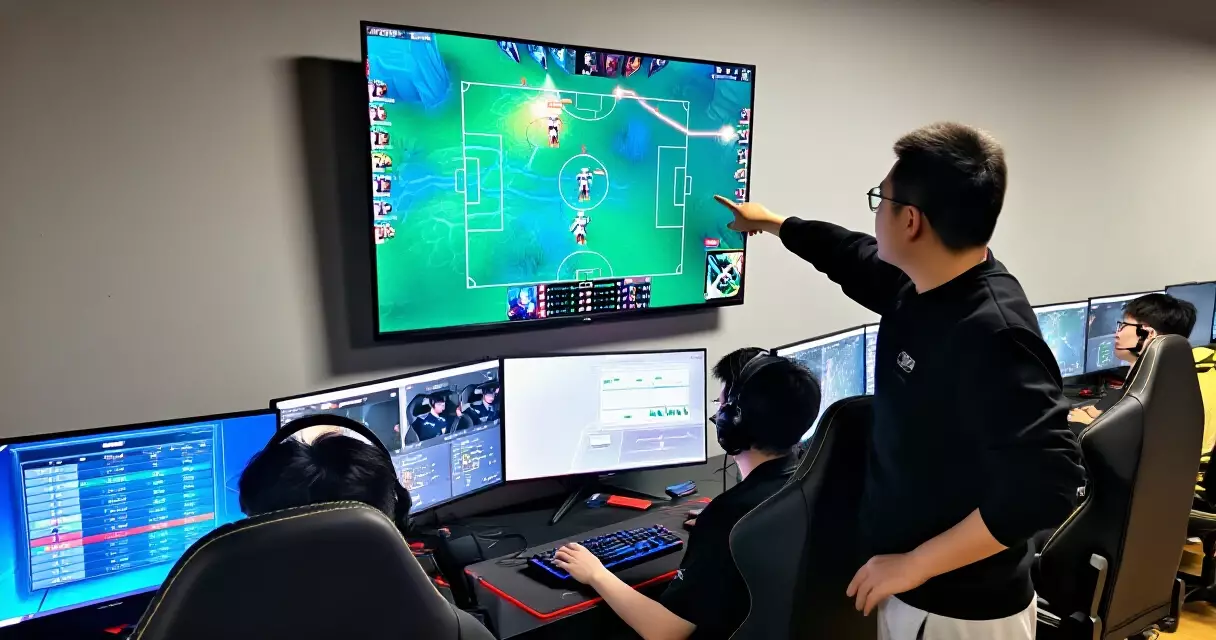
During live competition, the coach’s role shifts toward real-time adaptation. In games that allow timeout calls, coaches decide when to pause play – reading momentum shifts, identifying tilt in individual players, or calling a strategic reset when the team’s game plan has been read by the opponent. This requires a calm read on a high-pressure environment where the players themselves may be too emotionally invested to step back.
Some titles give coaches more direct influence than others. In tactical shooters like CS2 or Valorant, the in-game leader (IGL) – a designated player – calls real-time strategies. The coach typically works from behind the glass, communicating through tactical timeouts and inter-round breaks. In Dota 2 and League of Legends, draft pivots in best-of-three or best-of-five formats are where the coaching staff has the clearest on-paper impact.
4. Player Development and Individual Skill Work
Beyond team-level strategy, coaches invest significant time in individual player development. This covers mechanics – aim training regimens in shooters, micro-management habits in strategy games – but also communication patterns, decision-making under pressure, and role clarity within the team’s system. A player who is mechanically gifted but communication-poor can be a liability in team-based titles where coordination is decisive.
The University of North Dakota notes that esports coaches are responsible for players’ overall well-being and development – not just their gameplay. This increasingly includes guidance on sleep hygiene, physical conditioning, and nutrition basics. Extended gaming sessions affect reaction time, focus, and emotional regulation, so performance coaches at higher-tier organizations now work alongside team doctors and sports psychologists.
An esports coach’s job is not to play better than their players – it is to create the conditions in which those players can perform at their peak, consistently, under tournament pressure.
5. Roster Management and Recruiting
At many organizations, the head coach is also involved in roster decisions – identifying player needs, scouting potential recruits, and advocating for or against specific signings to team management. The Taylor & Francis peer-reviewed research published in 2026 identifies recruiting and managing players as a core coaching responsibility across the literature on esports coaching. This makes the esports coaching role structurally similar to a coaching director or sporting director in football – not just a tactician, but a talent architect.
For more on how pro teams approach roster building as a system – not just individual signings – see the pillar article on esports coaching, training, and roster development.
Head Coach vs. Analyst vs. Performance Coach: Who Does What
At top-tier organizations, “the coach” is actually a staff of specialists. The head coach sets overall strategy and leads player meetings. The analyst digs into data – scraping replays, building statistical models from match telemetry, and producing structured reports on opponent patterns. The performance coach focuses on the non-game dimensions: physical health, mental resilience, team chemistry, and stress management.
Smaller teams and collegiate programs often compress all three functions into one or two people. A single coach at a university program may run scrims, review VODs, design the practice schedule, talk players through mental slumps, and handle administrative tasks like scheduling and travel coordination – all in the same week.
| Role | Primary Focus | Key Tools | Typical Background |
|---|---|---|---|
| Head Coach | Strategy, draft, game plan, player direction | VOD software, draft simulators, whiteboard sessions | Former high-level player or experienced tactician |
| Analyst | Data collection, opponent profiling, telemetry | Replay platforms, spreadsheets, statistical dashboards | Strong analytical background, game knowledge |
| Performance Coach | Mental resilience, physical conditioning, team cohesion | Mental skills frameworks, fitness programming, 1:1 sessions | Sports psychology, fitness coaching, counseling |
| Positional / Specialist Coach | Role-specific mechanics and decision-making | Rank-appropriate scrim review, practice drills | Former pro or high-rank player in that specific role |
Game-Specific Coaching: How the Role Shifts by Title
Esports coaching is not uniform across games. The role adapts significantly depending on the title, team size, and competitive format. A Valorant coach and a Rocket League coach are doing structurally similar jobs but operating in almost entirely different conceptual environments.
In 5v5 tactical shooters like CS2 and Valorant, the coach works closely with the IGL to develop site execution protocols, utility sequences, and anti-stratting packages for specific opponents. Match preparation involves studying veto tendencies to predict which maps will be played, then building map-specific playbooks. The prize pool stakes in these titles – covered in our reporting on esports tournament prize pools through history – mean preparation errors have direct financial consequences.
In MOBA titles – League of Legends, Dota 2, Heroes of the Storm – draft coaching is a specialized discipline in its own right. Coaches study patch notes to identify which character adjustments alter the priority tier, then build draft frameworks around the new meta. A patch cycle that buffs a particular role or playstyle can invalidate weeks of preparation overnight, requiring rapid adaptation.
Battle royale formats like Apex Legends or Fortnite require coaches to focus on macro positioning, rotation theory, and risk-calibration under uncertainty – environments where 20 teams compete simultaneously and perfect information is impossible. Fighting game coaching sits at another extreme: individual player mentorship, frame-data analysis, character matchup study, and mental game development dominate the work, since most competition is 1v1.
A Typical Week: Inside the Esports Coach’s Schedule
The schedule varies by season, but here is what a week during an active competitive season might look like for a head coach at a mid-tier professional organization:
| Day | Morning | Afternoon | Evening |
|---|---|---|---|
| Monday | VOD review from weekend match | Individual player feedback sessions | Opponent research for next match |
| Tuesday | Practice schedule prep | Scrims (Block 1) | Scrim review, draft notes |
| Wednesday | Analyst meeting: opponent report | Scrims (Block 2) | Player development 1:1s |
| Thursday | Draft scripting and counter-pick work | Scrims (Block 3) with opponent-specific focus | Mental preparation talk with team |
| Friday | Light practice, tactical review | Match day preparation | Competition (match play) |
| Saturday/Sunday | Match play or travel | Live competition | Post-match review (same night) |
This schedule is demanding by any standard. Many coaches describe working 60-plus hour weeks during competitive seasons, with the pressure to respond to patch changes or roster emergencies regardless of the hour. The overlap between strategy work, people management, and administrative coordination makes time discipline a critical skill in its own right.
Skills and Qualifications: What It Takes to Coach Esports
The University of North Dakota identifies four core requirement areas for esports coaches: in-depth game knowledge, leadership skills, hands-on coaching experience, and – increasingly – formal education or certifications in esports or coaching. None of these alone is sufficient; the job demands all of them operating together.
Game knowledge at the coaching level means more than being a strong player. Coaches need to understand the game at a meta level – why certain strategies work in the current patch, how opponent tendencies shift over a long season, and where individual player habits create systemic vulnerabilities. Many coaches are former high-ranked competitive players, though some come from analytical or sports science backgrounds and develop game knowledge over time.
Leadership and interpersonal skills are equally critical. Coaching a team of five players with different personalities, motivations, and communication styles requires emotional intelligence that pure game knowledge cannot substitute. The 2026 Taylor & Francis research notes that holistic player support – going beyond gameplay to include wellbeing and interpersonal dynamics – is now firmly part of the coaching remit as the field matures. Pay structures in esports, covered in our reporting on how much pro gamers earn in 2026, affect coaching staff retention as much as player contracts.
Formal credentials are becoming more common but are not yet a universal requirement. Degrees in sports science, psychology, physical education, or game design provide useful foundations. Several universities now offer esports management or coaching-specific programs. Certifications from organizations like the National Federation of State High School Associations (NFHS) esports coaching program provide structured frameworks for those entering via the scholastic pathway.
The esports coach role demands a rare combination: deep tactical knowledge, the emotional range of a team counselor, the organizational discipline of a project manager, and the data fluency of a performance analyst – often all at once.
How Esports Coaching Compares to Traditional Sports Coaching
The structural parallels with traditional sports are real but imperfect. Like an NFL or NBA coach, an esports head coach sets strategy, manages personnel, and prepares the team for opponents. Unlike those roles, esports coaches often operate without the thick institutional support infrastructure – no athletic trainers on staff by default, no long-established playbook traditions, and no off-season that lasts more than a few weeks before the next patch cycle rewrites the game.
The pace of change is the defining difference. A basketball coach preparing for the playoffs is dealing with human opponents whose core capabilities change slowly. An esports coach in the week following a major Valorant or League of Legends patch update may need to rebuild significant portions of their strategy because abilities have been reworked or character balance has shifted enough to change what is competitively viable. Adaptability is not just valued – it is structurally required.
Salary parity is another contrast. While coaches at franchised leagues like the LCS can earn six figures, the gap between elite and entry-level esports coaching pay is steep. Traditional sports coaching at even the high school varsity level often includes benefits packages and institutional stability that most esports coaching roles at small organizations do not. For context on how the broader esports salary landscape compares to traditional sports, see our analysis of esports versus traditional sports salaries in 2026.
Frequently Asked Questions About Esports Coaching
What does an esports coach do on a typical day?
On a typical active-season day, an esports coach reviews recorded match footage (VODs), prepares or reviews training objectives for practice sessions, coordinates scrim scheduling with other teams, runs post-scrim review meetings, holds individual feedback sessions with players, and builds opponent analysis reports. During competition weeks, pre-match preparation becomes the dominant task, including draft scripting, map veto analysis, and mental preparation talks. According to Assessment.com’s esports career framework, coaches own culture, practice design, strategy, and stage readiness – a combination that makes most days a mix of high-focus analytical work and interpersonal communication.
How is an esports coach different from a traditional sports coach?
The core function – improving team performance through preparation, strategy, and player development – is shared. The key differences are pace of change, resource access, and institutional support. Esports coaches must adapt to frequent game patches that can rewrite strategic meta overnight, something traditional sports coaches never face. Institutional support is thinner: esports coaching roles at non-franchise organizations often lack athletic trainers, nutritionists, or established development pipelines. Career pathways are less defined. On the other hand, esports coaching involves an unusual degree of data availability – nearly every player action in a match generates loggable data, giving coaches a richer analytical toolkit than most traditional sports provide. Salary structures are also more volatile, with less collective bargaining protection.
What is a scrim in esports, and why do coaches organize them?
A scrim (short for scrimmage) is a practice match between two competitive teams, arranged privately and played outside of official tournaments. Scrims are the primary vehicle for structured team improvement – they give coaches a controlled environment to test new strategies, evaluate player execution of specific game plans, and stress-test draft compositions before they are deployed in real competition. Unlike solo queue ranked play, scrims can be paused, reviewed mid-session, and run against opponents whose tendencies the coaching staff already knows. British Esports identifies scrim coordination as one of the core functions of an esports coach, and most professional teams run multiple scrim blocks per week during active competitive seasons.
Do esports coaches work on mental health and player wellbeing?
Yes, and this dimension of the job has grown significantly in recent years. The University of North Dakota explicitly states that esports coaches are responsible for players’ overall well-being and development, not just gameplay strategy. This encompasses guidance on sleep patterns, physical conditioning basics, stress management techniques, and team cohesion. At elite organizations, performance coaches and sports psychologists are brought in as specialist support, but at most teams the head coach carries significant responsibility for recognizing and addressing mental health warning signs: burnout, tilt, interpersonal conflict, and performance anxiety. The 2026 Taylor & Francis research on esports coaching confirms that holistic player support is now a documented part of the coaching function in the academic literature on the subject.
How much do esports coaches earn in the United States?
Salary varies widely. The University of North Dakota reports an average of $61,121 per year for esports coaches in the U.S., but this figure hides a broad distribution. Entry-level roles – often at collegiate programs, minor league organizations, or scholastic programs – typically start between $30,000 and $40,000 annually, according to Jobs in Sports (2024 data). Mid-tier professional coaching at second-division or academy rosters sits between $50,000 and $80,000 in most franchised ecosystems. Head coaches at top LCS, LEC, or VCT franchise teams can earn six figures, with total compensation packages including performance bonuses and housing benefits that push compensation well above base salary. The gap between the top and bottom of the market is steep, and job security is rarely guaranteed beyond a single-season contract.
Do you need a degree or certification to become an esports coach?
No formal degree is currently required by law or a universal governing body, but credentials are becoming increasingly valuable as the field professionalized. The University of North Dakota identifies formal education or certifications in esports or coaching as one of the four key requirement areas for the role. Programs in sports science, sports psychology, physical education, or game design provide applicable foundational knowledge. The NFHS (National Federation of State High School Associations) offers an esports coaching certification that has gained traction in the scholastic pipeline. Some universities now offer esports management programs with coaching-specific tracks. Practically speaking, deep game expertise and demonstrable coaching results carry more weight at the professional tier than a specific credential – but formal qualifications open doors in education-sector roles and increasingly matter in formal recruiting processes at larger organizations.
What is the difference between a head coach and an analyst in esports?
The head coach is the primary strategic leader: setting the team’s game plan, directing practice, managing player dynamics, leading draft decisions, and handling communication with team management on roster matters. The analyst is a specialist who focuses on data-driven opponent research – building comp profiles from VOD review, running statistical analysis of match telemetry, producing reports on opponent tendencies, and constructing draft pick-ban trees. In practice, the coach interprets and acts on the analyst’s findings; the analyst provides the information infrastructure that makes the coach’s decisions better informed. At smaller organizations, these roles collapse into one person. At elite franchise teams, analysts may be further divided by game position, opponent, or function.
What games do esports coaches typically specialize in?
Most professional esports coaches specialize in a single title or genre, since the strategic depth of any major competitive game rewards deep specialization. The largest coaching labor markets in the U.S. revolve around League of Legends, Valorant, CS2, Rocket League, and Overwatch 2 – titles with structured franchised or major-circuit ecosystems. Collegiate programs and high school leagues have created demand for multi-title coaches who can work across Rocket League, Super Smash Bros., and Hearthstone simultaneously. Fighting game coaching – covering Street Fighter 6, Tekken 8, or Mortal Kombat – is a distinct niche with its own community and event structure. For a broader map of where esports competition is organized and how different titles fit into tournament structures, see our reporting on esports tournament formats and prize pools.
Sources
- University of North Dakota – How to Become an Esports Coach
- British Esports – Esports Coach & Analyst Career Pathway
- Taylor & Francis / Qualitative Research in Sport, Exercise and Health – Shouldering the Burden: How Stories Shape Esports Coaching Careers (2026)
- Assessment.com – Esports Coach & Analyst Career Guide
- Esports Atlas – Careers in Esports: Beyond Playing Professionally
Top Esports Organizations 2026: Teams, Rosters, and Performance Rankings