
Summary
The global esports coaching market was valued at $2.8 billion in 2025 and is forecast to nearly triple to $9.6 billion by 2034 – a 14.7% compound annual growth rate that outpaces most traditional sports training sectors. Behind that number...
Table of contents
- 1 What Esports Coaching Actually Means
- 2 A Brief History: From Fan Advice to Full-Time Staff
- 3 Core Coaching Functions in Modern Esports Teams
- 4 How Teams Structure Practice Weeks
- 5 Talent Identification and Roster Building
- 6 The Role of Data and Technology in Modern Coaching
- 7 Collegiate Esports Coaching: A Growing Pipeline
- 8 Coaching Salaries and Career Paths
- 9 Mental Performance and the Psychological Side of Coaching
- 10 Esports Coaching Compared to Traditional Sports Coaching
- 11 The Esports Coaching Market: Numbers and Growth
- 12 Frequently Asked Questions About Esports Coaching
- 12.1 What does an esports coach actually do day to day?
- 12.2 Do you need to be a former pro player to become an esports coach?
- 12.3 How much does esports coaching cost for individual players?
- 12.4 Which games have the biggest demand for esports coaching?
- 12.5 How do AI tools change the role of the esports coach?
- 12.6 Is esports coaching a realistic full-time career in the United States?
- 12.7 What qualifications matter most when hiring an esports coach?
- 12.8 How is esports coaching different in team vs. individual formats?
- 13 Related Reading
- 14 Sources
The global esports coaching market was valued at $2.8 billion in 2025 and is forecast to nearly triple to $9.6 billion by 2034 – a 14.7% compound annual growth rate that outpaces most traditional sports training sectors. Behind that number sits a profession that barely existed 15 years ago: the full-time esports coach who analyzes VOD replays, builds mental-performance routines, and turns a roster of talented individuals into a coordinated competitive unit.
What Esports Coaching Actually Means
Esports coaching is not a single job. The label covers several distinct roles that professional organizations typically staff separately once their budgets allow it. At the smallest level, a single head coach may handle everything: reviewing match footage, setting practice schedules, communicating with players about mental state, and briefing the team on enemy tendencies before a series. At the largest organizations – think Team Liquid, Cloud9, or T1 – coaching is divided into specialized functions.
A head coach owns strategy and in-game systems. An analyst builds opponent profiles and data models from raw replay files. A mental performance coach (sometimes called a sports psychologist) works on focus, tilt management, and team communication. A positional coach or role coach drills individual players on specific mechanics within their game role. Some organizations also retain a dedicated strength and conditioning coach to manage physical wellness, ergonomics, and sleep hygiene – factors that research increasingly links to reaction time and sustained performance.
A Brief History: From Fan Advice to Full-Time Staff
Formal esports coaching did not exist in any structured sense before roughly 2012. Early competitive scenes – StarCraft: Brood War in South Korea being the notable exception – relied on senior players informally advising teammates or occasional outside input from retired pros. The Korean model, where dedicated coaches were standard in broadcast leagues by the early 2000s, remained an anomaly everywhere else.
The shift came with the explosion of League of Legends after 2012 and the parallel rise of franchised league structures. Riot Games built its League Championship Series around a model borrowed partly from traditional sports, including scouted rosters, contracts, and implicit pressure on organizations to staff performance support. Teams that invested in coaching staff – even just one dedicated analyst – began showing measurable preparation advantages, and the practice spread.
By 2016, most top-tier CS:GO and League of Legends teams in Europe and North America employed at least a head coach. By 2020, mental performance coaching and sports psychology had become common enough that several prominent coaches spoke publicly about their mental-skills work. Today, coaching has formalized to the point where esports organizations recruit from traditional sports coaching pipelines alongside internal promotion from the player and analyst ranks.
The esports coaching profession moved from informal peer advice to structured staff roles in under a decade – a compression of institutional development that traditional sports took generations to achieve.
Core Coaching Functions in Modern Esports Teams
Modern professional teams break coaching work into several recurring functions, regardless of how many people fill them. Understanding these functions helps both aspiring coaches and team owners build realistic staffing plans.
VOD review and replay analysis is the foundation of almost every coaching workflow. Coaches watch recordings of both their own team’s matches and opponents’ matches, tagging key decision moments, identifying pattern tendencies, and preparing briefing materials. In games like CS2, VALORANT, and Dota 2, this process is supported by in-game replay tools and increasingly by third-party platforms such as GRID Esports and Mobalytics that structure data into searchable statistics.
Scrim scheduling and practice structure involves coordinating with other teams to arrange practice matches, managing fatigue across a week-long schedule, and ensuring that practice sessions have clear learning objectives rather than simply logging hours. The best coaching staffs treat scrim blocks as deliberate practice in the academic sense – specific targets, active feedback during sessions, and debrief periods afterward.
Individual player development addresses the gap between a player’s current capability and the level the team needs them to operate at. This may involve custom aim-training routines in tools like Aim Lab or KovaaK’s, positional drills in-game, or focused work on communication habits within the team’s comms structure.
How Teams Structure Practice Weeks
Practice structure varies by game title and organizational philosophy, but most high-performing professional teams follow a recognizable weekly rhythm. The table below represents a typical schedule pattern used by CS2 and VALORANT rosters competing in regional leagues:
| Day | Primary Focus | Typical Duration | Coaching Involvement |
|---|---|---|---|
| Monday | Recovery / physical training / light individual practice | 2–3 hours | Check-in meetings, no structured sessions |
| Tuesday | VOD review of prior week’s matches | 3–4 hours | Coach-led debrief; analyst presents data |
| Wednesday | Scrim block vs. other professional teams | 5–6 hours | Coach observes, notes, does halftime feedback |
| Thursday | Opponent scouting / strategy preparation | 4–5 hours | Head coach + analyst build gameplan |
| Friday | Scrim block with gameplan implementation | 5–6 hours | Coach tracks gameplan execution rate |
| Saturday | Individual skill work / ranked practice | 3–4 hours | Role coach monitors individual targets |
| Sunday | Rest day or travel (match week) | Variable | Mental performance coach available |
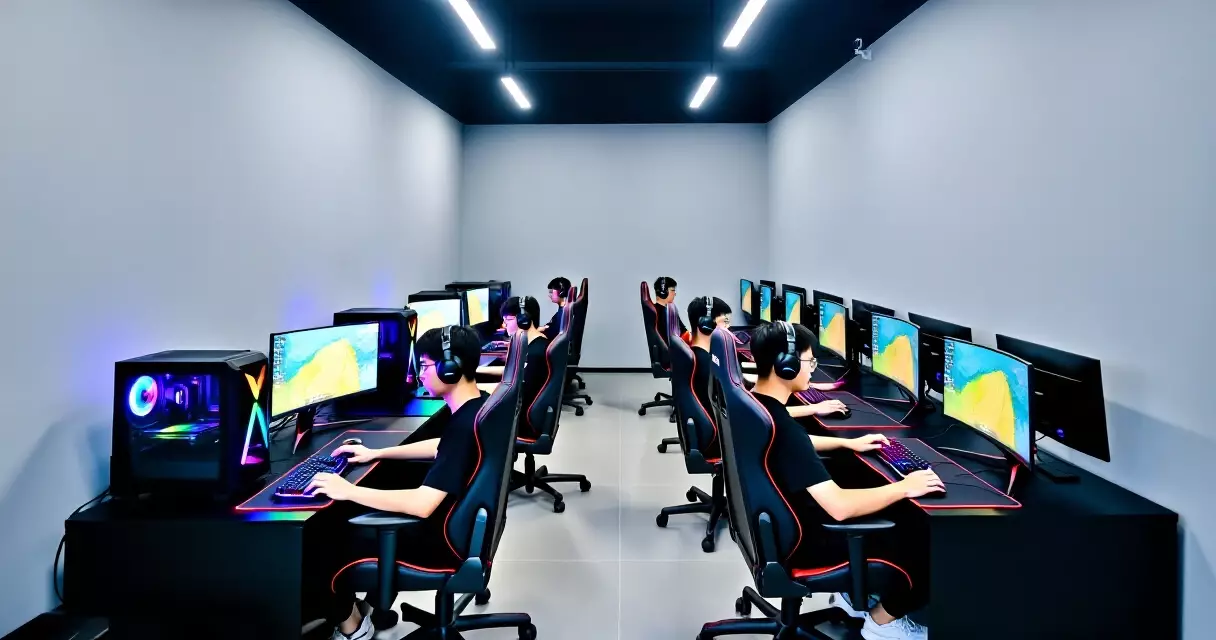
Boot camps – intensive multi-week residential training blocks – compress and intensify this schedule. Teams like NAVI, FaZe Clan, and Team Vitality have historically used European boot camps before major LAN events to consolidate strategy, reduce travel disruption, and build team cohesion in the weeks before high-stakes tournaments.
Talent Identification and Roster Building
Roster construction is one of the highest-stakes decisions an esports organization makes, and coaches are increasingly central to it. The traditional model relied almost entirely on ranked-ladder performance – scouting players with high matchmaking ratings in games like League of Legends, CS2, or VALORANT. That still matters, but scouting has grown more structured.
Most top organizations now use a combination of quantitative and qualitative evaluation. On the quantitative side, coaches and analysts pull data from platforms like HLTV (for CS2), op.gg (for League of Legends), and tracker.gg (for VALORANT and multiple titles) to build statistical profiles of prospective players. Key metrics vary by game but typically include output statistics (damage, kills, objective control), efficiency ratios (performance relative to resources consumed), and consistency metrics (variance across matches).
The qualitative side – which coaches often weight heavily – covers coachability, communication style, mental resilience under pressure, and cultural fit with the existing roster. Organizations that have learned hard lessons from difficult locker rooms now conduct structured interviews, consult references from prior teams, and sometimes involve mental performance staff in the scouting process before a contract offer goes out.
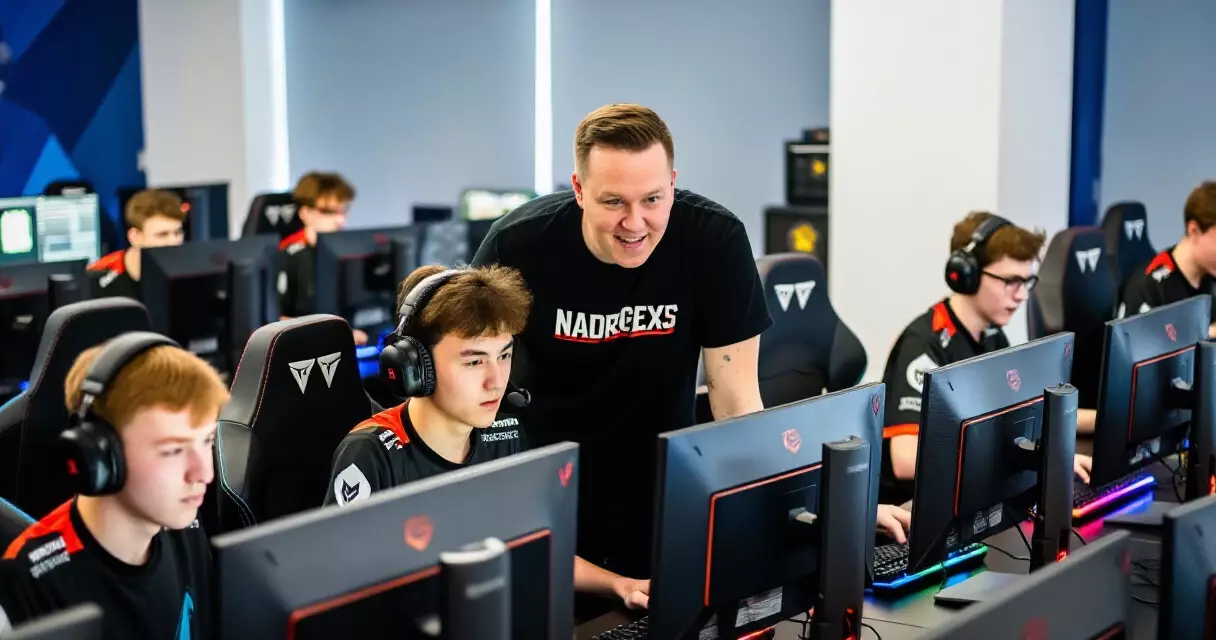
Player development pathways also intersect with coaching: many organizations run academy or talent development rosters specifically to develop younger players under a coaching structure before promoting to the main team. This mirrors minor-league or reserve-squad models from traditional sports. Teams like 100 Thieves, Evil Geniuses, and several Valorant Champions Tour franchise partners have maintained academy structures for this purpose.
The Role of Data and Technology in Modern Coaching
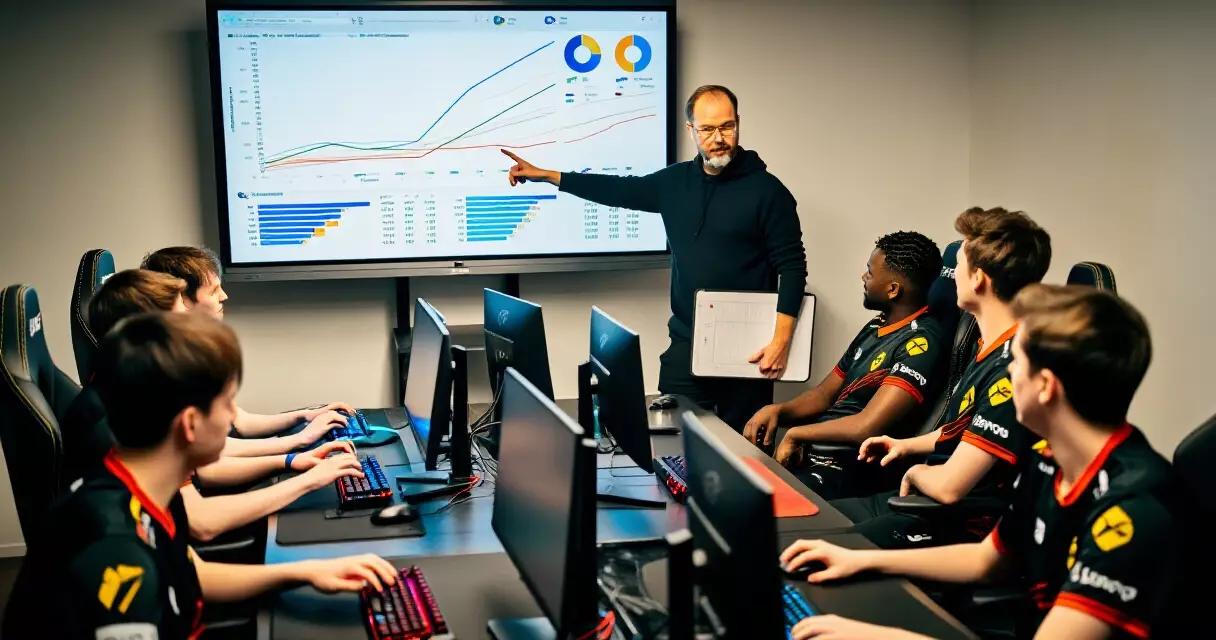
Esports generates more granular performance data per minute of play than almost any other competitive sport. Every in-game action is timestamped, positioned, and attributable to a specific player – a data density that coaches are only beginning to exploit systematically.
Tools like Mobalytics (founded partly to serve individual players improving their League of Legends performance), Strafe.gg, and GRID Esports aggregate match data and surface it in analyst-friendly dashboards. At the team level, dedicated data pipelines built by in-house analysts can track things like reaction timing on in-game events, round-economy decision accuracy in CS2, or ward coverage patterns in Dota 2.
AI-assisted coaching tools represent the field’s current frontier. Machine learning models can flag positional errors in replay footage faster than a human analyst watching in real time. Natural language processing tools can transcribe and tag communications from practice sessions to identify communication breakdowns. Several venture-backed startups are building specifically for this space, though the tools that professional teams actually rely on day-to-day tend to be custom-built internal systems rather than off-the-shelf products.
The Bureau of Labor Statistics projects 6% employment growth for coaches and scouts through 2034 – faster than the average for all occupations – and esports coaching sits within that broader trend as a high-growth subset. The esports education and training market, a closely related segment, was valued at $1.3 billion in 2024 and is forecast to reach $5 billion by 2035 at a 13.1% CAGR, according to Wise Guy Reports.
Esports generates more granular performance data per minute than almost any other competitive sport – but systematic exploitation of that data through dedicated coaching infrastructure is still catching up.
Collegiate Esports Coaching: A Growing Pipeline
Collegiate esports has created an entirely new coaching market segment in the United States. Over 280 colleges operated varsity esports programs through the National Association of Collegiate Esports (NACE) heading into 2026 – up from 175 in 2022 – with an estimated $50 million in annual scholarships distributed across more than 16,000 student-athletes. Each of those programs needs at minimum one coaching staff member.
College esports coaching roles differ from professional team coaching in meaningful ways. Coaches at the university level often handle player eligibility compliance, academic support coordination, recruiting, alumni relations, and community building alongside the performance coaching work that defines pro-team roles. Many college esports coaches come from traditional sports coaching backgrounds and learn the esports-specific knowledge on the job.
The pipeline runs in both directions. Some players who develop in collegiate programs transition to professional rosters – a pathway that mirrors the NCAA-to-professional sports model. In titles like Rocket League and VALORANT, collegiate circuits run by publishers explicitly serve as talent funnels. Coaches who identify and develop those players gain visibility in professional scouting networks as well.
Coaching Salaries and Career Paths
Compensation in esports coaching spans a wide range depending on level, title, and organization size. The average annual salary for esports coaching roles in the United States was $61,121 as of May 2026, according to ZipRecruiter data – roughly $29.39 per hour. That average masks significant variation.
At the lower end, part-time coaches on collegiate or semi-professional teams may earn $25,000–$40,000 annually, often supplemented by individual coaching sessions sold privately. Mid-tier professional coaches on regional league teams typically earn in the $50,000–$90,000 range. Head coaches at top-tier franchised teams in the Valorant Champions Tour, League of Legends Championship Series, or Call of Duty League command significantly higher packages – in some reported cases exceeding $150,000 annually when bonuses are included.
| Coaching Level | Typical Annual Salary Range | Common Titles | Primary Game Titles |
|---|---|---|---|
| Collegiate / amateur | $25,000–$45,000 | Head Coach, Team Manager | Rocket League, Valorant, Overwatch |
| Semi-professional / Challenger | $40,000–$70,000 | Head Coach, Analyst | CS2, LoL, VALORANT |
| Regional professional | $60,000–$100,000 | Head Coach, Strategic Coach | CS2, VALORANT, LoL, Dota 2 |
| Tier-1 franchised / international | $100,000–$200,000+ | Head Coach, Performance Director | LoL LCS, VCT, CDL, CS2 tier-1 |
| Individual coaching (freelance) | Variable ($30–$300/hr) | Private Coach, Mentor | Any competitive title |
Career entry points vary widely. Some coaches transition from professional playing careers, leveraging game knowledge and existing networks. Others enter from analytics roles, building toward head coaching through demonstrated strategic value. A growing number come from traditional sports coaching or sports psychology backgrounds and apply those transferable skills to the esports context. There is currently no standardized certification or licensing requirement for esports coaches in the United States – the profession remains credential-light relative to traditional sports.
For perspective on how compensation fits into the broader player-and-staff economy, see our coverage of salary transparency issues in esports and how esports players diversify their income beyond base salaries.
Mental Performance and the Psychological Side of Coaching
Mental performance coaching has moved from a fringe offering to a mainstream expectation at professional organizations. The demands on esports competitors – sustained focus across multi-hour sessions, public performance under high audience scrutiny, the psychological effects of losses broadcast live – create real mental health pressures that general coaches are often not trained to address.
Organizations like Team SoloMid (TSM), G2 Esports, and Team Liquid have retained licensed sports psychologists or performance consultants as part of their coaching infrastructure. The work covers several areas: pre-match routine development to manage activation levels, in-match focus techniques (especially for tournament play with long gaps between maps), communication protocols to reduce mid-game tilt, and longer-term identity work around the transition out of competitive play.
Academic interest in esports performance psychology is growing. Peer-reviewed research published through channels like PubMed/NCBI has examined reaction times, cognitive fatigue patterns, and the biomechanics of repetitive strain in esports athletes – findings that directly inform how performance coaches structure training loads and recovery periods.
Esports Coaching Compared to Traditional Sports Coaching
The structural parallels between esports and traditional sports coaching are real, but so are the differences. Understanding both helps clarify what the profession actually demands and where training gaps exist.
Traditional sports coaching has established professional development pathways – national governing body licenses, university degree programs in coaching science, and apprenticeship models under senior staff. Esports has none of that structure at a national scale in the United States. Entry is merit-based and network-driven, which lowers barriers in some ways (a skilled analyst can become a head coach without a specific credential) and raises them in others (the absence of structured pathways makes career navigation opaque for outsiders).
The data environment is one area where esports coaching has a genuine advantage over many traditional sports. A football coach reviewing game film manually processes a fraction of the data available to a CS2 or League of Legends coach working with structured replay APIs. The challenge is analytical capacity – the data exists, but turning it into actionable coaching decisions requires both game knowledge and data literacy, a combination that remains rare.
Travel demands differ as well. Traditional sports coaching involves heavy physical travel for away games. Esports increasingly splits between LAN events – where travel is required – and online league play, where coaches and players may operate from separate locations. Remote coaching models that would be impossible in traditional sports are routine in esports, which shapes hiring practices, team culture, and operational infrastructure. The rise of online tournaments and regional leagues is explored further in our roundup of esports tournament formats and structures.
The Esports Coaching Market: Numbers and Growth
Market sizing for esports coaching specifically is still maturing as a data category, but the surrounding market signals are consistent. The U.S. esports market was valued at $536.4 million in 2025 and is projected to reach $1,185.9 million by 2034 at an 8.94% CAGR, according to IMARC Group. North America held the largest regional share – over 30% – of the $2.6 billion global esports market in 2025, per Grand View Research.
The broader U.S. sports coaching industry (the closest public-data proxy) was valued at $15.5 billion in 2026 with 196,167 active coaching businesses – up 2.6% from 2025 – according to IBISWorld. Esports coaching represents a small but rapidly growing subset of that figure.
Individual coaching is the largest product category within the esports coaching market at 38.4% share in 2025, reflecting strong demand from non-professional players seeking ranked improvement – a market segment that platforms like Metafy, ProGuides, and Gamer Sensei have built businesses around. Asia Pacific leads regionally with 39.2% of revenue, but North America is the largest single-country market and the primary geography for high-salary professional coaching roles.
Frequently Asked Questions About Esports Coaching
What does an esports coach actually do day to day?
Day-to-day coaching work revolves around three core activities: reviewing match footage, planning and observing practice sessions, and communicating with players individually and as a group. A head coach typically spends two to four hours reviewing replays from scrimmages and official matches, identifying decision-making patterns to address. During practice, they observe scrim blocks, take notes, and provide feedback during breaks. Individual player meetings cover mental state, personal development targets, and any team-dynamic issues. On tournament weeks, preparation shifts toward opponent scouting, gameplan development, and pre-match briefings. Administrative work – scheduling, roster communications, coordination with management – fills the remaining time. The balance between these activities shifts across the competitive calendar, with more analysis-heavy weeks before major events and more practice-observation focus during regular season.
Do you need to be a former pro player to become an esports coach?
No, and the field increasingly reflects that. While many head coaches at top organizations are former professional players – the game knowledge and credibility with current players helps – a significant and growing share of working coaches entered through other routes. Analysts who built reputations for sharp strategic work have moved into head coaching roles. Sports psychologists from traditional sports backgrounds have been hired directly into performance coaching roles without any competitive playing history. Some coaches developed their reputations through community content – educational YouTube channels, detailed written guides, well-regarded coaching on platforms like Metafy – before being recruited by organizations. The clearest requirements are demonstrable game knowledge at the level needed to coach the target player population, strong communication skills, and the ability to build trust with competitive players whose livelihoods depend on the coaching quality.
How much does esports coaching cost for individual players?
Individual esports coaching rates span a wide range depending on the coach’s credentials, the game title, and the format. Entry-level coaches on platforms like Metafy or ProGuides typically charge $30–$75 per hour, often working with players climbing from mid-ranked to high-ranked. Coaches with a track record of developing professional players or with pro player credentials themselves command $100–$300 per hour or more. Subscription packages – monthly plans that include a set number of review sessions – often run $150–$500 per month depending on session frequency. Structured academies, where players commit to a longer development program with multiple coaches, can cost several thousand dollars for a season-long program. The esports education and training market as a whole was valued at $1.3 billion in 2024 (Wise Guy Reports), indicating that individual player spending on coaching and training is a substantial market at scale.
Which games have the biggest demand for esports coaching?
Demand for coaching correlates with player base size, competitive ladder depth, and the complexity of the game’s strategic layer. League of Legends consistently generates the highest volume of individual coaching demand globally, given its player base of tens of millions and well-established ranked system. CS2 (formerly CS:GO) and VALORANT both have deep coaching ecosystems with robust individual and team coaching markets. Dota 2 has a smaller but highly committed coaching community given the game’s strategic complexity. Games like Rocket League, Apex Legends, and Call of Duty have active individual coaching markets driven by their large player bases even if the professional team coaching scene is smaller than in the four titles above. Coaching demand at the professional level is more concentrated – it primarily lives in titles with active franchise or structured league systems that create stable employment for team coaches.
How do AI tools change the role of the esports coach?
AI-assisted tools are changing the analytical workflow more than they are replacing the coach’s human functions. Machine learning models can process replay data faster than any human analyst – flagging positioning errors, tracking enemy rotation patterns, or identifying statistical anomalies across hundreds of match rounds in the time it would take a coach to manually review a handful of clips. This shifts the coach’s time from raw data collection toward interpretation and communication. The decision about which patterns matter, how to frame feedback for a specific player’s psychology, and how to sequence developmental priorities across a roster still requires human judgment and relationship management. The coaches who adapt best to AI-assisted workflows will likely be those who develop data literacy alongside traditional coaching skills, using AI output as an analytical accelerator rather than a replacement for strategic thinking.
Is esports coaching a realistic full-time career in the United States?
For a growing number of people, yes – though the path is competitive and the employment market remains smaller than in traditional sports. The average annual salary for esports coaching in the United States was $61,121 as of May 2026, per ZipRecruiter data, which represents viable full-time income. Collegiate esports has significantly expanded the number of salaried coaching positions available: over 280 NACE member schools have varsity esports programs, each requiring coaching staff. The individual coaching market on platforms like Metafy allows coaches to build revenue independently of team contracts. The most common full-time coaching roles outside of top-tier professional organizations are at universities, esports training academies, and regional professional organizations. The field is genuinely growing – the esports education and training market is projected to grow at 13.1% annually through 2035 (Wise Guy Reports) – but competition for the highest-paying roles remains intense.
What qualifications matter most when hiring an esports coach?
Professional organizations weigh several factors depending on the role level. For individual coaching and academy work, demonstrated results with students – measurable rank improvement, player testimonials, track record of developing talent – carry more weight than formal credentials. For team coaching roles, analytical capability (ability to process and present replay data clearly), game knowledge at or near the top of the title’s competitive ecosystem, and communication track record with professional players all matter. A background in traditional sports coaching, sports psychology, or performance science is increasingly valued at larger organizations that have formalized their performance support infrastructure. References from coaches or players who have worked with the candidate are often the deciding factor in competitive hiring, since the field lacks standardized certification that would otherwise signal competence. Practical auditions – a trial analysis presentation, for example – are common in professional team hiring processes.
How is esports coaching different in team vs. individual formats?
Team coaching and individual coaching require overlapping but distinct skill sets. Individual coaching is primarily about identifying the specific skill gaps limiting a particular player’s performance and designing a practice plan to address them – it is diagnostic and prescriptive, with clear feedback loops as the player climbs the ranked ladder. Team coaching adds a relational complexity layer: five or more players with different learning styles, communication habits, and ego needs must be developed simultaneously while also being welded into a coherent unit with shared systems and chemistry. A team coach must manage interpersonal dynamics, facilitate honest feedback culture within the roster, and balance individual player development against team system needs – which sometimes conflict. The best team coaches in esports consistently identify communication structure and shared decision-making frameworks as more critical to results than any individual mechanical improvement.
Related Reading
- How to Become an Esports Coach: Qualifications, Career Path, and Getting Hired
- What Does an Esports Coach Actually Do? Roles, Responsibilities, and Daily Routines
- Coaches.gg Review: Connecting Aspiring Pros With Verified Esports Coaches
- Gamer Sensei Review: Coaching Quality, Game Coverage, and Value
- Mobafire Coaching Review: Community Guides vs Paid Instruction
- ProGuides Review: Coaching Platform Breakdown 2025
- Valo Academy Review: Structured Valorant Coaching Programs
Sources
- IBISWorld – Sports Coaching Industry in the US (2026): https://www.ibisworld.com/united-states/industry/sports-coaching/1542/
- IBISWorld – Sports Coaching Number of Businesses in the US: https://www.ibisworld.com/united-states/number-of-businesses/sports-coaching/1542/
- IMARC Group – United States Esports Market Size and Forecast: https://www.imarcgroup.com/united-states-esports-market
- Grand View Research – Esports Market Analysis, 2026–2033: https://www.grandviewresearch.com/industry-analysis/esports-market
- Wise Guy Reports – Esport Education and Training Market Forecast 2035: https://www.wiseguyreports.com/reports/esport-education-and-training-market
- OMNIA Partners – The 2026 Esports Advantage Report (PDF): https://www.omniapartners.com/suppliers-files/K-N/Mediatechnologies/Assets/Esports_WhitePaper_2026.pdf
- U.S. Bureau of Labor Statistics – Coaches and Scouts Occupational Outlook: https://www.bls.gov/ooh/education-training-and-library/coaches-and-scouts.htm
- ZipRecruiter – Esports Coaching Salary United States (May 2026): https://www.ziprecruiter.com/Salaries/Esports-Coaching-Salary
- PubMed/NCBI – Esports athlete performance research: https://pubmed.ncbi.nlm.nih.gov/
- Wikipedia – Esports overview: https://en.wikipedia.org/wiki/Esports
- National Association of Collegiate Esports (NACE): https://www.nacesports.org/
Top Esports Organizations 2026: Teams, Rosters, and Performance Rankings