
Summary
The global esports market surpassed $1.8 billion in total revenues in 2023, according to Newzoo, and the coaching infrastructure behind it has grown just as fast. Colleges across the United States now field varsity esports programs–more than 170 institutions had...
Table of contents
- 1 The Rise of Esports Coaching as a Real Career
- 2 What Qualifications Does an Esports Coach Need?
- 3 The Esports Coaching Career Path: From Beginner to Pro
- 4 Game-Specific Paths: Choosing Your Title
- 5 Building Your Coaching Portfolio and Getting Noticed
- 6 Where to Find Esports Coaching Jobs
- 7 Education, Certifications, and Formal Training Options
- 8 Salary Expectations for Esports Coaches in the U.S.
- 9 Related Reading
- 10 Frequently Asked Questions
- 10.1 Do you need to have been a professional player to become an esports coach?
- 10.2 How long does it take to become a paid esports coach?
- 10.3 What is the average salary for an esports coach in the United States?
- 10.4 Is a degree required to become an esports coach?
- 10.5 Which esports games have the most coaching job opportunities in the U.S.?
- 10.6 Can you coach esports part-time while working another job?
- 10.7 What skills are most important for an esports coach beyond game knowledge?
- 10.8 What is the difference between an esports coach and an esports analyst?
- 11 Sources
The global esports market surpassed $1.8 billion in total revenues in 2023, according to Newzoo, and the coaching infrastructure behind it has grown just as fast. Colleges across the United States now field varsity esports programs–more than 170 institutions had active NACE-affiliated programs by 2024, according to the National Association of Collegiate Esports (NACE)–and every one of them needs a coach. Whether you want to work at the collegiate level, join a franchise organization in the LCS, Valorant Champions Tour, or Overwatch League successor circuits, or build an independent coaching brand, the path into this profession is more structured than it was even three years ago.
The Rise of Esports Coaching as a Real Career
Esports coaching did not exist as a recognized job title before the mid-2010s. Early competitive teams–Counter-Strike squads, StarCraft II pros, early League of Legends rosters–were largely self-coached. Players reviewed their own VODs, debated strategy in Discord servers, and relied on veteran teammates to pass down game knowledge. The shift came when organizations started treating esports franchises like traditional sports properties, complete with front offices, analyst desks, and performance staff.
Riot Games established its franchised leagues–the LCS in North America in 2018 and the Valorant Champions Tour in 2021–and with that came league-minimum salary requirements and staffing expectations. Teams that wanted to compete seriously needed coaching staff who could break down replays, design structured practice schedules, and communicate under pressure. By 2023, it was common for top-flight teams in games like League of Legends, CS2, and Valorant to employ a head coach, one or two assistant coaches, an analyst, and a mental performance coach as separate roles.
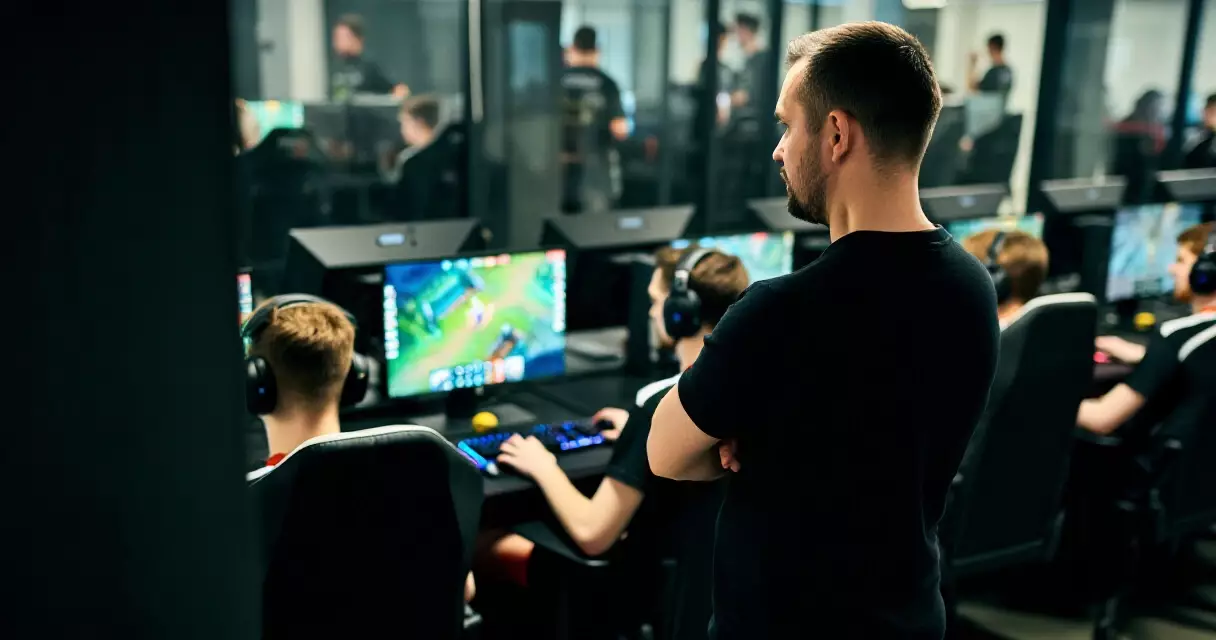
What Qualifications Does an Esports Coach Need?
There is no single licensing body that certifies esports coaches the way the National Strength and Conditioning Association certifies strength coaches or the way teachers hold state licenses. That is both a feature and a challenge. It means anyone can start coaching, but it also means the bar for getting hired–especially at professional or collegiate organizations–is determined by what you can demonstrate, not by a credential alone.
That said, three categories of qualifications consistently appear in esports coaching job postings across the industry:
- Competitive gameplay experience – Most head coaches at the professional level played at a high competitive rank. In League of Legends, that typically means Challenger or Master tier. In CS2, a global-elite or ESEA Rank S background is common. Collegiate coaches may have played at the amateur or open qualifier level without reaching the top 0.1% of the ranked ladder.
- Communication and leadership skills – Coaching is fundamentally about transferring knowledge and managing people. Coaches who cannot clearly articulate why a draft choice fails or how to adjust mid-round have limited career ceilings regardless of their in-game ability.
- Analytical fluency – Reviewing VODs, working with data dashboards like Mobalytics or proprietary team tools, extracting opponent tendencies from replay systems (such as the built-in replay tool in CS2 or Riot’s League of Legends replay client) are all expected skills.
- Relevant education – A degree in sports science, kinesiology, psychology, or game design is increasingly valued at the collegiate level. Some universities, including American Military University and several community colleges, now offer esports-specific bachelor’s or associate degrees that blend business, performance science, and gaming curriculum.
- Certifications – While no mandatory esports-specific certification exists, certifications from bodies like the National Federation of State High School Associations (NFHS), which offers a “Fundamentals of Coaching” course, are accepted by many high school and collegiate athletic departments that bring esports under their athletic umbrella.
The Esports Coaching Career Path: From Beginner to Pro
The typical career trajectory for an esports coach follows a recognizable arc, even if the exact steps vary by game title and organization size. Understanding where each rung of the ladder sits helps you plan a realistic timeline.
| Stage | Role Examples | Typical Entry Requirement | Approximate Compensation |
|---|---|---|---|
| Entry / Volunteer | Amateur team VOD reviewer, high school esports club coach | High ranked account, basic communication skills | Unpaid or stipend ($0–$10k/year) |
| Collegiate | Assistant coach or head coach at NACE school | Playing experience + general coaching cert (NFHS) | $25,000–$55,000/year |
| Amateur / Semi-Pro | Coach for Challengers-level or open-circuit team | Track record, team contacts, analytical portfolio | $15,000–$40,000/year (often part-time) |
| Tier-2 / Minor League | Head or assistant coach in secondary circuits (VCT Challengers, LCS Proving Grounds) | Documented results, network, game-specific expertise | $40,000–$80,000/year |
| Tier-1 / Pro | Head coach at LCS, VCT Americas, CDL franchise | Proven results at lower tier + strong organizational fit | $80,000–$300,000+/year |
Most coaches spend two to four years building a reputation in the amateur or collegiate tier before receiving their first paid professional contract. The fastest paths tend to involve a combination of a high peak rank, an early coaching win at a visible tournament, and a strong network built through community Discord servers, open qualifiers, and streaming platforms like Twitch.
For context on how the broader esports industry structures its talent pipelines–including how organizations scout and develop rosters–see our pillar piece on Esports Coaching: How Pro Teams Train and Build Rosters.
The fastest path into paid esports coaching is rarely through a single credential–it is built through a visible track record of improving teams that others can point to.
Game-Specific Paths: Choosing Your Title
Esports coaching is not a single career. The skills overlap significantly across titles, but each game has its own competitive ecosystem, its own rank ladder, and its own community norms around coaching. Picking a title to specialize in is one of the most practical decisions an aspiring coach can make.
League of Legends remains the highest-paying game ecosystem for coaches in North America, driven by the LCS franchise model. Riot Games’ structured league–covered in depth in our article on Riot Games Media Rights: How LoL and Valorant Deals Work–provides revenue predictability that trickles down to coaching salaries. Valorant has grown rapidly as a second major Riot title with its own VCT coaching market. CS2 (Counter-Strike 2) and its predecessor CS:GO produced some of the most analytically sophisticated coaching cultures in esports, with coaches like Aleksandr “zonic” Roudnev at Team Vitality becoming widely recognized names in the industry.
Other viable titles include Rocket League (with the RLCS circuit), Call of Duty (the CDL franchise), and Overwatch 2. Mobile titles like MLBB and PUBG Mobile have growing coaching markets in Southeast Asia but remain smaller in the U.S. specifically.
Building Your Coaching Portfolio and Getting Noticed
Before any organization considers hiring you, you need proof of coaching competence. In the absence of a formal licensing system, your portfolio serves as your credential. Here is what a strong entry-level coaching portfolio looks like:
- VOD review content – Publishing VOD breakdowns on YouTube, streaming coaching sessions on Twitch, or posting clip analysis on Twitter/X builds a public record of your analytical thinking. Coaches like Tim “Nemesis” Lipovšek and others have used content creation as a direct path to visibility within the community.
- Tournament results – Coaching a team to a notable placement in an open qualifier, a collegiate conference tournament, or an ESEA league is concrete evidence of your ability to prepare and lead a team under competitive conditions.
- Player testimonials – Written or video testimonials from players you have coached, especially if those players went on to rank up or join higher-tier teams, carry significant weight in professional hiring contexts.
- Coaching platforms – Services like ProGuides, Metafy, and GamerSensei allow freelance coaches to build client lists and accumulate ratings. A strong profile on these platforms demonstrates demand for your instruction at scale.
- Community presence – Being active in game-specific Discord communities, coaching subreddits, and Twitter/X conversations positions you as a known voice before you ever submit a formal application.
Where to Find Esports Coaching Jobs
The job market for esports coaches is spread across multiple channels. Unlike traditional sports, where athletic departments post roles on institution websites or through HR systems, esports coaching positions often circulate through community networks before they ever appear on a public job board.
| Job Source | Best For | Examples |
|---|---|---|
| Collegiate and corporate esports roles | University athletic department postings, team org HR | |
| Twitter / X | Professional and semi-pro openings | Team manager announcements, open tryout callouts |
| NACE Job Board | U.S. collegiate coaching roles specifically | NACE member school postings |
| Discord communities | Amateur and semi-pro openings across all games | Game-specific coaching servers, team recruitment channels |
| Upwork / Fiverr | Freelance one-on-one coaching clients | Individual player coaching gigs |
| Direct outreach | Any level; most effective at Tier-2 and below | Cold DMs to team managers on social media |
The National Association of Collegiate Esports maintains a job board specifically for member institutions and is one of the most reliable sources for U.S.-based paid collegiate coaching positions. LinkedIn has also become a meaningful channel as more franchise organizations treat their HR processes like traditional sports businesses.
To understand the broader context of how teams are structured and what organizations expect from their coaching staff, read our breakdown of What Does an Esports Coach Actually Do? Roles, Responsibilities, and Daily Routines.
Most professional coaching jobs are filled before they are ever publicly posted–relationships built during open qualifier runs and amateur team stints are the most reliable pipeline into paid roles.
Education, Certifications, and Formal Training Options
The formal education landscape for esports coaching has expanded significantly since 2020. Institutions ranging from community colleges to four-year universities now offer programs that blend esports administration, performance science, and coaching theory. Here are the most relevant options for aspiring coaches in the United States:
- Esports-specific bachelor’s degrees – American Military University’s B.S. in Esports and programs at schools like Harrisburg University of Science and Technology cover coaching theory, sports psychology, and game design as part of structured four-year curricula. These programs are increasingly recognized by NACE member schools during hiring.
- Sports science and kinesiology degrees – A traditional sports science degree from any accredited institution is directly applicable to esports coaching, particularly if you pair it with personal competitive experience. Research from institutions like PubMed/NCBI documents the overlap between cognitive performance research and esports athlete preparation.
- Sports psychology programs – Many collegiate esports programs have added dedicated mental performance coaches to their staffs. A background in psychology or sport psychology from an accredited graduate program positions you for this specialized but growing role.
- NFHS Fundamentals of Coaching – The National Federation of State High School Associations offers a coaching fundamentals course accepted by many school districts and colleges that incorporate esports into their athletics programs.
- Short-format certificates – Platforms like Coursera partner with universities to offer sports management and analytics certificates. While not esports-specific, they fill resume gaps for candidates without four-year degrees in a related field.
Notably, formal education alone will not land you a professional coaching job. The industry consistently rewards demonstrated results over credentials on paper. A coach who helped a collegiate team win a conference championship is more hireable than a candidate with a degree but no competitive track record.
Salary Expectations for Esports Coaches in the U.S.
Compensation in esports coaching varies more than almost any other job in the industry. At the volunteer and high school level, coaches often receive nothing or a small stipend. At the top of franchise leagues, head coaches at LCS and CDL organizations reportedly earn between $150,000 and $300,000 annually based on reporting from Reuters and ESPN Esports. The middle tier–where most coaches spend the bulk of their careers–is harder to pin down due to limited salary transparency.
For a broader look at how compensation across the esports industry compares to traditional sports, see our data piece on Esports vs Traditional Sports Salaries: Pay Compared 2026. The coaching salary gap between esports and traditional sports is closing at the elite level but remains wide in the developmental tiers.
One factor suppressing coaching salaries at the mid-tier is the prevalence of short-term contracts–often six months to one year–which reduce the use coaches have in negotiation. Longer-term contracts are more common at franchise organizations where revenue visibility is higher, as explained in our coverage of Esports Player Salaries: How Much Do Pro Gamers Actually Earn in 2026.
Related Reading
- Esports Coaching: How Pro Teams Train and Build Rosters
- What Does an Esports Coach Actually Do? Roles, Responsibilities, and Daily Routines
- Coaches.gg Review: Connecting Aspiring Pros With Verified Esports Coaches
- Gamer Sensei Review: Coaching Quality, Game Coverage, and Value
- Mobafire Coaching Review: Community Guides vs Paid Instruction
- ProGuides Review: Coaching Platform Breakdown 2025
- Valo Academy Review: Structured Valorant Coaching Programs
Frequently Asked Questions
Do you need to have been a professional player to become an esports coach?
No. Having been a professional player is an advantage, but it is not a requirement. Many successful coaches reached high competitive ranks–Challenger in League of Legends or Global Elite in CS:GO/CS2–without ever signing a professional contract. What matters more than a pro career is your ability to analyze gameplay, communicate strategy clearly, and earn the trust of the players you work with. At the collegiate level in particular, coaches are often hired based on their communication skills and willingness to learn the administrative side of running a program alongside their game knowledge. Former players who transitioned directly into coaching without a pro contract include many prominent names in the LCS and VCT circuits today.
How long does it take to become a paid esports coach?
The timeline varies widely, but most coaches who reach a paid position do so within two to four years of starting to coach in a formal capacity. The fastest paths involve coaching an amateur or collegiate team that achieves a notable tournament result within the first year, which creates a public track record quickly. Coaches who build content portfolios on YouTube or Twitch in parallel with team coaching often compress the timeline further because their analytical work is visible to a much larger audience than tournament brackets alone. Starting with freelance one-on-one coaching through platforms like Metafy or GamerSensei while simultaneously coaching a team is a common and effective dual-track approach.
What is the average salary for an esports coach in the United States?
Salary data for esports coaches is limited because most contracts are not publicly disclosed and the industry lacks the collective bargaining agreements that make coaching salaries transparent in traditional sports. Based on reporting from Reuters, ESPN Esports, and industry salary surveys, collegiate coaches typically earn between $25,000 and $55,000 annually. Semi-professional and Tier-2 coaches earn roughly $40,000 to $80,000. Head coaches at Tier-1 franchise league organizations–LCS, VCT Americas, CDL–have been reported to earn between $80,000 and $300,000 depending on the organization’s revenue and the coach’s negotiating position. Assistant coaches at the same level earn proportionally less. These figures do not account for performance bonuses, housing stipends, or equity arrangements that some franchise organizations offer.
Is a degree required to become an esports coach?
At most professional and semi-professional organizations, a degree is not explicitly required. Hiring decisions at these levels are almost entirely results-driven. However, at the collegiate level, many universities require coaching staff to hold at least a bachelor’s degree as a condition of employment through the institution, regardless of the sport. High schools that have incorporated esports into their athletic programs frequently require coaches to meet the same credentialing standards as other varsity sport coaches, which typically includes a bachelor’s degree and a general coaching certification like the one offered by the NFHS. As the collegiate esports space matures, degree requirements are likely to become more common, so obtaining relevant education provides a hedge against tightening standards.
Which esports games have the most coaching job opportunities in the U.S.?
League of Legends has historically offered the most structured and best-compensated coaching opportunities in the United States, driven by the LCS franchise system and its network of amateur circuits. Valorant has grown rapidly since its 2020 launch, with the Valorant Champions Tour creating a parallel coaching ecosystem. Call of Duty through the CDL is another franchise-based pipeline with consistent demand for coaching staff. At the collegiate level, League of Legends, Valorant, Rocket League, and Overwatch 2 tend to generate the most coaching positions due to their popularity in the high school feeder pipeline and the NACE-affiliated program structure. CS2 offers strong opportunities in the open-circuit structure but has fewer franchise-protected positions in the U.S. specifically.
Can you coach esports part-time while working another job?
Yes, and this is actually the most common arrangement for coaches at the entry and semi-professional levels. Many amateur and Challengers-tier coaches hold full-time jobs outside of esports and dedicate evenings and weekends to team practice, VOD review sessions, and tournament prep. High school esports coaches frequently hold this role as a stipend-paid add-on to a teaching or administrative position within the same school. The part-time path is also common on freelance platforms like Metafy and GamerSensei, where coaches set their own availability and build client bases at their own pace. The challenge is that part-time coaching limits the depth of relationship you can build with a team, which can slow your progression toward full-time roles.
What skills are most important for an esports coach beyond game knowledge?
The skills that separate good esports coaches from great ones go well beyond knowing the game. Communication–specifically the ability to deliver critical feedback in a way that motivates rather than demoralizes–is cited by players and team managers as the single most important quality in coaching staff. Data analysis is increasingly central, as teams at every level use replay tools, performance dashboards, and statistical models to inform strategy. Emotional intelligence and the ability to manage team dynamics, handle underperformance conversations, and maintain player confidence during loss streaks are also frequently identified as differentiators. Knowledge of sports psychology principles–even without a formal degree–helps coaches structure practice environments that build resilience. Finally, organizational skills including scheduling, opponent scouting, and tournament prep logistics are practical necessities that new coaches often underestimate.
What is the difference between an esports coach and an esports analyst?
In most professional esports organizations, coaches and analysts are distinct roles with different primary responsibilities. An analyst focuses on data collection, opponent research, and statistical modeling–producing reports, scouting notes, and draft databases that the coaching staff uses to make decisions. A coach is responsible for player development, in-game calling strategy, practice structure, and communication with the team during and between matches. At smaller organizations and the collegiate level, these roles often overlap or are performed by a single person. Many professional head coaches started as analysts, and the analyst-to-coach pipeline is one of the most reliable paths into coaching roles at Tier-1 organizations. Understanding how roles like these interact with overall team structure is covered in our article on What Does an Esports Coach Actually Do?
Sources
- National Association of Collegiate Esports (NACE) – nacesports.org – program count and job board data
- National Federation of State High School Associations (NFHS) – nfhs.org – coaching certification requirements
- PubMed / NCBI (National Center for Biotechnology Information) – pubmed.ncbi.nlm.nih.gov – cognitive performance and esports athlete research
- Reuters – reuters.com – esports industry revenue and salary reporting
- Newzoo Global Esports Report 2023 – global revenue figures
Top Esports Organizations 2026: Teams, Rosters, and Performance Rankings