
Summary
✓Reviewed by Emma ThompsonAn esports arena vs bootcamp facility for pro team training decision now has a real answer in Singapore, since the city-state opened its first purpose-built national training centre in February 2026 alongside an existing arena-style public venue...
Table of contents
- 1 Esports Arena vs Bootcamp Facility for Pro Team Training: The Direct Answer
- 2 Background: How Singapore Got From LAN Cafes to a National Training Centre
- 3 Esports Arena vs Bootcamp Facility for Pro Team Training: Core Differences
- 4 Hardware and Network Requirements at Each Facility Type
- 5 Why the Esports Arena vs Bootcamp Facility for Pro Team Training Choice Affects Player Development
- 5.1 Team Room Design Inside Arena Venues
- 5.2 Open LAN Areas and Fan Access
- 6 Broadcast and Production Considerations for Each Venue Type
- 7 Cost and Access Differences Between Arena and Bootcamp Models
- 8 What Singapore’s Facility Buildout Signals for the Region
- 9 Frequently Asked Questions
- 9.1 What is the main difference between an esports arena and a bootcamp facility?
- 9.2 Where is Singapore’s national esports training centre located?
- 9.3 How big is the EXP esports facility at Singapore Sports Hub?
- 9.4 What internet speed do esports venues need for broadcast in 2026?
- 9.5 Can a bootcamp facility also host live matches?
- 9.6 What hardware baseline should a competitive facility meet in 2026?
- 10 Key Takeaways
- 11 Sources
An esports arena vs bootcamp facility for pro team training decision now has a real answer in Singapore, since the city-state opened its first purpose-built national training centre in February 2026 alongside an existing arena-style public venue at the Singapore Sports Hub. For organisations and fans trying to understand what separates a scrim house from a tournament stage, the gap between these two facility types has never been more visible.
Esports Arena vs Bootcamp Facility for Pro Team Training: The Direct Answer
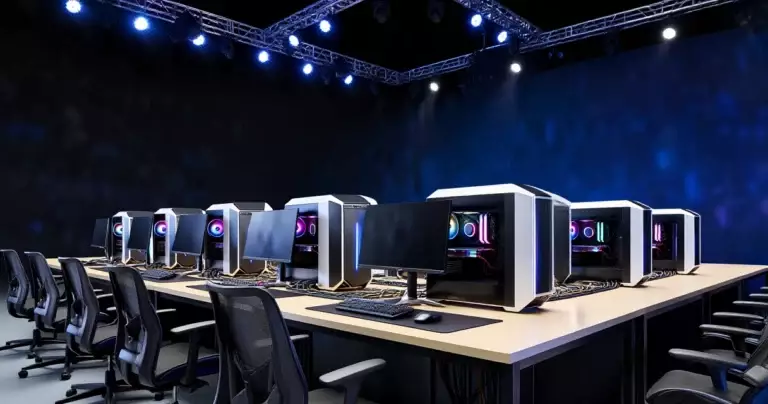
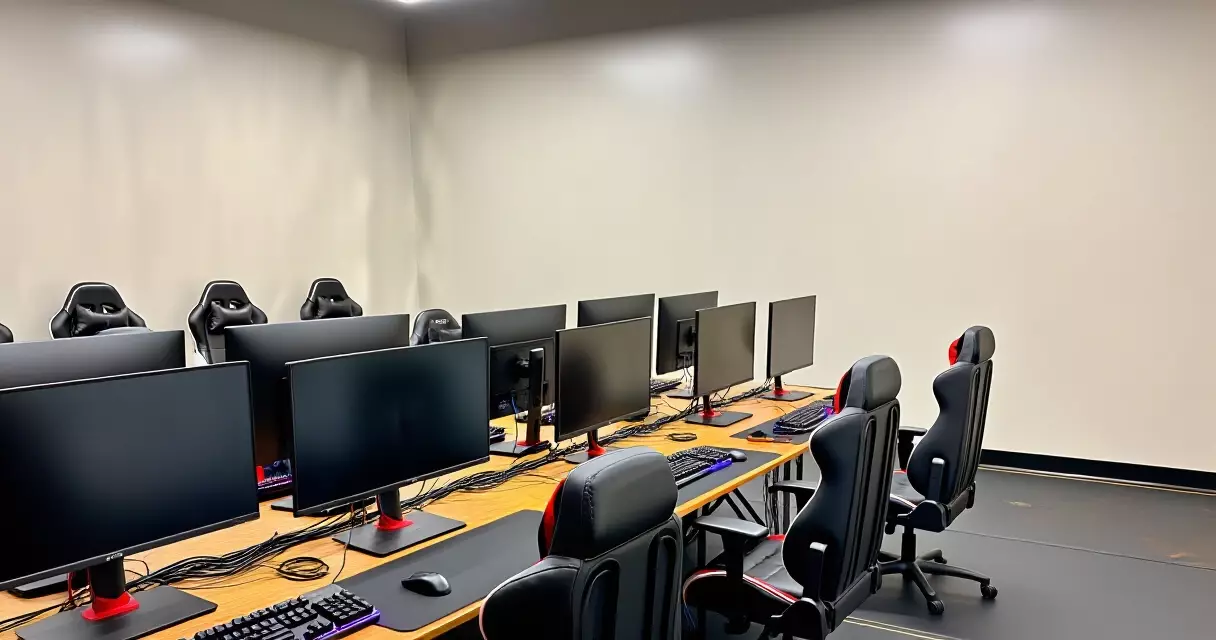
A bootcamp facility is built around repetition: private scrim rooms, identical hardware across every station, and minimal outside noise so a roster can drill the same scenarios for hours. An arena is built around presentation: a stage, seating, lighting, and a broadcast pipeline so a match becomes a spectator event. Singapore now has clear examples of both. The esports scene in Singapore has grown enough that the country now supports a formal training centre and a separate arena venue rather than relying on one hybrid space.
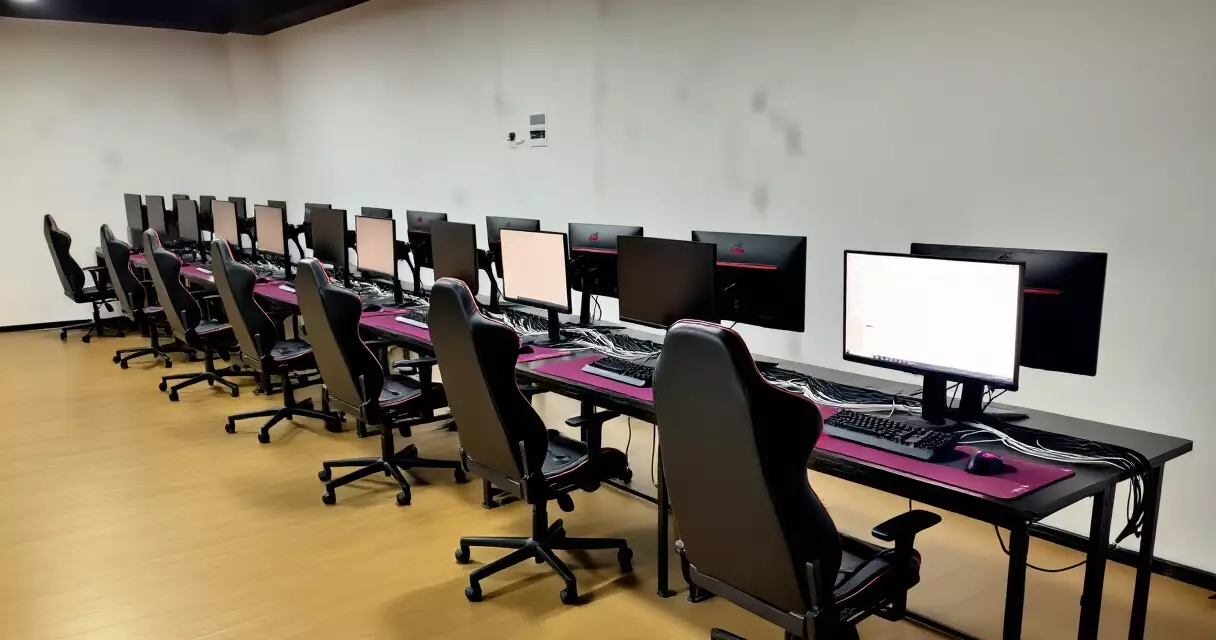
According to reporting on the facility’s February 2026 opening, the SGEA National Training Centre at GR.iD mall in Selegie occupies about 600 square metres, houses more than 100 gaming stations, and includes a competition arena that seats up to 150 spectators, meaning it actually blends training and light competition functions rather than sitting purely on the bootcamp side of the line.
Background: How Singapore Got From LAN Cafes to a National Training Centre
Singapore’s competitive gaming infrastructure spent years running on repurposed LAN cafes and hotel ballrooms rented for individual tournaments. That changed with the opening of the Singapore Esports Association National Training Centre on 27 February 2026, which is described in coverage of the launch as part of a broader push to prepare talent for major regional competition, including the 2026 Asian Games in Nagoya, where esports carries 11 medal events. The centre’s opening marks the first time the country has had a dedicated, permanent bootcamp-style facility rather than borrowed space.
A bootcamp is judged by how quickly a roster can repeat the same drill without friction; an arena is judged by how well a single match reads to a crowd that only sees it once.
Esports Arena vs Bootcamp Facility for Pro Team Training: Core Differences
The functional split between the two facility types comes down to audience, hardware consistency, and network design. A bootcamp prioritises identical, low-variance conditions across every station so scrim results reflect skill rather than gear differences. An arena prioritises production quality, since the same match is being consumed by a live crowd and a remote stream audience simultaneously. Teams preparing for a game patch update typically do that repetitive work in the bootcamp environment before ever setting foot on an arena stage.
| Factor | Bootcamp Facility | Arena / Public Venue |
|---|---|---|
| Primary purpose | Daily scrims, roster drilling | Live matches, spectator events |
| Example in Singapore | SGEA National Training Centre, GR.iD | EXP, Singapore Sports Hub |
| Reported size | ~600 sqm | 12,000 sq ft |
| Audience access | Closed, team-only | Public, ticketed or open events |
| Broadcast role | Internal review, VOD only | Live-streaming-ready event space |
EXP at the Singapore Sports Hub illustrates the arena side of the split closely. It is described as a 12,000 sq ft facility that includes dedicated pro-esports team rooms for strategy and practice, an integrated live-streaming-ready event space, and an open-concept LAN gaming area, meaning it actually straddles both categories by giving teams private practice rooms inside a public-facing venue.
Hardware and Network Requirements at Each Facility Type
Regardless of whether a facility is arena-style or bootcamp-style, the underlying hardware and connectivity baseline for 2026 competitive play has shifted. Industry guidance points to wired Ethernet over wireless as the standard for serious play, 144 Hz or higher monitors as the display floor, and at least 16 GB of RAM with SSD storage and a modern discrete GPU as the minimum system spec. Readers comparing an esports tournament PC against a regular gaming PC will recognise this as the same baseline that separates casual setups from competition-grade ones.
Arena-level venues carry a heavier connectivity burden because they must support live production on top of gameplay. Venue-level broadcast planning in 2026 treats 200 Mbps dedicated internet as the floor for larger esports broadcasts, replacing the older 100 Mbps dedicated standard that current sources describe as outdated. Leading esports production is also described as using 4K capture at 59.94 fps as the modern baseline, a jump that bootcamp facilities generally do not need since their output is internal review rather than public broadcast.
Why the Esports Arena vs Bootcamp Facility for Pro Team Training Choice Affects Player Development
Facility choice affects how a roster develops because bootcamp environments minimise external variables while arena environments introduce them deliberately, in the form of crowd noise, stage nerves, and camera pressure. A team that only ever practises at a facility like the GR.iD centre may drill mechanics efficiently but never rehearse performing under a spectated, broadcast setting the way EXP’s event space allows. This is one reason organisations that can access both facility types often alternate between them rather than picking one exclusively.
The competition arena inside the SGEA National Training Centre, which seats up to 150 spectators, gives Singapore-based teams a middle step between closed scrims and a full public arena event, since coverage of the centre notes it is intended to support both national-team training and professional events in the same location.
Team Room Design Inside Arena Venues
EXP’s dedicated pro-esports team rooms are built specifically for strategy sessions and practice ahead of events staged in the venue’s larger space, according to descriptions of the facility. That design lets a roster warm up and review strategy privately before moving directly onto a public stage, shortening the gap between preparation and performance compared with travelling between a separate training facility and an event venue.
Open LAN Areas and Fan Access
The open-concept LAN gaming area at EXP also distinguishes arena-style venues from bootcamp facilities, since it gives fans and amateur players access to the same physical space professional teams use, something a closed training centre like GR.iD does not offer by design. Coverage of esports team broadcast setup trends in Singapore for 2026 reflects this same push toward venues that serve both competitive and fan-facing functions at once.
Singapore now runs a bootcamp model and an arena model side by side rather than asking one venue to do both jobs.
Broadcast and Production Considerations for Each Venue Type
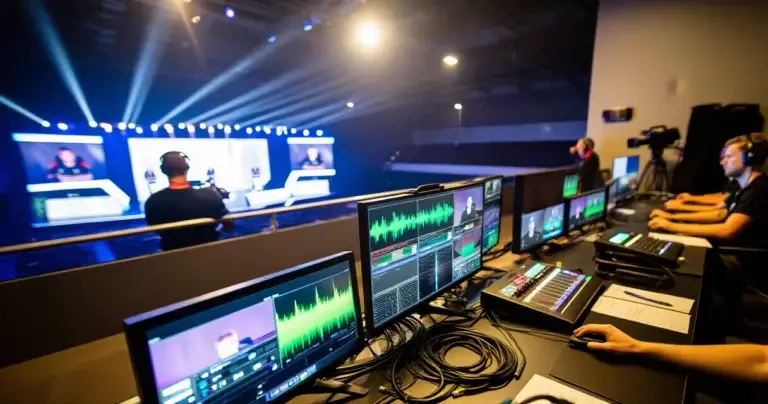
Broadcast capability is the clearest dividing line between the two facility types. An arena venue is designed around a live-streaming-ready event space, meaning camera positions, lighting, and audio are planned into the architecture. A bootcamp facility typically records for internal review only, without the production infrastructure an arena requires. Teams researching the broadcast setup trends Singapore teams follow will find that most of the heavier equipment, capture cards, multi-camera rigs, dedicated encoders, is deployed at arena-style venues rather than training centres.
This production gap also affects how quickly a facility can support a full tournament versus a private scrim block. An arena built to the 2026 baseline of 4K capture at 59.94 fps and 200 Mbps dedicated connectivity can host a broadcast match with minimal additional setup, while a bootcamp facility would need temporary production equipment brought in to reach the same standard.
Cost and Access Differences Between Arena and Bootcamp Models
Access models differ sharply between the two facility types. A national training centre such as the one at GR.iD is generally oriented toward national-team and professional-team use rather than open public booking, while an arena-style venue like EXP is built to host both private team sessions and public, ticketed, or open community events within the same footprint. Organisations weighing branding and sponsorship value in esports often favour arena venues specifically because the public-facing model generates the visibility that pure bootcamp facilities cannot offer.
What Singapore’s Facility Buildout Signals for the Region
The near-simultaneous existence of a dedicated national training centre and an established arena venue signals that Singapore is treating esports infrastructure the way traditional sports treat training grounds and stadiums, as separate but complementary assets. Reporting on the GR.iD centre’s opening frames it as part of preparations for major multi-sport competition in 2026, suggesting the bootcamp side of Singapore’s infrastructure is being built with international competition, not just domestic play, in mind.
How we know: the facility details in this article, including square footage, station counts, seating capacity, and opening dates, are drawn from coverage of the SGEA National Training Centre launch and descriptions of the EXP venue at Singapore Sports Hub. Hardware and broadcast baselines are drawn from 2026 industry guidance on competitive play and esports production standards. This article does not cover pricing for private facility rental, staffing structures at either venue, or facilities outside Singapore.
Frequently Asked Questions
What is the main difference between an esports arena and a bootcamp facility?
A bootcamp facility is built for private, repetitive team practice with consistent hardware across every station, while an arena is built for live, spectated matches with broadcast infrastructure. Singapore’s GR.iD training centre represents the bootcamp model, while EXP at Singapore Sports Hub represents the arena model.
Where is Singapore’s national esports training centre located?
The Singapore Esports Association National Training Centre opened on 27 February 2026 at GR.iD mall in Selegie, occupying about 600 square metres with more than 100 gaming stations.
How big is the EXP esports facility at Singapore Sports Hub?
EXP is described as a 12,000 sq ft facility at Kallang Wave Mall that includes dedicated pro-esports team rooms, a live-streaming-ready event space, and an open-concept LAN gaming area.
What internet speed do esports venues need for broadcast in 2026?
Current venue-level esports broadcast planning treats 200 Mbps dedicated internet as the minimum floor, replacing the older 100 Mbps dedicated standard that is now considered outdated for larger productions.
Can a bootcamp facility also host live matches?
Some can. The SGEA National Training Centre includes a competition arena that seats up to 150 spectators alongside its training stations, meaning it supports light competition use even though its primary role is team training.
What hardware baseline should a competitive facility meet in 2026?
Current guidance calls for wired Ethernet connections, 144 Hz or higher monitors, at least 16 GB of RAM, SSD storage, and a modern discrete GPU as the minimum standard for tournament-level play.
Key Takeaways
- Singapore’s SGEA National Training Centre at GR.iD, opened 27 February 2026, is the country’s clearest bootcamp-style facility, at roughly 600 sqm with 100+ stations and a 150-seat arena.
- EXP at Singapore Sports Hub is the clearest arena-style public venue, at 12,000 sq ft with dedicated pro-team rooms and a live-streaming-ready event space.
- Bootcamp facilities prioritise consistent hardware and low-variance conditions; arenas prioritise broadcast production and spectator experience.
- 2026 hardware baselines call for 144 Hz+ monitors, wired LAN, 16 GB+ RAM, and modern discrete GPUs across both facility types.
- Venue-level broadcasts now require roughly 200 Mbps dedicated connectivity and 4K capture at 59.94 fps as the production floor.
Sources
- EXP at Singapore Sports Hub — retrieved September 23, 2026
- Singapore Esports Association — retrieved September 23, 2026