
Summary
✓Reviewed by Emma Thompson When researchers surveyed 356 esports fans at the 2021 FPF eFootball Open Challenge, they uncovered a finding that has since reshaped how the industry thinks about commercial partnerships: fan identity does not stop at the team...
Table of contents
- 1 What Is Esports Fan Identity and Why Does It Affect Sponsors?
- 2 The Academic Foundation: Role-Based Identity Theory in Esports
- 2.1 Event Identification vs Brand Identification: Two Distinct Constructs
- 2.2 Player Attachment as a Third Path
- 3 Brand Authenticity: The Variable That Determines Whether Transfer Happens
- 4 Singapore as a Case Study: How Local Sponsorship Structures Reflect Fan Identity Dynamics
- 5 Behavioural Outcomes: What Fan Identity Actually Produces for Sponsors
- 6 Sponsorship Congruence Table: Category Performance in Esports
- 7 Trends Shaping the Sponsor–Sponsee Relationship in 2026
- 8 Comparison: Traditional Sports Sponsorship vs Esports Fan Identity Transfer
- 9 Frequently Asked Questions
- 9.1 What does esports fan identity toward the sponsor–sponsee relationship mean?
- 9.2 Why does congruence matter so much in esports sponsorship?
- 9.3 Does fan attachment to individual players affect sponsor perception?
- 9.4 What are the behavioural outcomes sponsors can expect from fan identity transfer?
- 9.5 How does brand authenticity influence the sponsor–sponsee dynamic?
- 9.6 Are Singapore esports fans different from global esports fans in how they relate to sponsors?
- 10 Key Takeaways
- 11 Sources
When researchers surveyed 356 esports fans at the 2021 FPF eFootball Open Challenge, they uncovered a finding that has since reshaped how the industry thinks about commercial partnerships: fan identity does not stop at the team badge. According to the peer-reviewed study published on Semantic Scholar, strong esports fan identity toward the sponsor–sponsee relationship flows in both directions — fans who feel deeply connected to an esports event also develop stronger identification with the event’s sponsor brand, and that sponsor-brand identification feeds back to reinforce event attachment in return. For competitive gaming news audiences in Singapore and across Southeast Asia, this reciprocity has direct implications for how teams, tournament organisers, and brands structure their partnerships in 2026.
What Is Esports Fan Identity and Why Does It Affect Sponsors?
Fan identity in esports is a role-based construct: fans define part of who they are through their attachment to a game, team, player, or tournament. This is distinct from casual interest — an esports fan with high role-based identity schedules time around match days, participates in community rituals, and uses team merchandise as a form of self-expression. The foundational study on esports fan identity toward the sponsor–sponsee relationship, which used structural equation modelling on a sample drawn from the FPF eFootball Open Challenge, operationalised this as a measurable psychological variable and then traced its downstream effects on commercial outcomes.
The mechanism matters because it explains why esports sponsorships can outperform traditional broadcast advertising. Fans do not encounter a sponsor logo neutrally — they encounter it through the lens of their identity as an event participant or community member. If the sponsor feels congruent with that identity, the fan extends their positive affect outward. If the sponsor feels out of place, identity rejection can actually produce negative brand associations.
The Academic Foundation: Role-Based Identity Theory in Esports
The academic grounding for esports fan identity toward the sponsor–sponsee relationship draws on role identity theory, which holds that individuals occupy multiple social roles and that these roles carry emotional and behavioural weight. Applied to esports, a fan who strongly identifies with the “esports fan” role is more likely to engage in behaviours consistent with that role — including positive responses to brands associated with their scene. The 2021 FPF eFootball Open Challenge study, cited across the University of Lisbon repository, operationalised role-based identity within a structural equation model that included event attachment, brand identification, sponsor attitude, and word-of-mouth intention as linked constructs.
A 2025 study published in Frontiers in Psychology extended this framework by introducing congruence as a mediating variable: it found that eSport consumption influences sponsor brand equity primarily through the perceived fit between the sponsor and the esports context. This congruence dimension explains a critical practical point — not all sponsors benefit equally from fan identity transfer. Brands that are seen as natural participants in the gaming ecosystem extract more value from fan identification than brands perceived as outsiders seeking reach.
Event Identification vs Brand Identification: Two Distinct Constructs
A key nuance in the literature is that event identification and sponsor-brand identification are separate, measurable constructs that influence each other rather than being the same thing. A fan may have extremely high event identification — they follow every match in the MPL Singapore season — but low brand identification with a given sponsor if that sponsor’s values or product category feel irrelevant to gaming. The reciprocal path found in the eFootball study (β = 0.30, p < 0.001 for the sponsor-to-event direction) suggests that strong sponsor branding can actually reinforce fans’ attachment to the event itself, making sponsorship a two-way investment rather than a one-way cost.
Player Attachment as a Third Path
Research published via Semantic Scholar on spectator emotional attachment to esports players found that individual player attachment shapes perceptions of sponsoring brands independently of event identification. This creates a third pathway: fans who follow a specific pro player — such as a donk or a recognised regional star — may extend positive affect to that player’s personal sponsors even when their broader team or event identification is moderate. Tournament organisers and agents increasingly structure partnership agreements with this individual-level pathway in mind.
Brand Authenticity: The Variable That Determines Whether Transfer Happens
Academic work published in SciELO’s Brazilian Administration Review on eSports event sponsorship found that sponsor brand authenticity is a significant driver of fans’ perceived brand equity and purchase intention. Brand authenticity in this context means the degree to which fans perceive a sponsor as genuinely belonging to the esports world — not as an opportunistic outsider buying exposure. This finding aligns with the congruence-mediation result from Frontiers in Psychology and suggests a consistent principle: esports fan identity toward the sponsor–sponsee relationship activates more powerfully when the sponsor is seen as authentic.
Authenticity is built through several channels: long-term partnership consistency, product relevance (peripherals, energy drinks, telecom), active community participation, and visible integration into the competitive experience rather than passive logo placement. ASUS ROG’s season-spanning partnership with PGL in 2026 — covering monitor, PC, and peripheral designation across the CS2 PGL Singapore Major — is a textbook example of authenticity-building through functional relevance: the brand is literally inside the game environment that fans identify with.
Singapore as a Case Study: How Local Sponsorship Structures Reflect Fan Identity Dynamics
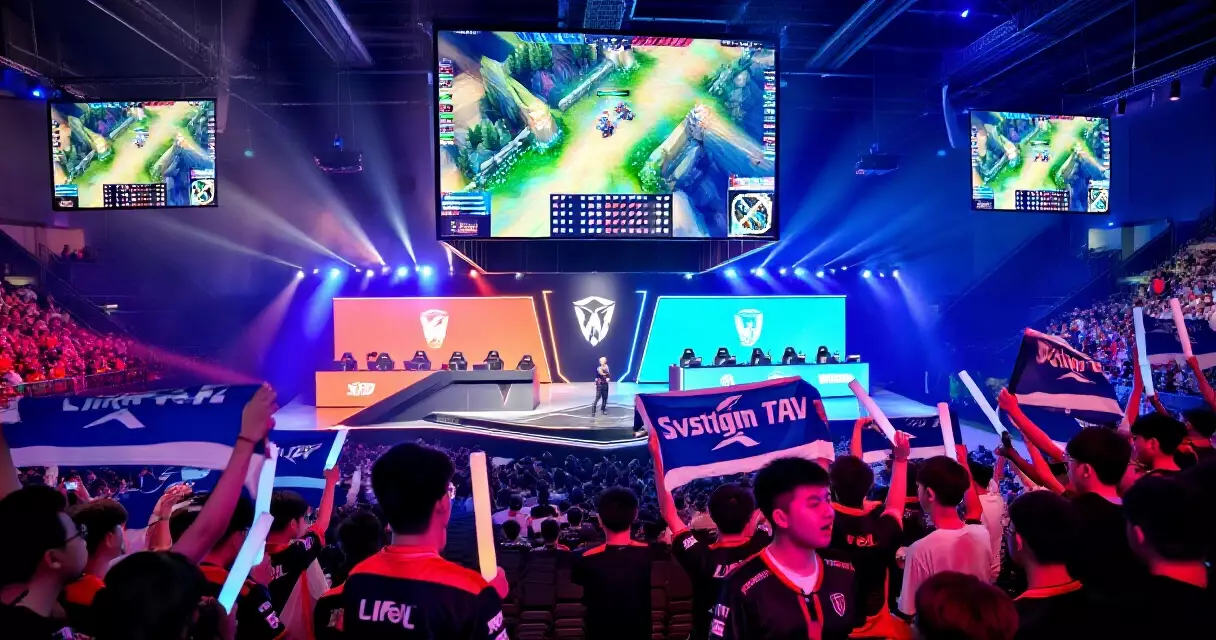
Singapore offers a concentrated and well-documented example of how esports fan identity toward the sponsor–sponsee relationship plays out at a regional level. The country’s esports ecosystem is built around a tiered sponsorship model that mirrors the identity hierarchy of its fan base. MPL Singapore Season 10, for instance, structured its partnerships across presenting partners (iTEA), official equipment partners (DXRacer), institutional partners, venue partners, and community partners — reflecting the understanding that different fan identity segments respond to different sponsor types.
iTEA’s entry as MPL Singapore Season 10’s Presenting Partner is notable: a homegrown food-and-beverage chain entering esports for the first time signals a strategic bet on fan identity transfer from event attachment to brand attitude. According to Esports Radar’s reporting on the partnership structure, this reflects a broader trend in Singapore toward community-facing sponsorship rather than pure broadcast visibility. For fans who see MPL Singapore as part of their local cultural identity, an iTEA logo on the main stage activates a different kind of pride than a global hardware brand would — it signals that the local scene is commercially viable and community-rooted.
Historically, Singapore’s esports sponsorship landscape was seeded by telecom investment. Singtel’s sponsorship of Singapore’s first SEA Games esports team — reported by Connected to India News — established a precedent for institutional validation of esports fandom: when a major national telecom backs the national team, fan identity gains official legitimacy, which in turn strengthens the social identity value of esports participation for Singaporean fans.
Behavioural Outcomes: What Fan Identity Actually Produces for Sponsors
The academic literature consistently identifies three measurable behavioural outcomes that flow from esports fan identity toward the sponsor–sponsee relationship: positive sponsor attitude, word-of-mouth intention, and brand purchase intention. The eFootball Open Challenge study found all three were significantly linked to the identity-to-identification pathway. Research on the MPL Indonesia fan base, documented in peer-reviewed form, replicated this chain for Mobile Legends: Bang Bang Professional League fans, finding that esports fan identity had a positive effect on emotional attachment to the event, and attachment in turn generated positive word-of-mouth about the event’s sponsors.
The Deloitte Let’s Play! 2024 report, hosted via InvestGame, provides the audience-scale context for these behavioural effects: according to Deloitte’s data, 73% of esports viewers are Generation Z or Millennials, compared with 55% in the general country sample. This demographic skew is commercially critical — these are audiences with years of brand-building opportunity ahead of them and with notoriously high sensitivity to authenticity signals.
Sponsorship Congruence Table: Category Performance in Esports
Not all sponsor categories extract equal value from esports fan identity transfer. Based on the congruence-mediation framework from Frontiers in Psychology and observed sponsorship structures in Singapore and globally, the table below summarises how different sponsor categories align with the fan identity dynamics described in the literature.
| Sponsor Category | Congruence with Esports Identity | Typical Identity Transfer Potential | Singapore Examples |
|---|---|---|---|
| PC hardware & peripherals | High — core to gameplay | Strong | ASUS ROG (PGL 2026), DXRacer (MPL SG S10) |
| Telecom & connectivity | High — enables participation | Strong | Singtel (SEA Games esports team) |
| Food & beverage | Moderate — lifestyle fit | Moderate, dependent on community activation | iTEA (MPL SG S10 Presenting Partner) |
| Financial services | Low — weak scene relevance | Weak without targeted activation | Emerging category, limited local examples |
| Venue & event infrastructure | Moderate-high — event identity | Moderate-strong | Venue partners across MPL Singapore seasons |
Fan identity in esports is not a passive audience metric — it is the transfer mechanism through which sponsor logos become brand preferences and broadcast impressions become purchase intentions.
Trends Shaping the Sponsor–Sponsee Relationship in 2026
As of September 2026, several clear directional shifts define how esports fan identity toward the sponsor–sponsee relationship is evolving in competitive gaming markets including Singapore. First, sponsorship structures are moving from single headline partners toward multi-tier ecosystem partnerships that activate different fan identity segments simultaneously — institutional fans, hardware fans, community fans, and casual viewers each respond to different sponsor signals. The MPL Singapore Season 10 model, with distinct partner tiers for community, equipment, and presenting roles, reflects this segmentation approach.
Second, the literature’s emphasis on authenticity is now being operationalised in contract structures: brands are negotiating for in-game integration, team-kit presence, and grassroots event activation rather than simply banner placements. Third, the individual player pathway — where fan attachment to specific pros drives sponsor attitude — is creating demand for player-level endorsement deals that sit alongside team or tournament sponsorships. For esports reporters covering the competitive gaming business in Singapore, the practical implication is that partnership announcements now warrant analysis of identity fit, not just deal value.
Comparison: Traditional Sports Sponsorship vs Esports Fan Identity Transfer
Understanding how esports fan identity toward the sponsor–sponsee relationship differs from traditional sports sponsorship helps explain why direct transfers of sports marketing playbooks often underperform in competitive gaming contexts.
| Dimension | Traditional Sports Sponsorship | Esports Sponsorship (Identity Model) |
|---|---|---|
| Primary transfer mechanism | Repeated logo exposure; celebrity endorsement | Identity congruence; community belonging |
| Authenticity requirement | Moderate — familiarity sufficient | High — perceived fit is a prerequisite for transfer |
| Fan demographics | Broad age range | 73% Gen Z / Millennial (Deloitte 2024) |
| Engagement frequency | Match days / seasons | 68% of viewers engage more than once per week (Deloitte 2024) |
| Player-level pathway | Celebrity endorsement (separate deal) | Emotional attachment to individual pros transfers to sponsor brands (Semantic Scholar, 2024) |
| Reciprocal reinforcement | Limited — event and sponsor identity largely separate | Confirmed — sponsor identification reinforces event identification (β = 0.30, p < 0.001) |
The reciprocal reinforcement between sponsor-brand identity and event identity means a well-chosen esports sponsor does not just extract value from the fan base — it actively strengthens the fan base’s attachment to the event itself.
Frequently Asked Questions
What does esports fan identity toward the sponsor–sponsee relationship mean?
It refers to the way a fan’s role-based identification with an esports event or team transfers to the sponsor brands associated with that event, and back again. Research using structural equation modelling found the forward path (fan identity to sponsor-brand identification) has a coefficient of β = 0.41, and the reciprocal path (sponsor-brand identification back to event identification) has a coefficient of β = 0.30, both statistically significant at p < 0.001.
Why does congruence matter so much in esports sponsorship?
Congruence — the perceived fit between a sponsor brand and the esports context — is the mechanism through which fan identity transfer actually occurs. A 2025 Frontiers in Psychology study found that congruence mediates the relationship between esports consumption and sponsor brand equity. Without congruence, even high levels of fan identity may not produce positive sponsor attitudes, because fans interpret an ill-fitting sponsor as external to their community rather than part of it.
Does fan attachment to individual players affect sponsor perception?
Yes. Research reviewed on Semantic Scholar on spectator emotional attachment to esports players found that attachment to individual players shapes attitudes toward those players’ sponsoring brands independently of broader event identification. This creates a player-level commercial pathway that is distinct from team or tournament sponsorship and is increasingly being structured into personal endorsement agreements in 2026.
What are the behavioural outcomes sponsors can expect from fan identity transfer?
The academic literature identifies three primary outcomes: positive sponsor attitude, word-of-mouth intention (fans recommending or discussing the sponsor brand in their community), and purchase intention. The eFootball Open Challenge study found all three were significantly linked to the identity chain, with word-of-mouth intention being particularly strong among highly-identified fans — consistent with the known pattern of esports fans as active community communicators rather than passive consumers.
How does brand authenticity influence the sponsor–sponsee dynamic?
According to a study published in the Brazilian Administration Review via SciELO, sponsor brand authenticity significantly affects esports fans’ perception of sponsors’ overall brand equity and their purchase intention. Authenticity here means the degree to which fans perceive the sponsor as genuinely belonging to the esports world rather than opportunistically seeking audience reach. Sponsors who invest in long-term, functionally relevant partnerships — like hardware brands with in-venue and in-game integration — consistently score higher on authenticity measures than those who enter through logo-only placements.
Are Singapore esports fans different from global esports fans in how they relate to sponsors?
The specific identity-to-sponsor transfer mechanisms documented in the academic literature are likely consistent across markets, because they are rooted in universal psychological constructs (role identity, social identity, congruence). However, Singapore’s esports fan base engages with a distinctive local sponsorship ecosystem that includes homegrown brands like iTEA entering at the top tier of MPL Singapore alongside global hardware partners. This community-facing, locally-rooted sponsorship structure may amplify identity transfer for Singaporean fans by reinforcing the sense that local esports is a genuine, commercially viable part of local culture — not just a global product consumed locally.
Key Takeaways
- Esports fan identity toward the sponsor–sponsee relationship is a two-way, reciprocal construct: fan identification with an event transfers to sponsor brands (β = 0.41) and sponsor-brand identification reinforces event attachment in return (β = 0.30), according to the peer-reviewed FPF eFootball Open Challenge study.
- Congruence between the sponsor brand and the esports context mediates whether identity transfer actually produces brand equity, as documented in the 2025 Frontiers in Psychology study on eSport consumption and sponsor brand equity.
- Brand authenticity is a separate, significant driver of fan purchase intention and brand equity perception, independent of congruence — sponsors must feel both relevant and genuine.
- The esports audience is a high-frequency, demographically concentrated group: according to Deloitte’s Let’s Play! 2024 report, 68% watch more than once per week and 73% are Gen Z or Millennials, giving sponsors a long identity-building runway with repeat exposure.
- Singapore’s esports sponsorship model — exemplified by MPL Singapore Season 10 with iTEA, DXRacer, and community partners — demonstrates how multi-tier, community-facing partnership structures activate different fan identity segments simultaneously, consistent with current academic recommendations for the sponsor–sponsee relationship.
For further coverage of how commercial relationships shape competitive gaming, see our report on the Team Liquid and Alienware five-year partnership extension — one of esports’ longest-running sponsor–sponsee relationships — and our analysis of fandom culture and identity in esports covering the broader research landscape.
Sources
- Esports fan identity toward sponsor–sponsee relationship (Semantic Scholar, FPF eFootball Open Challenge study) — Retrieved September 2, 2026
- University of Lisbon — Esports fan identity and sponsor-sponsee relationship thesis — Retrieved September 2, 2026
- Frontiers in Psychology — eSport consumption and sponsor brand equity: the mediating role of congruence (2025) — Retrieved September 2, 2026
- SciELO Brazilian Administration Review — eSports Event Sponsorship: Sponsor Brand Authenticity — Retrieved September 2, 2026
- Semantic Scholar — Effects of spectator emotional attachment to esports players on sponsoring brand — Retrieved September 2, 2026
- Deloitte Let’s Play! 2024: The Esports Market (via InvestGame) — Retrieved September 2, 2026
- Connected to India News — Singtel launches Singapore’s first SEA Games esports team — Retrieved September 2, 2026