

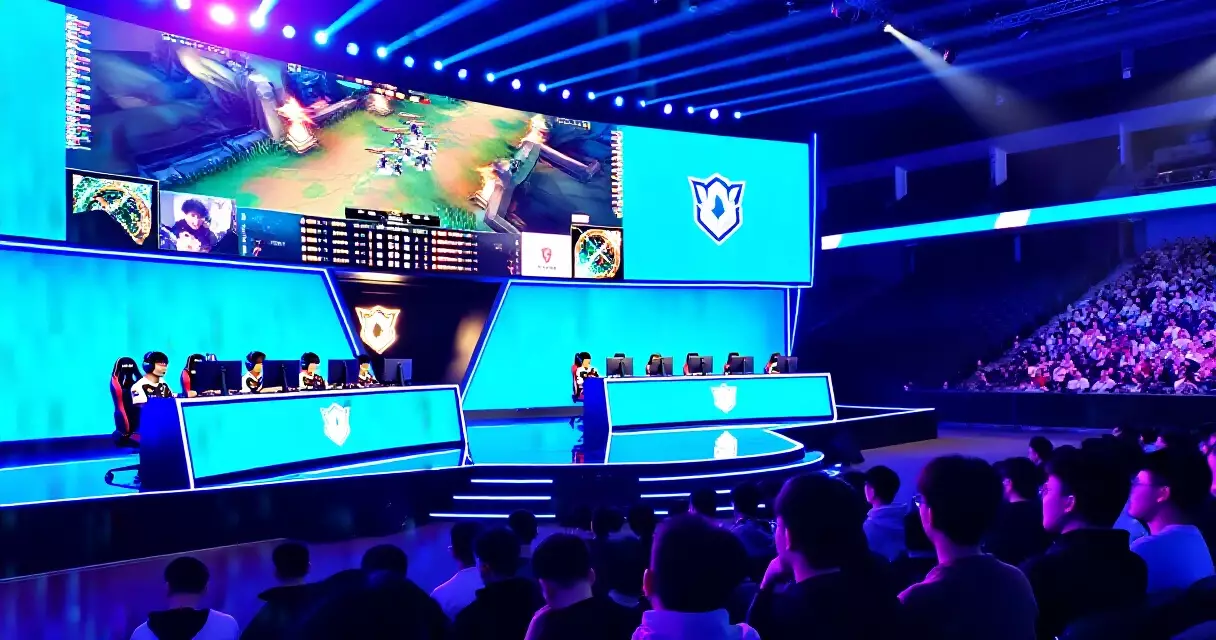
Summary
✓Reviewed by Emma Thompson The debate over where smart money is flowing — esports vs traditional sports industry investment trends — has never been more consequential. As of August 2026, the global esports market is navigating a pivotal reset after...
Table of contents
- 1 How Esports vs Traditional Sports Industry Investment Trends Diverged After 2022
- 2 A Brief History of Investment in Both Industries
- 3 Traditional Sports Franchise Valuations Reach All-Time Highs
- 4 Esports Investment in 2025 and 2026: Contraction, Consolidation, and New Models
- 4.1 Publisher Equity as an Investment Vector
- 4.2 Sponsorship Revenue: Convergence and Competition
- 5 Comparing Audience Demographics and the Investment Implication
- 6 Esports vs Traditional Sports: A Side-by-Side Investment Comparison
- 7 Geographic Investment Hotspots: Where Capital Is Moving in 2026
- 8 Media Rights: The Defining Investment Metric
- 9 The Electronic Arts Merger and Its Investment Signal for 2026
- 10 Frequently Asked Questions
- 10.1 Is esports a good investment compared to traditional sports franchises?
- 10.2 Why did esports investment decline after 2022?
- 10.3 What role does Saudi Arabia play in esports investment?
- 10.4 How do esports media rights compare to traditional sports?
- 10.5 Are traditional sports leagues investing in esports?
- 10.6 What is the biggest driver of traditional sports franchise value growth?
- 11 Key Takeaways: What the Investment Data Tells Us in August 2026
- 12 Sources
The debate over where smart money is flowing — esports vs traditional sports industry investment trends — has never been more consequential. As of August 2026, the global esports market is navigating a pivotal reset after years of hyper-growth, while traditional sports franchises continue attracting record-breaking capital. Understanding where investors are placing their bets, and why, reveals far more than a simple rivalry: it exposes two distinct models of entertainment economics colliding in real time.
How Esports vs Traditional Sports Industry Investment Trends Diverged After 2022
Between 2018 and 2021, venture capital poured into esports organizations at an unprecedented pace. Teams like Team Liquid, 100 Thieves, and FaZe Clan attracted nine-figure valuations, and publisher-backed franchise leagues — notably the Overwatch League and Call of Duty League — sold city-based slots for up to $60 million apiece. The thesis was simple: esports would follow the trajectory of traditional sports leagues, capturing massive broadcast rights deals and stadium-level revenue.
That thesis has been tested sharply. Activision Blizzard’s franchised leagues contracted significantly after 2022, with multiple team owners exiting at a loss. Meanwhile, Riot Games restructured its partnered league systems across VALORANT and League of Legends, moving away from permanent slots toward a performance-based partnership model. These structural changes forced investors to recalibrate expectations and timelines.
A Brief History of Investment in Both Industries
Traditional sports leagues have been attracting institutional capital for well over a century. The NFL, founded in 1920, and the NBA, established in 1946, built their financial foundations on gate receipts, national broadcast deals, and merchandise licensing. By the 1990s, private equity was quietly acquiring minority stakes in franchises, and by 2009, the NFL’s Green Bay Packers disclosed a franchise value exceeding $1 billion for the first time — a figure that now looks quaint. Esports, by contrast, only began attracting significant investor attention around 2014 to 2016, coinciding with the explosive growth of live streaming platforms and the mainstream arrival of titles like League of Legends and Counter-Strike 2’s predecessor CS:GO. The industry is, in investment terms, a teenager competing against centenarian institutions.
Traditional Sports Franchise Valuations Reach All-Time Highs
While esports pulled back from its peak investment frenzy, traditional sports valuations have continued climbing with little resistance. According to Forbes reporting in May 2025, the average NFL franchise is worth approximately $6 billion, up from roughly $4.6 billion in 2022. The Dallas Cowboys remain the most valuable franchise globally at an estimated $10.1 billion. NBA valuations have followed a similar arc, driven by the league’s new 11-year media rights deal with NBC and Amazon worth approximately $76 billion — a figure reported by the Wall Street Journal when the deal was confirmed in 2024.
The drivers behind this sustained growth are structural. Traditional sports benefit from decades of established fandom, stadium infrastructure, local and national government support, ticket and hospitality revenue, and regulated labor frameworks. These predictable cash flow characteristics make sports franchises attractive to sovereign wealth funds, private equity firms, and family offices seeking inflation-resistant assets. The NFL specifically permitted institutional ownership in 2023, opening the door to investors who previously could not participate, further accelerating valuations.
Esports Investment in 2025 and 2026: Contraction, Consolidation, and New Models
The investment climate in esports has shifted dramatically from 2022 onward. Deal volume tracked by Reuters and financial data aggregators shows that esports-specific venture rounds declined significantly post-2022, with several high-profile organizations conducting layoffs, restructuring, or in FaZe Clan’s case, going through a SPAC-based public listing that ultimately traded well below its debut price before being taken private again. The era of speculative franchise valuation — where teams were priced on audience projections rather than actual revenue — is largely over.
What has replaced it is more mature. Institutional investors in 2025 and 2026 are increasingly focused on esports infrastructure — tournament operators, broadcast technology, training facilities, and game publisher equity — rather than team ownership. The Esports World Cup Foundation, backed by Saudi Arabia’s Public Investment Fund, exemplifies this shift: rather than owning team franchises, it funds an annual multi-title event with prize pools exceeding $70 million, generating broadcast rights and sponsorship revenues that flow back to a central entity. The Esports World Cup 2026 in Riyadh continues this model at scale.
Publisher Equity as an Investment Vector
One of the clearest divergences from traditional sports investment is the role of the publisher. In traditional sports, no single entity controls the rules of the game — leagues govern play, but no private company owns football or basketball as intellectual property. In esports, publishers like Riot Games (owned by Tencent), Valve, and now the newly merged Electronic Arts entity own the games themselves. This creates a fundamentally different investment target: rather than buying a team or venue, investors can seek equity in the publisher, which controls the entire competitive ecosystem. This dynamic has no equivalent in traditional sports and represents a genuinely distinct investment thesis.
Sponsorship Revenue: Convergence and Competition
Both industries compete intensely for the same sponsorship dollars, particularly from endemic tech and consumer brands. Nike, Adidas, Red Bull, and BMW have all maintained or expanded their esports sponsorship portfolios even as team valuations corrected. According to Financial Times analysis of the sports sponsorship market in 2025, brand spending on esports partnerships grew modestly but steadily — at roughly 6 to 8 percent annually — even while headline team valuations fell. This suggests the audience value proposition remains intact even if the franchise investment model faced challenges.
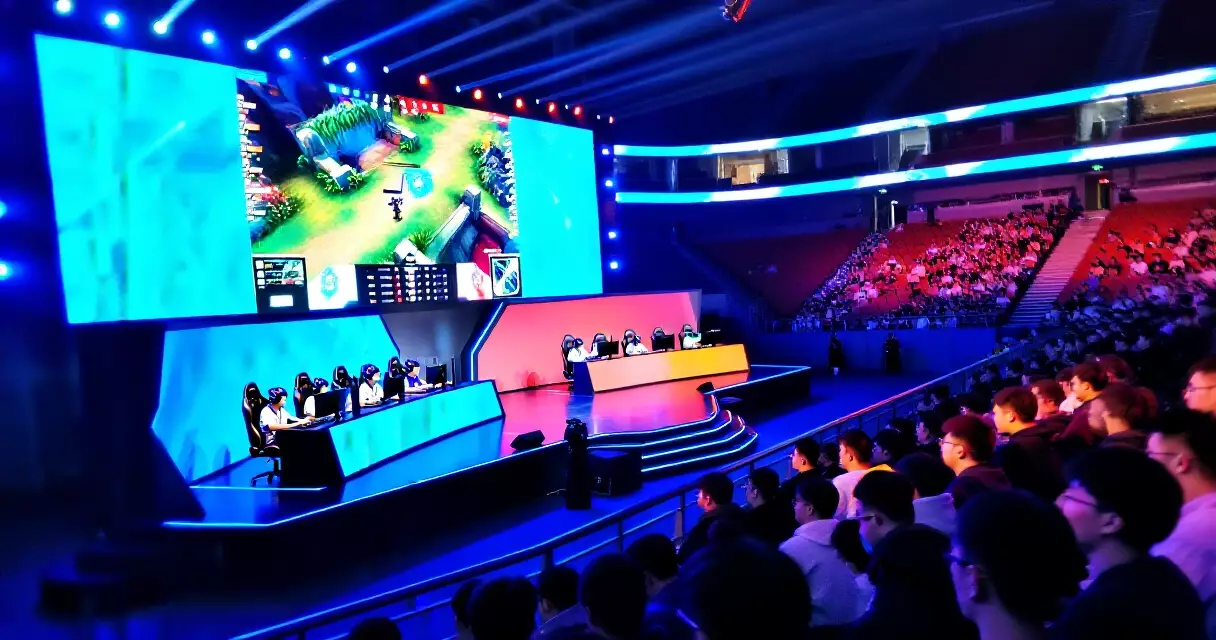
Comparing Audience Demographics and the Investment Implication
One of the most frequently cited arguments for esports investment is its audience demographic. Esports skews decisively younger than any major traditional sport: according to the Pew Research Center‘s 2024 gaming report, approximately 38 percent of American adults aged 18 to 29 say they follow esports regularly, compared to much lower figures for adults over 50. For advertisers targeting Gen Z and younger Millennials, esports offers concentrated reach that traditional sports — despite their scale — increasingly struggle to match organically.
Traditional sports organizations have responded by acquiring esports assets themselves. NFL team owners have invested in esports organizations, and the NBA launched the NBA 2K League specifically to bridge its traditional fanbase with a younger digital-native audience. These cross-industry moves reflect a shared recognition that the two sectors are not simply competing — they are increasingly interdependent for audience lifecycle management.
Esports vs Traditional Sports: A Side-by-Side Investment Comparison
| Factor | Esports | Traditional Sports |
|---|---|---|
| Primary revenue streams | Sponsorship, media rights, merchandise, in-game items | Gate receipts, broadcast rights, sponsorship, licensing |
| Typical franchise/team valuation range (2025–2026) | $5M – $400M (top orgs) | $500M – $10B+ (major leagues) |
| IP ownership of the game/sport | Publisher controls IP entirely | No single entity owns the sport |
| Primary audience age bracket | 16 – 34 | 25 – 54 (varies by league) |
| Broadcast deal maturity | Early stage; fragmented across streaming | Mature; multi-decade national TV contracts |
| Regulatory/labor framework | Developing; no universal governing body | Established collective bargaining, unions |
| PE/institutional ownership access | Always permitted | NFL opened in 2023; others vary |
| Geographic growth frontier | Southeast Asia, Middle East, Latin America | International expansion (NFL London, NBA Abu Dhabi) |
Geographic Investment Hotspots: Where Capital Is Moving in 2026
The Middle East has emerged as the single most consequential new capital source in both industries. Saudi Arabia’s Public Investment Fund has placed major bets across golf (LIV Golf), boxing, Formula 1 hosting, and esports through the Esports World Cup Foundation. The UAE has invested in traditional sports infrastructure at scale through Abu Dhabi’s ownership of Manchester City (via City Football Group) and the F1 Abu Dhabi Grand Prix. These sovereign wealth funds view sports and esports not only as profit centers but as instruments of soft power and tourism development — a rationale absent from most private equity investment theses and one that allows them to sustain losses that commercial investors cannot.
In Asia, South Korea and China remain foundational esports markets, but investment flows have shifted toward Southeast Asia, where mobile esports titles including Honor of Kings, Mobile Legends: Bang Bang, and PUBG Mobile command audiences measured in the tens of millions. The Honor of Kings World Cup 2026 at the Esports World Cup Paris drew teams from 20 nations, underscoring how genuinely globalized the competitive mobile gaming ecosystem has become.
Sovereign wealth funds are rewriting the investment calculus for both esports and traditional sports — their appetite for losses that commercial investors cannot absorb is setting valuations that no pure-return thesis can follow.
Media Rights: The Defining Investment Metric
No single variable defines investment value in sports more reliably than media rights. Traditional sports leagues have secured broadcast deals of staggering scale: the NFL’s current agreements with Fox, ESPN/ABC, CBS, NBC, and Amazon total approximately $113 billion over eleven years, according to AP reporting. These deals underwrite franchise values and provide cash flow predictability that no esports entity has yet matched.
Esports media rights remain fragmented and undermonetized relative to audience size. Twitch, YouTube, and platform-specific streaming deals have replaced traditional broadcast agreements, but the per-viewer revenue generated by esports streams is substantially lower than the per-viewer value in NFL or NBA broadcast packages. Riot Games’ partnership with Twitch for VCT coverage, and Valve’s Steam broadcast infrastructure for Dota 2 events like The International, generate audience engagement without the carriage-fee economics that make traditional sports rights so lucrative. This gap — between audience size and monetized rights value — is the central challenge for esports investment narratives in 2026.
| Metric | Esports (2025–2026 estimates) | Traditional Sports (2025–2026) |
|---|---|---|
| Global revenue (total industry) | ~$1.9B (Newzoo / Reuters) | NFL alone: ~$22B revenue (Forbes) |
| Largest single media rights deal | No single deal >$100M/yr reported | NBA: ~$6.9B/yr (WSJ, 2024 deal) |
| Largest single event prize pool | EWC 2026: $70M+ (EWC official) | Super Bowl host city economic impact: $1B+ (AP estimates) |
| Year-over-year sponsorship growth | ~6–8% (FT, 2025 analysis) | ~4–6% (sports industry avg) |
| Private equity deal activity | Declining post-2022 (PitchBook) | Accelerating post-NFL PE rule change (WSJ) |
The Electronic Arts Merger and Its Investment Signal for 2026
One of the most significant structural events reshaping how investors assess the esports vs traditional sports industry investment trends debate in 2026 is the Electronic Arts merger that closed in August 2026. A consolidating publisher landscape means fewer but larger entities controlling the game IP on which esports competition depends. For investors, this concentration can be read two ways: it simplifies the publisher equity investment thesis (fewer companies to evaluate), but it also increases dependency risk for esports organizations whose competitive existence hinges on the publishing entity’s continued support for the competitive ecosystem.
Frequently Asked Questions
Is esports a good investment compared to traditional sports franchises?
The risk-return profile differs fundamentally. Traditional sports franchises — particularly NFL and NBA teams — have demonstrated consistent long-term value appreciation backed by regulated revenue sharing and proven broadcast economics. Esports investments carry higher risk due to publisher dependency, immature media rights markets, and shorter organizational histories, but offer earlier-entry exposure to younger demographics. As of 2026, institutional investors generally favor traditional sports for capital preservation and esports for speculative growth exposure.
Why did esports investment decline after 2022?
Several factors converged: the collapse of franchised league models (notably Overwatch League), rising interest rates making speculative investments less attractive, FaZe Clan’s troubled SPAC listing, and the broader tech-sector valuation correction. Additionally, COVID-era gaming audience growth normalized as in-person entertainment returned, undermining optimistic audience projection models that had underpinned many valuations.
What role does Saudi Arabia play in esports investment?
Saudi Arabia’s Public Investment Fund is the single largest sovereign capital source in global esports as of 2026, primarily through the Esports World Cup Foundation, which funds the annual Esports World Cup in Riyadh with prize pools exceeding $70 million. PIF has also taken stakes in gaming companies and sports organizations globally, using competitive entertainment as part of a broader Vision 2030 economic diversification strategy.
How do esports media rights compare to traditional sports?
The gap remains substantial. The NBA’s 2024 media rights deal is valued at approximately $76 billion over 11 years according to the Wall Street Journal, while no esports title has secured a comparable single deal. Esports rights are typically distributed across streaming platforms at much lower per-viewer rates. Closing this gap is considered the primary prerequisite for esports achieving traditional sports-level investment valuations.
Are traditional sports leagues investing in esports?
Yes, extensively. NFL owners have personally invested in esports organizations, the NBA operates the NBA 2K League, and partnerships like the Adidas and Esports Foundation Nations Cup collaboration show mainstream sports capital actively crossing into the esports space. These moves reflect audience lifecycle strategy as much as pure financial return seeking.
What is the biggest driver of traditional sports franchise value growth?
Media rights are the dominant driver. The NFL’s approximately $113 billion in total broadcast agreements, as reported by AP, provide a revenue floor that guarantees franchise profitability independent of team performance. This rights-backed cash flow predictability is what makes traditional sports franchises attractive to institutional investors who require reliable return profiles — a feature esports has not yet replicated at scale.
The esports audience is the envy of every traditional sports broadcaster — the investment structures to monetize it at comparable scale simply have not caught up yet.
Key Takeaways: What the Investment Data Tells Us in August 2026
The esports vs traditional sports industry investment trends picture in August 2026 is not a story of one sector winning and the other losing — it is a story of two different maturity stages attracting different capital profiles. Traditional sports, led by NFL and NBA franchise values at all-time highs and backed by multi-decade broadcast contracts, remain the dominant destination for institutional, PE, and sovereign wealth capital seeking predictable, inflation-resistant returns. Esports, having shed speculative excess, is reconfiguring around infrastructure investment, publisher equity, tournament operations, and sponsorship revenue rather than franchise ownership — a model better suited to its actual economic structure.
- Traditional sports franchise valuations are at all-time highs, driven by media rights economics and new PE access rules
- Esports franchise investment peaked in 2021 and has contracted, but infrastructure and publisher equity investment continue
- Saudi PIF is the single largest new capital source in both sectors globally as of 2026
- The media rights gap between esports and traditional sports remains the central investment variable to watch
- Publisher IP ownership creates a fundamentally different — and riskier — investment structure in esports versus traditional sports
- Traditional sports leagues are themselves investing in esports, blurring the boundary between the two categories
Sources
- Reuters — Sports and Esports Business Coverage — Retrieved August 17, 2026
- The Wall Street Journal — NBA Media Rights Deal Reporting, 2024 — Retrieved August 17, 2026
- Financial Times — Sports Sponsorship Market Analysis, 2025 — Retrieved August 17, 2026
- Associated Press — NFL Broadcast Rights Reporting — Retrieved August 17, 2026
- Pew Research Center — Gaming and Esports Audience Report, 2024 — Retrieved August 17, 2026