
Summary
Ask two evenly matched esports teams to settle a best-of-three, and a sportsbook will often price each side at -110 in American odds. Run those two prices through an implied-probability formula and they add up to 104.76 percent, not 100....
Table of contents
- 1 What Betting Odds Actually Represent
- 2 From Chalkboards to Esports Apps: A Short History
- 3 American Odds: Reading the Plus and Minus
- 4 Decimal Odds: The Global Standard
- 5 Implied Probability: Turning Odds Into Percentages
- 6 The Overround: Why the Numbers Never Add Up to 100%
- 7 Reading an Esports Match Line in Practice
- 8 Frequently Asked Questions
- 8.1 What do plus and minus mean in esports betting odds?
- 8.2 How do I convert decimal odds to a percentage?
- 8.3 Why don’t the implied probabilities add up to 100 percent?
- 8.4 Are decimal or American odds better for beginners?
- 8.5 What is the vig or juice in esports betting?
- 8.6 Do esports odds move before a match?
- 8.7 How are esports odds different from traditional sports odds?
- 9 Related Reading
- 10 Sources
- 10.1 Further reading
Ask two evenly matched esports teams to settle a best-of-three, and a sportsbook will often price each side at -110 in American odds. Run those two prices through an implied-probability formula and they add up to 104.76 percent, not 100. That extra 4.76 percent is the heart of how esports betting odds work, and once you can see it, every line on the screen starts to make sense. This article breaks down American, decimal, and fractional formats, shows you how to turn any price into a probability, and explains why the math behind a League of Legends or Counter-Strike 2 line is the same math casinos have leaned on for more than a century.
What Betting Odds Actually Represent
Odds are a price, not a prophecy. When a sportsbook posts a number next to a team, it is quoting how much it will pay if you are right and, indirectly, how likely it thinks the result is. Every format you will meet, whether on a mainstream app or a dedicated esports book, is just a different way of writing the same two ideas: potential payout and implied chance. Our wider esports betting guide covers where to place those bets, while this article stays focused on decoding the numbers themselves.
Three formats dominate. American odds, also called moneyline, use a plus or minus sign and a number scaled to 100 units. Decimal odds, standard across Europe, Australia, and most esports platforms, show your total return per unit staked. Fractional odds, the old British style, appear as a ratio such as 3/1. All three describe identical underlying probabilities, so learning to switch between them takes minutes rather than days.
Odds are not predictions handed down by experts; they are prices, and like any price they carry a built-in margin for the house.
From Chalkboards to Esports Apps: A Short History
Fixed-odds betting did not begin with esports. The practice traces back to 19th-century British bookmakers who chalked fractional prices on boards at racecourses, a lineage documented in encyclopedic histories of gambling. American sportsbooks later built the moneyline format around the number 100, while continental Europe settled on the cleaner decimal system that online platforms now favor by default.
The modern surge in esports wagering rests on a legal shift. In Murphy v. National Collegiate Athletic Association, decided on May 14, 2018, the U.S. Supreme Court struck down the federal statute that had confined sports betting to a few states. That ruling let regulated books across the country add esports markets next to football and basketball. According to reporting by Reuters, Americans went on to place nearly $150 billion in legal sports wagers during 2024. Readers new to the activity itself can start with our explainer on what esports betting is.
American Odds: Reading the Plus and Minus
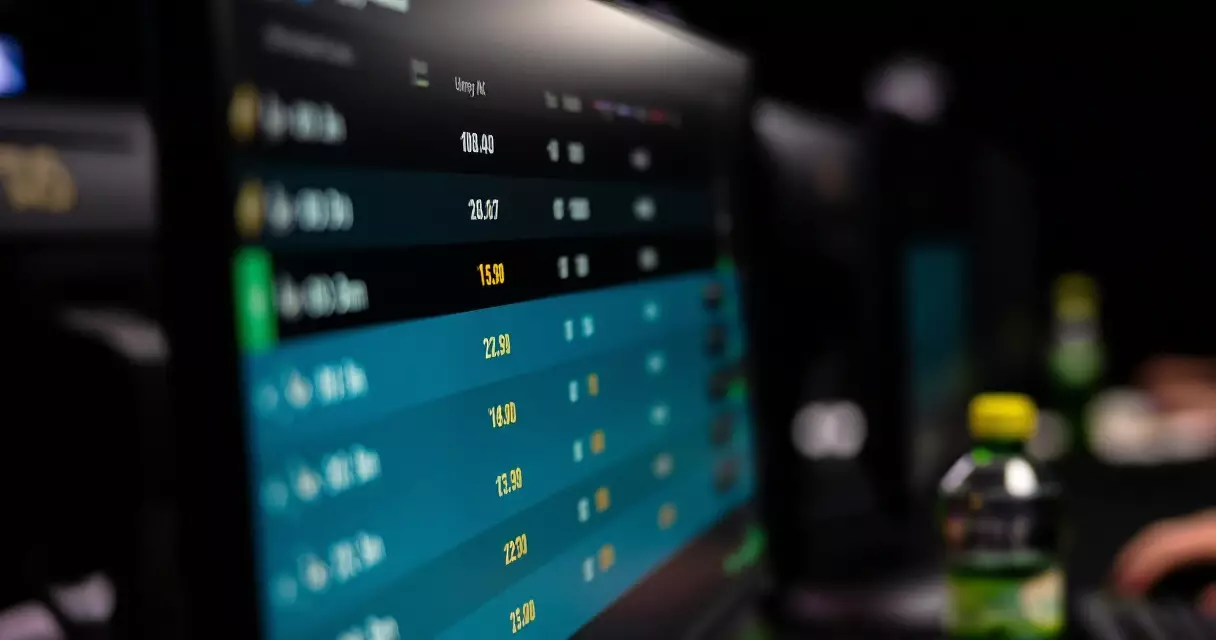
American odds revolve around the number 100. A minus sign marks the favorite and tells you how much you must stake to win 100 units. A plus sign marks the underdog and tells you how much profit a 100-unit stake returns. The sign alone tells you who the market expects to win before you even read the digits.
Picture a Counter-Strike 2 match where Team Liquid sits at -150. You would risk 150 to win 100, for a total return of 250. Flip to the underdog at +130, and a 100-unit stake returns 130 in profit, or 230 in total. The larger the minus number, the heavier the favorite; the larger the plus number, the longer the shot. Even money, where a winning stake doubles, is written +100 in this system.
Decimal Odds: The Global Standard
Decimal odds are the format most esports platforms show out of the box, and they are the simplest to compute. The number is your total return per single unit staked, with profit and your original stake already included. A price of 2.00 doubles your money, 1.50 returns one and a half times your stake, and 3.00 triples it.
Finding a payout takes one step: multiply your stake by the decimal price. A 20-unit bet at 1.71 on G2 Esports returns 34.2 units in total. Because the stake is baked into the figure, there is no separate step for adding it back. That clarity is why analysts and seasoned bettors lean on decimals when they need to compare two prices fast.
| American | Decimal | Fractional | Implied probability |
|---|---|---|---|
| +200 | 3.00 | 2/1 | 33.3% |
| +150 | 2.50 | 3/2 | 40.0% |
| +100 | 2.00 | 1/1 | 50.0% |
| -110 | 1.91 | 10/11 | 52.4% |
| -150 | 1.67 | 2/3 | 60.0% |
| -200 | 1.50 | 1/2 | 66.7% |
Implied Probability: Turning Odds Into Percentages
Every price hides a percentage, and converting to it is the single most useful habit in betting. For decimal odds, the formula is simply one divided by the price. A line of 2.00 implies 1/2.00, or 50 percent. A line of 1.50 implies 66.7 percent. Encyclopedic references on probability describe this inverse relationship as the basis of fair pricing.
American odds use two formulas. For a positive price, implied probability equals 100 divided by the sum of the odds and 100, so +150 gives 100/250, or 40 percent. For a negative price, it equals the odds divided by the sum of the odds and 100, so -200 gives 200/300, or 66.7 percent. Running the same prices through fixed-odds references returns matching percentages across every format, which is the proof that the formats are interchangeable.
Convert every line into a percentage before you bet, and the question stops being which team will win and becomes whether the price is fair.
The Overround: Why the Numbers Never Add Up to 100%
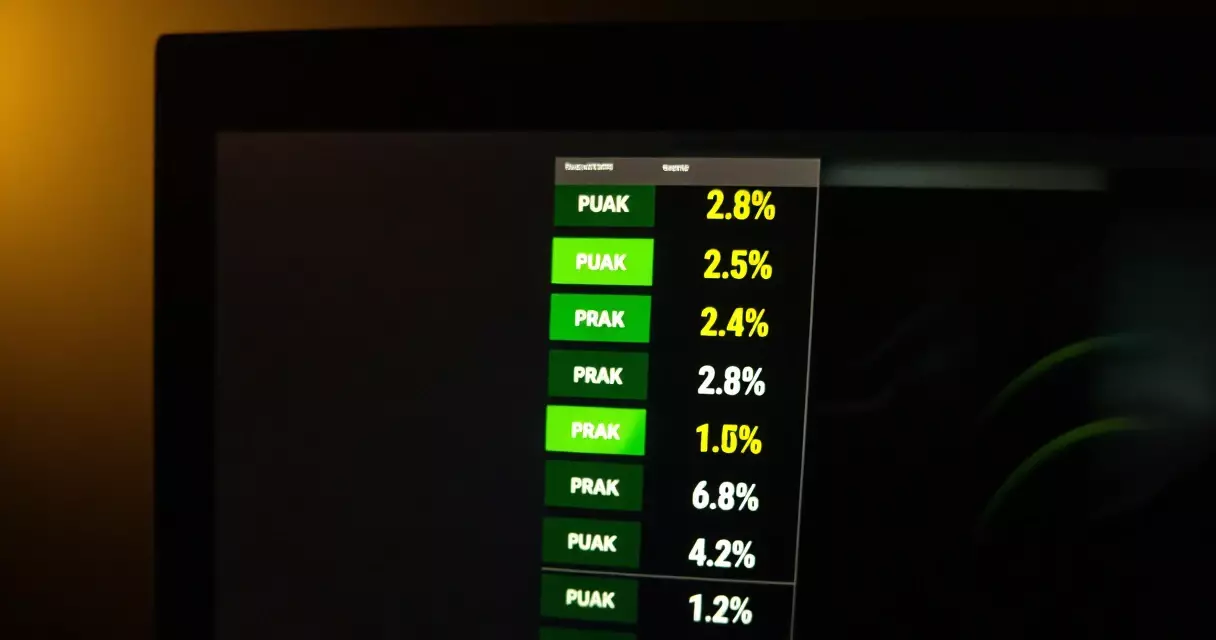
Here is where the house earns its keep. Add up the implied probabilities of every outcome in a market and the total runs past 100 percent. That surplus is called the overround, the vigorish, or simply the vig, and it is the bookmaker’s built-in margin on the event.
Take two evenly matched Valorant teams, each priced at -110. Each side implies 52.4 percent, and together they sum to 104.76 percent. The extra 4.76 percent is the book’s edge on a balanced market, the textbook example used in references on the mathematics of bookmaking. To recover the book’s true estimate of each team, divide each implied probability by the total: 52.4 divided by 104.76 returns a fair 50 percent. The gap between the raw figure and the normalized one is exactly what you are paying to play.
Reading an Esports Match Line in Practice
Put the pieces together on a single League of Legends or Dota 2 fixture. A two-way market lists each team with a price, and your job is to convert both into percentages, sum them, and check the overround. The table below walks through one illustrative line so you can see the full calculation in one place.
| Outcome | Decimal odds | American odds | Implied probability |
|---|---|---|---|
| G2 Esports to win | 1.71 | -141 | 58.5% |
| Team Liquid to win | 2.10 | +110 | 47.6% |
| Combined market | n/a | n/a | 106.1% |
The market gives G2 a 58.5 percent implied chance and Team Liquid 47.6 percent. Together they reach 106.1 percent, so the book’s margin on this fixture is 6.1 percent, a little fatter than the 4.76 percent on a perfectly balanced line. Strip the overround out and the fair estimate sits near 55 percent for G2. Comparing your own read of the matchup against that fair number, rather than against the raw odds, is the discipline that separates guessing from value hunting. Teams such as Cloud9 can swing between favorite and underdog from one event to the next, so the percentages move accordingly.
Frequently Asked Questions
What do plus and minus mean in esports betting odds?
In American odds, the sign tells you the role and the rough chance at a glance. A minus sign marks the favorite and shows how much you must stake to win 100 units, so -150 means risking 150 to win 100. A plus sign marks the underdog and shows the profit on a 100-unit stake, so +130 means a 100 stake returns 130 in profit. The further a number sits from 100, the more lopsided the matchup. A heavy favorite might read -400, while a long shot could read +350, and both translate cleanly into decimal and fractional formats.
How do I convert decimal odds to a percentage?
Divide the number one by the decimal price, then multiply by 100. A price of 2.00 gives 1 divided by 2.00, which is 0.50, or 50 percent. A price of 1.25 gives 0.80, or 80 percent, marking a strong favorite. A price of 4.00 gives 0.25, or 25 percent, marking a clear underdog. This one-step formula, set out in references on fixed-odds betting, works for any decimal price and is the quickest way to judge whether a line reflects your own view of the match. Keep it handy and you can scan a full slate of esports fixtures in seconds.
Why don’t the implied probabilities add up to 100 percent?
Because the bookmaker bakes a margin into every market. When you sum the implied probabilities of all outcomes, the total lands above 100 percent, and that surplus is the overround or vig. On a balanced two-way market with both teams at -110, the figures sum to 104.76 percent, so the margin is 4.76 percent. The book keeps that edge regardless of which side wins, which is how it turns a profit over many bets. To estimate the true probability, divide each outcome’s implied figure by the combined total, a process called normalizing that removes the margin from the numbers.
Are decimal or American odds better for beginners?
Decimal odds are usually the friendlier starting point because a single multiplication gives your total return and a single division gives the implied percentage. American odds require remembering two separate formulas, one for positive prices and one for negative, which adds a small mental tax. Most esports platforms let you switch formats in the settings, so a practical approach is to display decimals while you learn, then add American odds once the conversions feel natural. Whichever you pick, the underlying probabilities are identical, so neither format gives you a better deal on the same line.
What is the vig or juice in esports betting?
The vig, also called juice, vigorish, or overround, is the commission a sportsbook builds into its prices. It is the reason the implied probabilities across a market exceed 100 percent. A common standard on balanced markets is the -110 price on each side, which produces a 4.76 percent margin. Books with tighter margins return more value to bettors over time, so comparing the combined implied probability of the same match across several books is a simple way to find the lowest vig. Lower juice does not guarantee a winning bet, but it lowers the long-run cost of playing.
Do esports odds move before a match?
Yes, and the movement carries information. Opening lines reflect a book’s first estimate, then shift as money arrives, rosters change, or news about player form and patches surfaces. A favorite drifting from -150 toward -200 signals heavier backing or fresh information pointing its way. Because competitive titles update game balance through patches, a single change can alter how a team is expected to perform, and odds adjust in response. Watching how a line moves between its open and the match start often tells you as much as the number itself, especially in volatile titles.
How are esports odds different from traditional sports odds?
The mathematics is identical, but the context differs. Esports markets can move sharply on patch notes, roster swaps, and stand-in players, factors that have no clean equivalent in football or tennis. Sample sizes are sometimes smaller for newer teams, which can widen the overround as books protect themselves against uncertainty. Live, in-play markets are also heavily used, since a single team fight in Dota 2 can flip the expected outcome in seconds. The formats, formulas, and the presence of a margin stay the same, so the skills you build reading any sports line transfer directly to esports.
Related Reading
- Esports Betting Guide: Best Sites, Odds, and Match Analysis
- 10 Common Esports Betting Mistakes (and How to Fix Them)
- CS2 (Counter-Strike 2) Betting Guide: Markets, Odds & Tips
- Esports Betting Bankroll Management: Staking Plans
- Esports Betting Bonuses & Promo Codes: How to Compare Real Value
- Esports Betting Markets Explained: Match Winner, Handicaps, Maps & Props
- Esports Betting Strategy: 12 Proven Tactics to Find an Edge
- Esports Betting vs Sports Betting: Key Differences
- Is Esports Betting Legal in the US? 2026 State Rules
- League of Legends Betting: How to Wager on LoL Esports in 2026
- Live Esports Betting: How to Bet on Matches in Real Time
- What Is Esports Betting? A Beginner's Guide for 2026
- Rivalry Review 2026: Esports Betting Markets, Odds & Safety
- Thunderpick Review 2026: Esports Odds, Crypto & Bonuses
Sources
- Mathematics of bookmaking, Wikipedia – https://en.wikipedia.org/wiki/Mathematics_of_bookmaking
- Fixed-odds betting, Wikipedia – https://en.wikipedia.org/wiki/Fixed-odds_betting
- Vigorish, Wikipedia – https://en.wikipedia.org/wiki/Vigorish
- Murphy v. National Collegiate Athletic Association, Wikipedia – https://en.wikipedia.org/wiki/Murphy_v._National_Collegiate_Athletic_Association
- Esports, Wikipedia – https://en.wikipedia.org/wiki/Esports
- Sports betting, Wikipedia – https://en.wikipedia.org/wiki/Sports_betting
- Probability, Encyclopaedia Britannica – https://www.britannica.com/science/probability
- Reuters, business and markets coverage – https://www.reuters.com/business/
Further reading
Top Esports Organizations 2026: Teams, Rosters, and Performance Rankings