

Summary
✓Reviewed by Emma ThompsonAs the global esports apparel market reaches an estimated USD 3.2 billion in 2025 and continues climbing, one question increasingly surfaces among competitive players and fans in Singapore: what actually separates an esports team jersey from an...
Table of contents
- 1 What Is an Esports Team Jersey
- 2 What Is an Esports Performance Jersey
- 3 How the Esports Team Jersey vs Esports Performance Jersey Split Emerged
- 4 Fabric Technology: The Core Difference
- 5 Side-by-Side Comparison: Esports Team Jersey vs Esports Performance Jersey
- 6 Why the Distinction Matters for Competitive Players in Singapore
- 7 Brands Shaping the Esports Jersey Market in 2026
- 7.1 Esports-Native Brands
- 7.2 Traditional Sportswear Brands
- 8 Fabric Comparison: Technical Specifications by Material
- 9 How to Choose Between the Two
- 9.1 Buy an Esports Team Jersey If
- 9.2 Buy an Esports Performance Jersey If
- 10 The Market for Esports Jerseys in 2026
- 11 Care and Longevity Differences
- 12 Frequently Asked Questions
- 12.1 What is the main difference between an esports team jersey and an esports performance jersey?
- 12.2 Are esports performance jerseys worth the higher price?
- 12.3 Which fabric is best for an esports jersey in hot climates?
- 12.4 Do pro esports teams wear different jerseys than what fans can buy?
- 12.5 Can I wear a performance esports jersey casually?
- 12.6 Which brands make esports performance jerseys?
- 13 Key Takeaways
- 14 Sources
As the global esports apparel market reaches an estimated USD 3.2 billion in 2025 and continues climbing, one question increasingly surfaces among competitive players and fans in Singapore: what actually separates an esports team jersey from an esports performance jersey? The distinction matters more than most buyers realise, because the two categories serve fundamentally different purposes despite often looking similar on a hanger.
What Is an Esports Team Jersey
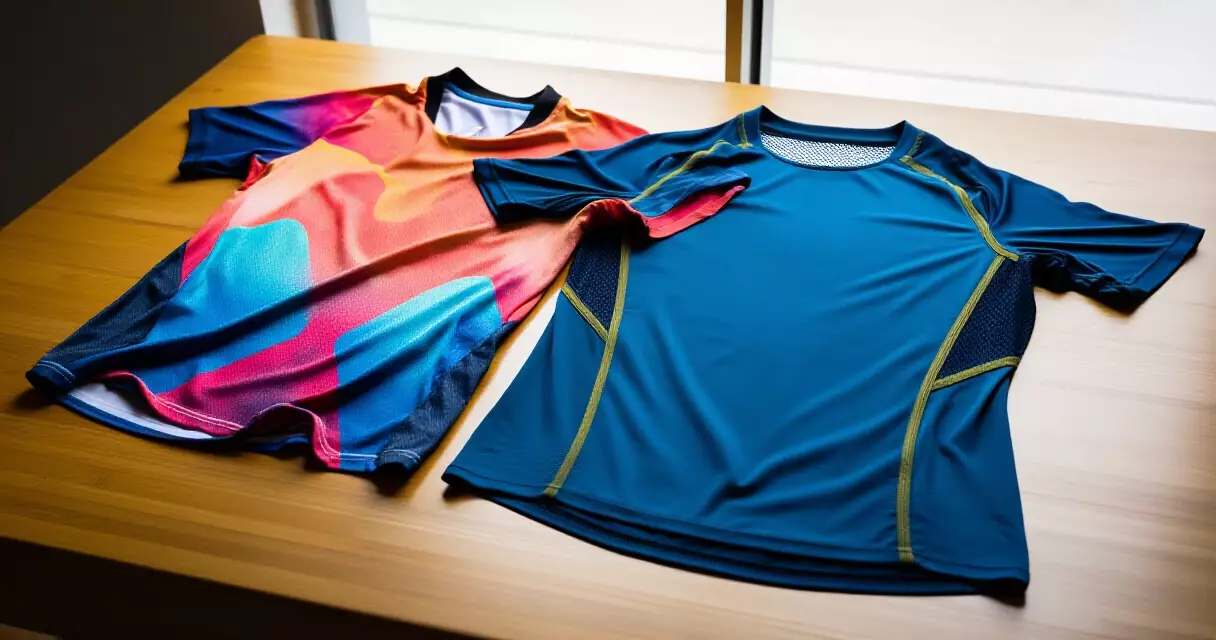
An esports team jersey is, at its core, a piece of merchandise. It carries the team’s branding, sponsor logos, player names, and visual identity. Fans buy these jerseys to show allegiance, much the same way football supporters purchase replica kits. The fit is typically relaxed or streetwear-casual, designed for everyday comfort rather than athletic performance. Fabric is usually a standard polyester or polyester-cotton blend that prioritises print quality and durability of graphics over technical performance.
Pricing for esports team jerseys generally ranges from SGD 40 to SGD 90 for replica-tier products. Brands such as We Are Nations and Into The AM have built their reputations on this category, offering officially licensed team apparel that emphasises bold sublimated designs and sponsor placement. These jerseys sell well as collectibles, event-day wear, and lifestyle pieces.
What Is an Esports Performance Jersey
An esports performance jersey is built for the player, not the spectator. It uses technical fabrics engineered to manage moisture, regulate body temperature, and allow unrestricted arm and shoulder movement during extended play sessions. A peer-reviewed study published by UiTM’s Journal of Mechanical Engineering in 2024 found that Tencel and Coolmax fibres excelled in moisture management, breathability, and thermal comfort compared to conventional jersey materials, while also demonstrating good durability under repeated wear.
Performance jerseys typically feature an athletic or slim fit with ergonomic panelling, mesh ventilation zones under the arms and across the upper back, and flatlock seams to reduce chafing. These design elements matter in competitive environments where players sit under intense stage lighting for hours, with ambient temperatures sometimes exceeding what standard air conditioning can offset.
How the Esports Team Jersey vs Esports Performance Jersey Split Emerged
The distinction between team and performance jerseys in esports mirrors a path that traditional sports walked decades earlier. Football, basketball, and rugby all eventually separated replica fan kits from match-day player-issue versions, with different price tiers and construction methods. Esports followed this trajectory as competitive gaming moved from small LAN events to arena-scale tournaments with broadcast production comparable to traditional sports. As teams signed apparel partnerships with brands like Nike, Puma, and Champion, the jersey ceased to be a simple screen-printed t-shirt and became a purpose-built garment with two distinct product lines.
According to a Reuters press release from April 2026, the global esports sector reached approximately USD 5.34 billion in valuation, up from USD 5.08 billion the previous year. That growth has intensified commercial pressure on teams to maximise jersey revenue across both fan and pro segments.
Fabric Technology: The Core Difference
Fabric is where the esports team jersey vs esports performance jersey divide becomes most tangible. Standard team jerseys use conventional polyester, which is lightweight and takes sublimation printing well but offers limited moisture management. Performance jerseys use engineered textiles designed to pull sweat away from the skin and disperse it across a larger surface area for faster evaporation.
Research published in Fibres & Textiles in Eastern Europe found that 100% polyester fabrics produced better physiological responses and athletic performance compared to other tested blends, but the construction method and fibre engineering mattered as much as the base material. Coolmax polyester, for instance, uses a four-channel fibre cross-section that increases surface area for moisture transport, while standard polyester uses a round cross-section that retains more moisture against the skin.
Side-by-Side Comparison: Esports Team Jersey vs Esports Performance Jersey
The following table compares the two jersey categories across the features that matter most to buyers deciding between them. Data is drawn from publicly available product specifications and the textile research cited above.
| Feature | Esports Team Jersey (Fan/Replica) | Esports Performance Jersey (Pro/Authentic) |
|---|---|---|
| Primary purpose | Fan identity, merchandise, casual wear | Competitive play, training, stage use |
| Typical fabric | Standard polyester or poly-cotton blend | Coolmax, Tencel, engineered polyester knit |
| Moisture wicking | Basic | Advanced multi-channel fibre transport |
| Fit | Relaxed or streetwear cut | Athletic or slim fit with ergonomic panelling |
| Ventilation | Minimal or none | Mesh zones (underarm, upper back) |
| Seam construction | Standard overlocked seams | Flatlock seams to reduce chafing |
| Thermal regulation | Passive only | Engineered thermal conductivity |
| Typical price range (SGD) | 40 to 90 | 90 to 180 |
| Sponsor logo placement | Prominent, design-forward | Integrated with performance panels |
Why the Distinction Matters for Competitive Players in Singapore
Singapore’s position as a growing esports hub makes the team jersey vs performance jersey question especially relevant. According to industry reporting, the city-state has hosted increasingly large-scale competitive gaming events, and local teams compete in regional circuits across VALORANT, League of Legends, and Dota 2. Players training and competing in Singapore’s climate need apparel that manages heat and humidity effectively, which a fan-grade jersey simply is not designed to do.
For competitive players, a performance jersey reduces one variable in a sport where marginal gains matter. Comfort over a five-hour match day affects focus, and focus affects results. This is why organisations investing in Esports World Cup preparation increasingly issue separate fan and player jersey lines.
A fan jersey tells the world which team you support. A performance jersey tells your body it can keep competing.
Brands Shaping the Esports Jersey Market in 2026
Esports-Native Brands
We Are Nations, Meta Threads, and Into The AM remain the dominant esports-native apparel suppliers as of September 2026. These brands built their businesses around sublimated jersey production for esports organisations and understand the specific requirements of gaming apparel, from sponsor panel placement to the relaxed fits that players prefer off-stage. We Are Nations, in particular, has supplied jerseys to multiple Tier 1 organisations, offering both fan-grade replicas and premium pro-issue versions with upgraded fabric specifications.
Traditional Sportswear Brands
Nike, Puma, and Champion have all entered the esports apparel space, bringing their established performance textile technologies with them. Nike’s partnership history with organisations like T1 in League of Legends demonstrated that mainstream sportswear engineering could be adapted for esports, applying Dri-FIT moisture management and athletic tailoring to a garment primarily used while seated. Puma has similarly worked with Cloud9 and other organisations, offering jerseys that blend streetwear aesthetics with performance fabric underlays.
Fabric Comparison: Technical Specifications by Material
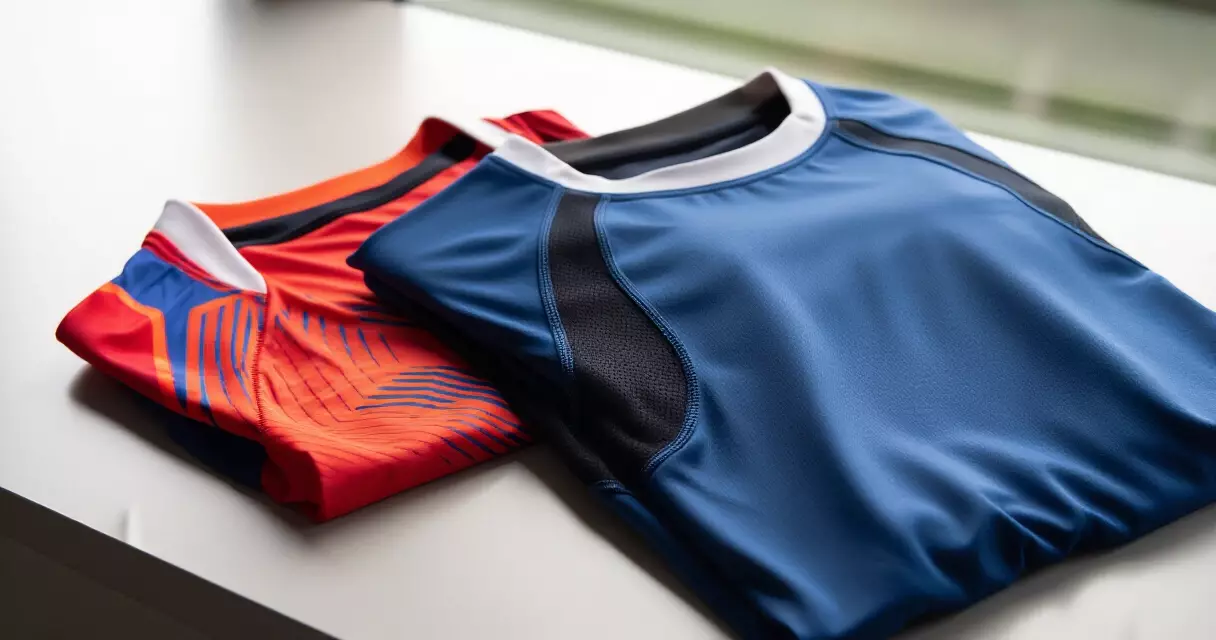
The following table summarises key performance characteristics of fabrics commonly used in esports jerseys, based on findings from the UiTM and Fibres & Textiles in Eastern Europe studies. These properties directly affect how a jersey performs during extended competitive use.
| Fabric Type | Moisture Wicking | Breathability | Thermal Comfort | Durability | Typical Use |
|---|---|---|---|---|---|
| Standard polyester | Moderate | Moderate | Average | High | Fan/replica jerseys |
| Coolmax polyester | Excellent | High | High | Good | Performance jerseys |
| Tencel (lyocell) | Excellent | Very high | Excellent | Good | Premium performance jerseys |
| Polyester-spandex blend | Good | Good | Good | Very high | Stretch-fit performance jerseys |
| Poly-cotton blend | Low | Low-moderate | Average | Moderate | Budget fan jerseys |
According to the Indian Journal of Science and Technology, incorporating spandex into single jersey fabrics increases GSM and bursting strength but reduces fabric width, which affects the fit and stretch characteristics of the final garment. This is why performance jerseys with stretch panels use carefully calibrated spandex percentages rather than simply adding more stretch fibre.
How to Choose Between the Two
Buy an Esports Team Jersey If
- You primarily want to support a team and wear their branding
- You plan to wear it casually, at events, or while watching streams
- You prefer a relaxed fit that works as everyday streetwear
- Budget is a primary consideration
Buy an Esports Performance Jersey If
- You compete in tournaments, scrims, or organised leagues
- You train for extended sessions and want active moisture management
- You play in warm environments or under stage lighting
- Comfort and thermoregulation over long play sessions matter to you
The Market for Esports Jerseys in 2026
According to Mordor Intelligence’s 2026 report, the global sports apparel market stands at an estimated USD 283.66 billion and is forecast to reach USD 400.83 billion by 2031 at a 7.16% compound annual growth rate. Esports apparel represents a growing slice of this market, driven by the expansion of franchised leagues, merchandise-as-revenue strategies, and the convergence of gaming culture with mainstream fashion.
The gaming merchandise sector specifically, which includes jerseys alongside other branded products, is valued at approximately USD 36.8 billion in 2026 according to Global Market Insights, with a projected CAGR of 20.5% through 2035. Jersey sales account for a significant portion of this figure, especially among organisations competing in high-profile circuits like the VCT Champions and the League of Legends global ecosystem.
The esports jersey has evolved from a tournament giveaway into a two-tier product line worth billions, and the gap between fan and pro versions is widening every season.
Care and Longevity Differences
How you wash and maintain an esports jersey affects its longevity, and the two types respond differently to care. Fan jerseys with heavy sublimation printing are generally more forgiving with standard machine washing, though turning them inside out preserves print quality. Performance jerseys require more careful handling because their technical properties degrade faster with heat and fabric softeners.
Performance fabrics like Coolmax lose their moisture-wicking efficiency if washed with conventional softeners, which coat the fibres and block their moisture channels. Cold water, gentle cycles, and air drying are the standard recommendations. This additional maintenance burden is a practical consideration when deciding between the two jersey types, particularly for players who go through multiple jerseys during a tournament week. Teams competing in events like the franchised league circuits often travel with dedicated equipment staff who manage jersey rotation and care.
Frequently Asked Questions
What is the main difference between an esports team jersey and an esports performance jersey?
The main difference is purpose and construction. A team jersey is fan merchandise built for branding and casual wear, using standard fabrics. A performance jersey is engineered for competitive play with moisture-wicking textiles, ergonomic cuts, ventilation zones, and flatlock seams designed to keep players comfortable during extended sessions.
Are esports performance jerseys worth the higher price?
For competitive players who train or compete regularly, the thermal regulation and comfort improvements justify the price premium. For casual fans who primarily want to support a team, the standard team jersey offers better value. The decision depends on whether you are buying apparel for play or for display.
Which fabric is best for an esports jersey in hot climates?
Based on UiTM’s 2024 research, Tencel and Coolmax fibres outperform standard polyester and polyester-cotton blends in moisture management, breathability, and thermal comfort. For Singapore’s tropical conditions, these engineered fabrics offer measurably better performance during extended wear.
Do pro esports teams wear different jerseys than what fans can buy?
Yes. Most Tier 1 organisations issue pro-specification jerseys to their players that differ from the fan replicas available for purchase. The differences typically include upgraded fabric, a more fitted cut, and performance construction features. Some organisations sell a “player issue” or “authentic” version at a higher price point that matches or closely resembles what the team wears on stage.
Can I wear a performance esports jersey casually?
Absolutely. Performance jerseys work well as casual wear, and many buyers choose them for the slimmer fit and higher-quality feel. The main trade-off is the higher price and the additional care requirements to maintain the fabric’s technical properties.
Which brands make esports performance jerseys?
Esports-native brands like We Are Nations and Meta Threads offer performance-tier options alongside their fan lines. Traditional sportswear brands including Nike, Puma, and Champion have also entered the space, bringing their established performance textile technologies to esports team partnerships. The sport brand identity dynamics are similar to those in traditional athletics.
Key Takeaways
- An esports team jersey is merchandise designed for fan identity and casual wear; an esports performance jersey is technical apparel built for competitive play
- Fabric technology is the core differentiator, with Coolmax and Tencel outperforming standard polyester in moisture management and thermal comfort according to peer-reviewed research
- Performance jerseys command a price premium, typically running SGD 90 to 180 compared to SGD 40 to 90 for fan replicas
- Singapore’s hot and humid climate makes the performance jersey’s thermoregulation features especially relevant for local competitive players
- The market for esports apparel continues to grow as part of a gaming merchandise sector valued at approximately USD 36.8 billion in 2026
Sources
- Thermoregulatory Comfort Properties of Sports Jersey Fabric (UiTM Journal of Mechanical Engineering, 2024) — retrieved September 9, 2026
- Sports Apparel Market Size, Growth and Trends Overview 2031 (Mordor Intelligence) — retrieved September 9, 2026
- Esports 2026: Global Market Surpasses the USD 5 Billion Mark (Reuters) — retrieved September 9, 2026
- Gaming Merchandise Market Size and Share 2026-2035 (Global Market Insights) — retrieved September 9, 2026
- Physiological Responses and Performance in Sports Fabrics (Fibres and Textiles in Eastern Europe) — retrieved September 9, 2026
- Performance Analysis of Spandex Incorporated Single Jersey Fabrics for Sportswear (Indian Journal of Science and Technology) — retrieved September 9, 2026