
Summary
✓Reviewed by Emma Thompson A CNN video report published on August 21, 2026 has reignited one of competitive gaming's most enduring identity questions: should esports players be formally recognized as athletes? The segment, titled "Are esports players the latest 'athletes'?,"...
Table of contents
- 1 CNN Brings the Athlete Debate Back Into the Mainstream
- 2 Why the Timing Matters: A Wave of Identity Pressure in August 2026
- 3 What the Research Actually Says About Esports Athletes
- 4 The Institutional Landscape: Where Recognition Stands in August 2026
- 5 Player Welfare and the Stakes of Getting the Definition Wrong
- 6 What to Watch: Key Decisions Expected in 2026
- 7 Sources
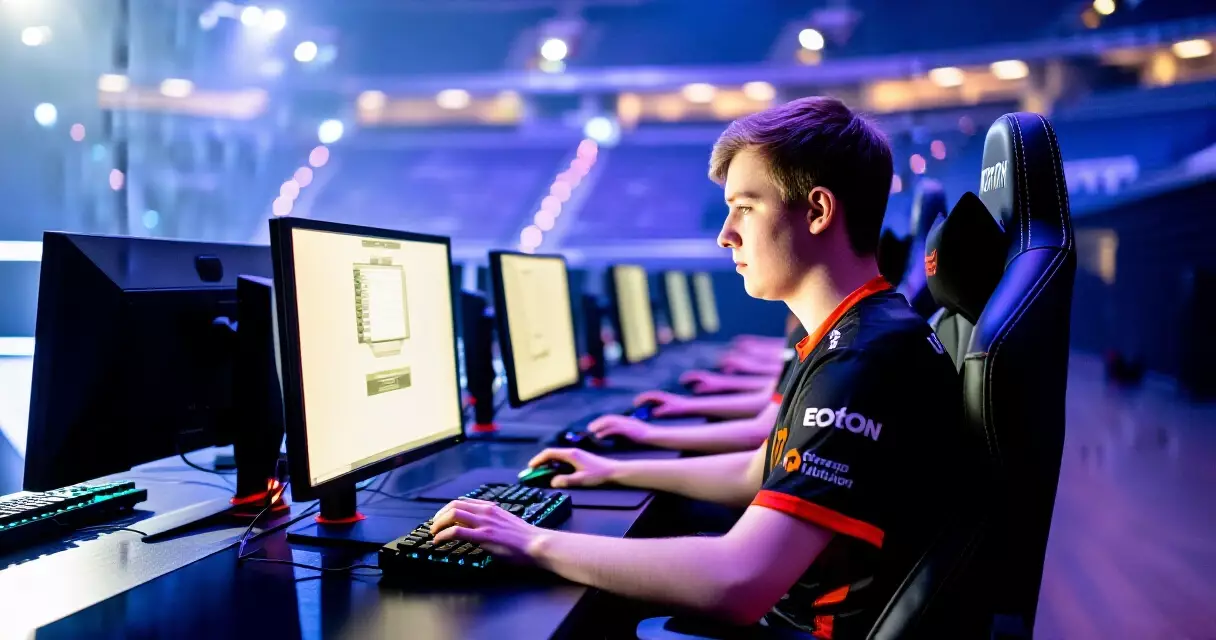
A CNN video report published on August 21, 2026 has reignited one of competitive gaming’s most enduring identity questions: should esports players be formally recognized as athletes? The segment, titled “Are esports players the latest ‘athletes’?,” arrives at a moment when the esports industry is actively pushing for mainstream institutional legitimacy, and as governing bodies from college sports associations to Olympic committees continue to debate where, and whether, competitive gaming belongs.
CNN Brings the Athlete Debate Back Into the Mainstream
The CNN report, released August 21, frames the question not as settled but actively contested. The segment comes weeks after a July 2026 academic paper by researchers Sarah Kneller and Dr. Lindsey Darvin — published through August Interactive — made the formal case for recognizing esports within athletic and academic institutions. That paper, part of a broader July 2026 body of work catalogued by August Interactive, argues that esports players demonstrate comparable physical and cognitive demands to traditional athletes, and that institutional exclusion has real consequences for player welfare, scholarship access, and professional legitimacy.
“The question of whether esports players are athletes is not merely semantic,” Kneller and Darvin wrote in the July 2026 paper, according to August Interactive’s news summary. “It carries direct implications for how players are supported, protected, and recognized at every level of competition.”
Why the Timing Matters: A Wave of Identity Pressure in August 2026
CNN’s decision to run the segment on August 21 was not made in a vacuum. The last two weeks of August 2026 have seen a cluster of identity-related flashpoints across competitive sports and esports. The Esports Integrity Commission’s open investigations register, updated as recently as August 23, 2026, lists multiple active probes including one opened August 21 into Santiago “TaiLung” Agüero Gustavo — a case that has focused industry attention on player conduct, accountability, and how competitive gaming governs the behavior of those it calls professionals.
At the same time, the WNBA’s public statement on August 13, 2026, denouncing what it called “bad-faith” debates around athlete eligibility and identity, has kept questions of who qualifies as an athlete — and under what terms — in the national sports conversation. While that dispute centers on a different arena, commentators have drawn parallels to esports’ own ongoing struggle for definitional clarity.
What the Research Actually Says About Esports Athletes
The academic case for esports athlete recognition has been building for several years, but the Kneller-Darvin paper represents one of the more direct institutional arguments to date. August Interactive’s summary, last updated August 16, 2026, notes the paper explores “the case for formally recognizing esports as a sport within academic and athletic institutions” — a framing that positions the debate squarely within existing regulatory and educational structures rather than asking those structures to create something new.
The broader esports viewership data from 2026 adds a quantitative dimension to the legitimacy argument: competitive gaming now draws audiences that rival or exceed many traditional sports broadcasts, creating a tension between cultural reach and formal institutional status that the athlete recognition debate crystallizes.
| Argument For Athlete Status | Argument Against |
|---|---|
| High-level cognitive demand comparable to chess grandmasters | Limited physical exertion vs. traditional sport definitions |
| Training regimens of 8-12 hours daily, per player reports | No universal governing body to enforce standards |
| Academic research (Kneller & Darvin, July 2026) supports formal recognition | Wide variation across game types and competition formats |
| NCAA and Olympic committees actively reviewing eligibility frameworks | Legal and institutional definitions tied to physical performance |
| Global Esports Games, Esports World Cup drawing tens of thousands of attendees | Industry fragmentation undermines a unified “athlete” identity |
The Institutional Landscape: Where Recognition Stands in August 2026
As of August 2026, the picture of formal esports athlete recognition in the United States remains fragmented. Several hundred colleges and universities now offer varsity esports programs with scholarship support, effectively granting competitive gamers student-athlete status at the institutional level. However, the NCAA has not formally classified esports as a varsity sport under its governance structure, meaning the legal and regulatory protections afforded to traditional student-athletes do not fully extend to esports competitors.
At the international level, the International Olympic Committee has continued its cautious engagement with competitive gaming through the Olympic Esports Series, but has stopped short of granting esports a full Olympic sport designation — a status that would carry the most significant formal recognition of players as athletes under international sporting law.
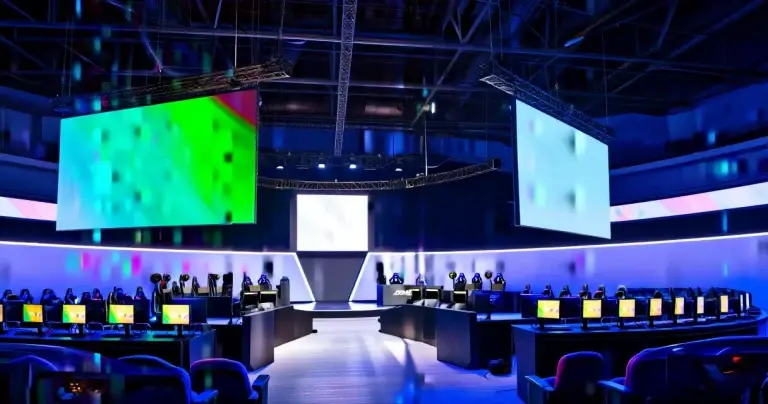
The Esports World Cup 2026, which wrapped its major event programming in Paris in late July and early August, served as a high-profile demonstration of what professional competitive gaming looks like at scale — including the identity governance challenges that come with it, from player verification disputes to conduct investigations. Those events have kept the question of what it means to be a professional esports player — and whether “athlete” is the right frame — front and center.
Player Welfare and the Stakes of Getting the Definition Wrong
Beyond the philosophical debate, the classification question carries concrete consequences for players. Esports professionals who are not recognized as athletes under labor law lack access to the standard protections available to traditional sports professionals: union representation, collectively bargained contracts, minimum salary floors, and in some jurisdictions, athlete-specific visa categories that simplify international competition travel.
Dr. Darvin, whose research focuses on sport management and inclusion, has previously argued that the failure to extend athlete status to esports players is not a neutral institutional position — it is an active choice that disadvantages a workforce that is increasingly professional, increasingly young, and increasingly global. Without formal recognition, players have limited recourse when contracts are disputed, when organizations fold mid-season, or when physical and mental health issues arise from the demands of competitive play.
What to Watch: Key Decisions Expected in 2026
Several institutional decisions expected in the coming months will shape whether the esports athlete recognition debate moves from academic argument to policy change:
- NCAA governance review: The association is expected to release updated guidance on esports program classification before the end of its 2026-27 governance cycle. Industry advocates are lobbying for a formal varsity sport designation.
- Olympic Esports Series 2027 format: The IOC is expected to announce the expanded structure for its esports programming by late 2026, with athlete status definitions potentially included.
- U.S. federal labor classification: Several pending cases and advocacy efforts are pushing for competitive esports players to be classified as employees rather than independent contractors — a reclassification that would confer labor protections regardless of “athlete” status.
- State-level legislation: At least three U.S. states had active legislative proposals as of mid-2026 to formally define esports competitors as athletes for the purposes of education and scholarship law.
CNN’s August 21 segment does not resolve any of these questions — but its presence in mainstream news coverage signals that the debate has moved well beyond esports industry circles. When a major general-interest news network devotes airtime to whether competitive gamers are athletes, it reflects a broader cultural reckoning with how sports, identity, and professional legitimacy intersect in a world where some of the most-watched competitive events happen on a screen.
For the players at the center of the debate, the stakes are straightforward: being recognized as an athlete is not about validation — it is about rights, protections, and the institutional infrastructure that makes a professional career sustainable. As the ongoing research into esports identity and community makes clear, how the industry defines its competitors shapes everything from how they train to how long their careers last.
Sources
- Are esports players the latest ‘athletes’? – CNN — cnn.com
- Who belongs on the Mount Rushmore of athletes? These top … — cnn.com
- Esports’ journey from niche hobby to multi-billion-dollar industry | CNN — cnn.com
- Shoe company rebrands as AI startup | CNN Business — cnn.com
- França x Espanha pela semifinal e IA de Neymar reacende debate sobre 2030 | 14/07/2026 — youtube.com