
Summary
The global esports media rights market hit $500.3 million in 2024, according to Grand View Research, and analysts project it will nearly quadruple to $1.877 billion by 2030 at a 24.4% annual growth rate. That kind of trajectory has every...
Table of contents
- 1 What Are Esports Media Rights?
- 2 A Brief History: From YouTube Clips to Billion-Dollar Deals
- 3 How Esports Broadcast Deals Actually Work
- 4 Streaming Contracts: Twitch, YouTube, and the Platform Wars
- 5 Television Rights: ESPN, TBS, and Linear Broadcast Experiments
- 6 The Biggest Deals and What They Reveal About Market Value
- 7 How Revenue Flows Through the Rights Chain
- 8 Current Trends Shaping Esports Media Rights in 2026
- 9 Esports Media Rights FAQ
- 9.1 What exactly do esports media rights cover?
- 9.2 Who owns esports media rights–publishers, leagues, or tournament organizers?
- 9.3 How big is the esports media rights market in the United States?
- 9.4 Are esports rights deals usually exclusive?
- 9.5 Why do streaming platforms pay so much for esports rights?
- 9.6 How do esports media rights differ from traditional sports rights?
- 9.7 Is esports media rights revenue growing faster than other esports revenue streams?
- 9.8 What happens when an esports rights deal expires or falls apart?
- 10 Sources
- 11 Related Reading
The global esports media rights market hit $500.3 million in 2024, according to Grand View Research, and analysts project it will nearly quadruple to $1.877 billion by 2030 at a 24.4% annual growth rate. That kind of trajectory has every major streaming platform, broadcast network, and digital media company paying close attention to how esports broadcast deals, streaming contracts, and TV rights actually work. Behind the viewership numbers and tournament prize pools sits a surprisingly complex market for content licensing that is reshaping how competitive gaming reaches fans worldwide.
What Are Esports Media Rights?
Esports media rights are, at their core, licensing agreements. A rightsholder–usually a game publisher, tournament organizer, or league–grants a broadcaster, streaming service, or media company permission to distribute competitive gaming content. That content can include live tournament matches, recorded replays, highlight packages, behind-the-scenes programming, and even archival footage. The rightsholder sets the terms: geography, exclusivity, duration, permitted platforms, and revenue share arrangements.
What makes esports rights structurally different from traditional sports is the role of intellectual property. In the NFL or NBA, the league owns the format and the event. In esports, the game publisher owns the underlying software that makes the competition possible. Riot Games controls the League of Legends IP, Valve controls Dota 2 and Counter-Strike, and Activision Blizzard controls titles like Overwatch and Call of Duty. Any broadcaster or streaming platform wanting to distribute matches must ultimately work within terms acceptable to the publisher, even when a separate tournament organizer has negotiated the rights on top of that layer.
This two-layer structure–publisher IP rights sitting beneath tournament or league broadcast rights–is the central feature that distinguishes esports media rights from every other sports rights market.
A Brief History: From YouTube Clips to Billion-Dollar Deals
Competitive gaming existed long before anyone called it esports, and its broadcast history reflects that grassroots origin. In the early 2000s, South Korean cable channel OGN was licensing StarCraft: Brood War matches to television audiences–a model that showed the medium could sustain broadcast deal structures years before the West caught on. In North America and Europe, competitive gaming primarily circulated through fan-uploaded YouTube footage and modest Twitch streams without formal rights frameworks.
The inflection point came around 2012-2014 when Riot Games launched the League of Legends Championship Series (LCS) and made match broadcasts freely available on Twitch and YouTube. Rather than locking content behind paywalls, Riot treated broad distribution as audience development. The strategy worked: peak concurrent viewers for the 2014 League of Legends World Championship exceeded 11 million. That number gave media buyers a benchmark to evaluate, and formal rights discussions began in earnest.
Twitch’s reported $45 million per year deal with the Overwatch League, cited by Newzoo, marked the moment that esports media rights entered the same conversation as major sports licensing. Suddenly, rights were worth negotiating seriously, exclusivity had real commercial value, and streaming platforms were willing to write nine-figure checks to secure them. The market has never retreated from that threshold.
When Twitch reportedly paid $45 million per year for Overwatch League rights, esports media deals stopped being a curiosity and started being a line item on every platform’s content budget.
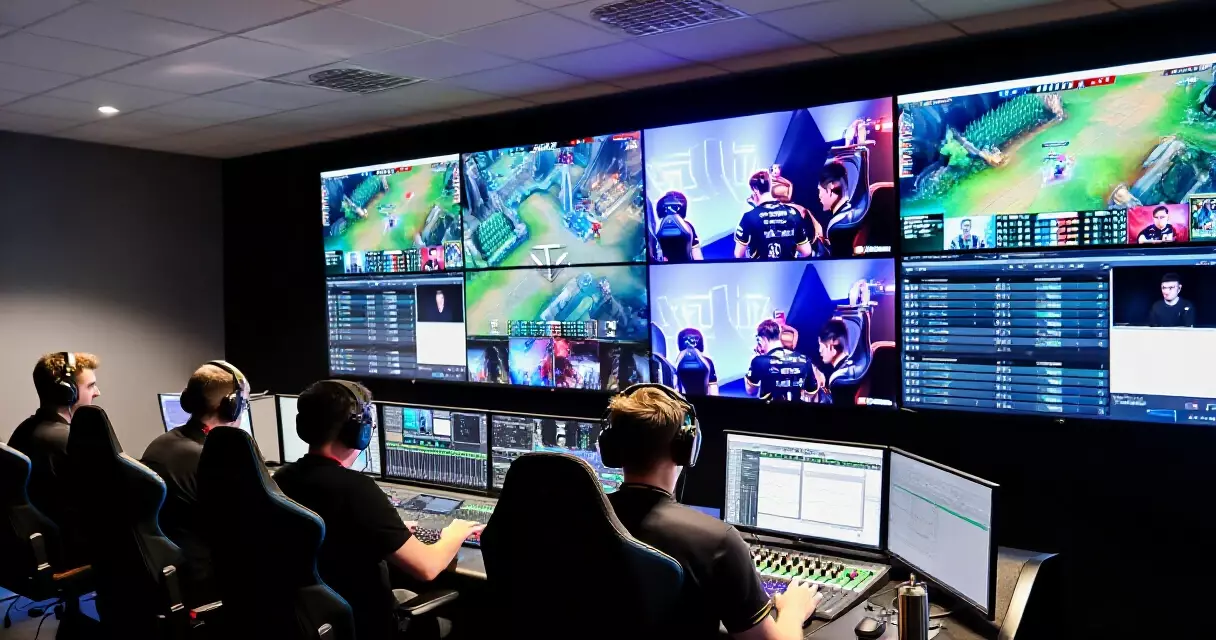
The production infrastructure behind esports broadcasts evolved alongside the rights market. Early tournament streams ran on consumer-grade setups; by 2018-2019, franchised leagues like the Overwatch League and the Call of Duty League were built around purpose-designed broadcast facilities, full crews, and production values competing directly with traditional sports telecasts.
How Esports Broadcast Deals Actually Work
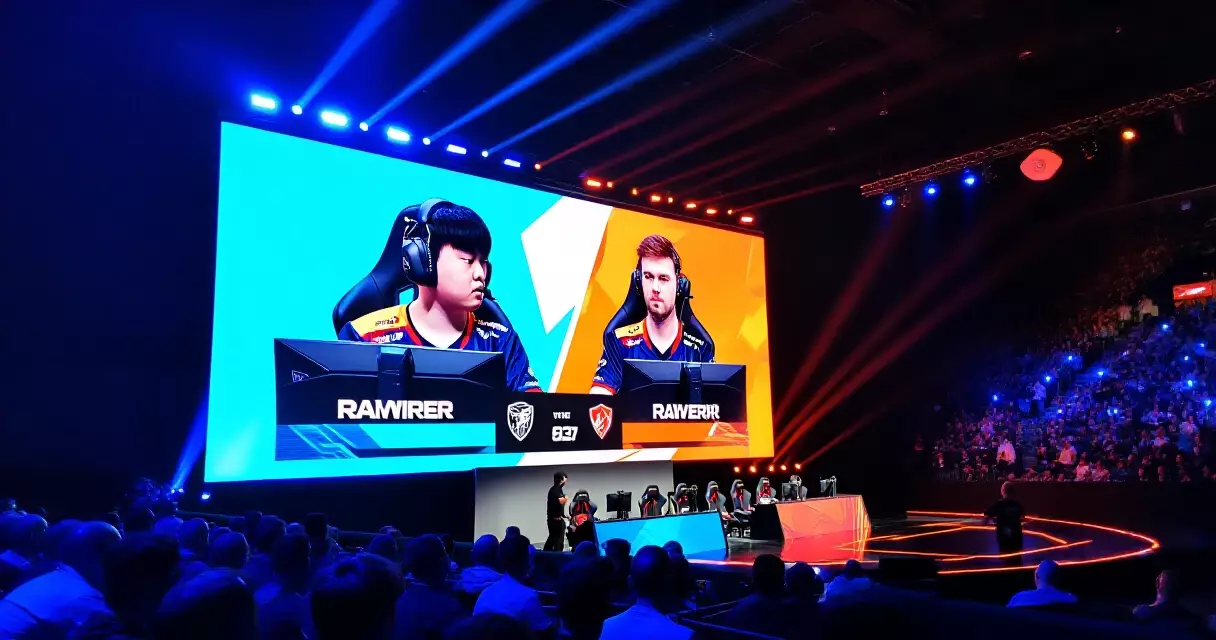
The structure of an esports broadcast deal depends on which layer of the rights stack is being licensed. At the top sits the publisher, whose IP license terms govern what can be broadcast and under what conditions. Beneath that, tournament organizers and leagues negotiate with platforms for the actual distribution rights to their events. Fans see only the end result–a stream on Twitch, a broadcast on ESPN, or a YouTube premiere–without seeing the contracts behind it.
Rights packages are typically carved up along several dimensions:
- Exclusivity: A deal can be fully exclusive (only one platform may show the content), non-exclusive (multiple platforms may distribute simultaneously), or territory-exclusive (exclusive in specific countries or regions).
- Platform scope: Modern deals specify which platforms are covered–linear TV, streaming, mobile, social media clips, podcasts, and even VR or second-screen apps.
- Content types: Live matches, VOD replays, highlights, short-form clips, and documentary content are frequently licensed separately or under tiered pricing.
- Duration: Deal lengths have ranged from single-event licenses to multi-year franchised arrangements covering entire seasons.
- Revenue splits: Some deals are flat-fee (platform pays the rightsholder a fixed sum), while others include ad-revenue shares, subscription revenue shares, or performance bonuses tied to viewership thresholds.
The shift toward multi-platform strategies has been one of the defining trends of recent years. Rather than signing a single exclusive deal with one broadcaster, publishers and leagues have started packaging rights into bundles: live matches go to Streaming Platform A, VOD rights go to Platform B, and highlight packages are licensed broadly to maximize reach. This approach mirrors what traditional sports leagues have done with NFL Sunday Ticket, Thursday Night Football, and Monday Night Football spread across different networks and streaming services.
For a deeper look at how tournaments generate revenue beyond just broadcast deals, the layered business model around esports events helps explain why rights are priced the way they are.
Streaming Contracts: Twitch, YouTube, and the Platform Wars
Streaming platforms have been the primary buyers of esports rights since Twitch established early dominance as the go-to destination for gaming content. Twitch’s strategy was straightforward: lock up the most valuable competitive gaming content through exclusive or preferred streaming deals to build habitual viewing and keep users on the platform. The Overwatch League’s $45 million per year Twitch deal was the most prominent example, but similar arrangements covered events in Counter-Strike: Global Offensive, League of Legends regional leagues, and various Fighting Game Community circuits.
YouTube Gaming entered the streaming rights market aggressively around 2019-2020, signing deals with leagues and tournament organizers including ESL’s Pro League and the CDL (Call of Duty League). YouTube’s pitch centered on its reach, its recommendation algorithm’s ability to grow audience over time, and the monetization options available through its ad ecosystem. IMG’s Digital Trends reporting in 2026 identified YouTube as the top priority platform for sports distribution for a second consecutive year, reflecting how its sports strategy has matured.
Both platforms compete along different axes. Twitch offers live-native features like real-time chat, PogChamp reactions, subscriptions, and a culture built around gaming. YouTube offers broader discoverability, stronger VOD performance, and a younger-skewing audience that may be encountering esports content for the first time. Rights holders increasingly see them as complementary rather than mutually exclusive, which has accelerated the shift away from single-platform exclusivity deals.
Newer entrants have also carved out niches. Kick, the streaming platform launched in 2023 with a creator-friendly revenue split, has attracted some gaming streamers and smaller tournament rights. Facebook Gaming secured ESL rights for a period before pivoting away from its gaming strategy. The landscape remains fluid, and any platform willing to write a significant check remains a potential rights buyer.
Television Rights: ESPN, TBS, and Linear Broadcast Experiments
Linear television was slower to embrace esports than streaming, but the experiments have been significant. ESPN aired the Heroes of the Dorm college League of Legends tournament as early as 2015, a move that generated both genuine curiosity and considerable skepticism from traditional sports observers who questioned whether esports would ever translate to TV audiences. The results were mixed but encouraging enough to sustain further experiments.
Turner Broadcasting’s ELeague, launched in 2016 on TBS, represented one of the most sustained attempts to integrate esports into traditional broadcast television. ELeague featured Counter-Strike: Global Offensive and later other titles, with primetime TBS slots and a companion Twitch stream that captured viewers who preferred online watching. The dual-platform model was ahead of its time–the simultaneous broadcast and stream structure that major traditional sports leagues adopted years later was already being tested in esports.
Disney–via ESPN and ABC–has shown recurring interest in esports. The Overwatch League appeared on ESPN, Disney XD, and ABC during its franchised years, giving Blizzard Entertainment’s competitive league the most mainstream TV exposure any esports property has received in the United States. Those broadcasts did not generate the same viewership density as traditional sports on the same channels, but they represented meaningful brand legitimacy that translated into sponsorship conversations with non-endemic advertisers.
Linear TV has given esports brand legitimacy rather than raw viewership numbers–but in sponsor conversations, that legitimacy often matters more than the overnight ratings.
The broader sports rights market context matters here. Global sports media rights spending reached $67.34 billion in 2026 according to S&P Global Market Intelligence and Ampere Analysis, up 9.6% year over year. North America drove more than half that total, with the United States accounting for $32.8 billion on its own. That context shows how much more negotiating use traditional sports retain–and why esports rights, even at $500 million globally, remain a small but fast-growing slice of a much larger pie.
The Biggest Deals and What They Reveal About Market Value
Analyzing the landmark deals in esports media rights history shows how rapidly market expectations have evolved and where the ceiling may lie.
| Deal | Parties | Reported Value | Platform | Key Feature |
|---|---|---|---|---|
| Overwatch League streaming rights | Blizzard / Twitch | ~$45M/year | Twitch | Exclusive streaming rights across all OWL matches |
| Overwatch League TV deal | Blizzard / ESPN/Disney | Undisclosed | ESPN, Disney XD, ABC | Mainstream linear TV exposure for franchised esports |
| ELeague CS:GO | Turner / Valve (via FACEIT) | Undisclosed | TBS + Twitch | Primetime TV plus simultaneous stream model |
| ESL Pro League | ESL / YouTube Gaming | Undisclosed | YouTube Gaming | Multi-year exclusive streaming agreement |
| CDL (Call of Duty League) | Activision / YouTube | Undisclosed | YouTube | Season-long exclusive YouTube rights for inaugural season |
Several patterns emerge from reviewing these deals. First, publisher backing correlates with deal size–properties with strong publisher support from Blizzard, Riot, or Activision attract the largest platform commitments. Second, exclusivity commands a premium but is becoming harder to justify commercially as multi-platform reach becomes more important to sponsors. Third, the most significant deals have tended to be structured as multi-year commitments rather than event-by-event licenses, reflecting platforms’ preference for predictable content pipelines.
North America’s dominance in this market is consistent with broader industry data. Newzoo reported that 44% of all esports media rights deals were made in North America, a concentration that reflects the density of media buyers, platform headquarters, and publisher decision-makers located in the United States. Understanding how tournament organizers like ESL, PGL, and BLAST position their broadcast products helps explain why North American platforms hold so much use in these negotiations.
How Revenue Flows Through the Rights Chain
Understanding who gets paid, and how much, requires mapping the rights chain from publisher to fan. The money moves through several layers, and the distribution between them varies significantly depending on deal structure.
| Rights Layer | Who Controls It | Revenue Sources | Typical Deal Structure |
|---|---|---|---|
| IP / Game Rights | Publisher (Riot, Valve, Activision, etc.) | License fees, royalties, revenue share | Master license to tournament organizer or league |
| Tournament/League Rights | Organizer (ESL, PGL, BLAST, league entity) | Platform fees, sponsorship allocation, ticket revenue | Flat fee or revenue share with broadcaster/platform |
| Broadcast Distribution Rights | Broadcaster or streaming platform | Subscriptions, advertising, affiliate revenue | Exclusive or non-exclusive license from organizer |
| Secondary Content Rights | Shared between organizer and platform | Highlight licensing, clip monetization, archive sales | Negotiated separately or as part of main deal |
Media rights and publisher fees combined generated $338.5 million for the U.S. esports market in 2023, according to DemandSage, against a total U.S. market value of approximately $871 million that year. That 39% share for these two revenue categories underscores how central content licensing has become to the overall business model. For context, player salaries and team operating costs must ultimately trace back to this rights revenue flowing through the system.
Platforms generate revenue from esports content through several mechanisms: advertising sold against live streams, subscription revenues where esports content is a retention driver, merchandise and ticket integrations built into broadcast interfaces, and data licensing to brands who want audience measurement. The data angle has become increasingly important as streaming platforms can offer advertisers more precise audience targeting than traditional broadcast TV ever could.
Current Trends Shaping Esports Media Rights in 2026
Several forces are converging to reshape how esports rights are packaged, priced, and distributed in 2026.
Streaming-first strategies are now mainstream. What was once a secondary distribution channel is now the primary one. Rights holders design deals around streaming reach first and linear TV second, if at all. This inversion has been accelerating since 2020, and by 2026 it is the default assumption in almost every rights negotiation. Streaming Media’s State of Live Sports Streaming 2026 report confirms that streaming has replaced linear as the strategic center of gravity for sports content distribution, including esports.
Rights packages are becoming more granular. Instead of one master deal covering all content, organizers and publishers are carving rights into finer slices: different platforms get different content types, different time windows, or different geographic territories. This requires more legal and licensing infrastructure but allows rights holders to maximize revenue across a wider buyer set.
YouTube’s use has grown. IMG’s Digital Trends analysis identified YouTube as the top priority for sports distribution in 2026, marking the second consecutive year the platform held that position. For esports, YouTube’s advantage lies in discoverability–new fans finding competitive gaming through recommendation algorithms rather than navigating directly to Twitch. That audience development function is worth real money to publishers trying to grow their games.
The broader sports rights market is at record levels. Global sports rights spending of $67.34 billion in 2026 (S&P Global Market Intelligence) is partly driven by North American renewal cycles, and that premium-content pricing environment affects how platforms value esports rights by comparison. When NFL rights cost billions annually, even a highly-viewed esports event commands less per-viewer than the absolute audience numbers might suggest.
Publisher control remains structurally dominant. Unlike traditional sports, where leagues have largely consolidated rights governance, esports rights are still defined by game publisher decisions. When a publisher changes its approach–as has happened with Riot’s international league restructuring and Activision’s CDL adjustments–the entire rights market for that title shifts. Broadcasters and platforms must remain adaptable in a way that has no real parallel in conventional sports rights markets.
These trends also affect how tournament revenue models are constructed, since broadcast deals are a foundational revenue pillar for any major esports event.
Esports Media Rights FAQ
What exactly do esports media rights cover?
Esports media rights cover the licensed right to distribute, broadcast, or otherwise make available competitive gaming content. This includes live tournament and league matches, recorded replays, highlight packages, short-form clips, and related shoulder programming such as pre-show and post-show analysis. The scope of what is covered depends on the specific license agreement. Some deals cover only live matches; others extend to all content produced in connection with an event or season. Modern deals increasingly include digital platform rights, social media clip licenses, and VOD archival rights as standard components rather than optional additions. The game publisher’s IP license sits above all of this, meaning that even a validly negotiated broadcast deal must comply with the publisher’s terms for what can be shown and how.
Who owns esports media rights–publishers, leagues, or tournament organizers?
Ownership is layered. The game publisher holds intellectual property rights over the game itself, which means any broadcast of competitive play requires the publisher’s permission at some level. Tournament organizers and leagues hold rights to the specific event format, production, and broadcast presentation they create. In practice, publishers either grant broad licenses to organizers (as Valve does with Counter-Strike), run their own leagues and control rights directly (as Riot does with the LCS), or license rights to third-party operators under restrictions (as Activision did with the Overwatch League). Teams and players generally do not hold primary media rights, though some contracts grant them secondary rights to rebroadcast matches on their own channels. The specific publisher determines how centralized or distributed the rights structure is for any given title.
How big is the esports media rights market in the United States?
Precise U.S.-only figures are difficult to find in public neutral sources because most market data is reported globally. What is clear is that the United States is the dominant player in North America, which in turn accounts for 38.7% of the global esports industry according to Coherent Market Insights. Newzoo reported that 44% of all esports media rights deals were made in North America, pointing to the U.S. as the center of gravity for rights transactions. The U.S. esports market overall was valued at $536.4 million in 2025 by IMARC Group, with media rights and publisher fees collectively representing $338.5 million of the total U.S. market’s revenue mix in 2023 according to DemandSage. Those numbers suggest U.S. media rights alone are worth hundreds of millions of dollars annually and growing at a pace that significantly outstrips overall market expansion.
Are esports rights deals usually exclusive?
Exclusivity in esports rights is common but not universal, and the trend over time has moved away from strict single-platform exclusivity toward more flexible arrangements. Early landmark deals like the Overwatch League’s Twitch agreement were structured as exclusive streaming contracts, which justified the high price tag by giving Twitch a content advantage over YouTube Gaming. More recently, publishers and organizers have found that non-exclusive or territory-segmented deals allow them to reach more viewers across more platforms simultaneously, serving both audience growth goals and sponsorship conversations with brands who want maximum reach. The rise of free-to-watch streaming as the dominant distribution model makes exclusivity harder to justify when broader access generates more viewership data and more advertising inventory overall.
Why do streaming platforms pay so much for esports rights?
Streaming platforms pay for esports rights because live competitive gaming content delivers something algorithmic recommendation cannot: scheduled, appointment-viewing events that bring users to the platform at predictable times. Esports also delivers demographics that advertisers and subscription platforms find valuable–18-34 year old viewers who are heavy internet users and often difficult to reach through traditional media. Beyond demographics, live rights create stickiness: if the only place to watch a major Counter-Strike or League of Legends tournament is Platform X, fans of those titles visit Platform X on tournament days regardless of other preferences. The data advantage is also significant–streaming platforms can measure viewer behavior, session length, and ad engagement far more precisely than linear TV broadcasters, making esports audiences particularly valuable for performance-based advertising campaigns.
How do esports media rights differ from traditional sports rights?
The most important difference is the role of game publisher IP. In traditional sports, the league or governing body owns the event format and sells broadcast rights independently. In esports, the game is itself copyrighted software, and no competition can exist without the publisher’s cooperation. This gives publishers structural use that no traditional sports league has over broadcasters. A second major difference is the global nature of the audience from the start–esports audiences are distributed internationally by default, making territory-based rights carving more complex. Third, esports deals are frequently shorter in duration and less stable than traditional sports contracts because the popularity of specific games can rise or fall rapidly. A title that commands large rights fees today may lose its audience within a few years as players migrate to newer games, a risk with no clean equivalent in football or baseball rights negotiations.
Is esports media rights revenue growing faster than other esports revenue streams?
Yes, by most available measures. Grand View Research projects the global esports media rights segment to grow at a 24.4% CAGR through 2030, which is faster than many other esports revenue categories. Coherent Market Insights forecasts the media rights segment to account for 40% of total global esports market value by 2026, suggesting it is becoming the dominant revenue category. Newzoo’s earlier analysis described media rights as the fastest-growing esports revenue category when the segment was generating close to $100 million globally, and subsequent growth has validated that assessment. The esports content licensing market more broadly is expanding at 26.4% CAGR according to market.us, meaning the ecosystem around rights–including highlight licensing, creator content, and branded programming–is also growing rapidly alongside pure broadcast deals. Relative to prize pool growth, rights revenue expansion has been significantly faster.
What happens when an esports rights deal expires or falls apart?
When an esports rights deal expires or a league loses its primary broadcast partner, the immediate consequences depend on how much of the league’s revenue and audience was tied to that platform. The Overwatch League’s transition away from its Twitch deal illustrated the risk: viewership fragmented as the property moved platforms, and the league’s commercial trajectory shifted significantly. Publishers and organizers with strong direct relationships with fans–through their own YouTube channels, official websites, or in-game viewing modes–are somewhat insulated from platform dependency. The growing model of owned-and-operated distribution, where the publisher or organizer streams directly rather than through a third-party platform, reduces rights deal risk but also reduces the upfront guaranteed revenue that a platform rights fee provides. For players, deal disruptions can affect salary guarantees, as salary transparency issues in esports often trace back to league revenue uncertainty driven by rights negotiations.
Sources
- Grand View Research, “Esports Market Analysis” – https://www.grandviewresearch.com/industry-analysis/esports-market
- Grand View Research, “Media Rights – Esports Market Statistics, 2024–2030” – https://www.grandviewresearch.com/horizon/statistics/esports-market/revenue-source/media-rights/global
- S&P Global Market Intelligence / Ampere Analysis, “Global sports rights climb to over $67 billion in 2026” – https://www.spglobal.com/market-intelligence/en/news-insights/research/2026/04/global-sports-rights-climb-to-ove-67-billion-in-2026
- Newzoo, “Understanding Media Rights in Esports” – https://newzoo.com/resources/trend-reports/understanding-media-rights-in-esports-newzoo-esports-bar
- Coherent Market Insights, “Esports Market Size, Share and Opportunities, 2026–2033” – https://www.coherentmarketinsights.com/market-insight/esports-market-4191
- IMARC Group, “United States Esports Market” – https://www.imarcgroup.com/united-states-esports-market
- Streaming Media / Ampere Analysis, “The State of Live Sports Streaming 2026” – https://www.streamingmedia.com/Articles/Editorial/Featured-Articles/The-State-of-Live-Sports-Streaming-2026-173832.aspx
- DemandSage, “Esports Statistics” – https://www.demandsage.com/esports-statistics/
- Wikipedia, “Sports broadcasting contracts in the United States” – https://en.wikipedia.org/wiki/Sports_broadcasting_contracts_in_the_United_States
- market.us, “Esports Content Licensing Market” – https://market.us/report/esports-content-licensing-market/
Top Esports Organizations 2026: Teams, Rosters, and Performance Rankings
Related Reading
- Esports Media Rights Explained: How Broadcast Deals Work
- Twitch vs YouTube vs ESPN: Esports Streaming Rights Compared
- Activision Blizzard Esports Media Rights Review: OWL and CDL Lessons
- BLAST Premier Media Rights Review: Regional Exclusivity and Revenue
- ESL FACEIT Hub Media Rights Review: Broadcast Access Explained
- PGL Media Rights Review: CS2 and Dota 2 Broadcast Deals
- Riot Games Media Rights: How LoL and Valorant Deals Work
- YouTube Gaming Esports Rights Review: Leagues, Deals, and Rivals