
Summary
When the League of Legends Championship Series moved its exclusive streaming home to ESPN+ and the Overwatch League signed a landmark deal with YouTube, it marked a turning point that few in the industry had predicted: traditional sports broadcasters and...
Table of contents
- 1 How Esports Streaming Rights Actually Work
- 2 Twitch: The Grassroots Default and Its Limits
- 3 YouTube Gaming: Rights Deals and the OWL Blueprint
- 4 ESPN and Traditional Broadcasters: The LCS and Beyond
- 5 Platform Comparison: Rights, Reach, and Revenue Models
- 6 The Economics Behind Esports Rights Deals
- 7 Rights Fragmentation and What It Means for Viewers
- 8 The Road Ahead: What 2026 and Beyond Looks Like
- 9 Frequently Asked Questions
- 9.1 Which platform holds the most esports streaming rights in the U.S.?
- 9.2 Why did the Overwatch League leave Twitch for YouTube?
- 9.3 Does ESPN+ have exclusive esports content?
- 9.4 How does Twitch make money from esports if it does not have exclusive rights?
- 9.5 Could Amazon use both Twitch and Prime Video for esports rights?
- 9.6 Why do esports rights deals expire or change platforms?
- 9.7 What is subscription fatigue and how does it affect esports fans?
- 9.8 Are esports rights treated differently from traditional sports rights legally?
- 10 Related Reading
- 11 Sources
When the League of Legends Championship Series moved its exclusive streaming home to ESPN+ and the Overwatch League signed a landmark deal with YouTube, it marked a turning point that few in the industry had predicted: traditional sports broadcasters and tech giants were now competing head-to-head for the same digital audience. Today, with global streamers projected to spend $14.2 billion on sports and esports rights in 2026 (Ampere Analysis), the question of who holds the biggest esports streaming rights has never been more consequential for publishers, teams, and fans alike.
How Esports Streaming Rights Actually Work
Esports streaming rights follow the same basic commercial logic as traditional sports broadcast deals, but with one key difference: game publishers typically retain more control over their IP than sports leagues do. A publisher like Riot Games or Activision Blizzard can dictate not only who streams their events but also how the stream is produced, whether third-party organizers can sell commentary rights, and whether clips can be redistributed. Understanding this structure is essential before comparing platforms. For a deeper breakdown of how broadcast and streaming deals are structured across the industry, see our pillar guide on esports media rights.
Rights packages in esports are typically sold by game title, regional territory, and event tier. A platform might hold the North American rights for a specific league but not the global rights for the same game’s World Championship. This layered structure means that fans in the United States often need to check multiple platforms depending on which tournament they want to watch, a friction point that mirrors the subscription fatigue already affecting traditional sports viewers.
Twitch: The Grassroots Default and Its Limits
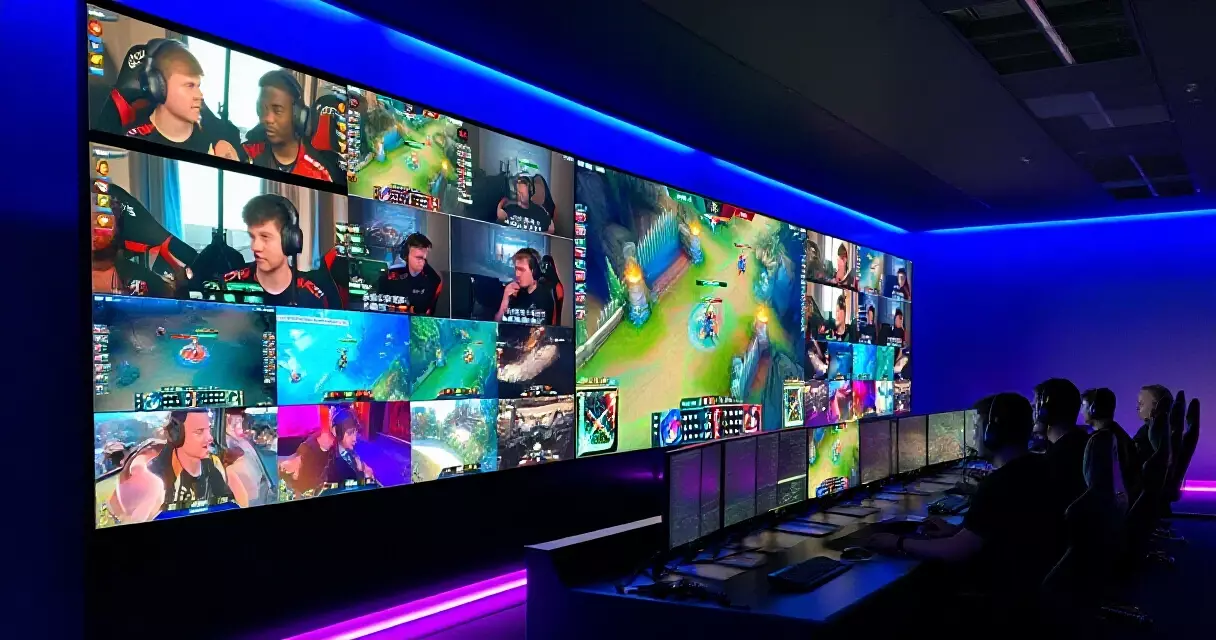
Twitch built its reputation as the home of esports long before rights deals became a boardroom conversation. The platform launched in 2011 and by the mid-2010s had become the default destination for competitive gaming content, from amateur tournaments to major league broadcasts. Its audience discovery tools, low-barrier streaming infrastructure, and built-in community culture gave publishers an easy path to reach engaged viewers without cutting complex rights agreements.
Today, Twitch retains its position as the largest single destination for esports viewership in terms of raw hours watched, but its grip on premium exclusive rights has loosened considerably. Several high-profile deals that once lived on Twitch have migrated to competing platforms, and the eNASCAR Coca-Cola iRacing Series is now split between YouTube and Twitch simultaneously, illustrating how publishers hedge by distributing across multiple platforms rather than granting full exclusivity to one.
Twitch’s model is primarily non-exclusive at the league level, meaning most content that appears on Twitch can also appear elsewhere. Where Twitch does hold ground is in publisher-run channels and individual streamer audiences: game developers often maintain official Twitch channels for ranked broadcasts, developer showcases, and unofficial tournaments where Twitch’s community infrastructure still outperforms rivals. The platform’s revenue model—primarily subscriptions and bits—also benefits smaller organizers who cannot access guaranteed rights fees from larger platforms.
YouTube Gaming: Rights Deals and the OWL Blueprint
YouTube’s most significant move in esports rights came with the Overwatch League. Blizzard Entertainment signed a deal with YouTube making it the exclusive streaming home of OWL globally, a contract that represented a fundamental shift in how publishers thought about platform relationships. Rather than splitting rights across Twitch and owned channels, Blizzard concentrated everything on one platform in exchange for a guaranteed fee reported at the time to be worth hundreds of millions of dollars over multiple years.
The OWL deal became both a case study and a cautionary tale. YouTube gained exclusive access to one of the most prominent esports leagues in the world, but viewership numbers on the platform were consistently lower than what OWL had achieved on Twitch during its inaugural 2018 season. The episode demonstrated that platform exclusivity does not automatically transfer an audience: viewers accustomed to discovering esports content on Twitch did not always follow the content when it moved.
Despite the mixed OWL outcome, YouTube has continued pursuing esports rights across multiple titles. The eNASCAR iRacing Series co-streams on YouTube, and Google’s broader sports rights strategy—which now includes NFL Sunday Ticket via YouTube TV—positions the platform as a serious long-term rights competitor. YouTube TV’s acquisition of NFL Sunday Ticket signaled that Google is willing to write checks at a scale that rivals traditional broadcasters, a capability that smaller esports rights packages can only benefit from in terms of negotiating use.
“The Overwatch League’s move to YouTube proved that even the biggest esports brand in the world could not simply drag its audience from one platform to another—rights deals move content, but communities move on their own terms.”
ESPN and Traditional Broadcasters: The LCS and Beyond
ESPN’s entry into esports rights represented a legitimization moment for the industry. The League of Legends Championship Series moved to ESPN+ as its exclusive U.S. streaming home, placing one of North America’s most-watched esports leagues inside the same rights portfolio as NBA games, NHL matches, and major soccer properties. According to data on Wikipedia’s sports broadcasting contracts page, the LCS is explicitly listed under ESPN+ alongside traditional sports properties, underscoring how far the platform has come in treating competitive gaming as a recognized broadcast product.
ESPN’s approach differs from YouTube and Twitch in one important structural way: it is a traditional rights buyer operating within a media ecosystem that includes both streaming and linear broadcast. This means esports content on ESPN+ can in theory reach viewers via the Disney+ bundle, Hulu, and ABC simulcasts in ways that pure streaming platforms cannot replicate. The same infrastructure that carries NBA playoff games can carry LCS Championship broadcasts to authenticated cable subscribers.
The BLAST Pro Series, another major Counter-Strike tournament circuit, was at one point carried by Eleven Sports Network in the United States, another example of how traditional broadcast infrastructure has intersected with esports rights. Meanwhile, ELeague—the joint venture between Turner Broadcasting and WME-IMG that produced professional CS:GO tournaments—aired on TBS, a linear cable channel, before the format evolved. These examples illustrate that the path from grassroots streaming to broadcast television has been traveled before, even if most esports content still lives primarily online.
Platform Comparison: Rights, Reach, and Revenue Models
Comparing Twitch, YouTube, and ESPN across the dimensions that matter most to publishers, teams, and fans reveals clear patterns in how each platform approaches esports rights. The table below summarizes the key differences based on publicly available information about their current rights holdings and business models. For deeper context on how broadcast revenue flows between these deals, the explainer on esports broadcast deal structures covers the financial mechanics in detail.
| Platform | Key Esports Rights (U.S.) | Rights Model | Revenue Share for Publishers | Audience Discovery |
|---|---|---|---|---|
| Twitch | eNASCAR iRacing (co-stream), publisher channels, grassroots tournaments | Primarily non-exclusive; revenue share via subscriptions/bits | Subscription splits, ad revenue; no typical rights fee for non-exclusive content | Strong; browse/category discovery built into platform |
| YouTube / YouTube Gaming | Overwatch League (exclusive, concluded), eNASCAR iRacing (co-stream), NFL Sunday Ticket (via YouTube TV) | Exclusive rights deals with guaranteed fees for premium properties | Guaranteed rights fee + ad revenue share | Strong; search and recommendation engine advantage |
| ESPN+ | League of Legends Championship Series (exclusive U.S. streaming), selected esports windows | Exclusive rights within Disney ecosystem; can simulcast to ABC/Hulu | Structured rights fee; no direct creator revenue share | Moderate; relies on existing sports audience crossover |
| Amazon Prime Video | Limited esports-specific rights; strong in traditional sports (NBA, 66 games/season) | Exclusive premium sports rights; projected $3.8B sports rights spend in 2026 | Structured rights fee | Moderate; relies on Prime subscriber base |
| Peacock / NBC | Limited dedicated esports; strong in traditional sports (NBA, up to 100 games/season) | Exclusive premium sports rights | Structured rights fee | Moderate; established news/sports audience |
The table reveals a pattern: platforms with the deepest pockets for rights fees—YouTube and ESPN—have been the ones to secure exclusive esports deals, while Twitch retains dominance through volume and community infrastructure rather than exclusivity. Amazon, despite projecting $3.8 billion in sports rights spend for 2026 according to Ampere Analysis data reported by SportsPro, has focused that spend on traditional sports rather than esports to date.
The Economics Behind Esports Rights Deals
Understanding why platforms pursue or pass on esports rights requires looking at the economics from both sides of the deal. For publishers, a rights deal provides upfront guaranteed revenue that is independent of viewership performance on the day. This matters enormously in esports, where tournament viewership can fluctuate significantly based on team popularity, meta shifts, and competing events. A guaranteed rights fee from YouTube or ESPN provides financial stability that purely ad-supported Twitch streams cannot replicate at the league level.
For platforms, esports rights serve a dual purpose: they attract a young, digitally-native demographic that is difficult to reach through traditional sports programming, and they provide content that drives subscription sign-ups and platform stickiness. The NBA’s $76 billion rights deal—split across ESPN, NBC/Peacock, and Amazon for the 2025–2036 period according to The Current’s rights guide—illustrates the same logic at a larger scale: rights are bought to anchor subscriber bases, not just to generate ad revenue.
The fragmentation of rights across multiple platforms also has a revenue implication for the broader esports ecosystem. When rights are split between platforms—as with the eNASCAR iRacing Series on both Twitch and YouTube—total reach may increase, but the rights fees tend to be smaller than those attached to full exclusivity deals. Publishers face a tradeoff between maximizing total audience size through non-exclusive distribution and maximizing upfront revenue through exclusive agreements. The right answer depends on the publisher’s current financial position and strategic priorities, which is why different titles have ended up on different platforms. This dynamic is explored in greater depth in our coverage of how esports tournaments generate revenue.
“For publishers, the choice between Twitch and a rights-fee platform is ultimately a question of whether guaranteed upfront revenue outweighs the community depth that only an incumbent platform can offer.”
Rights Fragmentation and What It Means for Viewers
The most immediate consequence of the current rights landscape for esports fans is the need to maintain multiple subscriptions across different platforms to follow multiple titles. A viewer who follows League of Legends, Overwatch, and Counter-Strike in 2026 may need ESPN+, a YouTube account, and Twitch to access all the content they care about—and that does not account for regional variations where rights packages differ between North America, Europe, and Asia-Pacific.
This fragmentation mirrors a trend already well-documented in traditional sports. A TV Technology survey from March 2026 found that nearly 41% of media professionals expected global streamers to hold the greatest structural power in sports media that year, with 39.4% pointing to leagues and rights holders themselves—a near-even split that reflects genuine uncertainty about where power sits in the ecosystem. The same dynamic applies in esports, where publishers, platforms, and third-party organizers all claim pieces of the rights value chain.
There is also a discoverability problem. Esports fans who are new to a title are far more likely to stumble across content on Twitch’s browse page or YouTube’s recommendation engine than on ESPN+, which requires active subscription management and deliberate navigation. This creates a paradox where the platforms offering the largest guaranteed rights fees may actually deliver lower organic audience growth for a publisher’s title, because they lack the community discovery infrastructure that Twitch and YouTube built specifically for gaming content. For an inside look at how tournament broadcasts are assembled regardless of platform, see our breakdown of esports tournament broadcast production.
| Rights Type | Typical Platform | Exclusivity Level | Example (U.S.) | Source |
|---|---|---|---|---|
| Major league – exclusive streaming | ESPN+, YouTube | Full exclusive | LCS on ESPN+; OWL on YouTube (concluded) | Wikipedia – Sports Broadcasting Contracts |
| Co-stream / non-exclusive | Twitch + YouTube simultaneously | Non-exclusive | eNASCAR iRacing on Twitch and YouTube | Wikipedia – Sports Broadcasting Contracts |
| Linear cable broadcast | TBS, Eleven Sports | Linear-exclusive | ELeague on TBS; BLAST on Eleven Sports | Wikipedia – Sports Broadcasting Contracts |
| Pay-per-view / premium event | ESPN+ (WWE model) | Full exclusive | WWE Premium Live Events on ESPN (from 2026) | WWE corporate press release, Aug 2025 |
| Owned channel / free stream | Twitch, YouTube | Non-exclusive | Publisher-run channels, developer showcases | Platform public documentation |
The Road Ahead: What 2026 and Beyond Looks Like
Several trends are converging to reshape the esports streaming rights landscape in the near term. First, the entrance of Amazon Prime Video as a major sports rights spender—projected at $3.8 billion in 2026 by Ampere Analysis—makes it a credible future bidder for premium esports packages, particularly given Amazon’s existing relationship with the gaming audience through Twitch, which it owns. A scenario where Amazon uses Twitch as a grassroots feeder platform while Amazon Prime Video holds premium exclusive rights for specific titles is commercially plausible and would change the competitive dynamic significantly.
Second, the rise of direct-to-consumer sports bundles is likely to influence how esports rights are packaged. ESPN’s move into a standalone DTC service—anchored by deals like the WWE Premium Live Events agreement announced in August 2025—creates a template for how esports content could be bundled alongside premium sports content to justify higher subscription prices. If ESPN’s DTC service succeeds, other platforms will likely follow, and esports rights packages could become anchor content for sports-focused streaming bundles aimed at younger subscribers.
Third, multi-platform rights splitting is becoming the norm rather than the exception. The NBA’s 2025–2036 deal, distributed across ESPN (80 games/season), NBC/Peacock (up to 100 games/season), and Amazon (66 games/season) per data from The Current, illustrates that even the most valuable sports properties now expect to be split. Esports publishers, who are often looking to maximize both revenue and reach, will likely follow this model—meaning the era of one-platform exclusivity for major esports titles may be shorter-lived than the OWL deal made it appear.
Frequently Asked Questions
Which platform holds the most esports streaming rights in the U.S.?
No single platform holds the most esports rights across all titles in 2026. Twitch has the largest volume of esports content by hours streamed, but most of that is non-exclusive. For exclusive league rights, ESPN+ holds the League of Legends Championship Series (LCS), while YouTube held the Overwatch League under its now-concluded exclusive deal. The eNASCAR iRacing Series is split between Twitch and YouTube simultaneously. The picture varies significantly by game title, region, and event tier, so the answer depends entirely on which specific title or tournament you are asking about.
Why did the Overwatch League leave Twitch for YouTube?
The Overwatch League moved to YouTube because YouTube offered Blizzard Entertainment a guaranteed rights fee that Twitch declined to match at the same scale. The deal gave Blizzard predictable revenue independent of viewership performance, which was commercially attractive as the league was scaling up. However, the transition revealed a significant challenge: the OWL audience was heavily concentrated on Twitch, and moving the content to YouTube did not automatically transfer viewer behavior. Viewership on YouTube was consistently reported as lower than OWL’s Twitch numbers in its first season, making the deal a cautionary example for publishers considering platform switches purely on financial grounds.
Does ESPN+ have exclusive esports content?
Yes. ESPN+ is the exclusive U.S. streaming home of the League of Legends Championship Series, as listed in sports broadcasting contracts documentation. The LCS deal represents ESPN’s most prominent esports rights holding in North America, placing it alongside the platform’s traditional sports properties including NHL games and select NBA content. ESPN’s parent company Disney can also route content across ABC, Hulu, and the Disney+ bundle, giving it more distribution flexibility than pure streaming competitors. The WWE Premium Live Events rights deal announced in August 2025, taking effect in 2026, demonstrates ESPN’s broader appetite for exclusive rights across entertainment and sports categories.
How does Twitch make money from esports if it does not have exclusive rights?
Twitch generates revenue from esports content primarily through advertising, channel subscriptions (where viewers pay a monthly fee to support a channel), and its virtual currency system called Bits. For publisher-run channels, Twitch shares a portion of subscription and ad revenue. The platform does not typically pay upfront rights fees for non-exclusive content—instead, it provides the infrastructure and audience discovery tools in exchange for hosting the stream. This model benefits smaller organizers and publishers who cannot negotiate guaranteed fees but want access to Twitch’s large, esports-native audience. For major league rights, however, platforms willing to write upfront checks have consistently outbid Twitch.
Could Amazon use both Twitch and Prime Video for esports rights?
This is one of the most strategically interesting possibilities in the current rights landscape. Amazon owns Twitch outright, making it the only major tech company that controls both a grassroots gaming streaming platform and a premium sports rights platform within the same corporate structure. A tiered model—where Twitch hosts community-level content and open qualifiers while Amazon Prime Video holds exclusive rights for league finals and World Championships—would allow Amazon to extract value from both audience segments simultaneously. Amazon Prime Video is projected to spend $3.8 billion on sports rights in 2026 according to Ampere Analysis, which gives it the financial capacity to pursue significant esports packages if it chose to prioritize them.
Why do esports rights deals expire or change platforms?
Esports rights deals typically run for two to four years before coming up for renegotiation, which is shorter than major traditional sports deals partly because the industry is still establishing what rights are worth. When a deal expires, publishers assess whether the platform delivered the promised audience reach and whether a better financial offer is available elsewhere. Platform competition for rights has also intensified as more major tech and media companies enter the space, which means publishers can often secure better terms at renewal than they did at the original signing. The Overwatch League’s concluding deal with YouTube is an example of how a high-profile exclusive arrangement can end after both parties evaluate the outcomes.
What is subscription fatigue and how does it affect esports fans?
Subscription fatigue refers to the frustration and cost burden that viewers experience when they need multiple paid subscriptions across different platforms to follow the content they care about. In traditional sports, Boardroom and other industry commentators have documented this as a growing problem following the fragmentation of rights across services like ESPN+, Peacock, Amazon Prime Video, and Paramount+. In esports, the same dynamic applies: a fan who follows multiple titles might need ESPN+ for the LCS, a YouTube account for Overwatch content, and Twitch for everything else, while also navigating regional restrictions that can block content based on geographic location. This friction is one of the strongest arguments for publishers to consider non-exclusive, multi-platform distribution strategies that maximize viewer accessibility.
Are esports rights treated differently from traditional sports rights legally?
In the United States, esports rights exist in a more complex legal landscape than traditional sports rights because the underlying intellectual property—the game itself—is owned by the publisher, not a players’ association or league governing body. This gives publishers significantly more contractual use in rights negotiations than traditional sports leagues typically have. A publisher can, in theory, prohibit third parties from streaming their game entirely, or require platforms to meet specific production and branding standards as a condition of any rights agreement. The legal frameworks that govern traditional sports broadcasting, including the Sports Broadcasting Act of 1961, were written before esports existed and do not directly address competitive gaming rights. This ambiguity gives publishers both flexibility and responsibility in structuring their own rights frameworks from scratch.
Related Reading
- Esports Media Rights: How Broadcast and Streaming Deals Work
- Esports Media Rights Explained: How Broadcast Deals Work
- Activision Blizzard Esports Media Rights Review: OWL and CDL Lessons
- BLAST Premier Media Rights Review: Regional Exclusivity and Revenue
- ESL FACEIT Hub Media Rights Review: Broadcast Access Explained
- PGL Media Rights Review: CS2 and Dota 2 Broadcast Deals
- Riot Games Media Rights: How LoL and Valorant Deals Work
- YouTube Gaming Esports Rights Review: Leagues, Deals, and Rivals
Sources
- Ampere Analysis via SportsPro – Streamers to spend $14.2bn on sports rights in 2026 (February 2026)
- Wikipedia – Sports broadcasting contracts in the United States (continuously updated)
- The Current – Guide to U.S. streaming sports rights (2026)
- TV Technology – Survey reveals streamers’ dominance over media sports rights (March 2026)
- WWE Corporate – ESPN and WWE landmark rights agreement press release (August 2025)
Top Esports Organizations 2026: Teams, Rosters, and Performance Rankings