

Summary
When TSM agreed to a reported $210 million naming-rights partnership with the cryptocurrency exchange FTX in June 2021, the agreement became the largest esports sponsorship on record and made the financial stakes of these deals impossible to ignore. According to...
Table of contents
- 1 How Sponsorship Became the Financial Backbone of Esports
- 2 The Main Types of Esports Sponsorship Deals
- 2.1 Jersey and apparel placement
- 2.2 Naming rights
- 2.3 Content and activation partnerships
- 2.4 Product and technical partnerships
- 3 What Sponsors Actually Pay For
- 4 How Esports Organizations Secure Sponsorship Deals
- 4.1 Build the audience asset first
- 4.2 Package and price the inventory
- 4.3 Target the right category of brand
- 4.4 Negotiate terms beyond the headline fee
- 5 Notable Deals and What They Reveal
- 6 Audience, Valuation, and How Deals Are Priced
- 7 Risks, Regulation, and the FTX Lesson
- 8 Frequently Asked Questions
- 8.1 How much do esports sponsorship deals typically cost?
- 8.2 What is the difference between endemic and non-endemic sponsors?
- 8.3 How do esports teams find and approach sponsors?
- 8.4 Why is sponsorship so important to esports organizations?
- 8.5 What happens when a sponsor goes bankrupt or pulls out?
- 8.6 Are esports sponsorships regulated?
- 8.7 Can small or new esports organizations attract sponsors?
- 9 Related Reading
- 10 Sources
When TSM agreed to a reported $210 million naming-rights partnership with the cryptocurrency exchange FTX in June 2021, the agreement became the largest esports sponsorship on record and made the financial stakes of these deals impossible to ignore. According to figures published by the market research firm Newzoo and summarized on Wikipedia’s overview of esports, sponsorship and advertising together account for the majority of total esports revenue, often cited near 60 percent of the global figure. That concentration explains why securing the right partners is not a side project for a competitive gaming team. It is the engine that funds player salaries, travel, facilities, and the content operation that keeps a brand visible between tournaments.
This article examines how esports organizations build sponsorship pipelines, what brands actually pay for, how deals are priced, and where the risks sit. The TSM example also carries a warning that runs through the whole subject: FTX collapsed into bankruptcy in November 2022, as documented on Wikipedia’s FTX entry, and the naming arrangement unwound. A sponsorship strategy that looks brilliant in a press release can age badly within a year, so the goal is durable revenue, not a single headline number.
How Sponsorship Became the Financial Backbone of Esports
Early competitive gaming ran on prize money and the goodwill of hardware companies. Mouse makers, keyboard brands, and monitor manufacturers were the first to attach their logos to winning players, because the connection to the product was obvious. These are the endemic sponsors: companies whose business sits inside gaming itself. For roughly a decade they carried the sector almost alone, and many teams treated a peripheral deal as the ceiling of what was possible.
The shift toward larger budgets arrived when audiences scaled. As live streaming on platforms such as Twitch and YouTube turned matches into appointment viewing, the demographic data started to interest brands that had nothing to do with computers. Newzoo and Statista figures, frequently cited in mainstream coverage and on the Wikipedia esports page, placed global esports revenue in the range of $1.6 billion to $1.9 billion across recent years, with the sponsorship and advertising slice consistently the largest component. Once the numbers were big enough to register on a corporate media plan, non-endemic money followed.
That non-endemic wave reshaped the field. Carmakers, banks, fast-food chains, and even luxury houses entered the space. Mercedes-Benz became a fixture in League of Legends broadcasts, while Louis Vuitton partnered with Riot Games to design the travel case for the 2019 League of Legends World Championship trophy, a collaboration recorded on Wikipedia’s 2019 Worlds entry. The arrival of a luxury fashion brand signaled that esports audiences were now valued as a cultural cohort, not just a niche of hardware buyers.
Understanding this history matters because it tells an organization where its use comes from. A team chasing partners today is selling access to a young, hard-to-reach audience that has largely abandoned traditional television. Teams that grasp how they fit into the broader business get there faster, which is one reason owners study how esports teams build their revenue streams before they ever pitch a single brand.
The Main Types of Esports Sponsorship Deals
Not every partnership looks the same, and the structure of a deal usually reflects what the brand is buying and how much it is willing to spend. Sorting the options into clear categories helps an organization decide which inventory to package and which partners to approach for each tier.
Jersey and apparel placement
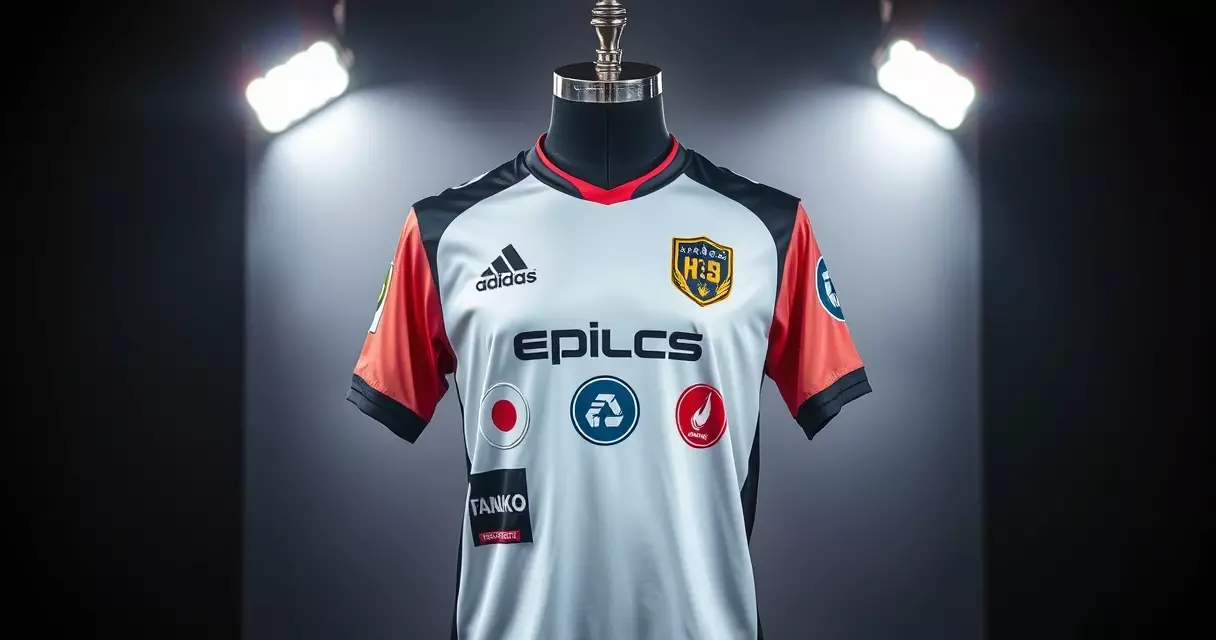
The most visible deal is a logo on the competition jersey. Front-of-jersey placement commands the highest fee because every broadcast, photo, and highlight clip carries it. Sleeve, back, and collar positions sell at lower rates. Teams often slice a single jersey into five or six placements, which lets them sign multiple partners against one asset and spread risk if any single sponsor leaves.
Naming rights
The largest agreements attach a brand name to the team itself or to its facility. The TSM-FTX deal was a naming-rights arrangement, and so was the Astralis Group’s relationship with various title partners over the years. These deals carry the deepest integration and the highest value, but they also concentrate the most reputational risk, because the sponsor effectively becomes part of the team’s identity.
Content and activation partnerships
Many modern deals are built around content rather than a static logo. A brand might fund a documentary series, a player vlog format, or a recurring stream segment. Red Bull has long favored this model across its esports relationships, building events and films instead of relying on a patch alone. Activation partnerships reward organizations with strong creative teams and large social followings, which is why media production has become a core competency rather than a luxury.
Product and technical partnerships
Endemic brands frequently pay partly in product and partly in cash. A peripheral company may supply gear for the entire roster, fund a training facility build-out, and add a marketing budget on top. These deals lower an organization’s operating costs even when the cash component is modest, and they tend to be more stable than non-endemic spending because the sponsor’s core customers overlap directly with the fan base.
What Sponsors Actually Pay For
A brand does not write a six-figure check for a logo. It pays for measurable outcomes, and the organizations that win the best deals are the ones that can describe those outcomes in the language a marketing director already uses. The table below maps common deal structures to the value drivers that justify them and to the rough commitment level each implies.
| Deal type | What the sponsor buys | Primary value driver | Relative cost |
|---|---|---|---|
| Front-of-jersey | Constant broadcast and photo visibility | Impressions and brand recall | High |
| Naming rights | Team or arena identity | Deep association and category ownership | Very high |
| Content series | Co-produced video and social formats | Engagement and audience trust | Medium to high |
| Product supply | Gear, software, or facilities | Authentic in-use endorsement | Low cash, high in-kind |
| Event activation | Booth, sampling, or live moments | Direct fan interaction and data capture | Variable |
Impressions remain the foundation of most pitches. A team counts the broadcast hours its jersey appears on screen, the social reach of its accounts, and the views on its content, then translates those into a media value a brand can compare against television or paid digital advertising. Because esports viewers skew young and have largely left linear broadcast, the demographic premium is real, and credible audience reporting closes deals that vague reach claims cannot.
Engagement increasingly outranks raw reach, however. Brands have learned that a smaller, devoted audience that watches a 12-minute team documentary is worth more than a larger audience that scrolls past a banner. Organizations that can show watch time, comment sentiment, and merchandise conversion give sponsors the proof they need to renew. This is the same operational discipline that separates the leaders profiled in our look at the biggest esports organizations compared from teams that struggle to keep partners past a single season.
How Esports Organizations Secure Sponsorship Deals
Landing a partner is a sales process with predictable stages, and treating it as such turns sponsorship from luck into a repeatable function. The teams that consistently sign quality brands run a pipeline, not a series of one-off conversations.
Build the audience asset first
No brand sponsors a team it cannot see. Before any outreach, an organization needs roster results worth following, social channels that grow, and content that demonstrates production quality. The audience is the product being sold, so investment in community and media comes before the sales pitch, not after it. Founders who skip this step and pitch on potential alone rarely get a second meeting.
Package and price the inventory
Every visible surface is inventory: jersey placements, stream overlays, social posts, video integrations, and event appearances. A media kit lists each asset with its reach, its audience profile, and a price. Clear packaging lets a brand mix and match, and it signals that the organization understands its own value. Teams that cannot price their inventory tend to give it away cheaply or scare partners off with numbers they cannot defend.
Target the right category of brand
A smart pipeline mixes endemic and non-endemic targets. Endemic brands convert faster because the fit is obvious, so they often anchor the early deals. Non-endemic brands pay more but need a longer education process, so they sit later in the funnel. Researching a brand’s existing marketing, its target customer, and its previous sports spending lets a team walk in with a tailored case rather than a generic deck.
Negotiate terms beyond the headline fee
The dollar figure is only one clause. Exclusivity, contract length, performance bonuses, content obligations, renewal options, and exit terms all shape the real value of an agreement. Many organizations now route these negotiations through legal counsel, because the structure that protects revenue when a sponsor stumbles is written into the contract long before any trouble appears. Teams that understand how esports contracts protect rights and obligations negotiate from a stronger position.
Closing is rarely instant. A non-endemic brand may take six to twelve months from first contact to signature, moving through introductory calls, a tailored proposal, internal approvals, and legal review. Organizations that forecast this timeline keep their cash flow stable, while those that treat sponsorship as emergency funding negotiate from weakness and accept worse terms. The discipline of running this as a structured business function is covered in detail in our guide on how to start an esports organization.
Notable Deals and What They Reveal
Real agreements teach more than theory. The deals below have been widely reported by premier outlets and documented on encyclopedic sources, and each one illustrates a different lesson about how sponsorship works at the top of the sport.
| Organization | Partner | Deal highlight | Lesson |
|---|---|---|---|
| TSM | FTX | Reported $210 million naming-rights agreement announced in 2021 | Record value, but partner risk unwound it |
| Riot Games (Worlds) | Louis Vuitton | Designed the 2019 World Championship trophy case and in-game items | Luxury validates the audience |
| Team Liquid | Honda, SAP, and others | Long-running roster of non-endemic and endemic partners | A diversified portfolio outlasts any single deal |
| Various teams | Red Bull | Content and event-led activations across multiple orgs | Creative integration beats a static logo |
The TSM agreement, recorded on Wikipedia’s TSM entry, set the high-water mark for esports sponsorship at a reported $210 million over ten years. It also became the cautionary tale of the sector when FTX collapsed, proving that a record fee means little if the partner cannot survive the contract. The organization spent the following period rebuilding its identity without the sponsor name it had adopted.
Team Liquid sits at the opposite end of the strategy spectrum. Rather than betting on one giant partner, it assembled a deep roster of sponsors across categories, a structure visible on Wikipedia’s Team Liquid entry. When any single brand departs, the others cushion the loss, and the organization keeps operating without a revenue shock. For most teams, this diversified model is the safer template, and it pairs naturally with the multi-stream approach described across the leading esports organizations of 2026.
Audience, Valuation, and How Deals Are Priced
Sponsorship pricing ultimately rests on audience value, and esports audiences carry a specific profile that brands prize. Viewers concentrate in the 18 to 34 age bracket, lean heavily digital, and are difficult to reach through conventional advertising. That scarcity is what supports premium fees even when raw viewer counts trail traditional sports, a dynamic reflected in the valuations that Forbes has tracked across its reporting on the most valuable esports companies.
Organizations translate that audience into a price through a media-value calculation. They measure broadcast exposure, social reach, content views, and event attendance, then assign each a comparable advertising rate. The resulting figure gives a brand a way to benchmark the deal against other channels. Because the largest revenue component in esports is sponsorship and advertising, often cited near 60 percent of the total by Newzoo as summarized on Wikipedia, an organization’s entire valuation tends to track the strength of its partner roster.
Several factors move the price up or down. Competitive results raise visibility and broadcast time. A roster of recognizable players lifts social engagement. Presence in a marquee league with guaranteed broadcast slots adds predictable inventory. Teams weak in these areas command lower fees, which is why on-screen performance and business development reinforce each other. Owners weighing where to invest often study the structural choices laid out in our breakdown of the different types of esports organizations, since the chosen model shapes how much sponsorship inventory exists to sell.
Risks, Regulation, and the FTX Lesson
Heavy reliance on sponsorship creates exposure that careful organizations plan for. The clearest risk is partner failure. FTX entered bankruptcy in November 2022, an event documented on Wikipedia’s FTX entry, and any team tied to it had to scramble for replacement revenue and a new identity. Concentration in a single large sponsor magnifies this danger, which is the core argument for the diversified portfolios that steadier organizations maintain.
Category risk runs alongside partner risk. Crypto, energy drinks, and certain regulated industries can shift from generous spenders to absent overnight when their own markets turn or when regulators tighten the rules. A team that built its budget on one volatile category inherits that volatility directly. Spreading partners across stable sectors such as technology, automotive, and consumer goods reduces the chance that a downturn in one industry empties the sponsorship pipeline at once.
Regulatory attention has grown as the audience skews young. Advertising standards bodies in several markets have scrutinized how brands, especially those in age-restricted categories, reach minors through gaming content. Organizations now build compliance into their deals, screening partners and disclosing paid relationships clearly. Reporting from outlets such as ESPN’s esports coverage and Reuters has tracked how the industry professionalizes its commercial practices, and teams that adopt those standards early protect themselves from both fines and reputational damage.
The durable takeaway is structural. Treat each sponsorship as one part of a balanced revenue base rather than the whole foundation. Diversify across partners and categories, write protective exit terms into contracts, and keep building the audience asset that makes the organization valuable to any brand. Teams that follow this discipline weather the loss of a single partner, while those chasing one record-setting deal stake their survival on a bet they cannot control.
Frequently Asked Questions
How much do esports sponsorship deals typically cost?
Values range enormously depending on the team and the placement. A small organization might sign a product-supply deal worth a few thousand dollars in gear, while top teams command six and seven-figure cash agreements. The headline reference point remains the TSM-FTX naming-rights deal reported at $210 million over ten years, documented on Wikipedia’s TSM entry, though that figure sits far above the market norm. Most teams assemble several mid-sized partnerships rather than chasing one record deal, because a diversified roster delivers steadier income and survives the departure of any single brand.
What is the difference between endemic and non-endemic sponsors?
Endemic sponsors are brands whose business sits inside gaming, such as peripheral makers, hardware companies, and energy drinks aimed at gamers. Their fit with a team is obvious, so they convert quickly and often pay partly in product. Non-endemic sponsors come from outside gaming entirely, including carmakers, banks, and even luxury fashion houses such as Louis Vuitton, which designed the 2019 League of Legends World Championship trophy case. Non-endemic brands usually pay larger cash fees but require a longer education process, so most organizations build pipelines that combine both categories to balance speed and value.
How do esports teams find and approach sponsors?
Successful teams run sponsorship like a structured sales pipeline rather than waiting for inbound interest. They first build a genuine audience asset through competitive results, growing social channels, and quality content. Next they package every visible surface into priced inventory listed in a media kit. Then they research and target brands whose customers overlap with their fans, tailoring each pitch to that brand’s marketing goals. The process closes with negotiation over fee, exclusivity, length, and exit terms. For non-endemic partners, the full cycle from first contact to signature commonly takes six to twelve months.
Why is sponsorship so important to esports organizations?
Sponsorship and advertising form the largest revenue component in esports, often cited near 60 percent of the global total by the research firm Newzoo and summarized on Wikipedia’s esports overview. That money funds player salaries, travel, coaching, facilities, and the content operation that keeps a team visible. Because prize money is unpredictable and merchandise margins are thin, partner revenue provides the stable base that lets an organization plan ahead. The strength of a team’s sponsor roster tends to track its overall valuation, which is why business development sits at the center of any serious operation rather than at the edge.
What happens when a sponsor goes bankrupt or pulls out?
Partner failure is a real and recurring risk. When FTX filed for bankruptcy in November 2022, as recorded on Wikipedia’s FTX entry, the teams tied to it lost both revenue and, in TSM’s case, a naming identity. Organizations that depend on one large sponsor suffer the most when this happens. The protection comes from two sources: a diversified roster of partners so no single loss is fatal, and contract clauses covering exit terms and payment guarantees. Teams that negotiate those protections in advance recover far faster than those who treated a single deal as their entire foundation.
Are esports sponsorships regulated?
Regulation has increased as authorities recognize how young the audience is. Advertising standards bodies in several markets scrutinize how brands in age-restricted categories reach viewers who may be minors, and disclosure rules require teams to label paid relationships clearly. Reporting from premier outlets such as ESPN and Reuters has tracked the sector professionalizing its commercial practices in response. Organizations now screen potential partners, build compliance language into contracts, and avoid categories that create legal or reputational exposure. Adopting these standards early protects a team from fines and from the credibility damage that follows a regulatory complaint.
Can small or new esports organizations attract sponsors?
Yes, though they should start realistically. New teams rarely land large non-endemic cash deals, but endemic product-supply partnerships are achievable early because the fit is obvious and the cost to the sponsor is mostly gear. The path runs through building a credible audience first: real results, active social channels, and consistent content. With those assets in place, a small team can package modest inventory at honest prices and grow its roster of partners over time. Many organizations that later signed major brands began with a single peripheral deal and reinvested the savings into audience growth.
Related Reading
- Top Esports Organizations 2026: Teams, Rosters, and Performance Rankings
- Biggest Esports Organizations Compared: Rankings & Analysis
- Esports Organization Contracts: Player Rights & Legal Guide
- Esports Organization Management Structure: Roles & Operations
- Esports Organization Revenue Streams: How Teams Make Money
- Esports Organization Valuation: How Teams Are Worth Millions
- Esports Training Facilities: The Gaming Houses Guide
- How to Start an Esports Organization: A Business Guide
- Types of Esports Organizations: Structures & Models
- Cloud9 Esports Review: North American Organization Deep Dive
- FaZe Clan Review: Gaming Organization Analysis & Rankings
- Fnatic Review: Inside a Legacy Esports Organization
- G2 Esports Review: European Powerhouse Organization Guide
- Team Liquid Review: Multi-Game Esports Organization Analysis
- TSM Esports Review: Teams, Players, and Performance
Sources
- Esports overview, revenue composition, and market figures – https://en.wikipedia.org/wiki/Esports
- TSM and the reported $210 million FTX naming-rights deal – https://en.wikipedia.org/wiki/TSM_(esports)
- FTX bankruptcy timeline – https://en.wikipedia.org/wiki/FTX
- Louis Vuitton trophy case partnership at the 2019 World Championship – https://en.wikipedia.org/wiki/2019_League_of_Legends_World_Championship
- Team Liquid sponsor roster – https://en.wikipedia.org/wiki/Team_Liquid
- ESPN esports coverage – https://www.espn.com/esports/
- Forbes business and valuation reporting – https://www.forbes.com/
- Reuters industry coverage – https://www.reuters.com/