
Summary
The business behind a professional esports team rarely appears on the broadcast. Fans watch five players on a stage, yet a single mid-sized organization can employ dozens of people across coaching, marketing, sales, and player welfare. Newzoo's 2025 estimates place...
Table of contents
- 1 How the Modern Esports Organization Is Built
- 2 From Clans to Companies: A Short History of Esports Org Structure
- 3 The Leadership Layer: Ownership, Executives, and the Board
- 4 Competitive Operations: Where Matches Are Won
- 5 The Commercial Engine: Revenue, Sponsorship, and Partnerships
- 6 Content, Marketing, and Community
- 7 Player Welfare, Contracts, and Human Resources
- 8 How Structure Scales With Organization Size
- 9 Governance, Compliance, and Industry Oversight
- 10 Frequently Asked Questions
- 10.1 What roles make up an esports organization’s management structure?
- 10.2 Who actually runs an esports team day to day?
- 10.3 How many people work at a professional esports organization?
- 10.4 How is an esports organization different from a traditional sports club?
- 10.5 What does an esports general manager do?
- 10.6 How do esports organizations make money to support this structure?
- 10.7 Do esports teams have boards and investors?
- 11 Related Reading
- 12 Sources
The business behind a professional esports team rarely appears on the broadcast. Fans watch five players on a stage, yet a single mid-sized organization can employ dozens of people across coaching, marketing, sales, and player welfare. Newzoo’s 2025 estimates place the global esports audience near 640 million people and annual industry revenue close to 1.9 billion dollars, and that money moves through companies with real departments, reporting lines, and budgets. Studying the esports organization management structure means looking past the roster to the org chart that keeps a team both competitive and solvent.
This article breaks down each layer, from owners and executives down to performance analysts and content editors. You will see how responsibilities are divided in 2026, where the headcount actually sits, and why two teams with identical rosters can perform very differently because of the people working behind them. If you want a wider view of the field first, our overview of the top esports organizations of 2026 pairs naturally with the operational detail below.
How the Modern Esports Organization Is Built
A professional esports organization functions as a media-and-sports hybrid. One side fields competitive teams across titles such as League of Legends, Counter-Strike, Valorant, and Dota 2. The other side runs a content business that sells attention to sponsors, advertisers, and merchandise buyers. Both sides report into a shared corporate layer that handles finance, legal, and strategy.
Most established teams group their staff into five functional pillars: leadership, competitive operations, commercial, content and marketing, and player support. Smaller teams collapse several of these into one person wearing many hats, while large brands staff each pillar as its own department with a director or vice president. The differences between these models are explored further in our breakdown of the types of esports organizations and their structures.
The table below maps the core departments to the roles and the work each one owns. Treat it as a reference for the rest of the article, because the sections that follow expand on every row.
| Department | Common roles | Primary responsibility |
|---|---|---|
| Leadership | Owner, CEO, COO, board members | Strategy, capital, hiring, and final decisions |
| Competitive operations | General manager, head coach, analyst, team manager | Winning matches and managing rosters |
| Commercial | Head of partnerships, sales lead, account manager | Sponsorship, licensing, and revenue |
| Content and marketing | Content director, editors, social manager, designer | Audience growth and brand reach |
| Player support | Performance coach, psychologist, nutritionist, HR | Player health, contracts, and welfare |
Each pillar has its own success metric. Competitive operations is judged on placements and prize money, the commercial team on signed deals and renewals, and the content team on views, followers, and engagement. Keeping these incentives aligned is the central management challenge, since a roster move that helps results can hurt a sponsor activation, and a content stunt that drives views can distract players before a major.
From Clans to Companies: A Short History of Esports Org Structure
Today’s corporate org charts grew out of informal player-run “clans” from the late 1990s and early 2000s. Early teams were collectives of friends who pooled travel costs and split modest tournament winnings. There were no executives, no sponsorship managers, and no payroll, just players who organized themselves between LAN events.
Money changed the shape of everything. As prize pools climbed, the structure had to follow. Valve’s Dota 2 championship, The International, reached a crowdfunded prize pool of roughly 40 million dollars in 2021, a figure that turned roster management into a serious financial responsibility. Organizations could no longer treat a championship run as a hobby when a single event paid out more than many traditional sports finals.
League franchising accelerated the corporate shift. When Riot Games moved its top-tier League of Legends competitions to franchised, partner-based leagues, buy-in fees and revenue sharing forced teams to operate like permanent businesses with audited finances. The Guardian and other outlets covered how franchising reshaped the economics of elite competition, locking owners into multi-year commitments that demanded professional management.
Recent mega-events pushed structure further still. The Esports World Cup in Riyadh distributed an overall prize pool exceeding 60 million dollars across its competitions, rewarding clubs that field strong rosters in many titles at once. A multi-title cup format rewards organizations with deep benches and centralized operations, which in turn justifies larger staff and clearer departmental boundaries.
The Leadership Layer: Ownership, Executives, and the Board
Every organization rests on an ownership and executive layer that sets direction and controls capital. Ownership can take several forms: a founder who still runs daily operations, a group of private investors, a venture-backed company, or in some cases a traditional sports club that has added an esports division. The owner decides how much risk the organization will take and how quickly it tries to grow.
The chief executive officer translates ownership goals into a plan. A CEO sets annual targets, approves major signings, and answers to investors or the board. Below the CEO, a chief operating officer keeps the day-to-day machine running, coordinating between competitive, commercial, and content teams so that one department’s plans do not collide with another’s.
Larger organizations add finance and legal leadership at this level. A chief financial officer manages budgets, payroll, and investor reporting, while in-house or retained legal counsel handles player contracts, sponsorship agreements, and intellectual property. These functions matter more than they once did, because a single mishandled contract can cost a team a star player or a major partner. Anyone planning to build from scratch should review our guide on how to start an esports organization before committing capital.
A formal board appears once outside money enters. Investors typically want seats, voting rights, and regular performance reviews. Board meetings cover financial results, expansion into new titles, and large spending decisions such as buying out a contract or opening a training facility. Founder-led teams without external investment often skip the board entirely and keep decisions inside a small leadership group.
Competitive Operations: Where Matches Are Won
Competitive operations is the part of the structure fans understand best, even if they only see the players. This pillar exists to win, and it is usually built around a general manager who owns roster strategy for a specific title. The general manager scouts talent, negotiates with agents, decides who plays and who sits, and manages the competitive budget for that game.
Coaching sits at the heart of daily performance. A head coach runs practice, sets strategy, and reviews opponents, while assistant and position coaches focus on specific roles or phases of play. In titles with complex drafts, a dedicated strategic coach may specialize in champion or agent selection alone. Coaches are increasingly recruited from outside gaming, bringing methods from traditional sports performance.
Analysts turn data into decisions. They chart opponent tendencies, track in-game statistics, and prepare scouting reports before each match. The table below shows a typical staffing pattern around a single competitive roster, though exact titles vary by organization and game.
| Role | Reports to | Core duties |
|---|---|---|
| General manager | COO or CEO | Roster strategy, signings, budget |
| Head coach | General manager | Practice, strategy, in-match calls |
| Assistant coach | Head coach | Role coaching, review, drills |
| Analyst | Head coach | Opponent scouting, data, reports |
| Team manager | General manager | Logistics, schedules, travel, welfare |
The team manager is the glue of competitive operations. This person handles travel, visas, housing, daily schedules, and the small logistics that let players focus only on practice and matches. A strong team manager prevents the burnout and chaos that quietly sink talented rosters, which is why experienced organizations treat the role as essential rather than optional.
The Commercial Engine: Revenue, Sponsorship, and Partnerships
Winning fills trophy cases, but the commercial team pays the bills. Sponsorship and media still account for the largest slice of income at most organizations, and a head of partnerships leads the people who find, close, and renew those deals. This department builds the sales decks, sets pricing for logo placements and activations, and manages the relationship long after the contract is signed.
Account managers protect existing partners. Once a brand signs, an account manager makes sure the agreed activations actually happen, from jersey logos to social posts to live event appearances. Renewal rates depend on this follow-through, since a sponsor who feels ignored will not return. Our deep dive into esports organization revenue streams explains how these income sources stack up against merchandise, prize money, and content monetization.
Larger commercial teams add specialists for merchandise, licensing, and business development. A merchandise lead manages the apparel line, suppliers, and online store, while a business development manager hunts for new categories of revenue such as bootcamp rentals, coaching products, or content licensing. Each new line adds complexity that the finance function must track.
Negotiation skill defines this department’s value. The difference between a strong and a weak partnership team can be millions of dollars over a season, and the work demands people who understand both gaming culture and corporate marketing. Teams that want to grow this function should study how rivals approach it, which is why securing the right partners is covered in our piece on esports organization sponsorship deals.
Content, Marketing, and Community
Attention is the product the commercial team actually sells, and the content department manufactures it. A content director sets the editorial calendar, decides which players and stories to push, and balances entertainment with competitive messaging. Editors, videographers, and graphic designers produce the highlight clips, documentaries, and social graphics that keep an audience engaged between matches.
Social media managers run the public voice of the brand. They post in real time during matches, respond to fans, and ride trends that can put a small team in front of millions overnight. Community managers, by contrast, nurture the dedicated fans in Discord servers and forums, the people who buy merchandise and defend the brand online.
Many organizations now treat individual players as media properties. A streaming or talent manager helps players build personal channels, schedule streams, and grow followings that benefit both the player and the team. This blurring of athlete and influencer is one reason esports companies look more like media houses than traditional sports clubs, a contrast detailed in our comparison of the biggest esports organizations.
Player Welfare, Contracts, and Human Resources
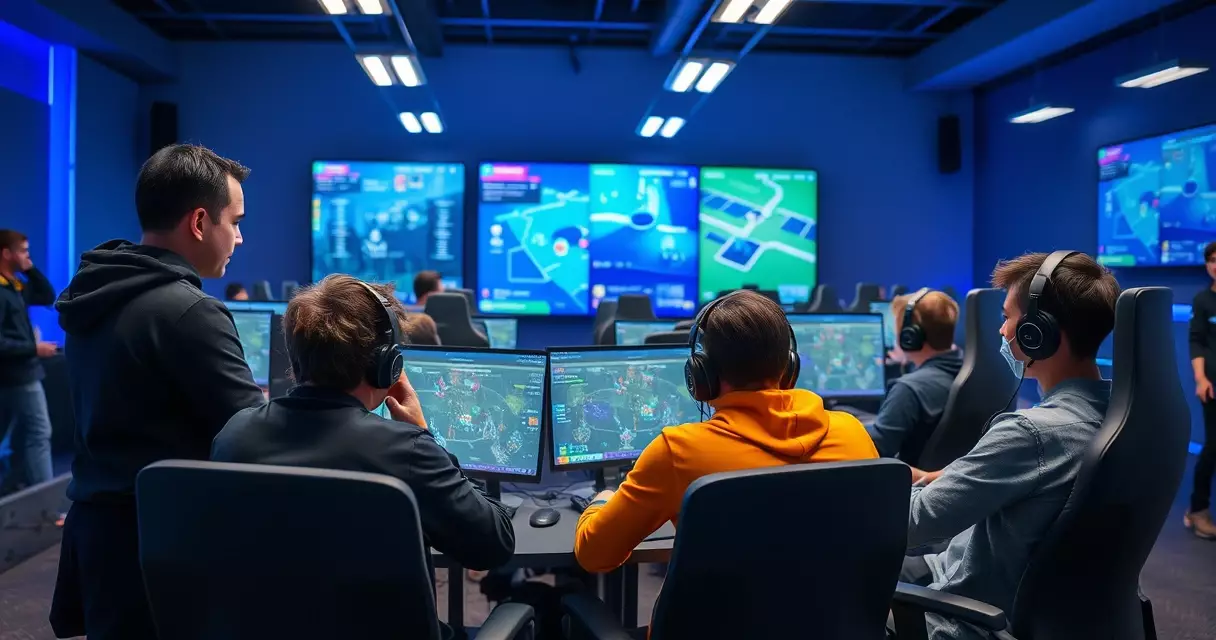
Players are the asset that everything else depends on, and modern organizations invest heavily in keeping them healthy. Performance coaches design physical training to counter the strain of long practice sessions, while sports psychologists help players manage pressure, slumps, and the public scrutiny that follows every loss. Burnout is a documented risk: peer-reviewed research published through Frontiers in Psychology has examined stress and mental fatigue among competitive gamers, and teams that ignore it pay in lost form and early retirements.
Nutrition and sleep support have moved from luxury to standard at top teams. Some organizations employ or contract nutritionists to plan meals around training schedules, especially during bootcamps where players live and practice together for weeks. Reaction time, focus, and consistency all suffer when basic health is neglected, so the welfare staff protect competitive value as directly as any coach.
Human resources and legal functions handle the formal side of the player relationship. Contracts define salaries, prize splits, image rights, streaming obligations, and transfer terms, and getting them wrong can trigger disputes that reach league governing bodies. Our guide to esports organization contracts and player rights covers the clauses that most often cause friction between teams and athletes.
Young rosters make welfare a duty as much as a strategy. Many competitors sign professionally as teenagers, which places real responsibility on the organization for housing, education, and mental health. The teams that handle this well tend to retain players longer and build the kind of reputation that attracts the next generation of talent.
How Structure Scales With Organization Size
The same five pillars exist at every level, but headcount and formality grow with budget. A grassroots team might run on a handful of volunteers, while a global brand can employ well over a hundred staff across multiple countries. The table below sketches three broad tiers, with figures drawn from publicly reported team operations and industry reporting rather than any single roster.
| Tier | Typical staff | Structure | Decision-making |
|---|---|---|---|
| Grassroots / semi-pro | 3–10 | Owner plus coach and a few volunteers | Founder decides nearly everything |
| Established mid-size | 20–50 | Defined departments with leads | Department heads with CEO sign-off |
| Tier-one global brand | 80–200+ | Full org chart, multiple titles, board | Executives and board within budgets |
Growth changes how decisions get made, not just how many people make them. A founder who once approved every expense must learn to delegate to department heads, or the organization stalls. The hardest transition is usually from the grassroots tier to the mid-size tier, where informal habits have to give way to budgets, written processes, and clear ownership of each function.
Geography adds another layer of complexity. A team competing in North American, European, and Asian leagues often needs regional managers and staff in each market, which multiplies coordination work. Time zones, languages, and local sponsorship norms all push large organizations toward decentralized structures with strong central reporting.
Governance, Compliance, and Industry Oversight
Esports has no single global regulator, so organizations answer to a patchwork of game publishers and league operators. Publishers such as Riot Games and Valve set the rules for their own competitions, including roster eligibility, conduct standards, and revenue sharing. A team that breaks these rules can face fines, point deductions, or removal from a league, which makes internal compliance a genuine management concern.
Mainstream sports institutions are slowly entering the space. The International Olympic Committee has moved to create dedicated Olympic Esports Games, with the IOC confirming plans for a standalone Olympic Esports event developed with national partners. Greater institutional involvement is likely to bring stricter standards around contracts, age, anti-doping, and integrity, all of which land on the organization’s compliance and legal staff.
Integrity and anti-corruption work has become its own responsibility. Match-fixing scandals across several titles have pushed leagues to demand monitoring, education, and reporting from member teams. Larger organizations now train players on betting rules and conduct, since a single violation can damage a brand built over many years.
Financial transparency is rising alongside governance. Franchised leagues require audited accounts, and investors expect professional reporting, which means even teams that began as friend groups now keep books that would satisfy a traditional business. This formalization is one of the clearest signs that esports management has matured into a recognized industry.
Frequently Asked Questions
What roles make up an esports organization’s management structure?
A typical structure spans five pillars. Leadership includes the owner, chief executive, and often a chief operating and financial officer. Competitive operations covers the general manager, coaches, analysts, and team managers who run the rosters. The commercial pillar holds partnership and sales staff, while content and marketing employ editors, social managers, and designers. Player support brings in performance coaches, psychologists, nutritionists, and human resources. Smaller teams combine several of these into a few people, but the functions still exist in some form regardless of how many staff fill them.
Who actually runs an esports team day to day?
Day-to-day competitive operations are usually led by a general manager and a head coach, supported by a team manager who handles logistics. The general manager owns roster and budget decisions, the head coach owns practice and strategy, and the team manager keeps schedules, travel, and welfare on track. Above them, a chief operating officer or chief executive coordinates across departments and approves larger moves. In a small team the founder may hold several of these jobs at once, but in established organizations the responsibilities are split so that no single person becomes a bottleneck during a season.
How many people work at a professional esports organization?
Headcount varies widely by tier. A grassroots or semi-professional team might run with three to ten people, many of them volunteers or part-time staff. An established mid-size organization commonly employs twenty to fifty people across defined departments. Tier-one global brands can field eighty to more than two hundred staff once you count coaches, content creators, commercial teams, and regional employees across several titles. The roster of players is only a small fraction of total headcount, since most employees work in support, content, and commercial roles rather than on the competitive stage.
How is an esports organization different from a traditional sports club?
The biggest difference is the weight of the content business. Traditional clubs earn heavily from ticketing, broadcasting rights, and matchday revenue, while esports teams lean on sponsorship and self-produced media because they rarely own their venues or competitions. Esports organizations also operate across multiple games run by different publishers, each with its own rules, rather than within one governing federation. Player careers tend to be shorter and start younger, which raises the importance of welfare and education. These factors push esports companies toward a media-house structure with strong content and social teams.
What does an esports general manager do?
An esports general manager owns the competitive direction of a specific game roster. The role covers scouting and signing players, negotiating with agents, setting the competitive budget, and deciding the starting lineup alongside the coaching staff. A general manager also manages relationships with the league and handles transfers in and out of the team. Think of the job as the bridge between the executive layer, which controls money and strategy, and the coaching staff, which controls daily performance. Strong general managers combine talent evaluation with financial discipline, because overspending on one roster can starve the rest of the organization.
How do esports organizations make money to support this structure?
Sponsorship and media partnerships remain the largest income source for most teams, followed by merchandise, content monetization, prize winnings, and league revenue sharing where it exists. Some organizations add income from bootcamp rentals, talent management, and licensing. Prize money tends to be unpredictable, so well-run teams treat it as a bonus rather than a core budget line. The commercial department exists specifically to diversify these streams so the organization is not exposed to a single sponsor or a single good tournament result. Our revenue streams guide breaks down how these sources compare in practice.
Do esports teams have boards and investors?
Many do, though not all. Teams that have raised outside capital typically have a board with investor representatives who review finances, approve major spending, and guide expansion into new titles. Founder-led teams without external investment often skip a formal board and keep decisions inside a small leadership group. As franchised leagues require audited accounts and professional reporting, even smaller organizations have adopted governance practices that once applied only to large companies. The presence of investors usually signals faster growth ambitions and more formal oversight of how money is spent across the organization.
Related Reading
- Top Esports Organizations 2026: Teams, Rosters, and Performance Rankings
- Biggest Esports Organizations Compared: Rankings & Analysis
- Esports Organization Contracts: Player Rights & Legal Guide
- Esports Organization Revenue Streams: How Teams Make Money
- Esports Organization Sponsorship Deals: Securing Partners
- Esports Organization Valuation: How Teams Are Worth Millions
- Esports Training Facilities: The Gaming Houses Guide
- How to Start an Esports Organization: A Business Guide
- Types of Esports Organizations: Structures & Models
- Cloud9 Esports Review: North American Organization Deep Dive
- FaZe Clan Review: Gaming Organization Analysis & Rankings
- Fnatic Review: Inside a Legacy Esports Organization
- G2 Esports Review: European Powerhouse Organization Guide
- Team Liquid Review: Multi-Game Esports Organization Analysis
- TSM Esports Review: Teams, Players, and Performance
Sources
- Esports overview, audience, and market figures, Wikipedia – https://en.wikipedia.org/wiki/Esports
- The International (Dota 2) prize pool history, Wikipedia – https://en.wikipedia.org/wiki/The_International_(Dota_2)
- Esports World Cup format and prize pool, Wikipedia – https://en.wikipedia.org/wiki/Esports_World_Cup
- Olympic Esports Games, International Olympic Committee – https://olympics.com/ioc/olympic-esports-games
- Games and esports coverage, The Guardian – https://www.theguardian.com/games
- Research on competitive gaming stress and wellbeing, Frontiers in Psychology – https://www.frontiersin.org/journals/psychology