
Summary
When Intel and ESL renewed their alliance in 2017, the two companies put a number on the table that reframed how seriously chipmakers take competitive gaming: a multi-year partnership reported at more than $100 million, described at the time as...
Table of contents
- 1 What Intel Actually Sponsors in Esports
- 2 A Short History of Intel in Competitive Gaming
- 3 Intel Extreme Masters: The Flagship Property
- 4 The Intel Grand Slam and Prize Incentives
- 5 Beyond IEM: Team Tie-Ins and the Olympic Push
- 6 Deal Structure and Specifications at a Glance
- 7 Pros and Cons of Intel as an Esports Sponsor
- 8 How Intel Compares to Other Endemic Sponsors
- 9 Who Should Study Intel’s Esports Playbook
- 10 Frequently Asked Questions
- 10.1 What is Intel’s biggest esports sponsorship?
- 10.2 How much did Intel commit to its ESL partnership?
- 10.3 What is the Intel Grand Slam?
- 10.4 Is Intel an endemic or non-endemic esports sponsor?
- 10.5 Does Intel sponsor individual esports teams?
- 10.6 What was the Intel World Open?
- 10.7 How long has Intel been involved in esports?
- 10.8 How does Intel measure return on its esports spending?
- 11 Sources
When Intel and ESL renewed their alliance in 2017, the two companies put a number on the table that reframed how seriously chipmakers take competitive gaming: a multi-year partnership reported at more than $100 million, described at the time as the largest brand investment in esports history by outlets including The Verge. That single agreement is the backbone of the most enduring sponsorship story in the industry, and it is the lens through which any Intel esports sponsorship review has to begin. Intel does not just slap a logo on a jersey. It owns and underwrites an entire global circuit.
What Intel Actually Sponsors in Esports
Most brands enter esports through one or two channels: a logo on a team kit, a stream overlay, or a tournament naming right. Intel does all three, but its signature move is owning the competition itself. The clearest example is Intel Extreme Masters (IEM), a global tournament series produced with ESL that Intel has backed since its launch. Rather than renting visibility from a third party, Intel built a property it controls.
The portfolio breaks into a few distinct buckets. There is the event layer (IEM and its marquee stop, IEM Katowice in Poland), the prize-incentive layer (the Intel Grand Slam bonus), the technology layer (Intel Core processors powering tournament PCs), and occasional special projects such as the Intel World Open tied to the Olympic movement. Understanding those layers matters because they reward very different goals, a point we cover in our breakdown of the different types of esports sponsorships.
A Short History of Intel in Competitive Gaming
Intel’s involvement predates the modern esports boom. According to Wikipedia, Intel Extreme Masters began in 2006 as a partnership with the Electronic Sports League (now ESL), making it the longest-running global pro gaming circuit still active today. That longevity is rare. Many sponsors who entered competitive gaming in the early 2010s have already exited, while Intel has stayed through multiple title cycles, from early Counter-Strike to StarCraft II to Counter-Strike: Global Offensive and beyond.
The relationship deepened in stages. The 2017 extension reported by The Verge locked in the headline funding, and the partnership later survived a major ownership change when Savvy Gaming Group acquired ESL and merged it with FACEIT in 2022, as reported by Reuters. Surviving a buyout of your tournament partner is itself a signal of how embedded the Intel brand had become.
Intel Extreme Masters: The Flagship Property
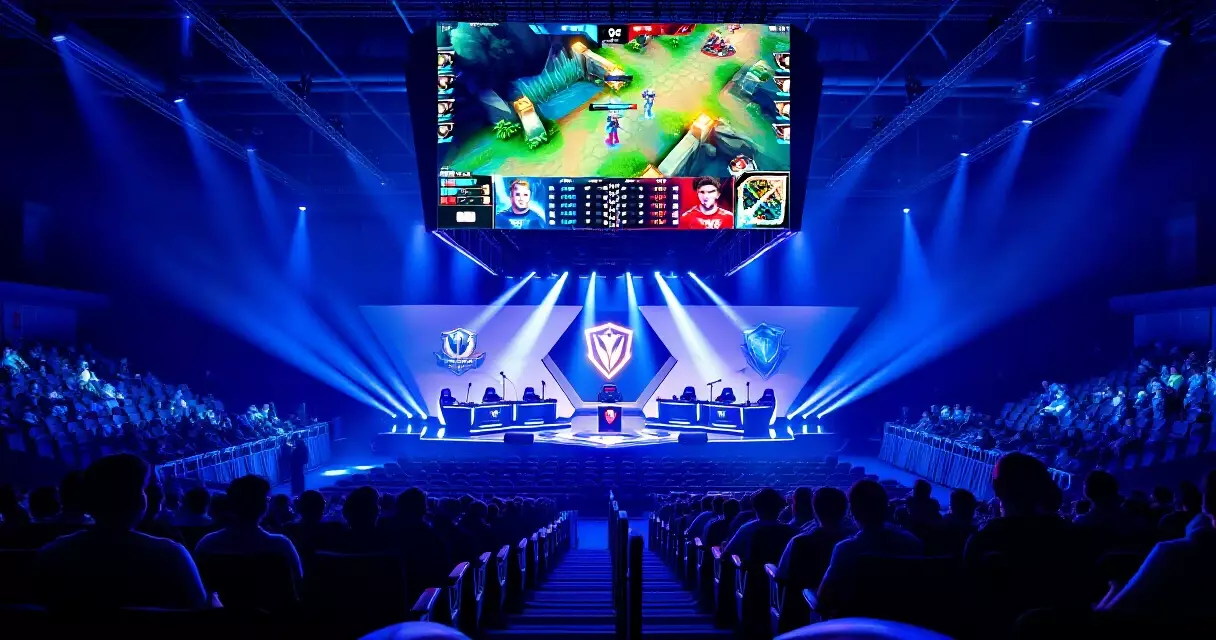
If you strip Intel’s strategy down to one asset, it is IEM. The series travels globally, but its emotional center is IEM Katowice, held at the Spodek arena in Katowice, Poland. The 2019 edition drew a reported attendance of roughly 174,000 visitors across the event weekend, a figure widely cited in coverage of the tournament and one that put IEM Katowice among the best-attended esports events in the world at the time.
Owning the event gives Intel something a jersey deal never can: control over the fan experience. The brand appears in the arena, in the broadcast, in the prize structure, and in the hardware. That vertical presence is why analysts treat Intel as a benchmark case when discussing how endemic sponsors extract value, a theme we explore in our guide to measuring esports sponsorship ROI.
Intel does not rent attention in esports. It builds the stadium, sets the prize, and supplies the silicon inside every machine on stage.
The Intel Grand Slam and Prize Incentives
Beyond hosting events, Intel engineered a reward layer designed to create narrative tension across the season. The Intel Grand Slam, introduced in 2017, offers a $1 million bonus to a team that wins a set number of premier Counter-Strike events within a defined window, per Wikipedia. The mechanism is clever marketing. It turns a string of separate tournaments into a single chase, giving broadcasters and fans a running storyline that keeps the Intel name attached to the most dominant teams of a given era.
This is the kind of structured incentive that rarely shows up in standard endemic deals. A peripheral maker might fund a single trophy. Intel funds an ongoing race, which compounds visibility every time a top team gets close to claiming the bonus. For brands studying how to attach themselves to winning teams, it is a textbook example, and it pairs well with the contractual mechanics covered in our piece on esports sponsorship contract terms and red flags.
Beyond IEM: Team Tie-Ins and the Olympic Push
Intel’s footprint is not limited to ESL events. The company has pursued mainstream legitimacy through the Olympic movement. The Intel World Open, announced ahead of the Tokyo Games with a $500,000 prize pool across Street Fighter V and Rocket League according to Olympics.com, positioned Intel alongside the International Olympic Committee at a moment when traditional sports bodies were cautiously testing esports.
On the technology side, Intel processors have powered competition PCs at sanctioned events for years, which turns sponsorship into product demonstration. Every frame rendered on stage is, in effect, an advertisement for the hardware. That blend of credibility and capability is what separates a chipmaker’s approach from a beverage or apparel brand, and it is worth comparing against how a non-endemic giant operates in our Red Bull esports sponsorship review.
Deal Structure and Specifications at a Glance
The table below summarizes the moving parts of Intel’s esports sponsorship program, drawn from the public reporting cited throughout this review. Figures reflect the headline numbers reported at announcement and should be read as reported values rather than audited financials.
| Program element | Detail | Reported source |
|---|---|---|
| Flagship circuit | Intel Extreme Masters (with ESL) | Wikipedia |
| Launch year | 2006 | Wikipedia |
| Headline extension (2017) | $100 million+, multi-year | The Verge |
| Season bonus | Intel Grand Slam, $1 million | Wikipedia |
| Olympic-linked event | Intel World Open, $500,000 pool | Olympics.com |
| Ownership shift weathered | ESL acquired by Savvy Gaming Group, 2022 | Reuters |
Pros and Cons of Intel as an Esports Sponsor
No sponsorship model is flawless, and Intel’s event-ownership approach carries trade-offs that a smaller brand could not absorb. Here is a balanced read on where the strategy delivers and where it strains.
- Pro – Category ownership: Backing IEM since 2006 makes Intel synonymous with premier competition, not just a logo among many.
- Pro – Product proof: Tournament PCs running Intel silicon turn every broadcast into a live performance test.
- Pro – Narrative control: The Intel Grand Slam manufactures season-long storylines that keep the brand attached to the best teams.
- Con – High capital commitment: A nine-figure circuit investment is out of reach for almost every other brand and creates exposure if viewership dips.
- Con – Partner dependency: Intel’s reach rides heavily on ESL, so changes at the operator level (such as the 2022 acquisition) introduce risk.
- Con – Title concentration: Heavy emphasis on Counter-Strike means the program is tied to the health of one game ecosystem.
The same depth that makes Intel a category leader also concentrates its risk in one operator and one dominant game title.
How Intel Compares to Other Endemic Sponsors
Intel sits at one end of a spectrum that runs from event ownership to pure product placement. The comparison below places it next to two other recognizable sponsors to show how the strategies differ. For deeper context on how these deals are valued, see our breakdown of how much esports sponsorship deals are worth.
| Sponsor | Primary model | Signature asset | Endemic? |
|---|---|---|---|
| Intel | Owns and underwrites the circuit | Intel Extreme Masters | Yes (hardware) |
| Logitech G | Gear supply plus team and event deals | Peripheral partnerships | Yes (peripherals) |
| Red Bull | Athlete and content branding | Player and creator deals | No (beverage) |
Each approach fits a different objective. Logitech G leans on equipment credibility, which we examine in our Logitech G esports sponsorship review, while Red Bull buys cultural cachet through personalities. Intel’s bet is the most structural of the three: own the stage, and you own the context everyone else competes inside.
Who Should Study Intel’s Esports Playbook
Three groups get the most from this case. Hardware and infrastructure brands can use Intel as the reference model for converting product into proof. Tournament organizers can study how a single anchor sponsor stabilizes a circuit’s finances over nearly two decades. And teams seeking partners can learn what a top-tier endemic sponsor expects in return, a topic we lay out step by step in our guide on how to get an esports sponsorship.
For everyone else, the takeaway is simpler. Intel proves that the most durable sponsorships are not the loudest ones. They are the ones woven so tightly into the competition that removing them would change the sport itself.
Frequently Asked Questions
What is Intel’s biggest esports sponsorship?
Intel’s largest and most important esports commitment is Intel Extreme Masters, the global tournament circuit it has produced with ESL since 2006, according to Wikipedia. Unlike a logo placement, IEM is a property Intel co-owns and underwrites, which is why the 2017 partnership extension with ESL, reported at more than $100 million by The Verge, was described as the largest brand deal in esports history at the time. The circuit’s flagship stop, IEM Katowice in Poland, is one of the most attended events in the sport and serves as the centerpiece of Intel’s entire competitive gaming strategy.
How much did Intel commit to its ESL partnership?
The headline figure most often cited is the 2017 extension between Intel and ESL, reported at over $100 million across multiple years by outlets including The Verge. That number covered the continuation of Intel Extreme Masters and related programming rather than a single event. It is important to read this as a reported headline value at announcement, not an audited annual spend, because the companies did not publish a full financial breakdown. Even so, the figure stood out because it dwarfed typical sponsorship budgets in esports at the time and signaled long-term intent rather than a short promotional campaign.
What is the Intel Grand Slam?
The Intel Grand Slam is a bonus-incentive program introduced in 2017 that offers $1 million to a team that wins a set number of premier Counter-Strike tournaments within a defined window, per Wikipedia. Its purpose is as much marketing as it is reward. By turning several separate events into a single connected chase, the Grand Slam creates a season-long storyline that broadcasters and fans follow closely, keeping the Intel name attached to the most dominant teams of a given period. It is a clear example of how Intel designs incentives that generate ongoing visibility rather than one-off exposure.
Is Intel an endemic or non-endemic esports sponsor?
Intel is an endemic sponsor, meaning its products are directly part of the gaming experience. Its processors power the PCs used in competition, so its presence is functional rather than purely promotional. This distinguishes Intel from non-endemic sponsors such as beverage or apparel brands, whose connection to gaming is cultural rather than technical. The endemic angle gives Intel a built-in advantage: every match played on its hardware doubles as a live performance demonstration. If you want a fuller breakdown of these categories, our guide on the types of esports sponsorships explains where endemic and non-endemic brands fit.
Does Intel sponsor individual esports teams?
Intel’s primary investment is at the event and circuit level rather than in long-term jersey sponsorships of individual organizations, which is what makes its model distinctive. Through Intel Extreme Masters and the Intel Grand Slam, the company attaches itself to whichever teams perform best, rather than betting on one roster. This event-first approach means Intel benefits from the success of the entire competitive scene instead of a single club. The trade-off is that its reach depends heavily on the strength of the tournaments it backs and on its operating partner ESL, now part of the ESL FACEIT Group.
What was the Intel World Open?
The Intel World Open was a tournament Intel organized in connection with the Olympic movement ahead of the Tokyo Games, featuring Street Fighter V and Rocket League with a $500,000 prize pool, according to Olympics.com. It represented Intel’s push to give competitive gaming mainstream and institutional credibility by aligning with the International Olympic Committee. The event reflected a broader trend of traditional sports bodies cautiously experimenting with esports, and it positioned Intel as a bridge between established sport and competitive gaming at a moment when that crossover was still new.
How long has Intel been involved in esports?
Intel has been active in esports since 2006, when Intel Extreme Masters launched in partnership with the Electronic Sports League, now ESL, according to Wikipedia. That makes Intel one of the longest-tenured major sponsors in the entire industry. Its continuity is notable because many brands that entered competitive gaming during the early 2010s boom have since exited, while Intel has remained through multiple game cycles and even through a change in ESL’s ownership in 2022. This longevity is a core part of why Intel is treated as a benchmark when analysts evaluate sustainable esports sponsorship.
How does Intel measure return on its esports spending?
Intel has not published a detailed public ROI formula, but its model points to the metrics it likely prioritizes: broadcast reach, arena attendance such as the roughly 174,000 visitors reported at IEM Katowice 2019, brand association with elite competition, and product credibility from hardware shown in action. Because Intel owns much of the event experience, it captures value across many touchpoints at once rather than a single impression count. For a structured look at how brands quantify this kind of return, our framework on measuring esports sponsorship ROI walks through the metrics that matter most.
Sources
- Intel Extreme Masters – https://en.wikipedia.org/wiki/Intel_Extreme_Masters
- ESL (company) – https://en.wikipedia.org/wiki/ESL_(company)
- The Verge, Intel and ESL partnership – https://www.theverge.com/2017/1/3/14152326
- Olympics.com, Intel and the IOC partnership – https://olympics.com/ioc/news/intel-and-the-ioc-announce-partnership-leading-up-to-olympic-games-tokyo-2020
- Reuters, Savvy Gaming Group acquires ESL and FACEIT – https://www.reuters.com/technology/saudi-arabias-savvy-buy-esports-firms-esl-faceit-15-bln-2022-01-25/
Top Esports Organizations 2026: Teams, Rosters, and Performance Rankings