
Summary
When Logitech acquired ASTRO Gaming for $85 million in 2017, the move told the competitive gaming world exactly where the Swiss-American peripheral maker wanted to be: under the hands and over the ears of professional players (Wikipedia). Nearly a decade...
Table of contents
- 1 From Peripherals Maker to Esports Power Broker
- 2 How Logitech G Structures Its Sponsorships
- 3 The Sponsorship Portfolio: Teams, Leagues and Events
- 4 Reach and Audience: What the Numbers Say
- 5 Brand Fit: Where Logitech G Wins and Where It Strains
- 6 Logitech G vs Rival Sponsors: A Side-by-Side Look
- 7 Pricing and Value: What a Logitech G Deal Looks Like
- 8 Pros and Cons of a Logitech G Sponsorship
- 9 Measuring the Return on a Logitech G Deal
- 10 Frequently Asked Questions
- 10.1 Does Logitech G sponsor individual streamers or only teams?
- 10.2 What is the difference between Logitech G and ASTRO Gaming?
- 10.3 How much does a Logitech G team sponsorship cost?
- 10.4 Is Logitech G an endemic or non-endemic esports sponsor?
- 10.5 Which esports titles feature Logitech G most prominently?
- 10.6 How does Logitech G compare with Razer as an esports sponsor?
- 11 Sources
When Logitech acquired ASTRO Gaming for $85 million in 2017, the move told the competitive gaming world exactly where the Swiss-American peripheral maker wanted to be: under the hands and over the ears of professional players (Wikipedia). Nearly a decade on, Logitech G keyboards, mice, headsets and microphones sit on tournament stages watched by audiences in the hundreds of millions, and its logo rides on the jerseys and broadcast backdrops of several of the most recognisable teams in the sport. This review looks at how Logitech G works as an esports sponsor, what its deals actually cover, how far its reach stretches, and whether the brand fit holds up against rivals such as Razer, SteelSeries and HyperX. For wider context on how these partnerships are built, see our pillar guide to esports sponsorship deals and brand partnerships.
From Peripherals Maker to Esports Power Broker
Logitech began in 1981 in Apples, a village in the Swiss canton of Vaud, before growing into one of the largest computer accessory companies in the world, with a dual base in Lausanne and Silicon Valley (Wikipedia). Mice and keyboards built the business. Gaming turned it into a cultural fixture.
The Logitech G sub-brand consolidated the company’s gaming gear under a single identity during the 2010s, pulling together its high-performance mice, mechanical keyboards, racing wheels and headsets. Product lines such as the G Pro series were developed with input from professional players, which gave the brand a credibility that purely marketing-led sponsors struggle to buy.
Two acquisitions widened that footprint considerably. The 2017 ASTRO Gaming purchase, valued at $85 million, handed Logitech a headset line already standard on console esports stages (Wikipedia). A year later, the company bought Blue Microphones for roughly $117 million, adding the streaming-favourite Yeti microphone to its catalogue (Wikipedia). Together those deals gave Logitech G a hardware stack that runs from the mouse a player clicks to the microphone they speak into.
Sponsorship grew naturally out of that catalogue. Rather than write cheques for logo placement alone, Logitech G leaned on equipping teams with gear they would use anyway, then attaching marketing rights on top. That pattern still defines how the brand shows up in competitive gaming today.
How Logitech G Structures Its Sponsorships
Logitech G is an endemic sponsor, meaning its core business sits inside gaming itself rather than outside it. That places the brand in a different category from soft-drink or apparel partners, and it shapes every deal the company signs. Readers comparing categories can review the full breakdown in our guide to the types of esports sponsorships.
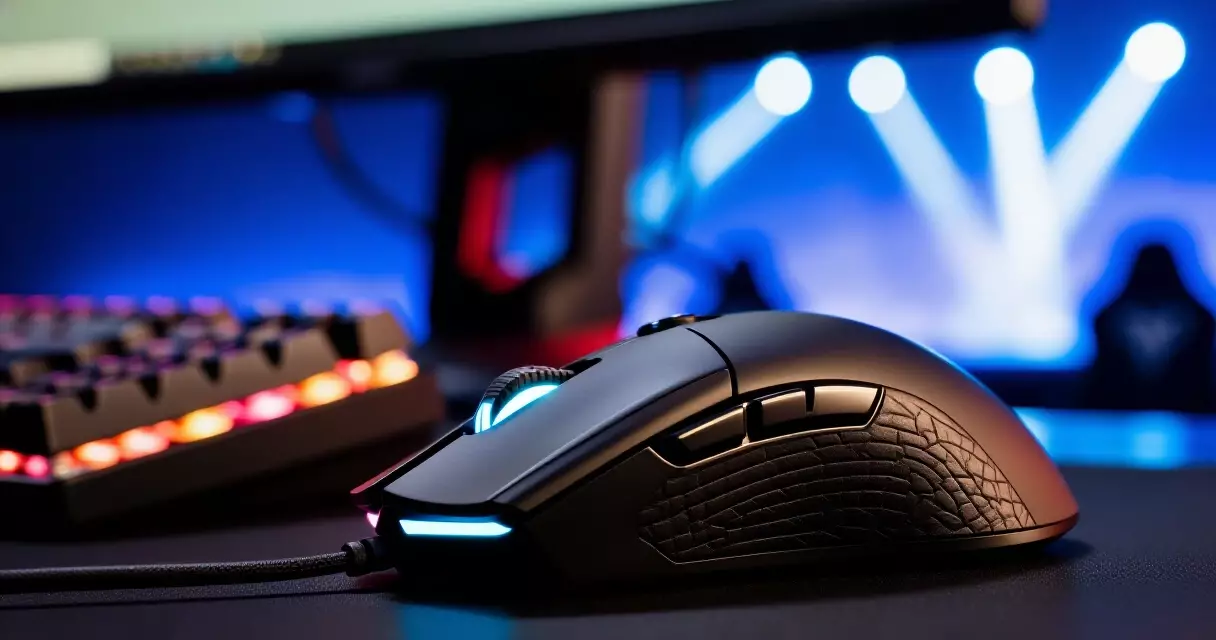
Most Logitech G agreements fall into one of a few shapes. Team peripheral partnerships supply an organisation with mice, keyboards and headsets, usually paired with jersey or social-channel branding. Event and league hardware deals make a specific mouse or keyboard the officially supplied gear at a tournament, putting the product on stage and in broadcast graphics. Sim-racing tie-ins, including the long-running link to McLaren’s esports programme, position the company’s wheels and pedals in front of motorsport-adjacent audiences. Console-focused deals run mainly through ASTRO headsets, which have appeared in competitions such as the Call of Duty League and the Halo Championship Series.
A fourth, quieter layer matters just as much: product co-development. Pros test prototypes, feedback shapes the final design, and the resulting hardware carries an implicit endorsement when those same players win on it. The marketing value sits inside the product rather than only on the jersey.
The Sponsorship Portfolio: Teams, Leagues and Events
Over the past decade Logitech G has equipped or branded a long list of organisations, including European and North American sides with deep League of Legends and Counter-Strike pedigrees. Among the most visible has been G2 Esports, whose roster and reach we cover in our G2 Esports review. The table below maps the main shapes the portfolio takes.
| Partnership type | Representative ties | What Logitech G supplies | Primary visibility |
|---|---|---|---|
| Team peripheral partnerships | Top-tier PC organisations | Mice, keyboards, headsets, mics | Jersey, training rooms, social |
| League and event hardware | Officially supplied tournament gear | Stage mice and keyboards | Broadcast graphics, stage |
| Console esports via ASTRO | Call of Duty League, Halo Championship Series | ASTRO A40 and A50 headsets | On-stage audio gear |
| Sim racing | McLaren esports programme | Racing wheels and pedals | Broadcast and event activation |
Breadth is the defining feature here. Where a non-endemic brand might back one marquee team, Logitech G spreads gear and branding across many organisations, multiple titles and both PC and console ecosystems. That diversification softens the blow when any single team underperforms, because the brand’s exposure never rests on one roster.
Reach and Audience: What the Numbers Say
The audience a sponsor reaches through esports is large and still growing. Industry trackers put the global esports following at more than 600 million people during the mid-2020s, a figure widely referenced in coverage of the sport (Wikipedia). Major finals in titles such as League of Legends routinely draw peak concurrent viewerships in the tens of millions, giving any officially supplied hardware repeated, unbroken screen time.
Behind that exposure sits a parent company with real financial weight. Logitech reported net sales of roughly $4.55 billion for its fiscal year ending in March 2025, with gaming standing as one of its largest product categories (Reuters; Logitech investor relations). That scale lets the brand fund multi-team commitments without overextending, a point worth weighing for any organisation assessing partner stability.
| Metric | Figure | Source |
|---|---|---|
| Year founded | 1981 | Wikipedia |
| ASTRO Gaming acquisition | $85 million (2017) | Wikipedia |
| Blue Microphones acquisition | ~$117 million (2018) | Wikipedia |
| Net sales, fiscal 2025 | ~$4.55 billion | Reuters / Logitech IR |
| Global esports audience, mid-2020s | 600 million-plus | Wikipedia (industry estimate) |
Reach is not only about peak viewers, though. Because players use the gear in practice, in content and at home, Logitech G earns impressions across vlogs, setup tours and stream overlays that never appear in official viewership tallies. That always-on quality is one reason endemic peripheral deals tend to outlast flashier non-endemic ones.
Brand Fit: Where Logitech G Wins and Where It Strains
Few sponsors fit competitive gaming as naturally as a company that makes the tools athletes compete with. When a player wins a tournament on a Logitech G mouse, the endorsement is built into the result rather than bolted onto it. That authenticity is the brand’s strongest asset, and it is something a non-endemic partner cannot replicate no matter how large the budget. For a contrasting model, our Red Bull esports sponsorship review shows how a lifestyle brand earns relevance from outside the hardware stack.
Strain shows up in two places. First, peripheral sponsorship has become crowded, so a Logitech G logo no longer feels distinctive the way it might have a decade ago. Almost every serious team carries a mouse-and-keyboard partner, which dilutes the signalling value of any single one. Second, players are notoriously particular about their gear, and an organisation locked into one brand can find that a star refuses to switch from a favoured competitor mouse, creating quiet friction behind the marketing gloss.
Logitech G manages that tension partly through its pro-input development model, which keeps its flagship gear competitive enough that fewer players push back. Even so, the fit is strongest for organisations whose identity already leans toward performance and PC play, and weaker for lifestyle-first brands chasing fashion crossover.
Logitech G vs Rival Sponsors: A Side-by-Side Look
The endemic peripheral space is competitive, and several brands chase the same teams and tournaments. Razer, SteelSeries and HyperX each bring distinct strengths, from Razer’s lifestyle marketing to HyperX’s deep headset presence. The comparison below uses approximate manufacturer list prices for flagship gaming mice as of 2026 to anchor the picture.
| Brand | Parent company | Flagship mouse list price (approx.) | Console esports headset presence |
|---|---|---|---|
| Logitech G | Logitech (Swiss-American) | ~$150 (G Pro X Superlight 2) | Strong, via ASTRO |
| Razer | Razer Inc. | ~$160 (Viper V3 Pro) | Moderate |
| SteelSeries | GN Store Nord (Denmark) | ~$130 (Prime / Aerox line) | Moderate |
| HyperX | HP Inc. | ~$60 to $100 | Strong headset legacy |
Read across that table and Logitech G’s edge becomes clear: it is the only brand that pairs a top-tier competitive mouse line with a dominant console headset name in ASTRO. Rivals tend to be strong in one lane. HyperX owns mindshare in headsets but lacks a comparable elite mouse pedigree, while Razer competes hard on mice and lifestyle but has a thinner stage-headset record. That two-lane coverage is a structural advantage when a sponsor wants visibility across both PC and console competition.
Pricing and Value: What a Logitech G Deal Looks Like
Peripheral sponsorships rarely run on cash alone. A typical Logitech G arrangement blends in-kind gear, which an organisation would otherwise buy, with a cash or marketing-services component layered on top. For a mid-table team, the in-kind value can cover most of its hardware budget across a full roster and substitute players, which is a meaningful saving even before any cash changes hands. Our breakdown of how much esports sponsorship deals are worth sets out the broader ranges these agreements occupy.
Specific figures are seldom disclosed, since peripheral deals are usually private and bundled. What can be said with confidence is that endemic hardware partnerships sit below the headline jersey-front sponsorships that lifestyle and finance brands pay for, while delivering steadier, lower-risk exposure. The value is less about a single large number and more about continuity: gear that is used daily, branding that appears every broadcast, and a partner whose own business depends on the sport staying healthy.
For teams, the practical question is whether exclusivity terms are worth the trade. Committing to one peripheral brand can unlock better gear support and co-marketing, yet it forecloses competing offers and can clash with player preferences. Reading the fine print on exclusivity, renewal and gear-supply guarantees matters as much here as the topline value.
Pros and Cons of a Logitech G Sponsorship
For organisations weighing an approach, the balance sheet looks like this.
- Pro: Authentic endemic fit, since the gear is genuinely used in competition.
- Pro: Full-stack coverage from mouse to microphone, plus console headsets through ASTRO.
- Pro: A financially stable parent with multi-billion-dollar net sales reduces partner risk.
- Pro: In-kind gear can offset a large share of a roster’s hardware costs.
- Con: Crowded category dilutes the distinctiveness of the logo.
- Con: Exclusivity can collide with individual players’ gear loyalties.
- Con: Cash components tend to be modest next to non-endemic jersey deals.
Measuring the Return on a Logitech G Deal
Return on a peripheral sponsorship is measured differently from a logo-only deal. Brand-side teams track media value from broadcast and social impressions, product-sales lift tied to pro endorsement, and sentiment among the gear-buying audience. Organisations on the receiving end weigh the cash and in-kind value against the exclusivity they give up. The frameworks involved are set out in our guide to measuring esports sponsorship ROI.
Because Logitech sells the products its sponsored players use, it can close the loop in a way few sponsors can, linking on-stage wins to downstream sales of the exact mouse or headset on screen. Coverage of competitive gaming on outlets such as ESPN keeps that visibility in front of mainstream audiences as well as endemic fans, extending the measurable reach beyond the core viewership.
Frequently Asked Questions
Does Logitech G sponsor individual streamers or only teams?
Logitech G works across both. Alongside its team peripheral partnerships, the brand maintains relationships with individual creators and streamers who use and showcase its mice, keyboards, headsets and Blue microphones. Individual deals tend to focus on content, gear seeding and social promotion rather than the jersey branding seen with organisations. The streamer side matters because so much gaming attention now happens on personal channels rather than league broadcasts, and a creator demonstrating a Logitech G product in a setup tour reaches a buying audience directly. Both routes feed the same goal: putting the company’s hardware in front of people deciding what gear to purchase next.
What is the difference between Logitech G and ASTRO Gaming?
Logitech G is Logitech’s main gaming brand, covering mice, keyboards, racing wheels, headsets and webcams. ASTRO Gaming is a separate headset-focused brand that Logitech acquired in 2017 for $85 million, and it is especially strong in console esports, where its A40 and A50 models have long been competition staples. Logitech has run the two as distinct identities rather than merging ASTRO entirely into the G line, letting ASTRO keep its console and audio heritage while Logitech G anchors the broader PC gaming range. For an esports sponsor, that split is useful, because it lets the company show up credibly on both PC and console stages under names each audience already trusts.
How much does a Logitech G team sponsorship cost?
Exact figures are rarely published, because peripheral deals are private and usually bundle in-kind gear with a cash or marketing component. As a category, endemic hardware partnerships sit below the large jersey-front sponsorships paid by non-endemic brands, but they carry real value through equipment that would otherwise come out of a team’s own budget. A mid-tier organisation can see most of its roster hardware costs covered, plus co-marketing support. The headline number matters less than the structure: how much gear is guaranteed, how long the term runs, and what exclusivity the team must accept in return. Anyone evaluating an offer should read those terms closely rather than fixate on a single dollar value.
Is Logitech G an endemic or non-endemic esports sponsor?
Logitech G is firmly an endemic sponsor. Its core business, gaming peripherals, lives inside the sport rather than outside it, which is the opposite of non-endemic partners such as soft-drink, finance or automotive brands that enter esports to reach the audience rather than to serve the gameplay. Endemic status gives Logitech G built-in authenticity, since the equipment is genuinely used in competition and is visible in every broadcast and practice session. It also shapes deal economics, with more value delivered as gear and product co-development than as straight cash. That endemic position is a defining strength of the brand as a sponsor, and it separates it cleanly from lifestyle-led entrants.
Which esports titles feature Logitech G most prominently?
Logitech G gear shows up most heavily in PC-first titles where mouse and keyboard precision decides matches, including League of Legends, Counter-Strike and Valorant, where the brand equips multiple top organisations. On console, the ASTRO headset line is prominent in competitions such as the Call of Duty League and the Halo Championship Series. Sim racing forms a third strand, with the company’s wheels and pedals visible through its long association with McLaren’s esports programme. That spread across genres is deliberate, letting the brand maintain presence whether the dominant title of the moment is a tactical shooter, a MOBA or a racing series, and reducing its dependence on any single game’s popularity.
How does Logitech G compare with Razer as an esports sponsor?
Both are endemic peripheral brands chasing the same teams, but they emphasise different strengths. Razer leans harder into lifestyle marketing and a distinctive visual identity, with flagship mice priced around $160 in 2026, and it competes strongly on PC gear. Logitech G matches Razer on mice, with the G Pro X Superlight 2 around $150, while adding a dominant console headset presence through ASTRO that Razer does not match as cleanly. For a team wanting coverage across both PC and console stages, Logitech G’s two-lane reach is an advantage. For a brand chasing fashion crossover and a bold aesthetic, Razer can feel like the stronger cultural fit. The right choice depends on where a team’s audience and identity sit.
Sources
- Logitech company history and corporate profile – https://en.wikipedia.org/wiki/Logitech
- ASTRO Gaming acquisition and console esports presence – https://en.wikipedia.org/wiki/Astro_Gaming
- Blue Microphones acquisition – https://en.wikipedia.org/wiki/Blue_Microphones
- Esports global audience estimates – https://en.wikipedia.org/wiki/Esports
- Logitech financial results and net sales – https://www.reuters.com/markets/companies/LOGN.S/
- Logitech investor relations – https://ir.logitech.com/
- Esports news coverage – https://www.espn.com/esports/
Top Esports Organizations 2026: Teams, Rosters, and Performance Rankings