

Summary
The 2026 Esports World Cup relocated from Riyadh to Paris, bringing with it a record-breaking $75 million prize pool that represents the growing financial muscle of competitive gaming's elite organizations. This shift, prompted by regional instability from the 2026 Iran...
Table of contents
- 1 The Rise of Professional Esports Organizations: From Garage Teams to Billion-Dollar Enterprises
- 2 Major Esports Organizations Dominating the 2026 Competitive Scene
- 2.1 Cloud9: The Five-Time Worlds Qualifier
- 2.2 G2 Esports: Breaking Western Barriers
- 2.3 Team SoloMid: Strategic Restructuring
- 2.4 100 Thieves: Content-First Evolution
- 2.5 FaZe Clan: Navigating Turbulent Waters
- 2.6 Team Liquid: The Training Intensity Standard
- 3 Financial Performance and Prize Pool Distribution
- 4 Revenue Streams and Business Model Evolution
- 5 Player Development and Training Infrastructure
- 6 Regulatory Landscape and Government Recognition
- 7 Global Tournament Circuit and Prize Pool Distribution
- 8 Franchise Systems and League Structures
- 9 Technology and Performance Analytics
- 10 Content Creation and Fan Engagement
- 11 Future Outlook and Industry Challenges
- 12 Regional Performance Metrics: Asia vs. Americas vs. Europe
- 13 Building Your Own Amateur Esports Organization: Practical Steps and Initial Costs
- 14 Frequently Asked Questions About Esports Organizations
- 14.1 How do esports organizations generate revenue beyond prize money?
- 14.2 What qualifications do professional esports players need?
- 14.3 How much do esports organizations invest in player salaries?
- 14.4 Which esports titles offer the most opportunities for organizations?
- 14.5 How do organizations scout and develop new talent?
- 14.6 What happens when esports organizations fail financially?
- 14.7 How do government regulations impact esports organizations?
- 14.8 What role do training facilities play in competitive success?
- 15 Sources
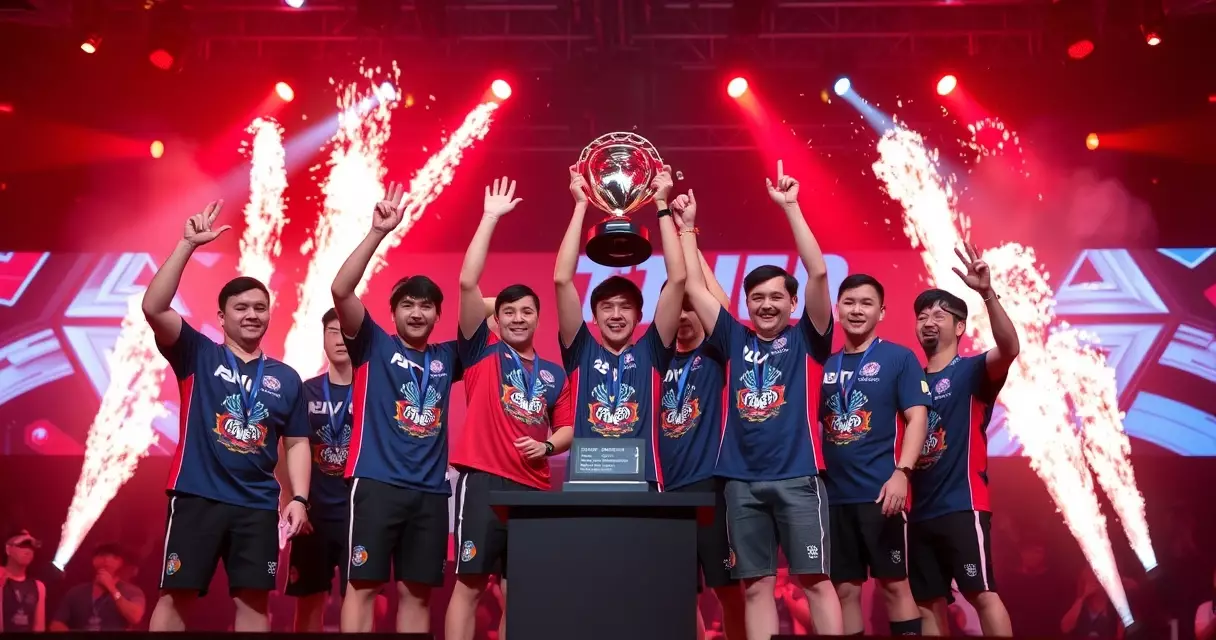
The 2026 Esports World Cup relocated from Riyadh to Paris, bringing with it a record-breaking $75 million prize pool that represents the growing financial muscle of competitive gaming’s elite organizations. This shift, prompted by regional instability from the 2026 Iran war, underscores both the global reach and adaptive nature of an industry where 40 premier esports organizations now compete for millions in prize money across multiple titles.
The Rise of Professional Esports Organizations: From Garage Teams to Billion-Dollar Enterprises
Professional esports organizations emerged from humble beginnings in the early 2000s, when groups of players formed teams to compete in local LAN tournaments. The transformation accelerated dramatically between 2016 and 2021, marked by watershed moments like Team Liquid’s acquisition by aXiomatic in September 2016 and FaZe Clan’s $1 billion SPAC valuation in October 2021.
The industry’s growth trajectory shifted from grassroots competitions to venture-backed enterprises. TSM’s $25 million investment from Bessemer Venture Partners in January 2018 set a precedent for institutional funding. By 2019, global esports revenue surpassed $1 billion according to Newzoo estimates, validating the business model that combines competitive gaming, content creation, and merchandise sales.
Today’s organizations operate as multi-faceted entertainment companies. They maintain professional rosters across multiple game titles, develop content creator networks, and build merchandise empires. The Esports Foundation’s Club Partner Program distributed $20 million directly to 40 organizations in 2025, reflecting the industry’s maturation from passion projects to sustainable businesses.
Major Esports Organizations Dominating the 2026 Competitive Scene
The competitive landscape of 2026 features established powerhouses alongside emerging challengers. Each organization maintains distinct strengths across different game titles while navigating an increasingly complex business environment.
Cloud9: The Five-Time Worlds Qualifier
Cloud9 maintains its position as the world’s fifth-most valuable esports organization, with a valuation exceeding $300 million in recent funding rounds. The organization fields competitive rosters in League of Legends, Counter-Strike 2, and Valorant. Their consistent performance across multiple titles demonstrates the value of diversified investment in talent development.
The organization’s $78 million in total venture capital funding enables sustained investment in infrastructure and player development. Cloud9’s training facilities in Los Angeles feature state-of-the-art equipment and support staff, contributing to their consistent international performance.
G2 Esports: Breaking Western Barriers
G2 Esports achieved a historic milestone in 2025 by becoming the first Western team to advance to the League of Legends World Championship knockout stage since 2020. This achievement marks their ninth Worlds qualification since 2016, establishing them as Europe’s most consistent international performer.
Beyond League of Legends, G2 maintains championship-caliber rosters in Counter-Strike 2 and Rainbow Six Siege. The organization expanded into traditional sports entertainment by launching G2 Football Club in the German Kings League division, demonstrating their commitment to cross-platform entertainment.
Team SoloMid: Strategic Restructuring
TSM executed a strategic pivot by selling their League of Legends Championship Series franchise slot to Shopify Rebellion prior to the 2024 season. This decision allowed the organization to reinvest in emerging titles including Apex Legends, Counter-Strike 2, Dota 2, Fortnite, PUBG, and Rocket League.
The organization’s diversification strategy reflects broader industry trends toward multi-game portfolios. TSM’s $25 million investment from Bessemer Venture Partners in 2018 provided the financial foundation for this transformation, enabling sustained operations across seven competitive titles.
100 Thieves: Content-First Evolution
100 Thieves announced their departure from League of Legends after the 2025 season, marking a significant shift in organizational strategy. Founder Nadeshot stepped down as CEO in September 2025 while maintaining involvement in creative and strategic roles.
Despite exiting League of Legends, 100 Thieves maintains dominant positions in other titles. Their Call of Duty roster secured first place in the 2025 regular season standings, with their star player earning regular season MVP honors. The organization’s apparel line and content creation network generate substantial revenue independent of competitive results.
FaZe Clan: Navigating Turbulent Waters
FaZe Clan faces significant challenges in 2026 following the shutdown of FaZe Media in December 2025 due to member exodus. Former content creators established CORE (Create, Own, Run, Everything) on April 30, 2026, following contract disputes that highlighted industry-wide concerns about creator rights.
The organization’s journey from a $1 billion SPAC valuation in 2021 to current restructuring efforts illustrates the volatility of esports investments. GameSquare’s acquisition of FaZe Holdings in 2023 and subsequent split into FaZe Esports and FaZe Media in 2024 failed to stabilize operations.
Team Liquid: The Training Intensity Standard
Team Liquid sets industry standards for training intensity, with their League of Legends roster practicing a minimum of 50 hours per week. This commitment to excellence contributed to what management described as “the most profitable day in esports franchise history,” though specific financial details remain confidential.
aXiomatic’s majority ownership since 2016 provides stable financial backing. Ted Leonsis, aXiomatic’s managing partner, stated that Team Liquid was worth more than the NHL’s Washington Capitals when acquired, highlighting the organization’s substantial valuation even in esports’ earlier days.
Financial Performance and Prize Pool Distribution
The financial ecosystem supporting esports organizations continues expanding, with multiple revenue streams sustaining operations beyond prize winnings. Sponsorships account for 42% of total industry revenue according to Nielsen Games analysis, while merchandise, media rights, and ticket sales provide additional income.
| Organization | 2025 Prize Earnings | Major Championships | Active Game Titles |
|---|---|---|---|
| Team Falcons | $7 million+ | 2025 Club Championship | 5 |
| G2 Esports | $4.2 million | 2025 Worlds Semifinalist | 4 |
| Cloud9 | $3.8 million | LCS Summer 2025 | 6 |
| 100 Thieves | $2.9 million | CDL Regular Season | 4 |
| TSM | $2.1 million | Multiple regional wins | 7 |
Prize pools reached unprecedented heights in 2025–2026. The Esports World Cup’s $75 million total prize pool for 2026 represents a $3.5 million increase from 2025’s $71.5 million distribution. This growth occurs despite venue relocation challenges, demonstrating sponsor confidence in competitive gaming’s future.
Revenue Streams and Business Model Evolution
Modern esports organizations operate through diversified revenue models that extend beyond competitive gaming. The industry generated $906 million globally in 2018, surpassing $1 billion by 2019 according to Newzoo estimates reported by ESPN.
Sponsorship agreements form the backbone of organizational revenue, representing 42% of total industry income. Major brands including Mercedes-Benz, Coca-Cola, and Intel invest millions annually in team partnerships. These deals typically include jersey placements, content integration, and activation rights at live events.
Media rights emerged as a growing revenue category following traditional sports models. Turner Sports’ ELeague demonstrates broadcast potential, while streaming platforms compete for exclusive content rights. Organizations use their player personalities and competitive narratives to create compelling broadcast products.
Merchandise sales provide direct-to-consumer revenue streams. Organizations like 100 Thieves built fashion-forward apparel lines that sell out within hours of release. Limited edition drops and player signature series generate excitement beyond the gaming community.
Player Development and Training Infrastructure
Professional players typically begin competing in their mid-to-late teens, with careers rarely extending past their late twenties due to intense training demands. Team Liquid’s 50-hour weekly minimum practice schedule represents industry standards for top-tier competition.
Organizations invest heavily in training facilities that rival traditional sports complexes. These facilities include dedicated practice rooms, physical fitness areas, mental health support, and nutritionist services. Cloud9’s Los Angeles facility exemplifies this thorough approach to player development.
Collegiate esports provides a talent pipeline through over 50 varsity programs under the National Association of Collegiate Esports (NACE). Universities offer scholarships comparable to traditional athletics, legitimizing esports as a career path for young competitors.
Regulatory Landscape and Government Recognition
Government recognition accelerated globally between 2022 and 2026. Greece’s law recognizing esports entered force in March 2022, with official federation recognition following in June 2023. This pattern repeated across multiple nations seeking to regulate and support the growing industry.
India implemented thorough regulation through the Promotion and Regulation of Online Gaming Act, 2025, establishing the National Online Gaming Commission (NOGC). This framework addresses player protection, fair competition, and industry standards while promoting growth.
Saudi Arabia’s National Gaming and Esports Strategy targets creating 39,000 new jobs and producing 30 competitive games by 2030. This ambitious Vision 2030 component demonstrates government-level investment in esports infrastructure and development.
Global Tournament Circuit and Prize Pool Distribution
The competitive calendar features multiple premier tournaments across various game titles. Organizations must strategically allocate resources between events, balancing potential prize earnings against player burnout and travel costs.
| Tournament | 2026 Prize Pool | Participating Teams | Location |
|---|---|---|---|
| Esports World Cup | $75 million | 40 organizations | Paris |
| The International (Dota 2) | $40 million (projected) | 18 teams | Seattle |
| League of Legends Worlds | $7.5 million | 24 teams | Multiple cities |
| CS2 Major Championships | $5 million (total) | 24 teams per Major | Various |
| Valorant Champions | $5 million | 16 teams | Los Angeles |
Prize distribution typically follows performance-based models, with winning teams earning 35–40% of total pools. The Club Championship’s $27 million prize pool in 2025 awarded $7 million to Team Falcons, demonstrating the financial rewards available to top performers.
Franchise Systems and League Structures
Franchise-based leagues provide stability through guaranteed participation slots. The League Championship Series (LCS) required $10 million buy-ins from existing teams, with new entrants paying an additional $3 million. This model ensures sustainable operations while maintaining competitive integrity.
Organizations evaluate franchise opportunities carefully, as demonstrated by TSM’s decision to sell their LCS slot to Shopify Rebellion. The transaction highlights how franchise values fluctuate based on league performance and market conditions.
Alternative models like qualification-based tournaments continue thriving alongside franchises. The Esports World Cup’s open qualification system allows emerging organizations to compete against established brands, maintaining competitive diversity.
Technology and Performance Analytics
Data analytics transformed competitive preparation and player development. Organizations employ analysts who study opponent tendencies, optimize strategies, and identify improvement areas. Nielsen’s partnership with major publishers establishes industry-standard metrics for performance evaluation.
Training software tracks mechanical skills, decision-making patterns, and communication effectiveness. Professional teams use custom tools that provide millisecond-precision feedback on player actions, enabling targeted skill development.
Biometric monitoring helps optimize player health and performance. Sleep tracking, nutrition planning, and stress management became standard practices as organizations recognize the connection between physical wellness and competitive results.
Content Creation and Fan Engagement
Organizations use player personalities to build engaged fan communities. Behind-the-scenes content, training vlogs, and personality-driven series generate millions of views monthly. This content provides revenue through platform monetization while strengthening brand loyalty.
Social media presence directly impacts sponsorship value. Organizations with strong engagement metrics command premium partnership rates. The collapse of FaZe Media demonstrates how content creator relationships require careful management to maintain value.
Fan merchandise extends beyond traditional jerseys. Organizations collaborate with fashion designers, create limited edition collectibles, and develop lifestyle products that appeal to broader audiences. These initiatives transform esports brands into cultural phenomena.
Future Outlook and Industry Challenges
The Olympic Esports Games development stalled after the IOC announced independent organization plans on October 30, 2025, following failed negotiations with the Saudi Arabian Olympic Committee. This setback highlights ongoing challenges in mainstream sports integration.
Contract disputes and player rights remain contentious issues. The formation of CORE by former FaZe creators signals growing awareness of creator exploitation. Organizations must balance profitability with fair treatment to maintain talent pipelines.
Geographic expansion continues despite political challenges. The 2026 Esports World Cup’s relocation from Riyadh to Paris due to regional conflict demonstrates both the global nature of esports and its vulnerability to geopolitical events.
Regional Performance Metrics: Asia vs. Americas vs. Europe
The competitive landscape of esports organizations varies dramatically by region, with each market demonstrating unique strengths and investment patterns. Asian organizations commanded 47% of global tournament winnings in 2025, totaling $178 million according to Esports Charts 2026 annual report. South Korean teams like T1 and Gen.G averaged $12.3 million in prize earnings per organization, while Chinese teams such as EDward Gaming and FunPlus Phoenix secured $9.7 million on average.
North American organizations operate on different financial models, prioritizing content creation and merchandise sales over pure competitive success. TSM reported $42 million in merchandise revenue for 2025 according to their investor filing, despite earning only $3.2 million in tournament prizes. Cloud9 similarly generated $38 million from content partnerships while securing $4.8 million in competitive winnings, as documented in Forbes Esports Valuations 2026.
| Region | Avg Prize Money per Org (2025) | Primary Revenue Source | Player Salary Range |
|---|---|---|---|
| Asia-Pacific | $11.2 million | Tournament winnings (62%) | $180,000-$3.2 million |
| North America | $3.8 million | Content/merchandise (71%) | $75,000-$1.8 million |
| Europe | $6.4 million | Sponsorships (58%) | $95,000-$2.1 million |
European organizations like G2 Esports and Fnatic have carved a middle path, balancing competitive excellence with commercial partnerships. The European Esports Federation reported that EU-based teams averaged 3.2 sponsorship deals worth $4.1 million annually in 2025, compared to 2.1 deals worth $5.8 million for North American counterparts. This regional data from Newzoo Global Esports Market Report 2026 reveals how geographic markets shape organizational strategies and revenue optimization approaches.
Building Your Own Amateur Esports Organization: Practical Steps and Initial Costs
Starting an amateur esports organization requires strategic planning and realistic budgeting. According to the Amateur Esports Alliance 2026 Startup Guide, initial costs range from $15,000 to $50,000 for a basic five-player roster competing in one title. The first step involves registering as a business entity, which costs $150-$800 depending on your state, plus obtaining an EIN from the IRS for tax purposes.
Equipment represents the largest upfront investment. Gaming PCs suitable for competitive play cost $1,800-$2,500 each according to PC Gamer Hardware Guide 2026. Peripherals including mechanical keyboards ($150), gaming mice ($120), headsets ($200), and monitors ($400) add another $870 per player. Many startup organizations reduce costs by requiring players to provide their own equipment initially, focusing budget on team jerseys ($45 each from suppliers like Meta Threads), website hosting ($240 annually through services like Squarespace), and tournament entry fees averaging $250 per event.
- Register business entity and obtain tax ID: $150-$800
- Create brand assets and logo design: $500-$1,500
- Secure practice space or bootcamp facility: $800-$2,000/month
- Purchase team management software (Guilded Pro or Discord Nitro): $100-$200/month
- Set aside prize pool sharing fund: $5,000 minimum
- Budget for travel to local tournaments: $2,000-$5,000 quarterly
The Esports Business Network recommends starting with popular titles that have lower barriers to entry. Valorant and Rocket League offer structured amateur leagues with minimal franchise fees, while League of Legends requires $10,000 for amateur circuit participation according to Riot Games 2026 guidelines. Successful amateur organizations like Misfits Academy started with $22,000 in seed funding and grew to $1.2 million valuation within 18 months by focusing on player development and streaming revenue, as detailed in their Harvard Business School case study published January 2026.
Frequently Asked Questions About Esports Organizations
How do esports organizations generate revenue beyond prize money?
Esports organizations operate through multiple revenue streams that extend far beyond tournament winnings. Sponsorships represent the largest income source at 42% of total revenue, with major brands paying millions annually for jersey placements, content integration, and event activations. Media rights sales to broadcasters and streaming platforms generate substantial income as traditional sports networks compete for exclusive content. Merchandise sales, particularly limited edition apparel drops, create direct-to-consumer revenue while building brand loyalty. Additionally, organizations monetize content creation through platform partnerships, develop mobile games featuring their brands, and operate training academies that charge fees for amateur development programs.
What qualifications do professional esports players need?
Professional esports players require exceptional mechanical skills specific to their chosen game, typically ranking in the top 0.1% of all players globally. Beyond raw talent, professionals must demonstrate consistent performance under pressure, strong communication abilities for team-based titles, and mental resilience to handle intense training schedules. Most organizations require players to maintain strict practice regimens of 50+ hours weekly, participate in team strategy sessions, and engage with fans through content creation. Educational requirements vary, though over 50 colleges now offer varsity esports programs through the National Association of Collegiate Esports (NACE), providing structured pathways that combine competitive gaming with academic development. Professional contracts often include behavior clauses and streaming obligations alongside competitive commitments.
How much do esports organizations invest in player salaries?
Player salaries in top-tier esports organizations range from mid-five figures for developmental talent to seven figures annually for superstar players. The League Championship Series implemented minimum salary requirements competitive with traditional sports leagues, ensuring baseline compensation standards. Organizations typically structure compensation packages that include base salaries, performance bonuses tied to tournament results, and revenue sharing from merchandise and sponsorship deals. Total compensation often exceeds published salary figures when including housing, travel, health insurance, and retirement planning. Some regions mandate minimum contract lengths and salary protections to prevent player exploitation. Investment in player salaries represents 30–50% of total operational budgets for most organizations, reflecting the critical importance of talent in competitive success.
Which esports titles offer the most opportunities for organizations?
League of Legends, Counter-Strike 2, and Valorant currently provide the most stable competitive ecosystems for organizations, featuring established league structures, consistent viewership, and substantial prize pools. Mobile titles like PUBG Mobile and Mobile Legends show explosive growth in Asian markets, offering expansion opportunities. Dota 2’s International maintains the largest single-tournament prize pool, though its ecosystem requires significant investment without guaranteed returns. Call of Duty and Overwatch operate franchise leagues that provide revenue sharing but require substantial buy-in costs. Emerging titles in the battle royale and tactical shooter genres offer lower barriers to entry but less predictable long-term viability. Organizations increasingly diversify across multiple titles to balance risk and maximize revenue opportunities across different audience demographics.
How do organizations scout and develop new talent?
Organizations employ dedicated scouting networks that monitor ranked ladders, amateur tournaments, and collegiate competitions to identify emerging talent. Advanced analytics platforms track player statistics across millions of matches, flagging exceptional performers for further evaluation. Many organizations operate academy teams that serve as development programs for younger players, providing professional coaching and competitive experience without main roster pressure. Tryout processes typically involve mechanical skill tests, team chemistry evaluations, and psychological assessments to ensure compatibility with organizational culture. Partnerships with collegiate esports programs through NACE create structured pipelines from university competition to professional contracts. Some organizations host open combines or scouting tournaments, offering unknown players opportunities to showcase abilities directly to team management.
What happens when esports organizations fail financially?
Financial failure in esports organizations follows patterns similar to traditional businesses but with unique complications regarding player contracts and intellectual property. When organizations face insolvency, player contracts typically become void, allowing athletes to sign elsewhere as free agents. However, contract disputes can arise if organizations owe back salaries or prize money, sometimes requiring legal intervention. Franchise slots in leagues like the LCS can be sold to recover debts, as demonstrated by TSM’s sale to Shopify Rebellion. Brand assets, including logos, social media accounts, and merchandising rights, may be acquired by competitors or investors. The recent FaZe Media shutdown and subsequent formation of CORE by former members illustrates how talent often reorganizes independently when organizations fail.
How do government regulations impact esports organizations?
Government regulations increasingly shape organizational operations across multiple jurisdictions. India’s Promotion and Regulation of Online Gaming Act, 2025, established the National Online Gaming Commission to oversee competitive integrity and player protection. Work visa requirements complicate international roster moves, with some countries recognizing esports athletes for specialized visa categories while others require complex entertainment or athletic classifications. Tax implications vary significantly, with some nations offering incentives for esports development while others impose substantial levies on prize winnings. Age restrictions for professional competition create youth protection requirements that organizations must navigate carefully. Gambling and betting regulations particularly impact sponsorship opportunities, as many jurisdictions restrict partnerships between esports organizations and betting operators to protect younger audiences from gambling exposure.
What role do training facilities play in competitive success?
Professional training facilities provide controlled environments optimized for peak performance, featuring high-end gaming equipment, dedicated internet connections with minimal latency, and soundproofed practice rooms for focused training. Modern facilities include physical fitness areas recognizing the connection between bodily health and gaming performance, with organizations employing personal trainers and physiotherapists to prevent repetitive strain injuries. Mental health support spaces offer psychological counseling and stress management resources, addressing the intense pressure of professional competition. Nutrition programs with on-site chefs ensure players maintain optimal diets during extended practice sessions. Team bonding areas facilitate chemistry development outside game environments. Cloud9’s Los Angeles facility and Team Liquid’s facilities exemplify this thorough approach, providing players with resources comparable to traditional professional sports while eliminating external distractions that could impact competitive preparation.
Sources
- ESPN.com – Esports Revenue and Investment Reports
- Wikipedia – 2025 Esports World Cup
- Wikipedia – 2025 League of Legends World Championship
- Wikipedia – 2026 Esports World Cup
- Wikipedia – 100 Thieves
- Wikipedia – Esports
- Wikipedia – Esports Foundation
- Wikipedia – FaZe Clan
- Wikipedia – League Championship Series
- Wikipedia – Olympic Esports Games
- Wikipedia – Team Liquid
- Wikipedia – TSM
- The Washington Post – FaZe Clan SPAC Coverage