

Summary
When Team SoloMid signed a naming-rights agreement with the cryptocurrency exchange FTX in June 2021, the reported figure stopped the esports industry in its tracks: 210 million dollars across ten years, the largest brand deal an esports organization had ever...
Table of contents
- 1 The Big Picture: How Much Money Flows Into Esports Sponsorships
- 2 A Short History of Esports Sponsorship Spending
- 3 Sponsorship Tiers and What Each One Costs
- 4 Real Numbers: Landmark Esports Sponsorship Deals
- 5 What Determines the Value of a Sponsorship Deal
- 6 How Deal Values Are Changing in 2026
- 7 Frequently Asked Questions
- 7.1 How much is an average esports sponsorship deal worth?
- 7.2 What was the largest esports sponsorship deal ever signed?
- 7.3 Why are most sponsorship figures kept secret?
- 7.4 What is the difference between endemic and non-endemic sponsors?
- 7.5 Do players earn money directly from team sponsorships?
- 7.6 Are esports sponsorship values still growing in 2026?
- 7.7 How do brands measure the return on an esports sponsorship?
- 8 Sources
When Team SoloMid signed a naming-rights agreement with the cryptocurrency exchange FTX in June 2021, the reported figure stopped the esports industry in its tracks: 210 million dollars across ten years, the largest brand deal an esports organization had ever struck, according to reporting by The Verge and ESPN. That single number reframed how players, brands, and investors talk about what a sponsorship is actually worth. Most deals look nothing like it, yet the headline reveals the wide gulf between a small jersey patch and a stadium-naming partnership. This article breaks down how esports sponsorship deals are priced, what each tier typically costs, and the real reported numbers behind the biggest agreements.
Pricing in this space is rarely published in full. Brands and teams sign mutual confidentiality clauses, and the numbers that do surface usually arrive through court filings, investor decks, or a press release that omits the dollar amount. Because of that, anyone studying sponsorship value has to triangulate from industry reports, disclosed landmark deals, and the handful of executives willing to speak on the record. The picture that emerges is messy but readable, and it rewards anyone trying to understand where the money in competitive gaming really sits.
The Big Picture: How Much Money Flows Into Esports Sponsorships
Sponsorship has been the financial backbone of competitive gaming for more than a decade. The analytics firm Newzoo, in its long-running Global Esports Market Report, has repeatedly found that sponsorship and advertising together account for the majority of all esports revenue, often cited in the range of 55 to 60 percent of the total. The same body of research put the global esports economy at roughly 1.4 billion dollars in 2022 and projected continued growth toward the 1.9 billion dollar mark later in the decade. Those figures place sponsorship income well ahead of media rights, merchandise, and ticketing as a share of what keeps the ecosystem running.
Why does sponsorship dominate so heavily? Competitive gaming reaches a young, hard-to-target audience that traditional television struggles to hold. A 2023 audience analysis summarized on Wikipedia's esports overview describes a global viewership measured in the hundreds of millions, heavily concentrated in the 18-to-34 bracket that advertisers prize. Brands pay to reach that demographic through team jerseys, broadcast overlays, content series, and arena signage. The result is a market where a logo placement can be worth anywhere from a few thousand dollars to several million per year, depending entirely on who is wearing it and where it appears.
Understanding the ceiling helps, but most money changes hands far below it. For a wider view of how the whole financial system fits together, our breakdown of esports organization revenue streams maps sponsorship against the other income sources that teams rely on.
A Short History of Esports Sponsorship Spending
Early competitive gaming ran on modest budgets. Through the 2000s, hardware brands such as Intel, Logitech, and SteelSeries supplied gear and small cash stipends to teams playing Counter-Strike and StarCraft. These were endemic deals, meaning the sponsor sold products the players already used. Money was tight, and a team might survive on equipment and tournament winnings rather than a marquee partner.
The turning point came as live streaming matured. Twitch, which Amazon acquired in 2014 for roughly 970 million dollars according to Reuters, gave brands a measurable place to reach viewers in real time. League of Legends, Dota 2, and Counter-Strike built persistent leagues, and audiences grew large enough that non-endemic brands, companies with no natural tie to gaming, began paying attention. Coca-Cola, Red Bull, and several car manufacturers entered the space, and average deal sizes climbed.
By 2018 the floodgates opened for blue-chip sponsors. Mastercard became the first global partner of the League of Legends esports circuit that year, a multi-year agreement reported across major business press, though the financial terms stayed private. The years that followed brought a wave of luxury and lifestyle brands, culminating in headline agreements that pushed reported values into eight and even nine figures. The history of this spending mirrors the broader maturation of teams into real businesses, a shift our guide to esports organization valuation examines in depth.
Sponsorship Tiers and What Each One Costs
Not all sponsorships carry the same weight, and the industry roughly sorts them into tiers. Each tier bundles a different set of rights, from a small social-media shoutout to exclusive category ownership and the right to put a company name on a team or venue. The ranges below are compiled from publicly reported deals and executive interviews; exact figures vary widely by region, game title, and the prestige of the organization involved.
| Sponsorship tier | What it typically includes | Estimated annual value (USD) |
|---|---|---|
| Social / content partner | Logo in social posts, occasional branded content, product seeding | 5,000 – 75,000 |
| Sleeve / secondary jersey patch | Smaller logo on kit, broadcast mentions, limited activation | 50,000 – 500,000 |
| Primary jersey / chest sponsor | Front-of-jersey placement, content rights, event presence | 500,000 – 3,000,000 |
| Presenting / category-exclusive sponsor | Exclusive product category, league or team integration | 1,000,000 – 8,000,000 |
| Title / naming rights | Company name attached to the team, arena, or league | 5,000,000 – 25,000,000+ |
The jump between tiers is steep, and it tracks visibility rather than effort. A sleeve patch that appears for a few seconds during a broadcast carries a fraction of the value of a chest logo that anchors every jersey shot, every photo, and every highlight clip. Category exclusivity adds another premium, because a brand pays not only for placement but for keeping competitors out of that space entirely. The different formats here connect closely to the broader taxonomy described in our overview of types of esports sponsorships.
Region matters as much as tier. A primary jersey deal for a top team in the Chinese or South Korean leagues can command sums that dwarf an equivalent placement in a smaller European or North American organization, simply because the audience and the willingness of local brands to spend differ so sharply. Game title shapes pricing too, since a League of Legends or Counter-Strike franchise generally draws larger and steadier viewership than a smaller competitive scene.
Real Numbers: Landmark Esports Sponsorship Deals
Headline agreements set the perception of what is possible, even though they sit far above the median. The table below gathers the most widely reported landmark deals, with the figures attributed to the outlets that broke or confirmed them. Where a value was never disclosed, the entry says so plainly rather than guessing.
| Deal | Year | Reported value | Source |
|---|---|---|---|
| TSM × FTX naming rights | 2021 | 210 million over 10 years | The Verge / ESPN |
| Nike × League of Legends Pro League (China) | 2019 | Reported around 144 million over 4 years | Premier sports business press |
| Louis Vuitton × Riot Games (Worlds) | 2019 | Undisclosed multi-year | Reuters |
| Mastercard global League of Legends partnership | 2018 | Undisclosed multi-year | Major business press |
| BMW multi-team partnership (Cloud9, Fnatic, G2, T1, FunPlus Phoenix) | 2020 | Undisclosed | Major business press |
| Mercedes-Benz × ESL | 2017 | Undisclosed multi-year | Major business press |
The TSM agreement remains the reference point for the top of the market. Reported at 210 million dollars over a decade by The Verge, it rebranded the organization as TSM FTX and folded a crypto exchange's name into one of North America's best-known teams. The arrangement also became a cautionary tale. When FTX collapsed into bankruptcy in November 2022, as documented extensively by Reuters, the naming partnership unraveled and TSM dropped the suffix. The episode showed that a record headline value means little if the sponsor cannot honor it.
Nike's entry into Chinese League of Legends, reported at roughly 144 million dollars across four years, signaled that apparel giants saw esports as a serious channel rather than an experiment. Luxury added its own gloss when Louis Vuitton designed a bespoke trophy case for the 2019 League of Legends World Championship in partnership with Riot Games, a move covered by Reuters that married a heritage fashion house to a digital sport. None of these deals look like the modest jersey patches that fund most rosters, which is exactly why they matter as ceiling markers.
For teams trying to reach even the lower rungs of this ladder, the practical path is its own subject. Our step-by-step guide on how to get an esports sponsorship walks through pitching, media kits, and valuation from the team side of the table.
What Determines the Value of a Sponsorship Deal
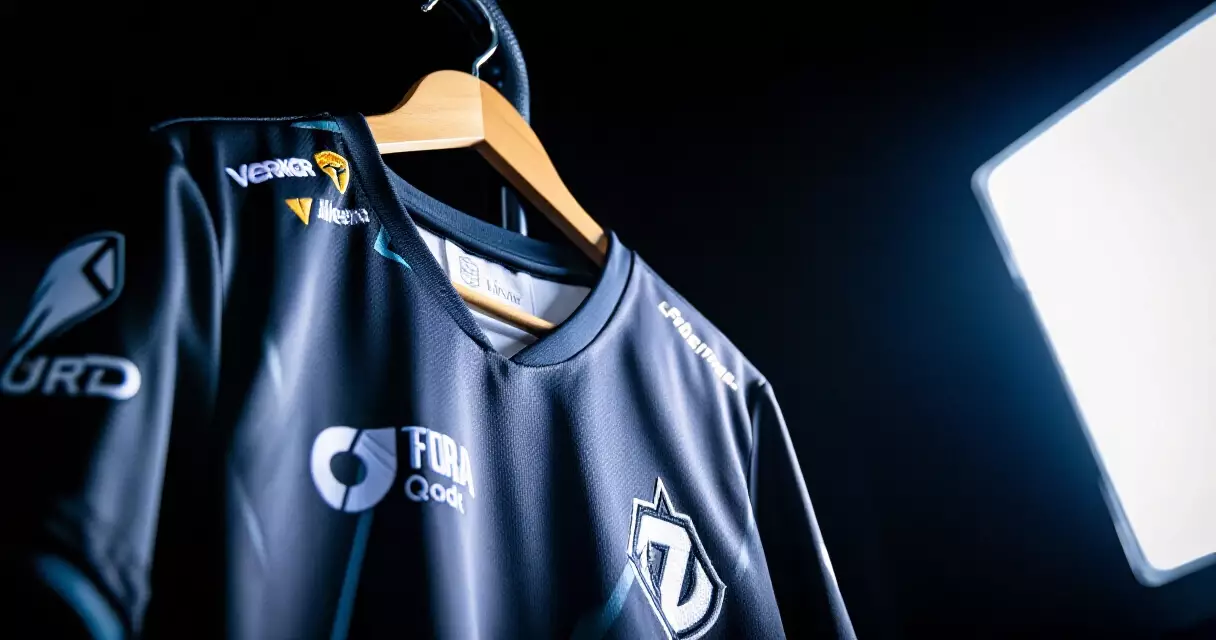
Several measurable factors push a deal up or down the value scale. Audience size is the starting point, because sponsors ultimately pay for eyeballs and engagement. A team that consistently fields rosters in premier League of Legends, Counter-Strike, Valorant, or Dota 2 events delivers more broadcast minutes and more social reach than one stuck in regional qualifiers, and the pricing follows.
- Reach and engagement: total viewership, social following, and watch time across the team's channels.
- Competitive prestige: championships, marquee players, and franchise slots in top leagues raise perceived value.
- Category exclusivity: locking out rival brands in a product category commands a premium.
- Activation rights: content series, player appearances, and co-branded products extend a deal's worth beyond a static logo.
- Contract length and stability: multi-year terms reduce risk for both sides and often raise the annual figure.
Activation often matters more than placement. A sponsor that merely buys a logo gets passive exposure, while one that builds a content series, runs fan promotions, and brings players to events generates measurable returns it can defend internally. That difference explains why two teams with similar viewership can sign deals of very different size: the team that can deliver creative, integrated campaigns is worth more to a marketing department than one offering a patch and nothing else.
Roster volatility is the quiet risk that shapes pricing. Players move between organizations frequently, and a star departure can cut a team's relevance overnight. Sponsors price that uncertainty in, sometimes through performance clauses or shorter initial terms. The mechanics of how teams secure and keep these partners are covered in detail in our look at esports organization sponsorship deals.
How Deal Values Are Changing in 2026
The market today looks more disciplined than it did during the speculative peak around 2021. After the crypto downturn wiped out several high-profile sponsors, including FTX, brands and teams alike grew more cautious about headline-grabbing valuations. Reporting from Reuters on the FTX collapse underlined how exposed organizations were to a single category, and many have since diversified their sponsor rosters rather than chasing one giant partner.
Three shifts define the current climate. Performance-based structures are more common, tying part of a sponsor's payment to viewership or engagement targets rather than a flat annual fee. Non-endemic brands in finance, automotive, and consumer goods continue to enter, broadening the buyer pool beyond hardware companies. And teams increasingly package data, offering sponsors detailed audience analytics to justify spend, a practice borrowed from traditional sports marketing.
Valuations have cooled at the very top while the middle has steadied. Fewer nine-figure naming deals appear, but a healthier base of mid-tier jersey and category sponsorships has filled in, which arguably makes the ecosystem more durable. Anyone tracking where the largest organizations sit in this landscape can compare the field in our ranking of the top esports organizations of 2026. The direction of travel points toward measured, accountable spending rather than the trophy deals that defined the previous cycle.
Frequently Asked Questions
How much is an average esports sponsorship deal worth?
There is no single average, because the range is enormous and most figures stay private. Based on publicly reported deals and industry interviews compiled through 2024 and 2025, a small social or content partnership might be worth a few thousand to seventy-five thousand dollars a year, while a primary jersey sponsorship for an established team typically lands between five hundred thousand and three million dollars annually. Title and naming-rights agreements run far higher, into the tens of millions over their full term. The team's audience size, competitive standing, and region drive most of that variation, so two organizations can sign very different deals for similar-looking placements.
What was the largest esports sponsorship deal ever signed?
The most widely cited record is the naming-rights agreement between Team SoloMid and the cryptocurrency exchange FTX, reported at 210 million dollars across ten years when it was announced in June 2021 by outlets including The Verge and ESPN. That deal rebranded the team as TSM FTX and stood as the largest brand partnership in esports history. It also ended early, because FTX filed for bankruptcy in November 2022, as documented by Reuters, and the naming arrangement collapsed with it. The figure remains the benchmark people reach for when discussing the ceiling of esports sponsorship value, even though no comparable deal has matched it since.
Why are most sponsorship figures kept secret?
Confidentiality protects both parties. Teams do not want rivals to know what they can command, and brands do not want competitors to gauge their marketing budgets or to anchor future negotiations against a public number. Most contracts therefore include mutual non-disclosure clauses covering the financial terms. The values that do reach the public usually surface through court filings, investor presentations, regulatory disclosures, or a leak to trade press. Because of this secrecy, analysts triangulate from the handful of confirmed deals, executive interviews, and aggregate market reports rather than relying on a clean list of published prices, which is why ranges rather than exact figures dominate any honest discussion.
What is the difference between endemic and non-endemic sponsors?
Endemic sponsors sell products tied directly to gaming, such as gaming chairs, peripherals, processors, and energy drinks aimed at players. They were the earliest backers of competitive teams and still form a reliable base. Non-endemic sponsors come from outside the gaming world, including banks, car manufacturers, fashion houses, and fast-food chains, and they pay to reach the young audience that esports gathers. Non-endemic money generally signals a maturing market, since those brands have many advertising options and choose esports deliberately. The arrival of companies like Mastercard, BMW, and Louis Vuitton over the past several years marked that shift, and non-endemic spending now drives much of the growth at the higher tiers.
Do players earn money directly from team sponsorships?
Usually the sponsorship money flows to the organization rather than straight to players, funding salaries, coaching, travel, and facilities. Player compensation comes from the team's overall budget, which sponsorship supports, so a richer sponsor roster can translate into better salaries indirectly. Some star players negotiate personal sponsorship deals separate from their team, especially streamers with large individual followings, and those personal agreements can rival or exceed their competitive salary. Contracts govern how these arrangements interact, including whether a player can promote a brand that competes with a team sponsor. Conflicts between personal and team deals are a recurring source of friction in the business.
Are esports sponsorship values still growing in 2026?
Growth has continued but in a steadier, less speculative form than during the 2021 peak. Newzoo's market research has consistently projected the overall esports economy expanding toward and past the 1.9 billion dollar range, with sponsorship remaining the largest single revenue category. The very top of the market has cooled, with fewer record-breaking naming deals after the crypto sponsor downturn, while the mid-tier of jersey and category partnerships has broadened and stabilized. Sponsors now favor performance-linked terms and richer audience data over trophy valuations. The net effect is a market that grows more slowly at the headline level but rests on a wider, more diversified base of brands than it did a few years ago.
How do brands measure the return on an esports sponsorship?
Brands track a mix of exposure and engagement metrics to judge whether a deal pays off. Media value, the estimated cost of buying the equivalent logo exposure through advertising, gives a baseline, while social impressions, watch time, and brand-lift surveys measure how well the audience noticed and responded. Activation campaigns, such as co-branded content or fan promotions, are measured by participation and conversion rather than impressions alone. The shift toward data-rich reporting lets marketing departments defend esports spending against other channels. This accountability is one reason performance-based contract terms have become more common, since both sides want a clear, shared definition of success before money changes hands.
Sources
- The Verge – TSM FTX naming-rights deal coverage: https://www.theverge.com/2021/6/4/22518563/tsm-ftx-deal-esports-naming-rights
- Reuters – FTX bankruptcy coverage: https://www.reuters.com/business/finance/ftx-bankruptcy/
- Reuters – Amazon acquisition of Twitch: https://www.reuters.com/article/us-twitch-m-a-amazon-com-idUSKBN0GP1V3/
- Reuters – Louis Vuitton and Riot Games partnership: https://www.reuters.com/article/us-lvmh-louisvuitton-gaming/
- Wikipedia – Esports overview and audience data: https://en.wikipedia.org/wiki/Esports
Top Esports Organizations 2026: Teams, Rosters, and Performance Rankings