

Summary
When Mastercard signed on as the first global sponsor of League of Legends Esports in September 2018, it put a financial-services logo in front of an audience that would soon watch a World Championship final peak near 44 million concurrent...
Table of contents
- 1 Who Mastercard Is and Why It Backed Esports
- 2 Inside the Mastercard and Riot Games Deal
- 3 How Mastercard Activates Its Sponsorship
- 4 Deal Snapshot and Specifications
- 5 Pros and Cons for Mastercard
- 6 Mastercard Compared With Other Esports Sponsors
- 7 Measuring Reach, Brand Lift, and ROI
- 8 Frequently Asked Questions
- 8.1 When did Mastercard start sponsoring League of Legends?
- 8.2 What is a non-endemic esports sponsor?
- 8.3 How much does Mastercard pay for the sponsorship?
- 8.4 Is the Mastercard esports sponsorship considered successful?
- 8.5 How does Mastercard compare to endemic sponsors like HyperX?
- 8.6 What does the Mastercard deal mean for other non-endemic brands?
- 9 Sources
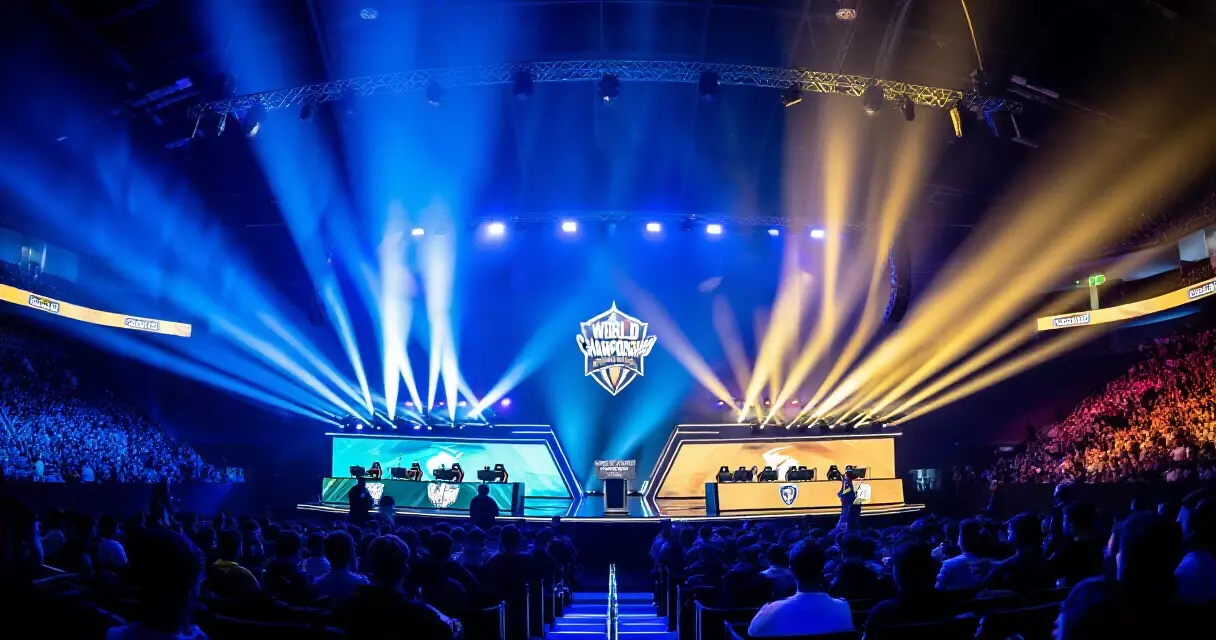
When Mastercard signed on as the first global sponsor of League of Legends Esports in September 2018, it put a financial-services logo in front of an audience that would soon watch a World Championship final peak near 44 million concurrent viewers, a figure Riot Games reported for the 2019 event. That one decision turned a payments company into the most studied non-endemic case study in competitive gaming. This review looks at what Mastercard actually bought, how it activates the deal, and whether the partnership holds up as a template for brands that sell nothing a gamer would normally buy.
Who Mastercard Is and Why It Backed Esports
Mastercard is a payments-technology company founded in 1966 and headquartered in Purchase, New York. It reported net revenue of roughly $25.1 billion in 2023, per company filings summarized on Wikipedia, which makes it one of the largest non-endemic spenders any esports property could hope to land. A non-endemic sponsor is a brand with no native product tie to gaming, the opposite of a mouse maker or a chair company. You can read more about that distinction in our breakdown of the different types of esports sponsorships.
The logic behind the move was demographic. League of Legends concentrates a young, hard-to-reach, ad-skipping audience in one place at a fixed time, and Riot Games sells that attention as a premium broadcast product. For a card network trying to stay relevant to people who may never carry a physical wallet, that audience is worth chasing. Esports also gave Mastercard a globally consistent platform, the same property activates in Seoul, Paris, and Los Angeles without rebuilding the campaign from scratch.
Inside the Mastercard and Riot Games Deal
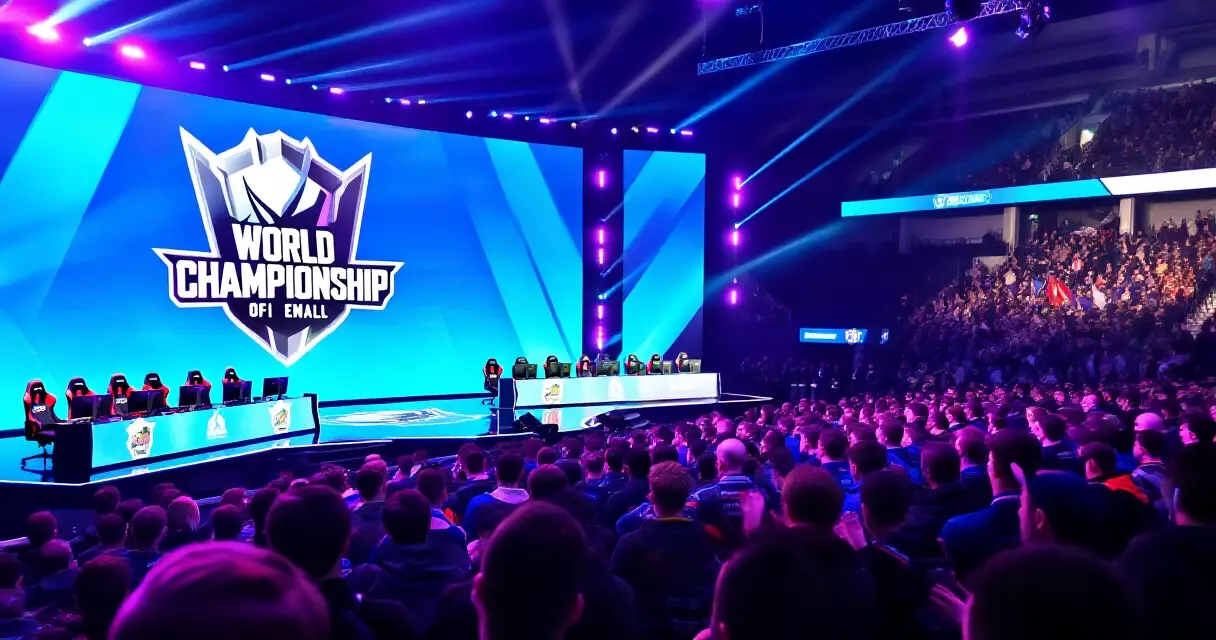
The agreement, announced in September 2018, made Mastercard the first-ever global sponsor of League of Legends Esports. Rather than buying a single jersey patch, the company took a property-wide position across Riot’s three marquee international events: the Mid-Season Invitational, the World Championship, and the All-Star Event. That structure matters. A property-level deal puts the brand on the broadcast, the arena, and the trophy moment instead of attaching it to one team’s win-loss record.
Riot has not disclosed the exact fee, and neither has Mastercard, which is normal for sponsorships of this scale. Industry reporting placed it as a multi-year, multi-million-dollar arrangement that has since been renewed and broadened. If you want context on how these numbers are typically structured and what drives them, our guide to how much esports sponsorship deals are worth covers the ranges that property-level partners tend to pay.
How Mastercard Activates Its Sponsorship
Buying the rights is the easy part. Activation is where non-endemic sponsors usually fail, and it is where Mastercard has invested most. The company routes the deal through its long-running Priceless platform, which packages money-can’t-buy fan experiences: courtside-style seats at Worlds, meet-and-greets, and on-site fan zones. The pitch to fans is access, not a credit card application.
In 2021 the company launched the Mastercard Gamer Academy, a program that mentors aspiring young players and content creators alongside professional talent. Initiatives like that one move the brand from a logo on a banner toward something fans associate with growing the scene. Red Bull built its reputation the same way, and our Red Bull esports review shows how content and athlete development out-perform simple logo placement over time.
Deal Snapshot and Specifications
| Attribute | Detail |
|---|---|
| Sponsor category | Non-endemic (payments / financial services) |
| Rights holder | Riot Games |
| Announced | September 2018 |
| Events covered | Mid-Season Invitational, World Championship, All-Star Event |
| Marketing platform | Priceless |
| Geographic scope | Global |
| Flagship program | Mastercard Gamer Academy (since 2021) |
| Status | Renewed multi-year partnership |
Pros and Cons for Mastercard
The strongest argument for the deal is raw, repeatable reach. A single Worlds broadcast delivers a global, youthful audience that traditional sports increasingly cannot promise. The brand also earns category exclusivity in payments, locking competitors out of the biggest stage in the game.
A bank logo on an esports stage is only worth what fans let it be worth, and access buys more goodwill than advertising ever will.
The downsides are real, too. Attribution is hard: it is difficult to prove that a Worlds viewer chose a card because of a logo. There is also brand-fit risk, since some fans view financial sponsors as outsiders, and any future controversy around Riot or the league transfers some reputational exposure to the sponsor. The frameworks in our guide to measuring esports sponsorship ROI explain why brand lift and recall, not direct sales, are the honest yardsticks here.
- Pros: unmatched global reach, category exclusivity, prestige association, a ready-made experiential platform in Priceless.
- Cons: weak direct attribution, persistent brand-fit skepticism, dependence on Riot’s reputation, undisclosed costs that complicate benchmarking.
Mastercard Compared With Other Esports Sponsors
Mastercard sits at one end of a spectrum that runs from pure non-endemic brands to hardware makers whose products fans actually use. Each model carries a different value proposition for the property and a different credibility ceiling with fans.
| Brand | Sponsor type | Core esports footprint | Primary value to the property |
|---|---|---|---|
| Mastercard | Non-endemic | LoL Esports global partner | Fan payments, prestige, mainstream credibility |
| Red Bull | Non-endemic | Athletes, events, content studio | Energy and lifestyle association |
| Intel | Semi-endemic | IEM circuit, hardware | Tournament infrastructure |
| Logitech G | Endemic | Team gear deals | Product placement and performance |
| HyperX | Endemic | Roster sponsorships | Peripheral visibility |
Against an endemic peer, Mastercard cannot claim that pros win because of its product. What it offers instead is scale and legitimacy that hardware brands cannot match. Intel sits in the middle, owning tournament infrastructure through the IEM circuit, as our Intel esports sponsorship review details. Mastercard’s lane is different: it sells the moment, not the machine.
Measuring Reach, Brand Lift, and ROI
The case for Mastercard lives or dies on audience numbers, and those numbers are large. Riot Games reported 99.6 million unique viewers for the 2018 World Championship final, the year the deal began. The 2021 final between EDward Gaming and DWG KIA reportedly peaked at 73.8 million concurrent viewers, according to figures Riot shared publicly and summarized on Wikipedia. The global esports audience reached an estimated 532 million people in 2022 per Newzoo data, the kind of figure that justifies premium sponsorship pricing.
| Event | Year | Headline viewership | Source |
|---|---|---|---|
| Worlds final | 2018 | 99.6M unique viewers | Riot Games |
| Worlds final | 2019 | 44M peak concurrent | Riot Games |
| Worlds final | 2021 | 73.8M peak concurrent | Riot Games |
| Worlds final | 2022 | 5.15M peak (excluding China) | Esports Charts |
Mastercard sells the moment, not the machine, and in esports the moment is the most valuable thing a brand can rent.
Honest measurement avoids the trap of counting card swipes. The credible metrics are aided and unaided brand awareness inside the gaming audience, sentiment shift, share of voice against rival payment networks, and the earned media generated by Priceless activations. On those terms the partnership reads as a long-term brand investment rather than a performance-marketing channel, which is exactly how Mastercard frames it. Broader market coverage from outlets such as CNBC and Reuters has tracked how mainstream brands keep treating esports as a top-of-funnel awareness play.

Frequently Asked Questions
When did Mastercard start sponsoring League of Legends?
Mastercard announced its partnership with Riot Games in September 2018, becoming the first global sponsor in the history of League of Legends Esports. The deal was not limited to a single team or region. Instead, it covered the property’s three biggest international events: the Mid-Season Invitational, the World Championship, and the All-Star Event. The arrangement has been renewed and expanded in the years since, including the 2021 launch of the Mastercard Gamer Academy, which signals the company intends to treat esports as a long-term platform rather than a one-season experiment.
What is a non-endemic esports sponsor?
A non-endemic sponsor is a brand whose products have no native connection to gaming, such as a bank, a car company, or a fast-food chain. Mastercard is a textbook example, since fans do not buy a payment network because of a tournament. Endemic sponsors, by contrast, sell things players actually use, like keyboards, headsets, or energy drinks. The distinction matters because non-endemic brands have to work harder to earn fan acceptance, usually by funding experiences and grassroots programs rather than relying on product credibility alone.
How much does Mastercard pay for the sponsorship?
Neither Mastercard nor Riot Games has publicly disclosed the exact value of the deal, which is standard practice for sponsorships at this level. Industry reporting has characterized it as a multi-year, multi-million-dollar agreement, and property-wide partnerships covering all three of Riot’s international events typically sit at the top of the sponsorship pyramid. Because the figure is private, analysts benchmark it against comparable global deals rather than confirmed numbers. The lack of disclosure is one reason measuring return on this partnership relies on brand metrics instead of a published cost-per-result.
Is the Mastercard esports sponsorship considered successful?
By the metrics that suit a non-endemic brand, it reads as a success. Mastercard secured category exclusivity, reached audiences in the tens of millions per event, and built repeatable activations through its Priceless platform and Gamer Academy. The honest caveat is attribution: it is hard to prove a direct sales lift from a logo on a broadcast. Most analysts judge the deal on brand awareness, sentiment, and share of voice within gaming, where the partnership has clearly raised Mastercard’s profile among a young, global, and otherwise hard-to-reach demographic.
How does Mastercard compare to endemic sponsors like HyperX?
The two play different games. Endemic brands such as HyperX or Logitech G gain credibility because pros genuinely use their gear, which lets them claim a performance link to winning. Mastercard cannot make that claim, so it competes on scale, prestige, and experiential access instead. Where a peripheral maker buys roster visibility, Mastercard buys the entire stage and the trophy moment. Neither approach is universally better; they suit different goals. Fans tend to trust endemic brands faster, while non-endemic partners like Mastercard bring mainstream legitimacy and far larger marketing budgets to the property.
What does the Mastercard deal mean for other non-endemic brands?
It offers a repeatable blueprint. The lesson is that reach alone is not enough; activation decides whether fans accept an outsider brand. Mastercard’s emphasis on money-can’t-buy experiences, talent development, and category exclusivity gives later entrants a clear model to copy. The deal also demonstrated that esports audiences are willing to tolerate, and sometimes welcome, a financial sponsor when it visibly invests in the community. For any bank, carmaker, or consumer brand weighing esports, the Mastercard case shows the entry point is experience and patience, not a quick performance-marketing win.
Sources
- League of Legends World Championship, viewership and sponsorship history – https://en.wikipedia.org/wiki/League_of_Legends_World_Championship
- Mastercard, company profile and financials – https://en.wikipedia.org/wiki/Mastercard
- Esports, global audience and market overview – https://en.wikipedia.org/wiki/Esports
- Reuters, technology and business coverage – https://www.reuters.com/technology/
- CNBC, business and esports coverage – https://www.cnbc.com
Top Esports Organizations 2026: Teams, Rosters, and Performance Rankings