
Summary
The global esports market generated an estimated $1.87 billion in total revenues in 2024 according to Newzoo, yet for most individual tournament organizers, turning a profit remains one of the hardest challenges in competitive gaming. Understanding how esports tournaments actually...
Table of contents
- 1 From LAN Parties to Multimillion-Dollar Productions: A Brief History
- 2 Sponsorships: The Engine That Runs Esports Tournaments
- 3 Media Rights and Broadcasting Deals
- 4 Ticket Sales, Live Events, and Venue Economics
- 5 Merchandise, Digital Goods, and In-Game Monetization
- 6 Publisher Fees, Revenue Shares, and Franchise Slot Fees
- 7 Revenue Breakdown by Tournament Type: A Comparative Table
- 8 Cost Structure: Where the Money Goes
- 9 Emerging Revenue Streams: NFTs, Subscriptions, and Data Licensing
- 10 Frequently Asked Questions About the Esports Tournament Business Model
- 10.1 How do esports tournaments make money without ticket sales?
- 10.2 Who pays for esports tournament prize pools?
- 10.3 Are esports tournaments profitable?
- 10.4 How much do esports sponsors pay?
- 10.5 What is the role of media rights in esports tournament revenue?
- 10.6 How do franchise leagues change the business model?
- 10.7 How does in-game monetization benefit tournament organizers?
- 10.8 What challenges does the esports tournament business model face in 2026?
- 11 Related Reading
- 12 Sources
The global esports market generated an estimated $1.87 billion in total revenues in 2024 according to Newzoo, yet for most individual tournament organizers, turning a profit remains one of the hardest challenges in competitive gaming. Understanding how esports tournaments actually make money – and where the money disappears – is essential context for anyone following the industry, whether you’re a fan, investor, or aspiring organizer.
From LAN Parties to Multimillion-Dollar Productions: A Brief History
Esports tournaments didn’t start with sponsors and TV deals. The earliest competitive gaming events in the late 1990s and early 2000s – like the Cyberathlete Professional League (CPL) founded in 1997 – relied on entry fees, small hardware partnerships, and the personal enthusiasm of organizers willing to work at a loss. Prize money was modest; the CPL World Tour 2005 offered $1 million total, which felt enormous at the time.
The shift toward professionalized revenue came in two waves. First, Korean broadcast network OGN pioneered the idea that esports could be televised and ad-supported, building a sustainable model around StarCraft: Brood War in the early 2000s. Second, Twitch’s launch in 2011 proved that streaming could scale globally, unlocking the sponsorship and media-rights economics that define today’s market. By the time Riot Games launched the League of Legends Championship Series (LCS) in 2013 as a fully salaried league, the template was set: treat esports like traditional sports broadcasting and monetize accordingly.
Today the financial architecture of an esports tournament involves half a dozen distinct revenue streams, each with its own risk profile. Publishers, independent organizers like ESL FACEIT Group and PGL, and game-native leagues like the Valorant Champions Tour (VCT) all operate with meaningfully different mixes of those streams. Top Esports Tournament Organizers: ESL, PGL, BLAST, and More Compared breaks down how the biggest names in tournament production differ structurally.
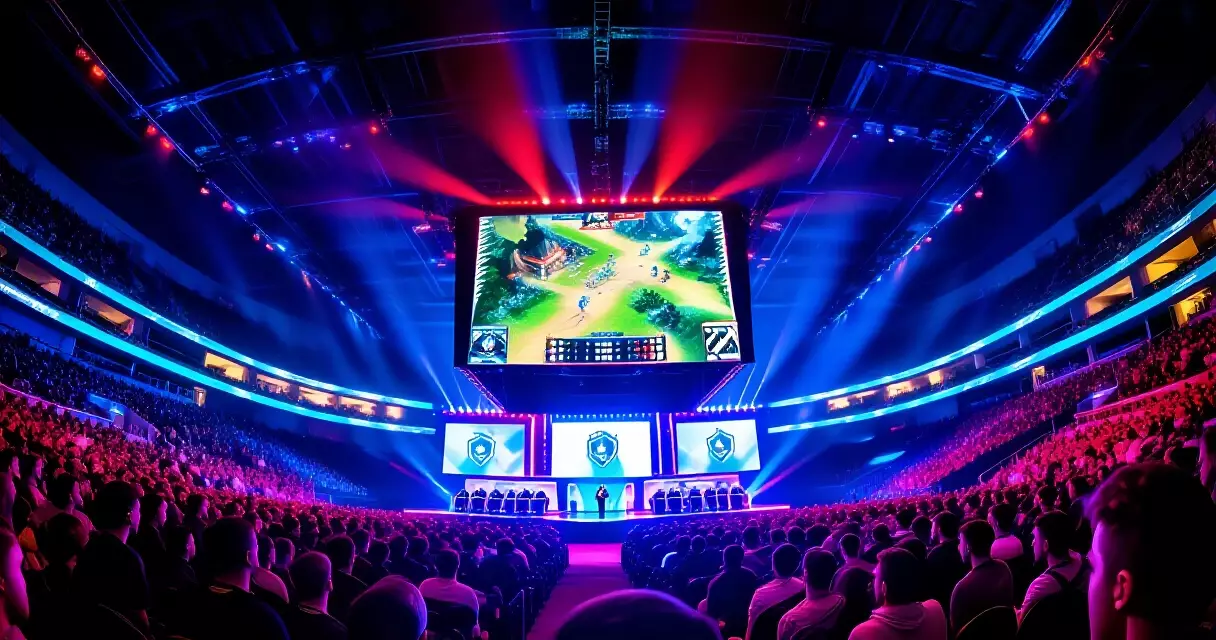
Sponsorships: The Engine That Runs Esports Tournaments
Sponsorships are, by a wide margin, the largest revenue source for esports tournament organizers. Brands pay to associate their name with competitive gaming events because the esports audience skews young (18–34), tech-savvy, and difficult to reach through traditional advertising. According to Newzoo’s market reports, sponsorship and advertising combined account for roughly 60% of all esports revenues globally.
Sponsorship deals in esports typically come in tiers. At the top sits the title sponsor, whose brand appears in the event name itself – Intel Extreme Masters (IEM), the Red Bull Home Ground CS2 event, or the Mastercard-sponsored Worlds finals stage for League of Legends. Title sponsors pay the most and receive logo placement on the main stage, in broadcast overlays, on player jerseys, and in all official communications. A title sponsorship for a Tier 1 major event can run from $1 million to $5 million or more per year.
Below the title sponsor sits a tiered structure of presenting sponsors, official partners, and category-exclusive suppliers. A presenting sponsor might receive naming rights to a specific segment of the broadcast – “The Red Bull Clutch Play of the Day” – while a category-exclusive partner secures the right to be the only energy drink, PC peripheral, or automotive brand associated with the event. Category exclusivity carries premium pricing because it blocks competitors from the same space.
Beyond logo placement, modern sponsorship packages often include activation rights: branded areas in the venue where fans interact with products, sampling opportunities, digital integrations during the livestream (branded in-game overlays, sponsored replay segments), and social media deliverables. Brands increasingly evaluate return on investment through stream impressions, brand-lift surveys, and social engagement metrics rather than simple logo visibility, which pushes organizers toward more creative integrations.
Media Rights and Broadcasting Deals
Media rights represent the second-largest revenue stream for the most prominent esports tournaments – and the one with the highest growth ceiling if the industry can replicate traditional sports’ broadcast economics. The basic idea is straightforward: organizers sell the right to broadcast their tournament content to platforms and networks, which then monetize that content through their own advertising, subscriptions, or viewership metrics.
Twitch and YouTube remain the dominant distribution platforms, but the deal structures vary. Some organizers operate their own channels and monetize directly through Twitch Partner revenue shares, YouTube ad revenue, and channel subscriptions. Others sell exclusive or non-exclusive broadcast licenses to platforms – Riot Games, for example, secured a multi-year broadcasting partnership with ESPN and Disney for the LCS in 2018, bringing League of Legends to linear television. Blizzard’s Overwatch League launched in 2018 with a reported $90 million, two-year exclusive streaming deal with Twitch, one of the largest esports broadcast agreements at that time.
The challenge for media rights is that esports hasn’t yet achieved the rights fees that traditional sports command – NFL Sunday Ticket or the UEFA Champions League represent a different order of magnitude. According to Wikipedia’s overview of esports economics, media rights account for roughly 10–15% of total esports revenues globally, compared to over 50% in major traditional sports leagues. Closing that gap is a central goal for publishers and organizers in 2025–2026.
For regional and smaller tournaments, media rights are often not sold but instead given away freely – or even subsidized – because the priority is growing viewership, which makes the event more attractive to sponsors. Only once a tournament has demonstrated consistent peak concurrent viewer counts in the hundreds of thousands does a meaningful broadcast rights market emerge.
“In esports, media rights are the prize at the end of audience-building – you can’t sell what viewers haven’t proven they’ll watch.”
Ticket Sales, Live Events, and Venue Economics
Live ticket sales were long considered a secondary revenue stream in esports, partly because the primary audience watches online. That calculus shifted meaningfully after events like The International (Dota 2), the League of Legends World Championship, and CS2 Majors demonstrated that thousands of fans would pay significant sums to watch matches in person. The 2024 LoL World Championship finals at Incheon’s Inspire Arena sold out its 15,000-seat venue, with tickets trading above face value on secondary markets.
Ticket revenue for a large-scale esports major typically covers only a fraction of total production costs – venue rental, stage construction, broadcast infrastructure, and talent fees for hosts, casters, and analysts are all expensive. However, live attendance drives secondary revenue lines: merchandise sales at the venue, food and beverage concessions, and VIP/meet-and-greet packages that can command hundreds or thousands of dollars per ticket.
Dedicated esports arenas represent a related but distinct business. Venues like the HyperX Esports Arena in Las Vegas and the Riot Games Arena in Los Angeles were built specifically to host regular competitive gaming events, enabling operators to amortize the cost of permanent stage infrastructure and broadcast setups across many events per year rather than rebuilding from scratch each time. How Esports Venues Make Money: Revenue Streams and ROI examines how the venue side of this equation works in detail.
VIP experiences have become an increasingly important revenue lever at major events. Premium seating areas, backstage access passes, player meet-and-greets, and branded hospitality suites allow organizers to extract significantly more revenue per attendee from the most engaged fans. At IEM Katowice, for instance, multi-day VIP packages historically sold alongside general admission, with pricing several times the standard ticket rate.
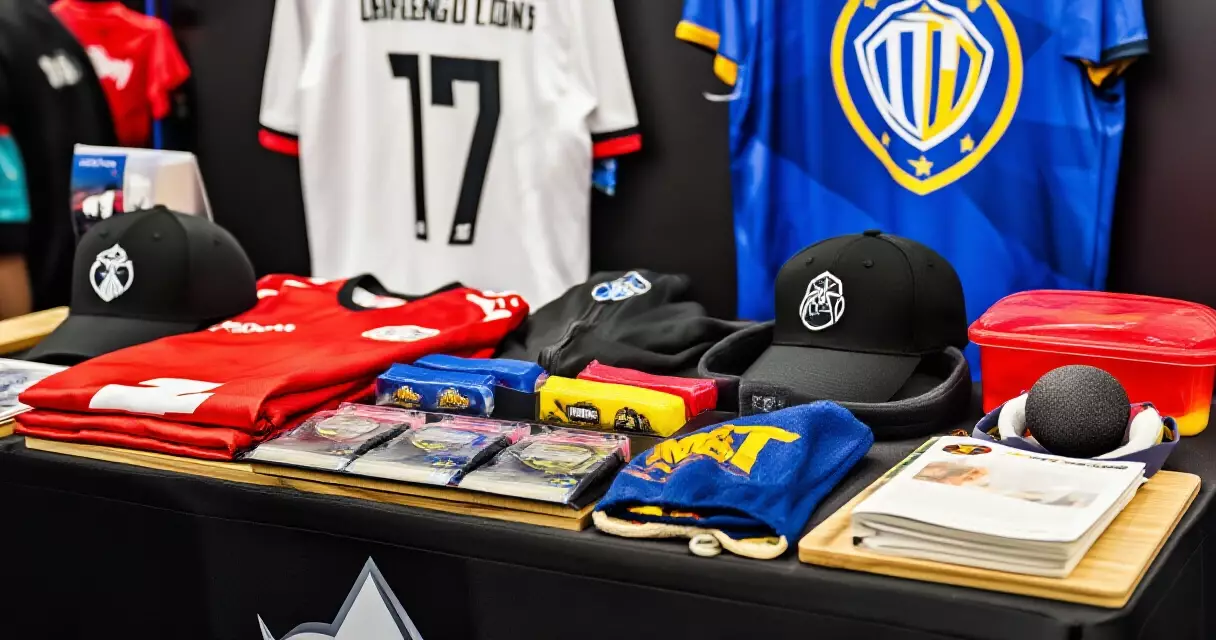
Merchandise, Digital Goods, and In-Game Monetization
Physical merchandise – jerseys, hoodies, caps, peripherals branded with team or event logos – has always been part of the esports revenue picture, but its scale pales next to what digital goods now generate. The real monetization innovation in esports has been in-game digital content tied to tournament events.
The model pioneered by Valve with The International is the clearest illustration. Starting in 2012, Valve offered the Battle Pass (originally called The International Compendium), which let fans buy a digital item that unlocked exclusive in-game cosmetics, match predictions, and community milestones tied to the tournament. A percentage of every Battle Pass sale – initially 25%, later adjusted – was contributed directly to The International prize pool. This created a self-reinforcing loop: as the prize pool grew (eventually exceeding $40 million in 2021), media coverage increased, which drove more Battle Pass sales. Esports Tournament Prize Pools: From Thousands to Millions covers how this explosion in prize money reshaped competitive gaming.
Riot Games employs a comparable model across Valorant and League of Legends. During major tournament windows like Valorant Champions or the LoL World Championship, Riot sells tournament-specific cosmetic bundles – weapon skins, player cards, event passes – with a portion of proceeds going to the prize pool or a charity fund. These bundles are time-limited, creating urgency, and are themed to teams competing in the event, turning fan loyalty directly into purchasing behavior.
For organizers without a publishing arm (i.e., third-party organizers like PGL or BLAST who run tournaments for games they don’t own), digital goods monetization is typically handled by the publisher, not the organizer. The organizer instead earns a fee or revenue share from the publisher for running the event. This distinction matters enormously for understanding why first-party tournaments (publisher-owned) tend to have more robust economics than third-party ones.
Publisher Fees, Revenue Shares, and Franchise Slot Fees
Publisher relationships sit at the structural foundation of esports tournament economics, yet they’re often invisible to fans. When ESL or PGL runs a CS2 Major, Valve doesn’t simply allow them to organize the event – it selects them as official partner organizers, provides them with access to the game’s official competitive pipeline, and in some cases provides direct financial support. In exchange, the organizer delivers a production that meets Valve’s standards and promotes the game globally.
Franchise leagues represent the most extreme form of publisher-organizer financial relationship. When Riot Games launched the franchised LCS in North America and the LEC in Europe, teams paid substantial franchise slot fees – reported at approximately $10 million per team for LCS slots – for the right to participate in a stable, promotion/relegation-free league. Activision Blizzard’s Overwatch League reportedly charged $20 million per slot for early franchise entrants in 2018, with later entrants paying even more. These fees provided publishers with massive upfront capital but created tension when the leagues underperformed expectations.
The franchise model has faced significant pressure since 2023. Riot restructured the LCS and LEC significantly, reducing team counts and modifying league formats. Activision Blizzard wound down the Overwatch League city-based franchise model entirely by 2024 after years of declining viewership and sponsor withdrawals. These retrenchments signal that the franchise fee model, while lucrative on paper, requires a viewership base that many esports titles haven’t sustained. Esports Tournaments Explained: Formats, Prize Pools, and How They Work provides useful background on how different league structures shape team and organizer economics.
“Franchise slot fees gave publishers a one-time windfall but created a system where team owners were paying for stability that the underlying viewership market couldn’t guarantee.”
Revenue Breakdown by Tournament Type: A Comparative Table
Not all esports tournaments operate with the same revenue mix. A Valve-run major has fundamentally different economics from an independent third-party open tournament. Understanding those differences helps explain why some events can sustain massive prize pools while others struggle to cover costs.
| Revenue Stream | Publisher-Owned Major (e.g., Valve TI, Riot Worlds) | Third-Party Tier 1 (e.g., IEM Major, BLAST Premier) | Regional Grassroots Event |
|---|---|---|---|
| Sponsorships | High (title + category exclusives) | Very High (primary revenue pillar) | Low–Medium (1–2 local brands) |
| Media Rights | Self-broadcast; ad revenue retained | Revenue share with game publisher | Usually zero; streamed free |
| Ticket Sales | Significant at stadium finals | Meaningful at arena events | Minor; entry fees + local tickets |
| Merchandise | Official game/event store sales | Limited event merchandise | Minimal or zero |
| In-Game Digital Goods | Large (Battle Pass, event bundles) | None or small rev-share from publisher | None |
| Publisher Subsidy/Fee | N/A (organizer = publisher) | Per-event production fee from publisher | None |
| Franchise/Entry Fees | Relevant in franchised leagues | Rare; sometimes partner team contributions | Player/team entry fees |
The table above illustrates why publisher-owned tournaments sit in a structurally different category: they control the full value chain from game to broadcast to in-game goods. Third-party organizers like ESL FACEIT Group must build their business primarily on sponsorship, making them acutely sensitive to brand-marketing budgets, which are cyclical and subject to economic downturns.
Cost Structure: Where the Money Goes
Revenue figures alone don’t capture whether an esports tournament is financially viable – costs matter just as much. Major tournament expenses include venue hire, travel and accommodation for players and staff, production infrastructure (cameras, replay servers, broadcast desk, studio lighting, LED panels), talent fees for hosts and casters, and prize money itself.
Prize money is often misunderstood as a direct cost to organizers. In some cases – particularly community-funded pools like Dota 2’s Battle Pass contributions – the prize pool is self-financing. In other cases, organizers fund prizes directly, treating them as a marketing expense: a larger prize pool attracts better teams and more viewer interest, which in turn makes the event more valuable to sponsors. For smaller events, prize pools are almost always the organizer’s direct cost and must be funded from sponsorship revenue.
Production costs for a Tier 1 broadcast event are substantial. Behind the Broadcast: How Esports Tournament Production Works estimates that a world-class esports broadcast setup – including cameras, graphics, replay systems, observer setups, and broadcast talent – can cost several hundred thousand dollars for a single event, before venue and travel expenses. This is why even well-sponsored events often run on thin margins or at a loss, relying on multi-year sponsor relationships rather than per-event profitability.
| Cost Category | Grassroots Regional Event | Tier 2 National Tournament | Tier 1 International Major |
|---|---|---|---|
| Venue | $500–$5,000 | $10,000–$80,000 | $200,000–$1M+ |
| Broadcast Production | Minimal or zero | $20,000–$100,000 | $500,000–$3M+ |
| Player Travel & Hotels | Minimal | $15,000–$60,000 | $300,000–$1M+ |
| Talent (casters, hosts) | Volunteer or small fee | $10,000–$50,000 | $200,000–$800,000 |
| Prize Pool | $500–$10,000 | $20,000–$250,000 | $500,000–$40M+ |
| Marketing & PR | Near zero | $5,000–$30,000 | $100,000–$500,000 |
Cost estimates above are illustrative ranges drawn from industry reporting and public event disclosures. Actual figures vary widely based on country, game title, and organizer efficiency.
Emerging Revenue Streams: NFTs, Subscriptions, and Data Licensing
Beyond the core revenue pillars, esports tournament organizers have experimented with several emerging monetization channels, with mixed results.
Subscription models have taken hold at the league level. Riot Games’ League of Legends Esports Manager game, various team-based subscription tiers, and platform-native tools (Twitch subscriptions to official league channels) provide recurring revenue. BLAST Premier has cultivated a dedicated subscriber base on YouTube and Twitch through consistent content and watch-along incentives. These revenue lines are modest compared to sponsorship but grow with the fan base and don’t require per-event renegotiation.
Data licensing is a less visible but growing revenue channel, particularly as esports betting markets expand in jurisdictions where it is legal. Organizers and publishers can license official match data feeds to regulated sportsbook operators, generating a per-match or subscription fee. This mirrors what traditional sports leagues like the NBA and NFL have done with their official data partnerships. The ethical and regulatory dimensions of this are complex – particularly around maintaining competitive integrity – but in markets with established legal frameworks, data rights represent real incremental income.
NFT and blockchain-based collectibles had a notable but short-lived moment in 2021–2022, with several teams and organizers launching digital collectible lines. The broader NFT market contraction in 2022–2023 largely ended that experiment for most participants, and few organizers now treat digital collectibles as a meaningful ongoing revenue stream.
Looking at where the industry is heading in 2025–2026, the clearest growth vectors are mobile esports monetization, regional expansion into Southeast Asia, the Middle East, and Latin America, and tighter integration between in-game content drops and tournament schedules. Esports Tournaments 2026: Circuit Guide by Game and Region maps how regional growth is reshaping the competitive calendar and, by extension, where new sponsorship markets are opening.
Frequently Asked Questions About the Esports Tournament Business Model
How do esports tournaments make money without ticket sales?
The majority of esports tournaments – especially those below the Tier 1 stadium event level – generate most of their revenue from sponsorships rather than ticket sales. Brand partners pay for logo placement in streams, broadcast integrations, social media exposure, and naming rights to segments of the show. Digital-first events broadcast entirely on Twitch or YouTube can build large audiences and command significant sponsorship deals without ever selling a single physical ticket. Publisher-funded events and leagues additionally draw on production fees, in-game sales, and media rights arrangements that don’t require live attendance at all. Entry fees from competing teams also contribute at the grassroots level.
Who pays for esports tournament prize pools?
Prize pool funding varies significantly by event structure. Some pools are publisher-funded directly from operating budgets – Riot Games funds the prize pools for Valorant Champions and the LoL World Championship from its own revenues. Others are community-funded through in-game purchase contribution models, most famously Valve’s Dota 2 Battle Pass, where a percentage of every pass sold contributed to The International’s prize pool. Sponsor contributions can also fund prizes; some title sponsors offer prize money as part of their sponsorship commitment. Third-party organizers running an event for someone else’s game typically receive a production budget from the publisher, which includes a prize pool allocation. For teams competing in these events, understanding prize pool structure matters because it affects how winnings are distributed and taxed.
Are esports tournaments profitable?
Most individual esports tournaments are not profitable on a standalone basis, especially at the Tier 1 production level where costs are highest. Profitability typically emerges across a portfolio of events or over a multi-year contract cycle rather than per-event. An organizer running 10 events per year can spread fixed infrastructure and staff costs, making each event more economical. Publisher-owned tournaments with in-game digital goods revenue and massive community-funded prize pools can achieve profitability, but the economics depend heavily on game popularity and the publisher’s willingness to subsidize competitive play as a marketing expense. Industry analysts at firms including Newzoo have noted that esports as a sector has struggled to reach consistent industry-wide profitability even as revenues have grown substantially.
How much do esports sponsors pay?
Sponsorship fees vary enormously based on event scale, audience size, and the specific rights package. At the grassroots level, a local or regional tournament might receive a few hundred to a few thousand dollars from a single peripheral brand or energy drink company. At the Tier 1 level, title sponsorships for events like IEM Major CS2 tournaments or the League of Legends World Championship finals stage carry reported values of $1 million to $5 million or more per year. Franchise league naming rights and multi-year presenting partnerships for premier leagues like the LCS or VCT (Valorant Champions Tour) can exceed these figures. The Intel Extreme Masters branding, for example, represents one of the longest-running and most valuable naming rights deals in esports history, covering multiple events per year globally.
What is the role of media rights in esports tournament revenue?
Media rights in esports are less mature than in traditional sports but are growing in importance. For the largest events and leagues, broadcast deals with platforms like Twitch, YouTube, or television networks provide direct licensing revenue. Riot Games’ LCS had a multi-year broadcast arrangement with ESPN; the Overwatch League’s early Twitch deal was valued at $90 million over two years. However, for the majority of esports tournaments, media rights are not a primary revenue source – events are freely streamed to maximize viewership, which in turn justifies higher sponsorship rates. The industry’s long-term goal is to build viewership consistency sufficient to command traditional-sports-scale media rights fees, but that remains a work in progress as of 2026. The Biggest Esports Tournaments in the World tracks which events have the viewership that makes media rights deals viable.
How do franchise leagues change the business model?
Franchise leagues – where teams buy permanent slots in a closed league rather than earning participation through open competition – fundamentally shift the business model in several ways. Teams pay large upfront slot fees (ranging from roughly $10 million for LCS slots to a reported $20 million-plus for early OWL slots), which gives the publisher immediate capital. In exchange, teams receive revenue sharing from central league income, sponsorship pooling, and broadcasting deals, along with protection from relegation. Franchising was designed to make esports more attractive to traditional sports investors by providing stable, long-term franchise value analogous to an NFL or NBA team. The model has faced serious challenges since 2023 as several franchised leagues restructured or wound down due to insufficient viewership and advertiser demand, raising questions about whether the model is sustainable in its current form.
How does in-game monetization benefit tournament organizers?
In-game monetization benefits tournament organizers primarily when the organizer is also the publisher of the game. Valve benefits directly from Battle Pass sales tied to The International; Riot benefits from tournament cosmetic bundle sales during Valorant Champions and LoL Worlds. Third-party organizers generally don’t share in in-game revenue – they may receive a production fee from the publisher, but the cosmetics revenue flows back to the game developer. The exception is when organizers negotiate a specific revenue share as part of a partnership deal, which happens in some co-production arrangements. For fans, in-game purchases tied to tournaments create a direct way to financially support the events they enjoy while receiving something tangible in return – a model that has proven highly effective at driving both engagement and revenue simultaneously.
What challenges does the esports tournament business model face in 2026?
Several structural challenges face the esports business model heading into 2026. First, sponsorship revenue is cyclical – when tech-sector advertising budgets tighten (as happened in 2022–2023), esports events are among the first to see deal reductions or non-renewals. Second, audience fragmentation across dozens of titles, platforms, and regions makes it hard to deliver the consolidated viewership numbers that justify premium media rights fees. Third, the cost of high-quality production has not declined even as sponsorship budgets have come under pressure, squeezing margins. Fourth, the collapse of several high-profile franchise league investments has made institutional investors more cautious. On the positive side, growth in mobile esports markets (particularly in Southeast Asia and the Middle East), improved data rights frameworks, and tighter integration between game content cycles and tournament schedules offer credible paths to more stable economics. Understanding tournament formats is relevant here because leaner formats reduce production costs while preserving competitive integrity.
Related Reading
- Esports Tournaments 2026: Circuit Guide by Game and Region
- Behind the Broadcast: How Esports Tournament Production Works
- Esports Tournament Formats: Single Elim, Double Elim, Round Robin & Swiss
- Esports Tournament Prize Pools: From Thousands to Millions
- Esports Tournaments Explained: Formats, Prize Pools, and How They Work
- How to Qualify for Esports Tournaments: Open Qualifiers, Invites & Regional Paths
- The Biggest Esports Tournaments in the World: Prize Pools, Viewership, and Prestige Ranked
- Top Esports Tournament Organizers: ESL, PGL, BLAST, and More Compared
Sources
- Newzoo Global Esports & Live Streaming Market Report 2024 – https://newzoo.com/insights/trend-reports/newzoo-global-esports-entertainment-market-report-2024-free-version/
- ESPN / Activision Blizzard – Overwatch League Twitch deal reporting – https://www.espn.com/esports/story/_/id/21776908/activision-blizzard-strikes-90-million-deal-twitch-overwatch-league
- Wikipedia – Esports (economics overview) – https://en.wikipedia.org/wiki/Esports
Top Esports Organizations 2026: Teams, Rosters, and Performance Rankings